
能源

Search documents
牛市震荡似“危”实“机”!
2025-10-13 14:56
Summary of Key Points from Conference Call Records Industry or Company Involved - The discussion primarily revolves around the Chinese economy, U.S. economic strategies, and the implications for various sectors including real estate, technology, and emerging industries. Core Insights and Arguments 1. **China's Financial Development** China is revitalizing its assets through capital markets, leveraging advantages in rare earth supply chains and technological breakthroughs, marking a significant shift in its financial development path distinct from the West [1][2][3] 2. **U.S. Economic Strategy** The U.S. relies on debt expansion and technology capital expenditure for economic growth. However, if technology investments do not significantly enhance labor productivity, the U.S. may face stagflation risks [3][4] 3. **Real Estate Market Stability** The most critical phase of risk in China's real estate sector has passed, with a declining proportion of real estate-related income, indicating it no longer poses a systemic risk. Major cities are expected to see price rebounds by 2026 [6][9] 4. **Technological Competition** The primary competitive arena between China and the U.S. in the coming years will be technology. Investors should focus on high-quality assets related to technology and emerging industries [7][8] 5. **Government Support for Emerging Industries** The Chinese government is shifting from debt expansion to equity financing, actively supporting emerging industries such as new energy and semiconductors through government funds [3][12][13] 6. **Impact of Central Bank Policies** Following the Central Financial Work Conference, the People's Bank of China has increased support for financial companies, indicating a proactive approach to stabilize and activate capital markets [15] 7. **Investment Opportunities in Strategic Assets** In the context of U.S.-China competition, strategic assets like gold, rare earths, and military-related investments are highlighted as having long-term investment value [22] 8. **Emerging Consumer Trends** The new consumption sector is seen as a potential safe haven amid global market volatility, with specific brands showing significant growth potential [33] 9. **Sector-Specific Recommendations** - **Technology Sector**: Focus on AI, IoT, and semiconductor equipment as key growth areas [24] - **Real Estate**: High-end commercial properties in Hong Kong and mainland China are expected to recover, driven by low-interest rates and high dividend yields [25] - **Gold Sector**: Companies in the gold industry are projected to see substantial profit growth, with some expected to increase production significantly [31][32] Other Important but Possibly Overlooked Content 1. **Consumer Savings Impact** Chinese household savings are substantial, with a significant portion in real estate. The sluggish real estate market may redirect funds into safer assets, which could enhance domestic consumption when the stock market becomes active [14] 2. **Differences Between A-shares and Hong Kong Stocks** A-shares are more supported by government interventions, while Hong Kong stocks have a short-selling mechanism, which may present different investment opportunities [16] 3. **Future of the Commercial Vehicle Market** The commercial vehicle market is expected to see growth due to local subsidies, despite current low sales and profits [28] 4. **Challenges in the Pharmaceutical Sector** The pharmaceutical sector is facing challenges due to potential regulatory changes, but innovative drugs are still expected to perform well internationally [35][36] 5. **Investment in High-Dividend Stocks** High-dividend stocks are recommended for risk-averse investors, particularly in stable sectors like utilities and consumer staples [25] This summary encapsulates the key insights and strategic directions discussed in the conference call, providing a comprehensive overview of the current economic landscape and investment opportunities.
大宗商品周度报告:中美贸易格局再度紧张,商品短期或承压运行-20251013
Guo Tou Qi Huo· 2025-10-13 13:27
Report Overview - Report Title: Commodity Weekly Report - Report Date: October 13, 2025 - Report Author: Hu Jingyi from Guotou Futures 1. Report Industry Investment Rating - Not provided in the report 2. Core Viewpoints - The commodity market closed up 0.46% last week, with precious metals leading the gain at 2.47%, non - ferrous and black metals rising 1.93% and 1.41% respectively, while agricultural products and energy - chemical products fell 0.47% and 1.63% respectively. Due to the re - intensification of the Sino - US trade situation, the commodity market may be under pressure in the short term [2]. - The US government shutdown, economic data uncertainty, inflation resilience, dovish statements from Fed officials, and central bank gold purchases support precious metals, which may fluctuate strongly in the short term. Non - ferrous metals may be under pressure due to trade tensions despite supply disturbances. Black metals are likely to face pressure with weak demand and increasing external trade frictions. Energy prices may oscillate weakly due to inventory increases and geopolitical factors. Chemical products may be affected by trade frictions and oil price drops. Agricultural products may face supply shortages if the trade war persists [3][4]. 3. Summary by Directory 3.1 Market Review - **Overall Market**: The commodity market rose 0.46% last week. Precious metals led the gain at 2.47%, non - ferrous and black metals rose 1.93% and 1.41% respectively, while agricultural products and energy - chemical products fell 0.47% and 1.63% respectively. The 20 - day average volatility of the commodity market increased significantly, and all sectors had net capital outflows [2]. - **Top Gainers and Losers**: Tin, copper, and coking coal led the gains with increases of 4.1%, 3.37%, and 3.11% respectively. Pigs, eggs, and crude oil had larger declines of 8.38%, 7.64%, and 3.71% respectively [2]. 3.2 Outlook for Different Sectors - **Precious Metals**: The losses from the US government shutdown, economic data uncertainty, inflation resilience, dovish Fed statements, and central bank gold purchases support precious metals. With the rising risk of the Sino - US trade war, the sector may oscillate strongly in the short term [3]. - **Non - Ferrous Metals**: Supply disturbances made the sector perform strongly during the holiday, but the re - intensification of the Sino - US trade situation led to large declines in previously strong varieties. Supply remains tight, but terminal consumption has slowed, and inventories are accumulating. The sector may be under pressure in the short term [3]. - **Black Metals**: During the long holiday, the apparent demand for rebar dropped significantly, production decreased slightly, and inventories increased sharply. With high - level molten iron, weakening steel mill profitability, and increasing external trade frictions, the sector may face pressure in the short term [3]. - **Energy**: International oil prices declined around the National Day holiday. The EIA report showed an unexpected increase in US crude oil inventories, and geopolitical factors may have a negative impact on oil prices. Oil prices may oscillate weakly in the short term, and attention should be paid to the escalation of the Russia - Ukraine conflict [4]. - **Chemical Products**: For building materials, trade friction may be unfavorable for PVC exports, and PVC may oscillate weakly. Polyester products may be affected by trade friction and oil price drops, facing cost collapse and weak demand [4]. - **Agricultural Products**: Possible US tariff increases may affect domestic soybean supplies in the first and second quarters of next year. If the trade war lasts, the overall supply may tighten in the first quarter of next year. Oils and fats may be under pressure due to the decline in crude oil prices and the uncertainty caused by the US government shutdown [4]. 3.3 Commodity Fund Overview - **Precious Metal ETFs**: Most gold ETFs had a weekly return of around 2.94% - 2.99%. The total net asset value of gold ETFs was 1,773.72 billion yuan, with a 1.66% increase. The total net asset value of all commodity ETFs was 1,853.72 billion yuan, with a 1.83% increase [38]. - **Other ETFs**: The energy - chemical futures ETF had a - 1.28% return, the feed soybean meal futures ETF had a - 0.29% return, the non - ferrous metal futures ETF had a 3.26% return, and the silver futures (LOF) had a 2.61% return [38].
Expect one more move higher in the S&P into year-end, says Strategas' Chris Verrone
Youtube· 2025-10-13 13:14
Market Overview - The market has shown signs of fatigue over the past three to four weeks, with only about 50% of stocks above their 50-day average, indicating a lack of momentum [3] - Despite recent volatility, the market is expected to maintain support levels around 6,400 to 6,450, with a potential move towards 7,000 by year-end [4] Economic Indicators - Cyclical stocks are outperforming defensive stocks, and credit conditions remain benign, suggesting a generally healthy economic environment [3][8] - The recent market sell-off was triggered by concerns over potential trade tensions with China, particularly the announcement of 100% tariffs effective November 1st [6] Sector Performance - Healthcare has begun to show positive trends, raising questions about whether this will extend to other defensive sectors like staples and REITs [5] - Consumer stocks are expected to respond positively to lower oil prices and interest rates, but there is uncertainty about their performance heading into 2026 [11] Regulatory Environment - A significant deregulatory push across various industries, including banking and energy, is noted, which may impact market dynamics [12] - The performance of financial stocks, particularly money center banks, is crucial for the overall market outlook, as they have been leading for the past two years [13]


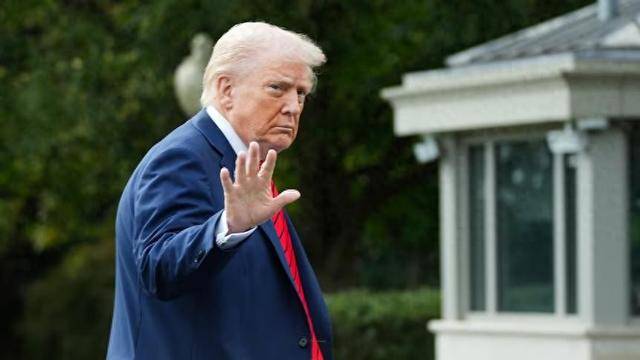
特朗普这2天冷静下来,再打关税战美国必败,主动给中国递上台阶
Sou Hu Cai Jing· 2025-10-13 12:29
Core Viewpoint - The article discusses the shifting stance of former President Trump regarding the trade war with China, indicating a potential retreat from aggressive tariff policies due to domestic economic pressures and the realization of the negative impacts of such policies on the U.S. economy [1][4][10]. Economic Impact - The Yale Budget Lab estimates that by 2025, American households will face an increased annual expenditure of $2,100 to $3,800 due to tariffs, with low-income families being disproportionately affected [6]. - The short-term price increase of goods due to tariffs is approximately 1.7% to 1.8%, resulting in an average loss of about $2,400 per household this year [6]. - The volatility in the U.S. stock market, particularly affecting tech and manufacturing sectors, reflects growing concerns over tariff policies leading to capital flight [6]. Supply Chain Challenges - Stricter origin verification mechanisms complicate global supply chains, forcing companies to adjust logistics and factory layouts, which increases overall logistics costs and compliance burdens [8]. - The article highlights that Trump's tariff policies are contributing to the fragmentation of the global economy and creating a "supply chain isolation" for the U.S., which could dilute its overall competitiveness in the long run [8]. Political and Legal Ramifications - Domestic legal challenges are emerging against Trump's tariff policies, with some companies and industry associations filing lawsuits, questioning the president's authority to impose tariffs under national security claims [16]. - If courts uphold these challenges, it could fundamentally undermine the existing tariff framework, leading to increased uncertainty in the trade environment and diminishing investment confidence [18]. International Relations - The article notes that Trump's unilateral and bullying tactics have damaged U.S.-China relations, with China responding firmly to U.S. tariffs, particularly affecting American agricultural and energy sectors [14][12]. - The article emphasizes that many countries are seeking to reduce their dependence on the U.S. market and are moving towards regional integration, while China is actively pursuing multilateral trade cooperation [18][20]. Strategic Misalignment - Trump's recent shift in tone is viewed as a tactical adjustment ahead of midterm elections rather than a genuine strategic change, as he faces increasing domestic opposition to the trade war [20]. - The article concludes that for genuine improvement in U.S.-China economic relations, the U.S. must abandon its unilateral sanctions and tariff threats, and instead engage in respectful and mutually beneficial negotiations [22].
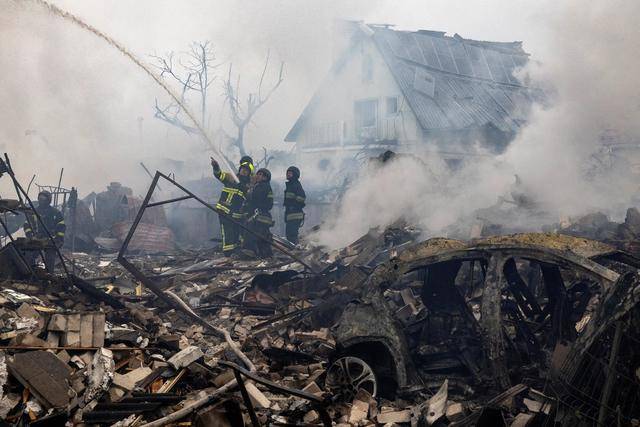
俄乌持续冲突,乌军打击俄境内能源设施,英媒:美国背后支持
Sou Hu Cai Jing· 2025-10-13 10:32
Group 1 - The Russia-Ukraine conflict has entered a prolonged phase, contrary to initial expectations from both Russia and Ukraine [1] - Ukraine has reportedly suffered 1.5 million casualties, although official figures may understate the true number due to many being classified as "missing" [1] - Russia has lost over 1 million troops according to Ukrainian sources [1] Group 2 - Ukraine's military has been actively targeting energy facilities within Russia, with reports indicating U.S. support in the form of intelligence for these operations [3][5] - The U.S. is seen as leveraging the conflict to weaken Russia economically while simultaneously expanding its own energy exports [5][7] - The U.K. has also played a significant role by supplying precision-guided munitions to Ukraine, aligning closely with U.S. objectives [9]
“成都造·全球销”系列活动欧洲行启动 40余家成都工业企业赴德法拓展市场
Mei Ri Jing Ji Xin Wen· 2025-10-13 08:12
Group 1 - A delegation of over 40 industrial enterprises from Chengdu is visiting Germany and France to expand into the European market, focusing on six key industries: electronic information, equipment manufacturing, pharmaceutical health, new materials, green food, and advanced energy [1] - The delegation includes companies from 12 key manufacturing industry chains, showcasing Chengdu's industrial strength and aiming to deepen practical cooperation with Europe [1] - During the visit, the delegation will hold 10 high-level exchange activities, including an economic cooperation seminar and company site visits, to promote cooperation projects [1] Group 2 - In Germany, the delegation will participate in a seminar on "Industry 4.0 and EU Market Insights" and visit Audi and Siemens facilities to learn about advanced manufacturing processes and digital solutions [2] - The highlight of the Germany trip will be the "2025 China (Chengdu) - Munich Industry Cooperation and Matching Conference," which will involve over 40 Chengdu enterprises and representatives from German Fortune 500 companies [2] - In France, the delegation will attend the "Invest in China, Invest in the Future" investment conference to connect Chengdu enterprises with French investment resources [2] Group 3 - The delegation will conduct a series of site visits and exchanges focusing on themes such as green energy transition, traditional energy industry trends, and logistics infrastructure for entering the European market [3] - Companies like Schneider Electric and Total Energy will be visited to explore energy management innovations and the transition to clean energy [3] - In the first half of the year, Chengdu's Economic and Information Bureau organized three delegations to five countries, resulting in 12 on-site contracts with an intended signing amount exceeding 6 billion yuan, highlighting the global competitiveness of "Chengdu-made" products [3]
本次冲击或将小于“4·7行情”!把握黄金坑机会
Zheng Quan Shi Bao Wang· 2025-10-13 03:39
Group 1 - The traditional manufacturing sector in China is poised to benefit from the current geopolitical climate, as it can leverage its advantages to gain pricing power and move away from intense competition [2] - Recent export controls and licensing systems are aimed at protecting national interests and may help leading companies secure stable overseas market shares and better profitability [2] - The capital expenditure in traditional industries is showing signs of stabilization and recovery, providing a favorable environment for companies to improve their profit margins [2] Group 2 - External shocks leading to asset declines present a buying opportunity in the Chinese market, as the current trade risks are clearer compared to previous disruptions [3] - The demand for quality assets in China is surging, driven by the ongoing transformation of the economy and capital market reforms [3] - The focus remains on sectors that align with industrial development and stability, particularly in emerging technologies and cyclical finance [3] Group 3 - The market is expected to experience a short-term adjustment, but the overall resilience remains strong, with potential for new highs post-adjustment [5] - The current market conditions are more favorable than previous shocks, with investor sentiment and institutional support strengthening [5] - Key sectors to watch include military, semiconductors, and new consumption, which are positioned for marginal improvements [5] Group 4 - The core drivers of the current market rally remain unchanged, with a focus on medium to long-term policy expectations and liquidity trends [6] - Attention should be directed towards sectors with strong performance certainty, such as new productivity themes and large consumption [6] - Investment opportunities are identified in metals, agriculture, and energy sectors [6] Group 5 - The recent volatility in the technology sector is not expected to lead to significant long-term declines, as the market has learned from past experiences [7] - The focus should be on sectors that can benefit from domestic policies and self-sufficiency, including non-ferrous metals, banking, and agriculture [7] - Opportunities may arise from market corrections, particularly in sectors with strong growth potential [7] Group 6 - The mid-term outlook for A-shares remains optimistic despite external uncertainties, with a focus on traditional value sectors such as real estate and consumption [8] - The market is showing signs of a shift towards value-oriented investments, indicating a potential rebalancing of investment styles [8] - The gold market is expected to maintain a positive outlook, with no immediate signs of a peak [8] Group 7 - The current market environment is characterized by a lack of panic, suggesting that adjustments in global risk assets will be manageable [9] - The focus should be on domestic policies and the recovery of internal demand, which are expected to gain more attention in the market [9] - The recovery of manufacturing activities and investment acceleration are seen as key themes for future growth [9] Group 8 - The upcoming APEC summit is anticipated to be a significant event for potential shifts in the geopolitical landscape, impacting market sentiment [12] - The market is expected to respond positively to the stabilization of industry chains and economic resilience amid ongoing trade tensions [12] - Investment strategies should focus on sectors that align with anti-tariff measures and self-sufficiency, such as agriculture and military [12]

威尔鑫点金·׀ 如何理解金银价格创历史新后的数十年最强技术超买?
Sou Hu Cai Jing· 2025-10-13 02:29
Core Viewpoint - The article discusses the recent surge in gold and silver prices, highlighting their historical highs and the implications of current market conditions, including overbought signals and the influence of the US dollar index on commodity prices [1][3][5]. Gold and Silver Market Performance - Last week, the international spot gold price opened at $3,887.25, peaked at $4,058.90, and closed at $4,018.09, marking an increase of $132.19 or 3.40% [1]. - The spot silver price rose by 4.86%, closing at $50.27, also a historical high [3]. - The gold and silver indices continue to show strong upward trends, with the wellxin precious metal index reaching 8,239.17 points, up 3.02% [3]. Technical Analysis - The gold market is currently in a significantly overbought state, with various technical indicators such as the MACD and RSI reaching historical highs, indicating potential risks of a market peak [12][15][17]. - The silver market also shows signs of overbought conditions, with the price reaching $51.23, close to the upper Bollinger Band, suggesting a possible technical peak [14]. Market Influences - The strong performance of precious metals is occurring despite a rising US dollar index, which opened at 98.03 points and closed at 98.82 points, up 1.15% [3]. - The article notes that the recent comments from former President Trump regarding trade tensions with China have negatively impacted the commodity market, leading to declines in oil and basic metals [7]. ETF Holdings - As of October 10, the largest gold ETF, SPDR Gold Trust, reported holdings of 1,017.16 tons, an increase of 2.3 tons from the previous week [20][22]. - The largest silver ETF, iShares Silver Trust, reported holdings of 15,443.76 tons, up 273.82 tons from the previous week [22].

中美关税摩擦再升级,警惕对风险资产冲击
Hua Tai Qi Huo· 2025-10-12 11:59
Report Industry Investment Rating No relevant content provided. Core Viewpoints - Domestic economic situation shows a gap between strong expectations and weak reality, with economic pressure increasing marginally in August, featuring "slow industry, weak investment, and dull consumption," and external tariff pressure rising. The government has introduced policies such as new policy - based financial tools worth 500 billion yuan and 1.1 trillion yuan of repurchase operations to address these issues. Attention should be paid to post - holiday policy expectations and the possible correction of the current off - peak season situation [2]. - Sino - US tariff friction has intensified. With the expiration of the tariff delay on November 10 approaching, the market's concern about the risks brought by tariff friction has risen rapidly. Before the South Korea APEC Summit from October 28 to November 1, the risk impact of tariff escalation on the market should be vigilant [3]. - The US government shutdown has entered its second week, and the market has under - priced the severity of the shutdown. Attention should be paid to the follow - up development of the event. In the commodity market, focus on sectors such as gold and non - ferrous metals, and also pay attention to the "anti - involution" space of some chemical products and the impact of Sino - US negotiations on agricultural products [4]. - In terms of strategy, it is recommended to allocate long positions in industrial products and precious metals in the commodity and stock index futures markets [5]. Summary by Directory Market Analysis - Domestic economic data in August showed signs of weakness, with external tariff pressure increasing from the US, Mexico, India, etc. The government has introduced policies to stabilize growth, including new policy - based financial tools and large - scale repurchase operations. Attention should be paid to post - holiday policy expectations and the possible correction of the off - peak season situation [2]. - Sino - US tariff friction has escalated. The US has taken measures such as adding Chinese enterprises to the entity list and increasing tariffs on imported products. China has responded with export controls on rare earths. Before the South Korea APEC Summit, the risk impact of tariff escalation on the market should be vigilant [3]. - The US government shutdown has entered its second week, affecting economic data release. The market has under - priced the severity of the shutdown. In the commodity market, different sectors have different trends, and gold is expected to strengthen [4]. Strategy - In the commodity and stock index futures markets, it is recommended to allocate long positions in industrial products and precious metals [5]. To - do List - On October 6, Trump announced a 25% tariff on imported medium and heavy - duty trucks starting from November 1, 2025. On September 25, he had announced a 25% tariff on all imported heavy - duty trucks starting from October 1 [6]. - The Fed's attitude towards the economy and inflation is complex. Some officials believe that continued easing may be appropriate this year, but inflation has upward risks, and employment has downward risks [6]. - China's central bank increased its gold reserves for the 11th consecutive month in September, and on October 9, it carried out 1.1 trillion yuan of repurchase operations [6]. - The first - stage Gaza cease - fire agreement came into effect on October 9, and Israel approved the agreement on October 10 [6]. - The US will impose additional port service fees on Chinese - owned or - operated ships starting from October 14, which seriously violates international trade principles and the Sino - US shipping agreement [6]. Macroeconomic Indicators - **US Economic Heat Map**: In September 2025, the GDP growth rate was 2.08%, the Markit manufacturing PMI was 52.00, and the service PMI was 54.20. Investment, employment, inflation, consumption, finance, and net exports all had corresponding data changes [8]. - **European Economic Heat Map**: In September 2025, the GDP growth rate was 1.30%, the manufacturing PMI was 49.80, and the service PMI was 51.30. There were also changes in investment, employment, consumption, inflation, trade, credit, and finance [9]. - **Chinese Economic Heat Map**: In the third quarter of 2025, the GDP growth rate was 5.2%. Trade, investment, consumption, inflation, finance, and other aspects had different trends, such as a 5.9% cumulative year - on - year increase in export volume and a 0.5% cumulative year - on - year increase in fixed - asset investment [10]. Interest Rates - The report provides data on the 10 - year and 2 - year Sino - US Treasury bond spreads [21]. Foreign Exchange - It includes data on the week - on - week change of the US dollar against major currencies and the trend of the US dollar index [24][26].
一批“十四五”重点工程建设稳步推进
Yang Shi Wang· 2025-10-12 11:47
Group 1 - The construction of key projects under the "14th Five-Year Plan" is progressing steadily across various regions, contributing to high-quality development [1] - The second phase of the "Yinhan Jihui" project in Shaanxi has successfully completed the northern tunnel, laying the foundation for full-line water supply by the end of the year, with an annual water transfer capacity of 1.5 billion cubic meters [1] - The project will benefit over 14 million people in cities such as Xi'an, Xianyang, Yangling, and Weinan [1] Group 2 - A series of key transportation infrastructure projects in Guangxi have commenced, including highways and port access channels, aimed at enhancing the comprehensive transportation network [1] - The successful rotation of the GZ-Guangdong Railway Bridge marks a critical construction milestone for the Shenjiang High-Speed Railway, which connects major cities in the Guangdong-Hong Kong-Macau Greater Bay Area [1] - The Shenjiang High-Speed Railway will enable a half-hour direct connection between the Qianhai Free Trade Zone in Shenzhen and the Nansha Free Trade Zone in Guangzhou [1] Group 3 - The installation of the largest rooftop photovoltaic power generation system at Xiamen Xiang'an International Airport has been completed, with an annual power generation capacity of 13 million kilowatt-hours, reducing carbon emissions by over 10,000 tons [2] - The airport's construction is advancing rapidly, with concrete pavement and lighting installation underway, aiming to meet an annual passenger throughput of 45 million and 380,000 aircraft takeoffs and landings [2]