
黑色金属

Search documents
黑色金属日报-20251203
Guo Tou Qi Huo· 2025-12-03 11:09
Report Industry Investment Ratings - **Thread Steel**: ★☆☆, indicating a bullish bias but low operability on the market [1] - **Hot Rolled Steel**: ★☆☆, indicating a bullish bias but low operability on the market [1] - **Iron Ore**: ☆☆☆, suggesting a short - term equilibrium state with poor market operability, and it is recommended to wait and see [1] - **Coke**: ★☆☆, indicating a bullish bias but low operability on the market [1] - **Coking Coal**: ☆☆☆, suggesting a short - term equilibrium state with poor market operability, and it is recommended to wait and see [1] - **Silicon Manganese**: ★☆☆, indicating a bullish bias but low operability on the market [1] - **Silicon Iron**: ★☆★, indicating a certain bullish trend [1] Core Viewpoints - The steel market is affected by factors such as demand, production, and policies, with a generally weak domestic demand and a high but declining export. The market shows an oscillating and slightly stronger trend [2] - The iron ore market has a loose fundamental situation, with strong supply and weakening demand. The market is expected to oscillate [3] - The coke and coking coal markets are influenced by downstream demand, carbon element supply, and inventory. Coke prices are likely to continue the rebound, while coking coal prices may be dragged down [4][6] - The silicon manganese and silicon iron markets are affected by supply, demand, and raw material factors. Their prices are oscillating, and the bottom - support strength needs to be observed [7][8] Summary by Commodity Steel - **Market Performance**: The market oscillated today. Thread steel's apparent demand and production declined slightly, and inventory continued to fall. Hot - rolled steel demand declined, production increased, and inventory decreased slowly [2] - **Supply and Demand**: Iron - water production declined, and downstream acceptance was insufficient. Steel mills continued to operate at a loss, with a high possibility of further blast - furnace production cuts. Domestic demand was weak, and steel exports declined from a high level [2] - **Market Outlook**: Spot prices were relatively strong in the off - season. With positive policy expectations, the market will continue to oscillate and strengthen, but the rhythm may fluctuate [2] Iron Ore - **Supply**: Global shipments were strong, the first shipment of iron ore from Simandou was sent, and domestic arrival volume was high. Port inventory continued to accumulate and was approaching the annual high [3] - **Demand**: Steel's apparent demand was low, in the off - season and with poor profitability. Iron - water was in a production - cut trend, and iron - ore demand had room to further weaken [3] - **Market Outlook**: The macro atmosphere was warm, and there were expectations for policy benefits. The market was expected to oscillate [3] Coke - **Market Performance**: The price oscillated strongly during the day, with a slight rebound due to expectations of downstream replenishment [4] - **Supply and Demand**: Coking profits were average, daily production increased slightly, and inventory increased slightly. Downstream demand had some resilience, but steel mills had a strong desire to lower raw - material prices [4] - **Market Outlook**: The futures price was at a premium, and the price was likely to continue the rebound in the short term [4] Coking Coal - **Market Performance**: The price oscillated strongly during the day, rebounding due to expectations of downstream replenishment [6] - **Supply and Demand**: Coking - coal mine production increased slightly, spot auction transactions were average with mostly falling prices, and terminal inventory decreased slightly. Total coking - coal inventory decreased slightly month - on - month, and production - end inventory increased slightly [6] - **Market Outlook**: The futures price was at a discount, and the price was likely to be dragged down by high Mongolian coal imports in the short term [6] Silicon Manganese - **Market Performance**: The price oscillated during the day. Manganese - ore spot prices increased due to the futures rebound [7] - **Supply and Demand**: Iron - water production decreased seasonally, weekly silicon - manganese production decreased slightly but was still at a high level, and inventory increased slowly [7] - **Market Outlook**: Supply decreased, inventory decreased slightly, and the bottom - support strength needs to be observed. Pay attention to the impact of reduced shipments from Ghana [7] Silicon Iron - **Market Performance**: The price oscillated during the day [8] - **Supply and Demand**: There were expectations for coal supply guarantee, leading to expectations of lower electricity costs and semi - coke prices. Iron - water production rebounded to a high level, export demand decreased slightly, and magnesium production increased. Overall demand had some resilience. Supply decreased, and inventory decreased slightly [8] - **Market Outlook**: Observe the bottom - support strength [8]
黑色商品日报-20251203
Guang Da Qi Huo· 2025-12-03 07:08
黑色商品日报 黑色商品日报(2025 年 12 月 3 日) 一、研究观点 | 品种 | 点评 | 观点 | | --- | --- | --- | | 钢材 | 螺纹钢:昨天螺纹盘面窄幅波动,截止日盘螺纹 2601 合约收盘价格为 3133 元/吨,较上一交易收盘价格 下跌 1 元/吨,跌幅为 0.03%,持仓减少 10.2 万手。现货价格基本平稳,成交回落,唐山地区迁安普方坯 | 窄幅整理 | | | 价格持平于 2990 元/吨,杭州市场中天螺纹价格持平于 3230 元/吨,全国建材成交量 9.82 万吨。近期部分 | | | | 地区工程赶工,螺纹需求仍维持一定韧性,在产量下降的情况下螺纹库存已连续七周下降,库存总量矛盾 | | | | 得到明显缓解,部分地区出现规格短缺的现象,对价格走势形成一定支撑。而年末市场对稳地产政策预期 | | | | 也有所升温,对市场情绪有一定提振。不过当前市场已处于消费淡季,后期需求将面临 2 个月左右的下降 | | | | 周期,需求对价格的驱动依然不足。预计短期螺纹盘面仍窄幅整理运行为主。 | | | 铁矿石 | 昨日铁矿石期货主力合约 i2601 价格冲高回落,收 ...
黑色金属数据日报-20251202
Guo Mao Qi Huo· 2025-12-02 03:49
1. Report's Industry Investment Rating - Steel: Adopt a unilateral range trading strategy; consider participating in cash-and-carry arbitrage for hot-rolled coils and use options strategies to assist spot procurement and sales [5]. - Ferrosilicon and Manganese Silicon: Investment clients should short on rallies, and industrial clients can use accumulating options to protect their spot exposure [5]. - Coking Coal and Coke: Speculators should focus on buying far-month contracts at low prices [5]. - Iron Ore: Hold short positions [5]. 2. Core Viewpoints of the Report - The steel market is expected to run slightly stronger, with prices fluctuating in a narrow range. There may be some room for a decline in iron ore production in December, and attention should be paid to the subsequent winter storage replenishment drive [3]. - The prices of ferrosilicon and manganese silicon are expected to be under pressure and weaken due to the over - supply situation, despite the strengthening cost support [5]. - The first round of coke price cuts has been fully implemented, but the coking coal and coke futures have shown signs of stabilizing and rebounding. It is recommended to buy far - month contracts at low prices, considering the possible downstream replenishment in mid - to - late December [5]. - Iron ore is facing significant pressure at the upper end of the range. Due to the expected increase in inventory and the decline in steel mill profitability, it is advisable to short on rallies [5]. 3. Summary by Related Catalogs Steel - On Monday, both futures and spot prices rose, and trading volume increased. In December, focus on macro - trading expectations, such as the US interest rate cut expectations and China's Central Economic Work Conference [3]. - In the industrial sector, the seasonal off - season has not yet formed a consistent negative narrative. The inventory and production pressure of hot - rolled coils are prominent, which restricts the upside of prices and market participants' willingness to hold inventory. However, funds are not actively shorting steel prices due to low steel mill profitability [3]. - After December, there may be some appropriate inventory replenishment in the industrial sector, providing support at low prices. The iron ore production may decline in December, and then attention should be paid to the start of the winter storage replenishment drive [3]. Ferrosilicon and Manganese Silicon - The prices of ferrosilicon and manganese silicon have rebounded with the black - metal sector, but the driving force is still insufficient [4]. - The steel price is under pressure, steel mill profits are shrinking, iron ore production is decreasing, and direct demand is expected to weaken. With the arrival of the off - season for terminal demand, the negative feedback pressure is gradually accumulating [5]. - Alloy factories have poor profits, but production remains high, and there is insufficient motivation for self - reduction or production control. The medium - term over - supply pressure remains high, and inventory and warehouse receipts are accumulating [5]. Coking Coal and Coke - In the spot market, the first round of coke price cuts has been implemented, the coking coal auction failure rate is high, and most transaction prices have fallen. Affected by the futures rebound, some Mongolian coal traders' quotes are temporarily stable, but market trading is average [5]. - In the futures market, on the first trading day of December, market risk appetite is good. With many domestic meetings in December, market expectations are high. Although the first - round coke price cuts have been implemented, the previous low points in the futures market have priced in 3 - 4 rounds of price cuts. With the increase in risk appetite, coking coal and coke futures have shown signs of stabilizing and rebounding [5]. - The steel data is still good, the apparent demand is seasonally weak but still resilient, production has increased, and the de - stocking slope is similar to the same period. The industrial contradictions are not prominent. Coking coal prices are weak due to the slowdown in downstream replenishment, but there are still fluctuations on the supply side [5]. Iron Ore - Iron ore has reached the upper end of the range - bound trading. In the short term, the arrival volume has increased, and the subsequent shipment volume is expected to remain stable, with no significant unexpected fluctuations [5]. - In the medium term, inventory will continue to accumulate under pressure. Some steel mills in southern China are facing increased losses and weakening demand, leading to maintenance. The steel mill iron ore production has slightly decreased to 268 million tons (-1.6). Steel mill profitability is affecting production willingness, and it is expected that subsequent fluctuations will mainly come from steel mill production cuts, which will lead to a continuous increase in port inventory [5]. - Due to inventory pressure, it is difficult for iron ore to break through the upper end of the range, and the recommended strategy is to short on rallies [5].
综合晨报:美国11月制造业PMI萎缩,A股迎来12月开门红-20251202
Dong Zheng Qi Huo· 2025-12-02 01:20
Report Industry Investment Ratings No specific investment ratings for the entire industry are provided in the report. Core Views of the Report - The US 11 - month ISM manufacturing PMI contracted, with a reading of 48.2, falling short of market expectations and remaining in the contraction zone for the ninth consecutive month. This has implications for the US economy and various financial and commodity markets [12][16][20]. - The expectation of a Bank of Japan (BOJ) interest - rate hike has increased, affecting market risk appetite, causing stocks and commodities to retreat after an initial rise, and keeping the short - term gold price within a volatile range [2][13]. - In the commodity market, different products show different trends. For example, steel prices are oscillating stronger, copper prices are expected to continue to rise in an oscillating manner, and PTA is in a tight - balance state at the end of the year [3][4][5]. Summary by Directory 1. Financial News and Reviews 1.1 Macro Strategy (Gold) - The US 11 - month ISM manufacturing PMI was 48.2, worse than expected and in contraction for nine consecutive months. The BOJ governor's hawkish remarks boosted the expectation of a December rate hike, causing stocks and commodities to fall back. Short - term gold prices are still in a volatile range [12][13]. - Investment advice: Short - term gold price trends are volatile, with increased fluctuations. Be aware of correction risks [14]. 1.2 Macro Strategy (Foreign Exchange Futures - US Dollar Index) - The Fed is closely monitoring the commercial real estate exposure of community and regional banks. The US factory activity contracted at the fastest pace in four months, with the manufacturing index dropping to 48.2 [15][16]. - Investment advice: The US dollar is expected to continue to decline in the short term [18]. 1.3 Macro Strategy (US Stock Index Futures) - The BOJ governor signaled a clear interest - rate hike, leading to a rise in Japanese government bond yields and a squeeze on the profit margin of yen carry trades. The US 11 - month ISM manufacturing PMI contracted, indicating weak manufacturing performance [19][20]. - Investment advice: The market will experience increased short - term volatility, but maintain a generally bullish outlook [21]. 1.4 Macro Strategy (Stock Index Futures) - The approval of public - offering fund products has started a counter - cyclical adjustment mechanism. A - shares had a good start in December, with the Shanghai Composite Index rising 0.65%, the Shenzhen Component Index rising 1.25%, and the ChiNext Index rising 1.31% [22][23]. - Investment advice: Allocate evenly among long positions in various stock indices [24]. 1.5 Macro Strategy (Treasury Bond Futures) - The central bank conducted 107.6 billion yuan of 7 - day reverse repurchase operations, resulting in a net withdrawal of 231.1 billion yuan. The bond market had a weak rebound, but there is no basis for continuous strengthening [25][26]. - Investment advice: There may be short - term repairs, but the market remains bearish [27]. 2. Commodity News and Reviews 2.1 Agricultural Products (Soybean Meal) - In November 2025, the national soybean crushing volume was 9.0175 million tons, a year - on - year increase of 10.24%. The soybean meal inventory reached 1.2032 million tons, the highest in the same period in history. The future weather and South American production expectations are important variables [28][29]. - Investment advice: Cost support and supply - demand constraints coexist. The soybean meal futures price is likely to remain volatile. Continue to monitor China's actual purchases of US soybeans, state reserve trends, and South American weather [29]. 2.2 Black Metals (Rebar/Hot - Rolled Coil) - The CMI index in November increased by 4.78% year - on - year, indicating that the domestic construction machinery market is in a recovery phase. Tangshan had illegal steel projects, and steel prices are expected to continue to rise slightly in an oscillating manner, but the upside space is limited [30][31][32]. - Investment advice: In the short term, steel prices are expected to rise slightly and remain volatile [33]. 2.3 Agricultural Products (Soybean Oil/Rapeseed Oil/Palm Oil) - Malaysia's palm oil exports in November decreased by 19.68% month - on - month, and production decreased by 0.2% month - on - month. Heavy rain affected the palm oil harvest, and the market expects November to continue to accumulate inventory [34][35]. - Investment advice: Palm oil is expected to remain in the range of 8,500 - 8,700 yuan, waiting for data guidance [36]. 2.4 Black Metals (Coking Coal/Coke) - The coking coal price in the central - southern market remained stable. The supply is gradually recovering, but the recovery is slow. The demand is weakening, with iron - water production continuing to decline [37]. - Investment advice: In the short term, the market will be mainly volatile [37]. 2.5 Agricultural Products (Corn Starch) - The theoretical profits of corn starch enterprises in Heilongjiang, Jilin, Hebei, and Shandong on December 1, 2025, were 30 yuan/ton, - 43 yuan/ton, 97 yuan/ton, and - 6 yuan/ton respectively. The demand for corn starch has recovered, and the supply pressure is expected to remain low [38]. - Investment advice: Adopt a range - trading strategy for the rice - flour price difference [39]. 2.6 Agricultural Products (Corn) - On December 1, the domestic corn average price was 2,292 yuan/ton, up 3 yuan/ton. The spot market is strong, while the futures market is falling back. The 01 contract is not suitable for short - selling, and attention can be paid to short - selling opportunities for the 03 contract [40][41]. - Investment advice: Do not short the 01 contract. Consider short - selling the 03 contract on rallies with a light position. Pay attention to the 3 - 7 and 3 - 9 reverse spreads [41]. 2.7 Black Metals (Iron Ore) - An Australian mining company signed an iron - ore purchase contract with Trafigura. The iron - ore price remains high and volatile, with the inventory expected to increase by 10 million tons to 160 million tons in December [42]. - Investment advice: The price is expected to remain volatile, with limited upside potential [42]. 2.8 Black Metals (Steam Coal) - South Africa's coal exports in October were 7.2052 million tons, a year - on - year increase of 11.18%. After the replenishment, the steam - coal price has fallen back, and it is expected to remain high and volatile in December - January [43]. - Investment advice: The price is expected to remain high and volatile and decline seasonally from December to January [43]. 2.9 Non - ferrous Metals (Polysilicon) - The Guangzhou Futures Exchange adjusted the trading margin and trading limit for the polysilicon futures PS2601 contract. The polysilicon supply - demand contradiction has worsened, and the battery - sheet price has continued to fall [44][45][46]. - Investment advice: The futures price may fall significantly, but the spot price is expected to remain flat. Consider buying on dips when the futures price is at a discount to the spot price [46]. 2.10 Non - ferrous Metals (Industrial Silicon) - A company plans to build 28 33MVA submerged - arc furnaces. The industrial silicon inventory is increasing, and the market is expected to be volatile between 8,800 - 9,500 yuan/ton [47][49]. - Investment advice: The market is expected to be volatile between 8,800 - 9,500 yuan/ton. Look for range - trading opportunities [49]. 2.11 Non - ferrous Metals (Copper) - Minmetals Resources' Izok Corridor project exploration made progress, and a copper smelter in Kamoa - Kakula was ignited. The macro - level support may weaken, but the domestic inventory reduction boosts bullish sentiment [50][51][52]. - Investment advice: The copper price is expected to continue to rise in an oscillating manner. Recommend buying on dips. Pay attention to the widening of the C - L spread [52]. 2.12 Non - ferrous Metals (Lithium Carbonate) - A 60,000 - ton power - battery recycling project in Yichang was launched. The production of lithium carbonate decreased last week, and the demand in the off - season may weaken. The inventory reduction rate is expected to slow down in December [53][54]. - Investment advice: Consider short - selling on rallies in the short term and buying on dips after the off - season risks are released [54]. 2.13 Non - ferrous Metals (Lead) - The LME lead inventory decreased, and the social lead inventory reached a one - month low. The new national standard for electric bicycles will be implemented. The lead price is expected to rise, and consider buying on dips [55][56][57]. - Investment advice: Consider buying lead on dips in the medium term. Adopt a wait - and - see approach for arbitrage and cross - border trades [57]. 2.14 Non - ferrous Metals (Zinc) - The domestic zinc inventory decreased, and the LME zinc inventory increased. A zinc - lead mine in Bejaia is planned to start production. The zinc price is expected to be bullish, but there are risks of low market attention and macro - level fluctuations [58][59][60]. - Investment advice: Look for buying opportunities on dips. Hold long positions in the calendar spread. Adopt a wait - and - see approach for cross - border trades [60]. 2.15 Non - ferrous Metals (Nickel) - The Indonesian Qingmeibang nickel project's production is normal in December. The refined nickel supply is expected to be in surplus, but the market is undervalued. Consider buying on dips [61][62]. - Investment advice: Consider buying on dips with a light position. Evaluate the impact of Indonesian resource contraction in the medium term [62]. 2.16 Non - ferrous Metals (Tin) - The LME tin showed a premium. The tin price is expected to remain high and volatile. The overseas supply may be affected by geopolitical risks, and the downstream demand is weak [63]. - Investment advice: The tin price is expected to remain high and volatile. Consider buying on dips but avoid chasing the market [63]. 2.17 Energy Chemicals (Asphalt) - The asphalt refinery inventory increased, and the social inventory decreased. The market sentiment is weak, and the cost is supported by geopolitical factors. Pay attention to the winter - storage policy [64][65]. - Investment advice: The asphalt price will be volatile in the short term [66]. 2.18 Energy Chemicals (Urea) - The compound - fertilizer capacity utilization rate increased to 37.06%. The urea futures price rebounded, and the inventory decreased. The demand is the key factor for the future price [66][67]. - Investment advice: The reduction of urea inventory strengthens the support for the futures price. Pay attention to the macro - level driving force after December [68]. 2.19 Energy Chemicals (Styrene) - The pure - benzene inventory in East China increased. The styrene and pure - benzene prices are oscillating. The demand is weak, but there are expectations of supply reduction. Pay attention to the implementation of maintenance plans [69][71]. - Investment advice: Pay attention to the implementation of pure - benzene maintenance plans. Consider buying far - month contracts on dips if there is a panic sell - off in December [72]. 2.20 Energy Chemicals (PTA) - The PTA spot price increased, and the market negotiation was light. The supply decreased due to plant maintenance, and the demand remained stable. The year - end supply - demand is in a tight - balance state [73]. - Investment advice: Adopt a long - term strategy of buying on dips. Pay attention to the crude - oil price risk. Consider long positions in the PTA 5 - 9 spread and PTA - oil spread [74]. 2.21 Energy Chemicals (Caustic Soda) - The caustic - soda price in Shandong decreased. The supply is high, and the demand is weak. The downstream alumina market has a negative impact on caustic - soda demand [75][76]. - Investment advice: The caustic - soda market will be weak in the short term. Pay attention to whether profit compression will lead to supply reduction [76]. 2.22 Energy Chemicals (Bottle Chips) - The bottle - chip factory export prices increased. The terminal demand is in the off - season, and the inventory is high. The price follows the polyester raw - material price [77][78]. - Investment advice: The bottle - chip supply - demand contradiction is not prominent in the short term. The price follows the polyester raw - material price [78]. 2.23 Energy Chemicals (Soda Ash) - The soda - ash factory inventory decreased slightly. The Far Xing Phase II project is expected to put pressure on the supply. The demand from the float - glass industry has decreased [79][80]. - Investment advice: Adopt a bearish view on soda ash in the medium term. Consider shorting far - month contracts on rallies [80]. 2.24 Energy Chemicals (Float Glass) - The float - glass price in Hubei increased slightly. The futures price decreased, and the inventory is still high. The short - term rebound space is limited [81]. - Investment advice: Be cautious and wait - and - see. Adopt a bearish view in the medium term and consider shorting on rallies [81]. 2.25 Shipping Index (Container Freight Rate) - The acquisition of a Spanish terminal by Hutchison Ports is blocked. The container freight rate is expected to be volatile, and there is a lack of strong bullish factors [82][83]. - Investment advice: Adopt a volatile trading strategy in the short term [84].
【策略】周度观点精粹-20251201
Zhong Xin Qi Huo· 2025-12-01 07:10
Report Industry Investment Rating No specific industry investment rating is provided in the report. Core Viewpoints The report presents a comprehensive analysis of various commodities and markets, with most commodities expected to show an oscillatory trend, and some showing a tendency of oscillating strongly or weakly. Market conditions are influenced by multiple factors such as supply - demand relationships, policy environments, and geopolitical events [3]. Summary by Category Financial - **Stock Index**: In a market with shrinking volume, potential lifting of the ban on share sales and reduction pressure, and a policy window period, funds are congested and waiting to be released. A dumbbell - shaped strategy of looking at the long - term and trading in the short - term is recommended, with an oscillatory trend [3]. - **Treasury Bonds**: The central bank conducts treasury bond trading, and subsequent aggregate monetary policy tools may be further implemented. In the fourth quarter, the allocation demand of institutional investors may increase seasonally, and the market is expected to oscillate strongly. Currently, opportunities for curve steepening and positive spreads are recommended [3]. Precious Metals - **Gold and Silver**: Attention should be paid to the release of US PMI and ADP employment data this week. The price of London gold is expected to be in the range of [4000, 4400], and that of London silver in the range of [53, 60], showing an oscillatory trend [3]. Base Metals - **Copper**: Supply constraints persist, and supply - disturbing factors are increasing, so the copper price is expected to oscillate strongly [3]. - **Aluminum**: In the short - term, the macro - sentiment is volatile, and the fundamentals are stable, so the aluminum price is expected to oscillate strongly. In the medium - term, the marginal increase in supply is limited, and demand has certain resilience, so the price center is expected to rise [3]. - **Alumina**: The current supply - demand is in excess, but the valuation is in a low - level range, so it is expected to oscillate [3]. - **Zinc**: Recently, the inventory of LME zinc has increased significantly, but the "short squeeze" has not eased significantly. Entering the off - season of consumption, downstream demand for zinc ingots is weakening, and supply remains high. However, the export window for domestic zinc ingots has opened, and domestic inventory is decreasing. The zinc price is expected to oscillate [3]. - **Tin**: With the current tightness in the ore end, the bottom support for the tin price is strong, so it is expected to oscillate strongly [3]. - **Lead**: Currently at the end of the traditional peak consumption season, but the replacement of old cars and electric bicycles is still ongoing. The orders for lead - acid batteries have improved, and the procurement demand for lead - zinc is expected to remain high. Recently, many primary and secondary lead smelters have carried out maintenance, and lead ingot production has declined. The lead price is expected to oscillate [3]. - **Nickel**: The current supply - demand is loose, and the nickel price is expected to oscillate weakly in the short - term. In the long - term, it depends on the official announcement of next year's nickel ore quota in Indonesia, which may decrease, so there is uncertainty in supply, and the nickel price is expected to oscillate [3]. - **Stainless Steel**: Due to the suppression of the price by the fundamentals during the seasonal off - season transition, but considering the long - term suppression of industry profits and the support from the ore end, the price is expected to oscillate, and attention should be paid to inventory changes and cost changes [3]. New Energy Metals - **Lithium Carbonate**: The short - term supply - demand is in a tight balance, with medium - term looseness and short - term shortages coexisting. The price is expected to oscillate widely [3]. - **Polysilicon**: The anti - involution policy has significantly boosted the polysilicon price, but the demand is also weakening. The price is expected to oscillate widely. Attention should be paid to whether there are substantial policy signals at the end of the year and the process of new warrant registration [3]. - **Industrial Silicon**: If the silicone industry cuts production, the demand for industrial silicon will further weaken, and the inventory pressure may increase again. However, the short - term market sentiment is volatile. The price is expected to oscillate, and attention should be paid to the progress of new warrant registration [3]. - **Cobalt**: The conflict in eastern Congo has escalated, and although it has not affected cobalt mining for the time being, the potential risks are expected to increase, so the cobalt price is expected to oscillate strongly [3]. Black Building Materials - **Coking Coal**: Although the fundamentals of coking coal have slightly deteriorated, the current valuation of the futures market is too low, and the low - production state in China will continue. The downstream has strong expectations of replenishing inventory, and the spot price has bottom support. The near - month contract price is expected to oscillate, and the far - month contract is expected to oscillate strongly [3]. - **Coke**: The fundamentals of coke are still healthy, and the price mainly follows the cost of coking coal. In the case of the continued weakening of raw material spot prices, the current round of price cuts is expected to be implemented, but there are still expectations of winter inventory replenishment. The continuous implementation of multiple rounds of price cuts is less likely, and the futures price is expected to oscillate following coking coal [3]. - **Iron Ore**: There is still a seasonal decline expectation for molten iron output, the rigid demand support is gradually weakening, and the inventory replenishment demand has not been significantly released. After the previous price increase, there is insufficient support for further upward movement. The short - term ore price is expected to oscillate [3]. - **Hot - Rolled Coil**: The demand side still has resilience, and inventory continues to decline, but the pressure of high - year - on - year inventory remains, and the fundamental contradiction has not been resolved. The Sino - US presidential call sent a positive signal, and the Central Economic Work Conference in December is approaching, and the macro - environment is still warm. The futures price has the driving force to rebound from a low level, but the upward space is limited, and it is expected to oscillate widely at a low level [3]. - **Rebar**: The fundamentals of rebar have continued to improve recently. The National Development and Reform Commission organized a symposium on the cost determination of disorderly price competition. The Central Economic Work Conference in December is approaching, there are still expectations of overseas interest rate cuts, and the Sino - US presidential call sent a positive signal, and the macro - environment is warm. The futures price has the driving force to rebound from a low level. However, the inventory level of rebar is still high year - on - year, and as the off - season deepens, the demand expectation is still under pressure, and the fundamental highlights are limited. The upward space of the futures price is limited, and it is expected to oscillate widely at a low level [3]. - **Silicon Ferrosilicon**: The firm cost supports the bottom of the silicon ferrosilicon price, but the market supply - demand is still loose, and the price increase is weak. The cost transfer to the downstream is difficult. The main - contract futures price is expected to operate at a low level. Attention should be paid to the adjustment of raw material prices and settlement electricity prices [3]. - **Manganese Silicate**: The cost of manganese silicate still has support, but the market supply - demand is loose, and the upward pressure on the price is large. The cost transfer to the downstream is difficult. The futures price is expected to operate at a low level. Attention should be paid to the adjustment range of raw material prices [3]. - **Glass**: In the short - term, the improvement in demand is obvious, and the fundamentals have improved, but the improvement is limited. Only when subsequent cold - repair is further implemented can the glass price continue to recover. Otherwise, the price may decline under the pressure of inventory accumulation during the Spring Festival. In the long - term, due to the increasingly strict environmental protection requirements, the supply side will face clearance and cost increase, and the far - month valuation may rebound [3]. - **Soda Ash**: In the short - term, the supply - demand fundamentals of soda ash have improved to some extent. If the production remains low after the mid - stream inventory reduction, there may be a short - term positive feedback, and the price is expected to oscillate. In the long - term, there will still be low - cost production capacity coming on - stream, and the supply - demand surplus will intensify. The price needs to continue to decline to suppress production [3]. Energy - **Crude Oil**: It is oscillating and waiting for the guidance of the OPEC+ meeting and geopolitical factors [3]. - **Natural Gas**: The European natural gas price is oscillating, and the US natural gas price may be strong in the short - term [3]. - **Steam Coal**: Attention should be paid to the impact of supply - side policies and the change in inventory replenishment rhythm. The medium - and long - term reasonable price range of 570 - 770 still has great reference value [3]. - **Fuel Oil**: High - sulfur fuel oil and low - sulfur fuel oil are both expected to oscillate and decline [3]. - **Asphalt**: The futures price is expected to oscillate and decline [3]. - **LPG**: Attention should be paid to whether the optimistic expectations for Saudi Arabia on December 8 can be fulfilled. Currently, the basis is continuously low, the pressure on refining margins is increasing, and the upward space of the spot price is expected to be relatively limited. The upward space of the futures price should not be overly optimistic. Attention should be paid to the generation of warrants [3]. Chemicals - **Benzene Ethylene**: The inventory accumulation pressure of pure benzene in December is still being realized, and it is expected to oscillate in the short - term [3]. - **PX**: In the short - term, it is greatly affected by sentiment and cost. The price is expected to operate in the range of [6650, 6950], and the PXN is expected to oscillate in the range of [250, 290] US dollars per ton [3]. - **PTA**: It is greatly affected by cost and market sentiment. In the short - term, it will oscillate following the cost, and the price will be sorted in the range of [4650, 4850]. The processing margin of the 01 contract can be operated in the range of [220, 300] yuan per ton [3]. - **Ethylene Glycol**: The price is expected to continue to oscillate in the low - level range in the short - term, and the upward elasticity of the price is obviously pressured. The EG01 - 05 spread can be cautiously reverse - arbitraged at high levels, and the operation space is [-75, -100] [3]. - **Short - Fiber**: The absolute price of short - fiber fluctuates with the raw material, and the processing margin will fluctuate between 950 - 1100 yuan per ton. A short - PF and long - TA position can be lightly established [3]. - **Bottle Chip**: The processing margin has strong support at the short - term range bottom, but the upward pressure is also large. It is expected to operate in the range of [400, 550], and the absolute price of bottle chips will fluctuate with the raw material [3]. - **Methanol**: After the overseas fluctuation information is confirmed, the futures price quickly rebounded to fulfill the expectation. After the rebound this week, the upward momentum of the methanol futures price has weakened. Attention should be paid to whether the digestion trend of coastal inventory can continue, and it is expected to oscillate [3]. - **PP and PE**: The upward space is limited, and they should be regarded as range - bound. The change in maintenance is still the key point of observation [3]. - **Caustic Soda**: The electricity price in December has decreased, and the cost of caustic soda has decreased by 80 yuan per ton, opening the downward space of the futures price. If the low - profit situation promotes upstream production cuts or the warrant logic before delivery intensifies, the futures price may stabilize [3]. - **PVC**: The 01 contract is facing position - taking games in the short - term and shows a small - scale rebound. In the long - term, if there are no positive factors such as upstream production cuts due to low profits, increased exports, or unexpected policies, the futures price may return to a weak trend [3]. - **Urea**: The domestic urea fundamentals show a pattern of strong supply and weak demand, which is difficult to change. After the inspection of the December reserve progress, the short - term reserve push may return to the normal progress, and this demand support is relatively stable in the long - term. It is expected to oscillate in the short - term, and attention should be paid to the overall progress of off - season storage [3]. Agriculture Feed and Livestock - **Soybean and Soybean Meal**: The US soybean price is expected to oscillate strongly at a high level. The import crushing margin has been repaired, and soybean procurement has accelerated. The oil mill's soybean meal inventory is slowly decreasing seasonally, and downstream customers are placing orders at low - level futures prices, with increased spot trading volume and a rising basis. The soybean - rapeseed meal spread is expected to oscillate strongly. Attention should be paid to the long - position opportunity of the M2605 contract after the contract roll [3]. - **Corn**: In the short - term, it is expected to oscillate strongly. Before the effective repair of downstream and mid - stream inventories, the price is likely to oscillate at a high level. It is necessary to wait for the release of upstream inventory and the alleviation of downstream supply tension [3]. - **Pig**: In the near - term, the pig price will continue to be weak, as the fourth - quarter pig production is still in the period of high - capacity realization, and the end - of - year pressure to sell large pigs is increasing. In the far - term, the Ministry of Agriculture is guiding enterprises to cut production, and the continuous loss of breeding profits is conducive to the reduction of production capacity in the fourth quarter. The far - month contract price is supported by the expectation of production capacity reduction. The pig industry shows a pattern of "weak reality + strong expectation", and attention should be paid to the reverse - arbitrage strategy opportunity [3]. Soft Commodities - **Apple**: Against the background of strong support for the spot price, combined with the expectations of Tomb - Sweeping Festival stocking and possible weather speculation, the futures price is relatively firm, and the sentiment is optimistic. Attention can be paid to the low - long opportunity after a pull - back, and subsequent attention should be paid to the weather changes in the producing areas. The price is expected to oscillate strongly for the time being [3]. - **Rubber**: It is not the time for a trending market, and the current price is closer to the upper pressure level. In terms of arbitrage, the RU - MR spread reached a phased high last week, and one can choose to exit and wait and see [3]. - **Cotton**: In the short - term, it is expected to oscillate in a range; in the long - term, the valuation is low, and it is expected to oscillate strongly. It is advisable to go long at a low price [3]. - **Paper Pulp**: The futures market is mainly about the game of warrants, and the paper pulp futures price is expected to oscillate widely [3]. - **Sugar**: In the medium - and long - term, it is expected to oscillate weakly. Since the global sugar market is expected to have a supply surplus in the new crushing season, the sugar price has a downward driving force. The operation strategy is to go short on rallies [3]. Shipping - **Container Shipping on European Routes**: It is expected to oscillate [3].
黑色:终端压力渐显,下行风险仍存:黑色金属|月报-20251201
Guang Jin Qi Huo· 2025-12-01 05:48
Report Industry Investment Rating No relevant content provided. Core Viewpoints - In the future one - month overall operation strategy, it is recommended to be cautious, observe, or defend. For iron ore, in the short - term, hold a cautious and wait - and - see attitude before the basis convergence is basically completed, and in the medium - term, hold a bearish operation idea for far - month contracts such as the 05 contract. For coking coal and coke, adopt a defensive strategy, and in the medium - term, pay attention to demand recovery and the degree of inventory reduction, and be vigilant against supply - demand mismatch disturbances. For steel, sell out - of - the - money call options, and hold a bearish operation idea for far - month futures [1][2][33]. Summary According to the Directory I. Iron Ore: Import Surge and Increasing Inventory Pressure - **Supply**: High ore prices have stimulated production increases. Overseas mines have repaired their profits since August, and the overseas shipping volume in November continued to be high. The commissioning of new mines such as Simandou in Guinea and Mbalam - Nabeba in West Africa will increase the medium - and long - term supply pressure on the global iron ore market. The latest data shows that the overseas ore supply has continued to increase year - on - year since November. The four - week shipping volume of major global ports was 131.422 million tons, a year - on - year increase of 7.68%, and the four - week arrival volume at 45 ports was 106.443 million tons, a year - on - year increase of 9.77% [4][7]. - **Demand**: As of the end of November, the profit - making ratio of domestic sample blast - furnace steel mills has dropped to 35.06%, significantly lower than the beginning - of - year level, and the theoretical profit per ton of steel is in an overall loss. Steel mills' production willingness has decreased, and iron ore demand has decreased. In December, due to the low profit per ton of steel and the expanding loss of downstream steel mills, iron ore demand is likely to continue to be weak [11]. - **Inventory and Price**: Since the beginning of August, the inventory of imported iron ore at 45 ports has bottomed out and rebounded, and accelerated to rise to 153 million tons in November. In the long - term, the global iron ore market faces the commissioning pressure of new projects. The Simandou iron ore was commissioned and shipped on November 11th, and is expected to arrive at the port by the end of January at the latest, with an expected monthly import increase of about 1.5 - 2 million tons. The off - season of terminal steel demand and the unclear prospects, as well as the losses of steel mills, will put pressure on ore prices [14]. II. Coking Coal and Coke: Weak Reality Pressure is Emerging, but Be Vigilant Against Repeated Policy - Based Production Restrictions - **Supply**: The domestic production of raw coal by sample mines has remained stable overall. Although the National Development and Reform Commission has emphasized energy supply guarantee during the heating season, there is still a risk of repeated policy - based production restrictions in December, which may lead to a phased mismatch between supply and demand. In terms of imports, the overall imports were at a high level in November due to high domestic prices [16]. - **Demand**: The overall coal demand has entered the off - season. The consumption of coking coal and coke by steel mills has been stable in the short - term, but the subsequent growth space is limited. The winter storage and replenishment rhythm of thermal power plants has slowed down. The winter coal demand is generally lower than that in summer, and the higher - than - normal temperature in the northern region this year has led to poor demand expectations [19]. - **Inventory and Price**: In November, the raw coal inventory and inventory days were still at the highest level in the same period in the past five years, with slow inventory turnover and large inventory pressure, which still suppresses the prices of coal and downstream coking coal and coke. It is recommended to adopt a defensive strategy. In the medium - term, pay attention to demand recovery and the degree of inventory reduction, and be vigilant against supply - demand mismatch disturbances [22]. III. Steel: Disappointing Peak - Season Consumption and Soaring Inventory Pressure - **Production**: Steel mills' profits are low, and production enthusiasm has been frustrated. In November, the profit per ton of steel continued to be under pressure, and the profit - making ratio of blast - furnace steel mills (accounting for 90% of steel supply) dropped to 35.06% at the end of the month, lower than the beginning - of - year level. From January to September, the cumulative output of crude steel decreased by 2.9% year - on - year, and the output in October continued to decline on the basis of September [26]. - **Demand**: In November, the overall steel consumption was at a low level in the same period in the past five years, mainly dragged down by building materials. Due to insufficient project funds and winter cooling, the construction progress has slowed down, and the consumption of building steel is weak. Although the consumption of steel plates is at a high level in the same period in the past five years, the increase in demand for steel plates is not enough to make up for the decrease in demand for building materials [29]. - **Inventory and Price**: Since October, the crude steel inventory has accelerated to rise to the highest level in the same period in the past five years. The inventory of rebar and hot - rolled coils has increased significantly compared with last year, which increases the potential selling pressure in the steel market, leading to insufficient upward driving force for steel prices and the existence of downward risks [31]. IV. Outlook for the Future: Adopt a Defensive Strategy and Pay Attention to Supply Disturbances - Overall, in December, the supply pressure of furnace materials is likely to continue to increase, and the inventory pressure of terminal steel is gradually emerging. It is recommended to be cautious, observe, or defend in the overall operation strategy in the next month. Pay attention to key variables such as the incremental import of iron ore, changes in port inventory, coal mine production restriction intensity, changes in mine inventory, steel mill production reduction intensity, and the implementation of fiscal policies [33][35].
金属近全线飘红 沪铅、沪锡、伦锡涨逾1% 纽银、沪银续刷历史新高
Sou Hu Cai Jing· 2025-11-28 08:22
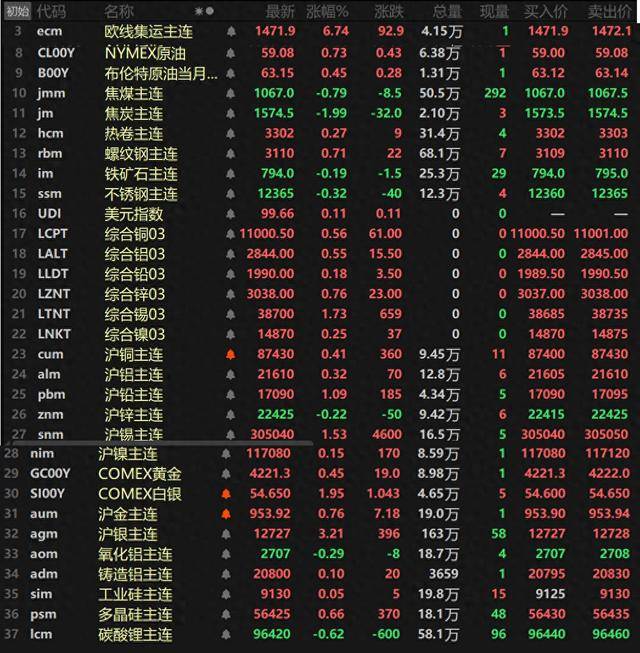
Metal Market - Domestic base metals experienced a general increase, with the exception of zinc, which fell by 0.22%. Lead and tin both rose over 1%, with lead increasing by 1.09% and tin by 1.53%. Other metals saw gains of less than 1% [1] - In the external market, base metals collectively rose, with tin leading at a 1.73% increase, while other metals had gains of less than 1% [1] - Precious metals also saw gains, with COMEX gold rising by 0.45% and COMEX silver increasing by 1.95%, reaching a new historical high of $54.65 per ounce. Domestic gold rose by 0.76% and silver by 3.21%, with silver also hitting a historical high of 12,755 yuan per kilogram [1] Macro Environment - The People's Bank of China conducted a net withdrawal of 73.7 billion yuan through reverse repos, maintaining the operation rate at 1.40% [4] - Beijing's new action plan aims to develop AI-enabled smart terminal products, including AI televisions, smartphones, and glasses, to enhance user experience through real-time content generation and personalized recommendations [4] - Fujian province is implementing a new round of state-owned enterprise reforms to strengthen and optimize state-owned enterprises and capital, focusing on strategic restructuring and enhancing core competitiveness [5][6] Currency and Oil Market - As of 15:06, the USD/CNY exchange rate was 7.0789, with the dollar index rising by 0.11% to 99.66, amid expectations of a potential rate cut by the Federal Reserve in December [7] - Oil prices increased, with WTI rising by 0.73% and Brent by 0.45%, as investors monitor developments in the Russia-Ukraine peace talks and the upcoming OPEC+ meeting [9]

黑色商品日报-20251128
Guang Da Qi Huo· 2025-11-28 05:17
黑色商品日报 黑色商品日报(2025 年 11 月 28 日) 一、研究观点 | 品种 | 点评 | 观点 | | --- | --- | --- | | 钢材 | 螺纹钢:昨天螺纹盘面窄幅波动,截止日盘螺纹 2601 合约收盘价格为 3093 元/吨,较上一交易收盘价格 | 窄幅整理 | | | 下跌 6 元/吨,跌幅为 0.19%,持仓减少 13.1 万手。现货价格稳中有跌,成交维持低位,唐山地区迁安普 | | | | 方坯价格下跌 10 元/吨至 2970 元/吨,杭州市场中天螺纹价格持平于 3180 元/吨,全国建材成交量 9.27 万 | | | | 吨。据我的钢铁数据,本周全国螺纹产量环比回落 1.88 万吨至 206.08 万吨,同比减少 21.8 万吨;社库环 | | | | 比回落 15.27 万吨至 384.75 万吨,同比增加 82.36 万吨;厂库环比回落 6.59 万吨至 146.73 万吨,同比增加 | | | | 1.48 万吨;螺纹表需环比回落 2.85 万吨至 227.94 吨,同比增加 2.59 万吨。螺纹产量小幅回落,库存维持 | | | | 较明显下降,表需小幅回落,供 ...
综合晨报-20251128
Guo Tou Qi Huo· 2025-11-28 02:56
Report Industry Investment Ratings No relevant content provided. Core Views of the Report - The market shows mixed trends across various commodities, with geopolitical factors, supply - demand dynamics, and policy expectations influencing prices. Each commodity has its own unique supply - demand situation and price - influencing factors, and the overall market lacks a unified trend [2][4][21] - For financial products such as stocks and bonds, geopolitical and macro - economic factors also play important roles, and short - term caution is recommended [48][49] Summary by Commodity Categories Energy - **Crude Oil**: Night - time international oil prices rose slightly. Market expectations for a cease - fire in the Russia - Ukraine conflict are still wavering. OPEC may maintain its production policy, and the increasing expectation of a December Fed rate cut boosts oil prices [2] - **Fuel Oil & Low - sulfur Fuel Oil**: The fuel oil market showed a differentiated performance overnight. High - sulfur fuel oil rose slightly with the cost of crude oil, while low - sulfur fuel oil was weak. In the future, the overall contradiction is limited, with high - sulfur fuel oil affected by geopolitical risks and low - sulfur fuel oil having sufficient supply [22] - **Asphalt**: The commercial inventory of asphalt is decreasing faster. The December production plan is lower year - on - year and month - on - month. The demand will decline seasonally, and the market is expected to be loose at the end of the year, putting pressure on prices [23] Metals - **Precious Metals**: Overnight, precious metals showed a volatile performance. The uncertainty of interest rate cuts and geopolitical prospects led to high - level oscillations. On the first day of the listing of platinum futures, the price fluctuated sharply, and attention should be paid to the strategy of shorting volatility [3] - **Base Metals**: - **Copper**: The average copper price this year was strong. Next year, the growth rate gap between supply and demand may narrow, and the price increase will be supported by factors such as liquidity and demand for green carbon and intelligent computing. Short - term, a small amount of chasing up can be attempted [4] - **Aluminum**: Overnight, Shanghai aluminum continued to oscillate. The inventory decreased, and the demand has resilience but lacks highlights. The industry has limited contradictions, and the price will mainly oscillate [5] - **Zinc**: Overseas funds have a strong influence. The domestic ore supply is tightening, and the bottom support is strong, but the consumption outlook is under pressure. The short - term price will oscillate in the range of 22,200 - 23,000 yuan/ton [8] - **Lead**: The LME lead inventory is at a high level, and the decline of the external market has slowed down. The domestic supply and demand are relatively balanced, and the price will oscillate in the range of 16,800 - 17,500 yuan/ton [9] - **Nickel & Stainless Steel**: Shanghai nickel oscillated, and the market sentiment was cold. The cost support of stainless steel continued to decline, and the price is recommended to be shorted on rebounds [10] - **Tin**: Overnight, LME tin turned down. Shanghai tin broke through 300,000 yuan and then adjusted. Pay attention to the inventory changes this week. It is recommended to short on rallies and hedge risks with call options [11] - **Ferroalloys**: - **Silicon Manganese**: The market has an increasing expectation of coal mine supply guarantee. The production is at a relatively high level, the inventory is slowly increasing, and the bottom support is expected to move down [19] - **Silicon Iron**: The market has an increasing expectation of coal mine supply guarantee. The demand has resilience, the supply is at a high level, and the bottom support will be tested [20] Chemicals - **Urea**: The urea futures price continued to rise, and the spot market rose slightly. The supply is sufficient, and the demand has increased in the short term, but the supply - demand surplus pattern is expected to continue [24] - **Methanol**: There is a game between strong expectations and weak reality. The short - term can consider unilateral long or positive spread trading, but the high inventory in ports may suppress the price increase [25] - **Pure Benzene**: The US gasoline crack spread has weakened. The domestic device load has been slightly adjusted down, and the price will oscillate [26] - **Benzene Ethylene**: The supply - demand structure has been slightly improved, the profit has been repaired, and the price will continue to oscillate [27] - **Polypropylene, Plastic & Propylene**: The supply of propylene in Shandong is slightly tight, and the price has risen, but the cost pressure on downstream products may limit the increase. The supply of polyethylene is stable, and the demand is weakening [28] - **PVC & Caustic Soda**: PVC is oscillating. The export situation may improve, and the price may stop falling and stabilize. Caustic soda is also oscillating, with high inventory and weak demand [29] - **PX & PTA**: The short - term supply - demand of PX is weakening, but the medium - term is expected to be strong. PTA is driven by cost, and the processing margin is expected to be repaired [30] - **Ethylene Glycol**: The weekly output has decreased, and the supply has improved marginally, but the medium - term is still weak [31] - **Short - fiber & Bottle - grade Chip**: Short - fiber has no new investment pressure, and the price fluctuates with raw materials. Bottle - grade chip demand is weakening, and the cost is the main driving factor [32] Agricultural Products - **Grains & Oilseeds**: - **Soybeans & Soybean Meal**: The domestic soybean supply is sufficient, the soybean meal inventory is at a high level, and the supply is loose. Pay attention to the signing and implementation of the Sino - US economic and trade agreement and South American weather [36] - **Soybean Oil & Palm Oil**: The overseas supply - demand of palm oil is weak, but the marginal negative factors have eased. Soybean oil is affected by the price of US soybeans, and attention should be paid to US soybean exports and South American weather [37] - **Rapeseed Meal & Rapeseed Oil**: The focus of the rapeseed market is on the customs clearance and crushing of Australian rapeseeds. The external market has a short - term boost to rapeseed meal, and a wait - and - see strategy is recommended [38] - **Corn**: The north port corn price is firm, and the supply and transportation of northeast corn are a concern. The downstream inventory is low, and the replenishment intention has increased. Wait for the signing of the Sino - US trade agreement and pay attention to the sales progress of new corn in the northeast [40] - **Livestock & Poultry Products**: - **Hogs**: The number of fertile sows has decreased, and the industry is reducing production capacity. The short - term price is weak, and the long - term may form a double - bottom pattern [41] - **Eggs**: The market is trading on the expectation of a decline in future inventory. The long - term supply pressure is expected to ease, and the fundamentals are expected to improve [42] - **Cash Crops**: - **Cotton**: US cotton has rebounded. The domestic cotton cost provides support, and the sales progress is fast. The cotton yarn market is weak, and a wait - and - see strategy is recommended [43] - **Sugar**: The international sugar supply is sufficient. The expected sugar production in Guangxi in the 25/26 season is relatively good, and attention should be paid to the production situation [44] - **Apples**: The futures price is oscillating at a high level. The short - term price is strong, but the long - term may face inventory pressure. Pay attention to the de - stocking situation [45] - **Wood**: The futures price is oscillating. The low inventory provides support, and a wait - and - see strategy is recommended [46] - **Paper Pulp**: The futures price has continued to fall. The domestic port inventory is at a high level, the supply is loose, and the demand is weak. A wait - and - see strategy is recommended [47] Others - **Shipping**: The container shipping index (European line) shows a differentiated trend. The far - month contract is under pressure from the resumption of navigation expectations, and the near - month contract is dragged down by the weak spot market. Consider the reverse spread strategy for near - month contracts [21] - **Financial Products**: - **Stock Index**: The stock market closed down, and the futures index also fell. Geopolitical and macro - economic factors have an impact. A wait - and - see and defensive strategy is recommended [48] - **Treasury Bonds**: The treasury bond futures closed down, and the market is trading lightly. The price will oscillate weakly in the range, and cautious operation is recommended [49]
大宗商品中观轮动系列(一):从板块到品种簇:贝叶斯动态框架
Guo Tai Jun An Qi Huo· 2025-11-27 10:32
Report Overview - The report focuses on the meso - level rotation of commodities, aiming to combine "subjective + quantitative" concepts. It provides a theoretical foundation for subsequent model building [1][63]. Industry Investment Rating - No industry investment rating is provided in the report. Core Views - The report emphasizes the construction of a dynamic cognitive system for investment. It analyzes the rotation phenomena and mechanisms in the equity and commodity futures markets, and constructs a research framework for macro - and fundamental - valuation rotation in the inventory cycle. It also quantifies the meso - level rotation targets as commodity "variety clusters" [1][63][64]. Summary by Directory 1. Significance of Meso - level Research - In the financial market, a dynamic cognitive system is needed for investment. Since 2022, the Chinese commodity futures market has changed, with lower volatility and reduced effectiveness of factors. Research on meso - level "commodity collections" can avoid co - decline risks, capture structural opportunities, and identify potential trends [3]. 2. Meso - level Rotation in the Equity Market 2.1 Rotation Phenomenon in the Equity Market - The size premium and value premium in the Fama - French three - factor model are core factors for explaining stock return differences, providing a theoretical basis for style rotation [4]. 2.2 Formation Mechanism: Cycle Alternation and Capital Game - **Cycle Alternation (Top - down)**: Style rotation in the equity market stems from the cycle of the economic cycle. Different stages of the economic cycle lead to different dominant styles, such as small - cap and growth styles in the early recovery stage, and large - cap and value styles in other stages [10][12]. - **Capital Game (Bottom - up)**: Style rotation is driven by the game between existing and marginal funds. Existing funds lead to style differentiation, marginal funds strengthen the style, and style conversion occurs when the valuation deviates from the fundamentals [15][16]. 3. Meso - level Rotation in the Commodity Futures Market 3.1 Rotation Phenomenon in the Commodity Futures Market - By analyzing the rotation speed, intensity, long - short suitability of the first and last positions, and the distribution of the first and last positions of commodity futures market indices, it is verified that there is a rotation phenomenon in the commodity futures market. The first - place average return is 5.79%, the last - place is - 4.43%, and the average difference is 10.22% [22][26][29]. 3.2 Formation Mechanism: Game between Reality and Expectation in the Inventory Cycle - The meso - level rotation in the commodity futures market is driven by the transfer of the main contradiction in the inventory cycle. Different stages of the inventory cycle have different logics, such as "reality - driven, expectation - following" in the passive de - stocking stage and "expectation - driven, reality - pressured" in the passive re - stocking stage [30][33][34]. 3.3 Dynamic Framework: Rotation of Macro - financial and Fundamental Valuations - A preliminary research framework for macro - and fundamental - valuation rotation in the inventory cycle is constructed based on Bayesian thinking. The reality side is represented by fundamental valuation, and the expectation side is represented by macro - valuation [40][44]. 4. From Sector to Variety Cluster Rotation - Sector indices have limitations, so variety clusters are introduced. By considering the industrial chain and return clustering, 16 variety clusters are divided, including those in the black, non - ferrous, energy - chemical, agricultural, and precious metal sectors. The variety clusters have lower correlation and better risk - dispersion properties [49][57][60]. 5. Summary - The report combines "subjective + quantitative" concepts. It analyzes the rotation phenomena and mechanisms in the equity and commodity markets, constructs a research framework, and divides variety clusters, providing a theoretical basis for subsequent model building [63][64][65].