科技

Search documents
四大科技巨头今年欲砸6500亿美元加码AI,分析师:别为AGI“倾家荡产”
Di Yi Cai Jing· 2026-02-08 06:49
美国科技巨头大举"撒钱"的举动正令资本市场感到忧虑。 上周,在亚马逊宣布计划向人工智能(AI)及相关基础设施领域注资2000亿美元后,股价于6日早盘应 声下跌近9%。然而,市场的冷静反应并未浇灭这场AI投资热潮。根据谷歌、微软、亚马逊和Meta在近 日披露的最新资本支出计划,这四大科技巨头在2026年的开支总额预计将高达约6500亿美元。 在理论定义中,AGI被视为AI的终极状态,意味着系统能在会计、法律等多个白领专业领域达到并取代 人类的智力水平。 而驱动这些巨头"不计成本"投入的核心逻辑,很大程度上寄希望于通用人工智能(AGI)的实现,以及 随之而来的数万亿美元潜在回报。正如硅谷风投机构红杉资本(Sequoia Capital)合伙人卡恩(David Cahn)所言:"唯有AGI的实现,才能证成未来十年这一量级的投资提案。" 然而,业内对AGI实现路径正涌现出越来越多的怀疑。彭博行业研究高级中国科技分析师罗伯特·李 (Robert Lea)在接受第一财经记者采访时表示,鉴于当代AI模型存在根本性的逻辑缺陷且方法论较为 单一,仅仅通过扩展现有模型,即行业目前盛行的做法,不太可能实现AGI。 模式识别并非真智 ...




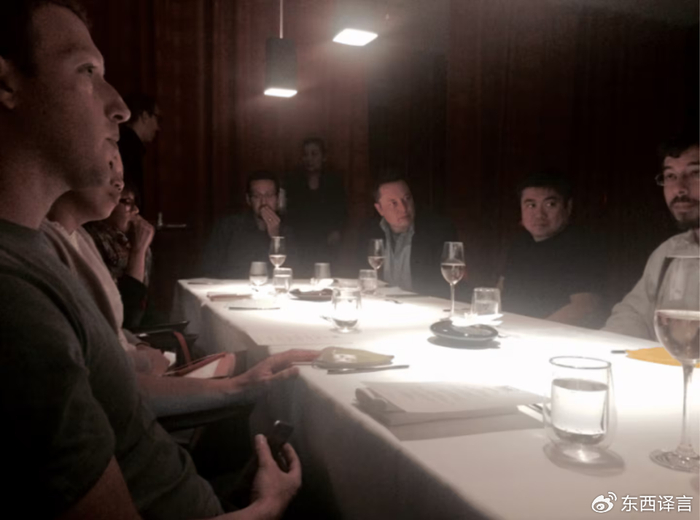
马斯克、扎克伯格与爱泼斯坦共进晚餐照曝光,“很打脸”
Xin Lang Cai Jing· 2026-02-08 02:36
当地时间2月7日,美国一家报纸发现了一张很难不引发关注的照片,照片来自美国司法部最新公布的与 杰弗里·爱泼斯坦有关的文件。 杂志的文章公开后,扎克伯格的代表随即发表声明,称:"马克曾在一次表彰科学家的晚宴上与爱泼斯 坦有过一面之缘,那次晚宴并非由爱泼斯坦组织。晚宴之后,马克再也没有与爱泼斯坦联系过。" 埃隆·马斯克、马克·扎克伯格等知名的科技界大佬出现在了照片中,在场的熟面孔中,疑似还有扎克伯 格的华裔妻子普莉希拉·陈。 这张照片出现在一封电子邮件中。2015年8月2日,爱泼斯坦给他的朋友彼得·阿提亚(现为CBS的"明 星"撰稿人),发了一封邮件,称他当晚将与马斯克、扎克伯格和彼得·蒂尔(被称为"硅谷风投教父") 共进了晚餐。第二天,他给自己发了一张扎克伯格、马斯克和其他人围坐在桌旁的照片。 18天后,爱泼斯坦再次提到了这场晚餐,他在给凯悦酒店执行董事长汤姆·普利兹克的电子邮件中,把 晚宴描述为"疯狂的",进而还说道:"我和扎克伯格、马斯克(原文写的是:mu=k)、蒂尔·霍夫曼 (LinkedIn联合创始人)一起吃饭了,很疯狂。" 值得注意的是,这场汇聚了数位科技界名流的晚餐会,早在2019年就被《名利场》杂 ...

2026年2月6日,黄金比特币美股一夜全崩,超过43万人一夜爆仓,爆掉近21亿美元
Sou Hu Cai Jing· 2026-02-07 04:19
Core Viewpoint - The financial markets experienced a significant crash on February 6, 2026, driven by a sudden shift in monetary policy expectations, high leverage trading, and a retreat of risk aversion, leading to widespread sell-offs across various asset classes [1][8]. Group 1: Precious Metals - Silver prices plummeted over 19% in a single day, marking the most severe drop in five years, with domestic futures contracts hitting the limit down [1] - Gold prices fell below the critical psychological level of $4,800 per ounce, reaching a low of $4,780, with a daily decline of 4.08% [3] Group 2: Energy Markets - WTI crude oil futures dropped over 2%, falling below $64 per barrel, while Brent crude also declined over 2%, losing the $68 mark [3] Group 3: Stock Markets - The Dow Jones index fell nearly 600 points, a decrease of approximately 0.97%, while the Nasdaq composite index saw a deeper drop of 1.39% [3] - Major tech companies, including Apple, Microsoft, Alphabet, and Nvidia, all experienced declines, exacerbated by disappointing earnings reports [3] Group 4: Cryptocurrency Market - Bitcoin's price fell below the critical support level of $70,000, dropping to $67,000 with a maximum decline of over 12% within 24 hours [4] - Over 430,000 investors were liquidated, with total losses amounting to $2.069 billion [4] Group 5: Key Negative Factors - The first factor was a 180-degree shift in expectations regarding the Federal Reserve, with potential hawkish leadership signaling a faster reduction of the balance sheet and prolonged high interest rates [5] - The second factor involved high leverage among investors, particularly in precious metals and cryptocurrencies, which led to forced liquidations as margin requirements were raised [6] - The third factor was a retreat of risk aversion and tightening liquidity, as geopolitical tensions eased and investors sold off positions in gold and silver to cover losses in other markets [6] Group 6: Market Dynamics - The market exhibited characteristics of liquidity drying up, with a lack of buying depth leading to significant sell orders being executed at lower prices [7] - Uncertainty in U.S. economic data, including a delay in the non-farm payroll report and rising layoff announcements, contributed to market apprehension [7] - The overall environment indicated a tightening of global liquidity, with major central banks signaling a shift away from ultra-loose monetary policies [7]
景林最新美股持仓曝光:谷歌升至第一大重仓 大幅减持英伟达
Xin Lang Cai Jing· 2026-02-06 21:56
来源:第一财经 景林资产向美国证交会(SEC)提交的最新13F表格数据显示,在截至去年12月31日的第四季度,其美 股持仓市值约为40.45亿美元,其中,谷歌(GOOG.O)升至第一大重仓股。与此同时,景林在去年最后一 个季度大幅减持英伟达(NVDA.O)及Meta Platforms(META.O)。当前,其前三大重仓股分别为谷歌 (GOOG.O)、Meta Platforms(META.O)及拼多多(PDD.O)。 ...

[2月6日]指数估值数据(港股也有风格轮动吗;港股指数估值表更新;投顾四周年成绩单来了)
银行螺丝钉· 2026-02-06 14:26
Core Viewpoint - The article discusses the recent performance of the Hong Kong stock market, highlighting the rotation between growth and value styles, and the impact of external market fluctuations on local indices [2][8]. Market Performance - The overall market experienced a slight decline, closing at 3.9 stars [1]. - Large-cap stocks fell, while mid and small-cap stocks showed minor fluctuations [2]. - Growth styles, particularly in the ChiNext, initially rose but ended the day lower [2]. Style Rotation - The article notes that the Hong Kong market has seen several style rotations since September 2024, with growth styles being strong from September 2024 to September 2025, where tech stocks' earnings doubled year-on-year, marking the fastest growth in five years [2]. - In contrast, value styles, such as the Hang Seng Dividend Low Volatility Index, saw a more modest increase of around 30% during the same period [2]. - From September 2025 onwards, growth styles faced a correction, with the tech index retreating approximately 19% [2]. Investment Strategy - The article emphasizes the importance of balancing investments between growth and value styles, adjusting allocations based on valuation metrics [10][11]. - It suggests that during periods of market fluctuations, investors should buy undervalued assets and sell overvalued ones, maintaining a patient approach during less volatile times [12][13]. Valuation Insights - The article provides a summary of the valuation metrics for various Hong Kong indices, indicating that the current star rating for the Hong Kong market is around 3 stars [14][16]. - It includes specific valuation data for indices such as the H-share Index and the Hang Seng Index, highlighting their price-to-earnings ratios and dividend yields [15].
中期选举行情爆发在即 美银看好中小盘股成美股新主线
智通财经网· 2026-02-06 13:07
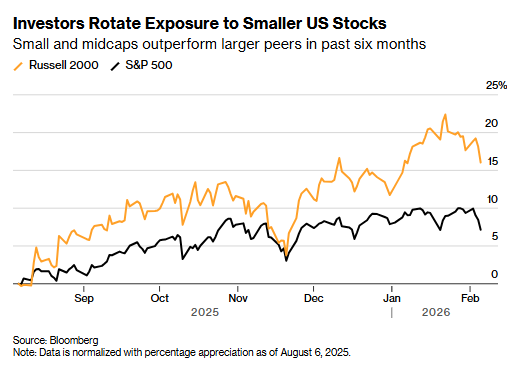
Group 1 - The core viewpoint is that as the U.S. midterm elections approach, the attractiveness of major tech companies is declining, making small and mid-cap stocks the best investment choice [1][2] - The U.S. Bank strategist team, led by Michael Hartnett, indicates that aggressive intervention policies by President Trump to lower costs in energy, healthcare, credit, housing, and electricity are putting pressure on energy giants, pharmaceutical companies, banks, and large tech sectors [1] - The report suggests a strategy of going long on the real economy sectors while shorting Wall Street financial sectors until Trump's approval ratings rise due to a shift towards livelihood issues [1] Group 2 - Investors are accelerating their exit from tech stocks due to concerns over the impact of artificial intelligence (AI) technology, seeking investments that will benefit from the Trump administration's cost-lowering measures [2] - The Nasdaq 100 index recorded its largest three-day decline since April, dropping 4.6%, while the S&P 500 index has underperformed its equal-weighted index by 4.2 percentage points year-to-date [2] - The Bank of America notes a significant shift in corporate business models from "light asset" to "heavy asset," posing a major threat to the market dominance of the so-called "seven giants" in tech [2] - It is projected that AI capital expenditures for large tech companies will reach approximately $670 billion this year, accounting for 96% of their cash flow, compared to only 40% in 2023 [2] - The era of large-scale stock buybacks for these companies is considered to be over, as their balance sheet advantages diminish [2] - Hartnett has been optimistic about international stocks since late 2024, a prediction that has proven to be highly prescient as U.S. stock performance continues to lag behind global markets [2]

瑞银Q4持仓:批量减持明星科技股 “七巨头”仅Meta获增持
美股IPO· 2026-02-06 10:33
Core Insights - UBS reported a total market value of $620 billion in Q4, reflecting a decrease of 5.65% from the previous quarter [3] - The firm made 1,347 new stock purchases and increased holdings in 4,181 stocks, while reducing holdings in 4,520 stocks and completely selling out of 1,188 stocks [3] - The top ten holdings accounted for 14.52% of the total market value [3] Top Holdings - NVIDIA (NVDA.US) is the largest holding with approximately 77.49 million shares valued at $14.45 billion, representing 2.34% of the portfolio, down 11.47% from the previous quarter [1][4] - Microsoft (MSFT.US) ranks second with about 28.04 million shares valued at $13.56 billion, making up 2.20% of the portfolio, a decrease of 7.64% [2][4] - Apple (AAPL.US) is third with around 44.55 million shares valued at $12.11 billion, accounting for 1.96% of the portfolio, down 10.57% [2][4] - Broadcom (AVGO.US) is fourth with approximately 23.77 million shares valued at $8.23 billion, representing 1.33% of the portfolio, an increase of 0.88% [2][4] - Amazon (AMZN.US) is fifth with about 34.61 million shares valued at $7.99 billion, making up 1.30% of the portfolio, down 4.57% [2][4] Notable Changes - UBS reduced its holdings in several tech stocks, including Micron Technology (MU.US) by 16.14%, TSMC (TSM.US) by 15.56%, Oracle (ORCL.US) by 1.91%, AMD (AMD.US) by 24.28%, and Western Digital (WDC.US) by 37.92% [5] - The firm slightly increased its position in Meta (META.US) by 0.85% among the "seven giants" [4] - New positions were established in Total (TTE.US) and increased holdings in Walmart (WMT.US), Alibaba (BABA.US), and Bitcoin holding company Strategy (MSTR.US) [5] Trading Activity - The top five purchases included Microsoft call options, SPDR S&P 500 ETF (SPY.US), MP Materials call options, UBS Group AG, and iShares 7-10 Year Treasury ETF put options [5][6] - The top five sales included SPDR S&P 500 ETF put options, Invesco QQQ Trust put options, iShares iBoxx High Yield Corporate Bond put options, Microsoft, and NVIDIA [5][6]


南方基金旗下恒生科技ETF南方(520570)获资金逆势加仓
2 1 Shi Ji Jing Ji Bao Dao· 2026-02-06 06:24
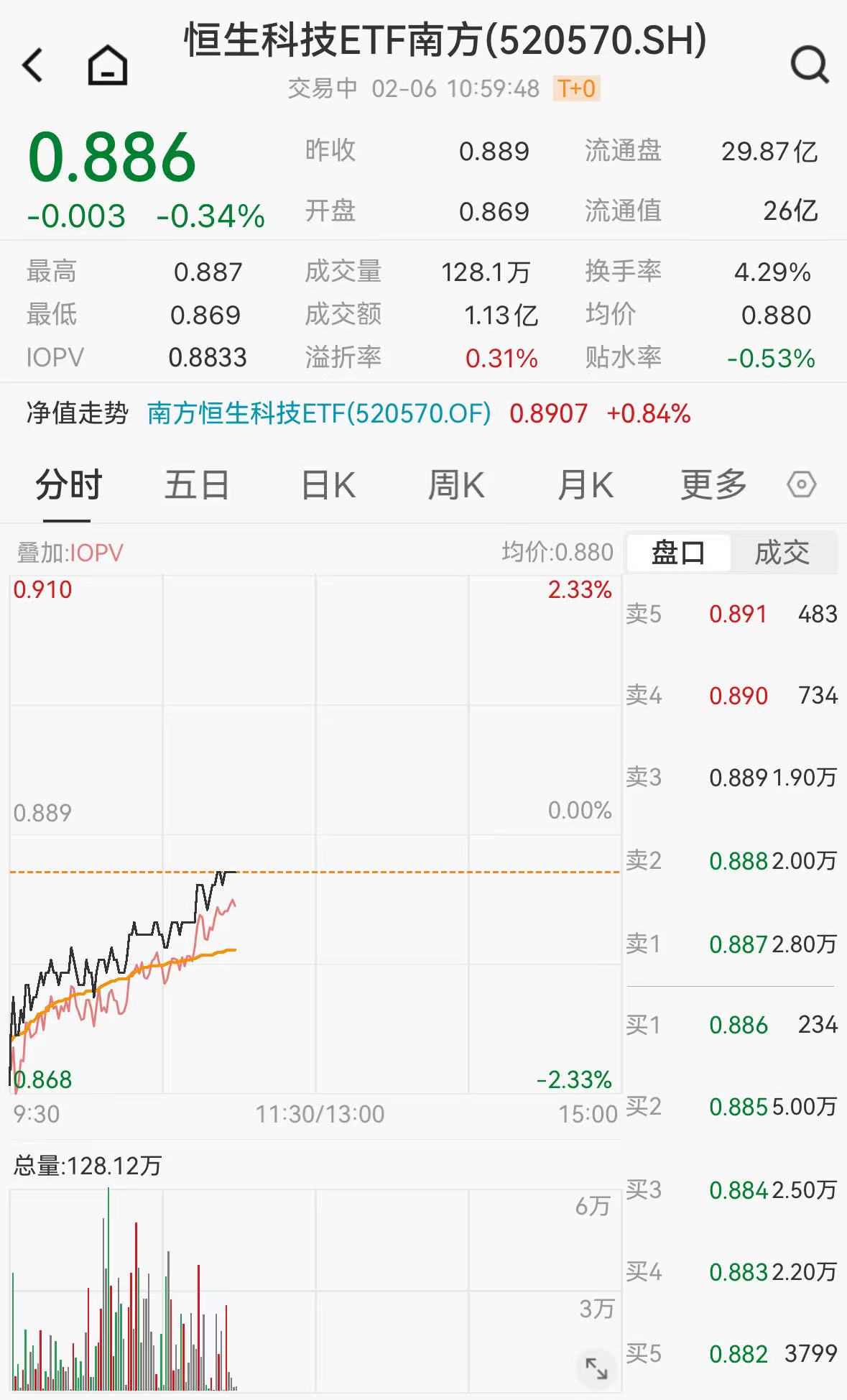
Core Viewpoint - The Hong Kong stock market, particularly the Hang Seng Technology Index, is experiencing a correction, but there is a notable trend of capital inflow into technology ETFs, indicating strong medium to long-term investment interest in the sector [1][2]. Group 1: Market Performance - On February 6, the Hang Seng Technology Index opened lower, dropping over 2% at one point, but later narrowed its losses, closing at 5374.24 [1]. - The Southbound Fund saw a net purchase of approximately HKD 61.6 billion on February 4, with significant inflows into major tech stocks like Tencent and Alibaba [1]. Group 2: ETF Activity - The Southbound Hang Seng Technology ETF (520570) experienced active trading with a transaction amount of about HKD 113 million and a turnover rate of approximately 4.29% [1][3]. - The ETF had a net subscription of around HKD 77.85 million on February 4, ranking 17th out of 212 in net inflows among cross-border ETFs, with a cumulative net inflow of about HKD 78.75 million over the past five days [1]. Group 3: Valuation and Investment Sentiment - Analysts believe that the current valuation of the Hong Kong technology sector is at a near five-year low, with a high safety margin due to the historical performance gap between the Hang Seng Technology Index and the ChiNext Index [1]. - The acceleration of AI commercialization and improvements in the policy environment are expected to support the long-term recovery potential of the index [2].
恒生科技ETF南方(520570)获资金逆势加仓
2 1 Shi Ji Jing Ji Bao Dao· 2026-02-06 06:16
Group 1 - The Hong Kong stock market opened lower on February 6, with the Hang Seng Tech Index dropping over 2% before narrowing its losses, closing at 5349.48 [1] - The Southern Fund's Hang Seng Tech ETF (520570) experienced active trading, with a transaction amount of approximately 96.62 million yuan and a turnover rate of about 3.70% [1] - During this adjustment phase, there was a notable trend of capital accumulation, with the ETF seeing a net subscription of around 77.85 million yuan on February 4, ranking 17th out of 212 in net inflows among cross-border ETFs, and a cumulative net inflow of approximately 78.75 million yuan over the past five days, indicating strong medium to long-term investment interest in the Hong Kong tech sector [1] Group 2 - Brokerages generally believe that the current valuation of the Hong Kong tech sector is at a near five-year low, with the Hang Seng Tech Index's yield differential compared to the ChiNext Index at a historical high, suggesting a high margin of safety [1] - The Hong Kong tech sector occupies a core position in AI application and commercialization, with strong certainty in profit growth, supported by expectations of a weak US dollar and stabilization of the RMB, which may jointly bolster the sector's valuation recovery [1] - On February 4, southbound trading saw a net purchase of approximately 6.16 billion HKD in Hong Kong stocks, with major tech leaders like Tencent and Alibaba receiving significant net inflows, and on February 5, net purchases exceeded 8 billion HKD [1]
特朗普下决心,和中国稀土拼到底!金库门刚开就烧掉120亿美元
Sou Hu Cai Jing· 2026-02-06 04:51
Group 1 - The core objective of Trump's $12 billion emergency strategy is to reduce U.S. dependence on Chinese rare earths and ensure a competitive edge in geopolitical matters [1][3] - Key initiatives include establishing an emergency stockpile of strategic minerals like rare earths, gallium, and cobalt, with a goal of ensuring at least 60 days of supply during crises [3] - Funding sources for the plan include $2 billion from private capital and up to $10 billion in loans from the Export-Import Bank of the United States [3] Group 2 - The plan aims to elevate critical minerals to a national security priority, leading to reforms such as simplifying mining permits and allowing controversial deep-sea mining [3] - The U.S. Department of Defense and Department of Energy have invested hundreds of millions in rare earth producers, while the Commerce Department has acquired a 10% stake in a U.S. rare earth company [3] - Japan has responded positively to the plan, committing up to $55 billion to deepen supply chain ties with the U.S., although the terms of investment have faced domestic criticism [7] Group 3 - The U.S. relies heavily on imports for critical minerals, with 12 minerals fully imported and 29 minerals over 50% imported by 2024, raising concerns about national security [5] - Analysts express skepticism about the feasibility of quickly reducing dependence on China, despite the potential long-term market stabilization from the plan [5] - Japanese companies investing in U.S. rare earth projects face challenges, as they lack control over key technologies and processes, leading to concerns about becoming low-end participants in the supply chain [9] Group 4 - Western countries claim to have mastered high-purity rare earth separation technologies, with some companies announcing independence from Chinese supply chains [9] - However, practical challenges remain, including achieving the required purity levels for high-end applications, which are critical for defense systems like the F-35 [9] - China's competitive advantage in rare earths stems from decades of investment and a comprehensive industrial ecosystem, making it difficult for other countries to replicate [9]