电气机械

Search documents
核心CPI同比创近14个月以来新高,怎么看?
Di Yi Cai Jing· 2025-07-09 03:13
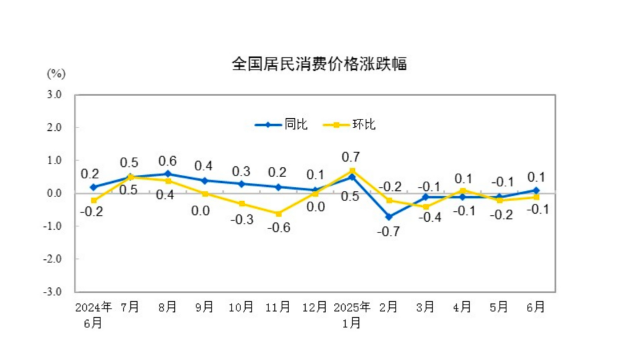
Group 1: CPI Trends - In June, the Consumer Price Index (CPI) turned from a decline to an increase of 0.1% year-on-year after four months of negative growth, influenced by the recovery of industrial product prices [1][3] - The core CPI, excluding food and energy, rose by 0.7% year-on-year, marking a 14-month high, indicating effective policies to expand domestic demand and promote consumption [1][3] Group 2: PPI Trends - The Producer Price Index (PPI) decreased by 0.4% month-on-month, with a year-on-year decline of 3.6%, which is an increase in the rate of decline by 0.3 percentage points compared to the previous month [1][5] - The decline in PPI is attributed to seasonal price decreases in domestic raw material manufacturing, increased green electricity leading to lower energy prices, and price pressures in export-oriented industries [5][6] Group 3: Industry-Specific Insights - In the automotive sector, prices for both gasoline and new energy vehicle manufacturing increased by 0.5% and 0.3% month-on-month, respectively, with year-on-year declines narrowing by 1.9 and 0.4 percentage points [1] - The photovoltaic equipment and electronic components manufacturing prices fell by 10.9% year-on-year, with the decline narrowing by 1.2 percentage points [1] - High-tech industries such as integrated circuit packaging and testing saw price increases of 3.1% year-on-year, indicating a growth in new production capacities and innovation [6] Group 4: Policy Implications - The government aims to balance the expansion of domestic demand with supply-side structural reforms to improve market price order and promote reasonable price recovery [7][8] - The effectiveness of macroeconomic policies, particularly those supporting the real estate sector, will significantly influence future industrial product price trends [6]

读研报 | “反内卷”,市场这样划重点
中泰证券资管· 2025-07-08 09:54
Core Viewpoint - The recent discussions on "anti-involution" are driven by policy guidance and market expectations, with a focus on promoting product quality and orderly competition while addressing low-price chaos in various industries [2] Group 1: Impacted Industries - The industries most affected by the current "anti-involution" include upstream raw materials related to real estate and infrastructure (such as coal, steel, and cement), equipment manufacturing overlapping with new productive forces (including automotive, electrical machinery, and electronic device manufacturing), and certain downstream consumer goods sectors (such as pharmaceuticals and food manufacturing) [3] - Emerging industries may experience a greater impact from "anti-involution," as recent government reports emphasize the need to cultivate new and future industries while addressing homogeneous competition in sectors like new energy vehicles and photovoltaics [4] Group 2: Policy Implementation and Observations - The consensus is that the approach to "anti-involution" will be moderate, considering the significant presence of private enterprises in affected industries, with many sectors having a high proportion of private companies [6] - Employment concerns are also crucial, as the new industries most affected by "involution" employ a substantial number of workers, making abrupt capacity reductions potentially harmful to job stability [6] - The market is currently in a wait-and-see mode regarding the form and intensity of "anti-involution" policies, with future market movements dependent on clearer policy signals [7] Group 3: Need for Comprehensive Policy Support - High-intensity capacity reduction may require comprehensive policy support, balancing social stability and the specifics of capacity overhang, including timelines for exit and risk mitigation strategies [8] - Observations should not only focus on supply-side changes but also on demand-side updates, as changes in supply structure are necessary but not sufficient for industry recovery [8]
券商首席热议!“反内卷”如何提振市场内生动力?
券商中国· 2025-07-08 08:23
Core Viewpoint - The concept of "anti-involution" is essential for promoting sustainable and healthy industrial development, as it addresses the negative impacts of involution on corporate profits and industry growth [2][3][10]. Group 1: Impact on Industry Development - Involution leads to a decline in corporate profits and creates issues in industry development, contradicting the goal of high-quality growth [2][3]. - Comprehensive governance of involution is crucial to break the downward pressure on inflation and promote an upward economic cycle [3]. - Encouraging companies to focus on technological innovation and high-quality products is necessary for sustainable development [2][3]. Group 2: Global Perspective - Chinese companies possess strong global supply capabilities, with manufacturing value added accounting for about 30% of the global total [4]. - The "anti-involution" approach can help establish stable supply-demand relationships in the context of rising de-globalization and supply chain fragmentation [4]. Group 3: Implementation Strategies - Current "anti-involution" efforts rely on industry self-regulation, but progress may be slow [5]. - The government is expected to introduce specific plans to address structural contradictions in key industries, with a focus on quantitative KPIs [6]. - The approach will be more gradual and tailored to different industries, avoiding a one-size-fits-all strategy [7]. Group 4: Focus Areas and Beneficiaries - Key areas for "anti-involution" include addressing supply-demand imbalances in sectors like new energy vehicles, photovoltaic components, and e-commerce platforms [9]. - Industries such as photovoltaic, new energy vehicles, and lithium battery storage are expected to benefit from improved competitive dynamics under "anti-involution" policies [9][10]. - The potential for mergers and acquisitions in state-owned enterprises is higher, while private sector-led industries may focus on self-regulation and price stabilization [9].
中国行业:分化加剧,破局在途
Hua Tai Qi Huo· 2025-07-06 12:56
Report Summary 1. Investment Rating The provided content does not mention the industry investment rating. 2. Core Viewpoints - In 2025, the core contradiction throughout the upstream, midstream, and downstream industries is the "structural gap during the new - old kinetic energy conversion period." In the first half of the year, the industry was affected by external uncertainties, with intensified internal differentiation, and overall prosperity relied on policy support. In the second half of the year, with the "two new" policies further boosting domestic demand and upgrading the industrial structure, the industry is expected to achieve a systematic leap from "quantity" to "quality" expansion [2][7]. 3. Summary by Directory Market Overview - **Upstream Materials**: In H1 2025, raw material prices were under pressure due to weak demand and Sino - US trade conflicts, showing significant differentiation. In H2, the structural differentiation will continue. Enterprises should focus on capacity elimination, tariff negotiations, and climate risks [8]. - **Midstream Manufacturing**: In H1 2025, it presented a differentiated pattern of "traditional under pressure, high - tech doing well." In H2, policies will support both demand and supply - side reforms, and traditional manufacturing is expected to break through cost dilemmas through intelligent and digital transformation [8]. - **Downstream Consumption**: In H1 2025, it showed a "weak recovery" pattern. In H2, the consumption market will continue to be structurally differentiated, and the recovery highly depends on policy implementation efficiency and business model innovation [9][10]. Upstream: Raw Material Price Fluctuations - **H1 2025 Situation**: Raw material prices were under pressure. Metal mining showed a divergence between black and non - ferrous metals; chemical raw materials had multi - directional fluctuations; energy sources like crude oil and coal were more differentiated; most agricultural products were at near - five - year lows [8][15]. - **H2 2025 Outlook**: The price differentiation will continue. Traditional raw materials' rebound depends on supply - side reforms and policy support, while emerging demand - driven products are more resilient. Enterprises should focus on capacity elimination, tariff reviews, and extreme weather [15][16]. Midstream: Short - term Stabilization, Continued New - Old Kinetic Energy Conversion - **Overall Situation**: In H1 2025, the manufacturing industry was affected by external factors, with traditional manufacturing under pressure and high - tech manufacturing supported by policies. After the tariff war, there was short - term stabilization, and both external and internal demands recovered to some extent [43][53]. - **Traditional Manufacturing**: In H1 2025, profits declined due to over - capacity and weak demand. In H2, policies will expand to more traditional manufacturing sectors, promoting transformation and efficiency improvement [59][75]. - **High - tech Manufacturing**: In H1 2025, it recovered significantly compared to the beginning of the year, benefiting from strong policy support. In H2, it is expected to continue to improve [69][75]. Downstream: Intensified Retail Differentiation, Weak Real Estate Recovery - **Retail Industry**: In H1 2025, online e - commerce grew due to the "trade - in" policy, while traditional physical retail was under pressure. In H2, the differentiation will continue, with emerging formats having growth potential and traditional retail relying on policy and innovation [82][93]. - **Leasing Industry**: In H1 2025, it was in a downturn. In H2, the "price - for - volume" trend will continue, and the de - stocking of commercial land will continue [92][93]. - **Real Estate Industry**: In H1 2025, it achieved "weak stabilization" under policy support. In H2, it is expected to continue to recover slowly with further policy optimization and improved supply - demand balance [99][115].
越南“跪了”!美国阴谋得逞,40%特殊关税瞄准中国,中方回应亮了
Sou Hu Cai Jing· 2025-07-06 02:43
Group 1 - The core point of the news is that the trade agreement between the US and Vietnam includes a 20% tariff on Vietnamese goods and a 40% tariff on goods transshipped through Vietnam, which is perceived as a direct measure against China [1][2][3] - The agreement allows for zero tariffs on US goods entering Vietnam, which may increase competition for local Vietnamese agricultural products, potentially impacting local farmers and related industries [3][6] - The implementation of the agreement may force Vietnamese companies to reassess their supply chains and production strategies, as they will need to comply with new rules regarding product origin verification [3][6] Group 2 - The 40% tariff on transshipped goods is likely to increase operational costs for Chinese companies that rely on Vietnam for assembly to avoid US tariffs, leading to potential shifts in investment strategies [6][7] - The agreement has raised concerns among other countries with similar economic structures to Vietnam, as they fear similar trade measures may be applied to them by the US [9] - The US-Vietnam trade agreement may serve as a precedent for future trade negotiations, where the US could impose similar conditions on other countries to reshape global supply chains and counter China's influence [9]

政策动态点评:“反内卷”的下一步
Minsheng Securities· 2025-07-03 07:40
Group 1: Overview of "Anti-Involution" Concept - The "Anti-Involution" concept was first introduced by the Central Committee a year ago, and it is expected to enter a new phase during the upcoming July Politburo meeting[1] - The focus of the upcoming meeting will be on addressing low-price and disorderly competition among enterprises, indicating a shift in strategy[1] - The "14th Five-Year Plan" is anticipated to be released in the second half of the year, emphasizing the strengthening of domestic circulation and integrating "Anti-Involution" as a key topic[1] Group 2: Gains and Losses in the Past Year - The "Anti-Involution" initiative has gained traction at the top-level design, appearing in several important national meetings, suggesting it will be a main theme in the "14th Five-Year Plan" period[2] - However, issues related to "involutionary" competition remain unresolved, with industrial capacity utilization rates still low, and a significant decline observed in the first quarter of this year[2] - The industrial profit margin has dropped to 5.3% in May, indicating negative impacts on operational efficiency due to "involutionary" competition[2] Group 3: Focus Areas for Current "Anti-Involution" Efforts - Current efforts should concentrate on addressing macroeconomic supply-demand imbalances, particularly in sectors like new energy vehicles, photovoltaic components, and e-commerce platforms[3] - Manufacturing sectors, especially electrical machinery, computer communications, and automotive industries, are identified as having more pronounced "involution" issues[3] - The government is expected to implement targeted measures in these key industries to mitigate "involution" challenges[3] Group 4: Future Directions and Risks - Future "Anti-Involution" strategies will rely on industry self-regulation, but progress may be slow; specific plans for resolving structural contradictions in key industries are anticipated post-July Politburo meeting[4] - Historical experiences from the "Supply-Side Reform" period suggest that quantitative KPIs for capacity reduction will be introduced for key industries[4] - Risks include potential policy shortcomings, unexpected changes in the domestic economic landscape, and unforeseen fluctuations in exports[4]
【广发宏观王丹】6月PMI背后的七个中观线索
郭磊宏观茶座· 2025-07-01 12:50
Core Viewpoint - The manufacturing PMI for June increased slightly by 0.2 points to 49.7, with six sectors in expansion compared to four in May, indicating a modest recovery in the manufacturing sector [1][5][6]. Manufacturing Sector Summary - The sectors leading in absolute prosperity include petroleum, chemical fiber, electrical machinery, specialized equipment, and agricultural products, benefiting from commodity price influences and large-scale equipment updates [1][7]. - The automotive sector saw a 7.8-point increase in export orders, with a 13.4% year-on-year growth in retail sales during the "618" promotion, and the launch of the 2025 new energy vehicle initiative [2][10]. - The pharmaceutical sector's PMI rose by 7.2 points, ending a two-month decline, influenced by policies supporting innovative drug development [2][10]. - Specialized equipment and non-metallic minerals also showed improvements, with increases of 3.3 and 3.7 points respectively, correlating with the rise in construction PMI [2][10]. - High-energy industries' PMI rose by 0.8 points, reflecting a divergence from overall manufacturing PMI trends [2][12]. Emerging Industries Summary - New materials and next-generation information technology are the only two sectors in the expansion zone for June, with new materials leading for two consecutive months and next-generation information technology for four months [3][13]. - The automotive manufacturing sector improved, but the new energy vehicle segment saw a significant decline in production by 15.9 percentage points, likely due to production cuts and supply-demand adjustments [3][15]. Construction Industry Summary - The construction PMI increased by 1.8 points in June, with residential and construction activity indices rising by 6.1 and 3.4 points respectively, attributed to improved funding for projects and minimal weather impact on indoor construction [3][15][16]. - However, the real estate sector's activity index and new orders declined by 0.7 and 2.9 points, indicating ongoing challenges in the front-end sales segment [3][19]. Service Industry Summary - The information technology and financial services sectors showed the highest prosperity, while offline travel-related industries experienced significant declines, with transportation and hospitality sectors dropping over 5 points [4][19][20]. - The service sector PMI decreased slightly by 0.1 points to 50.1, with various service sectors showing mixed performance [4][20]. Overall Insights - The overall PMI remains low, highlighting the need to focus on mid-level indicators, such as the benefits seen in emerging sectors, the automotive export order increase, and the recovery in pharmaceutical manufacturing [4][21].

产业经济周观点:新能源价格见底或是价格复苏的重要信号-20250630
Huafu Securities· 2025-06-30 05:18
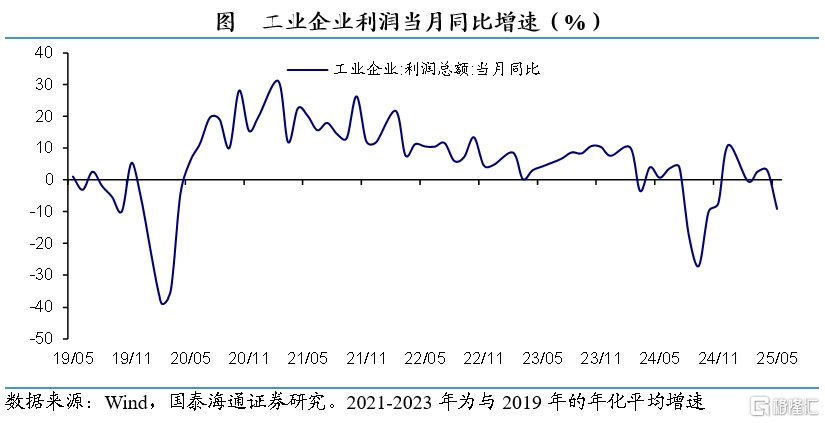
Group 1 - The report indicates a clear trend of supply recovery in China, with a long-term focus on core asset styles and free cash flow combinations [2][3] - The gradual disintegration of the dollar capital cycle suggests a potential long-term depreciation of the dollar, with global capital likely to flow back to China [3] - Under the influence of both internal and external factors, Chinese assets are expected to undergo systematic restructuring, with a trend of rising Price-to-Book (PB) ratios being a main theme of the current bull market [3] Group 2 - The report expresses optimism towards core asset styles, highlighting sectors such as the ChiNext 50, large financials, Hang Seng China Enterprises, Hang Seng Technology, oil shipping, gold, energy, and non-ferrous metals, while also noting the need to monitor micro risks [3] - Industrial enterprise profit growth in May showed a significant decline, with a year-on-year growth rate of -9.1%, down 12.1 percentage points from April, primarily due to a decrease in profit margins [8] - The report emphasizes that the weakness in profit margins may reflect external disturbances, particularly from tariffs affecting operational costs, and suggests that the resilience of midstream manufacturing prices is crucial, with signs of a bottoming out in new energy prices [8] Group 3 - In the U.S., the PCE inflation rate rose to 2.3% in May, with core inflation at 2.7%, indicating persistent inflationary pressures despite weakening consumer spending [13][15] - The report notes that the Hong Kong stock market saw gains, with the Hang Seng Index rising by 4.27% and the Hang Seng Technology Index increasing by 3.31% [16] - The report highlights that the financial and high-end manufacturing sectors performed well, while consumer sectors showed weakness, with the ChiNext index leading the gains at 6.58% [19][32]
5月工业企业利润数据点评:利润边际走弱,政策有望积极
Haitong Securities International· 2025-06-30 02:36
Profit Trends - In May, the profit growth rate of industrial enterprises fell to -9.1%, a decrease of 12.1 percentage points from April[3] - Cumulative profit growth from January to May was -1.1%, down from 3.2% in the previous four months[4] - The profit margin for May was 5.3%, slightly down from April, indicating a significant year-on-year decline due to high profit margins last year[5] Industry Performance - The share of profits from midstream industries dropped from 54% to 49%, reflecting weaker demand compared to upstream and downstream sectors[6] - Upstream industries faced profit declines primarily due to falling prices and volumes, while midstream sectors, particularly export-oriented ones, struggled to pass costs downstream[10] - Specific sectors like specialized equipment and electrical machinery saw profit growth rates drop by over 20 percentage points due to changing export dynamics[10] Economic Outlook - Active inventory reduction has continued for two months, with finished goods inventory growth at 3.5%[16] - Future profit recovery for enterprises will depend on the effectiveness of domestic demand policies amid ongoing external uncertainties[16] - The report anticipates that proactive policies will support domestic demand improvement, aiding in profit recovery for businesses[3]
国泰海通证券:5月工业企业利润边际走弱,政策有望积极
Ge Long Hui· 2025-06-28 01:48
Summary of Key Points Core Viewpoint - In May, industrial enterprise profits experienced a year-on-year decline of 9.1%, a significant drop of 12.1 percentage points compared to April, driven by falling volume, price, and profit margins due to disruptions in both domestic and external demand, as well as a decrease in commodity prices [1][2][4]. Group 1: Profit Trends - Cumulative profit growth for industrial enterprises from January to May was -1.1%, down from 3.2% in the previous period, with May's profit growth at -9.1% [2]. - The profit margin for May was reported at 5.0%, slightly up from the previous month, but the monthly figure of 5.3% showed a decline from April, indicating increased pressure on overall profits [4][9]. - The upstream sector faced significant profit margin declines due to falling international commodity prices, while the midstream sector struggled to pass on costs to downstream industries [9]. Group 2: Sector Performance - The share of profits from the midstream sector decreased from 54% to 49%, reflecting weaker demand compared to upstream and downstream sectors [5]. - In the upstream sector, only the chemical industry showed a narrowing profit decline, while other sectors experienced profit growth declines [7]. - The automotive sector saw a significant drop in profit growth, similar to trends in the midstream sector, while the pharmaceutical industry experienced a profit growth rebound [7][9]. Group 3: Inventory and Demand - Active inventory reduction has continued for two months, with a 3.5% increase in industrial product inventory from January to May [11]. - The overall revenue growth for enterprises from January to May was 2.7%, with May's growth at 0.8%, both showing a decline from previous months [11]. - Future profit recovery for enterprises will depend on the effectiveness of domestic demand policies amid ongoing external uncertainties [11].