
甲醇

Search documents
《能源化工》日报-20250924
Guang Fa Qi Huo· 2025-09-24 03:10
Report Industry Investment Ratings - No information provided regarding industry investment ratings. Core Views Polyolefin Industry - LLDPE and PP: Recent PP production decline due to losses in PDH and external propylene routes, leading to unplanned maintenance and inventory reduction. PE maintenance has reached a peak, with increasing开工 and de - stocking of mid - upstream inventory this week. More import offers from North America are emerging, and future supply rhythm and import offers need attention. Currently, the 01 contract faces significant inventory accumulation pressure, limiting upward space [2]. Methanol Industry - The market is trading high inventory and fast Iranian shipments. Coastal inventory has reached a record high, weakening market sentiment and prices, with a slight weakening of the basis. On the supply - demand side, inland supply is at a high level year - on - year. Although unplanned maintenance has increased recently, some plants are expected to resume production in mid - September. The inland inventory pattern is relatively healthy, providing some support for prices. Demand is weak due to the traditional off - season of downstream industries. Port arrivals are still high, with large inventory accumulation and weakening transactions. Overall valuation is neutral. The market is oscillating between high - inventory reality, weak basis, and overseas gas - restriction expectations in the future. Attention should be paid to the inventory inflection point [4]. Styrene Industry - Pure benzene: Recently, some plants have restarted or produced products, and maintenance plans have been postponed, keeping supply at a relatively high level. On the demand side, most downstream products are in a loss state, and the secondary - downstream inventory of some products is high. There are planned and unplanned production cuts in styrene plants from September to October, weakening demand support. The supply - demand outlook for pure benzene in September remains loose, with weak price drivers. In the short term, price trends are affected by geopolitical and macro factors. - Styrene: Driven by peak - season demand and pre - National - Day stocking of some factories, overall demand is okay but with limited growth. On the supply side, due to inventory and profit pressure, more plants have stopped or reduced production, and some have cut production due to accidents. With overseas plant maintenance, styrene export expectations have increased, reducing supply expectations. Port inventory has accumulated, pressuring styrene prices. In the short term, styrene may be affected by oil - price geopolitical situations and reduced concerns about supply increments. Strategies include short - selling on price rebounds for EB11 and widening the EB11 - BZ11 spread at low levels, but the driving force is limited [13]. Crude Oil Industry - Overnight oil prices rose. The main trading logic is that market concerns about immediate supply surplus have eased, and geopolitical risk premiums have resurfaced. Specifically, the deadlock in the oil - export agreement in the Kurdistan region of Iraq has dispelled the expectation of about 230,000 barrels per day of new supply, triggering a key rebound after the previous oil - price decline and supporting the near - month spread. Meanwhile, Ukraine's attack on Russian refineries and NATO's tough stance have increased the risk of supply disruption of Russian refined products such as diesel, pushing up the crack spread and supporting crude oil from both sentiment and cost aspects. Overall, although macro - level reports such as those from the International Energy Agency still point to a loose supply situation, short - term geopolitical factors have become the main pricing factor in the market, temporarily overriding the bearish expectation of potential increases in US crude - oil inventory. In the short term, oil prices are expected to trade in a range. It is recommended to conduct band - trading on a single - side basis, with the WTI trading range at [60, 66], Brent at [64, 69], and SC at [471, 502]. For options, wait for opportunities to widen the spread after volatility increases [32]. Urea Industry - Urea futures prices have been weakly oscillating recently. The main logic is sufficient supply and insufficient demand support. Specifically, the daily industry output remains above 200,000 tons, and new production capacity is about to be released, increasing supply pressure. Agricultural demand has entered the off - season, and industrial demand has weakened due to the decline in compound - fertilizer plant开工. Although there are some export - port - collection orders, the overall impact is limited. Market confidence is lacking, and continuous inventory accumulation further suppresses the futures price, lacking substantial positive drivers [37]. Polyester Industry - PX: Recent increases in PX supply are obvious due to the capacity increase from short - process production at home and abroad and the postponement of maintenance of some domestic PX plants. On the demand side, due to low PTA processing fees, new PTA plant commissioning has been delayed, and multiple PTA plants have maintenance plans. The supply - demand outlook for PX in the fourth quarter is expected to weaken further, with an expected compression of the PXN spread. In terms of absolute price, the attack on Russian oil - distribution facilities by Ukraine has boosted short - term oil prices, which may support PX in the short term. Strategies include short - term long - positions on PX11 or short - selling on price rebounds. - PTA: Due to low processing fees, new PTA plant commissioning has been delayed, and multiple PTA plants have maintenance plans, reducing supply expectations. However, the peak - season performance of downstream industries is average, and the spot basis of PTA has been weakly running. In terms of absolute price, short - term oil - price increases may support PTA. Strategies include short - term long - positions or short - selling on price rebounds for TA, and a rolling reverse - spread strategy for TA1 - 5. - Ethylene glycol: Supply - demand is gradually weakening. In the short term, ethylene - glycol imports in September are expected to be low, and inventory is expected to decrease this month, keeping port inventory at a low level. However, the terminal market is currently weak, and the basis is oscillating at a high level. In the long term, the supply - demand outlook for ethylene glycol in the fourth quarter is weak, as the Yulong Petrochemical plant has increased its load to 60% - 70%, the Satellite Petrochemical plant will restart in October, and demand will decline seasonally in the fourth quarter. Ethylene glycol will enter an inventory - accumulation phase, facing upward pressure. Attention should be paid to the progress of plant commissioning and restart. Strategies include selling call options EG2601 - C - 4400 on price increases and a reverse - spread strategy for EG1 - 5. - Short - fiber: The short - term supply - demand pattern is weak. Recently, short - fiber supply has remained high. On the demand side, although it is the peak - season of "Golden September and Silver October" and downstream industries have restocking demand before the National Day, new orders for gray fabrics are limited, and this year's peak - season performance is average. Short - fiber prices are supported at low levels, but the upward - rebound driving force is weak, and the price movement follows raw - material fluctuations. Strategies are the same as for PTA on a single - side basis. The processing fee on the futures market is expected to oscillate between 800 - 1100 yuan/ton, with limited upward and downward driving forces. - Bottle - grade polyester chips: Recently, some bottle - grade polyester chip plants have restarted while others have stopped production, with overall production capacity remaining basically unchanged. As the price has dropped to the lowest level of the year and there is rigid restocking demand before the National Day, downstream industries and traders are replenishing inventory at low prices, supporting the absolute price and processing fee of bottle - grade polyester chips and reducing inventory. However, the supply - demand situation remains loose. PR prices follow the cost - end fluctuations, and the upward space of the processing fee is limited. Attention should be paid to whether there will be more production cuts in bottle - grade polyester chip plants and the downstream follow - up situation. Strategies are the same as for PTA on a single - side basis. The processing fee of the PR main - contract on the futures market is expected to oscillate between 350 - 500 yuan/ton [40][41]. Chlor - alkali Industry - Caustic soda: The futures price continued to weaken yesterday. Supply has increased this week, and the开工 rate of sample enterprises has increased. On the downstream side, recent continuous declines in domestic and overseas alumina prices have narrowed the profit margin of domestic alumina enterprises, weakening the support for spot prices. Affected by the decline in the purchase price of the main downstream in Shandong and cautious downstream purchasing, inventory in the North China region has increased. In the East China region, enterprises with maintenance and load - reduction devices have not yet resumed, resulting in tight supply. Non - aluminum demand has followed up as a rigid need, and inventory has decreased. This week, in the Shandong market, due to the approaching National Day holiday, it will take time to release short - term local caustic - soda inventory. With the current high - level supply and poor sales in the main downstream, there is a possibility of further price cuts. Previously, short - selling was recommended, and short positions can be held. - PVC: The futures price weakened yesterday, and the supply - demand contradiction in the fundamentals is still difficult to resolve. On the supply side, many plants will end maintenance next week, with expected production increases. On the demand side, the开工 rate of downstream products has increased limitedly, and some have completed inventory replenishment, being resistant to high prices and having average purchasing enthusiasm. On the cost side, the price of raw - material calcium carbide has been rising, and the ethylene price has remained stable, providing bottom - level support for costs. It is expected that PVC will stop falling and stabilize during the peak season from September to October. Attention should be paid to the downstream demand performance [45]. Summaries by Related Catalogs Polyolefin Industry - **Prices and Spreads**: L2601, L2509, PP2601, and PP2509 futures prices all declined on September 23 compared to September 22. The price difference between L2509 - 2601 decreased by 11.11%, while that of PP2509 - 2601 increased by 17.95%. Spot prices of some products also changed, such as a 0.28% decline in the price of North China LDPE film stock [2]. - **开工 and Inventory**: PE plant开工 rate increased by 2.97% to 80.4%, and downstream weighted开工 rate increased by 1.78% to 42.9%. PE enterprise inventory increased by 5.57% to 45.1 tons, and social inventory decreased by 2.45% to 54.7 tons. PP plant开工 rate decreased by 2.5% to 74.9%, while PP powder开工 rate increased by 4.1% to 37.5%. Downstream weighted开工 rate increased by 1.2% to 51.5%. PP enterprise inventory increased by 8.06% to 58.2 tons, and trader inventory increased by 14.74% to 19.3 tons [2]. Methanol Industry - **Prices and Spreads**: On September 23, MA2601 futures price decreased by 0.21%, and MA2509 increased by 0.17%. The MA91 spread decreased by 60.00%. Spot prices of different regions showed different changes, such as a 0.73% increase in the price of Inner Mongolia's north - line spot and a 0.44% decrease in the price of Taicang port spot [4]. - **Inventory**: Methanol enterprise inventory decreased by 0.61% to 34.048 tons, port inventory increased by 0.48% to 155.8 tons, and social inventory increased by 0.28% to 189.8 tons [4]. - **开工 Rates**: The domestic upstream enterprise开工 rate decreased slightly by 0.12% to 72.66%, and the overseas upstream enterprise开工 rate decreased by 4.94% to 68.6%. The downstream external - MTO device开工 rate increased by 8.72% to 75.08%, while the fatty - acid开工 rate decreased by 3.41% to 82.3% [4]. Styrene Industry - **Upstream Prices and Spreads**: On September 23, Brent crude oil (November) increased by 1.6%, and WTI crude oil (October) increased by 1.2%. CFR Japan naphtha increased by 0.4%, while CFR China pure benzene decreased by 0.7%. The pure - benzene - naphtha spread decreased by 5.6%, and the ethylene - naphtha spread decreased by 1.0% [9]. - **Styrene - Related Prices and Spreads**: The latest styrene spot price in East China decreased by 1.0%. EB2510, EB2511 futures prices also declined. The EB basis (10) increased by 33.3%, and the EB10 - EB11 spread increased by 112.5%. EB non - integrated and integrated cash flows both decreased [10]. - **Inventory**: Pure - benzene inventory in Jiangsu ports decreased by 20.1% to 10.70 tons from September 15 to September 22, while styrene inventory in Jiangsu ports increased by 17.3% to 18.65 tons [12]. - **开工 Rates**: The Asian pure - benzene开工 rate remained unchanged at 79.0%. The domestic pure - benzene开工 rate decreased by 1.2% to 78.4%, while the domestic hydrogenated - benzene开工 rate increased by 9.1% to 59.6%. The styrene开工 rate decreased by 2.1% to 73.4% [13]. Crude Oil Industry - **Crude Oil Prices and Spreads**: On September 24, Brent increased by 1.59% to 67.63 dollars/barrel, WTI decreased by 0.54% to 63.15 dollars/barrel, and SC decreased by 1.55% to 483.60 yuan/barrel. The Brent M1 - M3 spread decreased by 33.82%, the WTI M1 - M3 spread decreased by 49.65%, and the SC M1 - M3 spread decreased by 33.33% [32]. - **Refined - Product Prices and Spreads**: NYM RBOB increased by 0.46% to 200.82 cents/gallon, NYM ULSD increased by 0.85% to 234.78 cents/gallon, and ICE Gasoil increased by 2.43% to 705.75 dollars/ton. The RBOB M1 - M3 spread decreased by 27.94%, the ULSD M1 - M3 spread decreased by 130.40%, and the Gasoil M1 - M3 spread decreased by 44.95% [32]. - **Refined - Product Crack Spreads**: The crack spreads of various refined products showed different changes. For example, the US gasoline crack spread increased by 1.10%, while the European diesel crack spread decreased by 0.90% [32]. Urea Industry - **Futures Prices and Spreads**: On September 23, the 01 - contract futures price of urea decreased by 0.12%, and the 05 - contract remained unchanged. The price difference between the 01 - contract and 05 - contract decreased by 3.77% [37]. - **Supply - Demand**: The domestic daily urea production increased by 1.82% to 19.56 tons on September 19 compared to September 18. The weekly domestic urea production increased by 2.36% to 133.00 tons, and the weekly domestic urea plant - inventory increased by 2.88% to 113.27 tons [37]. Polyester Industry - **Downstream Polyester Product Prices and Cash Flows**: On September 23, the prices of POY150/48, FDY150/96, and other polyester products changed. POY150/48 cash flow increased by 134.9%, while FDY150/96 cash flow decreased by 19.3% [40]. - **PX - Related Prices and Spreads**: CFR China PX decreased by 0.6% on September 23. The PX basis (11) decreased by 57.7%, and the PX - naphtha spread decreased by 3.3% [40]. - **开工 Rates**: The Asian PX开工 rate decreased by 0.8% to 78.2%, the Chinese PX开工 rate decreased by 1.5% to 86.3%, and the PTA开工 rate remained unchanged at 76.8% [40]. Chlor - alkali Industry - **PVC and Caustic - Soda Spot & Futures**: On September 23, the prices of Shandong 32% liquid caustic soda (converted to 100%) remained unchanged, while Shandong 50% liquid caustic soda (converted to 100%) increased by 2.4%. The market price of East China calcium - carbide - based PVC decreased by 0.8% [45]. - **Caustic - Soda Overseas Quotes & Export Profits**: The FOB price of East China ports increased by 1.3% to 400 dollars/ton on September 18 compared to September 11, and the export profit increased by 3723.4% to 223.4 yuan/ton [45]. - **PVC Overseas Quotes & Export Profits**: The CFR Southeast Asia PVC price remained unchanged at 650 dollars/ton on September 18 compared to September 11, and the export profit decreased by 266.4% to - 22.4 yuan/ton [45]. - **Supply:
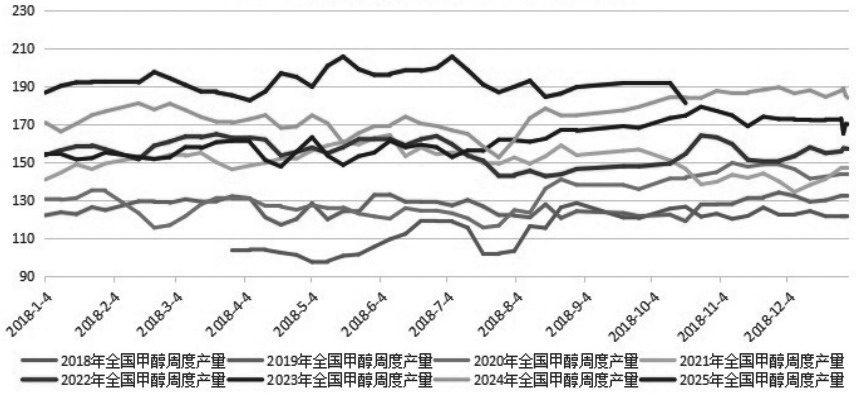
甲醇港口累库压力增大 后市易跌难涨
Zhong Guo Jin Rong Xin Xi Wang· 2025-09-23 23:53
Group 1 - The core viewpoint indicates that the domestic methanol futures market is returning to a weak fundamental-driven trend due to high supply pressure and weak demand, with prices expected to remain under pressure [1] - Domestic methanol production has decreased due to maintenance of several methanol plants, with an average operating rate of 79.39% and a weekly production average of 181.32 million tons, reflecting a significant drop [2] - The import volume of methanol is at a near two-year high, with expectations of continued high imports into the fourth quarter, contributing to increased port inventories [3] Group 2 - Despite entering the traditional consumption peak season, the recovery in olefin demand is below expectations, with the average operating load of coal (methanol) to olefin plants at 82.88% [5] - The downstream demand for methanol remains weak, with various downstream products showing low operating rates, such as formaldehyde at 31.54% and dimethyl ether at 6.68% [5] - Overall, the domestic methanol market is expected to maintain a trend of being difficult to rise due to the combination of high supply and weak demand [7]

偏空因素压制能化偏弱运行:橡胶甲醇原油
Bao Cheng Qi Huo· 2025-09-23 11:17
Report Summary 1. Investment Rating The report does not provide an overall industry investment rating. 2. Core Views - **Rubber**: On Tuesday, the domestic Shanghai rubber futures contract 2601 showed a trend of shrinking volume, reducing positions, fluctuating weakly, and slightly closing lower. The price center of the contract during the session slightly moved down to 15,525 yuan/ton, and the closing price slightly decreased by 0.22% to 15,525 yuan/ton. The premium of the 1 - 5 month spread expanded to 40 yuan/ton. With the implementation of the Fed's interest - rate cut expectation, the short - term positive factors were exhausted. The rubber market entered a market dominated by a weak supply - demand structure. It is expected that the domestic Shanghai rubber futures contract 2601 may maintain a weakly fluctuating trend in the future [5]. - **Methanol**: On Tuesday, the domestic methanol futures contract 2601 showed a trend of increasing volume and positions, fluctuating weakly, and slightly closing lower. The futures price rose to a maximum of 2,351 yuan/ton and dropped to a minimum of 2,327 yuan/ton, and the closing price slightly decreased by 0.42% to 2,343 yuan/ton. The discount of the 1 - 5 month spread widened to 32 yuan/ton. Suppressed by the weak methanol supply - demand fundamentals, it is expected that the domestic methanol futures contract 2601 may maintain a weakly fluctuating trend in the future [5]. - **Crude Oil**: On Tuesday, the domestic crude oil futures contract 2511 showed a trend of increasing volume and positions, fluctuating downward, and significantly closing lower. The futures price rose to a maximum of 478.7 yuan/barrel and dropped to a minimum of 471.6 yuan/barrel, and the closing price significantly decreased by 2.29% to 473.1 yuan/barrel. With the implementation of the Fed's interest - rate cut expectation, the short - term positive factors were exhausted, and the market shifted to a weak supply - demand fundamental. It is expected that the domestic crude oil futures contract 2511 may maintain a weakly fluctuating trend in the future [6]. 3. Summary by Sections 3.1 Industry Dynamics - **Rubber**: As of September 21, 2025, the total inventory of natural rubber in bonded and general trade in Qingdao was 461,200 tons (the adjusted previous - period total inventory was 464,700 tons), a month - on - month decrease of 3,600 tons or 0.76%. The bonded - area inventory was 69,400 tons (the adjusted previous - period bonded inventory was 73,100 tons), a decrease of 5.07%; the general - trade inventory was 391,800 tons (the adjusted previous - period general - trade inventory was 391,600 tons), an increase of 0.04%. The inbound rate of the Qingdao natural - rubber sample bonded warehouses increased by 0.59 percentage points, and the outbound rate decreased by 2.91 percentage points; the inbound rate of the general - trade warehouses increased by 1.32 percentage points, and the outbound rate increased by 1.78 percentage points. As of the week of September 19, 2025, the capacity utilization rate of China's semi - steel tire sample enterprises was 73.70%, a week - on - week slight increase of 1.09 percentage points and a year - on - year slight decrease of 3.40 percentage points; the capacity utilization rate of the full - steel tire sample enterprises was 65.70%, a week - on - week slight decrease of 0.61 percentage points and a year - on - year significant increase of 8.30 percentage points. In the terminal retail sector, in August 2025, China's automobile dealer inventory warning index was 57.0%, a year - on - year increase of 0.8 percentage points and a month - on - month decrease of 0.2 percentage points. The inventory warning index was above the boom - bust line, indicating a decline in the prosperity of the automobile circulation industry. The China Federation of Logistics and Purchasing released that the China Logistics Industry Prosperity Index in August 2025 was 50.9%, a 0.4 - percentage - point increase from the previous month. In August 2025, China's heavy - truck market sold about 84,000 vehicles, a month - on - month slight decrease of 1% compared with July and a year - on - year increase of about 35% compared with 62,500 vehicles in the same period last year. In the first eight months of 2025, the cumulative sales of the heavy - truck market reached 710,000 vehicles, a year - on - year increase of 13% [9][10]. - **Methanol**: As of the week of September 19, 2025, the average domestic methanol operating rate remained at 79.39%, a week - on - week slight decrease of 1.81%, a month - on - month slight decrease of 1.26%, and a slight decrease of 1.53% compared with the same period last year. During the same period, the average weekly domestic methanol output reached 1.8132 million tons, a week - on - week significant decrease of 106,100 tons, a month - on - month significant decrease of 84,200 tons, and a slight decrease of 30,200 tons compared with 1.8434 million tons in the same period last year. As of the week of September 19, 2025, the domestic formaldehyde operating rate remained at 31.54%, a week - on - week slight increase of 1.06%. For dimethyl ether, the operating rate remained at 6.68%, a week - on - week slight decrease of 0.11%. The acetic acid operating rate remained at 75.72%, a week - on - week slight decrease of 3.84%. The MTBE operating rate remained at 57.66%, a week - on - week slight increase of 1.85%. As of the week of September 19, 2025, the average operating load of domestic coal (methanol) to olefin plants was 82.88%, a week - on - week slight increase of 3.33 percentage points and a month - on - month slight increase of 3.58%. As of September 19, 2025, the futures market profit of domestic methanol to olefins was - 183 yuan/ton, a week - on - week slight recovery of 41 yuan/ton and a month - on - month significant decline of 26 yuan/ton. As of the week of September 19, 2025, the port methanol inventories in East and South China remained at 1.3298 million tons, a week - on - week significant increase of 62,500 tons, a month - on - month significant increase of 395,600 tons, and a significant increase of 487,200 tons compared with the same period last year. Among them, the port methanol inventory in East China reached 851,800 tons, a week - on - week increase of 43,700 tons, and the port methanol inventory in South China reached 478,000 tons, a week - on - week increase of 18,800 tons. As of the week of September 17, 2025, the total inland methanol inventory in China reached 340,500 tons, a week - on - week slight decrease of 2,100 tons, a month - on - month slight increase of 29,600 tons, and a significant decrease of 94,200 tons compared with 434,700 tons in the same period last year [11][12][13]. - **Crude Oil**: As of the week of September 12, 2025, the number of active US oil drilling platforms was 416, a week - on - week slight increase of 2 and a decrease of 72 compared with the same period last year. The average daily US crude oil production was 13.482 million barrels, a week - on - week slight decrease of 13,000 barrels per day and a year - on - year slight increase of 282,000 barrels per day. As of the week of September 12, 2025, the US commercial crude oil inventory (excluding strategic petroleum reserves) reached 415 million barrels, a week - on - week significant decrease of 9.285 million barrels and a significant decrease of 2.152 million barrels compared with the same period last year. The crude oil inventory in Cushing, Oklahoma, USA, reached 23.561 million barrels, a week - on - week slight decrease of 296,000 barrels; the US strategic petroleum reserve (SPR) inventory reached 405.7 million barrels, a week - on - week slight increase of 504,000 barrels. The US refinery operating rate remained at 93.9%, a week - on - week slight decrease of 1.60 percentage points, a month - on - month slight decrease of 3.3 percentage points, and a year - on - year slight increase of 1.2 percentage points. As of September 16, 2025, the average non - commercial net long positions in WTI crude oil futures remained at 98,709 contracts, a week - on - week significant increase of 16,865 contracts, a significant decrease of 23,354 contracts compared with the August average of 122,063 contracts, and a decline of 19.13%. Meanwhile, as of September 16, 2025, the average net long positions of Brent crude oil futures funds remained at 220,410 contracts, a week - on - week significant increase of 14,635 contracts, a slight increase of 18,092 contracts compared with the August average of 202,318 contracts, and an increase of 8.94%. Overall, the net long positions in the WTI crude oil futures market decreased significantly week - on - week, while the net long positions in the Brent crude oil futures market increased significantly week - on - week [13][14][15]. 3.2 Spot Price Table | Variety | Spot Price | Change from Previous Day | Futures Main Contract | Change from Previous Day | Basis | Change | | --- | --- | --- | --- | --- | --- | --- | | Shanghai Rubber | 14,700 yuan/ton | +0 yuan/ton | 15,615 yuan/ton | - 90 yuan/ton | - 825 yuan/ton | +90 yuan/ton | | Methanol | 2,260 yuan/ton | - 15 yuan/ton | 2,343 yuan/ton | - 5 yuan/ton | - 83 yuan/ton | - 10 yuan/ton | | Crude Oil | 456.0 yuan/barrel | - 0.4 yuan/barrel | 473.1 yuan/barrel | - 9.9 yuan/barrel | - 17.1 yuan/barrel | +9.5 yuan/barrel | [16] 3.3 Related Charts The report lists various related charts for rubber, methanol, and crude oil, including rubber basis, Shanghai Futures Exchange rubber futures inventory, full - steel tire operating rate trend, methanol basis, methanol port inventory, methanol inland social inventory, crude oil basis, US commercial crude oil inventory, etc., but does not provide specific data analysis in the text [17][30][44]
银河期货原油期货早报-20250923
Yin He Qi Huo· 2025-09-23 03:42
Report Industry Investment Ratings No relevant content provided. Core Views of the Report - The oil market is facing increasing supply pressure, with a high probability of inventory accumulation in Q3 and greater surplus pressure in Q4. Brent is expected to maintain a weak pattern, with attention on the support near $65.6 per barrel [2]. - The asphalt market has increasing supply and weak demand. Short - term spot prices are expected to run weakly, and the futures are expected to be weakly volatile [5][6]. - The fuel oil market has high - sulfur inventories suppressing prices, and low - sulfur supply increasing with no specific demand drivers. It is expected to be weakly volatile [8][9]. - The PX and PTA markets are affected by macro factors and oil prices. PX supply is expected to increase, and PTA supply and demand contradictions are expected to ease. Prices are expected to be weakly volatile [11][13]. - The ethylene glycol market has an expected increase in supply and low - level port inventories. Prices are expected to be weakly volatile [16]. - The short - fiber market has low processing fees and weak downstream demand. It is expected to be weakly volatile [17]. - The PR (bottle - chip) market has a transition from peak to off - peak demand, and processing fees are expected to fluctuate at a low level [19]. - The pure benzene and styrene markets are affected by macro and supply - demand factors. Supply is expected to increase, and prices are expected to be weakly volatile [24][26]. - The propylene market has an expected increase in supply and weak downstream demand. Prices are under pressure [28]. - The glass market has a marginal weakening of procurement sentiment. It is expected to be volatile before the festival [31][32]. - The soda ash market has high - level supply and stable demand. Before the festival, prices are expected to be stable, and after the festival, attention should be paid to policy and mid - stream pressure [34][35]. - The urea market has a loose supply and weak demand. It is expected to be weakly volatile [37][38]. - The methanol market has an increase in supply and high - level port inventories. The rebound height is limited, and it is recommended to short at high levels [40]. - The offset - printing paper market has a slight increase in supply and limited demand. It is recommended to short the 01 contract [42][43]. - The pulp market has high port inventories and weak demand, but there is support below. It is recommended to try long positions in the SP 11 contract [46]. - The log market has a supply - demand double - weak situation. It is recommended to wait and see, and aggressive investors can place a small number of long positions [49][50]. - The natural rubber and 20 - number rubber markets have inventory changes and macro factors affecting prices. It is recommended to hold short positions in the RU 01 contract and wait and see for the NR 11 contract [52][53]. - The butadiene rubber market has a decrease in capacity utilization and inventory changes. It is recommended to hold short positions in the BR 11 contract [55]. Summaries by Related Catalogs Market Review - **Crude Oil**: WTI2510 settled at $62.64, down $0.04 (- 0.06%); Brent2511 settled at $66.57, down $0.11 (- 0.16%); SC2511 fell to 484.2 yuan/barrel, and 477.5 yuan/barrel at night [1]. - **Asphalt**: BU2511 closed at 3387 points (- 0.41%) at night, BU2512 closed at 3329 points (- 0.69%) at night. Spot prices in different regions had different changes [3]. - **Fuel Oil**: FU01 closed at 2772 (- 0.22%) at night, LU11 closed at 3363 (- 0.30%) at night. Singapore paper - cargo market had specific month - spreads [6]. - **PX & PTA**: PX2511 closed at 6592 (- 0.03%) during the day and 6562 (- 0.46%) at night; TA601 closed at 4586 (- 0.39%) during the day and 4564 (- 0.48%) at night. Spot prices also had corresponding changes [9]. - **Ethylene Glycol**: EG2601 closed at 4268 (- 0.67%) during the day and 4249 (- 0.45%) at night. Spot and futures basis and prices were provided [14]. - **Short - Fiber**: PF2511 closed at 6344 (- 0.91%) during the day and 6318 (- 0.41%) at night. Spot prices in different regions decreased [16][17]. - **PR (Bottle - Chip)**: PR2511 closed at 5816 (- 0.89%) during the day and 5796 (- 0.34%) at night. Spot market had an acceptable trading atmosphere [19]. - **Pure Benzene & Styrene**: BZ2503 closed at 5921 (- 0.75%) during the day and 5905 (- 0.27%) at night; EB2511 closed at 6928 (- 0.92%) during the day and 6901 (- 0.39%) at night. Spot prices and inventories changed [22][23]. - **Propylene**: PL2601 closed at 6424 (- 0.59%) during the day and 6401 (- 0.36%) at night. Spot prices in different regions had different trends [27]. - **Glass**: The glass 01 contract closed at 1199 yuan/ton (- 1.40%), 1179 yuan/ton (- 1.67%) at night. Spot prices in different regions had different performance [29]. - **Soda Ash**: The soda ash 01 contract closed at 1293 yuan (- 1.9%), 1276 yuan (- 1.3%) at night. Spot prices in different regions changed [33]. - **Urea**: The urea futures closed at 1660 (- 0.06%). Spot prices decreased across the board [35][36]. - **Methanol**: The methanol futures closed at 2349 (- 0.17%). Spot prices in different regions were provided [38][39]. - **Offset - Printing Paper**: OP2601 was volatile and closed at 4234 at night. Market and raw material prices were stable [40]. - **Pulp**: The SP 11 contract closed at 4986, down 22 points (- 0.4%). Imported pulp prices in different varieties had different trends [43]. - **Log**: The 11 - month log contract closed at 807.5 yuan/cubic meter, up 0.44%. Spot prices were stable [46]. - **Natural Rubber & 20 - Number Rubber**: RU 01 closed at 15600, down 15 points (- 0.10%); NR 11 closed at 12455, up 30 points (+ 0.24%); BR 11 closed at 11500, down 5 points (- 0.04%). Spot and futures prices in different varieties were provided [50][51][53]. Related Information - **Crude Oil**: Fed officials had different views on interest - rate cuts. The net long positions of traders in crude - oil futures and options increased. Middle - East oil - producing countries increased production, and the demand peak season ended [1][2]. - **Asphalt**: In different regions, factors such as rainfall, refinery production resumption, and project construction affected supply and demand and prices [3][4]. - **Fuel Oil**: Russian refineries had maintenance and damage incidents, and Singapore's spot - window transactions were limited [7]. - **PX & PTA**: PTA plants had restart, maintenance, and load - reduction situations due to different reasons [10][12]. - **Ethylene Glycol**: The port inventory increased slightly, and the downstream polyester sales had different performances [14]. - **Short - Fiber**: The downstream polyester sales had different performances, and the short - fiber factory prices decreased [16][17]. - **PR (Bottle - Chip)**: Polyester bottle - chip factories' export quotes decreased slightly, and a 60 - ton bottle - chip device in Jiangyin was under maintenance [19]. - **Pure Benzene & Styrene**: Pure benzene and styrene had changes in plant maintenance, production, and port inventories [23][24][25]. - **Propylene**: The domestic propylene and propane - dehydrogenation operating loads increased [28]. - **Glass**: There were news about financial and industrial policies, and different regions' glass markets had different performances [29][30]. - **Soda Ash**: Some soda - ash plants resumed production, and the total inventory decreased [34]. - **Urea**: The daily production increased, and the开工 rate was high. The inventory of production enterprises increased [36][37]. - **Methanol**: International methanol production decreased, and some Iranian devices had problems [39]. - **Offset - Printing Paper**: A paper - making project of Jindong Paper reached a milestone, and the export volume and price of double - offset paper and coated paper decreased [40][41]. - **Pulp**: The import volume of bleached pulp and wood chips decreased in August, and the central bank official made a statement [44][45]. - **Log**: The number of pre - arrival ships of New Zealand logs increased, and the inventory decreased [47]. - **Natural Rubber & 20 - Number Rubber**: An Indian tire company adjusted its export strategy due to US tariffs [52][54]. Logical Analysis - **Crude Oil**: The month - spread of Brent was stable, while that of Dubai weakened. Supply pressure increased, and the price was expected to be weak [2]. - **Asphalt**: Supply increased, demand was weak, and inventory trends were different. Futures prices were expected to be weakly volatile [5][6]. - **Fuel Oil**: High - sulfur inventories suppressed prices, and low - sulfur supply increased with no specific demand drivers [8][9]. - **PX & PTA**: Affected by macro and oil - price factors, PX supply increased, and PTA supply - demand contradictions eased [11][13]. - **Ethylene Glycol**: Supply was expected to increase, and port inventories were at a low level. Prices were expected to be weakly volatile [16]. - **Short - Fiber**: Processing fees were low, and downstream demand was weak. It was expected to be weakly volatile [17]. - **PR (Bottle - Chip)**: Demand transitioned from peak to off - peak, and processing fees were expected to fluctuate at a low level [19]. - **Pure Benzene & Styrene**: Affected by macro and supply - demand factors, supply increased, and prices were expected to be weakly volatile [24][26]. - **Propylene**: Supply was expected to increase, and downstream demand was weak. Prices were under pressure [28]. - **Glass**: Procurement sentiment weakened marginally. It was expected to be volatile before the festival [31][32]. - **Soda Ash**: Supply was at a high level, and demand was stable. Before the festival, prices were expected to be stable, and after the festival, attention should be paid to policy and mid - stream pressure [34][35]. - **Urea**: Supply was loose, and demand was weak. It was expected to be weakly volatile [37][38]. - **Methanol**: Supply increased, and port inventories were at a high level. The rebound height was limited [40]. - **Offset - Printing Paper**: Supply increased slightly, and demand was limited. It was recommended to short the 01 contract [42][43]. - **Pulp**: Port inventories were high, and demand was weak, but there was support below [46]. - **Log**: Supply - demand was double - weak. It was recommended to wait and see, and aggressive investors could place a small number of long positions [49][50]. - **Natural Rubber & 20 - Number Rubber**: Inventory changes and macro factors affected prices. It was recommended to hold short positions in the RU 01 contract and wait and see for the NR 11 contract [52][53]. Trading Strategies - **Crude Oil**: Unilateral: Narrow - range oscillation, focus on the support of Brent near $65.6 per barrel; Arbitrage: Gasoline and diesel cracks were weak; Option: Wait and see [2]. - **Asphalt**: Unilateral: Weakly volatile; Arbitrage: The asphalt - oil spread was weakly volatile; Option: Sell out - of - the - money call options for BU2512 [6]. - **Fuel Oil**: Unilateral: Weakly volatile; Arbitrage: Wait and see; Option: Sell out - of - the - money call options for FU01 at high levels [9]. - **PX & PTA**: Unilateral: Weakly volatile; Arbitrage: Wait and see; Option: Wait and see [14]. - **Ethylene Glycol**: Unilateral: Weakly volatile; Arbitrage: Wait and see; Option: Wait and see [16]. - **Short - Fiber**: Unilateral: Weakly volatile; Arbitrage: Wait and see; Option: Wait and see [17]. - **PR (Bottle - Chip)**: Unilateral: Weakly volatile; Arbitrage: Wait and see; Option: Wait and see [19][20]. - **Pure Benzene & Styrene**: Unilateral: Weakly volatile; Arbitrage: Wait and see; Option: Wait and see [24][26]. - **Propylene**: Unilateral: It is recommended to short on rebounds, not to chase shorts; Arbitrage: Wait and see; Option: Not mentioned [29]. - **Glass**: Unilateral: The price is expected to be stable before the festival; Arbitrage: Wait and see; Option: Wait and see [33]. - **Soda Ash**: Unilateral: Stable before the festival, pay attention to policy and mid - stream pressure after the festival; Arbitrage: Wait and see; Option: Wait and see [35]. - **Urea**: Unilateral: Weakly volatile; Arbitrage: Wait and see; Option: Wait and see [38]. - **Methanol**: Unilateral: Short at high levels, not to chase shorts; Arbitrage: Wait and see; Option: Sell call options [40]. - **Offset - Printing Paper**: Unilateral: Short the 01 contract based on the lower limit of the spot - market price; Arbitrage: Wait and see; Option: Sell out - of - the - money call options [43]. - **Pulp**: Unilateral: Try long positions in the SP 11 contract, enter gradually based on last week's low; Arbitrage: Wait and see, focus on the 11 - 1 reverse spread; Option: Wait and see [46]. - **Log**: Unilateral: Wait and see, aggressive investors can place a small number of long positions; Arbitrage: Wait and see; Option: Wait and see [50]. - **Natural Rubber & 20 - Number Rubber**: Unilateral: Hold short positions in the RU 01 contract, wait and see for the NR 11 contract; Arbitrage: Wait and see; Option: Wait and see [53].
广发期货日评-20250923
Guang Fa Qi Huo· 2025-09-23 02:50
Industry Investment Ratings No investment ratings are provided in the report. Core Viewpoints - After the Fed cut interest rates by 25bp as expected, the market quickly digested the expectation and shifted to a volatile state. The technology sector still dominates the market. With the holiday approaching, capital activity has declined [2]. - Without incremental negative factors, 1.8% may be the high point for the 10 - year Treasury yield, but in the absence of strong positive factors, the short - term downward movement of the yield is also limited, with resistance around 1.75% [2]. - Gold remains in a high - level volatile state, and its volatility may rise again. Silver has high upward elasticity driven by突发事件 but the sentiment fades quickly [2]. - The EC futures contract continues to decline, and the main contract is weakly volatile [2]. - Steel exports support the valuation of the black commodity sector, and the spread between hot - rolled and rebar contracts is narrowing [2]. - The decline in iron ore shipments, the rebound in molten iron production, and the restocking demand support the strong price of iron ore [2]. - Coal prices at production areas are stable with a slight upward trend, and downstream restocking demand supports the upward trend of coal futures [2]. - The copper market is in a volatile consolidation phase, and the spot trading volume is good below 80,000 [2]. - There are more supply - side disturbances in Guinea for aluminum, and it is expected to fluctuate widely around the bottom of 2900 in the short term [2]. - The supply of tin ore imports remained low in August, providing fundamental support [2]. - Concerns about marginal increases in oil supply have led to a downward shift in short - term oil prices, but geopolitical factors still provide some support [2]. - The high supply pressure of urea persists, and the progress of urea factory orders before the National Day needs attention [2]. - The supply - demand outlook for PX has further weakened, and the cost side is also weak, putting short - term pressure on prices [2]. - The supply - demand situation of PTA has improved slightly but remains weak in the medium term, with limited driving forces [2]. - The short - fiber market has no obvious short - term drivers and follows the raw material price fluctuations [2]. - The demand for bottle - grade polyester chips has improved temporarily, but the supply - demand pattern remains loose, with limited upside for processing fees [2]. - The new ethylene glycol plant commissioning expectation and the weak terminal market put pressure on the upside of MEG [2]. - With the holiday approaching, the mid - stream of caustic soda is in a wait - and - see mode, and the spot price is under pressure [2]. - The spot procurement enthusiasm for PVC is average, and the market is in a volatile state [2]. - The supply - demand outlook for pure benzene has weakened, and the price driving force is limited [2]. - The weak oil price expectation puts pressure on the absolute price of styrene [2]. - The cost and supply - demand drivers for synthetic rubber are limited, and it may follow the trends of natural rubber and other commodities [2]. - The sentiment in the LLDPE spot market has weakened, and the basis remains stable [2]. - The number of PP plant overhauls has increased, and the trading volume is average [2]. - The port inventory of methanol has been accumulating, and the price is weak [2]. - After Argentina取消 the export tax, the two -粕 market is under pressure again [2]. - The pig slaughter pressure is high, and the spot price is unlikely to improve before the National Day [2]. - Under the bearish expectation, the corn futures price continues to decline [2]. - The Sino - US talks did not release incremental positive factors, and the oilseed market is in a volatile adjustment phase [2]. - The overseas sugar supply outlook is broad [2]. - With new cotton gradually coming onto the market, the supply pressure is increasing [2]. - The local domestic sales in the egg market still provide some support for demand, but the long - term trend is bearish [2]. - The early Fuji apples are traded at negotiated prices, and the sales volume is acceptable [2]. - The spot price of red dates fluctuates slightly, and the futures market is in a volatile state [2]. - The overall sentiment in the soda ash market has declined, and the price is trending weakly [2]. - The production and sales of glass have weakened, and the futures price has declined [2]. - Affected by typhoon weather, the rubber price is strongly volatile in the short term [2]. - The market sentiment for industrial silicon has weakened, and the price has declined [2]. - Affected by fundamental sentiment, the polysilicon price has dropped significantly [2]. - With no new news, the market sentiment for lithium carbonate is temporarily stable, and the fundamentals are in a tight balance during the peak season [2]. Summaries by Categories Equity Index Futures - Recommend selling short - term put options on the IF2509, IH2509, IC2509, and MO2511 contracts near the strike price of 6600 when the index pulls back to collect option premiums [2]. Treasury Futures - The T2512 contract is expected to fluctuate between 107.5 and 108.35. For single - side strategies, investors are advised to trade within the range, and consider going long lightly when the price pulls back to the low level if the market sentiment stabilizes, but should pay attention to taking profits in time. For the spot - futures strategy, the basis of the TL contract is oscillating at a high level, and investors can appropriately participate in the basis narrowing strategy [2]. Precious Metals - For gold, consider buying at low levels or buying out - of - the - money call options instead of going long. For silver, sell out - of - the - money put options when the price is high [2]. Freight Index Futures (EC) - Consider the spread arbitrage between the December and October contracts [2]. Black Commodities - For steel, try to go long on pullbacks and narrow the spread between the January hot - rolled and rebar contracts. For iron ore, go long on the 2601 contract at low levels, with the reference range of 780 - 850, and consider a long - iron - ore short - hot - rolled strategy. For coking coal, go long on the 2601 contract at low levels, with the reference range of 1150 - 1300, and consider a long - coking - coal short - coke strategy. For coke, go long on the 2601 contract at low levels, with the reference range of 1650 - 1800, and consider a long - coking - coal short - coke strategy [2]. Non - ferrous Metals - For copper, the main contract reference range is 79,000 - 81,000. For aluminum, the main contract reference range is 20,600 - 21,000. For aluminum alloy, the main contract reference range is 20,200 - 20,600. For zinc, the main contract reference range is 21,500 - 22,500 [2][3]. Energy and Chemicals - For crude oil, temporarily observe on the single - side, with the support range of WTI at [60, 61], Brent at [63, 64], and SC at [467, 474]. For urea, wait for the implied volatility to rise and then narrow it. For PX, short on rebounds following the crude oil trend and pay attention to the support around 6500. For PTA, short on rebounds following the crude oil trend, pay attention to the support around 4500, and consider a rolling reverse spread strategy between the January and May contracts. For short - fiber, the single - side strategy is the same as PTA, and the processing fee oscillates between 800 - 1100. For bottle - grade polyester chips, the single - side strategy is the same as PTA, and the processing fee is expected to fluctuate between 350 - 500. For ethylene glycol, sell call options on rallies and consider a reverse spread strategy between the January and May contracts. For caustic soda, adopt a short - selling strategy. For PVC, observe. For pure benzene, it will follow the benzene - ethylene and oil price fluctuations in the short term. For benzene - ethylene, short on absolute price rebounds and widen the spread between the November benzene - ethylene and November pure - benzene contracts. For synthetic rubber, pay attention to the support around 11,400. For LLDPE, observe near the previous low. For PP, observe in the short term. For methanol, observe as the downward space is currently limited [2]. Agricultural Products - For soybeans and rapeseed meal, adjust weakly in the short term. For live pigs, pay attention to the reverse spread opportunities between the January - May and March - July contracts. For corn, it is in a weak trend. For oils, the main palm oil contract adjusts weakly in the short term. For sugar, hold short positions. For cotton, adopt a short - selling strategy in the short term. For eggs, control the short - position size. For apples, the main contract runs around 8300. For red dates, it is bearish in the medium - to - long term. For soda ash, observe. For glass, observe. For rubber, observe. For industrial silicon, the main price fluctuation range is expected to be between 8000 - 9500 yuan/ton. For polysilicon, observe temporarily. For lithium carbonate, the main contract is expected to run between 70,000 - 75,000 [2].
首席点评:坚持支持性货币政策
Shen Yin Wan Guo Qi Huo· 2025-09-23 01:40
Report Summary 1. Report Industry Investment Rating No relevant content provided. 2. Core Viewpoints - The current stance of China's monetary policy is supportive, implementing a moderately loose monetary policy. The market risk appetite has increased due to the strengthened expectation of the Fed's interest rate cut, and the US stock market has reached a record high [1]. - The Chinese capital market is in the initial stage of strategic allocation. The CSI 500 and CSI 1000 indices, which are rich in technology - growth components, are more aggressive, while the SSE 50 and CSI 300 indices, which are rich in dividend - blue - chip components, are more defensive [4][11]. - With the Fed entering the interest rate cut cycle, the policy space for the domestic central bank has expanded, but the short - term capital market has tightened, and the bond futures prices have fluctuated at a low level [13]. 3. Summary by Directory 3.1 Key Varieties - **Fats and Oils**: The night - session of fats and oils was weak. The production and export of Malaysian palm oil decreased in early September, and Argentina's cancellation of export taxes on soybean oil and soybean meal dragged down the short - term performance of the fats and oils sector [2][29]. - **Gold**: After the Fed's interest rate decision, gold and silver initially declined and then strengthened again, reaching a new high this week. The long - term driving force for gold remains clear, and the expectation of further interest rate cuts by the Fed has continued the bullish sentiment [3][20]. - **Stock Index**: The US stock market rose. The previous trading day's stock index rebounded. The 9 - month trend was more volatile, in the high - level consolidation stage, but the long - term strategic allocation period of the Chinese capital market has just begun [4][11]. 3.2 Main News on the Day - **International News**: The Indian Minister of Commerce and Industry will visit the US to reach a "mutually beneficial" trade agreement, indicating a relaxation of tensions between the two countries [6]. - **Domestic News**: Since the implementation of the "9·24" package of policies, the "stability" foundation of China's capital market has been continuously consolidated, and the "vibrant" ecosystem has been accelerating. The number of new A - share accounts in August increased significantly [7]. - **Industry News**: The State Council's Food Safety Office is promoting the formulation of national standards for pre - made dishes and the explicit use of pre - made dishes in the catering industry [8]. 3.3 Daily Returns of Overseas Markets - The FTSE China A50 futures rose 0.45%, ICE Brent crude oil fell 0.15%, ICE 11 - sugar fell 2.04%, and other varieties showed different degrees of change [9]. 3.4 Morning Comments on Main Varieties - **Financial**: - **Stock Index**: Similar to the previous analysis, the short - term is in a high - level consolidation stage, and the long - term is in the strategic allocation period [11]. - **Treasury Bonds**: Bond prices rose slightly. The central bank carried out a 14 - day reverse repurchase operation. It is recommended to wait and see in the short term [13]. - **Energy and Chemicals**: - **Crude Oil**: Night - session oil prices continued to fall. Iraq plans to resume oil exports, and the market is concerned about OPEC's production increase [14]. - **Methanol**: Methanol prices fell at night. The overall inventory of coastal methanol is rising, and it is expected to be short - term bearish [15]. - **Rubber**: Natural rubber prices stopped falling and stabilized. Supply is expected to increase, and there is a possibility of a short - term rebound [16]. - **Polyolefins**: Polyolefin prices fell. The market is expected to fluctuate in a low - level range [17][18]. - **Glass and Soda Ash**: Glass and soda ash futures prices fell. The market is in the process of inventory digestion, and attention is paid to the consumption in autumn [19]. - **Metals**: - **Precious Metals**: Gold and silver prices reached a new high. The long - term driving force for gold is clear, and the bullish sentiment continues [20]. - **Copper**: Copper prices fell slightly at night. The market is affected by multiple factors and may fluctuate within a range [21]. - **Zinc**: Zinc prices fell slightly at night. The supply may be in surplus in the short term, and prices may fluctuate weakly within a range [22]. - **Lithium Carbonate**: Weekly production increased, inventory decreased, and prices may fluctuate in the short term [23][24]. - **Black Metals**: - **Coking Coal and Coke**: The main contracts fluctuated in a narrow range, showing a high - level oscillating trend [25]. - **Iron Ore**: Steel mills have resumed production, and iron ore demand is supported. The market is expected to be oscillating and bullish [26]. - **Steel**: The supply pressure of steel is increasing, and the market supply - demand contradiction is not significant. The market is bullish, with hot - rolled coils stronger than rebar [27]. - **Agricultural Products**: - **Protein Meal**: Bean and rapeseed meal prices fell significantly at night. The US soybean harvest pressure will gradually emerge, and bean meal is expected to be under pressure [28]. - **Fats and Oils**: Similar to the previous analysis, the short - term performance is weak [29][30]. - **Sugar**: International sugar prices are in a stage of inventory accumulation and are expected to be weak. Domestic sugar prices are supported by low inventory but are also affected by import pressure [31]. - **Cotton**: International cotton prices have limited upward momentum, and domestic cotton prices are also under pressure. The short - term is expected to be oscillating and weak [32]. - **Shipping Index**: - **Container Shipping to Europe**: The EC index fluctuated, and the spot freight rate accelerated its decline at the end of September. The decline rate may slow down after the National Day, and attention is paid to the shipping companies' price - cut rhythm [33].
坚持支持性货币政策-20250923
申银万国期货研究· 2025-09-23 00:36
Monetary Policy - The central bank emphasizes a supportive monetary policy stance, implementing moderate easing without immediate adjustments to short-term policies [1] - As of the end of August, various long-term funds held approximately 21.4 trillion yuan in A-share market, reflecting a 32% increase compared to the end of the 13th Five-Year Plan [1] - The LPR remained unchanged in September, while the Federal Reserve's anticipated rate cuts have influenced market risk appetite positively [1] Key Commodities Oil - Oil prices are under pressure due to recent weather impacts in Malaysia, with palm oil production expected to decrease by 8.05% for the period of September 1-15, 2025 [2][27] - Exports of Malaysian palm oil are projected to decline by 24.7% during the same period, contributing to the bearish sentiment in the oil sector [2][27] Gold - Following the Federal Reserve's decision to cut rates by 25 basis points, gold prices have rebounded, reaching new highs [3][18] - Strong retail sales data from the U.S. and ongoing expectations for further rate cuts have sustained bullish sentiment in the gold market [3][18] Stock Indices - U.S. stock indices have risen, with significant trading volumes, indicating a phase of consolidation after prolonged gains [4][10] - The financing balance decreased by 4.15 billion yuan to 23.816 trillion yuan, reflecting a divergence in market sentiment [4][10] Domestic News - The implementation of the "9.24" policy package has strengthened the foundation for stability in China's capital markets, with significant increases in trading volumes and new account openings [6] - As of September 18, the financing and securities balance reached 24.024 trillion yuan, with daily trading volumes in the A-share market exceeding 3 trillion yuan multiple times this year [6] Industry News - The State Council is prioritizing the establishment of national standards for pre-prepared dishes, aiming to enhance consumer rights and choices [8] Shipping Index - The European shipping index has shown fluctuations, with current freight rates declining significantly, indicating a competitive pricing environment among shipping companies [30]

偏空情绪压制,能化震荡偏弱
Bao Cheng Qi Huo· 2025-09-22 09:40
Report Industry Investment Rating No relevant content provided. Core Viewpoints - The domestic Shanghai rubber futures 2601 contract may maintain a weak and volatile trend as the Fed's interest - rate cut expectation is fulfilled and the rubber market enters a weak supply - demand structure [5]. - The domestic methanol futures 2601 contract may maintain a weak and volatile trend due to the weak methanol supply - demand fundamentals [5]. - The domestic crude oil futures 2511 contract may maintain a weak and volatile trend as the Fed's interest - rate cut expectation is fulfilled and the market turns to a weak supply - demand fundamental [5]. Summary by Directory 1. Industry Dynamics Rubber - As of September 14, 2025, the total inventory of natural rubber in bonded and general trade in Qingdao was 58.66 million tons, a decrease of 0.56 million tons or 0.95% from the previous period. Bonded area inventory decreased by 8.32% to 6.62 million tons, while general trade inventory increased by 0.07% to 52.04 million tons. The inbound rate of bonded warehouses decreased by 3.44 percentage points, and the outbound rate increased by 1.96 percentage points. The inbound rate of general trade warehouses increased by 0.27 percentage points, and the outbound rate decreased by 1.65 percentage points [8]. - As of the week of September 19, 2025, the capacity utilization rate of China's semi - steel tire sample enterprises was 73.70%, a week - on - week increase of 1.09 percentage points and a year - on - year decrease of 3.40 percentage points. The capacity utilization rate of all - steel tire sample enterprises was 65.70%, a week - on - week decrease of 0.61 percentage points and a year - on - year increase of 8.30 percentage points [8]. - In August 2025, China's automobile dealer inventory warning index was 57.0%, an increase of 0.8 percentage points year - on - year and a decrease of 0.2 percentage points month - on - month. The inventory warning index was above the boom - bust line, indicating a decline in the automobile circulation industry's prosperity. The China Logistics and Purchasing Federation's China Logistics Industry Prosperity Index in August 2025 was 50.9%, an increase of 0.4 percentage points from the previous month [9]. - In August 2025, China's heavy - truck market sold about 84,000 vehicles, a 1% month - on - month decrease from July and a 35% increase from the same period last year. In the first eight months of 2025, the cumulative sales of the heavy - truck market reached 710,000 vehicles, a 13% year - on - year increase [9]. Methanol - As of the week of September 19, 2025, the average domestic methanol operating rate was 79.39%, a week - on - week decrease of 1.81%, a month - on - month decrease of 1.26%, and a 1.53% decrease from the same period last year. The average weekly methanol production in China was 1.8132 million tons, a week - on - week decrease of 106,100 tons, a month - on - month decrease of 84,200 tons, and a decrease of 30,200 tons from the same period last year [10]. - As of the week of September 19, 2025, the domestic formaldehyde operating rate was 31.54%, a week - on - week increase of 1.06%. The dimethyl ether operating rate was 6.68%, a week - on - week decrease of 0.11%. The acetic acid operating rate was 75.72%, a week - on - week decrease of 3.84%. The MTBE operating rate was 57.66%, a week - on - week increase of 1.85%. The average operating load of domestic coal (methanol) to olefin plants was 82.88%, a week - on - week increase of 3.33 percentage points and a month - on - month increase of 3.58 percentage points [10]. - As of September 19, 2025, the domestic methanol - to - olefin futures market profit was - 183 yuan/ton, a week - on - week increase of 41 yuan/ton and a month - on - month decrease of 26 yuan/ton [10]. - As of the week of September 19, 2025, the port methanol inventory in East and South China was 1.3298 million tons, a week - on - week increase of 62,500 tons, a month - on - month increase of 395,600 tons, and an increase of 487,200 tons from the same period last year. The port methanol inventory in East China was 851,800 tons, a week - on - week increase of 43,700 tons, and the port methanol inventory in South China was 478,000 tons, a week - on - week increase of 18,800 tons. As of the week of September 17, 2025, the inland methanol inventory in China was 340,500 tons, a week - on - week decrease of 2,100 tons, a month - on - month increase of 29,600 tons, and a decrease of 94,200 tons from the same period last year [11][12]. Crude Oil - As of the week of September 12, 2025, the number of active US oil drilling platforms was 416, a week - on - week increase of 2 and a decrease of 72 from the same period last year. The average daily US crude oil production was 13.482 million barrels, a week - on - week decrease of 13,000 barrels per day and a year - on - year increase of 282,000 barrels per day [13]. - As of the week of September 12, 2025, the US commercial crude oil inventory (excluding strategic petroleum reserves) was 415 million barrels, a week - on - week decrease of 9.285 million barrels and a decrease of 2.152 million barrels from the same period last year. The crude oil inventory in Cushing, Oklahoma was 23.561 million barrels, a week - on - week decrease of 296,000 barrels. The US Strategic Petroleum Reserve (SPR) inventory was 405.7 million barrels, a week - on - week increase of 504,000 barrels. The US refinery operating rate was 93.9%, a week - on - week decrease of 1.60 percentage points, a month - on - month decrease of 3.3 percentage points, and a year - on - year increase of 1.2 percentage points [13]. - As of September 16, 2025, the average non - commercial net long position of WTI crude oil was 98,709 contracts, a week - on - week increase of 16,865 contracts and a decrease of 23,354 contracts or 19.13% from the August average. As of September 16, 2025, the average net long position of Brent crude oil futures funds was 220,410 contracts, a week - on - week increase of 14,635 contracts and an increase of 18,092 contracts or 8.94% from the August average. Overall, the net long position in the WTI crude oil futures market decreased significantly week - on - week, while the net long position in the Brent crude oil futures market increased significantly week - on - week [14]. 2. Spot Price Table | Variety | Spot Price | Change from Previous Day | Futures Main Contract | Change from Previous Day | Basis | Change | | ---- | ---- | ---- | ---- | ---- | ---- | ---- | | Shanghai Rubber | 14,700 yuan/ton | - 100 yuan/ton | 15,530 yuan/ton | - 5 yuan/ton | - 830 yuan/ton | + 5 yuan/ton | | Methanol | 2,287 yuan/ton | + 17 yuan/ton | 2,348 yuan/ton | - 13 yuan/ton | - 61 yuan/ton | + 13 yuan/ton | | Crude Oil | 458.9 yuan/barrel | - 0.1 yuan/barrel | 484.0 yuan/barrel | - 3.0 yuan/barrel | - 25.2 yuan/barrel | + 2.8 yuan/barrel | [16] 3. Related Charts - The report provides various charts for rubber, methanol, and crude oil including rubber basis, rubber 1 - 5 month spread,上期所 rubber futures inventory, etc., with data sources from Wind and Baocheng Futures Financial Research Institute [17][19][21]
广发期货《能源化工》日报-20250922
Guang Fa Qi Huo· 2025-09-22 05:34
1. Report Industry Investment Rating No relevant content provided. 2. Core Views Chlor - Alkali Industry - **Caustic Soda**: Last week, the caustic soda futures stopped falling and stabilized, with a sharp rebound on Friday. Next week, the supply is expected to increase, and the operating rate of sample manufacturers will rise. The profit margin of domestic alumina enterprises is narrowing, and the support for spot prices is weak. The inventory in North China is rising, while that in East China is falling. In the Shandong market, due to the approaching National Day holiday, there may be a price cut in the short - term [2]. - **PVC**: Last week, the PVC futures rebounded due to macro - warming, but the supply - demand contradiction is still difficult to ease. Next week, the output is expected to increase as many enterprises finish maintenance. The downstream demand is limited, and the procurement enthusiasm is average. The cost provides bottom - support. It is expected that PVC will stop falling and stabilize in September - October [2]. Urea Industry The urea futures are weakly declining. The supply may increase, and the demand from the autumn fertilizer market and industry is weak. The export new orders are limited. If there is no export surge or early shutdown of gas - based plants, the price may fall below 1,550 yuan/ton [7]. Pure Benzene - Styrene Industry - **Pure Benzene**: The weekly supply - demand of pure benzene is weak. In September, the supply may remain at a high level, and the demand support is weak. The price driving force is weak. The strategy for BZ2603 is to follow the styrene fluctuations [13]. - **Styrene**: The weekly supply - demand of styrene is also weak. The strategy is to be bearish on the absolute price rebound of EB11, and expand the spread between EB11 and BZ11 at a low level, but the driving force is limited [13]. PX - PTA - MEG Industry - **PX**: The supply of PX may increase due to short - process capacity increase and postponed maintenance. The demand is affected by PTA maintenance. The price is under pressure, and the basis boost is limited [17]. - **PTA**: The processing fee of PTA is low, and new device production is postponed. The demand is in the peak season, but the basis and processing fee repair drive is insufficient. The absolute price follows the cost [17]. - **MEG**: The supply - demand of MEG is gradually weakening. In the short - term, the import is not high, and the basis is oscillating at a high level. In the long - term, it will enter the inventory accumulation period in the fourth quarter [17]. - **Short - fiber**: The short - fiber supply is high, and the demand is limited during the peak season. The price has support at the low level, but the rebound drive is limited [17]. - **Bottle chips**: The bottle chip device restart and shutdown coexist. The downstream replenishment supports the price and processing fee, but the increase is limited [17]. Polyolefin Industry PP production has decreased due to losses in PDH and external propylene procurement routes, and the inventory has declined. PE maintenance has reached a peak, and the operating rate is rising. The upper - middle stream inventory has decreased. North American import offers are increasing. The inventory accumulation pressure of 01 contract is large, limiting the upside [22]. Methanol Industry The market is trading high inventory and fast Iranian loading. The coastal inventory has reached a historical high, the market sentiment is poor, and the price is weak. The domestic supply is at a high level year - on - year, and the demand is weak. The overall valuation is neutral. The market is swinging between high inventory and overseas gas - limit expectations. Attention should be paid to the inventory turning point [30][32]. Crude Oil Industry Last week, oil prices fluctuated weakly. The geopolitical premium has declined, and the market focuses on the weak supply - demand fundamentals. The supply is expected to be in surplus, and the demand is weak. The short - term oil prices are under pressure. Unilateral trading is recommended to wait and see, with SC resistance at 505 - 510, Brent at 68 - 69, and WTI at 64 - 65. Arbitrage is recommended to be long - spread, and options are recommended to buy put options [40]. 3. Summaries by Relevant Catalogs Chlor - Alkali Industry - **Spot and Futures Prices**: On September 19, compared with the previous day, the prices of some products such as SH2509, SH2601, V2509, and V2601 increased, while the basis and spreads of some products changed [2]. - **Overseas Quotes and Export Profits**: The FOB price of caustic soda in East China ports increased, and the export profit increased significantly. The export profit of PVC decreased [2]. - **Supply**: The operating rates of the caustic soda and PVC industries decreased [2]. - **Demand**: The operating rates of some downstream industries of caustic soda and PVC increased [2]. - **Inventory**: The inventory of some products such as liquid caustic soda in Shandong and PVC total social inventory changed [2]. Urea Industry - **Supply**: The daily and weekly production of urea, and the operating rate of production plants are provided. The supply may increase [7]. - **Demand**: The demand from the autumn fertilizer market and industry is weak, and the export new orders are limited [7]. - **Inventory**: The weekly inventory of urea in factories and ports is provided [7]. Pure Benzene - Styrene Industry - **Upstream Prices and Spreads**: The prices of crude oil, naphtha, ethylene, etc. decreased. The prices of pure benzene and styrene also decreased. The spreads and import profits changed [13]. - **Inventory**: The weekly inventory of pure benzene and styrene in Jiangsu ports decreased [13]. - **Industry Operating Rates**: The operating rates of some industries in the pure benzene - styrene chain changed [13]. PX - PTA - MEG Industry - **Upstream Prices and Spreads**: The prices of crude oil, naphtha, MX, etc. decreased. The prices of PX, PTA, and MEG also decreased. The spreads and basis changed [15][17]. - **Industry Operating Rates and Inventory**: No relevant content provided. Polyolefin Industry - **Futures and Spot Prices**: The prices of L2601, L2509, PP2601, and PP2509 decreased. The basis and spreads changed [22]. - **Inventory**: The enterprise and social inventories of PE and PP changed [22]. - **Operating Rates**: The operating rates of PE and PP plants and downstream industries changed [22]. Methanol Industry - **Prices and Spreads**: The prices of MA2601 and MA2509 changed. The basis and regional spreads changed [30]. - **Inventory**: The enterprise and social inventories of methanol changed [30]. - **Operating Rates**: The operating rates of upstream and downstream industries of methanol changed [30]. Crude Oil Industry - **Crude Oil and Product Prices and Spreads**: The prices of Brent, WTI, and SC changed. The prices of refined oil products and their spreads also changed [38]. - **Market Analysis**: The oil prices are under pressure due to supply - demand imbalance and weakening geopolitical support [40].
金融期货早评-20250922
Nan Hua Qi Huo· 2025-09-22 03:19
1. Report Industry Investment Ratings - No specific industry investment ratings are provided in the report. 2. Core Views of the Report - The macro - economic growth is slowing down, with drags from the real estate sector, weakening consumption support, and declining investment growth. However, policy - side counter - cyclical adjustments have been implemented, and the stock market remains strong while the commodity market is volatile. Overseas, the Fed has started a "preventive降息周期" [2]. - For the RMB exchange rate, the upward risk of the US dollar may be higher than the downward risk. The exchange rate may oscillate around 7.10 in the short - term, and policy signals from the RMB central parity rate should be focused on [4]. - The stock index is expected to be volatile in the short - term due to the multi - empty game and the approaching holidays [6]. - Treasury bonds should focus on central bank dynamics. There may be opportunities for long - side intervention on dips [7]. - Precious metals are expected to run strongly as the Fed's monetary policy is in a loose cycle, and gold price will continue to rise [10]. - Copper prices may oscillate strongly around 80,000 yuan per ton due to tight supply in the short - term and stable demand [15]. - Aluminum is expected to oscillate strongly, alumina may run weakly, and cast aluminum alloy is expected to oscillate strongly [17]. - Zinc is expected to maintain a short - term oscillatory pattern and is recommended to be under - weighted [20]. - Nickel and stainless steel are mainly affected by the macro - level, and the fundamentals provide no clear guidance [21]. - Tin prices may oscillate around 274,000 yuan per ton, with short - term supply remaining tight [23]. - Carbonate lithium prices are expected to oscillate between 72,000 - 76,000 yuan per ton before the National Day holiday [25]. - Industrial silicon prices may rise slightly during the dry season but are restricted by inventory. Polysilicon trading is complex, and high volatility requires cautious participation [28]. - Lead prices are expected to be cautiously bullish as the supply - demand contradiction lies in raw materials [29]. - Steel prices are expected to oscillate before the holiday, with limited upward and downward space [30]. - Iron ore prices are expected to oscillate, with support from replenishment and high molten iron production but limited upward space due to demand and high shipments [34]. - Coking coal and coke prices are supported by pre - holiday replenishment, but the rebound height is restricted by high steel inventory [35]. - Ferrosilicon and ferromanganese are supported by cost and term structure improvement, and trial long - positions are recommended [38]. - Crude oil is under fundamental pressure, and the medium - term trend is bearish, although geopolitical risks may cause short - term rebounds [40]. - LPG is expected to oscillate weakly as the overall driving force weakens [44]. - PTA - PX needs macro - level drivers to break through, and the polyester peak season is not highly expected [48]. - MEG is expected to oscillate between 4200 - 4400 yuan, and short - term downward space is limited [51]. - Methanol is recommended to reduce long - positions and hold short - put options [54]. - PP's downward space is limited, and attention should be paid to device changes and opportunities for long - positions on dips [57]. - PE is expected to maintain an oscillatory pattern as the real - world situation is weak but the valuation is low [60]. - PVC is recommended to be observed temporarily due to the coexistence of weak fundamentals and macro - level expectations [62]. - Pure benzene is facing increasing surplus pressure, and its price is expected to be weakly volatile. Styrene is expected to oscillate, and the spread between pure benzene and styrene can be considered to be widened [64][66]. - Fuel oil's cracking is stabilizing, and short - term short - selling is not recommended. Low - sulfur fuel oil's cracking is weakening, and the short - term situation remains weak [67][69]. - Asphalt is expected to oscillate weakly, with the possibility of a last - chance rise in the futures market during the demand peak season [71]. - Urea is expected to oscillate between 1650 - 1850 yuan in the 01 contract, with support and suppression coexisting [73]. 3. Summaries by Relevant Catalogs 3.1 Macro - **Market Information**: There were various events such as the China - US presidential phone call, policy announcements in China (e.g., Shanghai's property tax adjustment), and overseas events like the Fed's interest - rate decision, Japan's central bank actions, and geopolitical events [1]. - **Core Logic**: The macro - economy shows a complex situation with slowing growth and policy counter - cyclical adjustments. The stock and commodity markets are affected differently, and overseas, the Fed's policy path depends on employment and inflation [2]. 3.2 RMB Exchange Rate - **Market Performance**: The on - shore RMB against the US dollar declined on Friday, with the central parity rate also being adjusted downwards [3]. - **Core Logic**: The Fed faces challenges in formulating monetary policy. The US dollar index may mainly trade based on the current situation, and the RMB exchange rate may oscillate around 7.10, with policy signals from the central parity rate being crucial [4]. 3.3 Stock Index - **Market Review**: The stock index was volatile with reduced trading volume last Friday, and the trading enthusiasm declined but sentiment improved [6]. - **Core Logic**: The market is in a multi - empty game. With the approaching holidays, the market is expected to be volatile in the short - term [6]. 3.4 Treasury Bonds - **Market Review**: Treasury bonds rebounded last week but dropped significantly on Friday, and the money market was tight due to tax payments [7]. - **Core Logic**: The economic data in August showed downward pressure, but the market paid little attention. The bond market was less affected by the stock market. The market lacks a clear right - side signal, and attention should be paid to central bank dynamics [7]. 3.5 Precious Metals (Gold & Silver) - **Market Performance**: London spot gold and silver continued to rise last week, with short - term adjustments after the Fed's interest - rate cut but strong rebounds on Friday [10]. - **Core Logic**: The Fed is in a monetary policy easing cycle, and gold prices will continue to rise. Attention should be paid to the Fed's policy expectations and relevant economic data [10]. 3.6 Copper - **Market Performance**: The main futures contract of Shanghai copper declined during the week, and inventories changed differently in different markets [13]. - **Core Logic**: The decline in copper prices was due to the Fed's interest - rate cut and Powell's speech. In the future, copper prices may oscillate strongly around 80,000 yuan per ton due to tight supply and stable demand [15]. 3.7 Aluminum Industry Chain - **Market Performance**: The prices of aluminum, alumina, and cast aluminum alloy showed different trends, and relevant trading volumes and positions also changed [16]. - **Core Logic**: For aluminum, after the interest - rate cut, the focus may shift to fundamentals, and prices may oscillate strongly. Alumina is in a state of supply surplus and may have a weak price trend. Cast aluminum alloy is supported by cost and may oscillate strongly [17]. 3.8 Zinc - **Market Performance**: The main contract of Shanghai zinc oscillated slightly, and trading volume and positions changed [19]. - **Core Logic**: The zinc market is affected by the Fed's interest - rate cut and supply - demand fundamentals. Supply is in surplus, and demand is average. It is recommended to maintain an under - weighted position [20]. 3.9 Nickel and Stainless Steel - **Market Performance**: The prices of nickel and stainless steel declined, and relevant spot prices and inventories also changed [20]. - **Core Logic**: They are mainly affected by the macro - level, with limited fundamental adjustments. The future trend needs further observation [21]. 3.10 Tin - **Market Performance**: The main futures contract of Shanghai tin declined slightly during the week, and inventories increased [22]. - **Core Logic**: The decline was due to the Fed's interest - rate cut and Powell's speech. In the short - term, supply is tight, and prices may oscillate around 274,000 yuan per ton [23]. 3.11 Carbonate Lithium - **Market Performance**: The weighted index contract of carbonate lithium rose last week, with changes in trading volume, positions, and warehouse receipts [24]. - **Core Logic**: The lithium - battery industry chain performed well last week. With the expected increase in downstream demand, carbonate lithium prices may oscillate before the National Day [24][25]. 3.12 Industrial Silicon and Polysilicon - **Market Performance**: The weighted futures contracts of industrial silicon and polysilicon showed different trends, with changes in trading volume, positions, and warehouse receipts [26]. - **Core Logic**: Industrial silicon prices may rise slightly during the dry season but are restricted by inventory. Polysilicon trading is complex, and high volatility requires cautious participation [28]. 3.13 Lead - **Market Performance**: The main contract of Shanghai lead oscillated at a high level, and trading volume and positions changed [29]. - **Core Logic**: The Fed's interest - rate cut has little impact on lead prices. The supply - demand fundamentals are stable, and prices may rise cautiously [29]. 3.14 Black Metals 3.14.1 Steel (Rebar and Hot - Rolled Coil) - **Market Performance**: Steel prices were strong, and there were price adjustments in billets [30]. - **Core Logic**: The supply of steel decreased, and demand improved slightly, but inventory was still at a high level. Before the holiday, steel prices are expected to oscillate with limited space [30]. 3.14.2 Iron Ore - **Core Logic**: After the Fed's interest - rate cut, the market may return to fundamental trading. Supply is abundant, demand is strong, and inventory is transferring from ports to steel mills. Prices are expected to oscillate [32][33]. 3.14.3 Coking Coal and Coke - **Market Information**: There were relevant geopolitical and policy - related events. - **Core Logic**: Downstream pre - holiday replenishment has started, and the market's sentiment is improving. However, high steel inventory restricts the rebound height of coking coal and coke prices [35]. 3.14.4 Ferrosilicon and Ferromanganese - **Market Performance**: The prices of ferrosilicon and ferromanganese rose, and positions decreased [37]. - **Core Logic**: They are supported by cost and term - structure improvement. The long - term logic is related to the anti - involution expectation, and trial long - positions are recommended [38]. 3.15 Energy and Chemicals 3.15.1 Crude Oil - **Market Performance**: International oil prices weakened, with declines in both WTI and Brent crude [40]. - **Core Logic**: The core contradiction is between fundamental pressure and geopolitical support. Fundamentals are bearish in the medium - term, while geopolitical events may cause short - term rebounds [40]. 3.15.2 LPG - **Market Performance**: LPG prices declined, and relevant spot prices also changed [42]. - **Core Logic**: The overall driving force is weakening, with supply increasing slightly and demand changing little [44]. 3.15.3 PTA - PX - **Market Performance**: The prices of PX and PTA were affected by supply, demand, and inventory factors [45]. - **Core Logic**: The polyester peak season is not highly expected, and macro - level drivers are needed for a breakthrough [48]. 3.15.4 MEG - Bottle Chip - **Market Performance**: The inventory of MEG increased, and the prices were affected by supply, demand, and cost factors [49]. - **Core Logic**: MEG is under pressure from inventory expectations but has limited downward space. It is expected to oscillate between 4200 - 4400 yuan [51]. 3.15.5 Methanol - **Market Performance**: The price of methanol changed, and the inventory situation was different in different regions [53]. - **Core Logic**: The main contradiction lies in the port, and it is recommended to reduce long - positions and hold short - put options [54]. 3.15.6 PP - **Market Performance**: The price of PP declined, and its supply, demand, and inventory changed [55]. - **Core Logic**: The downstream demand recovery is less than expected, but the profit compression may trigger device shutdowns and a potential rebound [57]. 3.15.7 PE - **Market Performance**: The price of PE declined, and its supply, demand, and inventory changed [58]. - **Core Logic**: The real - world situation is weak, but the low valuation limits the downward space, and an oscillatory pattern is expected [60]. 3.15.8 PVC - **Market Performance**: PVC prices were at a low level, and its supply, demand, and inventory changed [61]. - **Core Logic**: The industry has weak fundamentals, but macro - level expectations make short - selling less attractive. It is recommended to observe temporarily [62]. 3.15.9 Pure Benzene and Styrene - **Market Performance**: The prices of pure benzene and styrene declined, and their inventory situations changed [63][65]. - **Core Logic**: Pure benzene faces increasing surplus pressure, and styrene may oscillate. The spread between them can be considered to be widened [64][66]. 3.15.10 Fuel Oil - **Market Performance**: The prices of fuel oil and low - sulfur fuel oil changed, and their supply, demand, and inventory situations were different [67][68]. - **Core Logic**: Fuel oil's cracking is stabilizing, and short - term short - selling is not recommended. Low - sulfur fuel oil's cracking is weakening, and the short - term situation remains weak [67][69]. 3.15.11 Asphalt - **Market Performance**: The price of asphalt declined, and its supply, demand, and inventory changed [70]. - **Core Logic**: Asphalt is expected to oscillate weakly, with the possibility of a last - chance rise in the futures market during the demand peak season [71]. 3.15.12 Urea - **Market Performance**: The price of urea declined, and its inventory situation changed [72]. - **Core Logic**: Urea is expected to oscillate between 1650 - 1850 yuan in the 01 contract, with support and suppression coexisting [73].