周期

Search documents
周期风格占比提升,投资策略市值下沉——权益基金月度观察(2025/10)-20251017
Huafu Securities· 2025-10-17 09:21
Market Performance - In September 2025, the average return of actively managed equity funds was 5.6%, while the CSI 300 index rose by 3.2% to 4641 points. Over 75% of the funds achieved positive returns this month [9][21]. - Growth funds performed the best with a median return of 8.5%. Value style funds faced pressure with an overall negative return, while sector-themed funds benefited from the non-ferrous metal market, achieving a maximum return of 31.3% [21][24]. - The performance of industry-themed funds showed significant differentiation, with high-end manufacturing, cyclical, and technology funds performing well. The top-performing technology fund was Yongying Technology Smart Selection A, with a return of 194.5% [24][29]. Equity Fund Multi-Strategy Overview - The report analyzed 2493 actively managed equity funds that met specific criteria, including a minimum scale of 100 million and a stock allocation exceeding 50% [32]. - The average goodness of fit for public funds relative to a single index was 0.78, indicating a slight increase in strategy concentration compared to the previous month [33]. - The distribution of equity fund strategies showed an increase in cyclical style, with a downward shift in investment strategy market capitalization. The most significant inflows were into the CSI 500, ChiNext Index, and CSI 1000 [39]. Fund Rating Changes - The report noted an increase in high-rated funds, with 39 AAA-rated funds and 99 AA+ rated funds, reflecting an overall improvement in fund ratings due to favorable market conditions. The proportion of value and small-cap high-performing funds increased from 16% to 18% [45][46]. - High-rated funds demonstrated excellent overall performance and robust investment management capabilities, showing good alpha sustainability in both short-term and long-term performance [52]. Outstanding Fund Monthly Tracking - The report identified 10 funds that exhibited significant performance improvement and management optimization, reflecting their investment strategies' adaptability to the current market environment [62]. - New funds with high return potential and differentiated competitive advantages were highlighted, with 7 new funds identified this month, primarily in quantitative strategies [60].
金鹰基金:关税烽烟再起风偏承压 政策对冲及时冲击有限
Xin Lang Ji Jin· 2025-10-13 02:20
Market Overview - A-shares experienced a significant divergence in performance post-holiday, with the Shanghai Composite Index losing the 3900-point mark and the ChiNext Index dropping over 4% on Friday, marking its largest single-day decline since April 7 [1] - The average daily trading volume in the A-share market increased to 2.60 trillion yuan, indicating heightened market activity [1] Economic Data - Holiday consumption demonstrated resilience in domestic demand, although per capita travel spending decreased year-on-year, reflecting limited consumer willingness [1] - The tightening of U.S.-China relations has led to a reduction in market risk appetite, with potential short-term impacts on domestic equity markets [2] Industry Insights - The cyclical sectors led the market gains, while technology and growth sectors lagged behind [1] - The short-term market style is expected to rebalance, with a focus on sectors showing performance, particularly in technology, AI, and domestic alternatives like semiconductors and energy storage [3] - Non-bank financial sectors such as brokerage, insurance, and financial IT are anticipated to see improvements in both valuation and performance [3] Policy and Future Outlook - The upcoming "14th Five-Year Plan" draft is expected to provide clear guidance for industrial development and economic restructuring, serving as a significant policy catalyst for the fourth quarter [2] - Despite the current market challenges, there remains a positive outlook for incremental capital inflows into the equity market, supported by stable economic fundamentals and a potential Fed rate cut cycle [2]
市场高位调整 机构:A股新一轮上行动能正在蓄势 “红十月”可期
Sou Hu Cai Jing· 2025-10-11 04:28
Core Viewpoint - The A-share market is experiencing a high-level adjustment, with profit-taking occurring in previously hot sectors such as artificial intelligence and solid-state batteries, although overall market activity remains robust with more stocks rising than falling [1] Group 1: Market Performance - As of the market close, the number of rising stocks (2774) exceeded the number of falling stocks (2536), and over 70 stocks hit the daily limit up, indicating sustained high levels of market activity [1] - Despite the high-level adjustment, the sell-off is primarily concentrated in previously hot sectors, suggesting a rotation rather than a broad market decline [1] Group 2: Future Outlook - According to a report from Industrial Securities, after a period of consolidation since September, the A-share market is poised for a new upward momentum, with expectations for a "red October" [1] - Global monetary and fiscal easing expectations have positively influenced risk assets worldwide, including U.S. stocks, Japanese stocks, gold, and Bitcoin, creating a favorable macro environment for the A-share market post-holiday [1] - The upcoming third-quarter earnings reports in October are expected to shift market focus towards sectors with strong performance indicators, particularly in AI, advanced manufacturing, cyclical industries, and finance, as previous valuation concerns in hot sectors are gradually resolved [1] - The latter part of October will see a series of policy catalysts that could elevate market risk appetite and provide more opportunities for investment [1]
A股行业轮动速度放缓,意味什么?机构:把握基本面 享受资金面
Feng Huang Wang· 2025-09-21 22:39
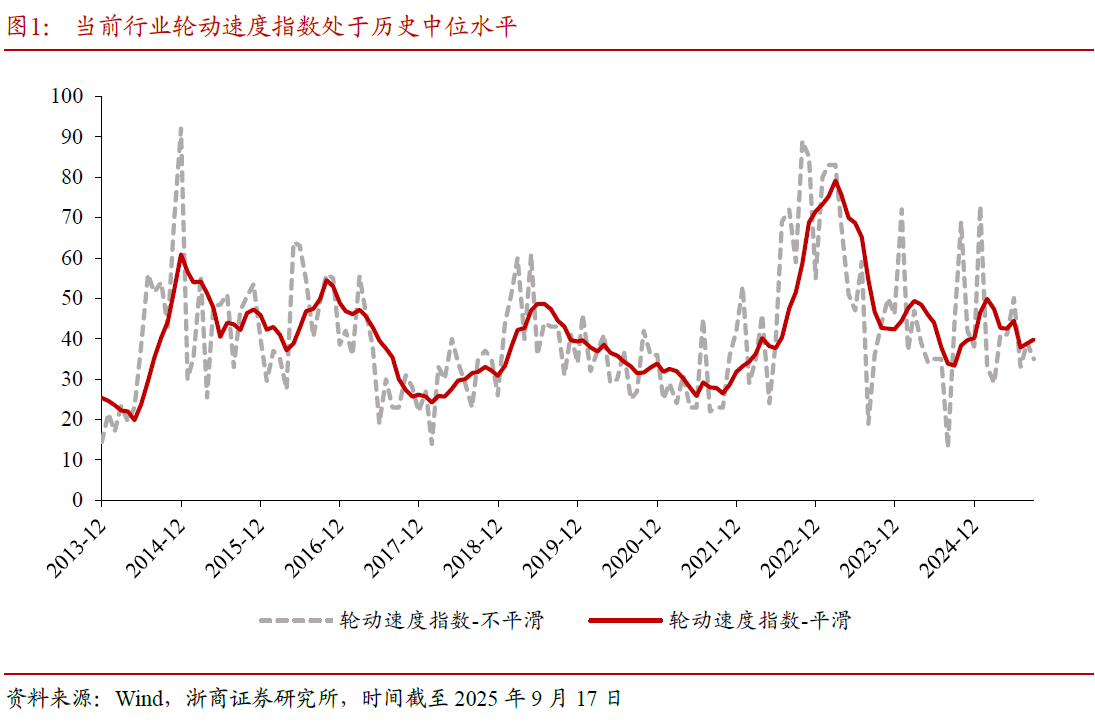
Core Viewpoint - The A-share market has entered a new phase of industry rotation, characterized by a slowdown in rotation speed but an increase in market differentiation [1][2][5] Group 1: Market Rotation Characteristics - The industry rotation speed has decreased since July, following a technology-led market rally, and is currently at the historical median over the past decade [2][5] - Despite the slowdown in rotation speed, the intensity of market differentiation has reached a new high for the year, indicating a significant structural divergence [5][6] Group 2: Driving Forces Behind Market Rotation - The core logic driving the current rotation is the interplay between liquidity and fundamentals, with liquidity being a major factor in the short term [6][7] - Different market phases are identified: liquidity-driven phases favor sectors like advanced manufacturing and TMT, while fundamental-driven phases benefit consumption, cyclical, and financial sectors [6][8] Group 3: Investment Strategies - Investment strategies should focus on balanced allocation to cope with moderate rotation speeds, while also identifying key opportunities in leading sectors [8][9] - Specific recommendations include focusing on the TMT sector due to strong catalysts and considering a shift to financial sectors as the market evolves [8][9] - The "dumbbell strategy" is suggested for long-term investors, emphasizing a tilt towards technology growth sectors while maintaining some exposure to dividend-paying stocks [9]

【策略】牛市中,板块轮动有何规律?——解密牛市系列之四(张宇生/王国兴)
光大证券研究· 2025-09-13 00:06
Core Viewpoint - The current bull market is primarily driven by liquidity, potentially entering its mid-stage, with TMT (Technology, Media, and Telecommunications) likely becoming the main focus in this phase [4][7]. Group 1: Bull Market Types and Stages - Bull markets can be categorized into two types: fundamental-driven and liquidity-driven, with significant price increases observed since 2010 [4]. - The stages of a bull market are divided into three phases: early, mid, and late, based on the presence of significant pullbacks in the Shanghai Composite Index [4]. Group 2: Historical Sector Rotation Patterns - Historically, there is no consistent long-term leading sector in bull markets; instead, sectors exhibit phase-specific opportunities [5]. - In liquidity-driven markets, sectors such as advanced manufacturing, TMT, and finance tend to show phase-specific opportunities, while in fundamental-driven markets, consumption, cyclical, and finance sectors are more favorable [5]. Group 3: Current Investment Focus - Currently, TMT is highlighted as a key sector to watch, with potential catalysts including strong domestic substitution demand and an anticipated interest rate cut by the Federal Reserve [7][8]. - If the market transitions to a fundamental-driven phase, advanced manufacturing will be a sector of interest, with real estate becoming more relevant in the later stages of the bull market [8].

牛市领涨主线之外,哪些行业值得关注?
2025-09-09 14:53
Summary of Key Points from Conference Call Records Industry or Company Involved - The discussion primarily revolves around the **chemical industry**, **non-gold and non-rare earth metals**, **new energy-related chemicals**, and **cyclical sectors** such as **engineering machinery** [1][3]. Core Insights and Arguments - **Market Performance**: In Q1 2025, sectors like **brokerage and innovative software** performed poorly, while the **robotics sector** showed resilience, indicating that strong sectors may not maintain their performance during corrections, with a probability of only **55%** [1][2]. - **Historical Data Analysis**: Historical data suggests that industries with mid-level performance that exhibit excess returns during corrections have a **70%** chance of outperforming in the next upward wave [2]. - **Investment Recommendations**: It is advised to focus on the **chemical sector**, **non-gold and non-rare earth metals**, and **new energy-related chemicals**, as well as cyclical sectors and engineering machinery, which have recently shown excess returns [1][3]. - **Chemical Sector Recovery**: The chemical sector has undergone a three-year clearing process and is currently at the forefront of recovery or at the end of the clearing phase, indicating investment potential [1][3]. - **PPI Recovery Expectations**: There is a high market expectation for the **Producer Price Index (PPI)** to turn positive, with predictions that this will occur by the end of this year or early next year, which would benefit cyclical styles [4][5]. - **Cyclical Style Outlook**: A positive outlook for cyclical styles is maintained for the next **6 months or more**, with expectations of better performance in **2026** [5]. Other Important but Potentially Overlooked Content - **Probability Insights**: If the current main sectors weaken during corrections, there is a **2/3** chance that they will not achieve excess returns in the next wave compared to the market. Conversely, if mid-level sectors show excess returns during corrections, they have an **80%** chance of outperforming in subsequent growth phases [6]. - **Market Adjustment**: Although the market has not fully adjusted, there is an expectation that cyclical styles may perform better in **2026**, suggesting a need for early rebalancing of investment strategies [6].
A股流动性与风格跟踪月报:短期震荡不改成长风格主线,大盘股更优-20250903
CMS· 2025-09-03 13:03
Market Style Outlook - The current liquidity-driven environment remains the main characteristic of the short-term stock market, with changes in market risk appetite dominating market rhythm. As September approaches, the anticipated interest rate cut by the Federal Reserve is expected to influence market expectations. The current heat of financing funds has reached a relatively high level, and future inflows may slow down slightly. However, with the potential for the Fed to restart rate cuts, the appreciation of the RMB, and the stabilization of domestic PPI, foreign capital may gradually shift towards inflow. Historically, during the pullback phase of a bull market, previously strong styles may experience larger corrections, but the market quickly returns to the previous strong main style after a brief pullback. Therefore, the market style in September is likely to favor large-cap stocks, with growth styles expected to continue to dominate [1][4][12]. Liquidity and Fund Supply-Demand - In September, incremental funds are expected to continue net inflow, with positive feedback from incremental funds likely to persist. The central bank continues to use various liquidity management tools to meet liquidity needs, maintaining a strong willingness to protect liquidity. The overall funding rates are expected to remain low. External liquidity conditions are also favorable, with market expectations for a high probability of a Fed rate cut in September, which may lead to a weaker dollar index. In August, the net inflow of funds in the stock market expanded significantly, with financing funds becoming the main source of incremental capital. The supply side shows a rebound in the scale of newly issued equity funds, and the market's risk appetite continues to improve [2][3][20]. Market Sentiment and Fund Preference - In August, market risk appetite further rebounded, with the overall A-share risk premium falling below the historical average. Major indices broke through previous resistance levels, showing an accelerated upward trend. The technology style performed well, with the ChiNext 50 and the Growth Enterprise Market leading the gains. The performance of sectors related to communication electronics and AI computing was particularly strong, with notable performances in computer, power equipment, and machinery sectors [3][31][41]. Major Asset Performance Review - The A-share market led global markets in August, with major indices breaking previous loss resistance levels and showing an accelerated upward trend. The market's upward slope has slowed down towards the end of August, with a shift in style from small-cap to large-cap stocks. The ChiNext 50 and small-cap growth indices led the gains, while the value and dividend styles performed relatively weakly [31][36][37].
2025年A股3季度投资策略:慢牛行情远未结束,居民资产入市空间巨大
Dongxing Securities· 2025-08-27 02:36
Group 1 - The core viewpoint is that the current market is experiencing a slow bull trend, driven primarily by short-term liquidity and declining interest rates, which have led to a significant reduction in household deposits and an increase in stock market attractiveness [4][15][18] - Institutional investors are leading the market, with a notable increase in new accounts opened by institutions compared to individual investors, indicating a shift in market sensitivity [1][24][28] - The report highlights a substantial potential for household asset allocation into stocks and funds, estimating a total of 300 trillion yuan in potential new allocations, with a significant portion expected to come from urban households [10][78][80] Group 2 - Economic data remains subdued, with industrial production and fixed asset investment growth rates declining, indicating ongoing economic contraction [5][39][42] - The report emphasizes that market support is driven by improved expectations, with a need for a certain degree of technology bubble to stimulate new growth [6][51][62] - The mid-term outlook for the index remains positive, with expectations of significant upward movement and potential historical highs, driven by the evolving role of China in the global economy [7][63][64] Group 3 - The report discusses the structural characteristics of the market, particularly the dominance of large technology companies, which are expected to drive future growth and market dynamics [7][62][76] - The report notes that the current low interest rates are a major driver for the shift of deposits into the stock market, reflecting a broader trend of financial asset reallocation [8][70][76] - The management's increased regulatory efforts and the introduction of new policies aimed at stabilizing the market are highlighted as crucial factors in restoring investor confidence [10][71][73]
为什么说这次是慢牛?
雪球· 2025-08-22 04:26
Core Viewpoint - The article discusses the establishment of a bull market in A-shares, characterizing it as a "slow bull" driven by structural improvements in the economy and long-term capital inflows [2][6]. Historical Bull Markets - The article reviews past bull markets in A-shares: - 1999-2001: A leveraged bull market followed by adjustments, driven by speculative trading and lessons learned [4]. - 2005-2007: A comprehensive bull market supported by institutional reforms and macroeconomic prosperity, with blue-chip stocks leading the rally [4]. - 2008-2009: A fundamental bull market driven by economic recovery post-global financial crisis, led by cyclical industries [4]. - 2014-2015: A liquidity-driven bull market characterized by high expectations for reforms but lacking fundamental support, leading to significant corrections [5]. Current Bull Market Characteristics - The current bull market is described as a "systematic slow bull" due to several factors: - The macroeconomic environment has changed, with a focus on structural improvements rather than rapid stimulus [6]. - The nature of capital has shifted from speculative to long-term investments, with state-owned and institutional investors providing stability [7]. - There is a significant reallocation of household assets, with a large amount of savings seeking new investment avenues, particularly in the stock market [7]. - Ongoing industrial upgrades are evident, with advancements in AI, innovative pharmaceuticals, and renewable energy sectors contributing to economic growth [8]. Investment Directions - The article identifies two main investment directions: - **Hardcore High Technology**: Focus on new economy sectors such as AI, innovative pharmaceuticals, robotics, renewable energy, and semiconductors, which are expected to be core assets for the next decade [11]. - **Super High Dividends**: Investment in traditional sectors like finance, machinery, and cyclical industries, which have potential for valuation recovery as long as the economy remains stable [12]. - The overall market logic suggests a "systematic bull market" driven by China's rise and advantages, emphasizing the importance of finding personal wealth opportunities within this "slow bull" environment [12].

七成投资者看好三季度A股 市场乐观情绪进一步酝酿
Shang Hai Zheng Quan Bao· 2025-08-04 22:59
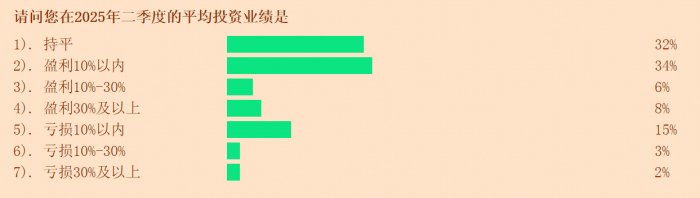
Core Viewpoint - The A-share market has shown strong resilience in the past quarter, leading to a recovery in individual investors' profitability. With index repair and low-risk interest rates, individual investors' willingness to allocate to equity assets has increased. For the third quarter, 70% of investors are bullish on the A-share market, indicating a more optimistic sentiment compared to the previous quarter. However, the performance of the A-share market in the third quarter may exceed the expectations of most investors, as the Shanghai Composite Index has successfully surpassed 3600 points in July [23]. Group 1: Market Performance and Investor Sentiment - In the second quarter, the A-share market experienced a "V"-shaped rebound after a significant drop in early April, with 48% of surveyed investors reporting profitability, an increase of 6 percentage points from the previous quarter [4][5]. - The proportion of investors who believe the Shanghai Composite Index will close positively in the third quarter has risen to 70%, a 12 percentage point increase from the previous quarter [17][19]. - Investors' expectations for the index's upper limit in the third quarter show that 39% anticipate it will reach around 3500 points, while 48% expect the lower limit to be around 3400 points [19]. Group 2: Asset Allocation and Investment Preferences - The proportion of individual investors who have increased their equity asset allocation has risen, with 36% planning to increase their overall equity asset size, a 7 percentage point increase from the previous quarter [8]. - Investors are showing a preference for technology growth stocks, with an average holding of 23.94%, while the average holding for cyclical stocks has increased to 20.21% [12][14]. - The investment sentiment towards new consumption concept stocks has also grown, with 55% of investors participating in this sector, indicating a shift in focus from traditional consumption stocks [15][21]. Group 3: Market Liquidity and External Factors - 44% of investors believe that the liquidity in the A-share market will remain at current levels, reflecting a significant increase in confidence compared to previous quarters [20]. - The expectation for the Federal Reserve's monetary policy remains optimistic, with 42% of investors anticipating continued accommodative policies and potential rate cuts [20]. - The inflow of southbound funds into the Hong Kong stock market has reached a historical high, with net inflows totaling 731.19 billion HKD in the first half of the year [21].