
证券业

Search documents
各部委各地学习中央经济工作会议“划重点”【国盛宏观熊园团队】
Xin Lang Cai Jing· 2025-12-24 16:47
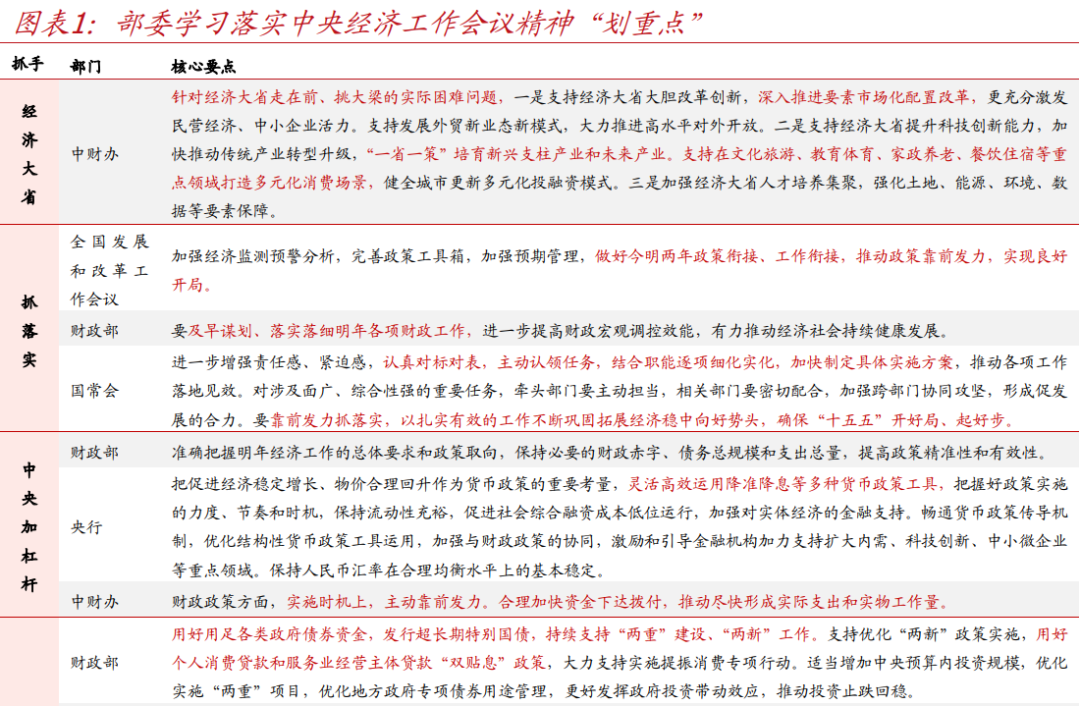
Core Viewpoint - The recent learning and dissemination of the Central Economic Work Conference's spirit by various departments and regions is a crucial window for tracking the implementation of the conference's directives, revealing more details and actionable measures. There are several highlights and new proposals, including a focus on proactive measures, accelerating fund disbursement, supporting new consumption growth points, and emphasizing real and substantial growth without exaggeration [2][3][11]. Group 1: Overall Direction - All parties are refining their deployment around the Central Economic Work Conference's principle of "seeking progress while maintaining stability and improving quality and efficiency," with clear directions and highlighted priorities such as expanding domestic demand, strengthening technology, promoting reform, and stabilizing real estate [3][11]. - The emphasis is on policies that "act proactively" to ensure a good start to the year [3][11]. Group 2: Departmental Deployment - Each department has made detailed deployments based on their functional positioning, with the Central Financial Office providing the most comprehensive interpretation of the conference's spirit, revealing specific tasks and details [4][12]. - Signal 1: The continuation of "central leverage" is confirmed, with specific scales to be determined at the 2026 National Two Sessions, emphasizing proactive measures and reasonable acceleration of fund disbursement [4][12]. - Signal 2: Multiple departments will prioritize expanding domestic demand, utilizing various funds, and supporting "two new" and "two heavy" projects, with new focuses on cultivating trillion-level new consumption growth points and increasing investment in consumption infrastructure and livelihood projects [4][12][13]. Group 3: Industry Focus - Signal 3: There is a strong focus on industrial transformation, self-control, and innovation leadership, promoting the expansion and efficiency of technology finance, particularly in the Beijing-Tianjin-Hebei and Yangtze River Delta regions [5][14]. - Signal 4: The emphasis on reform includes advancing a unified market, combating "involution," and stabilizing the private sector, with more details on fiscal and tax reforms to be discussed in the upcoming National Fiscal Work Conference [6][15]. Group 4: Risk Management and Market Stability - Signal 6: There is a strict adherence to the "no explosion" bottom line for risk prevention, balancing the needs of residents and real estate companies, and reiterating the principles for debt resolution while increasing financial and fiscal support [8][17]. - Signal 7: Efforts to stabilize the stock market will continue, promoting the narrative of the Chinese stock market and accelerating reforms in the Sci-Tech Innovation Board and commercial real estate REITs [9][18]. Group 5: Local Implementation - Many regions have begun to learn and convey the spirit of the Central Economic Work Conference, tailoring key tasks to local conditions, with a focus on proactive measures and concrete actions, particularly in the lead-up to the January 2026 local two sessions [10][23]. - Localities like Zhejiang and Hainan are emphasizing innovation and openness, respectively, while ensuring that actionable measures are taken to support economic growth [10][23][24].

债市调整 理财净值波动不断!多家银行理财公司“喊话”别慌
Bei Jing Shang Bao· 2025-12-24 15:21
Core Viewpoint - The recent fluctuations in the bond market have led to noticeable declines in the net value of fixed-income wealth management products, prompting investor concern and caution [1][2]. Group 1: Market Performance - The bond market has experienced continuous adjustments since November, with a brief rebound in early December followed by renewed weakness. As of December 24, the 30-year government bond yield was reported at 2.2185%, down 0.45 basis points from the previous trading day, while the 10-year yield stabilized at 1.835% [2][3]. - Nearly 100 wealth management products announced early termination between November 1 and December 9 due to the bond market's price decline, which directly impacted the net value of these products [4]. Group 2: Causes of Market Fluctuation - Multiple factors have contributed to the bond market's volatility, including year-end institutional behaviors, pressure from performance assessments, and uncertainty surrounding new public fund redemption fee regulations [3]. - Despite the current volatility, signs of recovery in the bond market are emerging, with long-term bonds showing improved value and potential for recovery as central bank policies support liquidity [3]. Group 3: Investment Strategies - Financial institutions recommend that investors focus on cash management products, which are primarily based on short-term deposits and money market instruments, as they are less affected by long-term bond fluctuations [5][6]. - For investors with a higher risk tolerance, "fixed income plus" products that include a small portion of equity assets can help hedge against bond market volatility [6]. - Institutions suggest that investors should adopt a long-term perspective and consider mid-duration pure bond products for lower risk, while those with a slightly higher risk appetite may opt for mid-to-long duration bonds or "micro-inclusion" fixed income products to enhance returns [6].
再提“维护资本市场稳定”!央行召开重要会议
Zheng Quan Shi Bao· 2025-12-24 13:02
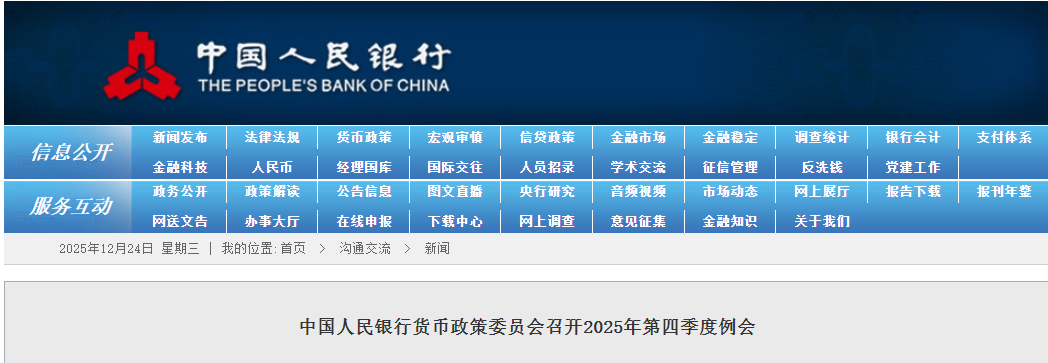
Core Viewpoint - The People's Bank of China (PBOC) has shifted its assessment of the external economic environment from "weakened" to "insufficient," indicating a more cautious outlook on global economic growth [2] - The PBOC's recent meeting emphasized the need for a moderately accommodative monetary policy to address domestic economic challenges, particularly the imbalance between strong supply and weak demand [3] Monetary Policy - The meeting called for the continuation of a moderately accommodative monetary policy, with an emphasis on enhancing counter-cyclical and cross-cyclical adjustments [3] - The focus has shifted from "increasing the intensity of monetary policy regulation" to "leveraging the integrated effects of incremental and stock policies" [3] - The PBOC aims to maintain ample liquidity, aligning the growth of social financing and money supply with economic growth and price level expectations [3] Tools and Instruments - The PBOC's toolbox for monetary policy has become more diverse, with a range of liquidity injection tools available, including long-term reserve requirement ratio cuts and various market operations [4] - The meeting suggested strengthening the guidance of central bank policy rates and improving the transmission mechanism of market-based interest rates [4] Market Stability - The PBOC emphasized the importance of maintaining stability in the capital market and suggested utilizing various financial instruments to support this goal [4] - There was a continued focus on enhancing the resilience of the foreign exchange market and stabilizing market expectations to prevent excessive fluctuations in the exchange rate [4]
日元越救越弱!日央行加息“失灵”,最强干预警告只是开始?
Sou Hu Cai Jing· 2025-12-24 08:50
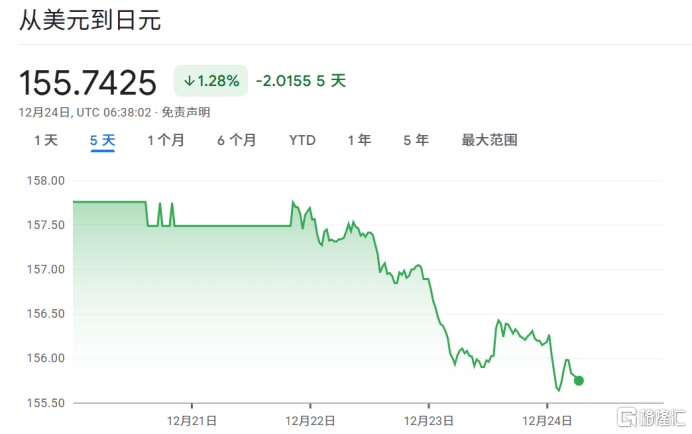
Core Viewpoint - The Japanese yen continues to weaken despite the Bank of Japan's recent interest rate hike, raising concerns about the effectiveness of monetary policy in stabilizing the currency [1][2][10]. Group 1: Monetary Policy and Interest Rates - The Bank of Japan raised interest rates by 25 basis points to a 30-year high during the December meeting, indicating a potential shift towards tighter monetary policy [1][8]. - The October monetary policy meeting minutes revealed intense debates among committee members regarding the necessity of further rate hikes to achieve long-term economic stability [6]. - Some committee members expressed concerns that the recent yen depreciation could lead to higher import costs and inflation exceeding expectations [6][16]. Group 2: Currency Performance - The yen has depreciated by 0.28% against the US dollar, trading at 155.7425, continuing its downward trend [3]. - Despite the interest rate hike, market reactions suggest a lack of confidence in the Bank of Japan's commitment to combating inflation, leading to further yen depreciation [10][11]. Group 3: Government Response and Fiscal Policy - The Japanese government issued a strong warning to currency speculators, emphasizing its authority to take decisive action against excessive currency fluctuations [5][13]. - The government has implemented an expansive fiscal policy totaling 21.3 trillion yen, which has raised concerns about Japan's fiscal health and contributed to rising bond yields [11]. - Plans for issuing new debt exceeding 28.6 trillion yen in the upcoming budget have intensified scrutiny over the government's fiscal strategy [11]. Group 4: Market Sentiment and Future Outlook - Analysts predict that the Bank of Japan may continue to raise interest rates in 2024, with expectations of reaching a policy rate of 1.25% by the end of 2026 [9]. - Concerns about the Bank of Japan's delayed response to inflation risks are growing, with market participants questioning the effectiveness of verbal interventions in stabilizing the yen [16].
央行等八部门出台金融举措,支持加快西部陆海新通道建设
Sou Hu Cai Jing· 2025-12-24 07:58
Core Viewpoint - The People's Bank of China and several government agencies have jointly issued opinions to enhance financial support for the construction of the Western Land-Sea New Corridor, aiming to create a new pattern of open economy that connects the Silk Road Economic Belt and the 21st Century Maritime Silk Road [2][3]. Financial Support and Innovation - The initiative emphasizes the need for financial product innovation in the logistics sector, encouraging banks to provide reasonable financing and bill discounting support to eligible small and micro logistics enterprises [1][7]. - A fund will be established in Chongqing to support infrastructure and industrial park construction along the corridor, with a focus on mixed financing and market-oriented debt-to-equity swaps for existing infrastructure projects [1][6]. Cross-Border Financial Cooperation - The plan supports the establishment of a cooperative mechanism for cross-border financial services, allowing banks to issue cross-border loans to enterprises in ASEAN countries while ensuring compliance with regulatory frameworks [1][14]. - It encourages the optimization of overseas institutional layouts by financial institutions to enhance cross-border trade and investment facilitation [4][5]. Infrastructure and Logistics Financing - Financial institutions are urged to increase support for infrastructure projects, utilizing various financing channels such as corporate bonds and real estate investment trusts (REITs) to meet diverse funding needs [6][8]. - The initiative promotes the development of specialized financial products for logistics, including comprehensive credit and flexible loan models to meet the evolving financing demands of the logistics sector [7][8]. Digital Financial Services - The establishment of the "Central Bank Western Land-Sea Smart Integration" platform aims to provide comprehensive financial services and enhance the efficiency of financial and enterprise connections [12][13]. - The platform will facilitate the integration of various financial data and services, promoting efficient matching of financing needs and financial supply [12][13]. Green Finance and Sustainable Development - The initiative supports the development of green finance standards and encourages investment in green projects, aiming to foster low-carbon economic development along the corridor [15]. - It promotes collaboration with Southeast Asia and Hong Kong investors to support the issuance of green bonds and the establishment of green low-carbon funds [15]. Regulatory and Risk Management - A financial regulatory cooperation mechanism will be established among provinces to enhance risk monitoring and ensure compliance with financial reforms [17][18]. - The plan emphasizes the importance of early identification and management of financial risks associated with cross-border capital flows [17][18].
金融监管总局报告显示:消费者持有这类金融资产最多→
Jin Rong Shi Bao· 2025-12-23 04:40
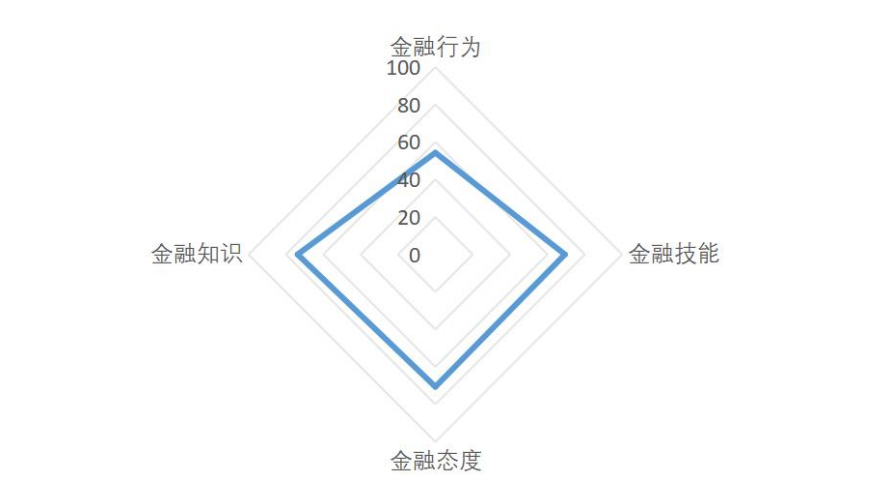
Core Insights - The Consumer Financial Literacy Index for 2025 is reported to be 67.61, indicating a moderate level of financial literacy among consumers in China [1][3]. Consumer Financial Skills - The average score for financial skills is 69.30, suggesting that consumers generally handle basic financial matters well but need to learn new skills to adapt to a more digital and complex financial environment [4]. - A significant portion of consumers, 36.38%, ignore high-yield financial products, while 37.58% check if the company or product is regulated [4]. Consumer Awareness of Financial Products - 59.08% of consumers understand that bank wealth management products are not guaranteed to be principal-protected and may incur losses, yet 29.59% mistakenly believe these products are guaranteed [6]. - 69.22% of consumers report overall profitability from their investments in bank wealth management products [26]. Consumer Financial Behavior - 57.03% of consumers have surplus income after expenses, while only 6.83% report that their income does not cover their expenses [9]. - The average score for financial behavior is 54.28, indicating a need for improvement in the diversification of financial tools and asset allocation strategies [20]. - 85.73% of consumers have used mobile payments, and 59.97% have engaged in saving behaviors, reflecting a healthy debt level among consumers [20]. Consumer Financial Knowledge - The average score for financial knowledge is 76.25, showing that consumers have a good grasp of basic financial concepts but struggle with more complex topics [27]. - 69.39% of consumers recognize the principle that higher returns often come with higher risks, and nearly 40% understand the importance of diversification in investment [30]. Consumer Attitudes Towards Financial Products - 79.97% of consumers are aware of their credit status, with 56.47% having checked their credit reports [19]. - 76.92% understand that a poor credit record can affect loan applications, but only 46.47% know the duration for which negative records are kept [35]. Demographic Insights - Financial literacy scores are highest among the 30-39 age group at 70.11, with scores decreasing in older age brackets [37]. - Higher income groups (annual income above 240,000 yuan) have a financial literacy score of 73.01, while those earning below 24,000 yuan score the lowest at 58.93 [37]. - Urban consumers score higher in financial literacy (69.92) compared to rural consumers (63.23) [37].
外汇专题报告:规模收敛但未转向,结售汇格局依旧平衡
Hua Tai Qi Huo· 2025-12-23 03:10
Group 1: Report's Investment Rating - No information provided on the industry investment rating. Group 2: Core Views - The narrowing of the surplus in November's foreign exchange settlement and sales and cross - border receipts and payments mainly reflects structural and rhythm adjustments. Enterprises' foreign exchange settlement and sales and hedging behaviors tend to be rational, and cross - border capital flows remain stable without a directional change. The US dollar is still in the stage of repricing within a range, lacking a trend driver in the short term. Affected by this, the USD/CNY rate generally maintains a range - bound movement, mainly fluctuating around 7.0 - 7.1 in the short term, and a directional breakthrough still awaits new macro variables [2]. Group 3: Summary by Directory Market Supply - Demand Relationship Analysis - In November, the surplus in bank foreign exchange settlement and sales fell to $15.65 billion, showing a continuation of the surplus but a marginal slowdown. The overall foreign exchange supply - demand remains in a relatively balanced state. The scale of foreign exchange settlement and sales did not show a significant increase or decrease, indicating that cross - border capital flows are still mainly for regular receipts and payments. The narrowing of the surplus mainly reflects a rhythm change rather than a directional reversal. Against the backdrop of dull US dollar pricing and neutral corporate exchange - rate expectations, the marginal guidance of single - month foreign exchange settlement and sales data on the exchange rate has declined [9]. Foreign Exchange Market Supply - Demand Balance - The change in the surplus structure mainly comes from the cooling of the foreign exchange settlement momentum at the client - service end, while the deficit in banks' own foreign exchange settlement and sales narrows simultaneously, offsetting some of the pressure from the narrowing surplus. The surplus in client - service foreign exchange settlement and sales narrowed from $21.426 billion to $16.423 billion, indicating that enterprises at the end of the year prefer to disperse foreign exchange settlement and focus on operating cash - flow management rather than releasing foreign exchange settlement demand in a concentrated manner. At the same time, the deficit at the bank's self - operating end narrowed significantly, reflecting a phased relief of the pressure on financial institutions in matchmaking and position management, making the surplus structure of foreign exchange settlement and sales smoother and helping to stabilize the market's expectations of short - term exchange - rate fluctuations [10]. Forward Foreign Exchange Settlement and Purchase Intentions - In November, the RMB exchange rate strengthened moderately, and market trading activity rebounded. The average spot value of the USD/CNY rate decreased by 0.48% month - on - month, still operating in a moderately volatile range. Meanwhile, the spot inquiry trading volume in the inter - bank market rose to $40.342 billion, reflecting a recovery in market trading willingness. In this context, enterprises' spot - end operations became more rational. After excluding forward performance, the foreign exchange settlement rate of received funds fell to 51.99%, and the foreign exchange purchase rate of payment funds decreased to 60.30%, indicating that enterprises did not adjust their foreign exchange settlement and sales rhythm in a concentrated manner due to short - term exchange - rate fluctuations but maintained a relatively balanced receipt and payment management. On the forward end, the overall performance was a cooling of new hedging demand and a differentiated performance structure, indicating that enterprises are adjusting their focus on managing short - to - medium - term exchange - rate risks. In November, both the forward foreign exchange sales and settlement contract amounts declined, and the new hedging demand decreased compared with the previous period. The change at the performance end was more notable, with a reduction in forward foreign exchange settlement performance and a significant increase in forward foreign exchange purchase performance, reflecting that some enterprises chose to perform contracts after locking in exchange rates previously but did not simultaneously expand new forward exposures. The unexpired forward net foreign exchange settlement scale is still rising, and the forward foreign exchange settlement and purchase hedging ratios are basically the same, indicating that the forward hedging structure of enterprises tends to be stable, mainly reflecting "stock adjustment" in risk management rather than an active bet on the exchange - rate direction [12]. Foreign Exchange Settlement and Sales Structure Analysis Banks' Own Foreign Exchange Settlement and Sales - In the macro - data analysis of bank foreign exchange settlement and sales, banks' internal foreign exchange settlement and sales activities are not the key focus. These activities mainly include external dividend and profit payments, repatriation of overseas profits, and capital injection. The funds involved are small in scale and seasonal, having a limited impact on the overall trend of foreign exchange settlement and sales [17]. Banks' Client - Service Foreign Exchange Settlement and Sales - In November, the surplus in domestic banks' client - service cross - border receipts and payments narrowed significantly, with both the current account and the capital and financial account declining. The current - account surplus decreased from $74.66 billion to $55.238 billion. The surplus in goods trade fell to $72.666 billion, mainly reflecting a structural adjustment under the stable export rhythm and enhanced marginal import recovery, rather than a reversal of the foreign - trade fundamentals. The deficit in service trade expanded to - $6.421 billion, mainly related to the slow recovery of outbound - related consumption and the incomplete recovery of cross - border service receipts and payments. At the same time, the deficit in the income and current transfer items expanded, weakening the support of the current account for the surplus in cross - border receipts and payments, but the overall current account still maintained a relatively solid surplus foundation. The deficit in the capital and financial account further expanded, indicating that cross - border capital flows are still mainly "structurally outflowing", but the internal composition shows differentiation. In November, the deficit in the capital and financial account expanded to - $38.605 billion. Among them, the deficit in securities investment narrowed to $34.599 billion, showing a significant improvement compared with the previous period, reflecting a marginal relief of the pressure of foreign - capital outflow. The deficit in direct investment narrowed slightly, indicating that cross - border capital flows at the entity level are becoming stable. Other investments changed from a small surplus to a slight deficit, with overall controllable fluctuations. Overall, the capital account still drags down cross - border receipts and payments, but there is no concentrated outflow through a single channel [21]. Deconstruction of November's Foreign Exchange Settlement and Sales Securities Investment - In November, the trading activity in the cross - border equity market declined simultaneously, reflecting a phased weakening of risk preferences at home and abroad. The trading volumes of the Shanghai - Hong Kong Stock Connect and the Shenzhen - Hong Kong Stock Connect decreased to 4424.844 billion yuan and 1791.246 billion yuan respectively, indicating that both north - bound and south - bound funds were mainly in a wait - and - see mode in that month, and the trading willingness decreased significantly. Compared with the equity end, the foreign - capital allocation in the bond end remained relatively stable, but there was a slight decline in November. The overall fluctuation of the overseas bond custody volume was not large, indicating that long - term allocation funds have not undergone a trend adjustment, but the slight decline in that month also reflects that when both the yield and the exchange rate are in a range - bound oscillation, the power for incremental allocation is insufficient. Overall, the impact of cross - border asset flows on the foreign - exchange market in November was mainly reflected in the slowdown of trading and foreign exchange settlement and sales rhythms, rather than a directional capital - flow shock [27]. Goods Trade - In November, the global manufacturing PMI declined marginally but remained near the boom - bust line, with major economies showing differentiation around the expansion - contraction critical point. Specifically, the global manufacturing PMI decreased slightly from 50.9 in October to 50.5; China's manufacturing PMI rebounded to 49.2, showing that the marginal effect of domestic - demand recovery offsetting external - demand slowdown. The US PMI fell to 52.2, the eurozone's to 49.6, and continued to weaken slightly in December, while Japan and South Korea remained below 50. Overall, the global manufacturing boom is in a high - level slowdown stage. External demand has not weakened significantly, but the expansion slope has decreased, making enterprises' foreign - exchange receipts and payments more likely to follow the order and delivery rhythm smoothly rather than adjusting their foreign - exchange settlement and sales strategies in a concentrated manner due to single - month boom fluctuations. In November, China's export data improved significantly, and the trade surplus widened again, indicating that foreign trade still has resilience in supporting foreign - exchange receipts and payments. In US dollars, exports increased by 5.9% year - on - year in November, a significant rebound from the previous month, and imports increased slightly to 1.9% year - on - year. The single - month trade surplus expanded to $111.68 billion. From January to November, exports increased by 5.4% year - on - year, imports decreased by 0.6% year - on - year, and the trade surplus exceeded $1 trillion for the first time. Structurally, the import and export to countries participating in the Belt and Road Initiative increased by 6%, effectively offsetting the drag of a 16.9% year - on - year decrease in imports and exports to the US. Mechanical and electrical products accounted for more than 60% of exports, among which the exports of integrated circuits and automobiles maintained rapid growth, and the general decline in commodity import prices also increased the surplus level. Overall, the stable volume and good price of foreign trade, as well as the diversified regional and product structures, help to enhance the long - term support of the current account for foreign exchange settlement and sales and the exchange rate, but in the short term, it mainly plays a "bottom - supporting" role rather than a trend - driving force [32].
上海荣泰健康科技股份有限公司关于使用可转债闲置募集资金现金管理赎回并继续进行现金管理的公告
Shang Hai Zheng Quan Bao· 2025-12-22 17:50
Core Viewpoint - The company, Shanghai Rongtai Health Technology Co., Ltd., has announced the use of idle funds from convertible bonds for cash management, aiming to enhance the efficiency of fund utilization and generate financial returns for shareholders [1][11]. Group 1: Cash Management Overview - The company has approved the use of up to RMB 450 million of idle funds from convertible bonds for cash management, with a focus on low-risk, high-liquidity financial products [1][11]. - The cash management aims to ensure that the safety of the raised funds is not compromised and that the intended use of the funds remains unchanged [2][11]. - The company has already redeemed RMB 130 million from investments in large certificates of deposit from Hangzhou Bank, yielding a total return of RMB 3.7017 million [2][11]. Group 2: Investment Details - The company has allocated RMB 30 million for cash management in the form of broker yield certificates, which meet the criteria of high safety and liquidity [3][5]. - The cash management products include various floating yield certificates issued by CITIC Securities, with investment amounts of RMB 10 million each and varying maturities [9][10]. - The cash management period for the purchased financial products will not exceed 12 months [5][11]. Group 3: Approval Process - The company conducted the necessary approval processes, including meetings of the board of directors and the supervisory board, to authorize the cash management plan [1][11]. - The supervisory board and the sponsor institution, Wanhe Securities Co., Ltd., have expressed their agreement with the cash management initiative [11]. Group 4: Impact on the Company - The cash management initiative is expected to improve the company's investment returns and fund utilization efficiency without affecting the main business operations or the progress of investment projects [11]. - The amount allocated for cash management, RMB 30 million, is not expected to have a significant impact on the company's future business, financial condition, operating results, or cash flow [11].

流动性与机构行为跟踪:杠杆上行,大行保险买长
ZHONGTAI SECURITIES· 2025-12-22 11:22
Report Summary 1. Report Industry Investment Rating No information provided regarding the industry investment rating. 2. Core View of the Report This week (December 15 - December 19), the money market rates were divided. The average daily lending of large - scale banks increased month - on - month, and funds slightly increased leverage. The maturity of certificates of deposit (CDs) increased, and the yield curve of CD maturities shifted downward. In terms of spot bond transactions, the main buyers were large - scale banks, mainly increasing their holdings of interest - rate bonds within 3 years and 5 - 10 years. The net buying volume of funds decreased, mainly increasing their holdings of short - term credit bonds. Large - scale insurance companies continued to increase their allocation of ultra - long - term interest - rate bonds of 20 - 30 years, and rural commercial banks mainly sold interest - rate bonds [4]. 3. Summary by Relevant Catalogs 3.1 Money Market - **Open market operations**: There were 668.5 billion yuan of reverse repurchases due this week. The central bank cumulatively injected 657.5 billion yuan of reverse repurchases, and conducted a 60 - billion - yuan outright reverse repurchase on Monday and had a 40 - billion - yuan outright reverse repurchase due on Tuesday. The net liquidity injection for the whole week was 189 billion yuan. Next Thursday, 300 billion yuan of MLF will mature [7][10]. - **Funds price**: As of December 19, R001, R007, DR001, and DR007 were 1.35%, 1.52%, 1.27%, and 1.44% respectively, changing by 0.44BP, 0.73BP, - 0.41BP, and - 2.78BP compared with December 12, and were at the 15%, 9%, 10%, and 3% historical quantiles respectively [12]. - **Large - scale banks' lending**: From December 15 to December 19, the total lending scale of large - scale banks was 22.81 trillion yuan, with a daily maximum lending scale of 4.7 trillion yuan and an average daily lending scale of 4.6 trillion yuan, an increase of 0.17 trillion yuan compared with the previous week's daily average [7][17]. - **Pledged repurchase transactions**: The average daily trading volume was 8.48 trillion yuan, with a daily maximum of 8.63 trillion yuan, a 5% increase compared with the previous week's daily average. The proportion of overnight repurchase transactions increased, with an average daily proportion of 90.0%, a daily maximum of 90.3%, an increase of 0.57 percentage points compared with the previous week's daily average, and as of December 19, it was at the 93.1% quantile [7][19]. 3.2 Certificates of Deposit and Bills - **CD issuance and financing**: The total CD issuance this week was 993.19 billion yuan, an increase of 52.6 billion yuan compared with the previous week. The total maturity was 1062.9 billion yuan, an increase of 450 million yuan compared with the previous week. The net financing was - 69.7 billion yuan, an increase of 51.8 billion yuan compared with the previous week [7][22]. - **By bank type**: State - owned banks had the highest issuance scale. The issuance scales of state - owned banks, joint - stock banks, city commercial banks, and rural commercial banks changed by 103.75 billion yuan, 7.81 billion yuan, - 69.44 billion yuan, and - 1.64 billion yuan respectively compared with the previous week [22]. - **By maturity type**: The 3 - month CD had the highest issuance scale. The issuance scales of 1 - month, 3 - month, 6 - month, 9 - month, and 1 - year CDs changed by - 30.68 billion yuan, 77.06 billion yuan, - 77.38 billion yuan, 55.07 billion yuan, and 28.19 billion yuan respectively compared with the previous week. The 3 - month CD accounted for the highest proportion (33.64%) of the total issuance of CDs by different types of banks, mainly issued by city commercial banks; the 6 - month CD accounted for 32.61%, mainly issued by state - owned banks [22]. - **CD maturity and yield**: The CD maturity this week increased to 1062.9 billion yuan, an increase of 450 million yuan compared with the previous week. Next week (December 22 - December 26), 882.2 billion yuan of CDs will mature. The yield curve of CD maturities shifted downward. As of December 19, the yields of 1 - month, 3 - month, 6 - month, 9 - month, and 1 - year CDs rated AAA changed by - 0.25BP, - 2BP, - 2.5BP, - 1.75BP, and - 2.5BP respectively compared with December 12 [7][26][34]. - **Bill rates**: As of December 19, the 3 - month direct discount rate, 3 - month transfer discount rate, 6 - month direct discount rate, and 6 - month transfer discount rate of state - owned and joint - stock banks were 0.66%, 0.5%, 0.91%, and 0.95% respectively, changing by 3BP, 4BP, 7BP, and 0BP respectively compared with December 12 [7][36]. 3.3 Institutional Behavior Tracking - **Leverage ratio**: The inter - bank leverage ratio in the bond market increased by 0.21 percentage points to 106.89% as of December 19 compared with December 12, at the 52.7% historical quantile since 2021. The leverage ratios of banks, securities firms, insurance companies, and broad - based funds were 103.5%, 184%, 133.8%, and 104.6% respectively, changing by 0.04BP, 0.46BP, 1.68BP, and 0.01BP respectively compared with December 12, and as of December 19, they were at the 30%, 1%, 95%, and 15% historical quantiles respectively [40][41]. - **Net buying duration**: The central value of the net buying duration of funds rebounded. As of December 19, the weighted average net buying duration of funds (MA = 10) was - 0.75 years, an increase from - 3.52 years on December 12, at the 18% historical quantile. The weighted average net buying duration of wealth management products (MA = 10) was 5.53 years, showing an increase compared with December 19, at the 99% historical quantile. The weighted average net buying duration of rural commercial banks (MA = 10) was - 1.38 years, turning negative compared with December 12, at the 26% historical quantile. The weighted average net buying duration of insurance companies (MA = 10) was 14.39 years, an increase compared with December 12, at the 97% historical quantile [7][43]. - **Duration of pure - bond funds**: As of December 19, the duration of medium - and long - term pure - bond funds increased by 0.03 years to 3.58 years compared with December 12, at the 51% historical quantile since this year. The duration of short - term pure - bond funds increased by 0.09 years to 1.91 years compared with December 12, at the 99% historical quantile since this year [45].
资产配置全球跟踪2025年12月第3期:资产概览:中债牛陡,白银领涨
国泰海通· 2025-12-22 11:19
资产概览:中债牛陡,白银领涨 [Table_Authors] 方奕(分析师) ——资产配置全球跟踪 2025 年 12 月第 3 期 本报告导读: 12/15-12/19,全球资产走势分化显著,发达/欧洲权益涨,新兴/亚洲权益跌。COMEX 银单周涨幅达 9.4%,年内涨幅破 120%。美联储 2026 年降息预期时间提前。 投资要点: 策略研究 /[Table_Date] 2025.12.22 | | 021-38031658 | | --- | --- | | | fangyi2@gtht.com | | 登记编号 | S0880520120005 | | | 郭佼佼(分析师) | | | 021-38031042 | | | guojiaojiao2@gtht.com | | 登记编号 | S0880523070002 | [Table_Report] 相关报告 成交活跃度下降,沪深 300 估值领涨 2025.12.21 消费景气线索增多,电子产业增长延续 2025.12.17 资产概览:全球风偏降温,贵金属领涨 2025.12.15 融资资金流入加速,外资重回流入 2025.12.15 海外联储降息 ...