多晶硅

Search documents
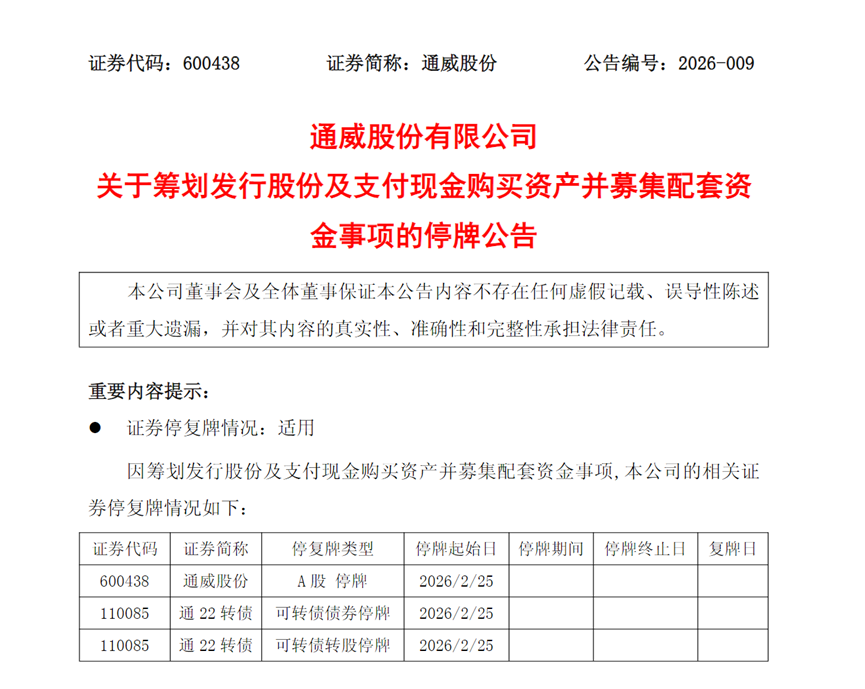
停牌!800亿市值光伏龙头通威股份 拟收购同行
Xin Lang Cai Jing· 2026-02-24 23:25
Core Viewpoint - The news discusses the recent acquisition activities of Tongwei Co., Ltd. in the context of the polysilicon industry, highlighting the challenges of capacity utilization and the ongoing supply-demand imbalance in the market [2][4]. Group 1: Company Actions - Tongwei Co., Ltd. continues to acquire capacity despite holding the largest production capacity in the polysilicon sector, which raises questions given the current underutilization of capacity [2][4]. - The acquisition by Tongwei is described as an individual company decision rather than part of the planned "polysilicon capacity integration acquisition platform" [2][4]. - The company has stated that this transaction will not lead to changes in its controlling shareholder or actual controller, and it is not expected to constitute a major asset restructuring [2][4]. Group 2: Industry Context - The polysilicon industry is currently facing a severe supply-demand imbalance, with the market awaiting capacity clearance [4][10]. - Tongwei is projected to incur a loss of between 9 billion to 10 billion yuan in 2025 due to these market conditions [4][10]. - The "polysilicon capacity integration acquisition platform," established at the end of 2025, includes Tongwei and its subsidiary as shareholders, aiming to address the capacity issues through a dual-track model of "debt acquisition + flexible capacity utilization" [4][11]. Group 3: Regulatory Environment - The market regulatory authority has raised concerns about potential monopoly risks associated with the integration plan, leading to discussions with relevant companies and the issuance of corrective measures [5][11]. - The implementation of the integration platform's plan is still under adjustment following regulatory feedback [5][11].


商品日报(2月24日):商品迎普涨 贵金属能化集体表现活跃
Xin Lang Cai Jing· 2026-02-24 13:11
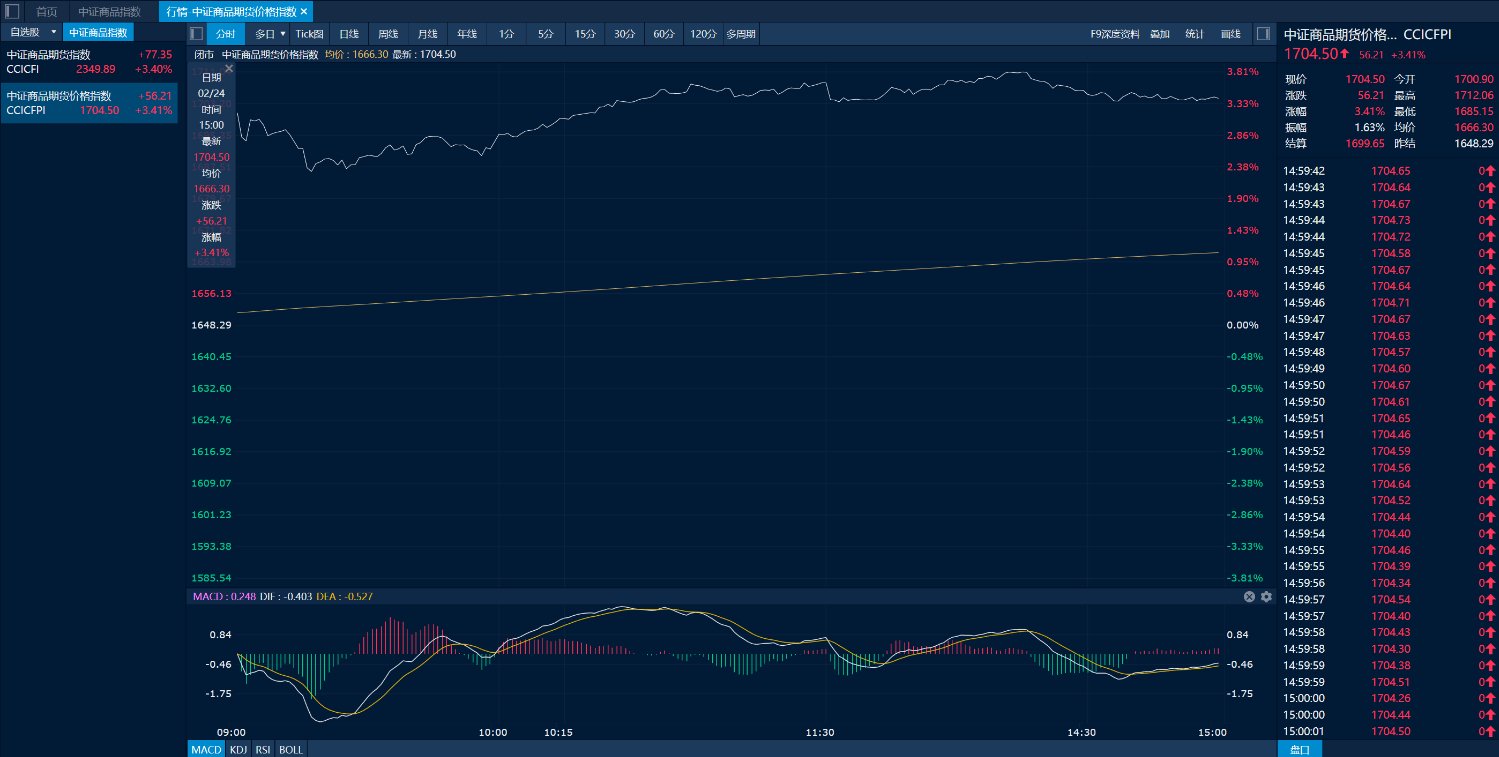
Group 1: Market Overview - The domestic commodity futures market experienced widespread gains on February 24, with the main contract for silver rising over 12% and lithium carbonate increasing by over 10% [1][2] - The China Securities Commodity Futures Price Index closed at 1704.50 points, up 56.21 points or 3.41% from the previous trading day [1] - The overall commodity index rose to 2349.89 points, an increase of 77.35 points or 3.40% [1] Group 2: Precious Metals - Precious metals, particularly silver, showed strong performance post-Spring Festival, with silver surging by 12.84% and lithium carbonate recovering above 160,000 yuan per ton [2] - The rise in precious metals is attributed to increased safe-haven buying due to U.S. tariff policies and geopolitical tensions in the Middle East [2] - Concerns about U.S. economic stagnation were heightened by a return of the core PCE year-on-year rate to 3% and a slowdown in GDP growth to 1.4% in Q4 [2] Group 3: Lithium Carbonate - The strong rise in lithium carbonate prices is supported by expectations of a tight supply-demand balance, despite concerns over a decline in downstream production [3] - Domestic lithium carbonate production is also expected to decrease, which offsets the negative impact of lower downstream production [3] - The overall sentiment remains bullish for lithium prices, although there are warnings about potential weakening fundamentals in Q2 [3] Group 4: Energy and Chemical Products - The energy and chemical sectors were active, driven by rising geopolitical risks in the Middle East, which pushed international oil prices to a six-month high [3] - SC crude oil rose by over 6%, while high-sulfur fuel oil increased by over 2% and 5% respectively [3] - The rubber sector also saw collective gains, with 20 rubber, butadiene rubber, and natural rubber all rising around 4% [3] Group 5: Declining Commodities - The main contract for polysilicon fell over 4%, primarily due to high inventory levels and price pressures from declining silicon wafer prices [4] - The supply of caustic soda also increased, leading to a decline of 3.37% in its main contract, as supply remained ample and demand was weak [5] - The operational rates for alumina production decreased, contributing to a lack of demand in the caustic soda market [5]
日度策略参考-20260224
Guo Mao Qi Huo· 2026-02-24 05:39
1. Report Industry Investment Rating - Not provided in the content 2. Core View of the Report - After the holiday, A-shares are likely to have a restorative rebound. Asset shortage and weak economy are beneficial to bond futures, but the central bank has indicated interest rate risks in the short term. The macro situation during the holiday is favorable for the market, and the prices of various commodities have different trends [1]. 3. Summary by Related Catalogs Macro Finance - **Stock Index**: Before the holiday, the A-share market adjusted significantly due to the rise of risk aversion. During the holiday, the Hong Kong stock market rebounded, and technology sectors such as AI and robotics attracted wide attention. It is expected that A-shares will have a restorative rebound after the holiday [1]. - **Treasury Bonds**: Asset shortage and weak economy are beneficial to bond futures, but the central bank has indicated interest rate risks in the short term. Attention should be paid to the interest rate decision of the Bank of Japan [1]. Non-ferrous Metals - **Copper**: The macro situation during the holiday is favorable for the market, and the copper price may fluctuate strongly in the short term [1]. - **Aluminum**: The macro situation is mixed, and the aluminum price will fluctuate in the short term. The operating capacity of domestic alumina has decreased, and there are disturbances in the supply of a large alumina enterprise in North China. Attention should be paid to the opportunity of going long at a low price [1]. - **Zinc**: The negotiation between the United States and Iran has reached a deadlock, which has led to concerns about the supply of Iranian zinc mines and supported the zinc price in the short term. Attention should be paid to the resumption of production of downstream enterprises after the holiday [1]. - **Nickel**: The LME nickel price rose slightly during the holiday. Although the tailings landslide in the Indonesian QMB project has limited actual impact, there are still concerns about nickel ore supply. The nickel price will fluctuate strongly in the short term and is still affected by the resonance of the non-ferrous metal sector. Attention should be paid to changes in Indonesian policies and macro sentiment. In the long term, the high global nickel inventory may still have a suppressing effect. It is recommended to pay attention to the opportunity of going long at a low price and control risks [1]. - **Stainless Steel**: The raw material nickel-iron price remains firm, the spot transaction of stainless steel is weak, the social inventory has increased slightly, and the steel mills' maintenance and production reduction have increased in February. The stainless steel futures will fluctuate strongly. Attention should be paid to the demand recovery after the holiday. It is recommended to go long at a low price in the short term and control risks [1]. - **Tin**: The uncertainty of recent macro events is relatively large. Under the influence of US tariffs and geopolitics, the short-term volatility of the tin price may increase. Although the long-term trend of the tin price remains unchanged, investors are advised to pay attention to risk management and profit protection in the short term [1]. - **Precious Metals**: The judgment of the Supreme Court that the "IEEPA tariff" is illegal and Trump's new tariff policy have intensified market concerns about uncertainty. Coupled with the escalation of the geopolitical tension between the United States and Iran, the demand for hedging has supported the price of precious metals. The macro situation is favorable for platinum, and the balance expectation of palladium may improve, which may further support the palladium price in the short term [1]. Agricultural Products - **Palm Oil**: The data of Malaysian palm oil from February 1 to 20 showed a double decline in production and exports. The Malaysian palm oil market rebounded and then faced pressure during the holiday and is expected to fluctuate [1]. - **Soybean Oil**: The US soybean oil has risen under the influence of biodiesel and crude oil prices. The domestic soybean oil may open higher but lacks new driving forces for the time being. It is recommended to wait and see [1]. - **Rapeseed**: The ICE rapeseed rose slightly during the holiday and may be affected by US biodiesel and potential domestic import demand. Attention should be paid to the release of the EPA biodiesel policy and the anti-dumping arbitration announcement of Canadian rapeseed in China [1]. - **Cotton**: The domestic new cotton crop has a strong expectation of a bumper harvest, and the purchase price of seed cotton supports the cost of lint cotton. The downstream startup rate remains low, but the inventory of spinning mills is not high, and there is a rigid demand for replenishment. The cotton market is currently in a situation of "having support but no driving force." Future attention should be paid to the tone of the No. 1 Central Document in the first quarter of next year regarding direct subsidy prices and cotton planting areas, the intention of cotton planting areas next year, weather during the planting period, and the peak demand season from March to April [1]. - **Sugar**: The global sugar market is in surplus, and the domestic new sugar supply is increasing. The short-selling consensus is relatively consistent. If the price continues to fall, there will be strong cost support below, but the short-term fundamentals lack continuous driving forces. Attention should be paid to changes in the capital market [1]. - **Corn**: After the holiday, attention should be paid to the selling pressure of on-the-ground grain in the production areas. However, the quality of Northeast grain is relatively dry this year, and the selling pressure is expected to be limited under the support of the rigid replenishment demand of the middle and lower reaches. In addition, attention should be paid to the release of policy grain and the implementation of import restrictions after the holiday. The overall expectation is to maintain range fluctuations [1]. - **Soybean Meal**: The US tariff policy has changed during the holiday, but the external market fluctuated little, which has limited guidance for the domestic soybean meal market. The Brazilian soybean premium has declined, and the soybean meal market is expected to fluctuate. Attention should be paid to Sino-US trade dynamics and Brazilian selling pressure in the near future [1]. - **Coniferous Pulp**: There is no obvious positive news for coniferous pulp during the Spring Festival. The previous positive factors on the supply side have basically faded. It is expected to fluctuate in the range of 5200 - 5400 in the short term. Attention should be paid to the port inventory after the holiday [1]. - **Log**: The spot price of logs has risen, the log arrivals in February have decreased, and the external quotation is expected to rise. The futures market has an upward driving force [1]. Energy and Chemicals - **Fuel Oil**: OPEC+ has suspended production increases until the end of 2026, the Middle East geopolitical situation is still uncertain, and the sentiment in the commodity market has cooled down. The short-term supply-demand contradiction is not prominent, and it follows the trend of crude oil [1]. - **Asphalt**: The raw material cost has strong support, the sentiment in the commodity market is changeable, the risk appetite of funds has decreased, the downstream demand has weakened before the holiday, and the basis difference has expanded to the high level of the same period [1]. - **Butadiene**: The cost end of butadiene has strong support, the overseas cracking device capacity has been cleared, which is beneficial to the long-term domestic butadiene export expectation. The profit of private cis-butadiene plants has remained in a loss state recently, and the expectation of maintenance and load reduction has increased. The downstream negative feedback has been gradually realized. The butadiene market is in a state of destocking, and the high inventory of cis-butadiene is still a potential negative factor. Attention should be paid to the inventory reduction of cis-butadiene before the Spring Festival and the trading performance of the butadiene market. The short-term market is expected to fluctuate widely, and the BR still has an upward expectation in the long term [1]. - **PX**: The PX-mixed xylene price difference has narrowed to $150, which is still enough to support PX manufacturers to purchase mixed xylene as raw materials. PX maintains fundamental resilience during the high-level correction, and there are still risks of crude oil prices due to the Iranian geopolitical risk. The downstream PTA industry continues to be strong, and the domestic PTA output in January is expected to reach a new high, and there is no plan to reduce production during the Spring Festival, and there is no new PTA production capacity throughout the year [1]. - **Ethylene**: The production profit rate of naphtha cracking has declined due to the rise in raw material prices. The price difference between ethylene and naphtha has reached $83. Several Korean ethylene producers plan to maintain the operating rate of their cracking devices in February. The ethylene glycol price is waiting at a low level [1]. - **Styrene**: The high inventory of pure benzene has weak import demand, and the price difference between the United States and Asia is $88, which is not enough to open the arbitrage window. The Asian styrene price and economic situation have recovered, mainly driven by supply tightening, unexpected shutdowns in the Middle East, surging export demand, and rising cost ends. The continuous strong export, short-term supply gap caused by domestic maintenance, and speculative buying driven by chemical futures support the firmness of the spot price [1]. - **Methanol**: Methanol is generally affected by the Iranian situation, and the future import is expected to decrease, but the downstream negative feedback is obvious. The leading MTO device has stopped, and some enterprises have reduced production, but the Fude plant restarted on January 25. The Iranian situation has eased, but the risk cannot be completely ruled out. The freight has risen due to the cold air in the inland area, and the inventory pressure of enterprises in the northwest has increased, and they have reduced prices to sell goods [1]. - **PVC**: In 2026, there will be less global production, and the differential electricity price in the northwest region is expected to be implemented, which will force the clearance of PVC production capacity. The future expectation is relatively optimistic, but the current fundamentals are poor, and the export rush has slowed down stage by stage [1]. - **LPG**: The CP price in February has risen, and the purchase in March is still relatively tight. The Middle East geopolitical conflict has cooled down, and the short-term risk premium has declined. The driving logic of the overseas cold wave has gradually slowed down, and the market expectation is weakening. It is expected that the basis will gradually expand. The domestic PDH operating rate has declined, and the profit is expected to recover seasonally. The short-term demand side of LPG is bearish, which suppresses the upward movement of the market. The port inventory has been continuously decreasing, but the domestic civil gas is relatively sufficient, showing a divergence between propane and PG [1]. Shipping - **Container Shipping**: The freight rate peaked and fell before the holiday. Airlines are still cautious about tentative resume flights. Airlines are expected to have a strong willingness to stop the decline and raise prices after the off-season in March [1].
综合晨报-20260224
Guo Tou Qi Huo· 2026-02-24 03:36
1. Report Industry Investment Ratings No relevant content provided. 2. Core Views - During the Spring Festival, international oil prices continued to rise, with Brent and WTI crude oil reaching new highs since August 2025. Geopolitical risks, especially the tense situation between the US and Iran, are the main drivers of the oil price increase. The next two weeks will be a critical window for the situation, and geopolitical factors will continue to dominate the oil market [1]. - Precious metals showed strong performance during the Spring Festival. With the US - Iran negotiation making no substantial progress and the possibility of US strikes on Iran, the strength of precious metals may continue in the short - term [2]. - For most commodities, the market is affected by various factors such as geopolitical risks, supply - demand relationships, and seasonal patterns. Some commodities are expected to have price fluctuations, while others are likely to maintain a range - bound trend [3][4][5]. 3. Summary by Commodity Categories Energy Commodities - **Crude Oil**: During the Spring Festival, international oil prices rose significantly. Geopolitical risks, especially the tense US - Iran situation, are the main factors. The next two weeks are crucial for the situation, and oil prices will be dominated by geopolitical factors [1]. - **Fuel Oil & Low - sulfur Fuel Oil**: Due to the sharp rise in geopolitical risks between the US and Iran during the festival, oil prices soared. Fuel oil is expected to follow the upward trend. High - sulfur fuel oil is strongly supported by geopolitical factors, while low - sulfur fuel oil is relatively weak and mainly follows the trend of crude oil [21]. - **Asphalt**: International oil prices strengthened during the holiday, and asphalt is expected to start a catch - up rise on the first trading day after the festival. The asphalt market has a pattern of weak supply and demand, and its price follows the trend of crude oil [22]. Metal Commodities - **Copper**: LME copper prices were basically the same as before the holiday. During the domestic holiday, investment and physical demand were weak, and copper prices fluctuated. Copper inventories increased, and the copper market may strengthen the positive market structure. There is a risk that the unilateral copper price will adjust to the MA60 moving average to attract buyers [3]. - **Aluminum**: LME aluminum had limited fluctuations and a slight increase during the Spring Festival. After the festival, Shanghai aluminum is expected to have high - level oscillations. Attention should be paid to the inventory accumulation, demand recovery, and the impact of the US - Iran situation on the supply side [4]. - **Zinc**: LME zinc had high - level oscillations during the festival, with limited guidance for Shanghai zinc. After the festival, Shanghai zinc has weak rebound momentum due to short - term oversupply, but strong cost support. It is expected to oscillate between 24,000 - 25,000 yuan/ton. In the long - term, the oversupply situation remains, and the recovery of TC can be regarded as an opportunity for short - selling at high levels [7]. - **Lead**: The decline of LME lead slowed down near the cost line. After the festival, domestic lead prices are at a low level. Downstream purchases may increase, and recycled lead production has decreased. However, due to the opening of the import window, demand lacks an increase expectation. Shanghai lead is expected to have low - level oscillations between 16,500 - 17,500 yuan/ton [8]. - **Nickel & Stainless Steel**: Shanghai nickel is expected to open higher and then oscillate on the first trading day. During the holiday, the external market was generally strong, and factors such as the US tariff policy and economic data affected the market [9]. - **Tin**: LME tin had a slight increase compared to before the holiday and basically oscillated. The internal and external tin prices are supported by the MA60 moving average. LME tin inventories continued to increase slightly during the festival, and the spot discount narrowed. Tin prices are expected to continue to oscillate, and attention should be paid to the resumption of supply in the main production areas [10]. - **Carbonate Lithium**: Carbonate lithium still has optimistic sentiment in the short - term and is expected to have a strong - biased oscillation. The external market was strong during the holiday, and factors such as the US tariff policy and economic data are favorable [11]. - **Industrial Silicon**: Before the holiday, industrial silicon rebounded slightly after breaking through the previous low. After the holiday, it is expected to continue to oscillate. The supply side may see the resumption of production of large factories in Xinjiang, while the downstream demand is weak, and the social inventory is at a high level [12]. - **Polysilicon**: During the Spring Festival, spot trading was stagnant. Before the holiday, polysilicon futures had a slight increase and narrowed fluctuations. Although there is cost support, the market is expected to maintain an oscillating trend due to factors such as production reduction and inventory accumulation [13]. Ferrous Metals - **Steel (Thread & Hot - rolled Coil)**: During the Spring Festival, the external market generally rose, while the domestic spot market was on holiday. The demand for steel decreased, and the inventory accumulated. Due to factors such as poor steel mill profits and weak downstream demand, the iron - water output remained at a relatively low level. With the improvement of the financial market sentiment, the steel price has a certain rebound momentum after the festival [14]. - **Iron Ore**: During the holiday, overseas iron ore swaps weakened. The supply is relatively strong, and the market is worried about oversupply. Although the demand is expected to improve marginally, the supply pressure is greater, and the price is still under pressure [15]. - **Coke & Coking Coal**: During the holiday, the increase in oil prices may have an indirect impact on the black - series commodities. The inventory of coke increased slightly, and the purchasing willingness of traders was average. The carbon element supply is abundant, and the downstream demand is in the off - season. The prices of coke and coking coal are expected to oscillate in a range [16][17]. - **Manganese Silicon**: The increase in oil prices during the holiday may have an indirect impact. The spot price of manganese ore increased slightly, and the downward space of the disk is relatively small. The inventory of manganese ore in ports may start to increase slowly, and the demand side is at a seasonal low level. The price is affected by oversupply and policy expectations [18]. - **Silicon Ferrosilicon**: The increase in oil prices during the holiday may have an indirect impact. Some production areas have a decrease in power costs, and the demand side is at a low level. The export demand is stable, and the supply changes little. The price is affected by oversupply and policy expectations [19]. Chemical Commodities - **Urea**: During the Spring Festival, the supply of urea remained at a high level, and production enterprises are expected to accumulate inventory seasonally. With the increase in temperature, the demand for agricultural fertilizer preparation is expected to start, and the production enterprises are expected to reduce inventory after the festival. The short - term market is likely to oscillate and rebound [23]. - **Methanol**: The overseas methanol plant operating rate remains low, and the import volume is expected to decrease after the Spring Festival. The coastal MTO plant operating rate is low, and attention should be paid to the profit repair and restart expectations after the festival. The traditional downstream will resume work one after another, and the inventory in the inland and ports is expected to decrease [24]. - **Pure Benzene**: The instability of the US - Iran situation provides support for the cost of pure benzene. The supply during the Spring Festival is relatively high, and the inventory in the East China port is expected to remain at a high level. The downstream demand is expected to improve, and the port inventory may decrease slowly [25]. - **Styrene**: The increase in international oil prices during the holiday boosted the cost of styrene, and it may open higher. However, the supply is expected to increase significantly after the festival, while the downstream demand recovery needs time, and the fundamental contradiction is intensified [26]. - **Polypropylene & Plastic**: The increase in international oil prices during the holiday may boost the opening price after the festival. However, due to the inventory accumulation of polyolefin petrochemical enterprises during the Spring Festival and the slow recovery of downstream production enterprises, the fundamental contradiction is intensified [27]. - **PVC & Caustic Soda**: The PVC industry is in the seasonal inventory accumulation stage. The cost support is strengthened, and the demand for export is strong. The price is expected to rise. The profit of caustic soda has declined significantly, and the cost support is strengthened. The supply may decrease, and the price is expected to operate near the cost [28]. - **PX & PTA**: The strong oil price provides cost support. PX has new capacity in the second half of the year, while PTA has none. In the first half of the year, it is advisable to take a long position. Based on the PX maintenance and polyester production increase expectations in the second quarter, opportunities for long - term PX processing spreads and positive spreads after the decline of the month - spread can be considered [29]. - **Ethylene Glycol**: Ethylene glycol is under long - term pressure due to new capacity, but the supply is expected to shrink, and the downward space is limited. In the second quarter, the supply - demand situation may improve due to centralized maintenance and increased demand [30]. - **Short - fiber & Bottle - grade Chips**: Before the holiday, the production of short - fiber and bottle - grade chips decreased, and the inventory was at a low level. After the holiday, the production is expected to increase. Attention should be paid to the terminal production resumption and inventory preparation rhythm [31]. Agricultural Commodities - **Soybean, Soybean Meal & Rapeseed Meal**: During the Spring Festival, US soybeans continued to be strong. The export and crushing data were good, which boosted the price. The supply - demand balance sheet for the 26/27 US soybean season shows a tightening supply - demand structure [35][37]. - **Soybean Oil, Palm Oil & Rapeseed Oil**: During the Spring Festival, US soybean oil and Malaysian palm oil continued to be strong. The increase in the price of US RIN has a strong driving effect on US soybean oil. The supply - demand balance sheet for the 26/27 US soybean season shows a tightening structure. The short - term upward movement of palm oil has resistance. The export of Canadian rapeseed has improved, and attention should be paid to the policy orientation [36]. - **Corn**: During the Spring Festival, the US is expected to plant less corn in 2026. The US corn futures price oscillated during the holiday. In China, some enterprises in the Northeast started purchasing after the Spring Festival. The trading volume of Dalian corn futures may increase, and attention should be paid to risks [38]. - **Pigs**: After the Spring Festival, the average price of live pigs decreased compared to before the festival. The supply in the spot market is sufficient, and the futures price is expected to continue to weaken. Attention should be paid to the implementation of the pig production capacity reduction logic in the medium - term [39]. - **Eggs**: After the Spring Festival, the egg price decreased slightly. Considering the expected decline in supply in spring, there is a possibility of the futures price continuing to strengthen. It is recommended to go long on the near - month contract at a low price [40]. - **Cotton**: During the Spring Festival, US cotton was strong. The global supply in the 25/26 season is relatively loose, but there is an expectation of supply contraction in the 26/27 season. The domestic cotton market has a good sales situation, and the medium - term Zhengzhou cotton price may be strong [41]. - **Sugar**: During the holiday, US sugar oscillated. In the international market, India's sugar production increased, while Thailand's production was lower than expected. In the domestic market, the market focus is on the expected difference in production. Although the production in Guangxi is currently slow, there is a strong expectation of production increase in the 25/26 season [42]. - **Apples**: The futures price oscillated. The cold - storage trading volume decreased, and the market focus is on the demand side. The high purchase price and the strong reluctance to sell of traders and fruit farmers may affect the inventory reduction speed [43]. - **Wood**: The futures price is at a low level. The supply is expected to decrease in the short - term, and the demand has declined. The low inventory provides certain support, and it is advisable to wait and see for the time being [44]. - **Paper Pulp**: The domestic paper pulp port inventory is still at a high level. The overseas quotation is strong, providing cost support, but the demand is average. The downstream paper mills are cautious about high - price raw material inventory, and attention should be paid to the demand performance after the festival [45]. Financial Products - **Stock Index**: Before the long holiday, A - share major indexes fell by more than 1%, and stock index futures were all at a discount. During the Spring Festival, the Hong Kong stock market was strong, while the overseas stock markets fell. There are uncertainties in trade policies and geopolitical situations. After the festival, the market may maintain a strong - biased oscillation, and attention should be paid to the performance of the technology - growth and cyclical sectors [46]. - **Treasury Bonds**: On February 13, 2026, the treasury bond futures showed a differentiated trend. The long - term contracts are over - priced, and the central bank's bond - buying has not ended, with a strong willingness to maintain the capital market. The TL06 contract has a certain safety margin for long - position trading, and it is appropriate to participate in the unilateral trading of TL or flatten the yield curve [47].
新特能源等硅料企业被约谈,涉及反垄断风险
Jing Ji Guan Cha Wang· 2026-02-23 08:57
Core Viewpoint - The regulatory interview with Xinte Energy primarily concerns antitrust risks at the industry level, particularly related to the silicon material storage platform established by several leading companies in the polysilicon sector [1] Industry Policy and Environment - The interview is set against the backdrop of the photovoltaic industry's "anti-involution" policy, which emphasizes strengthening industry self-discipline and preventing vicious competition since 2024 [1] - There are concerns that the industry self-discipline agreements may cross antitrust lines, creating pressure on the sentiment of leading polysilicon companies [1]
供需持续博弈,价格波动有限
Hua Tai Qi Huo· 2026-02-13 08:16
Group 1: Industry Investment Rating - No relevant information provided Group 2: Core Views - Industrial silicon prices are expected to remain range - bound. Supply contraction provides price support, but high polysilicon inventory suppresses demand, and the price lacks upward momentum. The upward potential depends on downstream demand recovery and inventory reduction, while the downward space is limited by cost support and production cut expectations [2] - Polysilicon prices are expected to continue to fluctuate. Supply contraction in February provides price support, but downstream cost drags down demand, and the large inventory is being reduced slowly, suppressing price increases. Before April, the "rush to export" phenomenon has no obvious driving force, and the market awaits the supply - demand game [5] Group 3: Market Analysis Industrial Silicon - On February 12, 2026, the industrial silicon futures price fluctuated and fell. The main contract 2605 opened at 8,375 yuan/ton and closed at 8,335 yuan/ton, a change of (-35) yuan/ton or (-0.42)% from the previous settlement. The position of the main contract 2605 at the close was 307,764 lots, and the number of warehouse receipts on February 11, 2026 was 19,317 lots, a change of 1,200 lots from the previous day [1] - The spot price of industrial silicon remained stable. The price of East China oxygen - permeable 553 silicon was 9,200 - 9,400 (0) yuan/ton; 421 silicon was 9,500 - 9,800 (0) yuan/ton; Xinjiang oxygen - permeable 553 price was 8,600 - 8,800 (0) yuan/ton; 99 silicon price was 8,600 - 8,800 (0) yuan/ton. Silicon prices in Kunming, Huangpu Port, Northwest, Tianjin, Xinjiang, Sichuan, and Shanghai remained flat, and the 97 silicon price was stable [1] - As of February 5, the total social inventory of industrial silicon in major areas was 562,000 tons, a 1.44% increase from the previous week [1] - The demand for industrial silicon continued to slump. The pre - holiday stocking was nearing the end, there were no new orders, and large polysilicon manufacturers cut production, so the market mainly focused on inventory reduction [1] - Large manufacturers have plans to cut production and stop work in February, and with the approaching Spring Festival holiday, the supply is expected to shrink [1] Polysilicon - On February 12, 2026, the main futures contract 2605 of polysilicon fluctuated and rose. It opened at 48,840 yuan/ton and closed at 49,015 yuan/ton, a 0.44% change in the closing price from the previous trading day. The position of the main contract was 37,702 (38,313 in the previous trading day) lots, and the trading volume on the day was 4,540 lots [2] - The spot price of polysilicon slightly declined. N - type material was 48.50 - 58.00 (-0.40) yuan/kg, and n - type granular silicon was 49.00 - 51.00 (0.00) yuan/kg [3] - The inventory of polysilicon manufacturers and silicon wafers increased. The latest polysilicon inventory was 34.90, with a 2.30% month - on - month change, and the silicon wafer inventory was 28.32GW, a 6.14% month - on - month change. The weekly polysilicon production was 20,100.00 tons, with a 0.00% month - on - month change, and the silicon wafer production was 10.38GW, a - 3.18% month - on - month change [3] - The prices of domestic N - type 18Xmm silicon wafers were 1.13 (0.00) yuan/piece, N - type 210mm was 1.43 (0.00) yuan/piece, and N - type 210R silicon wafers were 1.23 (0.00) yuan/piece [3] - The prices of battery chips were stable. The price of high - efficiency PERC182 battery chips was 0.27 (0.00) yuan/W; PERC210 battery chips were about 0.28 (0.00) yuan/W; Topcon M10 battery chips were about 0.44 (0.00) yuan/W; Topcon G12 battery chips were 0.44 (0.00) yuan/W; Topcon 210RN battery chips were 0.44 (0.00) yuan/W; HJT210 half - cell battery was 0.37 (0.00) yuan/W [3][4] - The mainstream transaction prices of components were stable. PERC182mm was 0.67 - 0.74 (0.00) yuan/W, PERC210mm was 0.69 - 0.73 (0.00) yuan/W, N - type 182mm was 0.73 - 0.74 (0.00) yuan/W, and N - type 210mm was 0.75 - 0.77 (0.00) yuan/W [4] Group 4: Strategies Industrial Silicon - Unilateral: Short - term range operation - Inter - period: None - Options: None [2] Polysilicon - Unilateral: Short - term range operation, and the main contract is expected to maintain a slight fluctuation in the short term - Inter - period: None - Cross - variety: None - Spot - futures: None - Options: None [5]
出海日报 | 多晶硅领域中国标准首次落地海外,上海物流企业护航长三角企业出海
Xin Lang Cai Jing· 2026-02-12 09:13
上海物流企业护航长三角企业出海 炒股就看金麒麟分析师研报,权威,专业,及时,全面,助您挖掘潜力主题机会! 据中国网报道,阿曼苏哈尔自贸区多晶硅项目2月5日正式投产,该项目由United Solar Polysilicon (FZC) SPC公司负责,规划年产能10万吨,这是除中国外全球最大的多晶硅项目。这也是多晶硅领域中国标准 首次落地海外——该项目从开工到竣工的整个建设周期,均采用中国标准、技术和装备,由中国企业设 计、施工。 (来源:智通财经) 《出海日报》是智通财经推出的一档新栏目,以简报的形式介绍中国企业在海外的最新动向。2026年2 月9日起,每周一至周五下午17:00发布,逢假日停发。内容截至当天16:00为止,当天之后发生的事件 将归入第二日简报。 多晶硅领域中国标准首次落地海外 据上海市青浦区人民政府消息,在青浦打造"长三角企业入沪出海第一站"的澎湃浪潮中,本地物流企业 正成为连接国内国际双循环的关键节点。日前,上海则一供应链管理有限公司披露其年度发展蓝图:凭 借2025年构建的覆盖亚欧20余国、时效领先行业1-2天的跨境物流网络,企业全年实现"零货损"与98% 服务达成率;2026年,将借力 ...

边际过剩加剧,预计震荡运行
Hua Tai Qi Huo· 2026-02-12 04:13
1. Report's Industry Investment Rating - Not provided in the given content 2. Report's Core View - Industrial silicon prices are expected to maintain a range - bound oscillation. The supply side has significantly shrunk, providing obvious price support, but high polysilicon inventories suppress demand, and prices lack upward momentum. The upward potential depends on downstream demand recovery and inventory reduction progress, while the downward space is limited by cost support and production - cut expectations [1][2]. - Polysilicon prices are expected to continue to oscillate. Although the supply side has shrunk significantly in February, providing support for prices, the demand side remains weak due to downstream cost constraints, and the large - scale inventory reduction is slow, suppressing price increases. There is currently no obvious driving force for the "rush to export" phenomenon before April, and the market awaits the supply - demand game [2][4]. 3. Summary by Related Catalogs Industrial Silicon Market Analysis - On February 11, 2026, the industrial silicon futures price oscillated downward. The main contract 2605 opened at 8420 yuan/ton and closed at 8370 yuan/ton, a change of (-40) yuan/ton or (-0.48)% from the previous settlement. The main contract 2605 held 303387 positions at the close, and the number of warehouse receipts on February 10, 2026, was 18117, a change of 1368 from the previous day [1]. - Industrial silicon spot prices remained stable. For example, the price of East China oxygen - passing 553 silicon was 9200 - 9400 (0) yuan/ton, and 421 silicon was 9500 - 9800 (0) yuan/ton [1]. - As of February 5, the total social inventory of industrial silicon in major areas was 56.2 tons, a 1.44% increase from the previous week [1]. - The demand for industrial silicon continued to be sluggish. The pre - holiday stocking was nearing the end, there were few new orders, polysilicon manufacturers cut production, and the market mainly focused on inventory reduction [1]. - Large manufacturers have plans to cut production and stop work in February, and with the approaching Spring Festival holiday, the supply is expected to shrink [1]. Strategy - Industrial silicon prices are expected to maintain a range - bound oscillation. Short - term range operation is recommended for single - side trading. No strategies are provided for inter - period, cross - variety, and spot - futures trading, or options [2]. Polysilicon Market Analysis - On February 11, 2026, the main futures contract 2605 of polysilicon oscillated upward, opening at 48125 yuan/ton and closing at 49180 yuan/ton, a 0.34% change from the previous trading day. The main contract held 38313 positions (38617 the previous day), and the trading volume was 4793 [2]. - Polysilicon spot prices remained stable. N - type material was priced at 48.50 - 58.80 (0.00) yuan/kg, and n - type granular silicon was 49.00 - 51.00 (0.00) yuan/kg [2]. - Polysilicon manufacturer inventories and silicon wafer inventories increased. The latest polysilicon inventory was 34.10, with a 2.40% month - on - month change, and silicon wafer inventory was 28.32GW, a 3.77% month - on - month change. The weekly polysilicon output was 20100.00 tons, a (-0.50)% month - on - month change, and silicon wafer output was 10.38GW, a (-11.66)% month - on - month change [2]. Strategy - Polysilicon prices are expected to continue to oscillate. Short - term range operation is recommended for single - side trading, and the main contract is expected to maintain a slight oscillation in the short term. No strategies are provided for inter - period, cross - variety, and spot - futures trading, or options [2][4][5]. Other Products - In the silicon wafer market, domestic N - type 18Xmm silicon wafers were priced at 1.13 (-0.05) yuan/piece, N - type 210mm at 1.43 (-0.05) yuan/piece, and N - type 210R silicon wafers at 1.23 (-0.05) yuan/piece [3]. - In the battery cell market, the prices of various types of battery cells remained stable, such as the efficient PERC182 battery cell at 0.27 (0.00) yuan/W [3][4]. - In the component market, the mainstream transaction prices of various components remained stable, such as PERC182mm at 0.67 - 0.74 (0.00) yuan/W [4]. - Two photovoltaic cell renovation projects in Hefei, Anhui, with a total investment of 34,637 million yuan, were publicly announced for environmental assessment [4].
国泰君安期货商品研究晨报-绿色金融与新能源-20260212
Guo Tai Jun An Qi Huo· 2026-02-12 01:54
Report Industry Investment Rating No information provided in the content. Core Viewpoints - Nickel: Indonesian news disturbances reappear, and attention should be paid to the risks of speculative attributes [2][4]. - Stainless steel: There are frequent maintenance and production cuts in February, and the cost support center has shifted upward [2][4]. - Lithium carbonate: Favorable sentiment boosts the market, and attention should be paid to pre - holiday capital behavior [2][9]. - Industrial silicon: The market volatility has decreased [2][13]. - Polysilicon: Some warehouse receipts have been cancelled, and attention should be paid to the impact of sentiment [2][13]. Summary by Related Catalogs Nickel and Stainless Steel - **Fundamental Data**: The closing price of the Shanghai nickel main contract was 139,360, with a change of 6,010 compared to T - 1; the closing price of the stainless steel main contract was 14,040, with a change of 300 compared to T - 1. Other data such as trading volume, spot prices, and spreads also showed corresponding changes [4]. - **Macro and Industry News**: The Indonesian government has suspended issuing new smelting licenses through the OSS platform; the Indonesian nickel miner association revealed that the benchmark price formula for nickel ore products will be revised; some mines in Indonesia are facing potential fines for illegal occupation of forest land; the KPPU reported monopoly behavior in the port storage and logistics of the IMIP park; the Indonesian Energy and Mineral Resources Ministry has approved the 2026 mining work plan and budget; a Swiss investment group plans to restart its nickel mine business in Guatemala [4][5][6]. - **Trend Intensity**: The trend intensity of nickel is 0, and that of stainless steel is 0 [8]. Lithium Carbonate - **Fundamental Data**: The closing price of the 2605 contract was 150,260, with a change of 12,920 compared to T - 1. Other data such as trading volume, position, and various lithium - related product prices also showed corresponding changes [10]. - **Macro and Industry News**: On February 10, 2026, Gotion High - tech and BASF signed a strategic cooperation memorandum. Gotion High - tech has made progress in its solid - state battery project, and there have been multiple cooperation agreements in the new energy battery field [11][12]. - **Trend Intensity**: The trend intensity of lithium carbonate is 0 [12]. Industrial Silicon and Polysilicon - **Fundamental Data**: The closing price of the Si2605 contract was 8,375, with a change of - 75 compared to T - 1; the closing price of the PS2605 contract was 48,950, with a change of - 420 compared to T - 1. Other data such as trading volume, position, price differences, and inventory also showed corresponding changes [13]. - **Macro and Industry News**: India's 2026 - 27 fiscal year federal budget shows that the new energy and renewable energy department will receive a 24% increase in total funding, with a 32% increase in photovoltaic industry funding [13][15]. - **Trend Intensity**: The trend intensity of industrial silicon is 1, and that of polysilicon is 0 [15].
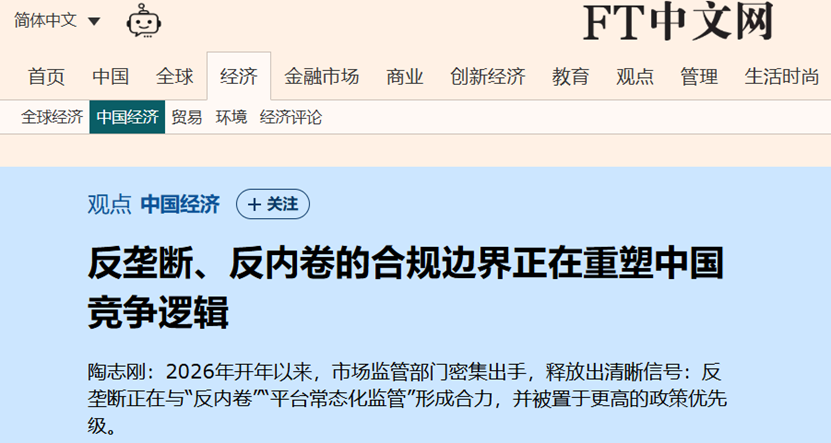
反垄断措施密集出台,《金融时报》发文称正重塑中国竞争逻辑
Huan Qiu Wang· 2026-02-12 01:01
Group 1 - The State Council's Anti-Monopoly and Anti-Unfair Competition Committee has issued guidelines for the public utility sector to prevent and curb monopolistic behaviors in water, electricity, gas, and heating services, aiming to maintain fair market competition and protect consumer and public interests [1] - The upcoming national market supervision work meeting in 2025 has prioritized "strengthening anti-monopoly and anti-unfair competition" as a key task, indicating that anti-monopoly efforts are now a crucial part of China's competitive order adjustment [1] Group 2 - In 2026, market regulatory authorities have intensified anti-monopoly enforcement actions targeting food delivery platforms, the polysilicon industry alliance, and online travel platforms, signaling a clear message that anti-monopoly is being integrated with "anti-involution" and "platform normalization regulation" at a higher policy priority [3] - The primary goal of anti-monopoly measures is to prevent monopolistic behaviors from causing systemic harm to consumers and suppliers, as monopolies can raise prices for consumers and lower earnings for upstream suppliers [3] - Unlike the reliance on judicial litigation in Europe and the U.S., China's anti-monopoly approach is primarily administrative, characterized by high efficiency, short cycles, and quick corrections, allowing early intervention to prevent long-term damage to consumers and suppliers [3]