
半导体

Search documents
大摩闭门会-解读英伟达GTC大会及博通-超威半导体-英特尔-美满电子-安霸-美光
2026-03-22 14:35
Summary of Conference Call Notes Company and Industry Involved - **Companies**: NVIDIA, Broadcom, AMD, Intel, Micron, Marvell, Astera Labs - **Industry**: Semiconductor, AI, Data Center, Memory Market Key Points and Arguments NVIDIA's Revenue Projections - NVIDIA has revised its total revenue target for the next three years to **$1.1 trillion**, exceeding market consensus by approximately **$150 billion** [1] - The expected revenue growth over the next **7 quarters** is around **20%** [1] AI Capital Expenditure Trends - AI capital expenditures are shifting from training to inference, with Broadcom reporting a **10x** increase in customer tokens against a **3x** investment, indicating demand growth far outpacing linear capacity expansion [1] - Despite aggressive spending plans from some companies, capacity constraints remain a significant bottleneck, affecting all components including processors and memory [5] Memory Market Dynamics - The supply-demand imbalance in memory chips is expected to persist for several years, with DRAM prices increasing by **90%** year-over-year in Q1 and projected to rise by **50%** in Q2 [1][8] - Micron's annualized earnings are anticipated to reach between **$76-$80** per share, with a potential cash flow of **$150 billion** over the next few years [8] Competitive Landscape - Broadcom's AI revenue forecast for **2027** has been raised to **$115 billion**, up from a previous estimate of **$85 billion** [5] - Concerns about competition from Meta and OpenAI regarding custom chips are noted, but their current capabilities remain unproven [5] Market Sentiment and Valuation - Despite strong performance and new product launches, NVIDIA's stock price has stagnated, attributed to market concerns over AI business sustainability and valuation [2] - The market is anxious about the 2027 outlook, but current short-term data points are more supportive than in the past two years [2] Emerging Technologies and Opportunities - NVIDIA's new open-source projects and partnerships are expected to generate direct revenue and enhance its ecosystem [4] - Marvell and Astera Labs are viewed positively, with Marvell focusing on non-ASIC business opportunities and Astera Labs making strides in the copper cable market [7][8] Future Outlook - The semiconductor shortage is leading customers to secure long-term contracts through prepayments, enhancing business visibility for the next **3-5 years** [1] - The AI industry's growth trajectory is expected to continue, with DRAM supply constraints likely to remain a bottleneck [8] Conclusion - The semiconductor and AI industries are experiencing significant growth, driven by strong demand and strategic shifts in capital expenditure. Companies like NVIDIA and Broadcom are well-positioned, but capacity constraints and competitive pressures remain critical factors to monitor.

新材料产业周报:英伟达全球首款CPO交换机Spectrum X全面投产-20260322
Guohai Securities· 2026-03-22 14:34
Investment Rating - The report maintains a "Recommended" rating for the new materials industry [1]. Core Insights - The new materials sector is positioned as a crucial direction for the chemical industry, currently experiencing rapid growth in downstream demand. With policy support and technological breakthroughs, domestic new materials are expected to accelerate into a long-term growth phase. The report emphasizes that "one generation of materials leads to one generation of industries," highlighting the foundational role of the new materials industry in supporting other sectors [6][18]. Summary by Sections 1. Electronic Information Sector - Focus on semiconductor materials, display materials, and 5G materials [7]. - NVIDIA announced the full production of the world's first Co-Packaged Optics (CPO) switch, Spectrum X, which integrates photonic components directly onto chips, achieving a bandwidth of 409.6 Tb/s to support large-scale generative AI workloads [8][38]. - MediaTek, in collaboration with Microsoft Research, developed a next-generation Active Optical Cable using micro-sized Micro LED light sources, significantly enhancing transmission distance while maintaining high reliability [9][10]. 2. Aerospace Sector - Focus on PI films, precision ceramics, and carbon fibers [11]. - Successful launch of multiple satellites using the Kuaizhou-11 solid rocket, showcasing the capabilities of the rocket in commercial launch tasks [12]. 3. New Energy Sector - Focus on photovoltaic materials, lithium-ion batteries, proton exchange membranes, and hydrogen storage materials [13]. - In February 2026, the National Energy Administration issued 198 million green power certificates, with a significant portion attributed to wind and solar power generation [13]. 4. Biotechnology Sector - Focus on synthetic biology and scientific services [14]. - Research teams have developed a new type of artificial photosynthetic cell that allows industrial microorganisms to efficiently synthesize high-value chemicals using solar energy [16]. 5. Energy Conservation and Environmental Protection Sector - Focus on adsorption resins, membrane materials, and biodegradable plastics [17]. - The Ministry of Industry and Information Technology and other departments issued a plan to enhance the energy efficiency of energy-saving equipment, targeting key industries for energy conservation and carbon reduction [18]. Key Companies and Earnings Forecast - The report highlights several key companies with earnings forecasts for 2024 to 2026, including: - Ruihua Tai (688323.SH): EPS forecasted to improve from -0.32 in 2024 to 0.26 in 2026 [19]. - Guangwei Composite (300699.SZ): EPS expected to rise from 0.89 in 2024 to 0.97 in 2026 [19]. - Zhongfu Shenying (688295.SH): EPS projected to increase from -0.14 in 2024 to 0.23 in 2026 [19]. The report emphasizes the potential for the new materials industry to enter a prosperous cycle driven by downstream application sectors [18].
策略深度报告:70年代滞胀启示录:从历史复盘到当下配置逻辑
Soochow Securities· 2026-03-22 14:24
Group 1: Historical Context of Stagflation - The stagflation in the 1970s was primarily caused by Keynesian monetary and fiscal policies, geopolitical conflicts affecting oil supply, and the collapse of the Bretton Woods system leading to dollar depreciation[2][15][21]. - During the first stagflation phase from 1973 to 1974, the U.S. stock market saw significant declines, while the second phase from 1979 to 1980 experienced a recovery in stock prices[3][22]. Group 2: Asset Performance During Stagflation - In the 1970s, U.S. stock performance was notably divergent, with the S&P 500 index experiencing a decline of approximately 48% during the first stagflation phase, while it rebounded in the second phase[3][22]. - Bond yields rose significantly, with the 10-year U.S. Treasury yield exceeding 15% during the second stagflation phase due to aggressive monetary tightening by the Federal Reserve[26]. - Commodity prices, particularly oil and gold, performed well during stagflation, with oil prices tripling from 1973 to 1974, driven by supply constraints[30][18]. Group 3: Implications for Current Markets - Current stagflation risks in the U.S. could lead to significant impacts on high-valuation and high-leverage assets if oil prices rise to $150-$200 per barrel, creating asymmetric risk-reward scenarios[1][14]. - The A-share market may not directly correlate with U.S. stagflation risks due to China's unique economic structure and ongoing recovery, potentially positioning it as a safe haven for global capital[4][33]. - The energy sector is expected to outperform in a stagflation environment, similar to the trends observed in the 1970s, with energy sector weights in indices increasing significantly during that period[44].
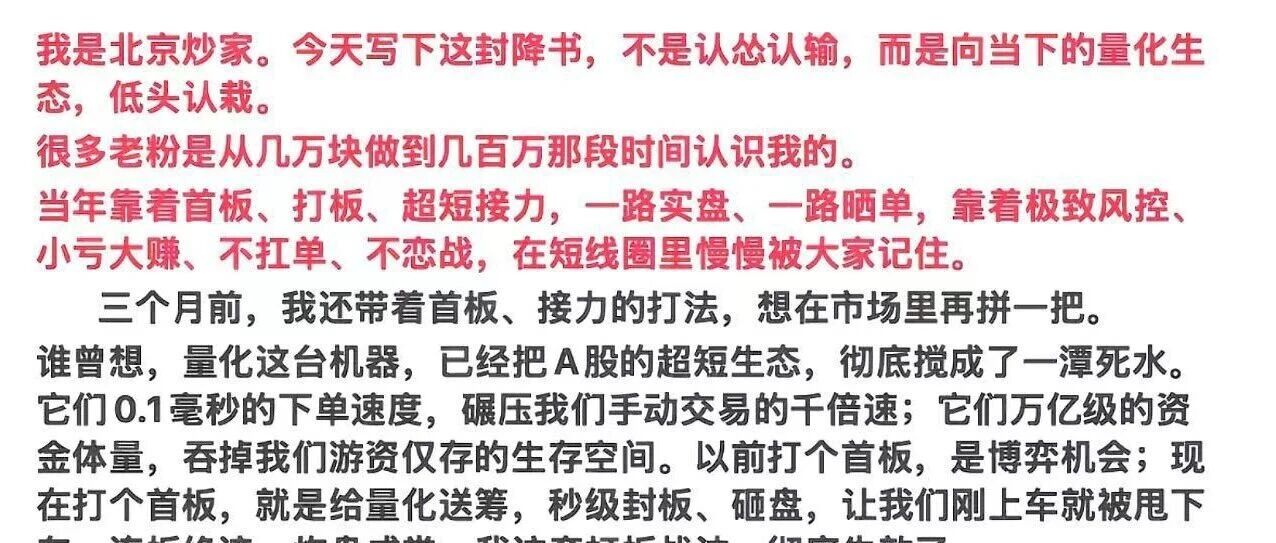
游资“投降”——A股一周走势研判及事件提醒
Datayes· 2026-03-22 14:13
Group 1 - The core viewpoint of the article highlights the significant shift in trading strategies, with retail investors, particularly short-term traders, withdrawing from the market in favor of quantitative trading strategies, which are becoming dominant in the A-share market [1][5] - Retail trading seats have seen a decline in transaction volume, reaching a three-year low, indicating a potential shift in market dynamics as notable traders exit or pause their operations [1][5] - Quantitative private equity funds have expanded significantly, surpassing traditional subjective long-only funds for the first time, indicating a shift in market influence [5] Group 2 - The market's recent decline is attributed to absolute return-oriented funds reducing their positions, rather than institutional reallocation, with certain sectors experiencing mismatched performance [7] - Investors are advised to remain patient and calm amid market fluctuations, as the period from April to May is expected to be crucial for decision-making [7] - Certain sectors, such as energy storage and domestic AIDC chains, are recommended for investment due to their potential resilience against geopolitical tensions and high oil prices [8] Group 3 - In the Hong Kong market, the short-selling volume has reached historical highs, similar to the bear market of 2021-2022, indicating limited upward potential [11] - However, high short-selling does not necessarily predict market declines; a market recovery could trigger a short squeeze, enhancing rebound strength [11] Group 4 - The article discusses the geopolitical tensions in the Middle East, with both the U.S. and Iran signaling a willingness to negotiate, which could impact market sentiment and investment strategies [12][15] - The U.S. seeks to include specific conditions in any agreement, while Iran has outlined six demands that must be met for negotiations to proceed [15] Group 5 - The article outlines various sectors that are expected to perform well, including renewable energy, particularly in wind and solar, as well as energy storage technologies, which are anticipated to benefit from ongoing geopolitical tensions and market demands [23][24] - The semiconductor and AI sectors are also highlighted, with significant investments and developments expected in the coming years, particularly in chip manufacturing and AI infrastructure [17][19][20]


一周全球宏观与资产复盘:周览全球:周览全球滞胀交易会如何继续演绎
East Money Securities· 2026-03-22 14:06
Macro Economic Overview - Global financial markets are dominated by the Iran situation, with the Federal Reserve's March meeting signaling inflation concerns and narrowing rate cut expectations, leading to a "stagflation" trading environment[9] - The transmission chain of geopolitical conflict to asset revaluation is evident: "geopolitical conflict → oil price surge → inflation expectations rise → rate cut expectations narrow → asset revaluation"[9] Commodity Market Performance - Oil prices are fluctuating at high levels, with upward momentum decreasing compared to last week; natural gas shows strong upward momentum due to attacks on Qatar's LNG facilities[10] - Gold prices have significantly dropped, with a decline of 9.62% in COMEX gold, driven by reduced rate cut expectations and liquidity concerns[24] Equity Market Trends - A-share market shows resilience amidst external volatility, but main funds have net outflows exceeding 260 billion CNY, indicating strong risk aversion[11] - The S&P 500 and NASDAQ indices fell by 1.9% and 2.1% respectively, while the Dow Jones Industrial Average decreased by 2.1%[23] Bond Market Dynamics - U.S. Treasury yields are generally rising, with short-term yields increasing more significantly, reflecting narrowed rate cut expectations post-Fed meeting[10] - The yield curve is steepening, with 1Y and 2Y Treasury yields down by 2.0bp and 4.5bp respectively, while 10Y and 30Y yields increased by 1.6bp and 2.2bp[23] Future Outlook - Short-term equity structure is expected to remain differentiated, with ongoing "stagflation" risks; energy-related sectors may perform independently[12] - The overall yield curve for U.S. Treasuries has potential for upward movement as the market begins to price in the end of the current rate cut cycle[12]
2025年北交所业绩快报梳理:北证盈利承压,关注科技+涨价主线-20260322
Shenwan Hongyuan Securities· 2026-03-22 14:06
Group 1 - The overall pre-announcement rate for the North Exchange is low at 43.9%, indicating that the performance of companies listed on this exchange is under pressure compared to other sectors [3][10][13] - In Q4 2025, the North Exchange's revenue grew by 2.9% year-on-year, but the net profit decreased by 47.5%, significantly lagging behind the overall A-share market [10][12][18] - The performance of large enterprises is recovering, while small and medium-sized enterprises are facing significant pressure, as indicated by the PMI data [18][20] Group 2 - The technology sector is expected to remain a key focus, with AI and semiconductor industries showing strong growth potential, benefiting companies like Hengtong Optics and Parallel Technology [3][34] - High-end manufacturing is also highlighted, with opportunities in robotics and aerospace, particularly for companies involved in exports like Sanyang Technology and Wuxin Tunneling [3][34] - The energy sector is seeing a price recovery in the photovoltaic and lithium battery industries, although profitability remains under pressure due to impairment provisions [3][34] Group 3 - The healthcare sector shows structural differentiation, with demand for high-end instruments and research equipment recovering, benefiting companies like Haineng Technology and New Zhi Biology [3][34] - Companies with performance exceeding expectations include Wuxin Tunneling and Jilin Carbon Valley, while those with high future profit forecasts include Shuguang Digital and Liancheng CNC [3][34] - The report emphasizes the importance of monitoring the performance of companies in the AI and semiconductor sectors, as well as those involved in high-end manufacturing and energy [3][34]
宏观经济周度高频前瞻报告:经济周周看:未来高度关注出口景气度-20260322
ZHESHANG SECURITIES· 2026-03-22 14:06
Economic Indicators - The latest GDP weekly high-frequency prosperity index as of March 21 is 5.3%, a slight increase from the previous value of 5.2%[9] - The industrial prosperity index is at 8.2%, up from 8.1%, while the service sector index rose to 3.2% from 3.0%[10] Production Sector - The service sector shows stable progress, with real estate transactions improving significantly, while metro passenger volume in 11 cities has decreased compared to last year[2] - The automotive steel tire operating rate continues to rise, nearing levels from the past two years, indicating a stable industrial sector[11] Demand Insights - Domestic consumption growth is projected at 3.5%, slightly up from 3.4%, influenced by fluctuations in oil prices[22] - The construction sector is recovering slowly post-holiday, with a funding availability rate of 50.7%, up 7.9 percentage points from the previous week[32] Real Estate Market - New housing sales in 30 major cities reached 166.49 million square meters, a 0.47% increase week-on-week, but a 17% decrease year-on-year[45] - Land transaction volume decreased by 342 million square meters compared to the previous week, reflecting a 5.11% year-on-year decline[45] Export Performance - Container throughput increased to 659,800 TEUs, up from 603,800 TEUs the previous week, with a year-to-date growth of 10.97%[51] - Global energy pressures are expected to positively impact China's export share, with ongoing strong external demand[2]
海外“滞涨”担忧下,A股或存在波动
AVIC Securities· 2026-03-22 14:06
Market Overview - Global capital markets are focused on the ongoing Middle East conflict, which is expected to persist in the short term, leading to sustained high oil prices[5] - The market's expectation for a Federal Reserve rate cut this year has decreased, with a slight probability of a rate hike emerging, reinforcing global "stagflation" trading consensus[5] - Major global stock markets have largely declined in unison, reflecting these concerns[5] Historical Context - Following the outbreak of the Russia-Ukraine conflict in 2022, oil prices surged, significantly driving inflation and causing substantial volatility in global equity markets[7] - During the initial downturn, all sectors weakened, with coal, real estate, and banking showing the least decline, each with a drop of less than 9%[7] - The subsequent recovery phase saw the new energy sector lead the market, with power equipment, automotive, and non-ferrous metals showing significant gains, particularly power equipment which rebounded over 55%[7] Investment Strategy - Short-term recommendations focus on dividend and stable styles due to ongoing geopolitical tensions and high oil prices, which may lead to volatility in A-shares[29] - Mid-term strategies should target the new energy sector and high-growth HALO industries benefiting from AI expansion, with a focus on sectors like photovoltaic equipment and battery manufacturing, which are expected to see significant profit growth by 2026[3][29] HALO Industry Insights - The HALO (Heavy Assets, Low Obsolescence) concept is gaining traction, characterized by business models based on large physical assets with low technological obsolescence risk[17] - The top ten HALO industries expected to see the highest net profit growth by 2026 include photovoltaic equipment, coking, batteries, and shipping ports[3] Risk Factors - Potential risks include domestic policy implementation falling short of expectations, geopolitical events exceeding forecasts, and overseas liquidity conditions not meeting projections[30]
A股外资机构最新持仓路线曝光
财联社· 2026-03-22 14:05
Core Viewpoint - The latest QFII holdings in A-shares reveal a strategic shift towards specific sectors such as pharmaceuticals, semiconductors, and manufacturing, indicating a targeted investment approach rather than a return to traditional blue-chip stocks [1][9]. Group 1: QFII Holdings Overview - As of March 22, 41 listed companies are included in the QFII heavy holdings list, with 77 holding records from 16 foreign institutions [1]. - Major active foreign institutions include UBS, Barclays, Morgan Stanley, Goldman Sachs, and JPMorgan, with sovereign wealth funds like Abu Dhabi Investment Authority and Kuwait Investment Authority focusing on pharmaceuticals, energy, and manufacturing [1][7]. Group 2: Investment Trends - QFII holdings are primarily concentrated in sectors such as pharmaceuticals, semiconductors, hardware, machinery, electrical equipment, and chemicals, with manufacturing being the main focus [1][9]. - The investment strategy reflects a preference for niche manufacturing, pharmaceuticals, and technology chains, moving away from traditional large-cap stocks [1][9]. Group 3: Specific Stock Movements - Abu Dhabi Investment Authority increased its stake in Baofeng Energy by 40,000 shares, bringing its total to 44.81 million shares, valued at 880 million yuan [2][6]. - New positions were established by UBS in companies like Demingli and Zhongxing Junye, while Morgan Stanley entered positions in Jin Haitong and Dazhi Shares [3][6]. Group 4: Sector-Specific Insights - The semiconductor and hardware sectors are highlighted, with companies like Demingli and Jin Haitong attracting significant foreign interest [9][10]. - In the pharmaceutical sector, companies such as Xin Nuowei and Huazhong Sanjiu are noted for their foreign holdings, indicating a diverse investment across traditional and growth-oriented pharmaceutical companies [11]. Group 5: Overlapping Holdings - Notable overlap in holdings exists, with Dazhi Shares being held by five foreign institutions, while *ST Songfa, Zhejiang Liming, and Shuhua Sports are held by four [8]. - This trend indicates a concentrated interest in specific stocks within the semiconductor, equipment manufacturing, automotive parts, and pharmaceutical sectors [8].





行业比较周跟踪(20260316-20260322):A股估值及行业中观景气跟踪周报-20260322
Shenwan Hongyuan Securities· 2026-03-22 14:00
Valuation Summary - The overall valuation of A-shares as of March 20, 2026, shows the CSI All Share (excluding ST) PE at 21.7x and PB at 1.8x, positioned at the historical 81st and 43rd percentiles respectively [2] - The Shanghai Stock Exchange 50 PE is at 11.4x and PB at 1.3x, at the historical 57th and 34th percentiles [2] - The CSI 300 PE is at 14.0x and PB at 1.5x, at the historical 62nd and 36th percentiles [2] - The CSI 500 PE is at 35.1x and PB at 2.4x, at the historical 67th and 56th percentiles [2] - The ChiNext Index PE is at 41.2x and PB at 5.6x, at the historical 36th and 64th percentiles [2] Industry Valuation Comparison - Industries with PE valuations above the historical 85th percentile include Real Estate, Automation Equipment, Retail, IT Services, and Communication [2] - Industries with PB valuations above the historical 85th percentile include Electronics (Semiconductors) and Communication [2] - Industries with both PE and PB valuations below the historical 15th percentile include Securities, Food and Beverage, Medical Services, and White Goods [2] Industry Sentiment Tracking New Energy - In the photovoltaic sector, the price of polysilicon futures dropped by 11.8%, and the spot price fell by 3.2%, indicating cautious demand from downstream [2] - Battery material prices, including lithium, have seen significant declines, with lithium carbonate down by 3.9% [2] Technology TMT - The Philadelphia Semiconductor Index rose by 0.3%, while the Taiwan Semiconductor Index fell by 0.4% [2] - The DRAM price index increased by 4.1%, indicating a positive trend in semiconductor pricing [2] Real Estate Chain - The national average price of rebar fell by 0.4%, while cement prices increased by 1.3% as construction activity picks up [3] - Real estate sales area decreased by 13.5% year-on-year in January-February 2026, indicating ongoing challenges in the sector [3] Consumer Sector - The average price of live pigs fell by 1.8%, prompting government intervention to stabilize prices [3] - Retail sales grew by 2.8% year-on-year in January-February 2026, showing signs of recovery in consumer confidence [3] Midstream Manufacturing - Manufacturing investment grew by 3.1% year-on-year in January-February 2026, supported by improved cash flow and external demand [3] - Industrial electricity consumption increased by 6.1%, reflecting a recovery in manufacturing and export activities [3] Cyclical Industries - Concerns over global economic stagnation have led to significant declines in metal prices, with COMEX gold down by 10.6% [3] - Brent crude oil prices rose by 0.5% to $104.41 per barrel, driven by geopolitical tensions affecting supply [3]