
非银金融

Search documents
市场脱离低回报区域可布局四条主线
Zheng Quan Shi Bao· 2026-01-04 23:52
Group 1 - The core viewpoint is that the ROE of the non-financial real estate sector in A-shares is expected to rise from 7.2% to 7.9% by 2026, indicating a shift from a "low return" phase to a more favorable profitability trend [1] - The investment strategy suggests focusing on four main lines: industrial resource products, equipment exports, consumer recovery, and non-bank financials, with a particular emphasis on tracking the demand for aluminum, copper, steel, and coal driven by power system construction [1] - In overseas markets, the characteristics of "investment stronger than consumption," profit differentiation among large and small enterprises, declining employment, and slowing wage growth are observed, which provide a foundation for a sustained interest rate cut cycle [1] Group 2 - On the domestic consumption front, the drag of housing prices on household spending has diminished, and the recovery of trade settlement rates along with visa-free entry for foreign tourists has led to improved sales net profit margins in sectors such as aviation, hotels, duty-free, and food and beverage [2] - The financial landscape shows a shift of household savings towards "fixed income+" products, with pension and insurance funds continuously increasing their allocation to equities; policy adjustments to lower insurance risk factors and relax brokerage leverage are expected to resonate with the non-bank sector and the recovery of ROE [2]
2026-资本市场有哪些-预期差-值得重视
2026-01-04 15:35
Summary of Key Points from the Conference Call Industry Overview - The focus is on the capital markets and the anticipated trends for 2026, particularly in relation to geopolitical events and domestic policies affecting investment strategies and market dynamics [1][2][3]. Core Insights and Arguments - **Geopolitical Impact**: Recent geopolitical events, such as U.S. actions in Venezuela and Iran, may cause short-term market fluctuations but are not expected to alter long-term trends. The stability of the Maduro regime is highlighted despite economic challenges [2][3]. - **Domestic Policy Signals**: The Chinese government's New Year address emphasizes national strength and technological breakthroughs over consumer issues, indicating a strong commitment to stable macroeconomic policies with limited consumer stimulus [2][3]. - **Real Estate Policy**: The real estate sector is expected to see continued policy adjustments aimed at stabilizing expectations, particularly in core cities, but without comprehensive fiscal support. The decline in real estate investment is viewed as a necessary phase in the economic transition [3][8]. - **Market Strategy for 2026**: The market strategy for 2026 includes maintaining policy stability and enhancing international competitiveness, with a focus on technology, global supply chain restructuring, and gold-related investments [6][7]. Market Performance Expectations - **Short-term Market Trends**: The market is anticipated to experience a strong performance leading up to the Spring Festival, with potential new highs driven by collective capital inflow. Key sectors to watch include robotics, nuclear fusion, and consumer services [7][11]. - **Investment Sentiment**: There is a cautious but gradually increasing sentiment among retail investors, who are expected to participate in the market, albeit at a slower pace. The preference is shifting towards more stable investment vehicles like fixed income and ETFs rather than actively managed funds [12][14]. Additional Important Insights - **Funding Dynamics**: The spring market rally is expected to be supported by insurance capital and the maturity of large bank deposits, which will lead to passive capital inflows into the market [16][17]. - **Sector Focus**: Investors are advised to focus on sectors with strong growth potential, such as robotics and nuclear energy, which align with the spring investment themes and have long-term profitability prospects [11][17]. - **Investor Behavior**: The current market sentiment reflects a defensive posture among retail investors, with a preference for certainty in investment choices, indicating a slower recovery in risk appetite compared to previous market cycles [13][14]. This summary encapsulates the key points discussed in the conference call, providing insights into the anticipated market trends and investment strategies for 2026.
招商策略:开年攻势,指数新高
Xin Lang Cai Jing· 2026-01-04 14:37
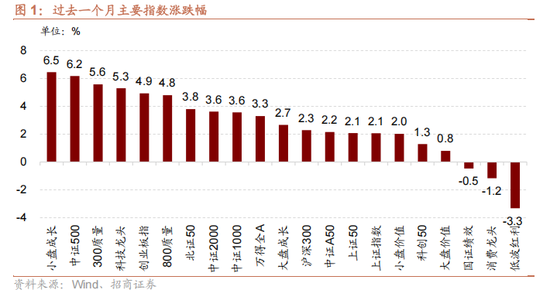
Core Viewpoint - The A-share market is expected to continue its upward trend in January, driven by improved fundamentals, increased government investment, and a favorable liquidity environment. The probability of reaching new highs is increasing as companies prepare to disclose their annual performance forecasts, which are likely to show significant year-on-year growth due to low base effects from the previous year [2][14][24]. Fundamental Analysis - Government special bond issuance is anticipated to accelerate, and central budget investments are expected to increase, leading to a marginal improvement in economic fundamentals. The annual performance forecasts for companies are likely to show a significant rebound in year-on-year growth due to low performance bases from the previous year [2][15][24]. - The liquidity environment is expected to remain favorable, with domestic funds likely to increase their positions in A-shares. The recent appreciation of the RMB is expected to attract foreign capital back into the A-share market [4][16][24]. Industry and Sector Recommendations - Key sectors to focus on in January include technology, industrial metals, and consumer services. Specific areas of interest are commercial aerospace, AI applications, AI computing power, and semiconductor equipment [2][14][24]. - The recommended sectors for investment include power equipment, machinery, non-bank financials, electronics, and basic chemicals, with a focus on cyclical and technology sectors [3][18][24]. Liquidity and Capital Supply - The overall net inflow of incremental funds is expected to remain stable in January, with foreign and insurance capital likely to be the main sources of new funds. The central bank's actions to manage liquidity around tax periods and year-end are expected to support a return to a more accommodative liquidity environment [4][16][24]. - The demand for funds is expected to increase, with significant net purchases of ETFs and a rebound in refinancing activities, indicating a growing demand for capital in the market [4][17][24]. Performance Outlook and Earnings Forecast - The performance of industrial enterprises is expected to show a mixed picture, with some sectors like high-tech manufacturing and certain resource categories likely to see improved earnings growth. However, sectors such as mining and traditional consumer goods may continue to face challenges [5][52][54]. - The upcoming earnings disclosure period in January is critical, as companies with strong earnings growth in the past are likely to perform better in the market. Conversely, companies that fail to meet expectations may face significant downward pressure on their stock prices [48][50][54].

券商资管2026年展望:权益掘金牛市后半程,多元配置凸显价值
Zhong Guo Ji Jin Bao· 2026-01-04 14:16
【导读】券商资管2026年多资产展望:权益掘金牛市后半程,多元配置凸显价值 进入2026年,在年初投资布局关键期,券商资管聚焦权益、债市与FOF三大业务,为全年投资锚定清晰 方向。综合来看,受访机构认为权益市场仍处于"牛市后半程",结构性机会丰富;债市预计维持宽幅震 荡;在波动与机遇并存的环境中,进行多资产、多策略配置仍是主流选择。 权益市场:锚定牛市后半程 对于2026年的A股市场,多家券商资管持积极看法,认为其仍处于"牛市后半程",驱动因素包括流动性 充裕、盈利周期见底回升、政策持续支持以及居民资产配置转移等。 国金资管表示,当前流动性环境和政策监管环境持续完善,长期资金呈持续流入态势,科技持续突围与 经济结构性亮点有望为部分行业带来基本面景气向上的结构性机会。权益市场的投资机会或将更具广度 和深度。 财通资管指出,"春季躁动"行情可能会在岁末年初到来,且以TMT和中小市值风格为主。另外,从市净 率(PB)和净资产收益率(ROE)角度出发,当前电力设备、非银金融、有色金属、传媒性价比或占 优,PB和ROE双底的消费及顺周期行业等待布局。 对于债券市场,多家券商资管判断,收益率将维持宽幅震荡走势,下行与上行 ...

A股2026年1月观点及配置建议:开年攻势,指数新高-20260104
CMS· 2026-01-04 13:01
Group 1 - The report anticipates that A-shares will continue their upward trend in January, supported by improved fundamentals due to accelerated local government special bond issuance and a recovery in government investment [2][4][12] - The earnings forecast for listed companies is expected to show a significant year-on-year increase due to a low base from the previous year, with January being a key period for earnings announcements [4][14][22] - The report highlights a focus on sectors such as commercial aerospace, AI applications, and semiconductor equipment, as well as cyclical resource sectors like industrial metals, which are expected to be the main battlegrounds in January [12][16][22] Group 2 - The liquidity environment is projected to remain stable, with net inflows of incremental funds expected, particularly from foreign and insurance capital [3][15][21] - The report emphasizes the importance of monitoring the performance of sectors with high earnings growth or improvement, particularly in TMT (Technology, Media, Telecommunications) and cyclical resource sectors [5][17][54] - The report suggests that the market is likely to experience structural inflows of funds, with a focus on large-cap growth stocks and indices such as CSI 300 and STAR Market 50 [16][18][21] Group 3 - The report indicates that January is a critical month for earnings disclosures, with potential volatility in stocks that may not meet expectations, particularly in high-growth sectors [48][51] - The analysis of historical data suggests that sectors with stable earnings, such as home appliances, automobiles, and non-bank financials, have a higher probability of achieving excess returns during this period [51][54] - The report notes that the upcoming year is significant due to the initiation of the 14th Five-Year Plan, which historically correlates with increased infrastructure investment and economic stabilization [23][26][29] Group 4 - The report discusses the global commodity market, indicating a potential upward trend in prices driven by demand recovery and policy expectations, particularly in industrial metals [30][35][36] - The analysis highlights the impact of geopolitical factors and supply chain security on commodity prices, emphasizing the importance of resource nationalism and strategic resource management [42][43][46] - The report suggests that the demand for industrial metals will be supported by new technological needs, particularly in AI and renewable energy sectors, which are expected to drive significant growth [38][40][47]
华创策略:春季躁动已经启动,流动性或为主要驱动
Sou Hu Cai Jing· 2026-01-04 12:58
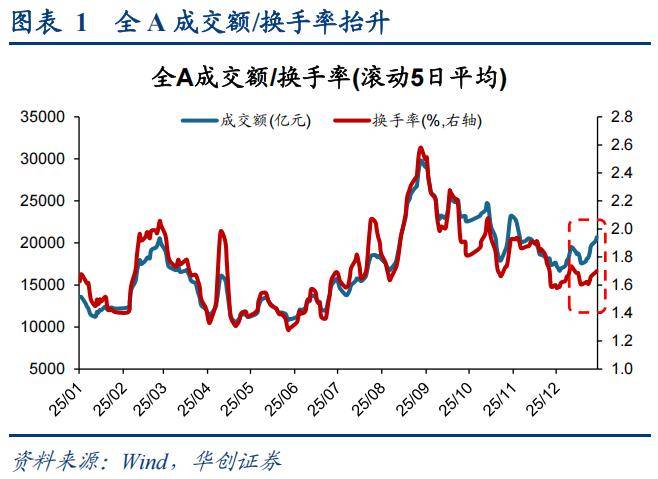
①春季躁动下成交热度较低的热门主题机会:有色/新能源/机器人/半导体等; ②关注业绩预期改善的非银,顺周期(煤炭、有色)。 报告正文 一、春季躁动已经启动 本轮春季躁动或可更多归因于流动性驱动。我们认为春季躁动行情更多为时间统计规律,启动与否不必苛求确切的信号,12/17至今上证指数实现11连 阳,指数点位从3822上升至3969点,全A成交额从1.7万亿上升至2.2万亿,换手率从1.6%提升至1.8%,春季躁动已经启动。我们判断本轮春季躁动可更多 归因为风险偏好回升下的流动性驱动:在美日央行两只靴子落地后,外围不确定干扰得到缓解,对市场风险偏好形成支撑。同时,国内地产风险得到一定 对冲与缓释:一方面,万科债券展期虽未获得通过,但宽限期从5个工作日延长至30个交易日(宽限期届满日定为2026年1月28日),为后续谈判留下更充 裕的缓冲时间;另一方面,12月30日财政部、税务总局联合发布关于个人销售住房增值税政策的公告,将未满2年住房销售增值税征收率从5%下调至 3%,通过降低交易成本减少"卖旧买新"的循环阻碍,有助于去库存促进房地产市场预期向好。从资金面上来看,以两融/ETF为代表的资金出现明显放 量,12/ ...
中信建投:多重利好推动港股大涨 A股有望迎来开门红行情
智通财经网· 2026-01-04 11:44
Group 1 - The A-share market is expected to experience a "New Year opening red" trend due to improved liquidity and exchange rate conditions compared to the previous two years [1][3] - Key sectors to focus on include semiconductors, AI, non-bank financials, new energy, and machinery equipment, with a long-term positive outlook on industrial metals, small metals, and innovative pharmaceuticals [1] - The market sentiment index has risen to 80, indicating high investor enthusiasm, and the "cross-year market" is likely to continue into January [2] Group 2 - The geopolitical tension from the U.S. military action in Venezuela is expected to lead to short-term increases in gold and oil prices, while the long-term impact on international oil prices may be negative [4] - China's heavy reliance on Venezuelan crude oil, which accounts for 80% of its imports, poses risks to certain chemical products due to potential instability in raw material supply [4] - The domestic technology sector, particularly semiconductors and AI chips, is positioned as a core driver of market performance, supported by government policies promoting smart devices and venture capital initiatives [4]

【策略周报】:躁动主线与扩散——策略周聚焦-20260104
Huachuang Securities· 2026-01-04 11:43
证 券 研 究 报 告 【策略周报】 躁动主线与扩散——策略周聚焦 1、关注春季躁动下成交热度较低的热门主题机会:有色/新能源/机器人/半导 体等。当前热门主题赛道中,除商业航天概念影响下的卫星通信与通信设备成 交热度处于高位,其余有色金属、新能源、机器人、半导体材料设备等主题成 交热度均处于历史中低水平,后续随着春季躁动的持续发酵成交有望向当前热 度偏低主题扩散。 相关研究报告 《【华创策略】杠杆资金净流入重回历史高位— —流动性&交易拥挤度&投资者温度计周报》 2025-12-29 《【华创策略】大类资产年关盘点——策略周聚 焦》 2025-12-28 《【华创策略】股票型 ETF 净流入创今年 4 月以 来新高——流动性&交易拥挤度&投资者温度计 周报》 2025-12-22 《【华创策略】储备躁动品种——策略周聚焦》 2、关注业绩预期改善的非银,科技制造(电子、电新),顺周期(煤炭、有色)。 ①非银:重视保险短期保费开门红&中期投资收益增厚业绩表现。②顺周期: 经济工作会议定调&"十五五"开局之年,财政发力基建项目有望加码,关注 紧供给的有色/化工/建材/钢铁/煤炭。 风险提示:宏观经济复苏不及预期; ...
光大证券:对春季行情保持耐心
Xin Lang Cai Jing· 2026-01-04 08:53
来源:光大证券 核心观点一:从震荡的四季度到春季行情。2025年12月A股先跌后涨,整体窄幅震荡。但月中,中长期 资金开始逐步入市,其再次成为了市场的稳定器,叠加居民资金的持续流入,十二月下旬市场持续上 行,春季行情表现值得期待。 核心观点三:春季行情的风格与方向。历史上春季行情通常以成长与顺周期两条主线为主。从往年春季 行情中各板块的表现来看,成长板块在大多数时候均有不错的表现,此外,顺周期板块成为主线的次数 也较高,而成长+周期双主线的情景在过去13次春季行情中共出现过6次。相关行业的行情短期有较强 持续性,不过春季行情中的强势行业未必会成为年度主线。对于今年而言,我们认为消费与成长有望成 为春季行情的两条主线。 核心观点一:从震荡的四季度到春季行情。2025年12月A股先跌后涨,整体窄幅震荡。但月中,中长期 资金开始逐步入市,其再次成为了市场的稳定器,叠加居民资金的持续流入,十二月下旬市场持续上 行,春季行情表现值得期待。 核心观点二:对春季行情保持耐心。春季行情多数年份都存在,不过表现有明显差异,当前来看,12月 下旬的上涨或许就是本轮春季行情的起点。不过需要注意的是,从历史规律来看,上证指数当年1月 ...

国金证券:躁动与变化,维持做多思路
Xin Lang Cai Jing· 2026-01-04 08:36
Group 1: Market Overview - Global risk assets have maintained a steady upward trend in a low volatility environment, while commodity prices have risen with increased volatility [1][7] - The Hong Kong stock market has shown particularly strong performance, leading among major global indices, driven by the spillover of US dollar liquidity and industrial catalysts [1][7] - High volatility in asset prices has been observed in the commodity market, indicating a fragile low inventory environment [1][7] Group 2: Long-term Perspective - Industrial metal values relative to US financial assets and broad money supply are at a 20-year low, indicating that physical assets are undervalued [8] - Future demand shocks from industrial changes and supply-side trade policy shifts, combined with low inventory and monetary easing, may amplify asset price volatility [8] - AI investment and the global manufacturing cycle recovery are key drivers for commodity markets in the medium term [8] Group 3: Economic Fundamentals - The latest manufacturing PMI for December exceeded expectations, indicating positive changes in the economic fundamentals [9] - Production has shown an unseasonal increase, with improvements in production, procurement, and business expectations, alongside a rise in inventory indices [9] - New domestic demand expansion policies are being implemented, including a "trade-in" policy for consumer goods and a significant investment plan of approximately 295 billion yuan to stabilize investment [9] Group 4: Seasonal Market Trends - Historical data shows a clear seasonal effect in market performance at year-end, with December typically favoring large-cap value stocks [11] - The current market rebound began in late November, coinciding with a downward trend in the US dollar index, aligning with the recovery of global risk assets [11] - The "spring rally" may already be underway, with high trading volumes in popular sectors reflecting increased risk appetite [11] Group 5: Changing Market Dynamics - The internal driving logic of the market is changing, with domestic economic data and early policy implementations acting as new catalysts [12] - The reliance on marginal improvements in overseas liquidity may not be sustainable, leading to a focus on assets with clearer fundamental signals and lower volatility [12] - Recommended investment areas include industrial resource products aligned with AI investment and global manufacturing recovery, as well as sectors benefiting from domestic consumption recovery [12][5]
