
机械设备

Search documents
上市公司套保进入精耕细作时代
Qi Huo Ri Bao Wang· 2026-01-05 00:54
Core Insights - The number of A-share listed companies using derivatives continues to grow, with 1,782 companies publishing hedging-related announcements in the first 11 months of 2025, an increase of 279 companies or 18.6% year-on-year, reflecting the survival wisdom of Chinese enterprises in a complex international environment [1] Group 1: Hedging Trends - Since 2020, factors such as the pandemic, geopolitical conflicts, and supply chain restructuring have driven an increase in the hedging participation rate among listed companies in China, which stands at 35%, compared to the 70%-80% maturity level in Europe and the U.S. [2] - The demand for hedging in emerging sectors has surged, with industries such as electronics, basic chemicals, power equipment, machinery, and pharmaceuticals becoming the main players in hedging activities, aligning with the direction of China's manufacturing transformation [2] Group 2: Risk Management Strategies - Exchange rate risk is the primary concern for companies, with 1,311 companies publishing currency hedging announcements in the first 11 months of 2025, a 13% increase year-on-year, significantly outpacing other risk types [4] - Approximately 78% of companies use foreign exchange forward contracts for hedging, while 22% opt for foreign exchange options for dual protection [4] - The reform of the RMB exchange rate formation mechanism is reshaping market expectations, prompting companies to establish dynamic adjustment mechanisms for hedging strategies [4] Group 3: Commodity-Specific Hedging - Copper is the most popular commodity for hedging, with 80% of listed companies mentioning copper futures hedging in the first 11 months of 2025, due to its extensive application in various industries [6] - Different segments of the copper industry employ distinct hedging strategies, with upstream mining companies typically using sell hedges to lock in sales prices, while downstream processing companies adjust positions based on order conditions [7] Group 4: Evolving Hedging Practices - Companies are increasingly adopting refined risk management models, such as converting fixed price negotiations into basis trading to mitigate default risks and attract foreign partners [5] - The use of hedging tools is evolving from a simplistic approach to a more sophisticated operation, enhancing the resilience of the real economy against risks [7]
招商证券:1月A股继续演绎春季攻势概率较高 关注投资驱动顺周期涨价方向
智通财经网· 2026-01-04 22:52
Core Viewpoint - The A-share market is expected to continue its upward trend in January, driven by improved fundamentals and increased government investment, with a high probability of a spring rally [1][2] Fundamental Analysis - The issuance of local government special bonds is anticipated to accelerate, and central budget investments are expected to increase, leading to a marginal improvement in the fundamentals [2] - The year-on-year growth rate of listed companies' annual performance forecasts is likely to rebound significantly due to a low base effect from the previous year [2][5] - The domestic capital market is expected to see increased inflows as the market sentiment improves, aided by the appreciation of the RMB and the return of foreign capital [2][4] Market Sentiment and Performance - January will see heightened speculation around performance disclosures, with a focus on companies that exceed expectations or show significant improvements post-announcement [1][2] - The sectors of commercial aerospace, AI applications, and semiconductor equipment are highlighted as key areas of focus for investment in January [2] Style and Sector Allocation - The recommended investment style for January favors large-cap growth stocks, with suggested index combinations including CSI 300 and STAR Market 50 [3] - Sector allocation should focus on cyclical and technology sectors, with specific recommendations for industries such as power equipment, machinery, non-bank financials, electronics, and basic chemicals [3][6] Liquidity and Capital Supply - Incremental capital is expected to maintain a stable net inflow in January, with foreign and insurance capital likely to be the main sources of this inflow [4] - The central bank is expected to implement measures to ensure liquidity remains ample, particularly around tax periods and year-end [3][4] Industry Trends and Recommendations - Industries expected to see high growth or improvement in annual reports include those with pricing power, export advantages, and sectors within TMT (Technology, Media, Telecommunications) [5][6] - The focus on sectors with marginal improvements includes AI hardware, robotics, AI applications, non-ferrous metals, and domestic computing power [3][6] External Liquidity Factors - The Federal Reserve's ongoing easing cycle is expected to positively influence market risk appetite in the first half of the year, although expectations may be subject to revision based on economic data [4]

十大券商一周策略:看多马年春节,短线两手准备!看好“有新高”组合
Zheng Quan Shi Bao· 2026-01-04 22:42
Group 1 - The market is expected to experience an upward trend at the beginning of the year, driven by a favorable liquidity environment and investor sentiment [1][6][9] - The anticipated balance between external and internal demand will be a significant factor for market performance in 2026, with policies aimed at boosting domestic demand becoming increasingly important [1][2] - The structural bull market is supported by a reassessment of China's technological capabilities and the resilience of external demand amid a complex trade environment [1][4] Group 2 - The Chinese stock market is likely to stabilize and cross important thresholds, aided by overseas liquidity and seasonal factors such as the Spring Festival [2][3] - The "transformation bull" trend is confirmed, with a focus on sectors benefiting from economic transformation and capital market reforms [2][4] - The spring market is expected to continue its upward trajectory, supported by improving economic data and favorable policy signals [3][4] Group 3 - The spring market rally has begun early, with a solid foundation for a bull market in 2026, driven by multiple positive factors including macroeconomic policies and capital inflows [8][12] - Investment strategies should focus on sectors benefiting from new technologies and policies, such as AI, energy storage, and robotics [8][12] - The market is experiencing a shift in internal driving logic, with a need to focus on assets with clearer fundamental signals and lower volatility [7][11]
上市公司回购增持:莫负投资人信任之托(四)
Sou Hu Cai Jing· 2026-01-04 15:48
Core Viewpoint - The article discusses the paradox of stock buybacks and share repurchases in the A-share market, highlighting the skepticism surrounding their effectiveness as genuine signals of corporate value amidst instances of stock price declines following such announcements [1][2]. Group 1: Buyback and Repurchase Trends - In early 2026, the trend of buybacks and share repurchases remains strong in the Shenzhen market, with companies like Dongcheng Pharmaceutical and Century Huatong announcing significant repurchase plans [1]. - By the end of 2025, Shenzhen companies disclosed a total of 424 buyback plans, with a maximum repurchase amount exceeding 800 billion and a maximum share purchase amount exceeding 300 billion [1]. - Major players in various sectors, including electronics and biomedicine, are leading the buyback efforts, with Midea Group and CATL making substantial repurchases [1]. Group 2: Investor Skepticism - The case of a company experiencing a stock price drop immediately after announcing a buyback raises questions about the sincerity of such actions, leading investors to wonder if these moves are genuine value affirmations or merely public relations tactics [2][3]. - The disparity between theoretical benefits of buybacks and the reality of declining stock prices creates confusion in the market, prompting investors to question the motives behind these actions [3]. Group 3: Recommendations for Genuine Buybacks - Companies should treat buybacks as strategic decisions based on thorough value assessments rather than as emergency measures during stock price declines [4]. - Regulatory bodies need to enhance rules to prevent buybacks from being used for market manipulation or information arbitrage, ensuring transparency and protecting smaller investors [4]. - Investors should focus on the actual actions taken by companies, assessing the consistency and sustainability of buyback plans rather than just the announcements [4]. Group 4: Trust and Market Confidence - The effectiveness of buybacks as a confidence-building tool relies on the trust of market participants, and misuse of this tool can undermine overall market confidence [5]. - The article emphasizes the need for companies to engage in genuine actions that contribute to long-term value rather than short-term fixes, fostering a partnership between companies and investors based on shared interests [5].




2026年股市3大核心逻辑和3大核心主线(附龙头名单)
Sou Hu Cai Jing· 2026-01-04 15:20
Core Viewpoint - The 2025 A-share market experienced a bull market driven by "hard technology," characterized by significant structural differentiation and record-breaking performance in various metrics [8][10]. Market Performance Summary - Major indices saw substantial increases, with a typical pattern of "strong innovation, stable main board, and weak value" [9]. - The market scale achieved a historic leap, with active leverage and foreign capital participation, indicating a concentrated performance in high-growth sectors [10]. Leading Sectors - The top-performing sectors averaged a 47.61% increase, with notable performances in: - Non-ferrous metals: +92.64% driven by AI/new energy demand for copper and lithium, alongside gold as a safe haven [11]. - Communications: +87.27% due to the explosion of CPO optical modules and accelerated satellite internet [11]. - Electronics: +49.40% from breakthroughs in domestic AI chips and semiconductor equipment [11]. - A total of 533 stocks doubled in value, with 7 stocks increasing over 500%, and the TMT sector accounting for 33.31% of daily trading volume [12]. 2026 Market Outlook - The 2026 market is expected to shift from liquidity and valuation-driven growth to profit-driven performance, with three core logical drivers: 1. Intensive policy dividends from the "14th Five-Year Plan" and proactive fiscal policies [13]. 2. Continued domestic and international liquidity easing, with anticipated Fed rate cuts [13]. 3. Sustained corporate profit recovery, with nearly 60% of listed companies expecting positive earnings [13]. Core Investment Themes - The main investment themes for 2026 include: 1. Core offensive line: AI full chain and new productivity, driven by policy, technology, and performance [15]. 2. High elasticity line: High-end manufacturing going overseas, benefiting from global energy transition and a strong RMB [16]. 3. Defensive line: Consumption recovery and cyclical rebounds supported by domestic demand policies [19]. Key Industries and Focus Areas - Key industries to watch include: - New energy vehicles, photovoltaic + energy storage, and high-end equipment [20]. - Consumer sectors such as smart cars and high-dividend blue chips in pharmaceuticals [20]. - Industrial metals and energy sectors benefiting from global inventory replenishment [20]. Market Dynamics and Timing - The market is expected to follow a rotational rhythm, with specific focuses for each quarter, including AI computing and applications, overseas expansion, and high-dividend defensive stocks [20][22].
招商策略:开年攻势,指数新高
Xin Lang Cai Jing· 2026-01-04 14:37
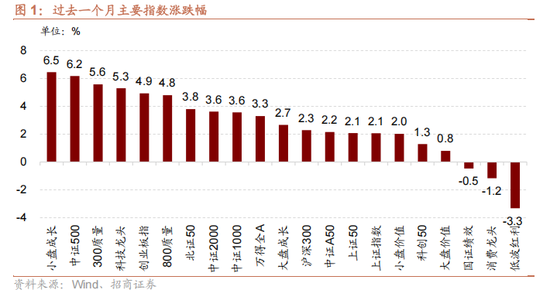
Core Viewpoint - The A-share market is expected to continue its upward trend in January, driven by improved fundamentals, increased government investment, and a favorable liquidity environment. The probability of reaching new highs is increasing as companies prepare to disclose their annual performance forecasts, which are likely to show significant year-on-year growth due to low base effects from the previous year [2][14][24]. Fundamental Analysis - Government special bond issuance is anticipated to accelerate, and central budget investments are expected to increase, leading to a marginal improvement in economic fundamentals. The annual performance forecasts for companies are likely to show a significant rebound in year-on-year growth due to low performance bases from the previous year [2][15][24]. - The liquidity environment is expected to remain favorable, with domestic funds likely to increase their positions in A-shares. The recent appreciation of the RMB is expected to attract foreign capital back into the A-share market [4][16][24]. Industry and Sector Recommendations - Key sectors to focus on in January include technology, industrial metals, and consumer services. Specific areas of interest are commercial aerospace, AI applications, AI computing power, and semiconductor equipment [2][14][24]. - The recommended sectors for investment include power equipment, machinery, non-bank financials, electronics, and basic chemicals, with a focus on cyclical and technology sectors [3][18][24]. Liquidity and Capital Supply - The overall net inflow of incremental funds is expected to remain stable in January, with foreign and insurance capital likely to be the main sources of new funds. The central bank's actions to manage liquidity around tax periods and year-end are expected to support a return to a more accommodative liquidity environment [4][16][24]. - The demand for funds is expected to increase, with significant net purchases of ETFs and a rebound in refinancing activities, indicating a growing demand for capital in the market [4][17][24]. Performance Outlook and Earnings Forecast - The performance of industrial enterprises is expected to show a mixed picture, with some sectors like high-tech manufacturing and certain resource categories likely to see improved earnings growth. However, sectors such as mining and traditional consumer goods may continue to face challenges [5][52][54]. - The upcoming earnings disclosure period in January is critical, as companies with strong earnings growth in the past are likely to perform better in the market. Conversely, companies that fail to meet expectations may face significant downward pressure on their stock prices [48][50][54].
转债市场周报:春躁期间转债估值仍有提升空间-20260104
Guoxin Securities· 2026-01-04 14:10
Core Insights - The convertible bond market is expected to see a slight increase in valuation during the spring season due to strong expectations for underlying stocks and seasonal effects [2][16] - The China Convertible Bond Index reached a new high of 496 points since July 2015, indicating a positive trend in the market despite a decrease in ETF shares [2][16] - The average conversion premium for convertible bonds has increased, reflecting a shift from passive to active investment strategies as investors selectively identify opportunities [2][16] Market Performance - The convertible bond market saw a decline in most individual bonds, with the China Convertible Bond Index down by 0.27% and an average price drop of 0.50% [1][7] - The average parity price decreased by 0.75%, while the overall market conversion premium increased by 0.74% compared to the previous week [1][7] - Specific bonds such as Tianchuang, Maolai, Libo, Hongwei, and Hongtu showed significant gains, while others like Haohan, Jiamei, Huayi, and Kaisheng experienced notable declines [1][11] Sector Analysis - In the stock market, sectors such as commercial aerospace and precision optics performed well, while the electric power sector faced significant adjustments due to lower-than-expected long-term electricity prices [7][8] - The overall sentiment in the bond market was weak, influenced by factors such as the end-of-year financial assessments and a general decline in market activity [8][14] - The average implied volatility for convertible bonds stands at 45.91%, indicating a high level of market uncertainty [17][22] Investment Strategy - Investors are advised to focus on convertible bonds with strong underlying stock performance and consider participating in bonds nearing maturity [2][16] - The report suggests targeting sectors with high earnings elasticity, such as lithium battery materials, semiconductor equipment, and power semiconductors, which are expected to benefit from increased demand [2][16] - For absolute return strategies, it is recommended to look at industry leaders with valuations at historical lows, particularly in sectors like livestock farming and utilities [2][16]
A股展望牛市2.0
IPO日报· 2026-01-04 13:14
Core Viewpoint - The A-share market is expected to continue its bullish trend into 2026, with a projected index increase of 10%, driven by a shift from valuation recovery to profit growth [1][3]. Group 1: Market Outlook - A-shares, Hong Kong stocks, and US stocks are anticipated to maintain a bullish trend, supported by global liquidity easing, economic recovery, rapid development of the AI industry, and rising resource prices [3]. - Analysts predict that A-share companies' profits may grow by 6% in 2025 and further accelerate to 8% in 2026, with a focus on profit realization rather than valuation [3][4]. - Goldman Sachs forecasts a transition from the "hope" phase to the "growth" phase for the Chinese stock market, with a potential 38% increase by the end of 2027, driven by profit growth of 14% in 2026 [3][4]. Group 2: Investment Strategies - Key investment themes for 2026 include technology and resource sectors, with a focus on AI applications, new energy, and materials [5][6]. - Analysts recommend increasing allocations to emerging markets, particularly in sectors benefiting from the weak dollar trend [5]. - Investment directions include technology sectors, consumer sectors driven by profit acceleration, and industries benefiting from "anti-involution" policies [4][6]. Group 3: Market Phases - The market is expected to enter a "prosperity verification phase" in 2026, characterized by a slower index increase and a shift in focus from valuation to fundamental improvements [4]. - The transition from a "bull market 1.0" to "bull market 2.0" is anticipated, with a potential for a comprehensive bull market in the second half of 2026 [3][4]. Group 4: Risk Factors - Analysts highlight concerns regarding insufficient domestic demand and low inflation, which could impact corporate profitability and investment willingness [7]. - Potential risks include the progress of US-China trade negotiations, real estate market developments, and the possibility of an AI bubble affecting the tech sector [7][8].

A股2026年1月观点及配置建议:开年攻势,指数新高-20260104
CMS· 2026-01-04 13:01
Group 1 - The report anticipates that A-shares will continue their upward trend in January, supported by improved fundamentals due to accelerated local government special bond issuance and a recovery in government investment [2][4][12] - The earnings forecast for listed companies is expected to show a significant year-on-year increase due to a low base from the previous year, with January being a key period for earnings announcements [4][14][22] - The report highlights a focus on sectors such as commercial aerospace, AI applications, and semiconductor equipment, as well as cyclical resource sectors like industrial metals, which are expected to be the main battlegrounds in January [12][16][22] Group 2 - The liquidity environment is projected to remain stable, with net inflows of incremental funds expected, particularly from foreign and insurance capital [3][15][21] - The report emphasizes the importance of monitoring the performance of sectors with high earnings growth or improvement, particularly in TMT (Technology, Media, Telecommunications) and cyclical resource sectors [5][17][54] - The report suggests that the market is likely to experience structural inflows of funds, with a focus on large-cap growth stocks and indices such as CSI 300 and STAR Market 50 [16][18][21] Group 3 - The report indicates that January is a critical month for earnings disclosures, with potential volatility in stocks that may not meet expectations, particularly in high-growth sectors [48][51] - The analysis of historical data suggests that sectors with stable earnings, such as home appliances, automobiles, and non-bank financials, have a higher probability of achieving excess returns during this period [51][54] - The report notes that the upcoming year is significant due to the initiation of the 14th Five-Year Plan, which historically correlates with increased infrastructure investment and economic stabilization [23][26][29] Group 4 - The report discusses the global commodity market, indicating a potential upward trend in prices driven by demand recovery and policy expectations, particularly in industrial metals [30][35][36] - The analysis highlights the impact of geopolitical factors and supply chain security on commodity prices, emphasizing the importance of resource nationalism and strategic resource management [42][43][46] - The report suggests that the demand for industrial metals will be supported by new technological needs, particularly in AI and renewable energy sectors, which are expected to drive significant growth [38][40][47]
超1100亿元,深市公司回购增持彰显信心,真金白银护航市场稳定
Zheng Quan Shi Bao· 2026-01-04 12:19
Core Insights - Since 2025, companies listed on the Shenzhen Stock Exchange have actively engaged in share buybacks and increases, with a total of 424 disclosed plans amounting to a maximum of 114.25 billion yuan, reflecting their confidence in long-term development and enhancing investor trust [1][3]. Group 1: Overall Trends - The overall trend in 2025 shows a significant increase in willingness for share buybacks and increases, characterized by high intent, considerable scale, and industry concentration [2][3]. - Out of the 424 disclosed plans, 288 were buyback plans with a maximum amount of 82.725 billion yuan, while 136 were increase plans with a maximum of 31.521 billion yuan [3]. Group 2: Industry Focus - Key industries leading the buyback efforts include electronics, biomedicine, machinery, and power equipment, accounting for 40.97% of total buybacks, while biomedicine, machinery, basic chemicals, and home appliances lead in increases, making up 37.78% [3]. - The buyback and increase activities are seen as mechanisms for companies to optimize their equity structure and enhance shareholder returns, contributing to market stability and liquidity [3]. Group 3: Leading Companies - Leading companies in various sectors have played a pivotal role in guiding market trends through substantial buybacks and increases, establishing benchmarks and stabilizing expectations [4][5]. - Midea Group has executed a buyback plan exceeding 10 billion yuan, aimed at reducing registered capital and implementing employee stock ownership plans, thereby enhancing shareholder equity [5]. - Contemporary Amperex Technology Co., Ltd. (CATL) plans to buy back shares totaling between 4 billion and 8 billion yuan, reflecting its commitment to value creation [5]. Group 4: Market Dynamics - The buyback activities of leading companies are seen as a reflection of rational recognition of their value and the gradual emergence of long-term investment value in the capital market [6]. - The ongoing market reforms and regulatory improvements are expected to sustain the positive momentum of buybacks and increases, providing robust support for the high-quality development of the capital market [6].