
服务业

Search documents
上海美国商会报告:贸易战并未触发大量美企回流美国
Di Yi Cai Jing· 2025-09-11 00:40
Group 1 - The report indicates that 71% of surveyed companies expect to achieve profitability in 2024, an increase from 66% in 2023, with significant differences across industries: 80% in manufacturing, 69% in retail, and 55% in services [1][2] - 48% of surveyed companies perceive the regulatory environment in China as transparent, a notable increase of 13 percentage points from the previous year [2] - 39% of surveyed U.S. companies believe they have benefited from government measures to promote consumption in China, while 37% see positive effects from market opening initiatives [2] Group 2 - Nearly half (48%) of surveyed companies call for the U.S. government to eliminate all tariffs on Chinese goods, with 64% expecting revenue declines due to the tariff war [4][5] - 69% of surveyed companies anticipate negative impacts on their operations if the U.S. were to revoke China's permanent normal trade relations status, with manufacturing being the most affected sector at 78% [5] - The report highlights that only 18% of companies considered relocating investments to the U.S., indicating that the trade war has not significantly triggered a return of U.S. companies [5]
深度专题 | “十五五”:产业破局与重构 ——“十五五”规划研究系列之三
申万宏源宏观· 2025-09-10 16:04
Core Viewpoint - The article discusses the importance of industrial structure adjustment in China's 14th and upcoming 15th Five-Year Plans, emphasizing a shift from focusing on the ratio of the three industries to prioritizing technological innovation and R&D investment [3][5][28]. Summary by Sections 1. Importance of Industrial Structure Adjustment - Industrial structure adjustment is a crucial component of China's Five-Year Plans, serving as a key means to achieve core objectives [3][16]. - The 13th and 14th Five-Year Plans have set clear quantitative targets for industrial structure adjustments, focusing on advanced manufacturing and R&D investment [3][5]. 2. Evolution of Industrial Structure Adjustment - The focus of industrial structure adjustment has shifted from the ratio of the three industries to emphasizing technological innovation [5][28]. - The importance of service industry value-added ratios has diminished, while R&D expenditure has become a central indicator [5][28]. - The 14th Five-Year Plan introduced a target for the digital economy's core industries, reflecting a more refined approach to planning [5][28]. 3. Directions for the 15th Five-Year Plan - The primary direction for industrial structure adjustment during the 15th Five-Year Plan is transformation and upgrading, with a focus on technological innovation [7][22]. - Emerging industries such as marine economy, artificial intelligence, and smart vehicles are expected to receive significant attention [7][22]. - The need to address supply-demand mismatches and implement "anti-involution" policies is highlighted as a critical aspect of the upcoming plan [7][8]. 4. Service Industry Focus - The service industry's development is essential for addressing structural unemployment during the transition process and aligns with the requirements of the new era of China's economy [8][47]. - The emphasis has shifted from finance and real estate to information technology, with a growing focus on enhancing the competitiveness of the service sector [6][47]. - The 15th Five-Year Plan is likely to increase the openness of the service industry to stimulate service consumption and trade [8][49]. 5. Manufacturing Sector Changes - The requirements for the manufacturing sector have evolved from focusing on quantity to quality, with an emphasis on high-tech industries [5][30][40]. - The contribution of high-tech industries to economic growth has become increasingly significant, with average growth rates surpassing those of traditional industries [32][44]. 6. Policy Implications - The article outlines that the strategic focus of the Five-Year Plans reflects a broader shift in policy priorities, emphasizing innovation, structural adjustment, and high-quality development [11][13][40]. - The integration of technological advancements into traditional industries is seen as a pathway to enhance competitiveness and sustainability [5][40].


宽松环境或延续,继续关注美国8月PPI、CPI数据
Xin Lang Ji Jin· 2025-09-10 08:52
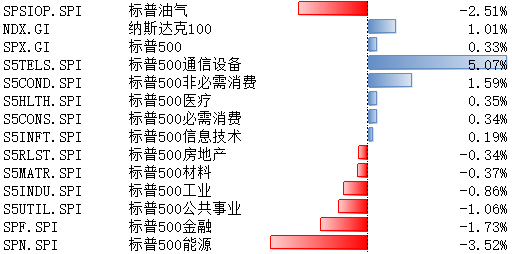
Macroeconomic Overview - In August 2025, the U.S. non-farm payrolls added only 22,000 jobs, significantly below the expected 75,000, with the previous month's figure revised up to 79,000 [1] - The labor force participation rate increased by 0.1 percentage points to 62.3%, while the unemployment rate remained steady at 4.3% [1] - Hourly wage growth slowed to 3.7% year-on-year, with a month-on-month increase of 0.3% [1] - The U.S. manufacturing and services sectors continue to show divergent trends, with manufacturing contracting and services expanding [1] - The ISM manufacturing index for August recorded 48.7, below the expected 49, while the ISM non-manufacturing index was at 52, exceeding both expectations and the previous value [1] - The ADP employment data for August showed a significant decline, with only 54,000 jobs added, falling short of the expected 68,000 and the previous 104,000 [1] Index Performance - For the week of September 1-5, the S&P Oil & Gas Index fell by 2.51%, while the Nasdaq 100 Index rose by 1.01% and the S&P 500 Index increased by 0.33% [2][3] - Among the 11 sectors covered by the S&P 500, five sectors saw gains, with communication equipment leading at 5.07%, while energy was the worst performer, declining by 3.52% [2][3] Investment Direction - The disappointing non-farm payroll data has led to increased expectations for interest rate cuts, resulting in a surge in gold prices and volatility in U.S. equities [4] - Market expectations for rate cuts have significantly risen, with projections indicating a potential cut starting in September [4] - The upcoming U.S. PPI and CPI data will be closely monitored as inflationary pressures remain concentrated in the fourth quarter [4] - The Bosera S&P 500 ETF (513500) is highlighted as a cost-effective investment tool for domestic investors to capture U.S. equity growth [4] - The S&P 500 Index is recognized as a benchmark for U.S. equities, covering over 500 representative companies across 11 sectors, accounting for approximately 80% of the total market capitalization [4] Nasdaq 100 ETF - The Bosera Nasdaq 100 ETF (513390) tracks the Nasdaq 100 Index, with a significant allocation of 57.87% in the information technology sector [5] - The index includes high-quality technology companies, providing exposure to various sectors such as consumer services, consumer goods, and healthcare [5]
“双贴息”促消费 “四两”如何拨“千斤”
Ren Min Ri Bao· 2025-09-08 01:37
Core Viewpoint - The implementation of the "double interest subsidy" policy for personal consumption loans and service industry loans aims to stimulate consumption and expand domestic demand, which is a key focus of current economic work [1][2]. Group 1: Policy Implementation and Impact - The "double interest subsidy" policy is designed to effectively release the potential of domestic demand and support various consumer expenditures, including home renovations and essential services [1][2]. - For example, a consumer taking a loan of 200,000 yuan for home improvement could save approximately 2,000 yuan in interest payments due to a 1% subsidy, while a restaurant upgrading its facilities with a 1,000,000 yuan loan could save around 10,000 yuan [1]. - The policy covers a wide range of consumer needs, from essential items to discretionary spending, indicating a comprehensive approach to stimulating consumption [1][2]. Group 2: Consumer Loan Statistics - As of the end of 2024, the balance of consumer loans (excluding housing loans) in China is projected to reach 21.01 trillion yuan, reflecting a year-on-year growth of 6.2% [2]. - Empirical studies show that the introduction of consumer financial products can increase borrowing consumers' spending by 16% to 30%, while merchant sales can rise by approximately 40% [2]. - There is a notable supply-demand gap in consumer credit services, with the demand rate exceeding actual participation by 5.3 percentage points in 2021, up from 2.5 percentage points in 2019 [2]. Group 3: Broader Economic Policies - The "double interest subsidy" policy is part of a broader set of measures aimed at enhancing consumer confidence and spending, including free preschool education and childcare subsidies [2]. - The government has initiated various policies, including a 500 billion yuan service consumption and elderly care re-loan program, to create a cohesive framework for stimulating consumption [2]. - The "national subsidy" program for replacing old consumer goods has already driven over 2.9 trillion yuan in consumption, benefiting around 400 million people [3]. Group 4: Innovation and Consumer Engagement - Understanding consumer psychology and preferences is crucial for creating demand and enhancing consumption, emphasizing the importance of innovation [4]. - Innovative products and services, such as cultural souvenirs and drone delivery systems, are emerging as effective ways to engage consumers and meet new demands [3][4]. - The market's capacity is significant, and businesses are encouraged to leverage policy benefits while focusing on genuine innovation to boost consumption [5].
扩内需等政策效果初步显现 8月份PMI三大指数均有所回升
Zhong Guo Chan Ye Jing Ji Xin Xi Wang· 2025-09-08 01:23
Group 1: Manufacturing Sector - In August, the manufacturing PMI rose to 49.4%, indicating an improvement in economic conditions compared to July [2][3] - The production index reached 50.8%, up 0.3 percentage points from July, marking an acceleration in manufacturing production [2] - The new orders index increased to 49.5%, reflecting a slight recovery in demand [2] - High-tech manufacturing and equipment manufacturing PMIs were 51.9% and 50.5%, respectively, showing continued strength in these sectors [3] - The prices of major raw materials and factory output prices rose to 53.3% and 49.1%, respectively, indicating an overall improvement in market price levels [2][3] Group 2: Non-Manufacturing Sector - The non-manufacturing business activity index was 50.3%, a 0.2 percentage point increase from July, indicating continued expansion [5] - The service sector's business activity index reached 50.5%, the highest point of the year, reflecting a significant recovery [5] - The construction sector's business activity index fell to 49.1%, down 1.5 percentage points from July, due to adverse weather conditions [6] Group 3: Market Expectations - The production and business activity expectations index was 53.7%, up 1.1 percentage points from July, suggesting increased confidence among manufacturing firms [4] - The business activity expectations index for the service sector was 57.0%, indicating optimism about future market developments [5]
中经评论:强化财政政策提振消费实效
Jing Ji Ri Bao· 2025-09-08 00:01
Group 1 - The article emphasizes the importance of boosting consumption as a key driver for economic growth and enhancing people's well-being, with various fiscal policies being implemented to support this initiative [1][4] - A total of 300 billion yuan in special government bonds has been allocated to support the old-for-new consumption policy, which has effectively stimulated sales in related goods [1][2] - The State Council's recent meeting highlighted the need for continued implementation of the "two new" policies to further release policy dividends and enhance consumer confidence [1][2] Group 2 - The ongoing supply of "national subsidies" is expected to stabilize market expectations and maintain consumer market activity, with the third batch of 69 billion yuan already disbursed and the fourth batch scheduled for October [2] - The article discusses the need for innovative consumption scenarios to meet the diverse and multi-layered demands of consumers, particularly in sectors like health, childcare, culture, and entertainment [2][3] - The introduction of personal consumption loan interest subsidies aims to simplify the process for consumers, making it easier for them to benefit from these financial supports [3]
第二十五届投洽会今日启幕,主宾省江苏与主宾国英国提前展开互动从扬子江到泰晤士河,“良伴”同行路不遥
Xin Hua Ri Bao· 2025-09-07 23:44
Core Viewpoint - The 25th China International Investment and Trade Fair has commenced in Xiamen, highlighting the strong partnership between Jiangsu province and the UK, with a focus on mutual investment and cooperation in key sectors. Group 1: Cooperation Directions - Jiangsu and the UK aim to deepen cooperation in three key areas: green low-carbon development, biomedicine, and consumer services [2][3] - In the green low-carbon sector, Jiangsu is building zero-carbon industrial parks and factories to support multinational companies [2] - The biomedicine sector is set for breakthroughs, with Jiangsu welcoming more UK companies to share in the policy benefits of its open innovation in the biopharmaceutical industry [2] Group 2: Trade and Investment Data - From January to July this year, the trade volume between Jiangsu and the UK reached $7.57 billion, marking an 8.2% year-on-year increase [4] - As of July, the UK has established 1,532 foreign investment projects in Jiangsu, with actual foreign investment totaling $4.97 billion [4] - Jiangsu has set up 139 overseas investment projects in the UK, with a total investment amount of $1.6 billion [4] Group 3: Successful Projects - The Jaguar Land Rover production base in Changshu is a benchmark for Sino-British manufacturing cooperation, with plans to produce electric vehicles for the European market [4] - AstraZeneca has invested over $5 billion in Jiangsu over 30 years, with recent investments including $475 million for a new small molecule drug factory in Wuxi [4][5] - GSK and Jiangsu Hengrui Medicine have signed an agreement to jointly develop 12 innovative drugs, enhancing both companies' global strategies [5] Group 4: Future Prospects - Over 100 UK SMEs are attending the fair, seeking to establish diverse collaborations with Jiangsu [6] - Jiangsu's policies and local government support are crucial for fostering a conducive environment for bilateral cooperation [6] - The establishment of the Sino-European (Wuxi) Life Science Innovation Industrial Park is a significant step in promoting open innovation in the biopharmaceutical sector [6]
信用债周策略20250907:信用债票息策略有优势吗
Minsheng Securities· 2025-09-07 14:48
Group 1: Credit Bond Yield Strategy - The credit bond yield strategy shows advantages as credit bonds have demonstrated strong anti-drawdown characteristics in the current adjustment market, with their adjustment pace and magnitude closely following government bonds [1][9] - The current market conditions suggest that credit bonds still possess certain yield value, warranting continued attention, although the protection space of credit spreads is insufficient [1][9] - Historical data indicates that September is typically a challenging month for the bond market, with a less than 15% probability of interest rates declining in September over the past seven years [1][16] Group 2: Market Dynamics and Fund Behavior - Credit bonds are expected to continue fluctuating weakly in September, but the adjustment magnitude is relatively controllable, as the net selling momentum of funds may weaken [2][20] - Funds significantly sold off credit bonds with maturities over five years in July and August, totaling over 370 billion yuan, leading to a noticeable reduction in long-term bond positions [2][20] - Despite the large net selling, credit bonds did not experience sustained negative feedback, indicating a potential stabilization in the market [2][20] Group 3: Investment Strategies - Investment strategies should focus on ordinary credit bond varieties, particularly those with good credit quality and larger outstanding amounts, such as 3Y/AAA+ and AAA bonds yielding around 1.88% and 1.90% respectively [3][23] - For urban investment bonds, the yields for bonds with maturities under 2 years have been compressed to historical low levels, suggesting a focus on high-quality issuers in favorable regions [3][23] - The report recommends prioritizing 4Y and 6Y perpetual bonds while avoiding lower-rated options, maintaining a focus on liquidity and flexibility in bond selection [3][23] Group 4: Policy Impact on Economic Growth - Recent policies aimed at boosting high-tech industries and expanding domestic demand are expected to stimulate economic growth, as indicated by rising manufacturing and service sector PMIs [4][27] - The manufacturing PMI rose to 49.4%, while the non-manufacturing PMI reached 50.3%, reflecting an overall improvement in economic conditions [4][27] - The service sector is showing significant recovery, with business activity indices indicating strong growth in capital market services and transportation sectors [4][28]
宏观与大类资产周报:弱美元交易或暂时延续-20250907
CMS· 2025-09-07 14:32
Domestic Insights - The August PMI manufacturing price index increased, likely due to the upward shift in upstream commodity prices, which may hinder future corporate profit recovery[2] - The current domestic market is in a new bull market phase, with wealth effects expected to boost service consumption as a highlight for Q4 economic growth[2] - September is a critical observation window for RMB appreciation, especially if US-China negotiations show substantial progress[2] Overseas Insights - In August, non-farm payrolls added only 22,000 jobs, significantly below the expected 75,000, indicating a moderate slowdown in employment rather than a rapid decline[15] - The unemployment rate rose to 4.3% in August from 4.2% in July, reinforcing concerns about employment risks discussed at the Jackson Hole meeting[15] - The weak non-farm data suggests the Federal Reserve may lower interest rates by 75 basis points this year, with weak dollar trading likely to continue in the coming weeks[15] Liquidity and Market Trends - The overall liquidity tightened this week, with the benchmark interest rate down approximately 7.412 basis points[19] - The average daily transaction volume in the interbank pledged repo market increased by about 2417.16 billion CNY, reaching 73138.95 billion CNY[20] - Government bond issuance pressure decreased, with a net repayment of 1184.54 billion CNY and a planned issuance of 8376.7 billion CNY next week[21] Asset Performance - The Shanghai Composite Index fell by 1.18% this week, while the Shenzhen Component Index decreased by 0.83%[39] - Gold prices showed an upward trend, while international crude oil prices experienced a downward trend[37] - The US 10-year Treasury yield declined, reflecting a mixed performance in European bond yields[39]
海外利率周报20250907:就业数据再次承压,美债利率大幅下行-20250907
Minsheng Securities· 2025-09-07 09:43
1. Report Industry Investment Rating No relevant content provided. 2. Core Views of the Report - Employment data in the US is under pressure again, leading to a significant decline in US Treasury yields. The market's expectation for the interest - rate cut amplitude at the September meeting has increased significantly [1][3][9][11]. - The US manufacturing and service industries show different trends, with the manufacturing industry moving from contraction to expansion, while the service industry is still in a good expansion state but with a slowdown in expansion speed. EIA crude oil inventories increased significantly, contrary to market expectations [2][10]. - Global stock markets are mixed, with European markets generally under pressure. Precious metals in the commodity market hit new highs, and risk preferences are polarized. Non - US and non - European currencies have generally weakened against the RMB [4][15][16][17]. 3. Summary According to the Relevant Catalogs 3.1 Macro - economic Indicator Review Employment - In July, JOLTS job openings were lower than expected, dropping to a 10 - month low (7.181 million, lower than the forecast of 7.380 million and the previous value of 7.357 million) [9]. - In August, the US ADP employment increase was only 54,000, far lower than the expected 73,000 and the previous value of 106,000, indicating a significant weakening of employment growth momentum [9]. - The number of initial jobless claims this week exceeded expectations, rising to 237,000, higher than the forecast of 230,000 and the previous value of 229,000, confirming the cooling trend of the labor market [9]. - The month - on - month growth rate of average hourly wages in August met expectations and was the same as the previous value (0.3%) [9]. - In August, the seasonally - adjusted non - farm payroll employment increase was only 22,000, far lower than the expected 75,000 and a more than 70% drop from the previous value, further lowering the market's expectations for the employment market [9]. - The unemployment rate in August rose to 4.3%, in line with expectations and slightly higher than the previous value of 4.2%. The market's expectation for the interest - rate cut amplitude at the September meeting increased significantly [1][9]. Economy - In August, the US Markit manufacturing PMI increased significantly to 53.0, returning above 50 and indicating that the manufacturing industry moved from the contraction range in July to the expansion range [2][10]. - In August, the US ISM manufacturing PMI was 48.7, lower than expected but up 0.7 points from the previous value [2][10]. - In August, the US Markit services PMI was lower than expected and declined from the previous value, but it was still above 50, indicating that the service industry was still in a good expansion state [2][10]. - In August, the US ISM non - manufacturing PMI rebounded above expectations, reaching 52.0 and remaining above 50 for three consecutive months [2][10]. - The US EIA crude oil inventory this week increased significantly to 2.415 million barrels, far exceeding the expected - 2.000 million barrels and the previous value of - 2.392 million barrels [2][10]. 3.2 Main Overseas Market Interest Rate Review US - From August 29 to September 5, 2025, the 1 - year and 10 - year US Treasury yields dropped by 18bp and 13bp respectively, to 3.05% and 4.1%. Employment data put pressure on the market, and the Fed's attitude remains cautious. The market's expectation for a 50bp interest - rate cut at the September meeting has heated up again, but the possibility is still low. Multiple 25bp interest - rate cuts this year are more likely, and the possibility of consecutive interest - rate cuts is small [3][11]. Europe and Japan - The Japanese bond market was stable with small fluctuations. The 1 - year and 10 - year Japanese bond yields fluctuated by - 0.34bp and - 0.8bp respectively, to 0.7% and 1.62%. - The German bond market was also stable. The 2 - year and 10 - year German bond yields fluctuated by 3.00bp and 0bp respectively, to 1.96% and 2.71% [3][14]. 3.3 Other Asset Class Reviews Equity - Global stock markets were mixed. The Hong Kong Hang Seng Index (+1.36%), the US NASDAQ (+1.14%), and the Indian Sensex30 (+1.13%) led the gains, supported by the rebound of the technology and financial sectors. In contrast, the German DAX (-1.28%), A - shares (-1.18%), and the Vietnamese VN30 (-1.07%) declined significantly, mainly affected by macro - economic and capital - market pressures, and European markets were generally under pressure [4][15]. Commodity - Precious metals performed brightly. London silver rose by 5.01%, and London gold rose by 4.82% this week, breaking through the historical high of $3,587 per ounce, highlighting the surge in market risk - aversion demand. Crude oil and agricultural products generally declined, while some black - series commodities rose slightly. Bitcoin rebounded by 2.12%, showing a polarized risk preference [4][16]. Foreign Exchange - Non - US and non - European currencies have generally weakened against the RMB. The US dollar and the euro exchange rates against the RMB rose by 0.08% and 0.10% respectively, while the Japanese yen, Russian ruble, and Indian rupee exchange rates against the RMB fell by 0.71%, 1.14%, and 0.62% respectively [4][17]. 3.4 Market Tracking The report provides multiple charts, including the US Treasury auction panel, FED WATCH latest target - rate expectations, the simulated trends of the US dollar, US stocks, US Treasuries, gold, and Bitcoin, the trends of global major stock indices, the weekly changes in bond yields of major global economies, the weekly changes in major commodities, the weekly changes in major foreign exchange rates against the RMB, and the latest economic data panels of the US, Japan, and the Eurozone [12][13][19][20][22][26][29][32][39][46].