玻璃

Search documents
中信期货晨报:商品期货多数上涨,中小盘股指涨幅较好-20250912
Zhong Xin Qi Huo· 2025-09-12 05:11
1. Report Industry Investment Rating - No relevant content provided. 2. Core Viewpoints of the Report - The report notes that most commodity futures rose, and small - and mid - cap stock index futures had good gains. In the overseas market, the US labor market shows a clear slowdown trend, and the weak non - farm data increases the probability of a September interest rate cut. In the domestic market, the PPI is expected to see a slight increase in the central value, while the CPI may be slightly lower than the first - half level. Short - term domestic assets present mainly structural opportunities, with a higher probability of incremental policies in the fourth quarter. Overseas, the situation is generally favorable for gold. Long - term US fundamentals are fair, and a weak US dollar pattern continues [6]. 3. Summary by Related Catalogs 3.1 Market Performance - **Stock Index Futures**: The CSI 300 futures closed at 4562, up 2.92% daily, 2.37% weekly, 1.24% monthly, 17.40% quarterly, and 16.35% year - to - date. The SSE 50 futures closed at 2990.2, up 1.78% daily, 1.68% weekly, 0.34% monthly, 11.20% quarterly, and 11.66% year - to - date. The CSI 500 futures closed at 7124.6, up 3.81% daily, 3.28% weekly, 1.83% monthly, 21.52% quarterly, and 25.11% year - to - date. The CSI 1000 futures closed at 7387.8, up 3.31% daily, 2.24% weekly, 0.29% monthly, 20.15% quarterly, and 26.32% year - to - date [3]. - **Treasury Bond Futures**: The 2 - year Treasury bond futures closed at 102.41, up 0.06% daily, 0.02% weekly, - 0.01% monthly, - 0.22% quarterly, and - 0.55% year - to - date. The 5 - year Treasury bond futures closed at 105.59, up 0.16% daily, 0.00% weekly, 0.07% monthly, - 0.63% quarterly, and - 0.89% year - to - date. The 10 - year Treasury bond futures closed at 107.58, up 0.08% daily, - 0.34% weekly, - 0.21% monthly, - 1.24% quarterly, and - 1.23% year - to - date. The 30 - year Treasury bond futures closed at 114.74, down 0.02% daily, - 1.38% weekly, - 1.55% monthly, - 4.61% quarterly, and - 3.44% year - to - date [3]. - **Foreign Exchange**: The US dollar index was at 97.8433, unchanged daily, up 0.11% weekly, unchanged monthly, up 1.11% quarterly, and down 9.81% year - to - date. The euro - US dollar exchange rate was 1.1695, with 0 pips change daily, - 24 pips weekly, 9 pips monthly, - 93 pips quarterly, and 1342 pips year - to - date. The US dollar - yen exchange rate was 147.46, with 0 pips change daily, up 0.03% weekly, up 0.28% monthly, up 2.40% quarterly, and down 6.20% year - to - date [3]. - **Overseas Commodities**: NYMEX WTI crude oil was at $63.75, up 1.56% daily, 2.87% weekly, - 0.41% monthly, - 1.88% quarterly, and - 11.30% year - to - date. ICE Brent crude oil was at $67.6, up 1.61% daily, 2.94% weekly, 0.21% monthly, 1.46% quarterly, and - 9.66% year - to - date. COMEX gold was at $3680.4, up 0.45% daily, 1.12% weekly, 4.67% monthly, 11.02% quarterly, and 39.45% year - to - date [3]. 3.2 Macro Situation - **Overseas Macro**: The US released August non - farm data, with only 22,000 new jobs, lower than the previous value and expectations. The labor market's downward risk has increased, and wage growth has slowed. The number of initial and continued unemployment claims shows that the labor market slowdown is becoming more obvious [6]. - **Domestic Macro**: In August, the PPI rebounded from - 3.6% to - 2.9% year - on - year, while the CPI dropped from 0% to - 0.4% year - on - year. The tail - wagging effect had a large impact, and food prices dragged down the CPI. The PPI's month - on - month rebound to 0 and the core CPI's rise to 0.9% indicate that domestic policies are starting to take effect. The PPI central value is expected to rise slightly, and the CPI may be slightly lower than the first - half level [6]. 3.3 Asset Views - **Short - term**: Domestic assets mainly present structural opportunities. The market sentiment has cooled down after important domestic events this week. In the overseas market, the weak US non - farm data increases the probability of a September interest rate cut, which is favorable for gold. - **Long - term**: The US fundamentals are fair, and interest rate cuts are expected to boost the fundamentals. The weak US dollar pattern continues, and investors should be vigilant about volatility spikes and focus on non - US dollar assets [6]. 3.4 Viewpoint Highlights - **Financial Sector**: Stock index futures should adopt a dumbbell structure to deal with market differences; stock index options should continue the hedging and defensive strategy; the stock - bond seesaw may continue in the short term for Treasury bond futures. All are expected to be in a volatile state [7]. - **Precious Metals**: Driven by dovish expectations, the prices of gold and silver are expected to rise in a volatile manner, as the probability of a September interest rate cut in the US increases, and the risk of the Fed's loss of independence expands [7]. - **Shipping Sector**: For the container shipping to Europe route, attention should be paid to the game between peak - season expectations and price - increase implementation. Steel and iron ore are expected to be volatile, with the impact of production restrictions on steel weakening and iron ore showing an unexpected decline in molten iron production and a slight increase in port inventories [7]. - **Black Building Materials**: Despite the "anti - involution" impact, the prices of varieties in this sector are still supported during the peak season. However, most varieties are expected to be in a volatile state, such as coke starting the first - round price cut after the end of military parade - related production restrictions, and the supply of coking coal significantly decreasing [7]. - **Non - ferrous Metals and New Materials**: Affected by the better - than - expected July China's import and export data, non - ferrous metals were initially boosted. However, most varieties are expected to be volatile, with some facing downward pressure, such as copper due to the rising risk of overseas recession [7]. - **Energy and Chemicals**: The supply - demand situation of crude oil has weakened significantly, and coking coal's decline has dragged down the chemical industry. Most varieties in this sector are expected to be volatile, with some facing downward pressure, such as PP due to the increasing pressure of new production capacity [9]. - **Agricultural Sector**: The agricultural market is in a narrow - range volatile state, waiting for the results of field inspections. Most agricultural products are expected to be volatile, such as livestock products facing a supply - demand imbalance and rubber facing pressure from previous highs [9].
黑色建材日报:成材持续累库,钢价震荡运行-20250912
Hua Tai Qi Huo· 2025-09-12 05:10
Report Industry Investment Ratings - Glass: Oscillating weakly [1] - Soda Ash: Oscillating weakly [1] - Silicomanganese: Oscillating [3] - Ferrosilicon: Oscillating [3] Core Views - The steel market shows continuous inventory accumulation, and steel prices are oscillating. The glass and soda ash markets have inventory changes, and prices are also oscillating. The ferrosilicon and silicomanganese markets are affected by factors such as supply - demand balance, production area losses, and electricity prices, with prices oscillating [1][2][3] Summary According to Related Catalogs Glass and Soda Ash - **Market Analysis** - Glass: Yesterday, the glass futures market oscillated. The main 2601 contract rose 0.51%. The weekly start - up rate of float glass enterprises was 76.01%, up 0.1% month - on - month, and the factory inventory was 61.583 million heavy cases, down 1.467 million heavy cases month - on - month. There is still a supply - demand contradiction, and short - term premium suppresses prices [1] - Soda Ash: Yesterday, the soda ash futures market oscillated upward. The main 2601 contract rose 1.26%. The production capacity utilization rate was 87.29%, up 1.07% month - on - month, the output was 761,100 tons, up 9,300 tons month - on - month, and the inventory was 1.7975 million tons, down 24,600 tons month - on - month. High production and new capacity in the fourth quarter, along with premium, suppress prices [1] - **Strategy** - Glass: Oscillating weakly [1] - Soda Ash: Oscillating weakly [1] Silicomanganese and Ferrosilicon - **Market Analysis** - Silicomanganese: Yesterday, the main contract of silicomanganese futures closed at 5,838 yuan/ton, down 16 yuan/ton from the previous day. The spot market was stable with strong wait - and - see sentiment. The supply - demand in the industry is still loose, but there are long - term losses in production areas and low manganese ore inventory. Prices follow the sector [2] - Ferrosilicon: Yesterday, the main contract of ferrosilicon futures closed at 5,626 yuan/ton, down 2 yuan/ton from the previous day. The spot market sentiment was average. The supply - demand in the industry is loose, with long - term losses in production areas and high factory inventory suppressing prices [2] - **Strategy** - Silicomanganese: Oscillating [3] - Ferrosilicon: Oscillating [3]
日评-20250912
Guang Fa Qi Huo· 2025-09-12 03:40
Report Summary 1. Report Industry Investment Ratings No specific industry investment ratings are provided in the report. 2. Core Views - In September, the direction of the second - half monetary policy is crucial for the equity market. After A - shares have accumulated significant gains, they may enter a high - level shock pattern, and the risk has been largely released [2]. - The 10 - year Treasury bond interest rate has strong gaming power around 1.8%, and an incremental driver is needed to choose a direction. The long - end of Treasury bonds is weak while the short - end is strong [2]. - The U.S. employment market continues to weaken, the ECB keeps policy unchanged, and gold shows a sideways consolidation [2]. - The container shipping index (European line) main contract is weakly volatile [2]. - Steel prices are suppressed by factors such as declining apparent demand and coking coal复产 [2]. - The U.S. core CPI meets expectations, and the expectation of interest rate cuts has heated up again [2]. - There is a high supply pressure in the short - term for some energy and chemical products, and the market needs to pay attention to industrial demand rhythm [2]. - For agricultural products, there are different supply - demand situations, such as the abundant supply expectation for sugar and the low inventory of old - crop cotton [2]. 3. Summary by Categories Financial - **Stock Index**: The stock index has a volume - increasing rise with the resonance of technology and finance. It is recommended to sell near - month put options at the support level to collect premiums [2]. - **Treasury Bond**: Uncertain about the direction, investors are advised to wait and see in the short - term, and pay attention to the capital market, equity market, and fundamentals [2]. - **Precious Metals**: Gold should be bought cautiously at low prices or sell out - of - the - money gold options. Silver should be traded in the range of 40 - 42 dollars and sell out - of - the money options at high volatility [2]. - **Container Shipping Index (European Line)**: Consider the 12 - 10 spread arbitrage as the main contract is weakly volatile [2]. Black - **Steel**: It is recommended to wait and see due to factors suppressing steel prices [2]. - **Iron Ore**: Buy the iron ore 2601 contract at low prices in the range of 780 - 830 and go long on iron ore and short on coking coal [2]. - **Coking Coal**: Short the coking coal 2601 contract at high prices in the range of 1070 - 1170 [2]. - **Coke**: Short the coke 2601 contract at high prices in the range of 1550 - 1650 [2]. Energy and Chemical - **Crude Oil**: Adopt a short - side thinking, with support levels for WTI at [61, 62], Brent at [64, 65], and SC at [465, 475] [2]. - **Urea**: Wait and see as the short - term high - supply pressure drags down the market [2]. - **PX**: Treat the short - term oscillation in the range of 6600 - 6900 [2]. - **PTA**: Oscillate in the range of 4600 - 4800 in the short - term and conduct TA1 - 5 rolling reverse arbitrage [2]. - **Short - fiber**: Follow the raw materials, with the processing fee oscillating in the range of 800 - 1100 [2]. - **Bottle Chip**: The supply and demand may both decline in September, and the processing fee fluctuates in the range of 350 - 500 yuan/ton [2]. - **Ethylene Glycol**: Look for EG1 - 5 reverse arbitrage opportunities [2]. - **Caustic Soda**: Wait and see [2]. - **PVC**: Hold short positions [2]. - **Pure Benzene**: Follow styrene and oil prices in the short - term [2]. - **Styrene**: Do low - buying operations on EB10 and expand the EB11 - BZ11 spread at a low level [2]. - **Synthetic Rubber**: The price fluctuates in the range of 11400 - 12500 [2]. - **LLDPE**: Oscillate in the short - term [2]. - **PP**: Stop profit on short positions at 6950 - 7000 [2]. - **Methanol**: Conduct range operations in the range of 2350 - 2550 [2]. Agricultural - **Soybean Meal**: Operate in the range of 3050 - 3150 for the 01 contract [2]. - **Hog**: The market has limited supply - demand contradictions, and pay attention to the subsequent slaughter rhythm [2]. - **Corn**: Short at high prices [2]. - **Oil**: The short - term P main contract may test the 9000 support [2]. - **Sugar**: Pay attention to the support at around 5500 [2]. - **Cotton**: Wait and see on a single - side basis [2]. - **Egg**: Control the position of previous short positions as the market rebounds [2]. - **Apple**: The main contract runs around 8100 [2]. - **Jujube**: The main contract fluctuates around 11000 [2]. Special Commodities - **Soda Ash**: Short on rebounds [2]. - **Glass**: Wait and see and pay attention to the spot market sentiment during the peak season [2]. - **Rubber**: Wait and see [2]. - **Industrial Silicon**: The price may fluctuate in the range of 8000 - 9500 yuan/ton, and pay attention to the silicon industry conference [2]. New Energy - **Polysilicon**: Wait and see as the production cut expectation rises and the price increases [2]. - **Lithium Carbonate**: Wait and see mainly, with the main contract running around 7 - 7.2 million [2].
钢铁供给快速恢复,加剧炉料与成品材分化
Zhong Xin Qi Huo· 2025-09-12 03:02
1. Report Industry Investment Rating - The report gives a "Neutral" rating to the black building materials industry, with a mid - term outlook of "Oscillation" [7]. 2. Core Viewpoints of the Report - As the traditional peak season deepens, the failure of the building materials peak season has intensified the differentiation between furnace materials and finished products. Furnace materials are stronger than building materials due to strong real - demand and restocking expectations, and provide cost support for building materials. The intra - sector differentiation and overall price support are expected to remain [7]. - The steel inventory is at a moderately high level, and the fundamental contradictions are still accumulating. The fundamentals of rebar are weaker than those of hot - rolled coils. The market is still cautious about the peak - season demand. However, with the restoration of hot metal and pre - National Day restocking demand, it may support the futures prices, but rebar is expected to perform weaker than hot - rolled coils [8]. 3. Summary by Relevant Catalogs 3.1 Iron and Steel - **Core Logic**: The spot market trading volume of steel is weak, with rigid - demand purchases at low prices. The trading volume of building steel is weaker than that of hot - rolled coils. Due to shrinking profits, some steel mills have shut down for maintenance. The production of rebar has decreased, and demand has declined, with inventory pressure in Hangzhou. The supply and demand of hot - rolled coils have returned to pre - parade levels, with improved downstream purchasing sentiment and inventory destocking. The supply of the five major steel products has decreased while demand has increased, and inventory is still accumulating but at a slower pace [8]. - **Outlook**: The steel inventory is moderately high, and fundamental contradictions are accumulating. The fundamentals of rebar are weaker than those of hot - rolled coils. The market is cautious about peak - season demand. However, with the restoration of hot metal and pre - National Day restocking demand, it may support the futures prices. It is recommended to pay attention to the strategy of going long on hot - rolled coils and short on rebar [8]. 3.2 Iron Ore - **Core Logic**: Port trading volume has increased. Overseas mine shipments and arrivals at 45 ports have decreased, mainly due to port maintenance in Brazil, which is expected to have little impact on annual shipments. The hot - metal production has recovered to over 2.4 million tons per day, supporting short - term demand. The port inventory has increased, the berthing inventory has decreased, and the in - plant inventory has slightly replenished, with the total inventory slightly decreasing and the overall inventory at a moderate level [9]. - **Outlook**: The demand for iron ore has recovered to a high level, and the in - plant inventory is low. There is an expectation of pre - festival restocking in the middle and late period. The fundamentals are healthy, but the peak - season demand of the finished - product end needs further verification, limiting the upside space of iron ore. It is expected that the price will oscillate in the short term [9]. 3.3 Scrap Steel - **Core Logic**: The supply of scrap steel has slightly decreased, and the demand has increased slightly. The total daily consumption of scrap steel in both long - and short - process production has increased slightly, and the factory inventory has slightly decreased, with the available inventory days at a low level [11]. - **Outlook**: The fundamental contradictions of scrap steel are not prominent. The pressure on finished - product prices has led to low EAF profits, but resources are still tight. It is expected that the price will oscillate in the short term [11]. 3.4 Coke - **Core Logic**: The supply and demand of coke have both increased, with daily production reaching a three - month high and total inventory slightly increasing. Although the supply is becoming more relaxed, the current supply - demand contradiction is acceptable. Steel mills still have restocking needs during peak - season production. After the futures market has priced in two rounds of price cuts, the price is expected to oscillate in the short term [3]. - **Outlook**: The supply of coke has recovered more than expected, but the hot - metal production has also recovered rapidly. Steel mills still have restocking needs during peak - season production. After two rounds of price cuts have been priced in the futures market, the price is expected to remain oscillating in the short term. Attention should be paid to the restocking situation of downstream steel mills and the hot - metal production during the peak season [12]. 3.5 Coking Coal - **Core Logic**: The supply of coking coal has basically recovered, with domestic coal mines resuming production and high - level imports from Mongolia. The demand for coking coal is high due to the high - level production of coke. However, after the previous restocking, the current procurement is mostly on - demand, and the spot market is under pressure. Attention should be paid to the extent of coal - mine复产 [12]. - **Outlook**: After the parade, coal mines have quickly resumed production and are expected to maintain a stable production rhythm. With the arrival of the downstream demand peak season and high - level coke production, the on - demand restocking will still support the coking coal price [13]. 3.6 Glass - **Core Logic**: The sentiment in the domestic commodity market has weakened, and the fundamental logic has returned as the delivery approaches. The demand is in the off - season, and the downstream lacks restocking ability. Although some upstream manufacturers have promoted sales by raising prices, the supply uncertainty has increased due to potential production - line ignitions and possible shutdowns in the Shahe area. The fundamentals are still weak, and the spot price decline may be limited, with a moderately high futures valuation [13]. - **Outlook**: The actual demand is weak, but there are expectations of the peak season and policies. After the mid - stream destocking, there may be another round of oscillations. In the long - term, market - oriented capacity reduction is still needed, and if the price returns to fundamental trading, it is expected to oscillate downward [13]. 3.7 Soda Ash - **Core Logic**: The upstream inventory of soda ash has decreased, but the supply is still at a high level. The long - term supply pressure remains due to un - cleared production capacity. The demand for heavy soda ash is stable with a slight increase, while the downstream of light soda ash has weak restocking sentiment. After the resolution of shipping issues, the mid - stream inventory has accumulated, and the downstream's willingness to accept goods is weak [16]. - **Outlook**: The oversupply situation of soda ash has not changed. After the futures price decline, the spot - futures trading volume has increased slightly. It is expected to oscillate widely in the future. In the long - term, the price center will decline to promote capacity reduction [16][20]. 3.8 Alloys (Manganese Silicon and Ferrosilicon) - **Manganese Silicon** - **Core Logic**: A new round of steel procurement has started, and the first - round inquiry price in September has decreased by 400 yuan/ton compared to the previous month. The fundamentals lack upward drivers, and although the cost and peak - season expectations support the futures price in the short term, the market supply - demand outlook is pessimistic in the long - term [4]. - **Outlook**: The short - term cost and peak - season expectations support the futures price, but there is significant downward pressure on the price in the long - term. Attention should be paid to the decline in raw - material costs [17]. - **Ferrosilicon** - **Core Logic**: The first - round inquiry price in September has decreased by 330 yuan/ton compared to the previous month. The supply has increased, and the demand from the metal - magnesium market is weak. The market supply - demand relationship has hidden concerns [4][18]. - **Outlook**: The stable cost of semi - coke and electricity provides short - term support for the ferrosilicon price. With peak - season expectations, the downward space of the futures price may be limited, but the price center is expected to decline in the long - term. Attention should be paid to the adjustment of electricity costs in the main production areas [18].
黑色建材日报-20250912
Wu Kuang Qi Huo· 2025-09-12 02:11
Report Summary 1. Report Industry Investment Rating No relevant content provided. 2. Core Viewpoints - The overall atmosphere in the commodity market has warmed up, but the prices of finished steel products are showing a weak trend. The demand for rebar remains weak, while the demand for hot-rolled coils is relatively firm, leading to a divergence in their trends. If the demand cannot be effectively restored, steel prices may still decline. The raw material side is relatively strong, and the potential impacts of safety inspections and environmental protection restrictions need to be continuously monitored [4]. - For iron ore, although the latest overseas shipments have significantly declined, the short-term demand support remains due to the increase in molten iron production. The price is expected to fluctuate strongly in the short term, and the recovery of downstream demand and the speed of inventory reduction need to be continuously observed [7]. - Regarding ferrosilicon and silicomanganese, their fundamentals are not ideal, and they are likely to follow the sentiment of the black sector, especially the situation of coking coal. The operability is relatively low. The impact of the "anti-involution" policy on the black sector depends on its actual implementation and effectiveness [10][11]. - For industrial silicon and polysilicon, they are in a "weak reality" pattern. Industrial silicon is expected to fluctuate, and polysilicon continues the "weak reality, strong expectation" pattern. The short-term market focus is on capacity integration policies and downstream price transfer progress [14][16]. - In the glass and soda ash market, the price adjustment space of glass is limited, and the market has certain expectations for policy support. Soda ash prices are expected to fluctuate in the short term, and the price center may gradually rise in the long term, but the increase is limited by the downstream demand [18][19]. 3. Summary by Category Steel - **Price and Position Data**: The closing price of the rebar main contract was 3092 yuan/ton, down 17 yuan/ton (-0.54%) from the previous trading day. The closing price of the hot-rolled coil main contract was 3334 yuan/ton, down 8 yuan/ton (-0.23%) from the previous trading day [3]. - **Market Analysis**: The demand for rebar continues to be sluggish, with high inventory pressure. The production of hot-rolled coils has increased, and the apparent demand is relatively good, with a slight reduction in inventory. The profit of steel mills is gradually narrowing, and the weakness of the futures market is becoming more prominent [4]. Iron Ore - **Price and Position Data**: The main contract of iron ore (I2601) closed at 795.50 yuan/ton, with a change of -1.18% (-9.50). The position changed by -5590 hands to 53.90 million hands. The weighted position was 85.28 million hands. The spot price of PB powder at Qingdao Port was 790 yuan/wet ton, with a basis of 44.54 yuan/ton and a basis rate of 5.30% [6]. - **Market Analysis**: Overseas shipments have significantly declined, mainly due to port berth maintenance. The short-term demand support remains due to the increase in molten iron production. The port and steel mill inventories have slightly increased, and the price is expected to fluctuate strongly in the short term [7]. Ferrosilicon and Silicomanganese - **Price and Position Data**: The spot price of 6517 silicomanganese was 5700 yuan/ton, unchanged from the previous day. The main contract of ferrosilicon (SF511) closed down 0.04% at 5626 yuan/ton [9]. - **Market Analysis**: Their fundamentals are not ideal, and they are likely to follow the sentiment of the black sector, especially the situation of coking coal. The operability is relatively low. The impact of the "anti-involution" policy depends on its actual implementation and effectiveness [10][11]. Industrial Silicon and Polysilicon - **Price and Position Data**: The closing price of the industrial silicon main contract (SI2511) was 8740 yuan/ton, up 0.87% (+75). The weighted contract position changed by 13190 hands to 498655 hands. The closing price of the polysilicon main contract (PS2511) was 53710 yuan/ton, up 1.56% (+825). The weighted contract position changed by -52 hands to 304226 hands [13][15]. - **Market Analysis**: They are in a "weak reality" pattern. Industrial silicon is expected to fluctuate, and polysilicon continues the "weak reality, strong expectation" pattern. The short-term market focus is on capacity integration policies and downstream price transfer progress [14][16]. Glass and Soda Ash - **Price and Position Data**: The spot price of glass in Shahe was 1147 yuan, down 17 yuan from the previous day. The spot price of soda ash was 1195 yuan, up 15 yuan from the previous day [18][19]. - **Market Analysis**: The price adjustment space of glass is limited, and the market has certain expectations for policy support. Soda ash prices are expected to fluctuate in the short term, and the price center may gradually rise in the long term, but the increase is limited by the downstream demand [18][19].
纯碱、玻璃日报-20250912
Jian Xin Qi Huo· 2025-09-12 01:35
Group 1: Report Information - Report Name: Soda Ash and Glass Daily Report [1] - Date: September 12, 2024 [2] - Research Team: Energy and Chemical Research Team [4] Group 2: Market Review and Operation Suggestions Soda Ash - On September 11, the main soda ash futures contract SA601 fluctuated strongly, closing at 1,287 yuan/ton, up 16 yuan/ton or 1.25%, with a daily reduction of 9,350 lots [7] - Fundamentally, the weekly production growth rate slowed down, and the inventory reduction amplitude decreased. The weak fundamental pattern remained unchanged. The weekly production of soda ash rose to 761,100 tons, a month-on-month increase of 1.24%. However, the domestic soda ash industry still faced the situation of high inventory and weak demand. Although the factory inventory continued to decline to 1.7975 million tons, 24,600 tons less than last Thursday, it was still at a high level. On the demand side, the shipment performance of Chinese soda ash enterprises declined slightly this week, with a total shipment volume of 785,700 tons, a month-on-month decrease of 1.44%. The overall shipment rate of soda ash was 103.23%, also showing a downward trend, a month-on-month decrease of 2.81 percentage points. Macroscopically, there was no new policy information to alleviate the involution in the soda ash industry, and the possibility of relevant policies being implemented in the short term was relatively low [8] - In summary, the oversupply and inventory accumulation of soda ash could not be alleviated in the short term, and it was difficult to make a breakthrough. At the same time, the overall industry capacity was further increasing, and the pattern of oversupply in the market was difficult to improve effectively. Downstream, the daily melting volume of float glass was relatively stable; the production and sales of photovoltaic glass were good recently. On the one hand, the fourth quarter was the traditional peak season for photovoltaic installation, and on the other hand, the expected increase in natural gas prices in winter would push up the production cost of photovoltaic glass. Therefore, downstream products might form a slight support for the soda ash price. It was expected that the futures price would fluctuate. In the absence of substantial positive factors, subsequent attention should be paid to macro changes [8] Glass - Fundamentally, in early September 2025, the domestic photovoltaic glass market saw a significant price increase, driven by strong demand. On the one hand, market expectations were released in advance, laying the foundation for demand release in September. On the other hand, with the approaching holiday, component enterprises generally planned to stock up in late September to ensure production continuity after the holiday, amplifying the market demand for photovoltaic glass in September [9] - For float glass, the supply-side pressure was marginally relieved compared with last year, and the cost side had certain support, but the demand side was weak, and it was difficult to make a significant breakthrough in the short term. The demand for new house glass continued to decline, but the production of automobiles and home appliances increased, supporting the glass demand. In the future, the main glass futures contract would show a short-term fluctuating and strengthening trend [10] Group 3: Data Overview - The report provides data on the trading of soda ash and glass futures on September 11, including opening price, highest price, lowest price, closing price, change, change rate, open interest, and open interest change [7] - It also presents charts on the price trends of active soda ash and glass contracts, weekly soda ash production, soda ash enterprise inventory, central China heavy soda market price, and flat glass production [12][17][19]
《特殊商品》日报-20250912
Guang Fa Qi Huo· 2025-09-12 01:35
Group 1: Rubber Industry Report Industry Investment Rating Not provided Core Viewpoint The fundamentals of natural rubber (NR) have not changed significantly. There is still cost support from the upstream, while downstream players are resistant to high - priced raw materials. The reference range for the 01 contract is 15,000 - 16,500. Follow - up attention should be paid to the raw material output during the peak season in the main production areas and whether the La Nina phenomenon affects the supply. If the raw material supply is smooth, consider short - selling at high levels; if the supply is not smooth, the rubber price is expected to remain high [1]. Summary by Directory - **Spot Prices and Basis**: On September 11, the price of Yunnan state - owned whole - miscible rubber (SCRWF) in Shanghai was 14,900 yuan/ton, down 150 yuan/ton or 1.00% from the previous day. The price of Thai standard mixed rubber remained unchanged at 15,000 yuan/ton. The basis of some varieties showed significant changes, such as the basis of Panjingxing, which decreased by 8.06% [1]. - **Inter - month Spreads**: The 9 - 1 spread was - 82 yuan/ton, down 0.51% from the previous day; the 1 - 5 spread was - 35 yuan/ton, up 22.22% [1]. - **Fundamentals**: In July, the production of Thailand, Indonesia, and India showed different trends, with Thailand's production increasing by 1.61%, Indonesia's by 12.09%, and India's decreasing by 2.17%. China's production decreased by 1.30%. The weekly开工率 of semi - steel and all - steel tires increased. The domestic tire production in July decreased by 8.16%, while the tire export volume increased by 10.51%. The total import volume of natural rubber in July increased by 2.47% [1]. - **Inventory Changes**: The bonded area inventory decreased by 0.64%. The factory - warehouse futures inventory of natural rubber on the SHFE increased by 1.99%. The出库率 of warehouses increased due to downstream holiday stocking, and there is still an expectation of further inventory reduction [1]. Group 2: Log Industry Report Industry Investment Rating Not provided Core Viewpoint Currently, logs are in a volatile pattern. The spot market continues to weaken, and the enthusiasm of traders for imports has declined. The arrival volume remains low, and it is expected that the supply in September will continue to be at a low level. The inventory is low and has been decreasing for several consecutive weeks. The demand remains above 60,000 cubic meters but has not shown an obvious improvement trend. After entering the seasonal peak season, observe whether the shipment volume improves significantly. Currently, the valuation of the futures market is relatively low, and it is in a stage of volatile bottom - seeking. It is recommended to go long at low levels [3]. Summary by Directory - **Futures and Spot Prices**: On September 11, the 2511 log contract closed at 804.5 yuan/cubic meter, down 2 yuan/cubic meter from the previous day. The spot prices of major benchmark delivery products remained unchanged. The new round of FOB quotes has loosened to the range of 114 US dollars/JAS cubic meter [3]. - **Supply**: Last week, the total arrival volume at 12 ports was about 170,000 cubic meters, a record low for the year. This week, 11 ships of New Zealand logs are expected to arrive at 12 ports in China, an increase of 6 ships from last week, and the total arrival volume is about 402,000 cubic meters, a week - on - week increase of 136% [3]. - **Demand**: The shipment volume last week decreased slightly but remained above 60,000 cubic meters. As of September 5, the average daily shipment volume of logs was 61,200 cubic meters [3]. Group 3: Industrial Silicon Industry Report Industry Investment Rating Not provided Core Viewpoint From the cost side, raw material prices are rising, and the electricity price in the southwest region will gradually increase during the dry season, which will lift the cost center of industrial silicon. Although the current production of industrial silicon has increased month - on - month, there are also news of capacity clearance, and small furnaces may be shut down. From the supply - demand side, both supply and demand increased in August, maintaining a tight balance. If some capacity is cleared in the long - term, the supply pressure will be reduced. It is recommended to go long at low levels, but also pay attention to the inventory and warehouse receipts while production increases. The main price fluctuation range is expected to be 8,000 - 9,500 yuan/ton [4]. Summary by Directory - **Spot Prices and Basis**: On September 11, the price of East China SI4210 industrial silicon was 9,500 yuan/ton, up 100 yuan/ton or 1.06% from the previous day. The basis of some varieties showed significant changes, such as the basis of SI4210, which increased by 38.46% [4]. - **Inter - month Spreads**: The 2509 - 2510 spread decreased by 5032.35% [4]. - **Fundamentals**: The national industrial silicon production in the current period was 385,700 tons, an increase of 14.01% from the previous period. The production in Xinjiang, Yunnan, and Sichuan all increased. The production of organic silicon DMC increased by 11.66%, while the production of recycled aluminum alloy decreased by 1.60%. The industrial silicon export volume increased by 8.32% [4]. - **Inventory Changes**: The social inventory increased by 0.37%, and the order - form inventory increased by 0.10% [4]. Group 4: Polysilicon Industry Report Industry Investment Rating Not provided Core Viewpoint In September, although there is some production reduction on the supply side, there are also factories resuming production to make up for the supply, so the overall supply reduction is not obvious. The silicon wafer production plan has increased slightly month - on - month, and the supply - demand situation in September may show a slight inventory accumulation pattern. Since late August, downstream players have carried out obvious inventory replenishment, and the price increase of polysilicon has been gradually accepted by the downstream, with a smooth spot price transmission mechanism. In the follow - up, the futures market pays less attention to the fundamentals and more to policy expectations. Short - term price fluctuations may be significant, so caution is required [5]. Summary by Directory - **Spot Prices and Basis**: On September 11, the average price of N - type re - feedstock remained unchanged at 51,550 yuan/ton. The average price of N - type granular silicon also remained unchanged at 48,500 yuan/ton. The basis of N - type materials decreased by 61.80% [5]. - **Futures Prices and Inter - month Spreads**: The main contract price was 53,710 yuan/ton, up 1.56% from the previous day. The spreads between different contracts showed different degrees of change [5]. - **Fundamentals (Weekly)**: The silicon wafer production was 13.88 GW, an increase of 0.73% from the previous week; the polysilicon production was 31,200 tons, an increase of 3.31% [5]. - **Fundamentals (Monthly)**: The polysilicon production was 131,700 tons, an increase of 23.31% from the previous month. The polysilicon import volume increased by 40.30%, and the export volume increased by 5.96% [5]. - **Inventory Changes**: The polysilicon inventory increased by 3.79%, and the silicon wafer inventory decreased by 1.78% [5]. Group 5: Glass and Soda Ash Industry Report Industry Investment Rating Not provided Core Viewpoint - **Soda Ash**: The futures market lacks a main trading logic and is in a narrow - range volatile pattern. The fundamental oversupply problem still exists. Although the inventory did not accumulate this week, it has actually been transferred to the middle and lower reaches, and the trade inventory continues to rise. The previously reduced production capacity has resumed, and the weekly production has returned to a high level of 750,000 tons. In the medium - term, there is no expectation of a significant increase in downstream capacity, so the overall demand for soda ash will continue the previous rigid - demand pattern. After the traditional summer maintenance season in the soda ash industry, with high supply, if there is no actual capacity exit or production reduction in the future, the inventory will be further pressured. Follow the implementation of policies and the production adjustment of soda ash plants. It is recommended to short - sell at high levels when the price rebounds [6]. - **Glass**: The spot market had good trading this week, and the inventory decreased. At the beginning of the week, the news of the conversion of coal - gas production lines to clean energy in the Shahe area triggered a rise in the futures market. The specific conversion time is to be determined, and the expected shutdown time is limited. There are still some plans for production resumption and ignition in the future. Currently, the inventory of manufacturers in the Shahe area is gradually increasing, while the inventory in the middle reaches has not significantly decreased. In terms of industry supply - demand, the deep - processing orders have improved seasonally but are still weak, and the operating rate of low - emissivity glass has remained low, showing no obvious peak - season characteristics. In the long - term, the real - estate cycle is at the bottom, and the completion volume is shrinking. Eventually, the industry needs to clear excess capacity. Follow the implementation of policies in different regions and the inventory replenishment performance of the middle and lower reaches approaching the peak season. Short - term: stay on the sidelines; medium - term: pay attention to the actual peak - season demand [6]. Summary by Directory - **Glass - related Prices and Spreads**: On September 12, the price of glass 2505 was 1282 yuan/ton, up 0.23% from the previous day; the price of glass 2509 was 686 yuan/ton, down 0.60% [6]. - **Soda Ash - related Prices and Spreads**: The price of soda ash 2505 was 1359 yuan/ton, up 0.44% from the previous day; the price of soda ash 2509 was 1168 yuan/ton, up 0.44% [6]. - **Supply**: The soda ash operating rate was 86.22%, down 1.24% from the previous day. The weekly soda ash production was 761,100 tons, up 1.25%. The daily melting volume of float glass was 160,200 tons, up 0.38% [6]. - **Inventory**: The glass inventory decreased by 2.33%, the soda ash factory inventory decreased by 1.35%, and the soda ash delivery warehouse inventory increased by 2.70% [6]. - **Real - estate Data**: The year - on - year growth rate of new construction area was - 0.09%, up 0.09% from the previous period; the growth rate of construction area was 0.05%, down 2.43% [6].
黑色建材日报:市场情绪谨慎,双焦震荡运行-20250911
Hua Tai Qi Huo· 2025-09-11 05:26
Report Summary 1. Report Industry Investment Ratings - Glass: Oscillating weakly [2] - Soda Ash: Oscillating weakly [2] - Silicomanganese: Oscillating [3] - Ferrosilicon: Oscillating [3] 2. Core Views of the Report - The market sentiment is cautious, with coking coal and coke oscillating. Glass and soda ash are oscillating weakly due to the downward shift of cost support [1]. - For silicon - based ferroalloys, the profit in production areas is poor, and ferroalloys are oscillating [3]. 3. Summary by Related Catalogs Glass and Soda Ash - **Market Analysis**: - Glass futures oscillated downward yesterday. The main 2601 contract dropped 1.5%. Spot sales data was okay, and futures were at a premium to the spot. Factory inventories were fluctuating slightly at a high level, and there were still supply - demand contradictions. Short - term premium on the futures market suppressed prices [1]. - Soda ash futures also oscillated downward. The main 2601 contract dropped 0.47%. The procurement sentiment was cautious, with mainly rigid - demand transactions. Soda ash production was at a high level and new capacity was to be launched in the fourth quarter, and consumption was expected to weaken further. The premium on the futures market also suppressed prices [1]. - **Strategy**: Both glass and soda ash are expected to oscillate weakly [2] Silicon - based Ferroalloys - **Market Analysis**: - Silicomanganese's main contract closed at 5854 yuan/ton yesterday. A major Hebei Steel plant's first - round inquiry price for September silicomanganese was 5800 yuan/ton, and the market was in a wait - and - see state. The cost of manganese ore was firm. Although downstream demand was resilient, supply - demand pressure was high due to high production [3]. - Ferrosilicon's main futures contract closed at 5628 yuan/ton. The market sentiment was average. Ferrosilicon enterprises' production was stable, and the cost had no significant fluctuations. Factory inventories had risen to a high level, suppressing prices. The industry's supply - demand was relatively loose, but production areas were in the red, and production release was relatively restrained [3]. - **Strategy**: Both silicomanganese and ferrosilicon are expected to oscillate [3]
基本?改善叠加政策预期,助?板块阶段性企稳
Zhong Xin Qi Huo· 2025-09-11 05:10
Report Industry Investment Rating - The mid - term outlook for the black building materials industry is "oscillation" [7] Core Viewpoints - The improvement of fundamentals and policy expectations help the sector stabilize periodically. The rapid recovery of hot metal output after the parade boosts the demand for furnace materials, supporting steel prices. Steel enterprises' rapid resumption of production and frequent policy expectations on the supply - side jointly lead to the price stabilization of sector varieties [2]. - The short - term prices of most varieties in the black building materials sector are expected to oscillate. Although there are some supporting factors, there are also limitations and uncertainties in demand and supply [3][7][8] Summary by Related Catalogs 1. Overall Situation of the Black Building Materials Sector - The main futures prices of the sector oscillated strongly yesterday, and the night - session prices oscillated. The statements in the NDRC report triggered small fluctuations in the market. The resumption of production by steel enterprises and policy expectations on the supply - side led to the price stabilization of sector varieties [2] 2. Raw Material Analysis Iron Element - In terms of iron ore, port maintenance led to a significant decline in Brazilian shipments, but the impact on annual shipments is expected to be small. The current demand has returned to the level before the parade restrictions, supporting iron ore demand. However, the peak - season demand for finished products needs to be continuously verified, limiting the upside space of iron ore. It is expected that the short - term iron ore price will oscillate. For scrap steel, the fundamental contradictions are not prominent. The pressure on finished product prices leads to low electric - furnace profits, but resources are still tight, and the short - term price is expected to oscillate [3] Carbon Element - The recovery of steel mills' imported ore consumption to the pre - parade level indicates the recovery of hot metal production. Steel mills still have restocking demand before the National Day, and the short - term price is expected to remain oscillating. The recovery of coal mines is slower than that of downstream hot metal, and safety accidents continue to disrupt the coal - mine production increase rhythm. Under this supply - demand pattern, coal - mine inventories are being depleted at a low level, and there is still restocking expectation downstream before the National Day, so the coking coal price is expected to be supported [3] Alloys - For manganese silicon, a new round of steel tenders has started, and the market is waiting and seeing. The first - round inquiry price in September decreased by 400 yuan/ton month - on - month. The fundamentals lack upward drivers. In the short term, the cost side and peak - season expectations support the futures price, but the medium - and long - term price has a large downward pressure. For ferrosilicon, the first - round inquiry price in September decreased by 330 yuan/ton month - on - month. The short - term cost side still supports the price, and the downward space of the futures price may be limited in the peak - season expectation, but the medium - and long - term price center will tend to decline [4] 3. Individual Product Analysis Steel - The spot market trading volume of steel is average, and the inventory is at a moderately high level. The fundamentals are weak, especially for building materials. Although the cost side has support and there is restocking demand during the peak season, it is expected that the performance of rebar will be weaker than that of hot - rolled coils [8] Iron Ore - The overseas mine shipments and arrivals at 45 ports decreased month - on - month, mainly due to port maintenance in Brazil. The demand has support in the short term as the small - sample hot metal output has recovered. The overall inventory level is moderate. The demand is expected to recover, and steel enterprises' inventories are at a low level, but the peak - season demand for finished products has not been verified, so the short - term price is expected to oscillate [8][9] Scrap Steel - The arrival volume of scrap steel decreased this week. The pressure on finished product prices led to low electric - furnace profits, and the total daily consumption of scrap steel in both long - and short - flow processes decreased. The factory inventory decreased slightly, and the inventory - available days are at a low level. The short - term price is expected to oscillate [10] Coke - The first - round price cut has been implemented, but the coking profit is still considerable, and the supply has basically returned to normal. After the parade, steel mills' production enthusiasm is high, and they maintain on - demand procurement. The coke supply will gradually become loose. With the support of high hot - metal production, steel mills still have restocking demand, and the short - term price is expected to oscillate [11] Coking Coal - Coal mines have basically resumed production, and Mongolian coal imports remain high. The downstream steel and coking enterprises' procurement is cautious, and the upstream inventory is accumulating, but the overall inventory pressure is not prominent. After the parade, the production of coking coal and coke will gradually recover, and the downstream restocking on - demand will support the coking coal price [11] Glass - The actual demand is weak, but there are peak - season and policy expectations. After the mid - stream destocking, there may be another wave of oscillations. In the medium and long term, market - oriented capacity reduction is needed, and if the price returns to fundamental trading, it is expected to oscillate downward [12] Soda Ash - The supply - surplus pattern remains unchanged. After the futures price decline, the spot - futures trading volume increased slightly. It is expected to oscillate widely in the future. In the long term, the price center will decline to promote capacity reduction [15] Manganese Silicon - A new round of steel tenders has started, and the market is waiting and seeing. The first - round inquiry price in September decreased by 400 yuan/ton month - on - month. The fundamentals lack upward drivers. In the short term, the cost side and peak - season expectations support the futures price, but the medium - and long - term price has a large downward pressure [16] Ferrosilicon - The first - round inquiry price in September decreased by 330 yuan/ton month - on - month. The short - term cost side still supports the price, and the downward space of the futures price may be limited in the peak - season expectation, but the medium - and long - term price center will tend to decline [17] 4. Index Information - On September 10, 2025, the comprehensive index of CITIC Futures commodities was 2222.49, down 0.11%; the commodity 20 index was 2487.89, down 0.16%; the industrial products index was 2232.18, up 0.10%. The steel industry chain index was 1999.51, with a daily decline of 0.18%, a 5 - day increase of 1.04%, a 1 - month decline of 4.05%, and a year - to - date decline of 5.16% [100][102]
光大期货能源化工类日报9.11
Sou Hu Cai Jing· 2025-09-11 03:29
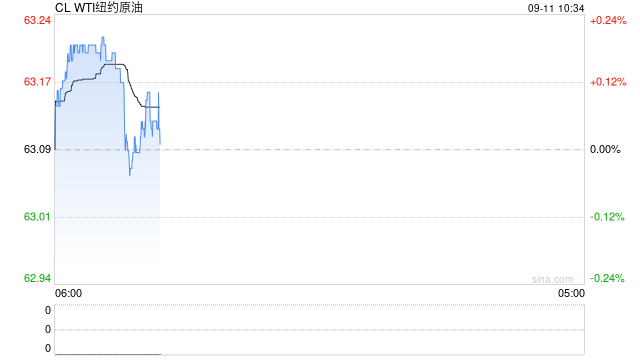
Energy and Chemicals - Oil prices increased on Wednesday, with WTI October contract closing at $63.67 per barrel, up $1.04, a rise of 1.66%. Brent November contract closed at $67.49 per barrel, also up $1.10, a rise of 1.66% [2] - The U.S. commercial crude oil inventory rose by 3.9 million barrels to 424.6 million barrels as of the week ending September 5. U.S. crude oil exports decreased by 1.1 million barrels per day to 2.8 million barrels per day [2] - The geopolitical risks are influencing oil prices, leading to fluctuations in the market [2] Fuel Oil - The main fuel oil contract FU2510 rose by 1.44% to 2827 yuan/ton, while the low-sulfur main contract LU2511 increased by 0.48% to 3383 yuan/ton [3] - An increase in supply from Singapore has been noted, with more low-sulfur fuel oil components flowing from Western markets to Asia [3] - The high-sulfur fuel oil market is weakening due to low demand for raw materials ahead of the autumn refinery maintenance season [3] Asphalt - The main asphalt contract BU2510 closed up 0.55% at 3463 yuan/ton. Domestic asphalt inventory levels increased to 27.11%, a rise of 0.66% week-on-week [4] - The operating rate of domestic asphalt plants decreased to 39.59%, down 0.63% week-on-week [4] - The upcoming demand peak in September is expected to ease supply-demand conflicts, potentially leading to further price increases [4] Rubber - The main rubber contract RU2601 rose by 40 yuan/ton to 15980 yuan/ton, while NR main contract fell by 20 yuan/ton to 12715 yuan/ton [5] - China's natural rubber social inventory decreased by 0.7 million tons, a decline of 0.57% [5] - The market is expected to remain strong due to stable demand and inventory depletion [5] PX, PTA, and MEG - TA601 closed at 4698 yuan/ton, up 0.43%, while EG2601 closed at 4319 yuan/ton, down 0.07% [6] - PX main contract closed at 6770 yuan/ton, up 0.65%, with spot prices at $838 per ton [6] - The PX supply is recovering, and downstream TA is expected to improve as maintenance is completed [6] Methanol - Methanol prices in Taicang were at 2295 yuan/ton, with CFR China prices between $261-$265 per ton [7] - Domestic supply is expected to gradually recover as production resumes, while Iranian shipments remain stable [7] - The market is anticipated to reach a temporary bottom as inventory levels peak after mid-month [7] Polyolefins - Mainstream prices for East China PP were between 6750-6960 yuan/ton, with various production margins reported [8] - Demand is expected to improve with the arrival of the "golden September and silver October" demand season [8] - The market is transitioning towards a balanced supply-demand scenario, but cost pressures remain [8] PVC - PVC market prices in East China are stabilizing, with electric stone method prices ranging from 4620-4730 yuan/ton [9] - Domestic construction activity is recovering, but overall demand remains weak compared to last year [9] - The market faces high inventory pressure, leading to a gradual compression of production profits [9] Urea - Urea prices continued to trend weakly, with the main contract closing at 1669 yuan/ton, down 1.01% [10] - The supply level remains stable, but demand sentiment is weak, with low sales rates reported [10] - The market is under pressure due to inventory increases and limited new export expectations [11] Soda Ash - Soda ash futures prices remained firm, with the main contract closing at 1281 yuan/ton, down 0.47% [12] - The market is stable, with production levels declining due to increased maintenance and equipment changes [12] - Overall, the market lacks new driving forces, but macro sentiment continues to support prices [12] Glass - Glass futures prices showed stability, with the main contract closing at 1181 yuan/ton, down 1.5% [13] - The domestic float glass market average price was 1164 yuan/ton, with a slight increase [13] - Demand sentiment remains positive, but no significant improvements in supply-demand balance are observed [13]