
原油

Search documents
加密货币市场24小时蒸发1500亿美元;美联储主席鲍威尔将发表讲话;现货白银一度涨破53美元/盎司创纪录【美股盘前】
Mei Ri Jing Ji Xin Wen· 2025-10-14 10:31
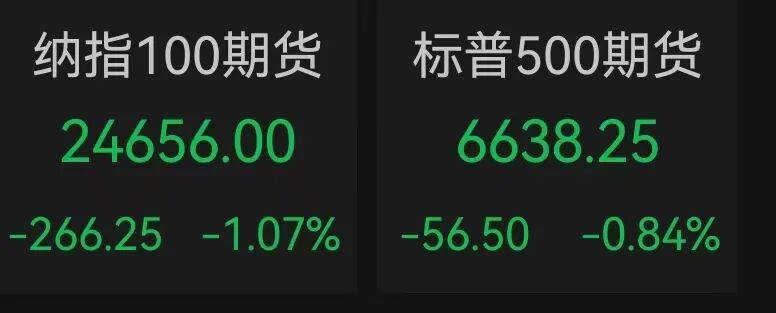
Group 1 - Dow futures fell by 0.53%, S&P 500 futures dropped by 0.84%, and Nasdaq futures decreased by 1.10% [1] - Nvidia's stock surged nearly 25% in pre-market trading after the company announced progress in developing chips for Nvidia's data center infrastructure [1] - Major tech stocks, including Nvidia, Broadcom, and Oracle, all fell over 2% in pre-market trading, while Chinese concept stock Bilibili dropped by 5% [1] Group 2 - The cryptocurrency market experienced a significant decline, with a total market cap loss of over $150 billion in 24 hours; Bitcoin fell by 3.75% to approximately $111,500, and Ethereum dropped by 7.5% below $4,000 [1] - Silver prices broke through $53 per ounce, marking a historical record, with an 80% increase this year, significantly outpacing gold's 55% rise [2] - Google announced plans to invest $15 billion in building a 1 GW AI data center in Andhra Pradesh, India, marking one of its largest investments in the country [2] Group 3 - The International Energy Agency (IEA) reported a worsening oversupply in the global oil market, with an expected increase in supply of 3 million barrels per day this year and 2.4 million barrels per day next year, while demand growth is projected at only 710,000 barrels per day and 699,000 barrels per day [3] - A Bank of America survey indicated that investor exposure to U.S. stocks has reached an eight-month high, with concerns about recession dropping to the lowest level since 2022; however, 54% of respondents believe AI stocks are in a bubble [3] - Nvidia's CEO Jensen Huang delivered the world's smallest AI supercomputer, NVIDIA DGX Spark™, to Elon Musk at SpaceX [3]


爱华中文平台:黄金破4100关卡 白银刷新高纪录
Sou Hu Cai Jing· 2025-10-14 09:45
Group 1: Market Overview - Gold prices surged past $4,100 per ounce, reaching a historical high of $4,116.77, closing at $4,106.48, an increase of 2.2% [1] - Silver also set a new record, peaking at $52.12 and closing at $51.82, up 3.1% [1] - The relative strength index (RSI) for gold and silver reached 80 and 83 respectively, indicating an overbought market [1] Group 2: Economic Indicators - U.S. major indices rebounded significantly after a sell-off, driven by a softening tone from President Trump regarding trade with China [3] - The S&P 500 index rose by 0.34% to 6,691.25, while the Dow Jones increased by 0.55% to 46,311 points [3] - The 10-year U.S. Treasury yield declined as investors sought safe-haven assets amid expectations of potential Fed easing [6] Group 3: Commodity Performance - WTI crude oil prices rose approximately 1.3% due to improved market sentiment from easing trade tensions [6] - Gold futures soared to a historical high, supported by strong safe-haven demand and expectations of Fed rate cuts [6] - The FTSE 100 index in the UK saw a slight increase, buoyed by global sentiment following the U.S. softening stance on China [6]

全球股市大变脸,“所有资产都在跌”
Hu Xiu· 2025-10-14 09:11
Market Overview - Global financial markets are experiencing a wave of panic, with all asset classes including stocks, cryptocurrencies, precious metals, and oil witnessing a simultaneous decline [1] - The market is shifting towards a risk-averse mode following significant volatility last week, indicating a rapid reallocation of funds rather than a fundamental change [2] Stock Market Performance - European and American stock futures have turned negative, with Nasdaq futures down by 1% and major Asian indices also showing increased declines, such as the MSCI Asia-Pacific index down by 1% and the Nikkei 225 down by 3% [3] - Major technology stocks in the U.S. are seeing declines, with Nvidia, Broadcom, and Oracle each dropping over 2%, while popular Chinese stocks like Bilibili are down by 5% [4] Commodity Market Trends - Safe-haven assets like gold and silver are retreating, with spot gold falling below $4100 per ounce and spot silver dropping below $51 per ounce, marking a daily decline of approximately 2.8% [7] - Copper prices are also under pressure, with New York copper dropping nearly 4% to $4.968 per pound [10] Cryptocurrency Market - Cryptocurrencies are generally declining, with Bitcoin down over 2% and Ethereum experiencing a drop of more than 6% [14] Oil Market Dynamics - Both WTI and Brent crude oil prices have decreased by over 1%, with Brent crude at $62.39, down by 1.47%, and WTI at $58.19, down by 1.49% [16] Future Market Outlook - Analysts suggest that the current market situation resembles previous "TACO" events, indicating that the sharp decline may present buying opportunities [17] - Some teams express caution, noting that the current market environment does not exhibit panic, and higher valuation levels may lead to profit-taking and increased volatility [20][22] - The outlook for Chinese assets indicates potential adjustments in the A-share market, but the extent of these adjustments is expected to be manageable [21]
广发期货日评-20251014
Guang Fa Qi Huo· 2025-10-14 02:11
1. Report Industry Investment Ratings - No specific industry investment ratings are provided in the report. 2. Core Viewpoints - Trade friction disturbs the stock index, which opens lower but is expected to rebound after the initial decline, with the long - term upward trend remaining unchanged. The bond market influence is complex, and the 10 - year Treasury bond has increased allocation value when the interest rate rises above 1.8%. Gold has large fluctuations before the APEC meeting in South Korea at the end of October. Different commodities have different trends and corresponding trading suggestions based on their fundamentals and market conditions [3]. 3. Summary by Related Catalogs Financial Sector - **Stock Index**: Affected by trade friction, the stock index opens lower. It is recommended to sell put options near MO2512 - P - 7000 to collect premiums [3]. - **Treasury Bonds**: With the cooling of risk - aversion sentiment, the spot bond interest rate rises. The T2512 oscillation range may be between 107.4 - 108.3, and it is advisable to wait for oversold opportunities [3]. - **Precious Metals**: Due to the continuous fermentation of Sino - US trade friction concerns, precious metals reach new highs. It is recommended to buy gold at a light position above 910 yuan and maintain a long - silver strategy above 50 dollars [3]. - **Shipping Index (European Line)**: Given macro uncertainties, it is recommended to observe cautiously [3]. Black Sector - **Steel**: Affected by Sino - US friction, steel prices are weakly sorted. It is recommended to wait and see on a single - side basis and conduct reverse arbitrage on the monthly spread [3]. - **Iron Ore**: Supply disturbances weaken, and it is recommended to go long on iron ore 2601 at low prices, with a reference range of 780 - 850, and conduct arbitrage by going long on iron ore and short on hot - rolled coils [3]. - **Coking Coal**: After the festival, coking coal prices have a phased correction. It is recommended to go short on coking coal 2601 at high prices, with a reference range of 1050 - 1200, and conduct arbitrage by going long on iron ore and short on coking coal [3]. - **Coke**: The first round of price increases has been implemented before the festival, and there is limited room for further increases. It is recommended to go short on coke 2601 at high prices, with a reference range of 1550 - 1700, and conduct arbitrage by going long on iron ore and short on coke [3]. Non - ferrous Sector - **Copper**: With the easing of tariff concerns, copper prices are strongly running. It is recommended to take profits on long positions at high prices and pay attention to the support at 84000 - 85000 [3]. - **Alumina**: The market supply is sufficient, and the spot price continues to fall. The main operation range is 2850 - 3050 [3]. - **Aluminum**: The macro - environment boosts the price center to around 21000, and the main reference range is 20700 - 21300 [3]. - **Aluminum Alloy**: The scrap aluminum quotation is firm, and the finished ingot price rises with the aluminum price. The main reference range is 20200 - 20800 [3]. - **Zinc**: The fundamentals have limited support for prices, and zinc prices oscillate. The main reference range is 21500 - 22500 [3]. - **Tin**: With the repair of the macro - sentiment, tin prices rise slightly. It is recommended to wait and see [3]. - **Nickel**: The macro - expectations are volatile, and the main reference range is 120000 - 126000 [3]. - **Stainless Steel**: The macro - risk increases, and the industrial demand is still insufficient. The main reference range is 12500 - 13000 [3]. Energy and Chemical Sector - **Crude Oil**: The macro - sentiment repair promotes the oil price rebound, but the loose fundamentals suppress the oil price. It is recommended to take a short - selling approach on a single - side basis [3]. - **Urea**: The market trading sentiment improves, but the short - term rebound lacks fundamental support. It is recommended to take a short - selling approach on a single - side basis and reduce the implied volatility at high prices on the option side [3]. - **PX**: The supply - demand expectation is weak, and the oil price support is limited. It is recommended to wait and see on PX11 and look for short - selling opportunities on rebounds, and conduct reverse arbitrage on the monthly spread [3]. - **PTA**: The supply - demand expectation is weak, and the driving force is limited. It is recommended to wait and see on TA and pay attention to the support near 4500, and conduct rolling reverse arbitrage on TA1 - 5 [3]. - **Short - fiber**: The inventory pressure is not large, and there is short - term support. It is recommended to increase the spread at low positions, but the driving force is limited [3]. - **Bottle Chip**: The supply - demand pattern of bottle chips remains loose, but the cost side is weak, and the short - term processing fee improves. The trading suggestions are the same as those for PTA, and the main processing fee is expected to fluctuate between 350 - 500 yuan/ton [3]. - **Ethanol**: The port inventory accumulates, and the supply - demand structure of MEG in the far - month is weak. It is recommended to short - sell EG01 at high prices, hold the seller of the out - of - the - money call option EG2601 - C - 4350, and conduct reverse arbitrage on EG1 - 5 at high prices [3]. - **Caustic Soda**: The spot price is stable with a slight decline, and the short - term downstream demand for alumina is average. It is recommended to hold short positions [3]. - **PVC**: The spot procurement enthusiasm is average, and the disk continues to weaken. It is recommended to wait and see [3]. - **Benzene**: The supply - demand is relatively loose, and the price driving force is limited. BZ2603 is expected to oscillate following benzene ethylene and the oil price in the short term [3]. - **Styrene**: The supply - demand expectation is weak, and the benzene ethylene price may be under pressure. It is recommended to short - sell on the rebound of EB11 and increase the spread at the low level of the EB - BZ spread [3]. - **Synthetic Rubber**: The cost support weakens, and the supply - demand is relatively loose. It is recommended to hold the seller of the call option BR2511 - C - 11400 [3]. - **LLDPE**: The disk price drops, and the arbitrage transaction is average. It is recommended to pay attention to the inventory - reduction inflection point [3]. - **PP**: The PDH profit is significantly repaired, and the transaction improves. It is recommended to wait and see [3]. - **Methanol**: The basis strengthens significantly, and the transaction is acceptable. It is recommended to pay attention to the positive spread arbitrage opportunity between March and May [3]. Agricultural Sector - **Soybean and Related Products**: Affected by the changing Sino - US trade expectations, the supply pressure suppresses domestic prices. It is recommended to pay attention to the support of 01 near 2900 [3]. - **Live Pig**: The slaughter pressure of the breeding end is large, and the pig price remains low, showing a weak oscillating trend [3]. - **Corn**: As the supply increases, the disk price is under pressure and runs weakly [3]. - **Palm Oil**: Supported by the fundamentals, palm oil stops falling and recovers. The main short - term oscillation range may be between 9000 - 9500 [3]. - **Sugar**: The overseas supply outlook is broad, and the raw sugar price drops sharply. It is recommended to take a short - selling approach in the short term [3]. - **Cotton**: With the new cotton gradually coming onto the market, the supply pressure increases. It is recommended to hold short positions [3]. - **Egg**: After the festival, the demand weakens, and it maintains a short - bias trend. It is recommended to close short positions on the 2511 contract at low prices and pay attention to the monthly spread reverse arbitrage opportunity [3]. - **Apple**: The redness of late - Fuji apples is relatively light, and the high - quality apples have a significant price advantage. The main price runs near 8600 [3]. - **Jujube**: As the harvest time approaches, the long - short game intensifies, and it is bearish in the long - term [3]. - **Soda Ash**: The supply - demand surplus is difficult to reverse, and the soda ash price runs weakly. It is recommended to take a short - selling approach on the rebound [3]. Special Commodity Sector - **Glass**: The production and sales performance is average, and the logic of the off - peak season in the peak season continues. It is recommended to observe cautiously [3]. - **Rubber**: It is recommended to pay attention to the raw material price increase situation during the peak production season and wait and see [3]. - **Industrial Silicon**: The supply increases, and with cost support, the price oscillates between 8300 - 9000 yuan/ton [3]. New Energy Sector - **Polysilicon**: The supply increases, and polysilicon is under pressure. It is recommended to try to go long at low prices when the price returns to the lower edge of the range, and pay attention to the implementation of capacity storage [3]. - **Lithium Carbonate**: The macro - environment is weak, the fundamentals maintain a tight balance, and the main price center is expected to be in the range of 7 - 7.5 million [3].
建信期货原油日报-20251014
Jian Xin Qi Huo· 2025-10-14 02:07
Group 1: Report Overview - Report Date: October 14, 2025 [2] - Report Type: Crude Oil Daily Report [1] - Research Team: Energy and Chemical Research Team of Jianxin Futures [4] Group 2: Market Review and Operation Suggestions - Market Performance: WTI dropped 5.23% to $57.84, Brent fell 4.8% to $62.09, and SC declined 2.68% to 453.7 yuan/barrel. Trump's tariff statement affected the market, and prices rebounded after a sharp drop [6]. - Supply - Demand Situation: OPEC+ and other countries' production is increasing. In Q4 2025, the market will be oversupplied, with an expected inventory build of 255,000 barrels per day (up 32,000 barrels per day from last month). In 2026, the inventory build rate is raised from 187,000 to 209,000 barrels per day [6]. - Operation Suggestions: Given the bearish fundamentals and eased Israel - Palestine situation, short on rallies and consider reverse arbitrage. Monitor the Russia - Ukraine situation for potential price increases, but inventory build expectations will limit upward movement [7]. Group 3: Industry News and Forecasts - Deutsche Bank Forecast: Brent crude is expected to reach $61 per barrel by the end of the year and then fall to $55 in 2026 due to inventory increases [10] - Import Data: In Q3, crude oil and metal ore imports increased by 4.9% and 10.1% year - on - year respectively [10] - Geopolitical News: US President Trump is going to Israel and Egypt to sign a peace agreement to end the Gaza war [10]
贸易紧张局势略缓和,能源化?供需偏弱格局依旧承压
Zhong Xin Qi Huo· 2025-10-14 01:53
1. Report Industry Investment Rating - Most of the energy and chemical products are rated as "oscillating weakly", including crude oil, asphalt, high - sulfur fuel oil, low - sulfur fuel oil, PX, PTA, pure benzene, styrene, ethylene glycol, short - fiber, polyester bottle - chip, LLDPE, PP, PL; methanol and urea are rated as "oscillating"; PVC and caustic soda are also rated as "oscillating" [9][10][13][14][15][17][18][20][21][22][24][29][30][31][32][33] 2. Core View of the Report - The overall supply - demand pattern of the energy and chemical industry remains weak. Although there are some temporary positive factors such as the easing of trade tensions and the progress of the peace agreement in the Middle East, the fundamental pressure persists. The industry is still dominated by the high - growth production period of OPEC +, facing the pressure of accelerated crude oil inventory accumulation. Most product prices are expected to show an oscillating and weakening trend [2][3][4] 3. Summary According to Relevant Catalogs 3.1 Market Quotes and Views 3.1.1 Crude Oil - **View**: Macroeconomic factors affect the rhythm, and the fundamentals are continuously under pressure. Global supply is in an increasing period dominated by the high - growth production of OPEC +. Later, there will be pressure of accelerated crude oil inventory accumulation due to the decline of refinery operations. The geopolitical support is weakening, and the macro - risk is fluctuating. The short - term macro - factors play a more significant role. The oil price may rebound but the downward trend is hard to reverse [9] - **Market News**: OPEC predicts that global oil demand will increase by 1.3 million barrels per day in 2025 and maintain the growth forecast of 1.38 million barrels per day in 2026. OPEC's crude oil production in September increased by 524,000 barrels per day to 28.44 million barrels per day. India and the US are expected to reach a trade agreement before the autumn deadline, and India hopes to buy more energy and natural gas from the US. World leaders participated in the signing ceremony of the Gaza peace agreement [9] 3.1.2 Asphalt - **View**: The spot price is continuously falling, and the asphalt futures price is also falling. The absolute price of asphalt is over - valued, and the monthly spread of asphalt is expected to decline with the increase of warehouse receipts [10] - **Main Logic**: OPEC + will continue to increase production in November, Saudi Arabia has lowered the export premium to Asia, the Middle East situation has cooled down, and the trade conflict has put pressure on the crude oil price, which in turn suppresses the asphalt futures price. The asphalt spot price is falling, the production plan in October has increased by 19% year - on - year, the supply tension has been greatly relieved, and the over - valued premium is starting to decline [10] 3.1.3 High - Sulfur Fuel Oil - **View**: The expectation of production increase and the cooling of geopolitical situation lead to the decline of high - sulfur fuel oil futures price. Geopolitical upgrading has a short - term impact on the price, and attention should be paid to the changes in the Russia - Ukraine situation [10] - **Main Logic**: OPEC + will continue to increase production in November, Saudi Arabia has lowered the export premium to Asia, and the end of the Palestine - Israel conflict is negative for high - sulfur fuel oil. Although the processing demand of domestic refineries is increasing, the demand for gasoline in the US is weak, and the power generation demand in the Middle East is lower than expected, so the overall demand for fuel oil is still weak [10] 3.1.4 Low - Sulfur Fuel Oil - **View**: Low - sulfur fuel oil follows the decline of crude oil. It is affected by green fuel substitution and high - sulfur substitution, with limited demand space, but the current valuation is low and it follows the fluctuation of crude oil [12] - **Main Logic**: Low - sulfur fuel oil follows the decline of crude oil. It faces negative factors such as the decline of shipping demand, green energy substitution, and high - sulfur substitution. The reduction of export tax rebates for refined oil in China may lead to an increase in supply and a decrease in demand for low - sulfur fuel oil [12] 3.1.5 Methanol - **View**: There is still capital gambling on the impact of Iran - related factors, and methanol rebounds cautiously. It is expected to show an oscillating trend in the short term [24] - **Main Logic**: On October 13, the methanol futures price rebounded. Some capital is gambling on the news that the unloading of Iranian - sanctioned ships may be blocked. Although the port inventory of methanol is still at a relatively high level, considering the high probability of Iranian - related disturbances in winter, methanol still has the value of low - level buying. However, it is restricted by the overall weak sentiment of the energy and chemical industry and the weak downstream olefin market [24] 3.1.6 Urea - **View**: There is a short - term improvement in transactions, but the downward pressure trend continues. The fundamental pattern remains unchanged, and the futures price is expected to be under pressure after a short - term positive period [24] - **Main Logic**: On October 13, driven by the expected monthly guiding price of urea announced by the nitrogen fertilizer association in the next half - year, the downstream transactions improved and the futures price rose briefly. However, the fundamental pattern remains unchanged, and it is necessary to wait for the agricultural demand after the autumn sowing [24] 3.1.7 Ethylene Glycol - **View**: The port inventory has reached an inflection point and will accumulate slightly in the short term. The long - term inventory accumulation pressure is large, and the price is expected to oscillate weakly. Attention should be paid to the TA01 - 05 reverse spread [20] - **Main Logic**: The oil price is oscillating weakly, and the cost support is weak. The supply of ethylene glycol remains high, the port inventory is continuously accumulating, and the pressure of future arrivals is increasing. It is in a stage of weakening supply - demand balance, and the spot market is loose [20] 3.1.8 PX - **View**: After the oil price breaks through and then recovers, PX's supply and demand are both strong, and its profit is adjusted within a certain range. It is expected to oscillate within a range [13] - **Main Logic**: Trump's attitude has eased, and the international oil price has rebounded slightly after breaking through the low level. PX has followed the cost and fallen slightly. Fundamentally, there is no significant change. PTA has no further production reduction plan, and the polyester load is relatively stable, which provides some support for PX demand. However, PX's own supply is still in a strengthening trend [13] 3.1.9 PTA - **View**: There is no further production reduction plan, and the processing fee is expected to be under pressure. It will follow the cost and oscillate weakly, and attention should be paid to the TA01 - 05 reverse spread [14][15] - **Main Logic**: The international oil price broke through and fell last Friday, and although it rebounded later, the cost support has been slightly dragged down. PTA factories have no further production reduction plan, and some devices will increase their load in the short term. With the expectation of new device commissioning, the basis is weak. The downstream polyester demand provides certain support, and the sales of polyester yarn have increased under the promotion of price concessions [14][15] 3.1.10 Short - Fiber - **View**: The price is dragged down by the cost, but the processing fee has a certain support. The absolute value will follow the raw material price [21] - **Main Logic**: The upstream market is generally weak, and the short - fiber price has oscillated and fallen due to the cost. At a low price, it has triggered some speculative stockpiling, and the sales have increased slightly. It is expected to follow the upstream price in the short term, and the processing fee has some support [21] 3.1.11 Polyester Bottle - Chip - **View**: The low price has triggered speculative replenishment, and the processing fee has been further repaired. The absolute value will follow the raw material price, and the support at the lower end of the processing fee has increased [22] - **Main Logic**: Due to Trump's attitude easing over the weekend, the upstream raw material price did not fall deeply. The low price of bottle - chips has triggered some speculative replenishment, and combined with factory production reduction, the processing fee of polyester bottle - chips has been further repaired [22] 3.1.12 LLDPE - **View**: The fundamental support is limited, and it oscillates weakly under the influence of macro - factors [29] - **Main Logic**: Recently, the overall energy and chemical market has been oscillating weakly, and LLDPE has followed. The oil price is oscillating, and although the US has increased sanctions on Iran - related entities, the Iranian oil supply is still stable. The global supply is in an increasing period, and there is pressure of supply surplus. The plastic's own fundamental support is limited, and the peak season is coming to an end, so the upper - and middle - stream enterprises have the intention to reduce inventory at high prices [29] 3.1.13 PP - **View**: The cost support is limited, and it oscillates weakly [30] - **Main Logic**: The Sino - US trade friction has intensified again. The oil price is oscillating, and the supply is in an increasing period with the pressure of supply surplus. PP's own fundamental support is limited, with high production and limited demand, and the high - level inventory will suppress the price. It is expected to be weak in the short term, and attention should be paid to the change of maintenance [30] 3.1.14 PL - **View**: The raw material support has weakened, and it oscillates weakly [31] - **Main Logic**: The market sentiment is bearish, and downstream buyers are cautious. Enterprises have difficulty in selling products and have to offer discounts. The regional differentiation is intensifying, and the high - price transactions are difficult to achieve [31] 3.1.15 PVC - **View**: There is still fundamental pressure, and it oscillates. The fundamental situation is under pressure, and it is expected to run weakly. Attention should be paid to the impact of Sino - US tariffs and the 14th Five - Year Plan on market expectations [32] - **Main Logic**: At the macro - level, Sino - US tariff disputes have arisen again. At the micro - level, the PVC fundamental situation is under pressure, with the cost moving down. The upstream autumn maintenance will increase in mid - October, the downstream start - up rate is weak, the export orders have improved, and the calcium carbide price is under pressure [32] 3.1.16 Caustic Soda - **View**: The spot price has stabilized, and the short - term spot supply and demand have improved. The pressure on the spot market has been relieved, and short - positions should be closed at the appropriate time [33] - **Main Logic**: At the macro - level, Sino - US tariff disputes have arisen again. At the micro - level, the short - term spot supply and demand of caustic soda have improved. The procurement of some enterprises has relieved the pressure on 32% caustic soda in Shandong. The non - aluminum peak season is coming to an end, and the low inventory may drive non - aluminum enterprises to buy at low prices. The production of caustic soda will decline in mid - October due to maintenance [33] 3.2 Variety Data Monitoring 3.2.1 Energy and Chemical Daily Index Monitoring - **Inter - period Spread**: Different products have different changes in inter - period spreads. For example, the M1 - M2 spread of Brent is 0.48 (change: 0.03), and the 1 - 5 - month spread of PX is - 52 (change: - 10) [34] - **Basis and Warehouse Receipts**: The basis and warehouse receipts of various products also vary. For example, the basis of asphalt is 178 (change: 16), and the warehouse receipts are 43,900 [35] - **Inter - variety Spread**: The inter - variety spreads, such as 1 - month PP - 3MA, 5 - month TA - EG, etc., also show different changes [37] 3.2.2 Chemical Basis and Spread Monitoring - The report also monitors the basis and spread of various chemical products such as methanol, urea, styrene, etc., but the specific content is not fully presented in the text [38][51][63] 3.3 Commodity Index - **Comprehensive Index**: The comprehensive index of CITIC Futures commodities on October 13, 2025, shows that the commodity index is 2233.00 (+0.01%), the commodity 20 index is 2525.09 (+0.17%), and the industrial products index is 2211.57 (-0.64%) [279] - **Sector Index**: The energy index on October 13, 2025, is 1139.91, with a daily decline of 1.42%, a 5 - day decline of 7.10%, a 1 - month decline of 4.63%, and a decline of 7.17% since the beginning of the year [281]
能源化工日报:原油,甲醇,尿素-20251014
Wu Kuang Qi Huo· 2025-10-14 01:30
Report Summary 1. Investment Rating No investment rating information is provided in the report. 2. Core Views - **Crude Oil**: Although the geopolitical premium has dissipated and OPEC's production increase is minimal with supply not yet surging, oil prices are not easy to be overly bearish in the short - term. Maintain a range strategy of buying low and selling high, but currently, it is recommended to wait and see, waiting for a decline in OPEC exports when oil prices fall for verification [3]. - **Methanol**: Affected by rumors of Iranian plant shutdowns and some warehouses not accepting Iranian ships' cargo, the 1 - 5 spread has strengthened from a low level, and the futures price has stabilized. However, the actual fundamentals are weak, with high domestic supply, weak demand, and high inventory. The cost - performance of short - selling is not high, and it is recommended to wait and see [6]. - **Urea**: After the holiday, the futures price has dropped significantly, and the spot price has dropped less. The supply pressure has increased, and the demand is weak. It is in a situation of low valuation and weak drive, and it is recommended to wait and see [9]. - **Rubber**: Affected by macro factors, the rubber price has broken down in the short - term. Referring to the April 2025 trend, there may be a 1 - 3 - day decline cycle. It is recommended to wait and see or operate short - term, and partially re - build the hedge position of buying RU2601 and selling RU2511 [17]. - **PVC**: The enterprise's comprehensive profit has declined to a low level, but the supply is high, the demand is weak, and the export expectation is poor. It is recommended to pay attention to short - selling opportunities on rallies [21]. - **Pure Benzene and Styrene**: The spot and futures prices of styrene have declined, but the basis has strengthened. The BZN spread has room for upward repair. The port inventory is decreasing, and the price may stop falling [24]. - **Polyethylene**: The futures price has declined. The cost - end support has weakened, but the inventory is high. The demand is expected to pick up seasonally, and the price may remain in a low - level shock [27]. - **Polypropylene**: The futures price has declined. The supply pressure is high, the demand has a seasonal rebound, and the inventory pressure is high. The high number of warehouse receipts suppresses the market, and there is no prominent short - term contradiction [30]. - **PX**: The PX load remains high, and the downstream PTA has many unexpected short - term maintenance. The PX inventory accumulation cycle is expected to continue, and it is recommended to wait and see [33]. - **PTA**: The supply side has a high maintenance volume, and the de - stocking pattern continues, but the processing fee space is limited. The demand side has a high load, but the terminal shows signs of weakness. It is recommended to wait and see [33]. - **Ethylene Glycol**: The domestic and overseas device loads are high, the supply is high, the import volume is increasing, and the port is starting to accumulate inventory. It is recommended to short on rallies [36]. 3. Summary by Commodity Crude Oil - **Market Information**: The main INE crude oil futures closed down 12.50 yuan/barrel, a 2.68% decline, at 453.70 yuan/barrel. Chinese crude oil weekly data showed a decrease in arrival inventory by 0.29 million barrels to 211.81 million barrels, a 0.14% decline; gasoline commercial inventory increased by 0.63 million barrels to 91.39 million barrels, a 0.69% increase; diesel commercial inventory increased by 0.72 million barrels to 103.95 million barrels, a 0.70% increase; total refined oil commercial inventory increased by 1.35 million barrels to 195.34 million barrels, a 0.70% increase [2]. - **Strategy**: Wait and see, waiting for OPEC's reaction to falling oil prices [3]. Methanol - **Market Information**: The price in Taicang increased by 55 yuan, in Inner Mongolia by 2.5 yuan, and in southern Shandong by 20 yuan. The 01 - contract price increased by 35 yuan to 2342 yuan/ton, and the basis was - 42. The 1 - 5 spread increased by 32 to - 12 [5]. - **Strategy**: Wait and see due to weak fundamentals but limited downside space [6]. Urea - **Market Information**: The Shandong spot price decreased by 10 yuan, and the Henan spot price decreased by 10 yuan. The 01 - contract price increased by 13 yuan to 1610 yuan, and the basis was - 100. The 1 - 5 spread increased by 1 to - 68 [8]. - **Strategy**: Wait and see because of low valuation and weak drive [9]. Rubber - **Market Information**: Affected by the US tariff statement, global risk asset prices dropped. The tire开工率 decreased during the National Day holiday. As of October 9, 2025, the all - steel tire开工率 in Shandong was 46.38%, 6.08 percentage points lower than last week and 3.30 percentage points lower than the same period last year; the semi - steel tire开工率 was 50.87%, 9.10 percentage points lower than last week and 23.72 percentage points lower than the same period last year. The export of semi - steel tires slowed down. As of September 21, 2025, China's natural rubber social inventory was 1.112 million tons, a 0.1 - million - ton decrease, a 1% decline [13][15]. - **Strategy**: Wait and see or short - term operation, and partially re - build the hedge position [17]. PVC - **Market Information**: The PVC01 contract decreased by 14 yuan to 4721 yuan. The Changzhou SG - 5 spot price was 4610 yuan/ton, a 30 - yuan decrease. The basis was - 111 yuan/ton, a 16 - yuan decrease. The 1 - 5 spread was - 318 yuan/ton. The cost of calcium carbide in Wuhai increased by 50 yuan to 2450 yuan/ton. The overall开工率 was 82.6%, a 1.2% increase. Factory inventory was 38.4 million tons, an 8.4 - million - ton increase, and social inventory was 103.6 million tons, a 5.5 - million - ton increase [19]. - **Strategy**: Pay attention to short - selling opportunities on rallies due to strong supply and weak demand [21]. Pure Benzene and Styrene - **Market Information**: The cost of East China pure benzene was 5660 yuan/ton, unchanged. The styrene spot price decreased by 50 yuan to 6700 yuan/ton, and the active - contract closing price decreased by 53 yuan to 6690 yuan/ton. The basis was 10 yuan/ton, a 3 - yuan increase. The BZN spread was 129.25 yuan/ton, a 3.5 - yuan increase. The upstream开工率 was 73.61%, a 0.41% increase. The Jiangsu port inventory decreased by 0.54 million tons to 19.65 million tons. The demand - side three - S weighted开工率 was 38.54%, a 0.87% decrease [23]. - **Strategy**: The price may stop falling due to the decreasing port inventory and the upward - repair potential of the BZN spread [24]. Polyethylene - **Market Information**: The main - contract closing price decreased by 54 yuan to 6983 yuan/ton, and the spot price decreased by 50 yuan to 7040 yuan/ton. The basis was 57 yuan/ton, a 4 - yuan increase. The upstream开工率 was 81.1%, a 0.28% decrease. The production enterprise inventory increased by 10.59 million tons to 48.86 million tons, and the trader inventory increased by 0.73 million tons to 5.40 million tons. The downstream average开工率 was 44.36%, a 0.23% increase [26]. - **Strategy**: The price may remain in a low - level shock due to weak cost - end support and expected seasonal demand recovery [27]. Polypropylene - **Market Information**: The main - contract closing price decreased by 29 yuan to 6693 yuan/ton, and the spot price decreased by 20 yuan to 6730 yuan/ton. The basis was 37 yuan/ton, a 9 - yuan increase. The upstream开工率 was 77.06%, a 1.46% decrease. The production enterprise inventory increased by 16.11 million tons to 68.14 million tons, the trader inventory increased by 6.11 million tons to 26.11 million tons, and the port inventory increased by 0.22 million tons to 6.87 million tons. The downstream average开工率 was 51.76%, a 0.05% increase [29]. - **Strategy**: High supply pressure, seasonal demand rebound, and high inventory, with high warehouse receipts suppressing the market [30]. PX - **Market Information**: The PX11 contract decreased by 46 yuan to 6458 yuan. The PX CFR decreased by 7 dollars to 791 dollars. The basis was 16 yuan, a 15 - yuan decrease. The 11 - 1 spread was 28 yuan, a 4 - yuan increase. The Chinese PX load was 87.4%, a 1% increase, and the Asian load was 79.9%, a 1.9% increase. Some domestic and overseas plants restarted, and one Japanese plant was under maintenance. The PTA load was 74.4%, a 2.7% decrease. In early October, South Korea's PX exports to China were 12.7 million tons, a 2.1 - million - ton increase year - on - year. The inventory at the end of August was 3.918 million tons, a 0.019 - million - ton increase month - on - month [32]. - **Strategy**: Wait and see due to high load, expected inventory accumulation, and neutral - low valuation [33]. PTA - **Market Information**: The PTA01 contract decreased by 24 yuan to 4510 yuan. The East China spot price decreased by 50 yuan to 4440 yuan. The basis was - 71 yuan, a 6 - yuan decrease. The 1 - 5 spread was - 54 yuan, a 2 - yuan decrease. The PTA load was 74.4%, a 2.7% decrease. Some plants adjusted their loads. The downstream load was 91.5%, unchanged. The terminal draw - texturing and weaving loads were unchanged. The social inventory on October 10 was 2.16 million tons, a 0.053 - million - ton increase [33]. - **Strategy**: Wait and see because of high supply - side maintenance, limited processing fee space, and weak terminal signs [33]. Ethylene Glycol - **Market Information**: The EG01 contract increased by 11 yuan to 4111 yuan. The East China spot price increased by 1 yuan to 4207 yuan. The basis was 69 yuan, a 1 - yuan increase. The 1 - 5 spread was - 74 yuan, an 11 - yuan increase. The supply - side load was 75.1%, a 1.6% increase. Some domestic and overseas plants had changes in operation. The downstream load was 91.5%, unchanged. The import arrival forecast was 8 million tons, and the East China departure was 0.9 million tons per day from October 11 - 12. The port inventory increased by 3.4 million tons to 54.1 million tons [35]. - **Strategy**: Short on rallies due to high supply, increasing imports, and expected inventory accumulation [36].
国泰海通|策略:资产概览:资产分化显著,日股黄金新高
国泰海通证券研究· 2025-10-13 14:03
Core Insights - Global equity markets faced overall pressure, with significant performance divergence, particularly in Asia where Japanese and Korean markets excelled [1][2] - Precious metals, especially gold and silver, reached new highs, while oil prices declined [1][4] - The bond market showed a "bull steep" trend in China, while US bonds exhibited a "bull flat" trend, indicating differing yield curve behaviors [3] Group 1: Equity Market Performance - The MSCI global index fell by 1.3%, with developed markets underperforming compared to emerging markets, particularly in Asia [2] - The Nikkei 225 index surged by 7.0%, reaching a new high, driven by a weaker yen and optimistic policy expectations [2] - A-shares experienced a slight decline, with the Wande All A index down by 0.4%, while the KOSPI and KOSDAQ in South Korea rose by 5.4% and 2.1%, respectively [2] Group 2: Commodity and Currency Trends - The COMEX silver and gold prices increased significantly, with silver up over 60% and gold over 50% year-to-date [1][4] - The South China commodity index and CRB commodity index rose by 0.2% and 2.0%, respectively, with most major commodities showing gains except for WTI and Brent crude [4] - The US dollar index increased by 1%, while the Japanese yen depreciated by 2.2% against the dollar [4] Group 3: Bond Market Dynamics - In China, the yield curve showed a downward trend overall, with the long end (20-30 years) rising, indicating a "bull steep" characteristic [3] - The US bond market also saw a downward shift in the yield curve, with a narrowing 10Y-2Y spread, reflecting a "bull flat" trend [3] - As of October 12, the probability of a 25 basis point rate cut in October rose to 98.3%, with expectations for two rate cuts within the year [3]

聚酯周报:基本面与情绪共振,化工下跌聚酯跟随-20251013
Guo Mao Qi Huo· 2025-10-13 06:00
1. Report Industry Investment Rating - The investment view for polyester is "oscillating", suggesting a lack of clear driving forces and an expected period of mainly oscillatory movement [4]. 2. Core View of the Report - The polyester market is experiencing a situation where fundamentals and sentiment are in resonance, leading to a decline in the chemical sector, with polyester following suit. Various factors such as supply, demand, inventory, and others are influencing the market, and overall, the market is expected to be mainly oscillatory [4]. 3. Summary by Relevant Catalogs 3.1 Main Views and Strategy Overview - **Supply**: Some ports are responding to sanctions, causing disruptions in China's crude oil imports. The optimization demand for oil products may be better than the chemical demand. For the PTA segment, the domestic PTA device supply has slightly contracted, the PTA basis has stabilized, and the PX device operating rate has been stable. However, due to sentiment disruptions, costs have weakened, and polyester is expected to decline accordingly [4]. - **Demand**: The downstream load of polyester has remained at around 90%. The inventory of polyester factories is optimistic, with the main increase in polyester load concentrated in the bottle - chip variety, and the weaving - end load has remained stable [4]. - **Inventory**: The port inventory of PTA has slightly increased by 50,000 tons, with a small inventory build - up during the holiday [4]. - **Basis**: The PTA basis has quickly stabilized, the PTA profit has continued to shrink, and the liquidity in the PTA market is very loose [4]. - **Profit**: The spread between PX and naphtha has reached $220, and the PTA processing fee has remained at around 200 yuan, with a slight expansion [4]. - **Valuation**: The PTA price is at a moderately low level. After the domestic maintenance season ended, the reforming device has gradually recovered, but attention should be paid to the disruptions to the PX raw material supply caused by the current sanctions [4]. - **Macro Policy**: The State Administration for Market Regulation has launched a legal investigation into Qualcomm for suspected violations of the Anti - Monopoly Law due to its failure to legally report the concentration of business operators in its acquisition of Autotalks [4]. - **Investment View**: There are no obvious driving forces, and the market is expected to mainly oscillate [4]. - **Trading Strategy**: For single - sided trading, it is recommended to wait and see, and attention should be paid to geopolitical risks [4]. 3.2 Oil Product Fundamentals Overview - The market anticipates an oil surplus in the fourth quarter of 2025, with an estimated surplus of 1.7 million barrels per day. In the first quarter of 2026, as OPEC+ increases production, the surplus is expected to further increase to 2.3 million barrels per day. China has been increasing its SPR strategic reserves, adding to the global additional demand for crude oil. Most of the current crude oil increments come from the Middle East, mainly provided by Saudi Arabia and the UAE [24]. - The US government shutdown may affect gasoline demand during the off - season. North American refineries are operating at high loads. As winter approaches and the North American RVP changes, the increasing demand for butane blending may make it difficult to maintain gasoline profits. The change in North American cracking spreads may affect Asian gasoline cracking spreads, and the cracking spreads in major global regions may weaken [50]. 3.3 Aromatic Hydrocarbon Fundamentals Overview - With the commissioning of Yulong Petrochemical's new device, the supply of aromatic hydrocarbons has increased. The profit from selective disproportionation has declined. After the end of the maintenance season, the floating spread of PX has continued to weaken, and the operating rate of PX has significantly recovered [33][63]. - The price of pure benzene is suppressing the disproportionation profit. The supply of MX is expected to increase starting in October, and the future domestic xylene capacity addition will continue at a high rate. In 2026, a total of 1.7 million tons of xylene devices from several companies are waiting to be commissioned [63]. - The processing fee of PTA has remained low, and the industry profit is still restricted by over - capacity due to new device commissioning. The downstream load of polyester has remained above 90%, indicating optimistic market demand. Mainstream PTA factories have planned to reduce production, and the PTA operating rate may further improve, but it is difficult for PTA to have an independent market due to the decline in crude oil prices [70]. 3.4 Polyester Fundamentals Overview - **Ethylene Glycol**: The supply of ethylene glycol has increased, and the price has been weakly operating. The ethylene glycol port inventory in East China is still at a low level, the weekly port arrivals are limited, the overseas import volume of ethylene glycol is expected to decline, and the commissioning of domestic new devices has continuously pressured the ethylene glycol price. The profit of coal - based ethylene glycol has recovered, and the device load has increased [77][83]. - **Gasoline**: The load of major refineries may decline due to port transportation impacts [85]. - **Polyester**: Polyester has continued to maintain a high load, and the production of polyester has increased while the downstream has entered the off - season [91][99].
期货眼日迹
Yin He Qi Huo· 2025-10-13 05:58
1. Report Industry Investment Ratings No industry investment ratings are provided in the report. 2. Core Viewpoints of the Report The report provides a daily morning observation of various commodities, including agricultural products, black metals, non-ferrous metals, and energy chemicals. The market trends of each commodity are analyzed based on factors such as supply and demand, macroeconomic conditions, and trade policies. The report suggests corresponding trading strategies for each commodity, including unilateral trading, arbitrage, and options trading. 3. Summaries by Relevant Catalogs Agricultural Products - **Soybean Meal**: Macro influences increase, and the volatility of meal products widens. The CBOT soybean and soybean meal indices decline. South American soybean exports to China offset the decrease in US soybean exports. It is recommended to short the soybean meal 05 contract at high points, hold long positions in rapeseed meal, and conduct M11 - 1 positive spreads [15][16][17]. - **Sugar**: Typhoon weather is favorable for the market. ICE and London sugar prices decline. Brazilian sugar production may increase, and the domestic sugar market is affected by the typhoon. It is expected that the international sugar price will fluctuate within a range, and the domestic sugar price will also show a short - term oscillatory trend [17][18][20]. - **Oilseeds and Oils**: Sino - US tariffs resurface, and the market maintains a short - term oscillatory trend. The Malaysian palm oil inventory increases in September, and domestic soybean oil may gradually reduce inventory. It is recommended to wait and see first and consider lightly going long on dips [21][22][23]. - **Corn/Corn Starch**: New grain is concentrated on the market, and the price oscillates at the bottom. The US corn price is weak, and domestic new - crop corn is abundant. It is recommended to go long on the 12 - month corn contract on dips, and gradually establish long - term long positions in the 05 and 07 corn contracts [24][25][27]. - **Hogs**: The pressure of slaughter continues to be reflected, and the spot price continues to decline. Hog prices fall in various regions, and the overall supply is sufficient. It is recommended to short at high points and conduct LH15 reverse spreads [27][28][29]. - **Peanuts**: Harvest is affected by rainfall, and peanuts are short - term bullish. The average price of peanuts declines slightly, and the inventory of peanut oil manufacturers changes. It is recommended to go long on the 01 and 05 peanut contracts lightly [30][31][32]. - **Eggs**: Oscillate weakly. Egg prices decline, and the inventory of laying hens is high. It is recommended to short near - month contracts at high points [33][34][36]. - **Apples**: Oscillate slightly bullishly. Apple inventory decreases, and new - crop apples are affected by rainfall. It is expected that the price will oscillate slightly bullishly in the short term [37][38][42]. - **Cotton - Cotton Yarn**: Oscillate slightly bearishly. ICE cotton prices decline. The Sino - US trade war affects cotton consumption. It is expected that the US cotton price will oscillate, and the Zhengzhou cotton price will oscillate slightly bearishly [43][44][46]. Black Metals - **Steel**: US tariff increases put slight pressure on steel prices. The black sector oscillates weakly, and steel inventories accumulate. It is recommended to maintain a bottom - oscillating trend and go long on the spread between hot - rolled and rebar at low points [48][49][50]. - **Coking Coal and Coke**: Long positions can be lightly established on dips. The market may be affected by macro - market sentiment, but the impact is expected to be small. It is recommended to go long on dips [50][51][53]. - **Iron Ore**: Adopt a bearish approach at high levels. Global iron ore shipments increase, and the demand is weak. It is recommended to hedge at high levels in the spot market and conduct reverse cash - and - carry arbitrage [53][54][56]. - **Ferroalloys**: The valuation is not high, and short positions can be reduced during macro - shocks. The prices of ferrosilicon and silicomanganese are stable to weak. It is recommended to reduce short positions during macro - shocks [56][57][58]. Non - Ferrous Metals - **Precious Metals**: Trade disputes resurface, and they are driven by short - term risk - aversion sentiment. Gold and silver prices rise, and the US dollar index and bond yields decline. It is recommended to go long at low points [59][60][62]. - **Copper**: Tariffs cause a short - term setback in copper prices, but the long - term trend remains unchanged. Copper prices decline, and the supply is tight while consumption is weak. It is recommended to go long on dips [64][65][67]. - **Alumina**: The weak trend due to supply - demand surplus remains unchanged. The price of alumina declines, and the supply exceeds demand. It is expected to maintain a weak - oscillating and bottom - grinding trend [69][70][71]. - **Cast Aluminum Alloy**: Weakens with the increase in tariff policies, but the scrap aluminum price may be relatively firm. The futures price of cast aluminum alloy declines. The impact of tariffs is expected to be less severe than in April. It is necessary to pay attention to subsequent policies [74][75]. - **Electrolytic Aluminum**: The short - term volatility increases due to panic sentiment, and the medium - term bullish trend remains unchanged. The price of electrolytic aluminum declines. The impact of tariffs is limited, and the medium - term price may strengthen [75][76][78]. - **Zinc**: There is obvious support below, and the zinc price may rebound. The domestic zinc price is under pressure, and the overseas price is strong. It is recommended to close out profitable short positions and go short again at high points [79][80][82]. - **Lead**: Supply and demand are both weak, and be wary of the lead price falling after rising. The lead price rises, and the supply may increase in the second half of October. It is recommended to be cautious as the price may fall after rising [83][84][87]. - **Nickel**: Volatility increases, and the price center moves down. The LME nickel price declines, and the inventory increases. The nickel market is in an oversupply situation, and the price is expected to decline [88][89][91]. - **Stainless Steel**: Oscillates downward. The stainless steel inventory increases, and the price is affected by tariffs. It is expected to oscillate weakly [92][93][95]. Energy and Chemicals - **Industrial Silicon**: Go long at the lower end of the range. Some silicon plants experience production disruptions, and the demand is strong in the short term. It is recommended to go long near the low point of the September disk [95][96][97]. - **Polysilicon**: The supply - side expectations are intertwined with weak reality. The US government cancels some energy projects. The polysilicon market is affected by production increases and potential cuts [97][98].