
Hua Er Jie Jian Wen

Search documents
高市早苗亲手打开“潘多拉魔盒”,央行干预能阻止日债崩溃吗?
Hua Er Jie Jian Wen· 2026-01-21 08:05
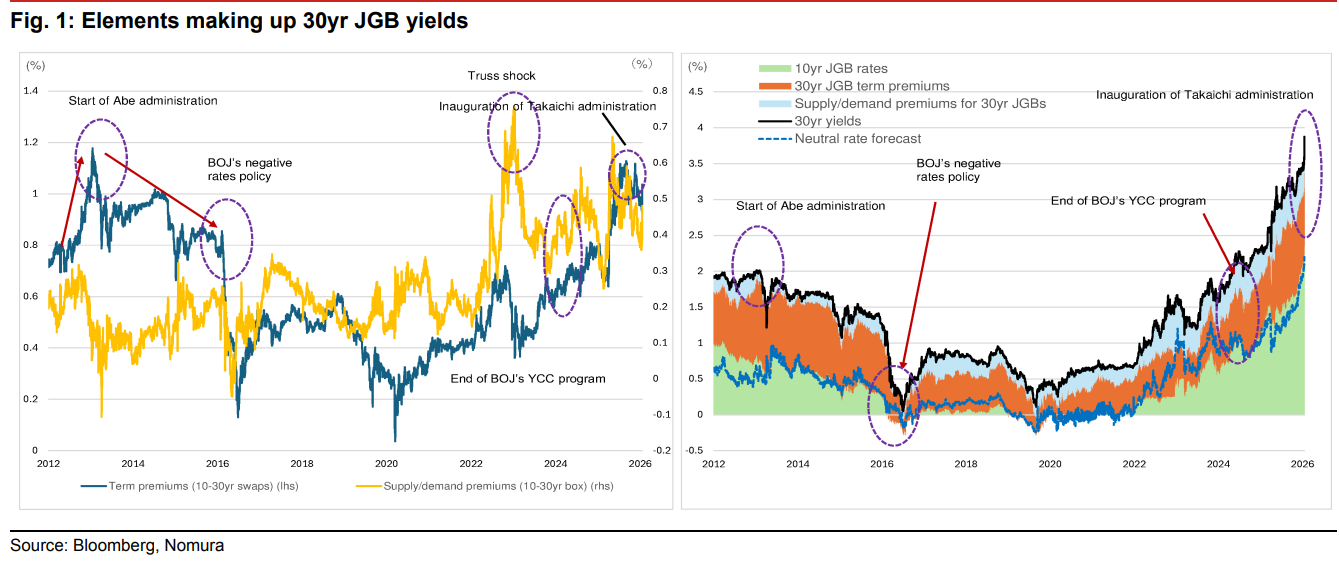
问题的关键不在于这项减税本身"花了多少钱",而在于——它动摇了市场对日本财政纪律最后一道防线的信任。 选举政治叠加财政承诺,风险被一次性定价 日本国债市场正在经历的,并非一次普通的利率上行,而是一场由政治触发、由财政放大、最终落在央行身上的信任危机。 在首相高市早苗抛出食品类消费税减免提案后,市场用最直接的方式给出了回应:抛售国债、抛售日元、同步压低股市估值。短短两个交易日内,日本10年 期国债收益率上行约15个基点,30年期收益率一度暴涨30个基点,波动幅度在历史上极为罕见。 据追风交易台,摩根大通直言,这项政策"如同打开了日本财政的潘多拉魔盒";而野村更进一步警告,日本债市正面临类似英国"特拉斯冲击"的 "高市冲 击" 风险。 这一表态迅速引发连锁反应。各主要政党纷纷加入消费税减免的讨论,中道改革联盟甚至提出,可通过动用政府养老金投资基金(GPIF)或政府资产来弥 补财政缺口。自民党内部也被认为可能考虑动用外汇或养老金特别账户。 但对于债券市场而言,这些方案几乎无法被视为"合格的资金来源"。 野村与摩根大通的共识:这是一场"选举型财政冲击" 据新华社报道,高市早苗已宣布将于1月23日解散众议院,并在2月8 ...

“天、地、端、火箭、应用” ,五层解构商业航天产业链
Hua Er Jie Jian Wen· 2026-01-21 07:33
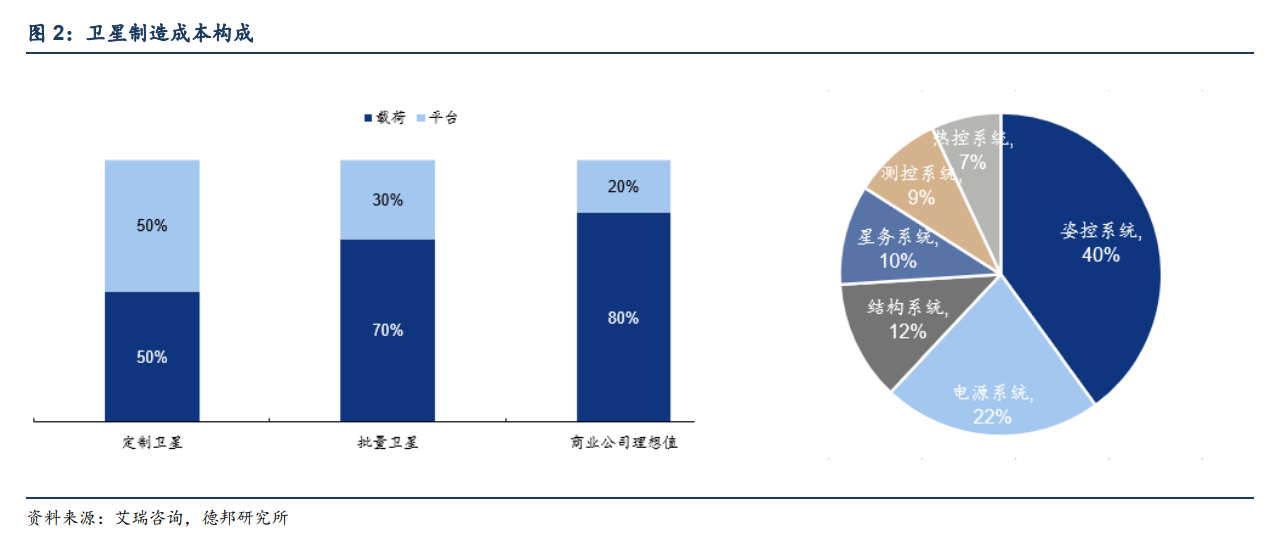
Core Viewpoint - The aerospace industry is undergoing a paradigm shift from a cost-agnostic "engineering narrative" to a profit and market-driven "industrial narrative," with a focus on commercial viability rather than just technological milestones [1] Group 1: Industry Transition - China's commercial aerospace is at a "dawn moment," transitioning from an engineering-driven model to an industry-driven one, with low Earth orbit satellite constellations becoming marketable infrastructure [1] - The competition between China and the U.S. is intensifying, with China attempting to catch up to SpaceX's cost barriers through initiatives like the "GW constellation" and "Thousand Sails constellation" [1] Group 2: Satellite Manufacturing - The satellite manufacturing sector is shifting to a mass production model, akin to the automotive industry, with China's market expected to grow from approximately 7.1 billion yuan in 2025 to 39.4 billion yuan by 2030 [2] - The urgency to secure orbital and frequency resources is driving a transition from sporadic research models to continuous, batch engineering deliveries [3] Group 3: Ground Systems - Ground systems are evolving from a supporting role to a core hub in the satellite constellation, with the market projected to grow from 1.2 billion yuan in 2025 to 39.1 billion yuan by 2030 [6] - The complexity of data access, forwarding, and scheduling will increase exponentially with the rise in satellite numbers, making ground systems critical for operational success [6] Group 4: Terminal Market - The terminal segment is expected to see explosive growth, with market size projected to surge from 0.5 billion yuan in 2025 to approximately 141.9 billion yuan by 2030 [7] - The current market is limited to specialized industries, but the potential for consumer markets exists, particularly with advancements in satellite and WiFi integration [7] Group 5: Rocket Launch Costs - The primary constraint in commercial aerospace is launch costs, with current Chinese prices ranging from 50,000 to 100,000 yuan per kilogram, while SpaceX has reduced costs to about 20,000 yuan per kilogram [8] - The market for rocket launch services is expected to grow from 10.7 billion yuan in 2025 to 34.3 billion yuan by 2030, driven by advancements in reusable rocket technology [9] Group 6: Application Market - The application segment is projected to grow from a mere 0.2 billion yuan in 2025 to 525 billion yuan by 2030, with applications expected to account for over 67% of revenue [10] - The strategy involves targeting specialized industries first before expanding into consumer markets, similar to SpaceX's approach with Starlink [10]
桥水看好中国股票,其境内对冲基金2025年上涨45%
Hua Er Jie Jian Wen· 2026-01-21 07:07
Core Viewpoint - Bridgewater Associates is optimistic about Chinese stocks, projecting a 45% increase for its domestic hedge fund by 2025 [1] Group 1 - Bridgewater's positive outlook on Chinese equities indicates a strong belief in the potential growth of the Chinese market [1] - The forecasted 45% rise in the hedge fund's value suggests significant confidence in investment opportunities within China [1]
特朗普赴达沃斯专机因故障被迫折返,此前刚放话“绝不回头”
Hua Er Jie Jian Wen· 2026-01-21 06:12
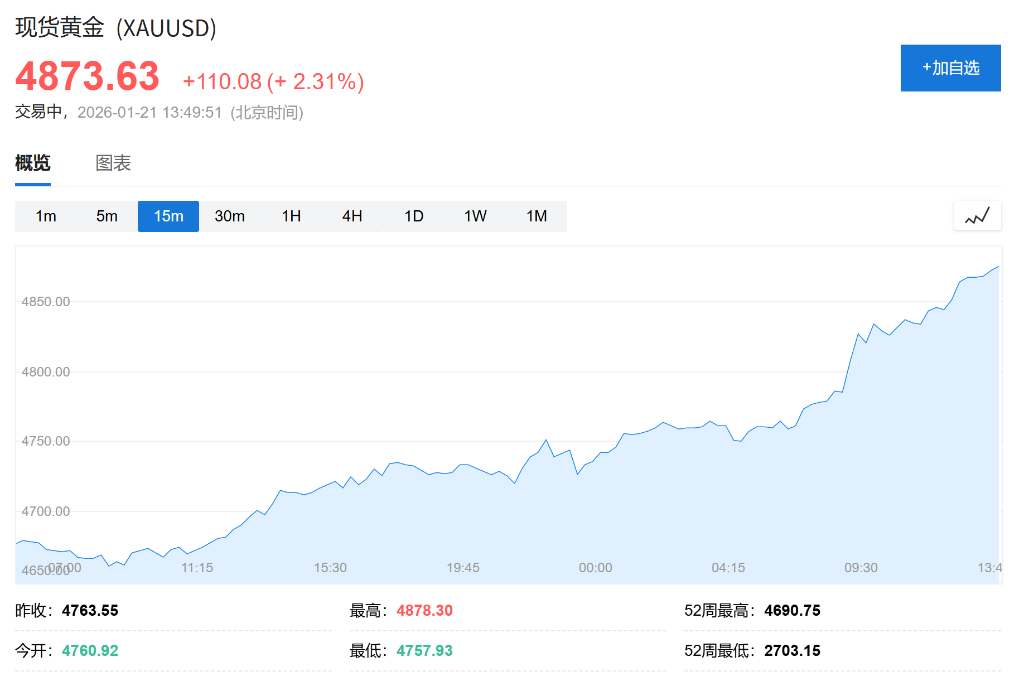
就在特朗普誓言在格陵兰岛问题上"绝不回头"仅仅数小时后,现实却对他开了一个充满讽刺意味的玩笑:这位美国总统乘坐的"空军一号"因技术 故障被迫在空中折返。 这场意外不仅打乱了特朗普前往达沃斯世界经济论坛的行程,更为这场笼罩在跨大西洋地缘政治危机阴影下的峰会增添了更多的不确定性。 据路透社及金融时报报道,特朗普乘坐的专机在周二晚间起飞后不久,机组人员发现机上出现"轻微电力故障",出于谨慎考虑,飞机随后返回华 盛顿附近的安德鲁斯联合基地。 白宫新闻秘书Karoline Leavitt证实,飞机已安全降落,特朗普将换乘另一架飞机继续前往瑞士苏黎世。尽管白宫试图淡化此次事件的影响,但这 一插曲不可避免地推迟了特朗普在达沃斯的亮相时间,他原定于周三下午在论坛发表讲话。 这一"折返"事件发生的时机极为微妙。据央视新闻报道,1月18日,北约秘书长与特朗普通话,讨论格陵兰岛问题。通话后,特朗普就美国控制格 陵兰岛的计划发表了极其强硬的言论,宣称"绝无回头的可能"。 受地缘政治局势升级影响,全球金融市场避险情绪急剧升温。周三,现货黄金价格飙升逾2%,突破每盎司4870美元,创下历史新高。 与此同时,随着投资者涌向避险资产,30年 ...
工信部:近期已启动第二阶段6G技术试验,AI已渗透领航级智能工厂70%以上业务场景
Hua Er Jie Jian Wen· 2026-01-21 06:07
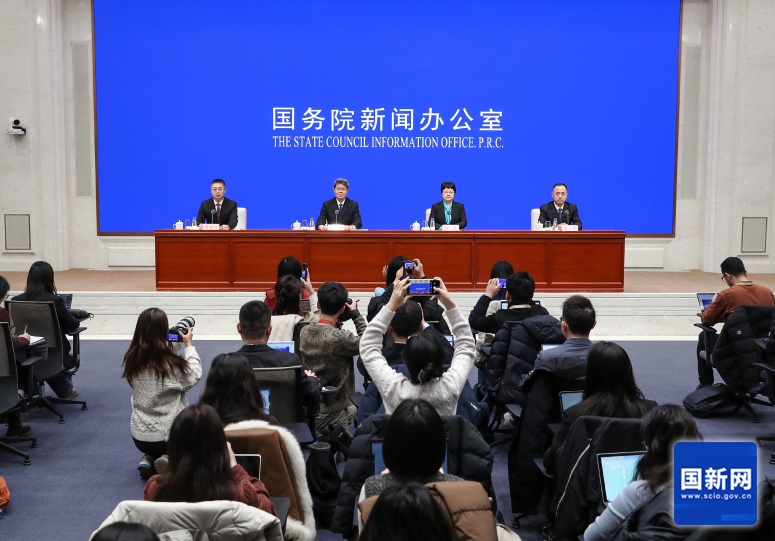
Core Viewpoint - The press conference highlighted China's significant advancements in industrial and information technology development, with a focus on 5G and AI, aiming for high-quality growth and innovation by 2025 [1][6]. Group 1: 5G and 6G Development - China has established 4.838 million 5G base stations, covering all towns and 95% of administrative villages, with over 1.2 billion 5G users [3][50]. - The country holds 42% of the global share of essential 5G standard patents, and the first phase of 6G technology trials has been completed, with over 300 key technologies reserved [3][50]. Group 2: AI and Emerging Industries - By 2025, the core AI industry in China is expected to exceed 1.2 trillion yuan, with over 6,000 AI companies anticipated [5][6]. - AI applications have penetrated over 70% of business scenarios in leading smart factories, with more than 6,000 vertical models developed [8][28]. Group 3: Technological Innovations - Innovations in materials such as perovskite, permanent magnet materials, and power batteries are at an internationally advanced level, with significant advancements in quantum technology [4][22]. - The manufacturing sector has seen a 28% increase in industrial robot production and a 28.2% rise in new energy vehicle sales [17][23]. Group 4: Support for Future Industries - The Ministry of Industry and Information Technology (MIIT) plans to support local governments in developing future industries and increase investment from government funds [9][24]. - A focus on training and developing a workforce skilled in both AI and manufacturing is emphasized to address employment restructuring due to technological advancements [10][39]. Group 5: Small and Medium Enterprises (SMEs) - In 2025, the value added by industrial SMEs is projected to grow by 6.9%, with over 14,000 specialized and innovative SMEs cultivated [12][44]. - The MIIT will implement a "14th Five-Year Plan" to enhance the development environment for SMEs and ensure timely payments to them [45][46]. Group 6: Information Infrastructure - The construction of information infrastructure has been prioritized, with significant advancements in mobile and fixed networks, including 5G and gigabit optical networks [49][50]. - The MIIT aims to enhance the application of information infrastructure across various sectors, ensuring continuous upgrades and technological advancements [51].
日债崩盘后,日本第二大行喊话了:准备抄底,持仓要翻倍!
Hua Er Jie Jian Wen· 2026-01-21 06:07
Core Viewpoint - Sumitomo Mitsui Financial Group plans to significantly increase its domestic sovereign debt holdings after market yields stabilize, indicating a strategic shift back to Japanese government bonds from foreign bonds [1][4]. Group 1: Investment Strategy - The bank intends to double its current Japanese government bond portfolio from 10.6 trillion yen (approximately 67 billion USD) [1]. - The current focus is on Japanese government bonds (JGBs), moving away from foreign bond investments, which were previously prioritized [4]. - The bank has already begun purchasing some 30-year bonds, believing their prices are close to fair value, but remains cautious due to inflation risks and uncertainties ahead of elections [3][4]. Group 2: Market Conditions - The Japanese bond market recently experienced a sharp sell-off, with long-term yields reaching record highs due to concerns over fiscal policies ahead of the February elections and the Bank of Japan's reduction in large-scale bond purchases [1][5]. - The 20-year government bond yield fell by 10 basis points to 3.245%, while the benchmark 10-year bond yield decreased by 5 basis points to 2.290% [1]. Group 3: Future Predictions - Nagata predicts that the Nikkei 225 index will surpass 60,000 points by the end of the year, and the yen may weaken to 180 yen per dollar in the coming years [3][8]. - The bank expects the 10-year Japanese government bond yield to exceed 2.5% by year-end, with a fair value range between 2.5% and 3% [4]. Group 4: Broader Economic Context - The recent sell-off in the bond market complicates the Bank of Japan's policy path, with expectations of potential interest rate hikes to address yen weakness [7]. - Nagata anticipates that the Bank of Japan may raise rates three times this year, exceeding general market expectations [7].

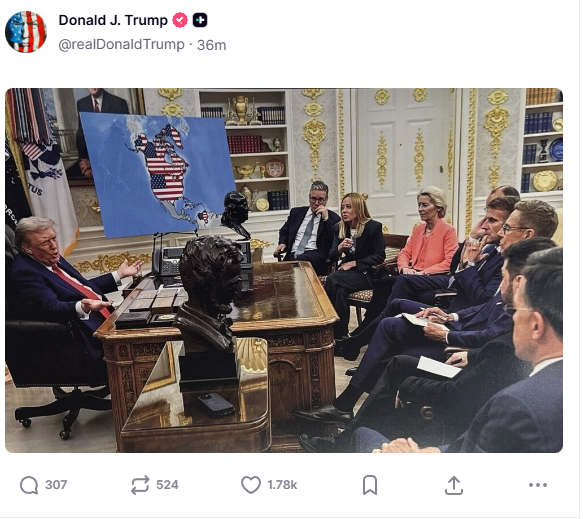
马克龙呼吁:欧洲喜欢尊重而非霸凌、关键领域应引入中国投资
Hua Er Jie Jian Wen· 2026-01-21 06:07
Core Viewpoint - French President Macron delivered a pragmatic yet confrontational speech at the Davos World Economic Forum, emphasizing a strong political stance against Trump's "bullying diplomacy" while extending an olive branch to China [1][2]. Group 1: Trade Relations and Economic Strategy - Macron criticized the U.S. for attempting to subordinate Europe through competitive means and called for Europe to utilize all tools to protect its interests [1]. - He highlighted the need for Europe to address key issues, promote innovation, and attract private investment, asserting that the current international order faces severe challenges [1][2]. - In response to U.S. tariff threats, Macron indicated that France would request the activation of the EU's anti-coercion tool if necessary, marking France's first official response to U.S. tariff threats [4]. Group 2: Military and Defense - Macron announced plans to increase military spending by €36 billion from 2026 to 2030, emphasizing the need for France to be strong and respected in a challenging global environment [3]. - He stated that to maintain freedom, one must be feared, and to be feared, one must be strong, reflecting a commitment to enhancing France's military presence, particularly in the Arctic region [3]. Group 3: Foreign Investment and Technology Transfer - Macron expressed the need for more foreign direct investment from China in key sectors to stimulate growth in Europe, emphasizing that such investments should involve technology transfer rather than merely exporting products [5][6]. - He reiterated the importance of mutual projects in areas where China has technological advantages, such as batteries, electric vehicles, and solar panels [6]. Group 4: European Manufacturing and Environmental Goals - Macron reaffirmed a "Europe first" stance, particularly in the electric vehicle sector, proposing that all vehicles sold in Europe should contain at least 75% locally sourced components [7]. - He maintained a firm position on the controversial 2035 ban on fossil fuel vehicles, arguing that abandoning this goal would jeopardize the future of Europe's battery industry [7].
美欧对峙--这届达沃斯是如此不同
Hua Er Jie Jian Wen· 2026-01-21 05:55
特朗普政府的格陵兰诉求及关税威胁,正在瑞士达沃斯世界经济论坛上引发跨大西洋关系的深刻裂痕。 这场超现实的争端不仅主导了今年年会议程,更凸显出美欧关系可能正处于历史转折点。 据央视新闻,欧盟 委员会主席冯德莱恩在世界经济论坛上表示,丹麦的主权和领土完整不容谈判。欧盟正在制定自身安全 战略,其中北极战略将升级,而这一战略的核心原则是主权国家有权决定自己的未来。特朗普的施压策 略提醒欧洲"必须加快推进独立进程,从安全到经济,从国防到民主"。法国总统马克龙虽未点名特朗 普,但表示"我们更喜欢尊重而非霸凌,更喜欢法治而非暴力"。 欧洲理事会外交关系委员会在格陵兰争端前的民调显示,仅16%的欧洲人认为美国是"盟友",更多人将 美国视为"对手"或"竞争者"。欧盟领导人预计本周将考虑启动"反胁迫"机制,可能对美国及美国企业采 取全面报复措施。 欧洲寻求战略自主 冯德莱恩在达沃斯的讲话标志着欧洲战略思维的转变。她在准备今年演讲时,北极安全原本并非主要议 题,但特朗普的举动改变了这一切。欧盟委员会主席欢迎欧盟与四个南美国家达成的贸易协议,并谈及 进一步分散经济依赖,以应对特朗普治下美国带来的不确定性。 据华盛顿邮报周三报道,尽管 ...
日债集体反弹!日本长债收益率大幅下行
Hua Er Jie Jian Wen· 2026-01-21 05:15
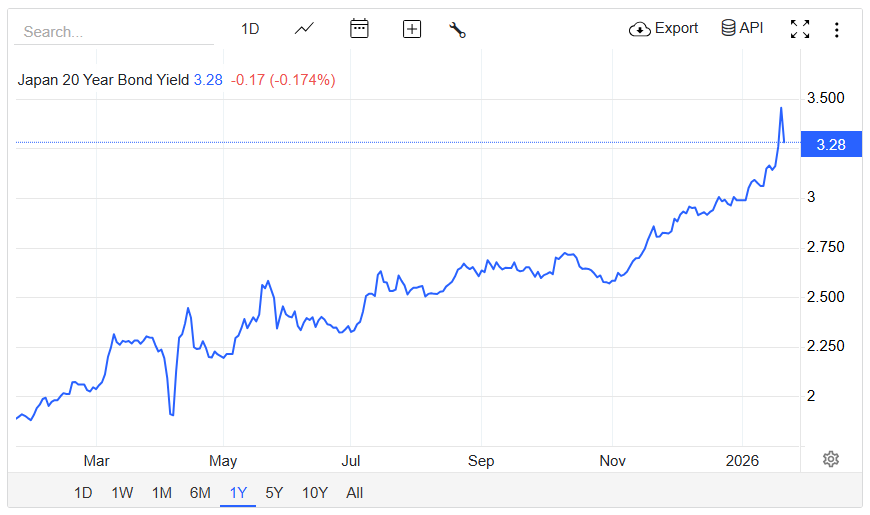
Core Viewpoint - Japan's long-term bond yields have decreased, indicating a potential shift in the country's monetary policy or economic outlook [1] Group 1: Bond Yield Changes - The yield on Japan's 40-year government bonds has fallen by 22 basis points to 3.99% [1] - The yield on Japan's 20-year government bonds has decreased by 10 basis points to 3.245% [1] - The yield on Japan's 10-year government bonds has declined by 5 basis points to 2.290% [1]
“AI入口大战”--字节已成“倒逼之势”,阿里腾讯“输不起”
Hua Er Jie Jian Wen· 2026-01-21 04:56
Core Insights - The competition among Chinese internet giants in AI is evolving from a focus on model parameters to a critical battle for "default entry points" that could determine their survival [1][2] - ByteDance's aggressive pricing strategy and vast traffic ecosystem have positioned it as a significant threat to Alibaba and Tencent, compelling them to increase investments by 2026 to protect their core markets [1][2] Group 1: Market Position and Financials - ByteDance's Volcano Engine has rapidly become the second-largest AI infrastructure provider in China, achieving a market share of 13% in AI cloud services by mid-2025, trailing only Alibaba's 23% [1][3] - In 2025, ByteDance's profit is projected to reach $50 billion, surpassing Tencent's $36 billion and Alibaba's $15 billion, providing a solid foundation for aggressive expansion in the AI sector [2][4] Group 2: User Behavior and Market Dynamics - The shift in user behavior towards AI as a primary entry point poses a significant risk to traditional apps, as users may prefer to consult AI first, leading to potential marginalization of existing applications [1][5][6] - The competition is not merely about technology but also about redefining user habits, with the potential for AI to reduce the frequency of searches and increase engagement with content and transactions [6][7] Group 3: Strategic Implications for Major Players - Goldman Sachs identifies 2026 as a pivotal year where the focus will shift from model competition to securing default entry points, which will redefine traffic distribution and the internet profit pool [2][7][8] - Major players like Alibaba and Tencent are expected to undergo significant strategic shifts, with Tencent leveraging its WeChat ecosystem and Alibaba focusing on its app capabilities to maintain market dominance [7][8] Group 4: Investment Considerations - The investment logic is set to change fundamentally by 2026, with a focus on profitability growth and new narratives rather than mere valuation expansion [8][9] - Investors are advised to prioritize "entry success rates" over "model sentiment" and to monitor key performance indicators related to system-level cooperation and transaction closure progress [8][9]

