Qi Huo Ri Bao

Search documents
贵金属大幅上涨,分析人士:短期需警惕调整风险
Qi Huo Ri Bao· 2025-10-10 01:04
Core Viewpoint - The significant rise in domestic gold and silver futures prices following the National Day and Mid-Autumn Festival holidays is attributed to the surge in international gold and silver prices during the holiday period, driven by increased market risk appetite due to the U.S. government shutdown [1][2]. Group 1: Gold Market Analysis - COMEX gold futures prices surpassed $4000 per ounce on October 7, primarily due to the ongoing U.S. government shutdown, which has become the fourth longest in history [1]. - The prolonged shutdown may impact the payment of salaries for military and federal employees, and the delay in the release of key economic data, such as non-farm payrolls and CPI, could affect data quality [1]. - Analysts suggest that the recent surge in gold prices may have already priced in much of the market's risk appetite, and any resolution to the government shutdown could lead to price volatility [3]. Group 2: Silver Market Analysis - The rise in silver prices is influenced by multiple factors, including increased demand for safe-haven assets, expectations of preemptive interest rate cuts, and the entry of arbitrage funds [2]. - The recent turmoil in the French government and uncertainties surrounding the independence of the Federal Reserve have heightened market risk aversion, further supporting silver prices [2]. - The People's Bank of China reported an increase in gold reserves, indicating a continued trend of accumulation, which may enhance the purchasing power of gold buyers [2]. Group 3: Short-term and Long-term Outlook - Short-term caution is advised for gold bulls, as indicators suggest overbought conditions, and a rebound in the U.S. dollar could lead to a decline in gold prices [3]. - Long-term trends for gold prices remain positive, with expectations of a 25 basis point rate cut by the Federal Reserve at the end of October, which could provide upward momentum for gold [3]. - For silver, the medium to long-term price center is expected to continue rising, particularly as the end of the rate-cutting cycle may lead to historically low real interest rates, significantly benefiting silver prices [3].
国海良时期货:螺纹钢或延续近远月合约反套逻辑
Qi Huo Ri Bao· 2025-10-10 00:38
关注库存以及限产、地产政策的变化 过去16年间,螺纹钢期货10月至次年1月合约价差在二、三季度有9年呈现反套格局、7年呈现正套格 局。高库存压力、预期与现实的博弈、交割压力以及季节性需求弱化共同构建了"近月弱、远月强"的 Contango结构,形成了极强的反套格局。当前,现货抛压与交割压力持续压制近月2510合约,其相对远 月2601合约的弱势难以逆转。尽管近期盘面可能出现超跌反弹,但在库存出现确定性拐点前,Contango 结构仍将维持,反套逻辑主导至交割完成的可能性仍在加大。 反套逻辑 在螺纹钢期货的历史走势中,10月至次年1月合约价差在二、三季度的多数时间呈现反套逻辑。对过去 16年统计的数据显示,其中有9年呈现反套格局,占比超过半数,显示该反套逻辑在二、三季度具有显 著的普遍性与合理性。 首先,高库存压力是近月合约承压的核心因素。二、三季度是传统建筑旺季向淡季过渡的关键时期,螺 纹钢库存的变化常常成为主导月差结构的核心变量。在此期间,处于宏观政策空窗期,春节后的政策预 期已基本落地,市场缺乏强有力的政策刺激。与此同时,螺纹钢下游的房地产和基建项目在7—8月受高 温多雨天气影响,施工进度受到抑制,需求端 ...
贵金属大幅上涨 分析人士:短期需警惕调整风险
Qi Huo Ri Bao· 2025-10-10 00:21
Group 1 - The core viewpoint of the articles highlights a significant increase in gold and silver prices following the National Day and Mid-Autumn Festival holidays, driven by international market trends and domestic factors [1][2] - COMEX gold futures prices surpassed $4000 per ounce on October 7, attributed to rising market risk appetite due to the ongoing U.S. government shutdown, which is now the fourth longest in history [1] - Analysts note that the U.S. government shutdown could impact the release of key economic data, including non-farm payrolls and CPI, potentially affecting market sentiment and economic forecasts [1][2] Group 2 - Silver prices are influenced by multiple factors, including increased demand for safe-haven assets, expectations of preventive interest rate cuts, and the entry of arbitrage funds into the market [2] - The People's Bank of China reported an increase in gold reserves to approximately 7406 million ounces (about 2303.523 tons) as of September, marking the 11th consecutive month of gold accumulation [2] - Tether, the largest stablecoin issuer, plans to accumulate its own gold-backed tokens, indicating a deeper integration of cryptocurrency into traditional safe-haven assets, which may enhance the purchasing power of gold buyers [2] Group 3 - Short-term caution is advised for gold bullish operations, as indicators show signs of overextension, with high open interest but low trading volume, suggesting weakened buying momentum [3] - Despite recent improvements in U.S. economic data and a potential rebound in the dollar, the long-term upward trend for gold prices remains intact, although fluctuations may occur once the government shutdown ends [3] - For silver, medium to long-term price levels are expected to rise, benefiting from the anticipated interest rate cuts, with historical trends indicating significant support for silver prices as the rate-cutting cycle approaches its end [3]
突然“跳水”!一则利空突袭!美联储主席最新发声
Qi Huo Ri Bao· 2025-10-09 23:40
Group 1: Precious Metals Market - Silver prices surged, breaking the $50 per ounce mark for the first time, with a year-to-date increase of 73% [1] - Gold prices fell over 2%, dropping below $3960 per ounce, a decline of nearly $100 from recent highs [1] - As of the latest update, gold was priced at $3976.38 per ounce and silver at $49.04 per ounce [1] Group 2: Oil Market - WTI crude oil futures fell by 1.66%, closing at $61.51 per barrel, while Brent crude oil futures dropped by 1.55% to $65.22 per barrel [6] - A ceasefire agreement between Israel and Hamas was approved, which may impact oil market dynamics due to geopolitical stability [6] Group 3: U.S. Economic Policy - Federal Reserve Chairman Powell emphasized the importance of community banks but did not comment on current economic conditions or monetary policy [7] - New York Fed President John Williams expressed support for further interest rate cuts within the year to mitigate risks of a labor market slowdown [7] Group 4: Market Sentiment and Risks - Analysts noted that the recent surge in gold and silver prices was influenced by the U.S. government shutdown, which has become one of the longest in history [8] - The political turmoil in France and the election of a new Japanese leader have also contributed to increased market risk aversion [8] - The expectation of further interest rate cuts by the Federal Reserve is seen as a positive factor for silver prices, with analysts predicting a potential upward shift in the price center for silver [9][10]


“猪茅”上调2025年仔猪出栏量预测!生猪期价大跌,后市能否反弹?
Qi Huo Ri Bao· 2025-10-09 23:39
Core Viewpoint - The pork market is experiencing a "旺季不旺" (旺季不旺) situation during the traditional demand peak season, with prices under pressure due to oversupply and weak consumption [1][2]. Market Performance - The national mainstream transaction price for live pigs is running between 11.0 to 12.6 yuan/kg, with prices in the Sichuan-Chongqing region dropping below 11 yuan/kg [1]. - On October 9, live pig futures opened lower, with the main contract hitting a low of 11,535 yuan/ton, down 5.88% by midday [1]. - Trading volume increased to over 50,000 lots, a growth of more than 30% compared to September 30 [1]. Supply and Demand Dynamics - Analysts indicate that the simultaneous decline in both futures and spot prices reflects a pessimistic market outlook regarding future supply and demand dynamics [1]. - The current supply pressure is expected to persist, with the national pig output maintaining an upward trend due to high breeding sow inventory levels [2][3]. Policy and Industry Response - The Ministry of Agriculture and Rural Affairs is actively promoting high-quality development in the pig industry, emphasizing strict capacity control measures [2]. - Despite positive policy signals, the actual pace of capacity reduction is slower than expected, with breeding sow inventory remaining above the target adjustment level [2]. Future Outlook - Analysts believe that the current pig prices are in a bottoming phase, with short-term pressures from strong supply and weak demand [3]. - The potential for a seasonal rebound in Q4 will depend on the weight of pigs at market release; a decrease in weight could alleviate supply pressure and allow for price recovery, albeit with limited upward potential [3][4].

商务部、海关总署发布公告 涉及稀土等出口管制
Qi Huo Ri Bao· 2025-10-09 20:21
Core Viewpoint - The Ministry of Commerce of China announced new export control measures on five categories of materials, including superhard materials, rare earth equipment, lithium batteries, and artificial graphite anode materials, effective from November 8, 2023, to enhance national security and comply with international obligations [1]. Group 1: Export Control Measures - The export control measures are based on the Export Control Law of the People's Republic of China and are aimed at items with significant dual-use attributes [1]. - The announcement has been communicated to relevant countries and regions prior to implementation [1]. Group 2: National Security and International Compliance - The measures are designed to better protect national security and interests while fulfilling international non-proliferation obligations [1]. - The Chinese government emphasizes that these measures are not targeted at any specific country or region and will allow for the approval of legitimate export applications after review [1]. Group 3: Global Supply Chain Stability - China expresses willingness to collaborate with other countries to maintain the stability and smooth operation of global supply chains [1]. - The government is open to dialogue and communication regarding export control policies and practices through bilateral mechanisms to facilitate compliant trade [1].
风险偏好较高 债市偏空震荡
Qi Huo Ri Bao· 2025-10-09 18:31
Monetary Policy - The monetary policy is shifting towards "precise drip irrigation," focusing on structural tools to enhance key areas, while expectations for interest rate cuts are cooling down [1][6] - The central bank maintains a stance of "moderate easing," emphasizing the implementation of previously announced measures rather than increasing stimulus [6] Market Conditions - After adjustments in August, the bond yield curve has steepened, with the 10-year government bond yield rising to 1.86%, reflecting mixed market signals and a lack of clear turning points [4][9] - Investor risk appetite remains high, leading to cautious sentiment in the bond market, which is expected to continue in a volatile downward trend [1][9] Funding Situation - The funding environment is reasonably ample, with the central bank taking measures such as restarting 14-day reverse repos and maintaining low interest rates [5] - A total of 17,633 billion yuan in 7-day reverse repos and 9,000 billion yuan in 14-day reverse repos are set to mature, indicating a stable funding outlook [5] Economic Indicators - Economic recovery continues at a moderate pace, with travel and consumption remaining stable during the National Day holiday, although movie box office and real estate sales are relatively weak [7] - The manufacturing PMI rose to 49.8% in September, indicating improved economic activity, while the non-manufacturing PMI saw a slight decline [7]
智能化驱动衍生品市场重塑发展模式
Qi Huo Ri Bao· 2025-10-09 18:16
Core Insights - The Chinese government aims to fully transition to an intelligent economy and society by 2035, providing strong support for achieving socialist modernization [1] - Artificial intelligence is reshaping the derivatives market by enhancing trading models, efficiency, risk management, and clearing mechanisms, leading to a more efficient, transparent, and globalized market [1] Group 1: Impact of AI on Derivatives Market - AI, particularly based on large language models, is driving the financial industry from basic digitization to deep intelligence, significantly enhancing the scale, liquidity, efficiency, and service capabilities of the domestic derivatives market [2] - The rise of high-frequency algorithmic trading, influenced by technological advancements, has led to a substantial increase in its market share, improving liquidity and trading efficiency while narrowing bid-ask spreads [2][3] - The reduction of information asymmetry in the derivatives market is increasing overall market transparency and efficiency [2] Group 2: Future Trends and Opportunities - The open-source nature of large computing models and reduced computing costs will lead to widespread application of AI-driven strategy optimization, enhancing market effectiveness and pricing efficiency for complex derivatives [3] - The evolution of the derivatives market from a "tool market" to an "algorithmic ecosystem" will strengthen the dominance of institutional investors, with top firms contributing significantly to market liquidity [3][4] - AI is also facilitating the development of intelligent risk management and compliance systems, with firms exploring AI-based risk management frameworks to enhance efficiency and coverage of various risk scenarios [4] Group 3: Technological Advancements in Trading - The application of technology is crucial for competitive advantage in the derivatives market, with efficient pricing algorithms and low-latency trading systems becoming essential for market participants [6] - AI technologies are enabling dynamic risk control models and intelligent simulations of various stress scenarios, enhancing the risk management capabilities of trading firms [6][7] - Real-time risk monitoring systems and machine learning models for stress testing are expected to improve the ability to withstand extreme risk events [7] Group 4: Market Maturity and Global Positioning - The maturation of the domestic derivatives market will enhance China's pricing power in international commodity markets, attracting more foreign investors and diversifying market participant structures [5] - The increasing complexity and variety of derivatives will help enterprises better manage operational costs and risks [5]


期货行业构建“多元业务”新格局
Qi Huo Ri Bao· 2025-10-09 18:16
Core Insights - The domestic futures industry demonstrates resilience in a complex economic environment, with an expansion of customer base, optimization of business structure, and acceleration of green transformation [1] - The industry is experiencing a significant increase in trading volume and revenue, driven by enhanced risk management needs and the integration of financial technology [2] Group 1: Industry Performance - As of August 2025, the total trading volume for 150 futures companies reached 65.23 trillion yuan, with a trading volume of 895 million contracts, showing significant year-on-year growth despite a slight month-on-month decline [1] - In August, the operating revenue and net profit for these companies were 3.861 billion yuan and 1.234 billion yuan, respectively, reflecting year-on-year growth despite a slight decrease compared to July [1] Group 2: Customer Structure and Business Diversification - The number of effective customers in the futures market reached 2.61 million by June 2025, a 12% year-on-year increase, with institutional clients growing by 55% over the past five years [2] - Futures companies are diversifying their business models, moving away from reliance on brokerage services to a structure that supports collaborative growth across multiple business lines [2] Group 3: Revenue Sources and Risk Management - The income from off-exchange derivatives business grew by 30% year-on-year in the first half of 2025, driven by increased demand for customized hedging solutions in sectors like new energy and chemicals [3] - The asset management business is also contributing significantly, with innovative products like "fixed income + futures" gaining traction, allowing firms to shift from a channel-based profit model to a more stable and growth-oriented structure [3] Group 4: Future Outlook - The futures market is expected to continue its long-term positive trend, supported by the expansion of green products and the integration of futures markets with the real economy [4] - The industry is likely to enhance its service offerings to the real economy through personalized hedging solutions and supply chain financial services, while also increasing its international influence through cross-border trading initiatives [4]
天气变化如何重塑小麦生产格局?
Qi Huo Ri Bao· 2025-10-09 07:08
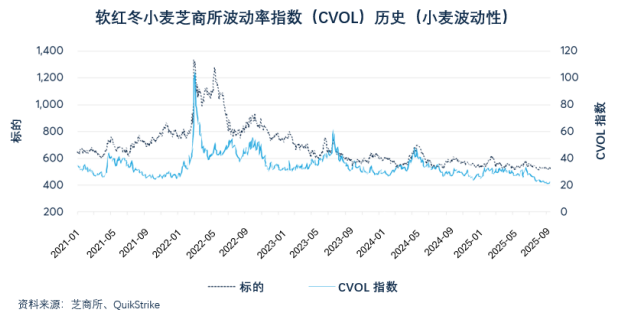
Core Insights - The global wheat production is projected to reach a record high of 808.6 million tons in the 2025/2026 crop year, with significant regional disparities in production outcomes [1] - Wheat consumption is also expected to hit a historical peak, particularly driven by increased imports from China and other Asian countries due to weather impacts on local production [1] Production Outlook - The USDA forecasts that major wheat-producing countries like China, India, the EU, Russia, and Argentina will achieve high yields, while others may face declines due to drought [1] - The area suitable for wheat cultivation is expected to expand significantly due to rising temperatures, with Canada potentially adding 1.85 million square kilometers of arable land [4] Price Volatility - Wheat prices have experienced significant fluctuations, particularly influenced by geopolitical events such as the Russia-Ukraine conflict, which saw prices peak at $1,209 per ton in early 2022 [2] - Current market conditions indicate that despite a general downward trend, prices remain volatile due to ongoing weather uncertainties affecting production [2] Climate Impact - Rising temperatures may enhance wheat yields in some regions but could also negatively impact crop quality and growth cycles if temperatures exceed optimal ranges [6] - Extreme weather events have already disrupted production in key areas, such as Argentina and Russia, highlighting the vulnerability of wheat supply chains [6] Technological Adaptation - Agricultural technology plays a crucial role in developing climate-resilient wheat varieties, with gene editing and transgenic crops potentially transforming supply dynamics [7] - Countries are adopting various measures to enhance food security, including China's goal to increase grain production by 50 million tons by 2030 [7] Economic Pressures - Short-term production costs are constraining wheat output in some regions, leading to reduced profitability for farmers, particularly in Russia and the U.S. [8] - The U.S. wheat prices have fallen to a five-year low, prompting some farmers to switch to more profitable crops like soybeans and corn [8] Future Considerations - The interplay of rising temperatures and increased CO2 levels may expand suitable wheat-growing areas and enhance yields, but farmers must adapt through resilient practices [9] - The ongoing threat of extreme weather events suggests that wheat prices will likely continue to experience volatility in the future [9]