
Qi Huo Ri Bao

Search documents
续创新高后 黄金价格能否持续上行?
Qi Huo Ri Bao· 2025-10-09 06:55
Group 1: Market Overview - The recent U.S. government "shutdown" crisis, heightened expectations for multiple rate cuts by the Federal Reserve, and ongoing global geopolitical conflicts have led investors to increase their gold holdings for hedging, resulting in a continuous rise in precious metal prices. On October 7, COMEX gold futures prices surpassed $4000 per ounce, setting a new historical high [1] - The ongoing "shutdown" has delayed the release of key economic reports such as non-farm payrolls and CPI, significantly increasing market uncertainty regarding the U.S. economic outlook and Federal Reserve policy direction. This has intensified market risks and elevated investment hedging sentiment [1][9] - The combination of macroeconomic slowdown, loose monetary policy, and geopolitical tensions is expected to support a long-term bullish trend in the precious metals market [1] Group 2: U.S. Government Shutdown - The U.S. government officially began its "shutdown" on October 1 due to a failure to reach consensus on a short-term funding bill between the Republican and Democratic parties. This marks the first government shutdown since January 2019 [8] - The inability to pass a temporary funding bill has resulted in hundreds of thousands of federal employees being placed on unpaid leave, increasing political pressure on lawmakers as payroll dates approach [9] - The ongoing shutdown has created a "vacuum" for the release of critical economic data, complicating market assessments of the U.S. economy and Federal Reserve policy [9] Group 3: Employment Market - The U.S. employment market is showing signs of weakness, with the non-farm payroll report delayed due to the government shutdown. Previous economic indicators suggest a slowdown in job growth, with August's non-farm payrolls adding only 22,000 jobs, far below the expected 75,000 [12] - The unemployment rate has risen to 4.3%, the highest level since 2021, indicating a deteriorating job market. Government job losses have contributed to this trend, while private sector job growth remains modest [13] - The Federal Reserve is expected to lower interest rates in response to the weakening employment market, with a 98% probability of a 25 basis point cut in October and a 90% probability in December [13] Group 4: Global Gold Demand - Global gold demand has shown strong momentum, with central banks, including China's, continuing to purchase gold as a strategic asset to optimize foreign exchange reserves and hedge against global economic and political uncertainties [14][15] - In Q2 2025, global gold demand increased by 3% year-on-year to 1249 tons, with a significant 45% rise in value to $132 billion. Central banks remain a key support for global gold demand [15] - Gold ETFs have seen significant inflows, with $5.5 billion in August alone, indicating a shift of funds from traditional assets to gold among Western investors [16]

供强需弱 PVC供大于求格局难改
Qi Huo Ri Bao· 2025-10-09 01:58
Group 1 - Since Q4 2021, domestic housing prices have shown a turning point, leading to a shift in market expectations for the real estate sector, with continuous declines in housing transaction data and shrinking terminal demand for PVC, resulting in a downward price trend [1] - Current PVC prices are low, with domestic calcium carbide method PVC losing 750 CNY/ton and ethylene method PVC losing 650 CNY/ton, indicating deep industry losses. However, the production profit from caustic soda is 330 CNY/ton, allowing calcium carbide method PVC enterprises to maintain production [1] - As of September 26, the domestic PVC production enterprise operating rate was 78.97%, up 0.33 percentage points year-on-year, with weekly output at 479,600 tons [1] Group 2 - PVC inventory continues to rise due to high supply, with pre-holiday inventory at 1.328 million tons, a 2.11% increase, marking 13 consecutive weeks of accumulation. Social inventory sample data shows 971,300 tons, a 16.23% year-on-year increase, indicating significant de-stocking pressure [1] - The operating rates for domestic pipe and profile industries are around 40%. Real estate investment, new construction area, completed area, and sales area in August showed year-on-year declines of -12.9%, -19.5%, -4.7%, and -17%, respectively, leading to insufficient new orders and a weekly demand of around 450,000 tons for PVC [1] Group 3 - The imposition of anti-dumping duties by India on PVC imports from China has impacted exports, with duties ranging from 122 to 232 USD/ton for five years, although the market had anticipated this, leading to a "rush to export" in July and August [2] - The short-term supply-demand imbalance for PVC is unlikely to change, with ample domestic production capacity and high inventory levels. The downward trend in the real estate sector and the impact of India's anti-dumping duties on exports suggest a continued weak price outlook for PVC [3] - However, there are potential short-term rebound demands for PVC due to historical low prices, cost support, potential supply issues with upstream calcium carbide as winter approaches, and possible policy stimuli towards the end of the year [3]

PTA估值跟随成本波动
Qi Huo Ri Bao· 2025-10-09 01:56
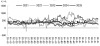
当前正值纺织服装行业"金九银十"传统旺季,但聚酯原料市场表现不尽如人意。以PTA为例,9月郑商所PTA期 货主力合约价格从月初4800元/吨跌至最低4530元/吨。终端坯布环节在内需偏弱和外贸高关税的双重压力下, 始终未出现去库存的现象。产业链上游工厂维持高开工率,导致供增需减的现象较为明显,形成了旺季不旺、价 格反而下跌的现象。 PTA低加工费触发行业"反内卷",但中期而言,PTA供应过剩和低加工费格局仍将延续。9月下旬,下游持货意 愿较低,而PTA供应商持续出货,从而造成了PTA基差疲软。前期PTA现货加工费一度跌至200元/吨以下,跌破 了大部分PTA工厂的现金流水平。部分工厂计划10—11月检修,并且独山能源四期PTA新装置也推迟了投产时 间,这带动了加工费阶段性修复。由于当前中国PTA产能在9170万吨,原料PX的供应相对偏紧,在新的PX装置 投产之前,PTA加工费难以趋势性回升,预计仍维持低位。 图为PTA库存与基差变动 总体而言,终端需求增速放缓,PX—PTA—聚酯产业链处于正向反馈阶段的时间较短,产业链内部利润的分配 需要通过头部企业的"反内卷"自救行为来实现。在PX新装置投产之前,PTA加工 ...
市场明显回暖 钢材价格有望小幅上涨
Qi Huo Ri Bao· 2025-10-09 01:56
Domestic Market - During the National Day holiday, the real estate market showed signs of recovery, with increased promotional efforts from property developers leading to higher transaction volumes in several cities [1] - In cities like Shenzhen, Shanghai, Guangzhou, and Wuhan, developers offered special discounts and subsidies, resulting in significant increases in visitor and transaction numbers [1] - For instance, in Shenzhen's Longgang District, visitor and transaction volumes surged by 40% to 50% compared to normal days [1] - In Shanghai, a property in Qingpu District saw over 200 groups of potential buyers and a transaction volume of 63 million yuan in the first four days of the holiday [1] - In Guangzhou, a new project sold over 200 units on its opening day and continued to attract significant interest, with over 1,000 groups visiting [1] - Overall, the sales area of real estate in Hubei province increased by over 10% year-on-year during the holiday [1] - However, financing for property companies remains constrained, with a year-on-year decline of 35% in the third quarter [1] Overseas Market - The probability of a 25 basis point rate cut by the Federal Reserve in October is approximately 94.1%, with a very low chance of maintaining current rates [2] - President Trump announced a 25% tariff on medium and heavy trucks imported from other countries starting November 1, 2025, which is expected to have a limited impact on China's heavy truck exports [2] - The EU plans to reduce steel import quotas and impose a 50% tariff, but this is also expected to have a limited effect on China's steel exports, which primarily go to Southeast Asia, Africa, and Latin America [2] Spot Market - During the National Day holiday, domestic construction steel prices remained stable, with Tangshan steel billet prices stabilizing at 2,950 yuan per ton [3] - Major steel mills maintained stable rebar prices, while trading activity was limited due to cautious sentiment among traders [3] - Despite some steel mills conducting maintenance, overall steel supply, particularly for plates, remains high [3] - Steel exports increased, which may help alleviate the domestic oversupply situation [3] - The Singapore iron ore swap price saw a slight increase during the holiday, suggesting a potential for a modest rise in steel prices post-holiday, followed by fluctuations [3]
需求逐步走弱 尿素震荡偏弱运行
Qi Huo Ri Bao· 2025-10-09 01:56
Core Viewpoint - The urea market is experiencing a continued downward trend in prices due to an oversupply situation, with current spot prices nearing historical lows, and this trend is expected to persist [1][6]. Supply Dynamics - Urea production capacity is entering a new growth cycle, with an expected increase of over 7 million tons by 2025, leading to an average daily production increase of 15,000 to 20,000 tons year-on-year, currently at around 200,000 tons, which is a five-year high [2]. - Urea inventories are at elevated levels, with enterprise stocks around 1.2 million tons, also a five-year high, and are expected to continue accumulating due to the off-season for agricultural demand [2]. Demand Trends - Agricultural demand is weakening as the autumn fertilizer application period concludes, with lower urea usage due to a focus on high-phosphorus fertilizers and non-concentrated purchasing [3]. - The operating rate for compound fertilizers has decreased from 42% to 38%, with expectations of continued decline, and finished product inventories are high at around 800,000 tons, marking a five-year peak [3]. - The production rate for melamine has significantly dropped from 72% to 46%, limiting its support for urea demand [5]. Cost Factors - The current coal market remains strong, with prices around 700 RMB per ton for 5500 kcal coal, providing some cost support for urea production, which has a complete cost range of 1,500 to 1,550 RMB per ton [5].
终端需求疲软 “弱现实”难以支撑纯碱大幅反弹
Qi Huo Ri Bao· 2025-10-09 01:42
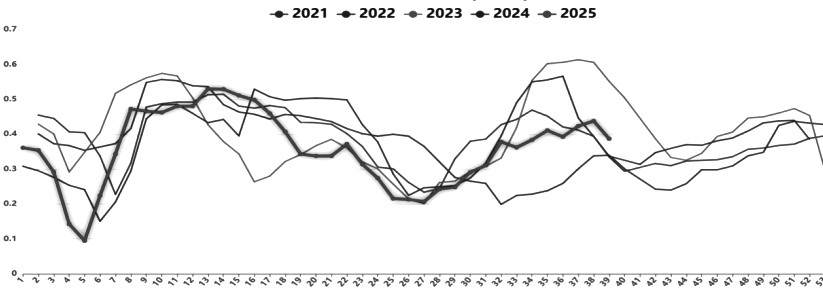
图为国内纯碱周度产量 自9月以来,原料价格普遍上涨导致纯碱企业生产成本出现不同程度的增长,部分企业亏损加剧。虽然部分纯碱企业通过阶段性 上调价格来缓解自身成本压力,但下游接受程度相对较低,试探性涨价无法有效改善其经营状况。相反,在市场需求相对疲软 的情况下,价格上涨反而抑制了一部分下游采购需求,行业产销压力增大。 国庆假期结束后,预计全国纯碱产量继续保持在较高水平,一方面是因为行业开工率普遍较高,另一方面是因为新建项目逐步 投产。事实上,自去年年初以来,我国纯碱行业就一直处于供大于求的局面,玻璃等主要终端消费领域的需求增长速度明显放 缓,进一步加剧了供大于求的局面。此外,全球贸易摩擦也为出口带来了不确定性,出口对需求的拉动作用减弱。在此背景 下,即使全行业短期内能够通过调整开工率等方式调节产量,但从长远角度来看,若不能从根本上改变结构性供需矛盾,就很 难实现真正的复苏。 图为国内纯碱周度库存 看向需求端,目前下游对纯碱的实际需求没有出现明显增长。国庆假期之前,许多工厂开始提前备货,一定程度上提振了纯碱 需求,但这些订单带来的提振效应将逐渐消退。另外,下游加工制造业的整体利润率偏低也是一个不容忽视的因素。当企业 ...
美国即将对中国船舶征收港口费 对航运市场影响几何?
Qi Huo Ri Bao· 2025-10-09 00:54
Core Viewpoint - The U.S. is implementing additional port fees for Chinese vessels starting October 14, 2025, which will significantly increase operational costs for Chinese shipowners and shipbuilders [1][3]. Group 1: U.S. Port Fee Implementation - The U.S. Trade Representative's Office (USTR) announced a fee structure for Chinese-owned, operated, and built vessels, with charges starting at $50 per net ton, increasing annually until reaching $140 by 2028 [1]. - The fees must be paid three working days before arrival at the first U.S. port, with non-compliance risking unloading delays or customs clearance suspension [1]. - The fee structure aims to boost U.S. shipbuilding and tax revenue while targeting Chinese maritime operations [3]. Group 2: Chinese Response and Operational Adjustments - In response, China amended its international shipping regulations to impose special fees on vessels from countries that implement discriminatory measures against Chinese shipping [2]. - Major shipping alliances have begun adjusting their operations, with some routes to the U.S. being suspended to reduce costs associated with the new port fees [4]. Group 3: Impact on Shipping Costs and Market Dynamics - The new port fees are expected to increase operational costs for Chinese shipowners significantly, with estimates of an additional $304 per TEU for container ships calling at U.S. ports [3]. - Shipping companies are prioritizing market share over profitability, leading to a rapid cancellation of sailings due to tariff disruptions and weak U.S. demand [5][6]. - The overall impact on the European shipping market is expected to be limited, but the situation will require ongoing observation as shipping lines may adjust their strategies in response to the new fees [7][8].

假期外盘金属表现优异 分析人士:有色板块或迎来一波补涨行情
Qi Huo Ri Bao· 2025-10-09 00:47
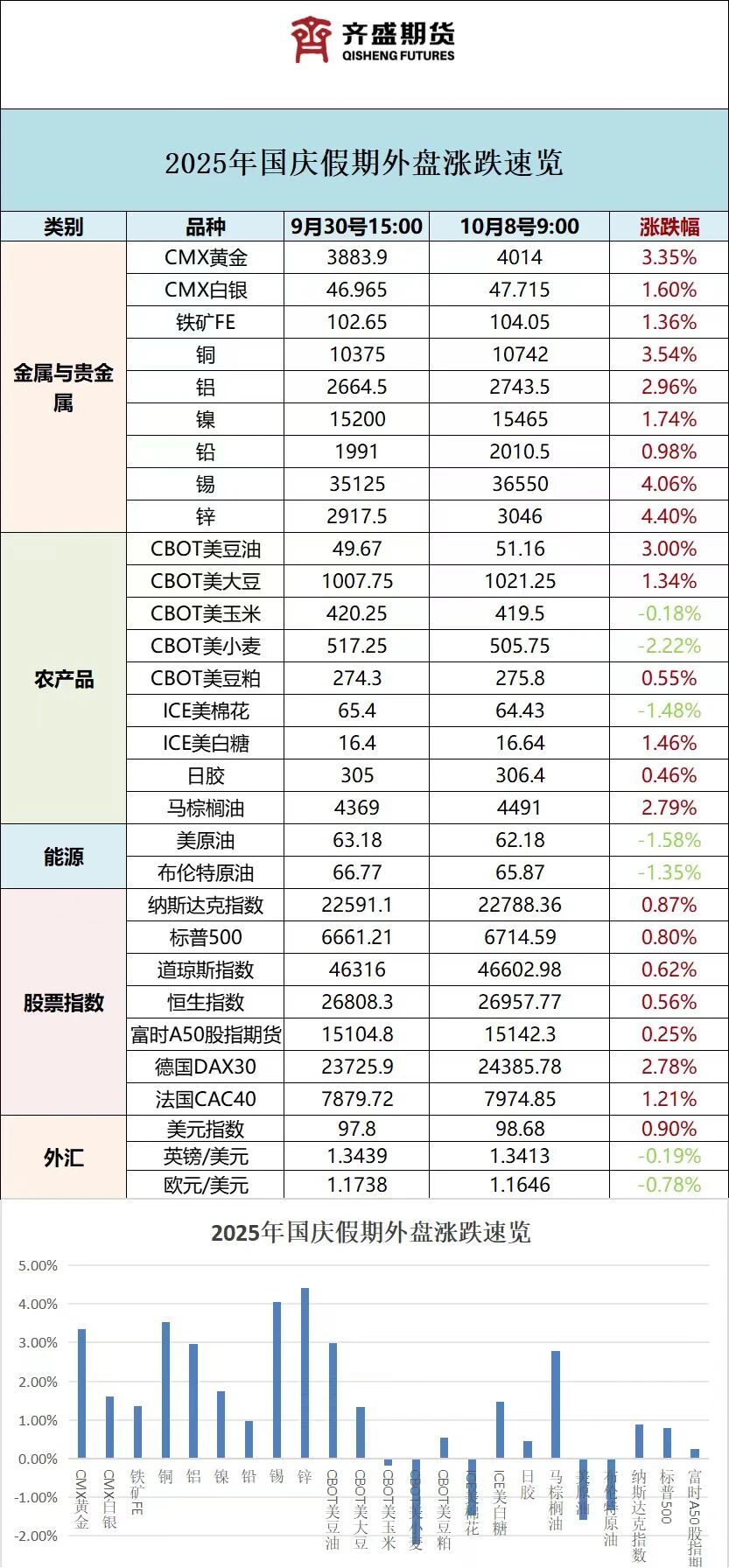
Core Viewpoint - The non-ferrous metal sector has shown strong performance during the National Day and Mid-Autumn Festival holiday, driven by macroeconomic expectations and supply disruptions, with significant price increases observed in various metals [1][5][9]. Price Movements - During the holiday period, LME copper rose by 3.54%, tin by 4.06%, nickel by 1.74%, aluminum by 2.96%, and zinc by 0.98% [1][3]. - Specific price changes as of October 8 include: - CMX gold: 4014 (up 3.35%) - CMX silver: 47.715 (up 1.60%) - Copper: 10742 (up 3.54%) - Aluminum: 2743.5 (up 2.96%) - Tin: 36520 (up 4.06%) [3]. Supply Disruptions - Significant supply disruptions have been reported, including a 9.9% year-on-year decrease in Chile's copper production in August, marking the largest drop in over two years [5][6]. - The Grasberg mine in Indonesia has ceased operations, exacerbating the global copper supply shortage [6][9]. - Other supply issues include the closure of illegal tin mines in Indonesia and a withdrawal of annual zinc production guidance by 29Metals due to seismic events [5][7]. Demand Dynamics - Overall demand for non-ferrous metals remains weak, with a "peak season not booming" characteristic observed [8]. - Although China's manufacturing PMI showed some recovery in September, the improvement in production outpaced demand, particularly affecting copper and tin prices [8]. Market Outlook - The domestic non-ferrous metal market is expected to experience a rebound post-holiday, with potential for significant price increases in copper, aluminum, and tin [9]. - The overall market sentiment is optimistic, with expectations for continued price increases in non-ferrous metals, although the pace may vary across different metals [9][10].
打破“枷锁” 看见未来
Qi Huo Ri Bao· 2025-10-09 00:46
Core Viewpoint - The Chinese glass industry, the largest in the world, is facing unprecedented structural pressures, necessitating a transformation from quantity accumulation to quality enhancement, and from being large to becoming strong [1] Group 1: Industry Challenges - The glass industry is deeply tied to the real estate sector, making it a cyclical industry with a sharp structural imbalance in demand despite high supply [1] - There is an oversupply of low-end float glass while high-end glass, such as ultra-thin electronic glass, remains heavily reliant on imports, leading to a "bottleneck" risk in advanced fields [1][2] - The glass manufacturing process is energy-intensive, with fuel costs accounting for 30% to 40% of total production costs, making companies sensitive to energy price fluctuations [2] Group 2: Environmental and Regulatory Pressures - The glass industry contributes approximately 2% of China's total industrial carbon emissions, facing increasing pressure from stricter environmental regulations and carbon trading markets [2] - The traditional high-energy, high-emission development model for construction glass is becoming unsustainable due to intense market competition and lack of pricing power [2] Group 3: Path to Transformation - High-end development is essential for the glass industry to break through, requiring a shift of resources from low-end to high-value sectors, such as electronic information display glass [3] - Green transformation is viewed as a future competitive necessity, focusing on energy revolution through methods like "coal-to-gas" conversions and exploring disruptive low-carbon technologies [3] - Smart manufacturing is crucial for enhancing competitiveness, involving the use of automation and AI to optimize production processes and reduce human error [4] Group 4: Service-oriented Approach - Transitioning from being mere suppliers of glass to providing comprehensive solutions for end-users is vital for overcoming product homogenization and enhancing value chains [4] - The future leaders in the glass industry will be those that integrate high-end materials, green technology, digital intelligence, and service solutions into their business models [4]
中州期货:钢材价格有望小幅上涨
Qi Huo Ri Bao· 2025-10-09 00:41
Domestic Market - During the National Day holiday, the real estate market showed significant recovery due to various positive news, with increased promotional efforts from property developers leading to higher transaction volumes in several cities [1] - In cities like Shenzhen, Shanghai, Guangzhou, and Wuhan, developers offered special discounts and subsidies, resulting in a surge in visitor and transaction numbers, with Shenzhen's Longgang district seeing a 40%-50% increase in visitor and transaction volumes compared to normal days [1] - According to data from CRIC, financing for property companies continued to contract, with Q3 financing at 114.5 billion yuan, a 5% increase quarter-on-quarter but a 35% decrease year-on-year [1] Overseas Market - The probability of the Federal Reserve lowering interest rates by 25 basis points in October is 94.1%, with a very low chance of maintaining rates unchanged [2] - Starting November 1, 2025, the U.S. will impose a 25% tariff on medium and heavy trucks imported from other countries, which is expected to have a limited impact on China's heavy truck exports [2] - The EU plans to reduce steel import quotas and impose a 50% tariff, but this is also expected to have a limited effect on China's steel exports, which primarily go to Southeast Asia, Africa, and Latin America [2] Spot Market - During the National Day holiday, domestic construction steel prices remained stable, with Tangshan steel billet prices stabilizing at 2,950 yuan/ton [3] - Trade sentiment among merchants was cautious, with limited transactions and most traders refraining from quoting prices [3] - Overall, while real estate sales data showed improvement, the sustainability of this trend is uncertain, and the steel industry remains in a phase of capacity reduction, with increased steel exports potentially alleviating domestic oversupply [3]