Qi Huo Ri Bao

Search documents
国家发改委副主任李春临:聚焦要素价格市场化形成、畅通要素流通渠道等重点领域和关键环节,分类施策推进改革
Qi Huo Ri Bao· 2025-09-11 08:45
据介绍,国务院批准开展要素市场化配置综合改革试点的10个地区,包括北京城市副中心、江苏苏南重 点城市、浙江杭甬温、安徽合肥都市圈、福建福厦泉、河南郑州市、湖南长株潭、广东粤港澳大湾区内 地九市、重庆市、四川成都市。这10个地区是发展基础较好、经济增长支撑作用强的城市群、都市圈或 者中心城市,改革基础条件较好,也具有较强代表性。李春临表示,各地区试点方案总体结构基本一 致,但具体改革措施因地制宜,各有侧重,围绕激发技术要素创新活力,推进土地要素集约高效配置, 引导人力资源要素合理流动,加快培育和完善数据要素市场,增强资本要素服务实体经济能力,健全资 源环境市场制度建设,全面提高要素协同配置效率等提出了一系列改革举措。试点方案自批复起实施2 年时间,预计2027年完成试点任务。 下一步,李春临表示,国家发展改革委将会同试点地区和有关方面,认真组织实施好改革试点工作,坚 持问题导向,一切从实际出发,聚焦要素价格市场化形成、畅通要素流通渠道等重点领域和关键环 节,"一把钥匙开一把锁",分类施策推进改革,围绕深化要素协同配置、提升要素配置效率、探索新型 要素配置方式、优化新业态新领域要素保障、培育发展新质生产力等目标, ...
股指 短线宽幅波动
Qi Huo Ri Bao· 2025-09-11 01:15
Market Overview - A-share market trading activity has decreased, with a slight decline in transaction volume in the Shanghai and Shenzhen markets, indicating that incremental capital has not yet formed a consistent expectation in the short term, leading to a wide fluctuation in the market [1][4] - The overall A-share market is experiencing significant fluctuations, with notable sector rotation. Benefiting from interest rate cut expectations and "anti-involution" policies, sectors such as electric power equipment and non-ferrous metals have seen substantial gains, while previously high-performing sectors like computers and communications have shown weakness [1] Economic Indicators - In August, China's exports increased by 4.4% year-on-year in USD terms, below the expected 5.9% and previous value of 7.2%. Imports grew by 1.3%, also below expectations [1] - The decline in exports to the US has intensified, with a drop of 33.1% in August, negatively impacting total exports by 5.1 percentage points, while exports to the EU and ASEAN exceeded previous values [1] Consumer Price Index (CPI) and Producer Price Index (PPI) - In August, China's CPI growth remained flat month-on-month, with a year-on-year decrease to -0.4%. The PPI growth shifted from a decline to flat, with a significant narrowing of the year-on-year decline [2] - Prices of pork and eggs have shown lower-than-seasonal increases, while some food prices continue to decline, affecting non-food items [2] Infrastructure and Real Estate - High-frequency data for August indicates a slight increase in the year-on-year growth rate of petroleum asphalt and cement shipments. The National Development and Reform Commission has allocated 300 billion yuan for the third batch of "two heavy" construction projects, which will support infrastructure growth [3] - In the real estate sector, first-tier city housing prices have declined more than those in second and third-tier cities, with sales of commercial housing in 30 cities in August still needing improvement [3] Consumer Behavior - The retail sales growth rate for social consumer goods in August is expected to moderate. The previous year's "old-for-new" subsidy funds have been gradually distributed, but this year faces a high base environment and increased consumer sensitivity to price changes [3] Global Economic Context - Recent expectations for overseas interest rate cuts have risen, with the US adding only 22,000 non-farm jobs in August, below the expected 75,000 and previous 79,000. The unemployment rate rose to 4.3%, the highest since November 2021 [4] - Following the employment data release, the dollar index and US bond yields fell, while gold, US stocks, and copper prices surged. Market sentiment has shifted towards recession, with an increased probability of the Federal Reserve cutting rates three times this year [4]
长债 或进一步下跌
Qi Huo Ri Bao· 2025-09-11 01:13
Group 1 - Since the end of July, government bond futures have shown weak fluctuations, with the "stock-bond seesaw" effect becoming prominent, and the bond market is under pressure due to the CSRC's proposed regulations on fund redemption fees [1][3] - In August, China's exports increased by 4.4% year-on-year, while imports grew by 1.3%, indicating a potential decline in export growth in the future due to the release of transshipment demand [1] - The bond market is currently sensitive to negative news and less responsive to positive developments, reflecting a weak market sentiment, especially in the long end of the yield curve [3] Group 2 - The macroeconomic narrative is more favorable for the stock market, with core economic indicators showing volatility, while the bond market faces challenges due to the current economic phase and rising inflation expectations [2] - The central bank's recent shift in monetary policy language suggests a focus on implementing existing policies rather than introducing new ones, which may impact credit expansion and the bond market [2] - The recent regulatory changes regarding redemption fees for bond funds could lead to increased costs for investors, further pressuring the bond market [3]
丙烯 维持偏弱震荡
Qi Huo Ri Bao· 2025-09-11 01:12
Group 1: Market Overview - The core viewpoint indicates that despite optimistic macro expectations, the propylene industry fundamentals remain weak, with terminal consumption showing signs of fatigue [1][4] - Propylene futures for the 2601 contract have shifted to a downward trend, currently trading in the range of 6350 to 6450 yuan/ton [1] Group 2: Supply Dynamics - Domestic propylene production has seen a slight increase, with the capacity utilization rate rising to 74.98% in early September, reflecting a 0.12 percentage point increase [3] - In August, domestic propylene production reached 530.56 million tons, marking a month-on-month increase of 2.6% and a year-on-year growth of 15.7% [3] - Despite a decrease in propylene supply from South Korea, Southeast Asia's supply has increased, maintaining overall import levels [3] Group 3: Demand Conditions - The demand for propylene is primarily driven by the polypropylene (PP) sector, which is currently facing challenges, leading to reduced procurement willingness among downstream enterprises [4] - It is projected that the overall consumption of propylene in September will decline by 0.68% month-on-month, totaling 537.2 million tons [4] - Domestic propylene inventories have been steadily increasing, with stock levels as of September 4 reaching 37,000 tons, a 26.55% increase compared to the previous year [4] Group 4: Economic Implications - The expectation of interest rate cuts by the Federal Reserve may improve macroeconomic conditions, potentially leading to a valuation uplift for chemical products [2] - However, the fundamental weaknesses in the propylene market, characterized by rising supply pressures and weak downstream demand, suggest that the 2601 propylene futures contract will likely continue to experience weak fluctuations [4]
多因素叠加 油价反弹空间有限
Qi Huo Ri Bao· 2025-09-11 01:09
Group 1: Core Insights - The article highlights a significant decline in U.S. gasoline consumption following the summer travel season, leading to a drop in international crude oil prices, with NYMEX WTI futures falling below $65 per barrel from a high of $74.25 per barrel on June 23 [1] - The current supply-demand situation indicates a potential for substantial crude oil accumulation, exacerbating market oversupply pressures due to increased production from OPEC+ and non-OPEC countries, while demand shows signs of slowing down [1][8] - Geopolitical crises and the cost structures of oil-producing countries will influence future crude oil output, suggesting that the surplus may be lower than expected, with investment demand providing some support for oil prices in a stagflation environment [1] Group 2: Production Trends - Major oil-producing countries are actively increasing production, with OPEC+ accelerating the restoration of previously halted production capacities, potentially reversing 1.66 million barrels per day of cuts within a year if they maintain a monthly increase of approximately 137,000 barrels per day [2] - In July, OPEC's crude oil production rose by 262,000 barrels per day compared to June, with Saudi Arabia and the UAE contributing significantly to this increase [2] - Non-OPEC countries are also expected to add substantial new production capacity, with projects in Brazil, Guyana, and Norway contributing a combined increase of over 100,000 barrels per day [3] Group 3: Uncertainties in Output - Despite OPEC+'s intentions to capture market share through increased production, actual output remains uncertain due to factors such as remaining idle capacity, geopolitical issues, and production costs [4] - OPEC+ currently has about 5 million barrels per day of spare capacity, with Saudi Arabia holding approximately 2.4 million barrels per day, but the execution of production increases has varied among member countries [4] - From April to August, OPEC+ members collectively increased production by about 1.16 million barrels per day, with an execution rate of approximately 61%, indicating discrepancies in adherence to production plans [4] Group 4: Demand Weakness - Global crude oil demand is expected to weaken significantly by 2025, with a slowdown in growth rates observed in the second quarter, leading to a continuous increase in global oil inventories [7] - As of June, global oil inventories rose for the fifth consecutive month, reaching a record high of 7.836 billion barrels, with U.S. liquid hydrocarbons inventory showing a notable increase [7] - The risk of weakened U.S. oil demand is heightened, particularly as economic indicators suggest a potential stagflation scenario, with a notable decline in U.S. gasoline consumption following the summer travel season [7][8]
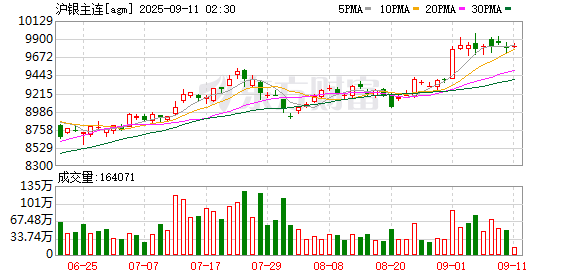
徽商期货:美联储降息预期发酵,白银强势运行
Qi Huo Ri Bao· 2025-09-11 01:08
Group 1: Precious Metals Market - The prices of precious metals have risen due to increasing expectations of a Federal Reserve rate cut and personnel changes within the Fed [1] - The market has fully priced in the expectation of a rate cut in September, with silver prices likely to maintain high volatility in the short term [1] - Silver's investment attributes are strong, and it may have greater upward potential driven by rate cut expectations [1] Group 2: U.S. Labor Market - The U.S. labor market has shown signs of weakness, with a significant drop in non-farm payrolls in August, adding only 22,000 jobs compared to the expected 75,000 [2] - The unemployment rate increased from 4.2% to 4.3%, marking the highest level since 2021 [2] - Federal government employment continues to drag down the overall job market, with a loss of 15,000 jobs in August [2] Group 3: Federal Reserve Rate Cut Expectations - The Federal Reserve's rate cut expectations have increased due to the impact of tariff policies and a cooling labor market [3] - Fed Chairman Jerome Powell signaled a potential rate cut at the Jackson Hole Economic Symposium, with expectations for a 25 basis point cut in September [3] - Future rate cuts will depend on economic data, with the Fed likely to cut rates in September and December [3] Group 4: Silver Industrial Demand - Silver demand is expected to remain strong, particularly driven by the photovoltaic industry, with a projected supply gap of 3,657 tons in 2025 [4] - The total silver supply is expected to increase to 32,000 tons in 2025, while total demand is projected to decrease to 35,700 tons [4] - Industrial demand, particularly from the photovoltaic sector, is anticipated to continue increasing, although overall silver consumption may face pressure [4] Group 5: Market Sentiment and Economic Outlook - Concerns over the independence of the Federal Reserve have increased due to ongoing pressure from former President Trump, leading to heightened market risk aversion [5] - The global trade landscape and political uncertainties contribute to a potentially strong short-term performance for precious metals [5] - In the medium to long term, the continuation of loose monetary policy and slowing U.S. economic growth may provide upward momentum for precious metals [5]
美联储降息预期发酵 白银强势运行
Qi Huo Ri Bao· 2025-09-11 00:59
Group 1: Precious Metals Market - The prices of precious metals have risen due to increasing expectations of interest rate cuts by the Federal Reserve and personnel changes within the Fed [2] - The market has fully priced in the expectation of a rate cut in September, with silver prices likely to remain volatile at high levels in the short term [2] - Silver's investment attributes are strong, and it may have greater upward potential driven by rate cut expectations [2] Group 2: U.S. Labor Market - The U.S. labor market has shown signs of weakness, with a decrease in non-farm payrolls and an increase in the unemployment rate [3] - In August, only 22,000 new non-farm jobs were added, significantly below the expected 75,000, marking a sharp decline from the revised previous month's figure of 79,000 [3] - The unemployment rate rose to 4.3%, the highest level since 2021, indicating ongoing challenges in the labor market [3] Group 3: Federal Reserve's Interest Rate Outlook - The Federal Reserve's expectations for interest rate cuts have increased due to the impact of tariff policies and a cooling labor market [4] - Fed Chairman Jerome Powell signaled potential rate cuts at the Jackson Hole Economic Symposium, with expectations for a 25 basis point cut in September [4] - Future rate cuts will depend on economic data, with the Fed likely to cut rates in September and December, and possibly two more times in the first half of next year [4] Group 4: Silver Demand and Supply - Strong industrial demand for silver is expected to continue, particularly driven by the photovoltaic industry [5] - The global silver supply gap over the past four years has reached 21,000 tons, equivalent to half a year's global production [5] - In 2025, the global silver supply is projected to be 32,000 tons, while demand is expected to be 35,700 tons, indicating a continued supply-demand imbalance [6] Group 5: Market Sentiment and Economic Outlook - Concerns over the independence of the Federal Reserve have increased due to pressure from former President Trump, leading to heightened market risk aversion [6] - The global trade landscape and political uncertainties contribute to a potentially strong short-term performance for precious metals [6] - In the medium to long term, the continuation of loose monetary policy and slowing U.S. economic growth may provide upward momentum for precious metals [6]

沪铜 利多因素不断累积
Qi Huo Ri Bao· 2025-09-11 00:56
Group 1 - The core viewpoint is that the copper market is expected to experience a strong price trend in the fourth quarter due to factors such as rising expectations for interest rate cuts by the Federal Reserve and a strong fundamental outlook [1][3] - The macroeconomic environment indicates that the expectation of interest rate cuts by the Federal Reserve will provide liquidity support to the commodity market, although global trade tensions still pose uncertainties [1][2] - Global copper mine production is projected to increase by 2.7% year-on-year in the first half of 2025, with significant production growth in Peru, the Democratic Republic of the Congo, and Mongolia, while Indonesia's production is expected to decline sharply by 36% [1] Group 2 - The domestic copper market in 2025 is showing significant structural differentiation, with weak demand in traditional consumption areas, while the new energy and power sectors are experiencing strong demand [2] - As of September 5, the number of copper warehouse receipts in Shanghai has decreased by 85% year-on-year, and Shanghai copper inventory has dropped by 66% year-on-year, indicating a tightening supply situation [2] - The overall outlook for the fourth quarter suggests a traditional demand peak for copper, but structural contradictions in the fundamentals remain, with slow release of new production capacity and tight copper concentrate supply [2][3] Group 3 - The expectation of interest rate cuts by the Federal Reserve is providing liquidity support, and the spot market is maintaining a tight balance between supply and demand, leading to a forecast of strong fluctuations in copper prices for the fourth quarter [3] - The long-term view indicates that the global copper market is undergoing structural adjustments, with slowing demand growth in traditional sectors and emerging industries like new energy and electricity becoming new growth engines [3] - The Chinese copper industry faces three major challenges: increasing dependence on foreign resources, overcapacity in the processing sector, and demand suppression in downstream sectors due to high copper prices [3]

焦煤库存持续去化
Qi Huo Ri Bao· 2025-09-11 00:49
Core Viewpoint - The coking coal prices have experienced a significant decline since August, with futures contracts dropping over 19%, influenced by market sentiment shifts and ongoing industrial challenges [1][4]. Inventory Summary - Coking coal inventory has been consistently decreasing, with the total inventory at 3,034.82 million tons as of September 5, reflecting a reduction of 36.78 million tons from the previous period and a year-on-year decline of 20.70% [2]. - The inventory levels at coal mines, ports, and washing plants are notably lower than the previous year, with port inventory down 31.83% and washing plant inventory down 34.52% [2]. Supply Summary - Domestic coal mine production is operating at low levels, with a capacity utilization rate of 75.78%, down 8.26 percentage points from the previous period [3]. - The average daily production of raw coal and refined coal has decreased significantly, reaching near five-year lows [3]. - Import volumes of coking coal have increased, with July imports at 3,873.2 million tons, a 13% month-on-month rise [3]. Demand Summary - The average daily production of coke from independent coking plants and steel mills has declined to 110.04 million tons, indicating a decrease over two consecutive weeks [4]. - Despite some improvement in coking enterprise profits, the overall demand for coking coal remains limited due to ongoing challenges in the downstream steel market [4]. - The market sentiment is cautious, with downstream steel enterprises primarily focused on essential inventory replenishment rather than aggressive purchasing [4].
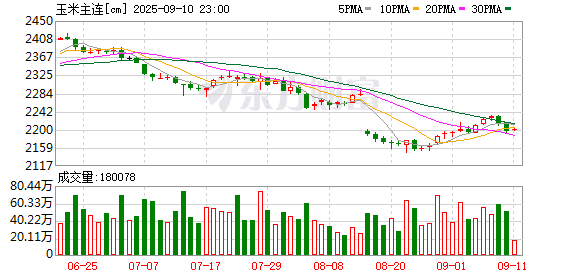
新季玉米集中上市在即 主流价格形成尚需时日
Qi Huo Ri Bao· 2025-09-11 00:42
Core Insights - The domestic corn market is entering a new phase with the large-scale listing of 2025 spring corn and the upcoming harvest of summer corn in various regions, raising concerns about price alignment and future demand [2][12] Planting Area and Production - The corn planting area in China has shown a steady increase, with a notable growth expected in 2025, supported by favorable policies and high farmer enthusiasm [3][4] - From 2020 to 2024, the cumulative growth of corn planting area was 8.4%, and production increased by 13.1%, indicating a positive supply trend [4] - Regional disparities in corn growth are evident, with stable production in Northeast China and significant increases in Xinjiang and Southwest regions due to policy support [4][7] Weather Impact on Growth - The corn growth in southern regions, particularly in Henan, is adversely affected by prolonged drought conditions, with expected yield reductions of over 30% in some areas [5][6] - Conversely, Northeast China has experienced favorable weather conditions, leading to expectations of stable or slightly increased yields compared to the previous year [6][7] Consumption Trends - Corn consumption in China has seen significant growth since 2000, with total demand projected to continue rising in 2025, primarily driven by feed consumption [8][9] - The structure of corn consumption remains stable, with feed and industrial uses accounting for approximately 90% of total consumption [8] Market Dynamics and Pricing - The corn market is characterized by a "north strong, south weak" pricing pattern, with new season corn entering the market alongside inventory pressures [12][14] - Traditional trading strategies are becoming less effective, with market prices showing more volatility and transparency due to the involvement of larger trading entities [10][11] - The pricing of new season corn varies significantly across regions, with some areas experiencing lower prices despite good quality [11] Future Outlook - The corn market is expected to face multiple uncertainties as the new season corn enters the market, with potential regional price fluctuations due to supply-demand imbalances [13][14] - The strength of feed consumption is supported by stable livestock numbers, but any downturn in pig prices could impact demand [13][14]