虎嗅APP

Search documents
OpenClaw爆火两周后,它的用法已经比科幻世界还离谱了
虎嗅APP· 2026-02-11 09:38
Core Insights - The article discusses the emergence and capabilities of OpenClaw, an AI agent that operates on personal computers and interacts through messaging platforms like WhatsApp, Telegram, and Discord, allowing users to automate various tasks seamlessly [6][7]. Group 1: OpenClaw Overview - OpenClaw is an AI agent that runs locally on users' computers, providing system-level permissions for tasks such as file management, terminal commands, and email handling [6]. - It features persistent memory, allowing it to retain context across sessions and remember user preferences and past interactions [6]. - The project gained significant traction, with over 170,000 stars on GitHub shortly after its launch, indicating strong community interest and support [3]. Group 2: Use Cases - A software engineer utilized OpenClaw to negotiate the purchase of a Hyundai Palisade, resulting in a savings of approximately $4,200 by automating the communication with multiple dealerships [9][10]. - Another developer reported that OpenClaw autonomously decided not to send notifications on his wife's birthday, showcasing its ability to understand social contexts [12][13]. - Users have employed OpenClaw for various tasks, including managing emails, booking flights, and even negotiating restaurant reservations, demonstrating its versatility [13][19]. Group 3: Community and Market Response - The rapid rise of OpenClaw has led to concerns among major tech companies, prompting them to restrict its use within their organizations [7]. - Following OpenClaw's popularity, a new platform called RentAHuman.ai emerged, allowing users to hire individuals to perform physical tasks that AI cannot complete [22][24]. - The article highlights a growing interest in developing infrastructure around AI agents, including security systems and credit systems for autonomous agents [27][28]. Group 4: Risks and Challenges - The article notes potential risks associated with AI agents, including the possibility of malicious code in plugins and unauthorized installations in corporate environments [26]. - There are concerns about the unpredictability of AI behavior when given broad permissions without clear boundaries, leading to unintended consequences [20][21]. - Despite the excitement surrounding OpenClaw, there are calls for more robust security measures and oversight as the technology evolves [26][27].


早报 | 特朗普称若美伊谈判失败将强硬行动;雷军宣布初代小米SU7正式停产;多平台称春节期间配送费涨价;谷歌百年期债券获7倍认购
虎嗅APP· 2026-02-11 00:48
Group 1 - The article discusses President Trump's consideration of deploying an additional aircraft carrier strike group to the Middle East if negotiations with Iran fail, highlighting the ongoing military buildup in the region [2][4][5] - The second round of negotiations between the U.S. and Iran is expected to take place next week, with Trump emphasizing the need for a strong agreement or else face tough actions [3][4] Group 2 - Alphabet, Google's parent company, raised nearly $32 billion in debt financing, showcasing the significant funding needs of tech giants in the AI race, with a record issuance of a century-long bond that received over 7 times the demand [6][6] - The issuance of the century bond is notable as it reflects Alphabet's financial stability and long-term planning, especially as the company plans to double its capital expenditure to $185 billion this year, primarily for AI infrastructure [6] Group 3 - xAI, Elon Musk's AI startup, has lost another co-founder, Tony Wu, amid a series of departures from the company, which is facing consumer backlash and regulatory scrutiny [8][8] - The company has been criticized for its AI product, Grok AI, which has been involved in creating unauthorized deepfake images [8] Group 4 - Paramount Skydance has revised its hostile takeover bid for Warner Bros Discovery, offering to pay a $2.8 billion breakup fee if Warner Bros terminates its agreement with Netflix, and promising to refinance Warner's debt [9][10] - Following the announcement, shares of Paramount and Warner Bros saw slight increases, indicating market interest in the revised proposal [10] Group 5 - The European Commission accepted Volkswagen's price commitment for exporting electric vehicles from China, allowing the company to avoid anti-subsidy taxes on its CUPRA Tavascan model [11][12] - Volkswagen has also committed to limiting the quantity of vehicles exported to the EU and investing in significant projects related to electric vehicles to support EU industry strategies [12] Group 6 - Xiaomi's founder announced the official cessation of production for the first-generation Xiaomi SU7, with total deliveries nearing 370,000 units [13][14] - The company is adjusting its service and delivery fees during the Spring Festival period, with various platforms announcing price changes [15] Group 7 - Country Garden's executives received disciplinary action from the Shanghai Stock Exchange for failing to timely disclose debt defaults, although the board believes there is no reason to doubt their integrity [16] - Investors such as Ge Weidong and Fang Wenyuan participated in Jianghuai Automobile's private placement, each investing 1 billion yuan [17][18] Group 8 - ByteDance launched its image generation model Seedream 5.0 across various platforms, indicating a push in AI capabilities [19][20] - The model is positioned to compete with existing technologies in the market [20] Group 9 - The Shanghai Gold Exchange announced adjustments to margin requirements and price limits for gold and silver contracts to mitigate risks during the Spring Festival [28] - The U.S. is set to release its non-farm payroll data, a key economic indicator that influences global financial markets [30] Group 10 - The National Healthcare Security Administration implemented new pricing regulations for innovative drugs to enhance transparency and expedite the market entry of new medications [31] - Elon Musk predicted that general artificial intelligence (AGI) could emerge within three years, potentially leading to significant job displacement in various sectors [32][33]


还乡之路
虎嗅APP· 2026-02-11 00:48
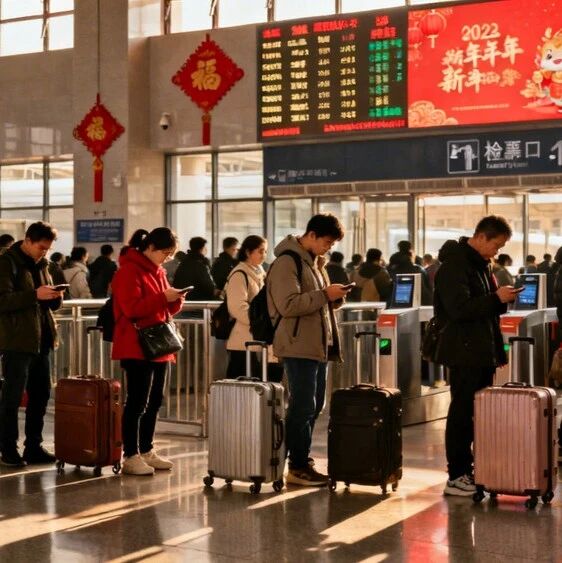
本文来自微信公众号: 秦朔朋友圈 ,作者:刘子1984,头图来自:AI生成 一 离过年还有几天,大家或早或晚,都回了乡吧。 我的故乡在赣西北,宜春市下辖的一个县。上海出发的320国道,行至九百二三十公里处,便是了。 我就从上海出发,说远不远,说近不近,以往回乡过年,是个麻烦事。 2010年以前,动车还未普及,从上海坐火车到南昌或宜春,要十四五个小时。每年春节返乡前,我 一般早早上网发帖或回帖,约顺风车——有人开车回乡过年,顺路带几个人赚点钱。有几年都是到南 昌,上班族们约个地方,晚上下班后出发,第二天凌晨到,一车人疲惫不堪。 我家离南昌还有三个多小时车程,我再打车去长途车站,买票及等车再需三个小时,到得本县与邻县 交界处,就看见父亲开着他的小面包,停靠在国道边等我。又几公里山路,到得村里,又近天黑。如 此说来,900多公里,几乎一天时间。 2010年动车开通后,中国铁路速度大为提升,基本能买到票。只是春运动车票依然紧张,到宜春的 基本抢不到,到南昌还好一些,但上班族不可能去车站排队抢票,只好捡漏一大早或半夜十一二点出 发的加班车。如此虽然疲惫,总是快了不少,行程可压缩到半天。 二 客流之外,是趋同的城乡物流。 ...
下一个DeepSeek时刻正在酝酿?
虎嗅APP· 2026-02-11 00:48
Core Viewpoint - The Seedance 2.0 concept is emerging as a new market trend, with significant movements in media stocks and AI video generation technology [2][6][12]. Group 1: Seedance 2.0 and Market Dynamics - Seedance 2.0 is seen as a pivotal moment in AI video generation, allowing users to create high-quality videos with minimal input, significantly reducing production costs [6][7]. - The global AI video generation market is projected to exceed several billion dollars by 2025, with China's market expected to surpass 90 billion yuan [7]. - Companies with substantial IP resources and distribution channels, such as Chinese Online and Hengdian Film, are positioned to benefit from this trend [8]. Group 2: Comparison with Previous Trends - The current market sentiment differs from the previous DeepSeek moment, as the emotional and market environment has changed significantly [10][12]. - The DeepSeek phenomenon saw a broad range of stocks being driven by speculation, but the current Seedance 2.0 trend is more focused on practical applications and financial performance [12][18]. - The media sector is experiencing a bifurcation, with some companies benefiting from AI advancements while others face challenges due to high debt and demand issues [16][19]. Group 3: Investment Opportunities - Investment opportunities in the media sector are categorized into two types: those driven by industry benefits and those propelled by AI advancements [14][15]. - Companies that can effectively leverage AI for cost reduction and efficiency improvements are likely to emerge as key players in the evolving landscape [18][22]. - Specific companies to watch include those in AI gaming, marketing, and IP production, such as Kaiying Network and BlueFocus Communication Group [20][21][22].


她用AI一年上架200本小说,那个叫“作者”的身份死于2026
虎嗅APP· 2026-02-10 14:12
Core Viewpoint - The article discusses the impact of AI on the concept of authorship, suggesting that AI-generated content challenges traditional notions of unique human creativity and authorship, potentially leading to a redefinition of what it means to be a writer in the modern age [10][18][80]. Group 1: AI and Writing Efficiency - Coral Hart, a romance novelist, has leveraged AI tools to produce over 200 novels in a year, generating a six-figure income, highlighting the efficiency of AI in content creation [5][34]. - An experiment showed that students preferred AI-generated texts over original works from renowned authors, indicating that AI can produce content that resonates with readers [7][14]. Group 2: The Concept of Authorship - The article references Roland Barthes' idea of "the death of the author," arguing that the traditional notion of authorship is a modern construct that AI is now challenging [20][29]. - The emergence of AI writing raises questions about the value of human authorship, as AI can replicate styles and produce content indistinguishable from human-created works [10][36]. Group 3: Cultural and Political Implications - The article discusses how language and writing are not neutral but carry cultural and political weight, suggesting that reliance on AI may reflect a new form of cultural colonization [49][50]. - The shift from traditional authorship to AI-generated content may lead to a new literary experience that emphasizes collective engagement rather than individual creation [52][70]. Group 4: Future of Content Creation - The future of authorship may involve curating and creating experiences rather than merely producing text, as the value shifts from content creation to the meaning and context of that content [71][89]. - The article posits that the role of content creators may evolve into that of facilitators or curators, focusing on the experience rather than the act of writing itself [70][72].

华强北,为什么能持续产生硬件创新?
虎嗅APP· 2026-02-10 14:12
Core Viewpoint - The article explores why Huaqiangbei, a district in Shenzhen, can continuously produce hardware innovations with minimal venture capital involvement, contrasting it with the Silicon Valley model that relies heavily on venture capital funding [4][6][18]. Group 1: System's Minimum Unit - Huaqiangbei is often referred to as "China's Electronics First Street," characterized by a vast network of trade, solution providers, and factories, functioning as a large API interface [10][12]. - The minimum unit in Huaqiangbei consists of sharp traders, solution companies, supporting factories, and a network of trust, allowing for a "Lego-style" survival philosophy where components can be easily assembled [13][14]. - This "physical open-source" approach lowers the hardware development barrier, enabling non-technical entrepreneurs to thrive [14][15]. Group 2: Why VC Fails Here - The business model in Huaqiangbei inherently rejects the venture capital logic due to different return cycles and exit mechanisms [18][22]. - Entrepreneurs in Huaqiangbei prioritize cash flow and quick returns, often completing product cycles in a matter of weeks or months, which does not align with the long-term investment horizon of VCs [22][24]. - A unique distributed financial system based on "familiar credit" allows entrepreneurs to leverage supplier credit and customer deposits to fund operations, bypassing traditional capital requirements [23][24]. Group 3: Innovation Funnel and Market Dynamics - Huaqiangbei's innovation logic is based on survival of the fittest, where low barriers to entry lead to a high volume of product experimentation [32][34]. - The market acts as the ultimate judge, with a rapid feedback loop that results in a high failure rate (95% of products) and a few successes that can become major hits [37][38]. - Unlike Silicon Valley, which reduces uncertainty through lab testing, Huaqiangbei eliminates it through market trials and rapid iteration [38]. Group 4: The Role of Chaos - Huaqiangbei's chaotic environment, often criticized for producing "high copies," is actually a source of its vitality, allowing for rapid innovation without stringent regulations [42][44]. - The lack of strict order fosters a low-cost environment for innovation, enabling entrepreneurs to test ideas quickly and adapt based on market response [45][46]. - This chaotic ecosystem has historically contributed to the development of a robust supply chain and skilled workforce in China, despite its controversial reputation [48]. Group 5: Future Challenges - Looking ahead to 2026, Huaqiangbei faces challenges from the hollowing out of hardware value due to the rise of AI and cloud computing, which may render traditional hardware innovation less relevant [56][57]. - The emergence of digital supply chain platforms could threaten Huaqiangbei's role as an intermediary, raising questions about the future of its business model [58][59]. - Despite these challenges, Huaqiangbei is evolving from a product-selling hub to a capability-selling entity, positioning itself as a global hardware innovation factory [60][61].

中国车企,要接受新车销量“仅微涨”的新常态
虎嗅APP· 2026-02-10 14:12
Core Viewpoint - The Chinese automotive market is experiencing a downturn in new car sales, with significant declines reported for major brands, while the used car market is thriving, indicating a shift in consumer preferences and market dynamics [2][3][24]. Group 1: New Car Market Trends - In January 2026, BYD's sales dropped by 30%, and Li Auto's sales fell by 7.55%, with Geely only seeing a slight increase of 1% due to strong overseas performance [2]. - The overall passenger car sales in China are projected to reach 24 million in 2026, with a growth rate slowing to 1% [2]. - The decline in consumer confidence, exacerbated by reduced subsidies and macroeconomic factors, is expected to keep consumer sentiment below the breakeven line [2]. Group 2: Used Car Market Dynamics - The used car market in China is booming, with a transaction volume of 20.1 million units in 2025, marking a year-on-year growth of 2.52% and a total transaction value of 1.28979 trillion yuan [3]. - The demand for used electric vehicles is expected to grow by over 50% [3]. - The trend of purchasing used cars is driven by practical needs, such as commuting and returning home during holidays, with a notable increase in cross-regional vehicle registrations [6][8]. Group 3: Consumer Preferences and Behavior - Consumers are increasingly opting for used cars due to price advantages, allowing them to afford better models compared to new cars [10]. - The introduction of new policies has increased the variety of available used car models, enhancing consumer choice [11]. - The demand for used cars is becoming more personalized, with consumers selecting vehicles based on specific needs such as fuel efficiency and durability [14]. Group 4: Implications for Automotive Companies - The rise in used car sales may negatively impact new car sales in the short term, as each additional used car sold could equate to one less new car sold [17]. - In the long term, a healthy used car market can stabilize the residual values of new cars, encouraging new car purchases [20]. - The growing interest in used cars among younger consumers may lead to future brand loyalty and new car purchases from the same manufacturers [21]. Group 5: Market Evolution and Future Outlook - The automotive market in China is maturing, with new car sales growth plateauing, while the used car market is expected to continue expanding [24]. - The automotive industry must adapt to this new normal by focusing on vehicle durability and reliability, rather than solely on sales volume [24]. - The overall automotive market is projected to exceed 10 trillion yuan in 2025, with significant implications for the aftermarket services sector [22].




字节与OpenAI的战争,摆在了桌面上
虎嗅APP· 2026-02-10 14:12
Core Viewpoint - The article discusses the emergence of ByteDance's Seedance 2.0 as a significant player in the AI video generation space, marking a shift in the competitive landscape where Chinese companies can now stand on equal footing with global leaders like OpenAI [6][20]. Group 1: Route Dispute - There are two main approaches in global AI video generation: the physical simulation approach represented by OpenAI's Sora, which focuses on realistic simulations, and the narrative logic approach represented by ByteDance's Seedance 2.0, which emphasizes storytelling and creative direction [8][10]. - Seedance 2.0 leverages ByteDance's extensive experience in video content and user engagement, transforming its algorithms into a generative AI tool that understands narrative and visual pacing [9][10]. Group 2: Ecological Competition - The success of Seedance 2.0 is supported by a unique ecosystem that includes a vast amount of user-generated content and engagement on platforms like Douyin, which provides a rich training ground for the AI [12][14]. - ByteDance has built the world's largest and most active short video ecosystem over the past decade, allowing Seedance 2.0 to utilize proven methods for capturing audience attention [14][15]. Group 3: Democratization of Visual Expression - Seedance 2.0 lowers the barriers to video creation, enabling ordinary users to produce high-quality content without needing professional skills, thus democratizing storytelling capabilities [17][18]. - This technology empowers individuals to express their ideas creatively, contributing to a broader movement towards technological equity in content creation [18][19]. Group 4: Awareness Post-Equalization - The launch of Seedance 2.0 signifies that Chinese tech companies have moved beyond merely following global trends to defining industrial standards in AI video generation [20][21]. - However, the article cautions that the success of a single product does not equate to overall leadership, as the technology also raises ethical concerns regarding the authenticity of generated content [21][22].

回调不是虚惊一场,科技股投资开始“去伪求真”
虎嗅APP· 2026-02-10 09:28
Group 1 - The article discusses a crisis of confidence in the AI narrative among global tech investors, with significant stock price declines in both US and Chinese markets [3][4]. - Nvidia's CEO, Jensen Huang, defended the sustainability of AI infrastructure spending, which led to a temporary rebound in AI-related stocks [4][26]. - The article highlights that the capital market's expectations for AI are excessively high, requiring continuous performance that exceeds expectations to avoid severe stock price corrections [6][7]. Group 2 - AMD experienced a significant stock drop of 17.31% due to its revenue guidance not meeting overly optimistic expectations, despite being above analyst consensus [9]. - Similarly, Qualcomm's stock fell over 8% after it lowered its revenue guidance for mobile chips, reflecting the market's sensitivity to performance expectations [9]. - The article notes that the domestic AI chip leader, Cambricon, has also seen its stock decline by 21.96% this year, with a significant drop of 9.18% in a single day due to underwhelming performance forecasts [15][12]. Group 3 - Investors are increasingly concerned about the return on investment in AI, as high capital expenditures from major tech companies like Google and Amazon raise questions about future profitability [18][19]. - The SaaS industry is facing a survival crisis due to the emergence of AI tools that threaten traditional business models, leading to significant stock declines in major SaaS companies [22][23]. - The article emphasizes that if SaaS businesses are replaced by AI, it could negatively impact demand for computing power, affecting companies like Nvidia [24]. Group 4 - The macroeconomic environment, particularly concerns about potential tightening monetary policy under a new Federal Reserve chair, has contributed to the decline in tech stock valuations [28][29]. - Recent political developments suggest that fears of immediate monetary tightening may be alleviated, leading to a rebound in tech stocks [31]. - The upcoming release of key macroeconomic data, including non-farm payrolls and CPI, is critical for determining the future trajectory of tech stocks [33][34]. Group 5 - The article concludes that the recent market corrections are a rational adjustment rather than a full-blown collapse, with a focus on distinguishing between genuine tech companies and those lacking solid performance [38][41]. - The investment strategy should shift from indiscriminate buying to careful selection of companies that can convert capital expenditures into actual cash flow [39][40]. - The tech sector is expected to experience differentiation, with "pseudo-tech stocks" facing potential declines while core assets with technological advantages may present buying opportunities [41][42].

全球游客,突然涌向中国春节
虎嗅APP· 2026-02-10 09:28
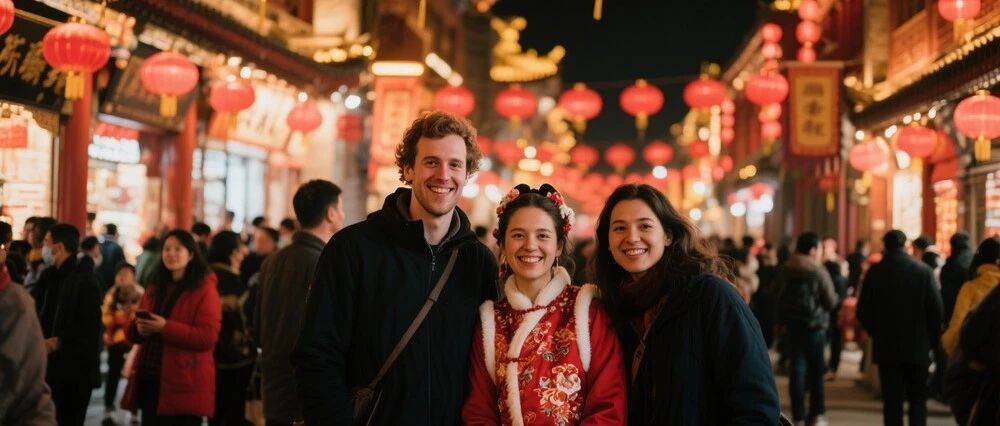
Core Viewpoint - The article highlights the significant increase in foreign tourists visiting China during the Spring Festival, indicating a shift in the perception of the holiday as a cultural experience not limited to Asian visitors [4][10][13]. Group 1: Trends in Foreign Tourism - During the Spring Festival, approximately one-third of hotel bookings in certain areas are from foreign guests, with a notable increase in visitors from countries like Vietnam, Singapore, and Argentina, where bookings have surged by nine times [4][9][10]. - Data shows that foreign flight bookings for the Spring Festival have increased over four times compared to the previous year, with cities like Shanghai, Guangzhou, Beijing, and Chengdu being the most popular entry points [10][12]. - The demand for multilingual tour guides has risen sharply, particularly for languages such as Russian and Spanish, with some guides charging up to 2,500 yuan per day during peak times [12][20]. Group 2: Impact of Diplomatic Relations - Recent visits by European leaders to China coincide with the rise in foreign tourism, suggesting a connection between diplomatic relations and tourism growth [15][18]. - The Chinese government has implemented visa facilitation measures, such as extending visa-free policies for citizens from 45 countries, which has contributed to the increase in foreign visitors [19][20]. - In 2025, the number of foreign visitors to China is projected to reach 82.04 million, a 26.4% increase from the previous year, with visa-free entries accounting for 73.1% of total arrivals [20][22]. Group 3: Cultural Significance of the Spring Festival - The Spring Festival is becoming a significant cultural event for foreign tourists, with its elements like red lanterns and dragon dances being easily recognizable and shareable on social media [23][36]. - The timing of the Spring Festival coincides with a lull in tourism in Europe and a long holiday period in Asia, making it an attractive travel window for international visitors [25][26]. - The article emphasizes that the authentic and uncommercialized nature of the Spring Festival enhances its appeal to foreign tourists, making it a unique cultural experience [36][39].