GEELY AUTO(00175)

Search documents
销量650万辆 跻身全球前五 吉利控股发布“一个吉利 全面领先”2030战略目标
Bei Jing Ri Bao Ke Hu Duan· 2026-01-23 11:06
Core Insights - Geely is celebrating its 40th anniversary in 2026 and has introduced a new strategic goal for 2030, aiming for global leadership in the automotive industry through enhanced coordination and collaboration [1][3] - The company targets to achieve global sales exceeding 6.5 million vehicles, with revenue surpassing 1 trillion yuan, and aims to rank among the top five global automakers by 2030 [1][8] - Geely plans to focus on a "six-in-one" core capability system, emphasizing brand, technology, vehicle, ecology, talent, and sustainable development [3][5] Strategic Goals - The "One Geely" initiative aims to strengthen top-level operations and global governance, creating a strategic collaboration and resource integration platform [3] - The "Fully Leading" strategy focuses on building a competitive advantage through a clear brand positioning and leveraging both domestic and international market strengths [3][5] Technological Advancements - Geely will enhance its "seven verticals" technology system, focusing on smart driving, smart cockpits, electronic architecture, and battery technology to maintain a leading position in safety and innovation [5] - The company aims to create a comprehensive safety ecosystem that integrates vehicle, human, road, cloud, and star safety [5] Market Performance - In 2025, Geely's total sales reached 4.116 million vehicles, marking a 26% year-on-year increase, with new energy vehicle sales at 2.293 million, a 58% increase, achieving a penetration rate of 56% [8] - Geely ranked seventh globally in total sales, becoming the fastest-growing company among the top ten automotive groups [8]


从“更大”,到“更强大”!“一个吉利”以万亿为锚,驶向全球前五
Jin Rong Jie· 2026-01-23 11:03
Core Insights - Geely has set a five-year strategic goal to become a leading player in the global automotive industry, aiming for total global sales to exceed 6.5 million units and revenue to surpass 1 trillion yuan by 2030 [1][2]. Group 1: Strategic Goals - By 2030, Geely aims to achieve global total sales of over 6.5 million vehicles, with revenue exceeding 1 trillion yuan, positioning itself among the top five global automakers [1][2]. - The company plans for 75% of its sales to come from new energy vehicles (NEVs) and over one-third of sales to be from international markets [2]. Group 2: Market Position and Growth - In 2025, Geely's total sales are projected to reach 4.116 million units, a 26% year-on-year increase, making it the fastest-growing company among the top ten automotive groups [2]. - NEV sales are expected to reach 2.293 million units, reflecting a 58% year-on-year growth, with a penetration rate of 56%, significantly above the industry average [2]. Group 3: Brand Strategy - Geely is focusing on strengthening its core brand and has established a brand matrix that includes "Geely China Star," "Geely Galaxy," "Lynk & Co," and "Zeekr," covering a wide range of market segments from mainstream to high-end [3][5]. - The company aims to leverage its global brands like Volvo and Polestar in international markets while exploring new joint venture models with partners like Renault [5]. Group 4: Technological Advancements - Geely is enhancing its "Seven Vertical" technology system, focusing on key areas such as intelligent driving, smart cockpit, electronic architecture, and battery technology [7]. - The company’s intelligent driving platform, "Qianli Haohan," is positioned as one of the most advanced globally, with plans for L2-level assistance and rapid advancement towards L3 and L4 technologies [7]. Group 5: Safety and Sustainability - Safety is a top priority for Geely, which aims to create a "world safety dual-pole" system with Volvo, focusing on a comprehensive safety ecosystem [8]. - Geely is committed to integrating green and low-carbon principles throughout its product lifecycle and aims for carbon neutrality in its manufacturing processes [14]. Group 6: Future Ecosystem Development - Geely is developing a "Heaven and Earth Integrated" transportation network, which includes various mobility solutions and aims to launch 100,000 customized Robotaxi vehicles by 2030 [11]. - The company is also advancing its alcohol-hydrogen electric vehicle technology, with over 50,000 units already in operation, contributing to carbon neutrality and energy security [11]. Group 7: Alignment with National Strategy - Geely's 2030 strategy aligns with China's "14th Five-Year Plan," focusing on high-quality development and seizing global market opportunities [13]. - The company is transitioning from simple product exports to a comprehensive value chain output model, emphasizing technology and service integration [13].
吉利控股发布2030战略目标:销量突破650万 营收破万亿并冲击全球前五
Yang Shi Wang· 2026-01-23 09:53
Core Viewpoint - Geely Holding Group has officially launched its "One Geely, Leading All" 2030 strategic goal, aiming to enhance global coordination and establish a comprehensive core capability system to achieve leading indicators in the global automotive industry [1][4]. Group 1: Strategic Goals - Geely aims to achieve global total sales exceeding 6.5 million units (including passenger and commercial vehicles) and revenue surpassing 1 trillion yuan by 2030, positioning itself among the top five global automakers, with approximately 75% of sales from new energy vehicles and over one-third from overseas markets [4]. - The company plans to develop a leading global new energy architecture covering vehicle classes A to E, with a target to reduce average model development cycles and comprehensive costs by over 30% based on the new architecture [4]. Group 2: Six-in-One Capability System - Geely will focus on six areas: brand, technology, complete vehicles, ecology, talent, and sustainable development, with an emphasis on strengthening the Geely parent brand and creating a clear, distinctive global brand matrix [7]. - The company will leverage its brands, including Geely, Lynk & Co, and Polestar, while also enhancing the localized operational capabilities of international brands like Volvo and Lotus in the European and American markets [7]. Group 3: Technological Advancements - Geely will enhance its "Seven Vertical" technology system, focusing on smart driving, smart cockpits, electronic architecture, complete vehicle architecture, batteries, electric drives, and super hybrid technologies [8]. - The company aims to establish "Qianli Haohan" as a globally advanced technology platform, achieving full coverage of L2-level assisted driving and accelerating the commercialization of L3 technology and Robotaxi [8]. Group 4: Safety and Ecological Layout - Safety remains the top priority for Geely, with plans to strengthen safety technology collaboration within the group and establish a "world safety dual-pole" structure between Volvo and Geely [10]. - Geely will focus on three ecological areas: user services, future mobility, and methanol-hydrogen electric vehicles, aiming to launch 100,000 customized Robotaxis by 2030 [10]. Group 5: Talent and Sustainability - Geely will deepen its "Talent Forest" strategy, investing 500 million yuan initially and up to 300 million yuan in total to foster innovation and entrepreneurship among youth [12]. - The company commits to integrating green and low-carbon principles throughout the product lifecycle, promoting eco-friendly materials, and achieving carbon neutrality in benchmark factories [12]. Group 6: Future Directions - By 2026, Geely will focus on AI technology, energy diversification, product premiumization, and internationalization, with upcoming technologies including the full-domain AI 2.0 system and the next-generation Qianli Haohan assisted driving system [13]. - New products, such as the Zeekr 8X, are set to be launched, reflecting the company's commitment to high-quality development [13].
2030年销量突破650万辆 跻身全球前五 吉利控股集团发布“一个吉利 全面领先”战略目标
Jing Ji Wang· 2026-01-23 09:25
Core Insights - Geely Holding Group has announced its 2030 strategic goal of "One Geely, Comprehensive Leadership," aiming to achieve global sales exceeding 6.5 million vehicles and revenue surpassing 1 trillion yuan, with 75% of sales from new energy vehicles and over one-third from overseas markets [1][5]. Group 1: Strategic Goals - The 2030 strategy focuses on enhancing top-level planning and global collaboration to create a unified strategic framework [1][5]. - Geely aims to develop a "six-in-one" core capability system to ensure key performance indicators reach a leading level among global automakers [1][5]. Group 2: Sales Performance - In 2025, Geely's total sales reached 4.116 million vehicles, a 26% year-on-year increase, marking five consecutive years of rapid growth [3]. - New energy vehicle sales reached 2.293 million units, up 58%, with a penetration rate of 56% [3]. Group 3: Brand and Market Strategy - Geely plans to strengthen its core brand and create a clear, distinctive global brand matrix to enhance brand competitiveness and influence [5]. - The company will leverage its international brands like Volvo and Polestar to capitalize on local market advantages in Europe and North America [5]. Group 4: Technological Advancements - Geely is committed to enhancing its "seven verticals" technology system, focusing on smart driving, smart cockpits, and electric architectures to maintain a leading position in safety and innovation [6][9]. - The company aims to develop advanced platforms for smart driving and AI technologies, including the L2 and L3 autonomous driving capabilities [6][7]. Group 5: Ecosystem Development - Geely is focusing on three major ecological business areas: user services, future mobility, and methanol-hydrogen electric ecosystems [10][12]. - The company plans to establish a comprehensive service system for users and develop a nationwide integrated mobility service by 2030 [10]. Group 6: Talent and Sustainability - Geely is enhancing its organizational structure and talent development to support its transformation into a technology-driven enterprise [13]. - The company is committed to sustainable development, aiming to reduce carbon footprints and promote green technologies across its product lifecycle [13]. Group 7: Future Outlook - Geely aims to innovate in AI technology, energy diversification, product premiumization, and internationalization to drive high-quality development in the automotive industry [15]. - The company is set to launch new models and technologies that enhance user experience and operational efficiency [15].
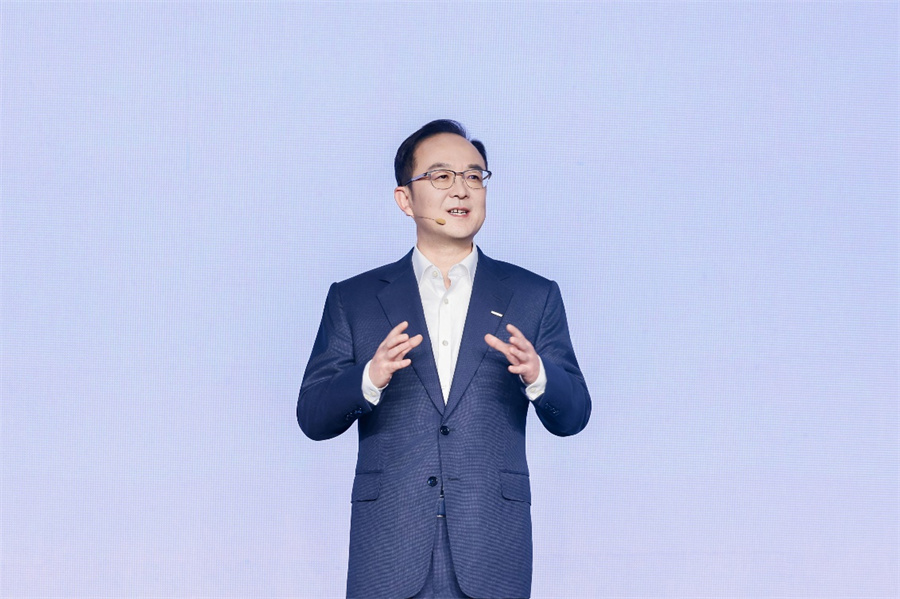
吉利控股发布2030战略目标:剑指650万辆销量 冲击万亿营收
Zhong Guo Jin Rong Xin Xi Wang· 2026-01-23 08:27
Core Insights - Geely Holding Group has announced its "One Geely, Fully Leading" 2030 strategic goal, aiming for global sales to exceed 6.5 million units and revenue to surpass 1 trillion yuan by 2030 [1][2] Group Strategy - The core of "One Geely" focuses on strengthening top-level coordination and establishing a global strategic layout, while "Fully Leading" emphasizes six core areas: brand, technology, and complete vehicles [1] - The brand strategy will enhance the Geely parent brand and integrate local brands like Geely China Star and Zeekr with international brands such as Volvo and Lotus, alongside partners like Renault to create a global brand matrix [1] Technology Development - Geely will develop a top-tier global new energy architecture covering A to E class vehicles, aiming to reduce average R&D cycle and comprehensive costs by over 30% [1] - In the field of intelligent driving, Geely aims for full coverage of L2 level assisted driving, advancing towards L3 industrialization and accelerating the commercialization of L4 technology and Robotaxi [1] - The safety sector will focus on establishing a "world safety dual-polar" pattern, promoting the "Shen Dun Jin Zhuan battery" as an industry benchmark and advancing the industrialization of semi-solid and solid-state batteries [1] Ecological Layout - Geely will focus on user services, future mobility, and methanol-hydrogen electric fields, including the launch of 100,000 customized Robotaxi models by 2030 [2] - The methanol-hydrogen sector will expand multi-scenario applications and accelerate the construction of methanol refueling networks [2] Talent and Sustainability - Geely will deepen its "Talent Forest" strategy with a total investment of 300 million yuan in a youth innovation and entrepreneurship incentive plan, exploring new talent cultivation models [2] - The company will strengthen ESG governance, promoting low-carbonization throughout the product lifecycle and encouraging supply chain partners to achieve carbon reduction [2] Future Outlook - By 2025, Geely aims to achieve sales of 4.116 million units with a 56% penetration rate of new energy vehicles [2] - The company plans to drive high-quality development in the automotive industry through technological innovation in AI, energy diversification, product premiumization, and internationalization, creating a safe, reliable, and intelligent travel experience for global users [2]
吉利控股取得车辆电池与电机冷却系统专利
Sou Hu Cai Jing· 2026-01-23 07:55
Group 1 - Zhejiang Geely Holding Group Co., Ltd. and Zhejiang Linkong Technology Co., Ltd. have obtained a patent for "Vehicle Cooling System and Vehicle," with authorization announcement number CN116353332B, applied on April 2023 [1] - Zhejiang Geely Holding Group Co., Ltd. was established in 2003, located in Hangzhou, primarily engaged in the automotive manufacturing industry, with a registered capital of 1.03 billion RMB [1] - The company has invested in 38 enterprises, participated in 523 bidding projects, and holds 5,000 trademark and patent information, along with 275 administrative licenses [1] Group 2 - Zhejiang Linkong Technology Co., Ltd. was established in 2018, located in Ningbo, primarily focused on research and experimental development, with a registered capital of 850.01 million RMB [1] - The company has participated in 1 bidding project and holds 886 patent information, along with 4 administrative licenses [1]
吉利2026年推i-HEV智能双擎及4款新车
Zhong Guo Jing Ying Bao· 2026-01-23 07:28
Core Viewpoint - Geely Auto Group plans to launch its new i-HEV intelligent hybrid technology in the first half of 2026, aiming to surpass Japanese hybrid technologies and introduce 4 to 5 new models [1] Group 1: i-HEV Technology - The i-HEV intelligent hybrid system integrates the best global power systems and leading battery technologies, being the first to apply "AI cloud power" in hybrid systems [1] - The new hybrid system is expected to reduce fuel consumption of HEV models to 3 liters per 100 kilometers [1] - Geely's self-developed intelligent electric drive will enhance the overall vehicle power by at least 20% compared to mainstream HEVs, providing a strong electric feel in fuel vehicles [1] Group 2: Product Launch and Sales Goals - Geely plans to launch 1 to 2 new products each quarter starting in 2026, covering a wide range from mainstream to luxury, and from fuel to new energy and hydrogen [1] - The company aims to achieve an annual sales target of 3.45 million vehicles [1]
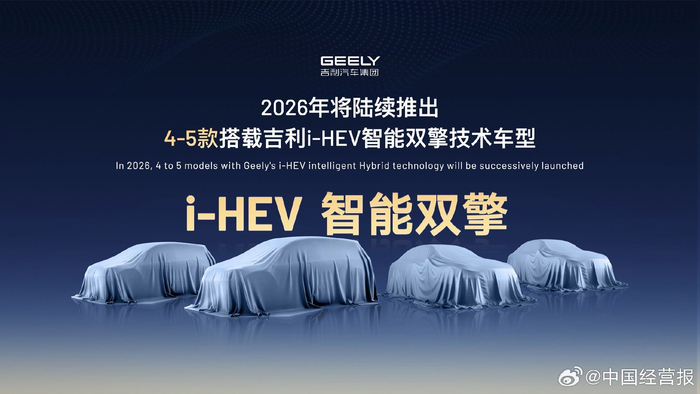
吉利控股CEO安聪慧:2030年要营收超1万亿,跻身全球车企销量前五
Sou Hu Cai Jing· 2026-01-23 05:40
Core Insights - Geely Holding Group has announced its 2030 strategic goal of "One Geely, Comprehensive Leadership," aiming to enhance global collaboration and achieve a unified strategic framework [2][3] - The company plans to establish a "six-in-one" core capability system focusing on brand, technology, complete vehicles, ecology, talent, and sustainable development, ensuring key competitive indicators reach a leading level among global automakers [3][14] Sales and Growth Targets - Geely aims to achieve total global sales exceeding 6.5 million units by 2030, with revenue surpassing 1 trillion yuan, positioning itself among the top five global automakers [4][15] - By 2025, Geely expects to reach sales of 4.116 million units, a 26% increase year-on-year, with new energy vehicle sales projected at 2.293 million units, reflecting a 58% growth and a penetration rate of 56% [9][10] Brand Strategy - The company will strengthen its core brand, creating a clear and distinctive global brand matrix, enhancing brand competitiveness and influence [3][16] - Geely plans to leverage its international brands like Volvo and Polestar in the European and American markets, fostering collaborative partnerships with companies like Renault [3][16] Ecosystem Development - Geely is focusing on three major ecological business areas: user services, future mobility, and methanol-hydrogen electric ecosystems [5][19] - The user service ecosystem aims to create a comprehensive after-sales service system that is convenient, transparent, digital, and ecological, enhancing customer satisfaction and loyalty [5][19] - The future mobility ecosystem will integrate various transportation services, including Robotaxi and eVTOL, aiming for a nationwide service capability by 2030 [20] Technological Advancements - Geely is committed to enhancing its core competencies in smart and electric technologies, aiming to maintain a leading position in global safety standards [16][17] - The company is developing advanced AI capabilities and smart driving technologies, with plans to commercialize L3 autonomous driving solutions [17][18] Sustainability and ESG Initiatives - Geely emphasizes the importance of ESG as a competitive advantage, committing to sustainable development practices and reducing carbon footprints across its product lifecycle [22][23] - The company plans to implement green procurement and technology sharing with suppliers to promote carbon reduction initiatives [22]
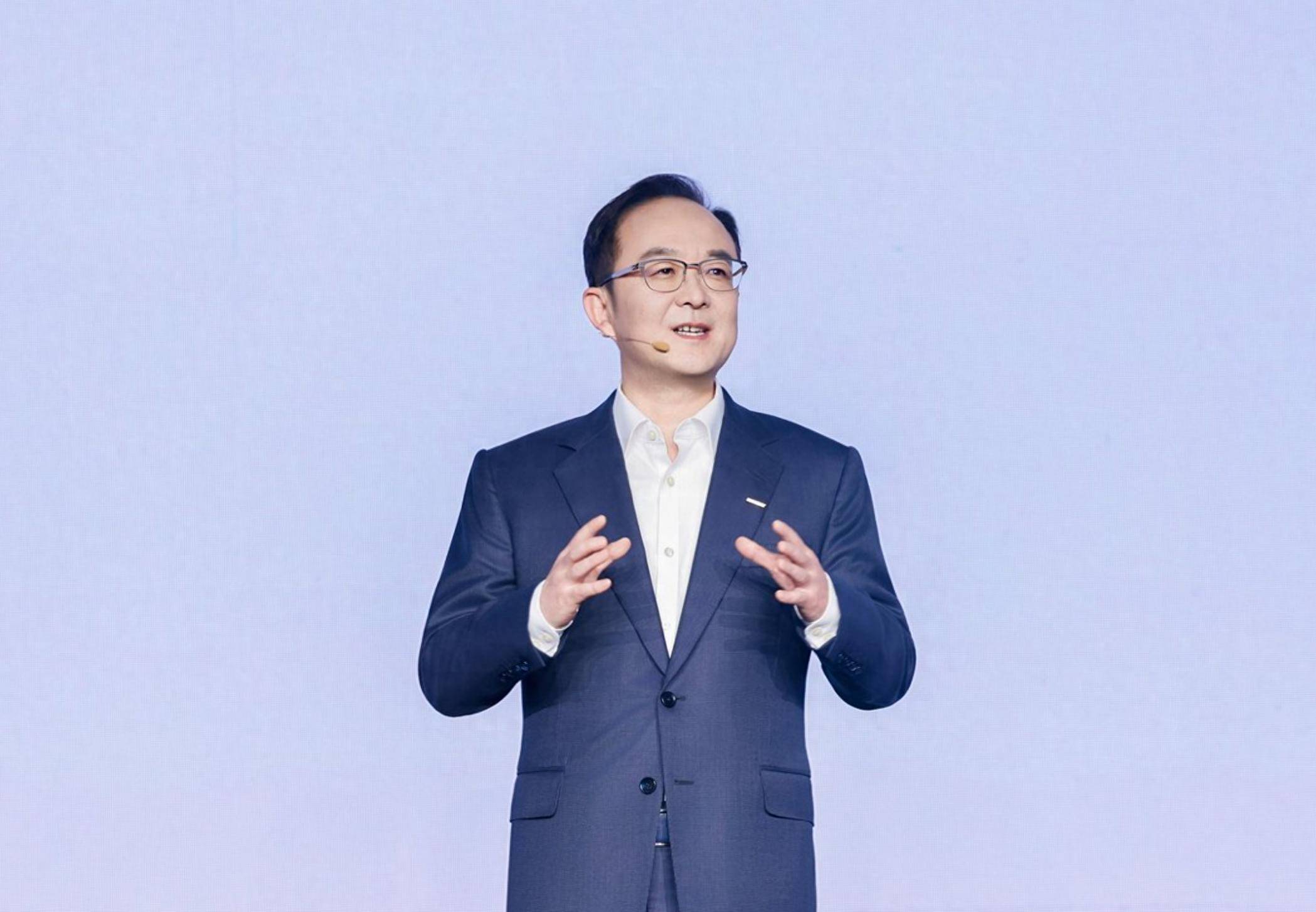
吉利取得车辆数据补正方法专利
Sou Hu Cai Jing· 2026-01-23 04:13
Group 1 - Zhejiang Geely Holding Group Co., Ltd. has obtained a patent titled "Vehicle and Its Data Correction Method and Device, Computer Readable Storage Medium," with authorization announcement number CN119807187B, and the application date is December 2024 [1] - Zhejiang Geely Holding Group, established in 2003 and located in Hangzhou, primarily engages in the automotive manufacturing industry, with a registered capital of 1.03 billion RMB [1] - The company has made investments in 38 enterprises, participated in 523 bidding projects, and holds 5,000 trademark and patent information entries, along with 275 administrative licenses [1] Group 2 - Zhejiang Remote New Energy Commercial Vehicle Group Co., Ltd., founded in 2016 and also based in Hangzhou, focuses on the automotive manufacturing sector, with a registered capital of 500 million RMB [1] - This company has invested in 27 enterprises, engaged in 406 bidding projects, and possesses 33 trademark entries, 3,990 patent entries, and 31 administrative licenses [1] Group 3 - Zhejiang Remote Commercial Vehicle R&D Co., Ltd., established in 2021 in Hangzhou, is another player in the automotive manufacturing industry, with a registered capital of 1 billion RMB [2] - The company has invested in 1 enterprise, participated in 29 bidding projects, and holds 2,165 patent entries, along with 3 administrative licenses [2]
吉利控股集团发布“一个吉利 全面领先”战略目标
Zhong Guo Qi Che Bao Wang· 2026-01-23 03:58
Core Insights - Geely Holding Group has announced its 2030 strategic goal of "One Geely, Comprehensive Leadership," aiming to achieve global sales exceeding 6.5 million vehicles and revenue surpassing 1 trillion yuan, with 75% of sales coming from new energy vehicles [1][5] - The company plans to enhance its core capabilities and establish a global strategic framework to become a leader in high-quality development for Chinese enterprises [1][5] Strategic Goals - The 2030 key indicators include global total sales exceeding 6.5 million vehicles, revenue over 1 trillion yuan, and ranking among the top five global automakers [1] - Geely aims for new energy vehicle sales to account for approximately 75% of total sales and for overseas sales to exceed one-third of total sales [1] Business Performance - In 2025, Geely's total sales reached 4.116 million vehicles, a 26% year-on-year increase, with new energy vehicle sales at 2.293 million, up 58%, achieving a penetration rate of 56% [3] - Geely ranked seventh globally in total sales, marking it as the fastest-growing company among the top ten automotive groups [3] Brand Strategy - Geely is focused on strengthening its core brand and creating a clear, distinctive global brand matrix to enhance brand competitiveness and influence [5] - The company will leverage its various brands, including Geely, Lynk & Co, and Volvo, to create a collaborative and mutually beneficial brand partnership model [5] Technological Advancements - Geely is committed to enhancing its "Seven Vertical" technology system, focusing on smart driving, smart cockpits, and electric architectures to maintain a leading position in global safety [8] - The company aims to develop advanced platforms for L2 and L3 autonomous driving and to commercialize L4 technology and Robotaxi services [8] Ecosystem Development - Geely plans to establish three major ecological business areas: user services, future mobility, and methanol-hydrogen electric ecosystems [9][10] - The user service ecosystem will focus on creating a convenient, transparent, and digitalized after-sales service system [9] Talent and ESG Initiatives - Geely is enhancing its organizational structure and talent development to support its transformation into a technology-driven enterprise [11][13] - The company is committed to sustainable development, aiming to integrate green technologies and practices throughout its product lifecycle [13] Future Outlook - By 2026, Geely aims to create a unified "smart vehicle brain" through AI technology, enhancing the driving experience and promoting high-quality development in the automotive industry [14] - The company is focused on regional deepening and global collaboration to ensure steady international growth [14][15]