XPENG(09868)
Search documents
东吴证券:维持小鹏汽车-W“买入”评级 2026年将从汽车走向AI科技
Zhi Tong Cai Jing· 2025-12-08 01:51
Core Viewpoint - Dongwu Securities maintains a "buy" rating for XPeng Motors (09868), emphasizing its strategy of "range extension + overseas expansion" in the C-end market and leveraging its mass production capabilities to accelerate globalization [1] C-end Market - XPeng's core competitiveness lies in its ability to create mass-market hit products, focusing on range extension with large batteries and efficient range extenders to achieve long pure electric range and leading fuel-to-electric conversion rates [1] - The company plans to launch seven new models by 2026, covering both pure electric and range-extended vehicles, while globalization is seen as the second growth curve through localized production, R&D centers, and channel expansion [1] B-end Market (Robotaxi) - The Robotaxi segment is positioned to benefit from policy catalysts and technological breakthroughs, with predictions that the market will reach 83.1 billion yuan by 2030, potentially replacing private car travel [2] - XPeng's Robotaxi project is set to launch in the second half of 2026, with pre-production vehicles expected to begin trial operations [2] - The company aims to reshape the billion-dollar mobility market through its self-developed VLA2.0 model, mass production capabilities, and innovative business models [2] Collaboration with Volkswagen - XPeng has successfully upgraded its positioning to that of a smart technology solution provider, deepening its collaboration with Volkswagen from joint development of the G9 platform to co-developing electronic and electrical architectures and core AI chips [3] - Volkswagen's sales in China are projected to exceed 2.6 million units by 2026, with a new energy penetration rate of over 10% [3] - The collaboration will see the launch of two full-size pure electric models in 2026, alongside deep cooperation in EE architecture and charging networks [3] Robotics - XPeng's core competitiveness in robotics stems from deep synergy with its smart vehicle business, with the IRON robot integrating "bionic body" and "AI brain" technologies [4] - The IRON robot features a human-like spine, bionic muscles, 82 degrees of freedom, and a dexterous hand with 22 degrees of freedom, enabling advanced environmental perception, decision-making, and interaction capabilities [4] - Commercial trials for IRON are set to begin in 2026, focusing on services such as guiding, shopping assistance, and patrol [4] Flying Cars - XPeng's next-generation vertical take-off and landing flying car, A868, has entered the test flight phase, achieving over 500 km of range [5] - As of October 2025, XPeng has received 7,000 pre-orders and plans to deliver the A868 globally in the second half of 2026 [5]
东吴证券:维持小鹏汽车-W(09868)“买入”评级 2026年将从汽车走向AI科技
智通财经网· 2025-12-08 01:49
Core Viewpoint - Dongwu Securities maintains a "Buy" rating for XPeng Motors (09868), emphasizing its strategy of "range extension + overseas expansion" in the C-end market and leveraging its mass production capabilities to accelerate globalization [1] C-end Market - XPeng's core competitiveness lies in its ability to create mass-market hit products, focusing on large batteries and efficient range extenders to achieve long pure electric range and leading oil-electric conversion rates [1] - The company plans to launch seven new models by 2026, covering both pure electric and range-extended vehicles, while aiming for a scale of tens of thousands of deliveries through localized production and channel expansion [1] B-end Market (Robotaxi) - The Robotaxi segment is positioned to benefit from policy catalysts and technological breakthroughs, with projections indicating that the market could reach 83.1 billion yuan by 2030 [2] - XPeng's Robotaxi project is set to commence with pre-production vehicles rolling off the line in the second half of 2026, aiming to reshape the billion-dollar mobility market with its self-developed VLA 2.0 model and innovative business model [2] Partnership with Volkswagen - XPeng has successfully upgraded its positioning to that of a smart technology solution provider, deepening its collaboration with Volkswagen from joint development of the G9 platform to co-developing electronic and electrical architectures [3] - Volkswagen's sales in China are expected to exceed 2.6 million units by 2026, with a new energy penetration rate surpassing 10%, as XPeng collaborates on two full-size pure electric models and deepens cooperation on charging networks [3] Robotics - XPeng's core competitiveness in robotics stems from the deep integration with its smart vehicle business, with the IRON robot combining "bionic body" and "AI brain" capabilities [4] - The IRON robot features a human-like spine, bionic muscles, and advanced dexterity, with plans for commercial trials in navigation and shopping services starting in 2026 [4] Flying Cars - XPeng is on the verge of mass production for its next-generation vertical take-off and landing flying car, the A868, which has achieved over 500 km of range during test flights [5] - As of October 2025, XPeng has received 7,000 pre-orders for the A868, with plans for global deliveries in the second half of 2026 [5]
11月新势力榜单:蔚来困于盈利,理想反弹乏力
Feng Huang Wang Cai Jing· 2025-12-07 14:03
Core Insights - The delivery rankings of new car manufacturers have undergone significant changes in November, with a reshuffling of positions following the "golden September and silver October" period [1] Group 1: Delivery Rankings - Hongmeng Zhixing topped the delivery chart with 81,864 units, achieving a year-on-year growth of 90% and a month-on-month increase of 20% [2][3] - Leap Motor maintained its position as the "single brand champion" with 70,327 units delivered, marking its second consecutive month above 70,000 [4] - Xiaomi entered the top three with over 40,000 units, while BYD's Fangchengbao emerged as a dark horse with 37,405 units [5] Group 2: Competitive Landscape - In the second tier, brands like Xiaopeng (36,728 units) and NIO (36,275 units) are in close competition, with Ideal (33,181 units) and Deep Blue (33,060 units) also in the mix [5][21] - Zeekr accelerated its growth with 28,843 units, while Lantu broke the 20,000 mark for the first time [6] Group 3: Financial Performance and Market Challenges - Despite high delivery numbers, companies like Leap Motor face challenges in profitability, with a net profit of 150 million yuan in Q3, down 8% from the previous quarter [12][13] - Xiaomi's automotive division reported a 700 million yuan operating profit in Q3, making it the fastest to achieve profitability among new forces, yet its stock price has been under pressure due to negative publicity [14][15] - NIO's stock fell 20% in November after lowering its Q4 delivery guidance, indicating challenges in meeting profitability targets [24][30] Group 4: Strategic Adjustments - Xiaopeng is transitioning to a dual strategy of pure electric and range-extended vehicles, with plans to launch three new range-extended models in Q1 next year [19][20] - NIO is focusing on high-end models to improve overall gross margins, while also facing pressure to enhance profitability [22][26] - Ideal is adjusting its organizational structure and technology to address ongoing challenges, with a focus on ramping up production of its new electric model [28][30]
11月新势力榜单:蔚来困于盈利,理想反弹乏力
凤凰网财经· 2025-12-07 12:07
Core Viewpoint - The delivery rankings of new car manufacturers have undergone significant changes in November, with a reshuffling of positions following the "golden September and silver October" period, highlighting the competitive landscape in the electric vehicle market [4][6]. Group 1: Delivery Rankings - Hongmeng Zhixing topped the delivery chart with 81,864 vehicles delivered, a year-on-year increase of 90% and a month-on-month increase of 20%, becoming the "alliance leader" among new forces [5][10]. - Leap Motor maintained its position as the "single brand champion" with 70,327 vehicles delivered, indicating a strong competitive dynamic between the top two players [6][17]. - Xiaomi entered the third position with over 40,000 vehicles delivered, while BYD's Fangchengbao emerged as a dark horse with 37,405 vehicles, intensifying competition in the 30,000 to 40,000 vehicle range [7][19]. Group 2: Market Dynamics - The second tier of manufacturers is characterized by fierce competition, with brands like Xiaopeng and NIO facing challenges in maintaining their delivery volumes amid strategic adjustments and market pressures [24][26]. - NIO delivered 36,275 vehicles in November, a year-on-year increase of 76.3%, but faced stock price declines due to lowered fourth-quarter delivery guidance [28][29]. - Li Auto's deliveries reached 33,181 vehicles, showing signs of recovery, but the company still faces challenges in scaling production and maintaining profitability [32]. Group 3: Financial Performance and Market Sentiment - Xiaomi's automotive division reported a significant operating profit of 700 million yuan in Q3, making it the fastest profitable new force, despite facing negative market sentiment due to various controversies [20][21]. - Leap Motor's stock price fell by 9% in November, raising concerns about its ability to balance scale and profitability, especially in competitive price segments [17][18]. - The overall market sentiment reflects a growing scrutiny on profitability and sustainability, with companies needing to demonstrate not just sales growth but also healthy financial performance to meet investor expectations [36][37].
小鹏汽车-W(09868.HK):2026年看点梳理 从汽车走向AI科技!
Ge Long Hui· 2025-12-07 02:40
Core Insights - The company is entering a new phase with its C-end smart vehicle segment, leveraging "range extension and overseas expansion" to enhance its competitive edge in mass-producing popular models [1] - The B-end Robotaxi segment is positioned for growth, with expectations of a market turning point by 2027, potentially reaching a scale of 83.1 billion yuan by 2030 [1] - The partnership with Volkswagen is evolving, positioning the company as a smart technology solution provider, with plans for joint development of electric vehicles and deep collaboration on electronic architecture [2] C-end Smart Vehicle Segment - The company aims to launch seven new models by 2026, covering both pure electric and range-extended vehicles [1] - The focus on local production, R&D centers, and channel expansion is expected to drive the company towards a scale of tens of thousands in deliveries [1] B-end Robotaxi Segment - The company is capitalizing on favorable policies and technological advancements in the Robotaxi market, with a projected market size of 83.1 billion yuan by 2030 [1] - The Robotaxi project is set to begin trial operations in the second half of 2026, with mass production of pre-installed vehicles [1] Partnership with Volkswagen - The collaboration has expanded from initial vehicle development to include joint efforts in electronic architecture and AI chip development [2] - Volkswagen's sales in China are expected to exceed 2.6 million units by 2026, with a new energy vehicle penetration rate above 10% [2] Robotics and Flying Cars - The company's robotics initiative integrates advanced AI with mechanical design, featuring a humanoid structure and high degrees of freedom [2] - The new generation of flying cars, A868, is in the testing phase, with over 7,000 pre-orders and plans for global delivery in the second half of 2026 [2] Financial Projections - The company maintains a revenue forecast of 78.5 billion yuan for 2025, with a year-on-year growth of 92% [3] - Adjustments have been made to the revenue expectations for 2026 and 2027, now projected at 105.8 billion yuan and 151.9 billion yuan respectively, reflecting a year-on-year growth of 35% and 44% [3] - The company is rated as a "buy" based on its transition from automotive to AI technology, with expected earnings per share of -0.71 yuan in 2025, 1.29 yuan in 2026, and 3.26 yuan in 2027 [3]
特朗普松绑油耗标准:全球车企抢跑“油电同强时代”
智通财经网· 2025-12-06 09:08
Core Viewpoint - The proposal by former President Trump to terminate strict fuel economy standards set by the Biden administration poses a significant challenge to Europe's aggressive policies on banning fuel vehicles, highlighting a shift in the automotive industry's dynamics towards a more sustainable and diversified future led by China's oil-electric hybrid strategy [1][9]. Group 1: Policy Changes and Impacts - Trump's proposal aims to reduce the average cost of purchasing new cars by $1,000, potentially saving Americans $109 billion over five years [3]. - The new fuel efficiency standard proposed by Trump's administration requires vehicles to achieve approximately 34 miles per gallon by 2031, compared to Biden's target of 50 miles per gallon [2]. Group 2: Industry Dynamics - The automotive industry's core profits are derived from fuel vehicles, and the transition to electric vehicles represents a significant restructuring of interests, with traditional automakers facing survival pressures due to lost profits from engine manufacturing and after-sales services [4]. - The shift in stance among U.S. automakers from supporting electric vehicle initiatives to opposing stringent regulations reflects the industry's struggle with profit erosion amid changing policies [4]. Group 3: European Market Challenges - European automakers are under severe pressure from the EU's legislation to ban fuel vehicles by 2035, which is seen as overly ambitious and detrimental to businesses [5]. - The EU's "Fit for 55" plan aims for a 55% reduction in new car carbon emissions by 2030, with a complete transition to zero emissions by 2035, but this has led to some companies planning to abandon engine development altogether [5]. Group 4: Global Automotive Trends - The trend of oil-electric hybrid strategies is gaining traction globally, with Asian automakers, particularly Chinese brands like BYD, Geely, and Chery, significantly increasing their market share [7][8]. - The global automotive market remains predominantly fuel-based, with 73% of vehicles still using fuel, indicating that a rapid transition to electric vehicles is unlikely in the short term [8]. Group 5: China's Strategic Position - China's oil-electric hybrid strategy is viewed as a successful model, with the recent release of the 3.0 roadmap emphasizing the continued importance of internal combustion engines alongside electric vehicles [10]. - By 2040, it is projected that 85% of new passenger vehicles in China will be electric, with a significant market still remaining for non-pure electric models, positioning Chinese automakers as key players in the global automotive technology landscape [10].
小鹏汽车-W(09868):2026年看点梳理,从汽车走向AI科技!-20251206
Soochow Securities· 2025-12-06 07:14
Investment Rating - The report maintains a "Buy" rating for the company [1] Core Insights - The company is transitioning from automotive manufacturing to AI technology, with significant growth expected in revenue and profit margins by 2026 [1][8] - The company plans to launch seven new models in 2026, focusing on both pure electric and extended-range vehicles, while expanding its global presence [8][41] - The Robotaxi segment is anticipated to reshape the Chinese transportation market, with commercial operations expected to accelerate in 2026 [8][50] Summary by Sections C-end Smart Vehicles - The company aims to build a "mass production capability" for multiple successful vehicle models, leveraging a platform-based technology approach [14][15] - The introduction of the X9 EREV model highlights the company's focus on long-range capabilities and efficient energy consumption [23][30] - The company has achieved significant growth in monthly deliveries, indicating a successful product strategy [20][41] B-end Robotaxi - The company is positioned to benefit from favorable policies and technological advancements in the Robotaxi market, with expectations for commercial operations to begin in 2026 [50] - The Robotaxi project is expected to leverage the company's AI capabilities and innovative business models to capture market share [8][50] Collaboration with Volkswagen - The partnership with Volkswagen has evolved from joint vehicle development to deeper collaboration on electronic architecture and AI technology [8][24] - The collaboration is expected to enhance the company's market position as a provider of intelligent technology solutions [8][24] Robotics and Flying Cars - The company is advancing its robotics initiatives, with plans for commercial applications of its IRON robot in various service scenarios by 2026 [8][24] - The flying car project is nearing production, with successful test flights and significant pre-orders indicating strong market interest [8][24]
中国汽车的真正考验,才刚开始
Xin Lang Cai Jing· 2025-12-06 07:04
Core Viewpoint - The Chinese automotive industry is facing a significant downturn, with 2026 expected to be one of the most challenging years in its history due to declining sales and market conditions [5][37]. Group 1: Market Performance - Retail sales of passenger cars in China saw a 15% year-on-year increase earlier this year, but growth has rapidly declined since July, with October experiencing an overall negative growth [7][39]. - In November, daily retail sales averaged 4.6 million units, down 19% year-on-year in the first week, and 6.7 million units, down 9% in the second week [8][39]. - Major automakers are struggling to meet their sales targets, with only a few smaller new players achieving their goals by November [8][40]. Group 2: Industry Challenges - The automotive industry is transitioning from subsidy-driven growth to competition based on real demand and efficiency, indicating a significant shift in market dynamics [40][41]. - The impact of subsidies is diminishing, with over 50% of sales in 2025 attributed to trade-in programs, highlighting a reliance on government incentives [9][41]. - The market is experiencing a "strategic waiting" phase among consumers, leading to a decline in new orders as buyers anticipate better deals [15][48]. Group 3: Future Outlook - The expected decline in new energy vehicle purchase tax incentives in 2026 is anticipated to further exacerbate market challenges [15][47]. - The penetration rate of new energy vehicles is slowing, with a notable drop in total retail volume despite high growth rates in percentage terms [15][47]. - The industry is likely to undergo a significant restructuring, with weaker companies facing exit from the market, marking a shift from scale expansion to value competition [32][65]. Group 4: Technological Developments - The automotive sector is exploring various technological advancements, including smart driving and battery innovations, but progress varies across different areas [51][54]. - The introduction of solid-state batteries and centralized computing is underway, but widespread adoption is not expected until 2026 or later [54][55]. - The smart driving sector is experiencing a technological leap, with new models expected to enhance user trust and influence purchasing decisions in 2026 [57][60].
小鹏汽车-W(09868.HK):新车交付3.7万辆 同比持续增长 环比有所下滑
Ge Long Hui· 2025-12-06 04:08
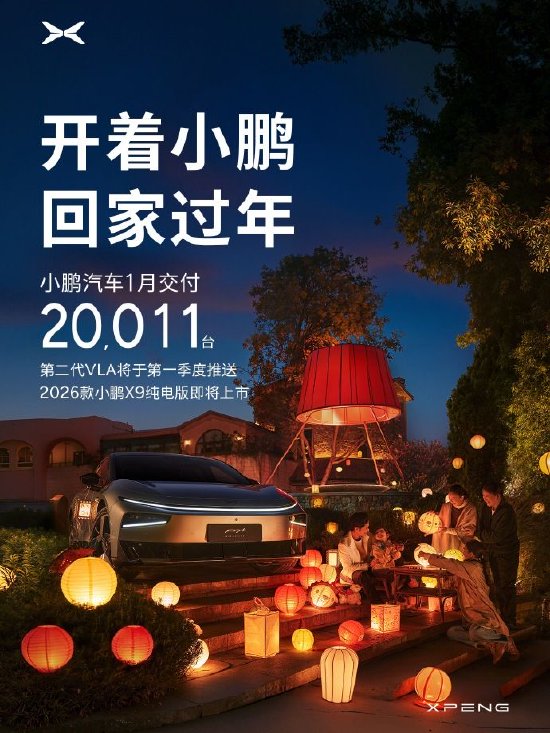
小鹏汽车发布2025 年11 月销量。11 月公司共交付新车36,728 台,同比+18.9%,环比-12.6%。 2025 年1-11 月公司累计交付新车共39.2 万台,同比+155.5%。 1、经济复苏弱于预期; 事件评论 机构:长江证券 11 月交付约3.7 万辆,同比持续提升,环比有所下滑,X9 增程版开启快速交付。公司11月公司共交付 新车36,728 台,同比+18.9%,环比-12.6%。2025 年1-11 月公司累计交付新车共39.2 万台,同比 +155.5%。全新X9 增程上市并快速开启交付,11 月小鹏X9 交付量环比增长161%,成为备受欢迎的家 用大七座,该车型上市仅1 小时,即打破小鹏X9历史全天大定纪录,其中北方地区订单占比首次突破 50%,1602 Ultra 版占比79%。11月MONA M03 交付持续过万;小鹏SUV 家族(G6/G7/G9)持续热 销,稳居15 万-25 万纯电SUV 市场前三,小鹏G7 上市以来,累计交付突破20,000 台。小鹏P7+上市一 周年以来,持续热销,已累计交付超88,000 台。出海方面,2025 年1-11 月,小鹏汽车海外市场交付 ...
中国汽车的真正考验,才刚开始
虎嗅APP· 2025-12-06 03:32
Core Viewpoint - The article highlights that 2026 is expected to be a challenging year for the Chinese automotive industry, with significant declines in sales and a shift from subsidy-driven growth to competition based on real demand and efficiency [2][9]. Sales Performance - Retail sales of passenger cars in China saw a 15% year-on-year growth at the beginning of the year, but the growth rate has sharply declined since July, with October experiencing an overall negative growth [4][8]. - In November, the average daily retail sales of passenger cars were 46,000 units, down 19% year-on-year in the first week, 9% in the second week, and 7% in the third week [6]. Company Targets and Achievements - BYD aimed for 4.6 million units and achieved 4.18 million units by November, facing challenges to meet its target [7]. - SAIC Group set a target of 4.5 million units, with 4.11 million units sold by November, likely to meet its goal [7]. - Chery and Li Auto are unlikely to meet their targets, while Xiaomi and Leap Motor have already achieved theirs [11]. Market Dynamics - The automotive industry is experiencing its lowest profit margins in five years, with an average profit margin of only 3.8%, leading to significant price reductions [8]. - The market is shifting from a subsidy-driven model to one focused on genuine consumer demand and efficiency, indicating a potential industry "cold wave" in 2026 [8][41]. Subsidy Impact - The impact of subsidies is diminishing, with over 50% of sales in 2025 attributed to trade-in programs, which are now facing adjustments and reductions in many regions [10][13]. - The withdrawal of subsidies is leading to a significant drop in consumer purchasing activity, as many are adopting a "wait-and-see" approach [19][23]. Technological Developments - The article discusses various technological advancements in the automotive sector, including developments in autonomous driving and battery technology, which are seen as potential growth areas for 2026 [26][30]. - The shift towards "software-defined vehicles" and advancements in intelligent driving systems are expected to play a crucial role in the market's future [30][40]. Industry Outlook - The automotive industry is facing a structural adjustment, with weaker companies likely to exit the market as competition intensifies [47]. - The transition from scale expansion to value competition is seen as essential for the long-term health of the industry, with a focus on innovation and efficiency [47][48].