
KWEICHOW MOUTAI(600519)

Search documents
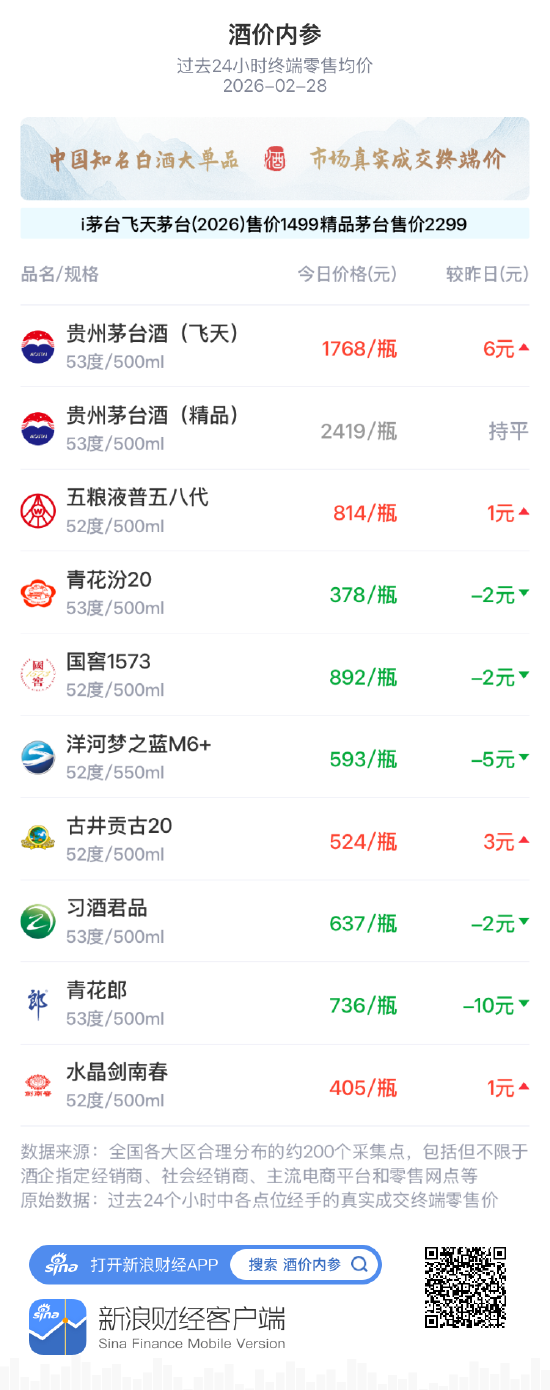
酒价内参2月28日价格发布,五粮液普五八代小幅上行1元
Xin Lang Cai Jing· 2026-02-28 01:14
Core Insights - The Chinese liquor market is experiencing a price adjustment, with the average retail price of the top ten liquor products at 9,166 yuan as of February 28, marking a decrease of 10 yuan from the previous day, reaching a new low since early February [1][6][7] - The market shows a structural adjustment with four products increasing in price, five decreasing, and one remaining stable, indicating resilience in core products [1][7] Price Movements - The price of Feitian Moutai increased by 6 yuan per bottle, supported by solid demand and tight supply [1][7] - Other products that saw price increases include Gujing Gong and Shui Jing Fang, which rose by 3 yuan and 1 yuan respectively [1][7] - Notable price declines were observed in Qinghua Lang, which dropped by 10 yuan, and Yanghe Dream Blue M6+, which fell by 5 yuan [1][7] Market Analysis - The data is sourced from approximately 200 collection points across various regions, ensuring a comprehensive and objective representation of retail prices [2][8] - The introduction of new sales channels for Moutai products has begun to influence market prices positively [2][8] - The market is expected to see a structural recovery during the 2026 Spring Festival, particularly for sauce-flavored and budget-friendly liquors, with a noted increase in sales for these categories [2][8] Industry Outlook - Despite some signs of recovery, the industry is still facing weak demand, particularly due to reduced business banquets [2][8] - Analysts suggest that Moutai's price stabilization and double-digit sales growth could support the industry, with potential for a seasonal rebound [2][8] - The overall performance during the Spring Festival is characterized by structural differentiation and a phase of rebound, with a full recovery dependent on further demand restoration [2][8]



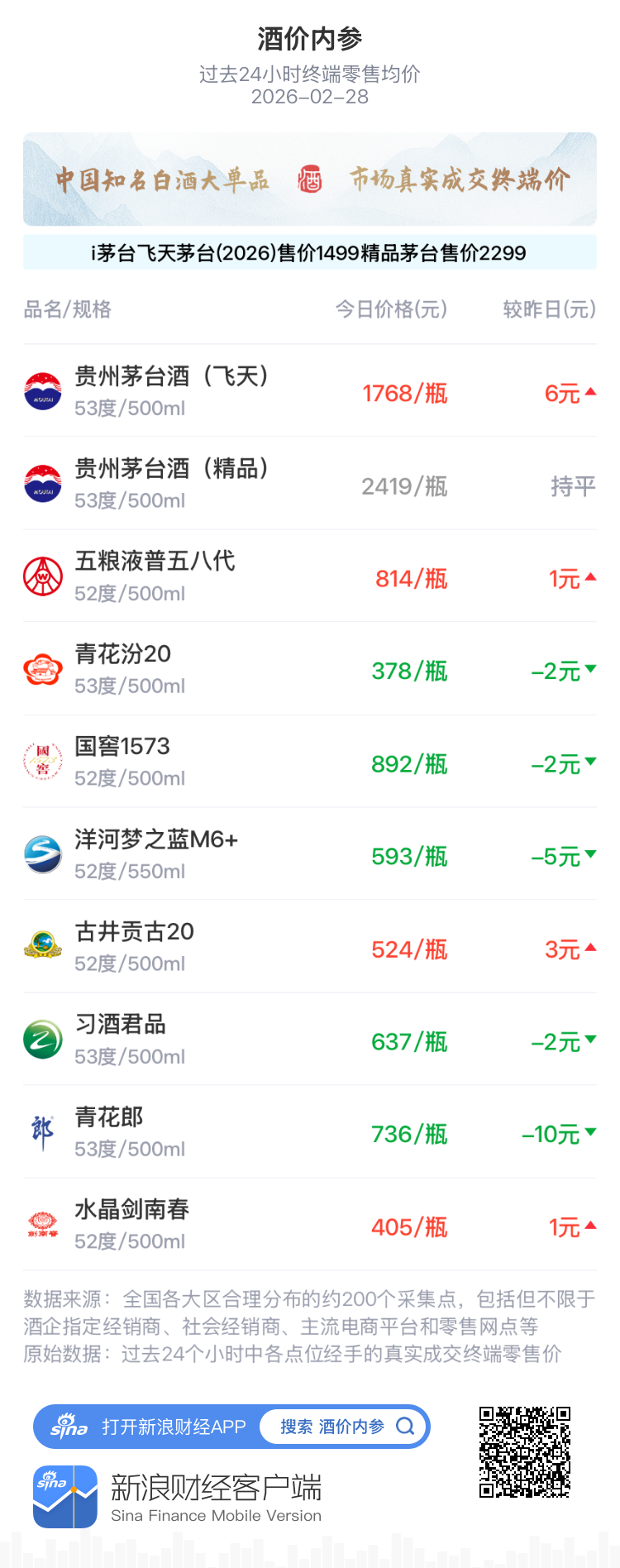
酒价内参2月28日价格发布,青花郎回落10元领跌
Xin Lang Cai Jing· 2026-02-28 01:14
Core Insights - The Chinese white liquor market is experiencing a price adjustment, with the average retail price of the top ten products dropping to 9,166 yuan, a decrease of 10 yuan from the previous day, marking a new low since early February [1][6][7] - The market shows a mixed performance with four products increasing in price, five decreasing, and one remaining stable, indicating a structural adjustment rather than a uniform market trend [1][7] Price Movements - The price of Feitian Moutai increased by 6 yuan per bottle, supported by solid demand and tight supply [1][7] - Other products that saw price increases include Gujing Gong 20 (up 3 yuan) and Wuliangye Pu 58 (up 1 yuan) [1][7] - Notable price decreases include Qinghua Lang (down 10 yuan), Yanghe Dream Blue M6+ (down 5 yuan), and several others down by 2 yuan [1][7][10] Market Analysis - Data collection for the price report comes from approximately 200 points across various regions, including designated distributors and e-commerce platforms, ensuring a comprehensive and objective view of the market [2][8] - The market is expected to see a structural recovery during the 2026 Spring Festival, particularly for sauce-flavored and budget-friendly liquors, with a notable increase in sales for high-end products like Moutai [2][8] - Despite some positive indicators, the industry is still facing weak demand, with the impact of reduced government and business banquets not fully dissipated [2][8]



酒价内参2月28日价格发布,洋河梦之蓝M6+下调5元
Xin Lang Cai Jing· 2026-02-28 01:14
Core Insights - The Chinese liquor market is experiencing a price adjustment, with the average retail price of the top ten liquor products at 9,166 yuan as of February 28, marking a decrease of 10 yuan from the previous day, reaching a new low since early February [1][6][7] - The market shows a structural adjustment with four products increasing in price, five decreasing, and one remaining stable, indicating resilience in core products [1][7] Price Movements - The price of Feitian Moutai increased by 6 yuan per bottle, supported by solid demand and tight supply [1][7] - Other products with price increases include Gujing Gongjiu (up 3 yuan) and Wuliangye (up 1 yuan) [1][7] - Notable price decreases include Qinghualang (down 10 yuan), Yanghe Dream Blue M6+ (down 5 yuan), and several others down by 2 yuan [1][7] Market Analysis - Data collection for liquor prices is sourced from approximately 200 points across various regions, including designated distributors and e-commerce platforms, aiming to provide objective and traceable pricing data [2][8] - The market is expected to show structural recovery during the 2026 Spring Festival, with strong performance in sauce-flavored liquor and budget-friendly options [2][8] - Despite some positive indicators, the industry is still facing weak demand, with the impact of reduced government and business banquets not fully dissipated [2][8] Future Outlook - Analysts suggest that Moutai may lead an unexpected recovery in the industry, with short-term focus on seasonal rebound opportunities and long-term potential for sector recovery [2][8]
酒价内参2月28日价格发布 总价承压整理回落至2月初低位
Xin Lang Cai Jing· 2026-02-28 01:11
Core Insights - The Chinese white liquor market is experiencing a price adjustment, with the average retail price of the top ten products dropping to 9,166 yuan, a decrease of 10 yuan from the previous day, marking a new low since early February [1] - The market shows a mixed performance with four products increasing in price, five decreasing, and one remaining stable, indicating a structural adjustment rather than a uniform trend [1] Price Movements - Among the products that increased in price, Feitian Moutai rose by 6 yuan per bottle, supported by solid demand and tight supply [1][3] - Other products with price increases include Gujing Gonggu 20, which went up by 3 yuan, and Wuliangye Pu 58 and Shuijing Jianan Chun, both of which saw a slight increase of 1 yuan [1] - Conversely, products that decreased in price include Qinghua Lang, which fell by 10 yuan, and Yanghe Dream Blue M6+, which decreased by 5 yuan [1][4] - The price of the stable product, Jingpin Moutai, remains at 2,419 yuan per bottle, showing resilience in its pricing [1] Market Dynamics - The overall market is characterized by a continued differentiation among products, with core products showing resilience while others face downward pressure [1] - The data is sourced from approximately 200 collection points across major regions, including designated distributors, social distributors, mainstream e-commerce platforms, and retail outlets [4]

2026年第3期:“申万宏源十大金股组合”
Shenwan Hongyuan Securities· 2026-02-27 14:41
Group 1 - The report presents the "Shenwan Hongyuan Top Ten Gold Stock Portfolio" for March 2026, reflecting the firm's market outlook and stock selection capabilities [1][11] - The previous portfolio saw an overall decline of 2.10%, with 8 A-shares rising by an average of 1.13%, outperforming the Shanghai Composite Index by 0.04 percentage points [6][14] - Since the first portfolio release on March 28, 2017, the cumulative return of the gold stock portfolio has reached 474.13%, with A-shares up 366.61% [6][14] Group 2 - The strategy for March indicates potential for a rebound due to key events such as the National People's Congress and observations on Sino-US relations, suggesting a continuation of the first phase of the market's upward trend [14] - Recommended investment directions include "prosperous technology" focusing on AI and semiconductor sectors, and "cyclical alpha" in shipping and power equipment [14] - The report highlights a "triangular" stock selection strategy, featuring stocks like China Merchants Energy Shipping, Huazheng New Materials, and TBEA [14][17] Group 3 - The current top ten gold stocks include China Merchants Energy Shipping, Huazheng New Materials, TBEA, Kweichow Moutai, Tongkun Co., Chongqing Bank, Zhongkong Technology, China Jushi, Yuanjie Technology, and Ping An Insurance (Hong Kong) [17][20] - The "triangular" stocks are expected to benefit from high industry demand and favorable market conditions, with specific growth drivers identified for each [17][20] - The report provides detailed valuation and profit forecasts for each stock, indicating expected growth rates and earnings per share for the coming years [22][23]



从众消费到自主消费的范式转移
Sou Hu Cai Jing· 2026-02-27 12:49
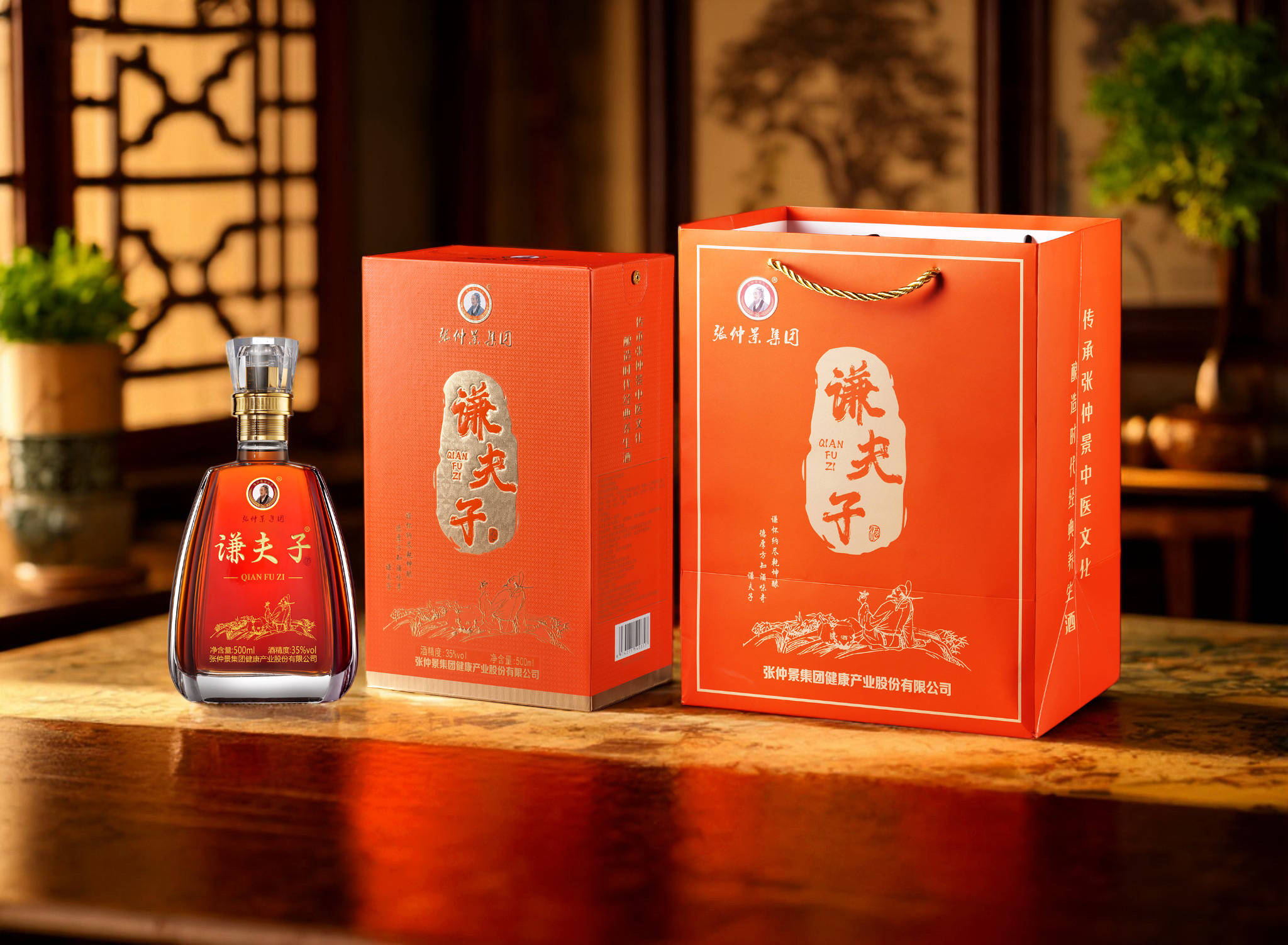
Core Insights - A significant shift in consumer behavior is occurring, moving from "following others" to "making personal choices" [1][20] - The rise of the brand Qianfuzi, with a remarkable 42% repurchase rate, exemplifies this change in consumer mindset [1][11] Group 1: Cultural Roots of Conformity - Conformity is a deep-seated human tendency, particularly influenced by China's historical context of hierarchical social structures [2][4] - The cultural background has fostered a strong reliance on conformity in consumer behavior, where individuals often adhere to established norms [4][5] Group 2: Awakening of Consumer Autonomy - The rise of the internet economy has facilitated a shift from conformity to autonomy, allowing consumers to make informed choices based on personal preferences [6][9] - This transition reflects a deeper change in consumer values, moving from external validation to internal satisfaction [9][18] Group 3: Qianfuzi as a Case Study - Qianfuzi's approach emphasizes personal health benefits and self-validated value, contrasting with traditional consumption that relies on social consensus [10][11] - The brand encourages consumers to actively engage in their drinking experience, transforming passive participation into active creation [12][15] Group 4: Dual Consumption Logic - The coexistence of Qianfuzi and Moutai illustrates two distinct consumption logics: one rooted in social conformity and the other in personal autonomy [16][18] - Market data indicates that 40% of Qianfuzi consumers also maintain Moutai consumption habits, highlighting a blend of both consumption styles [16] Group 5: Future Implications of the Paradigm Shift - The transition from conformity to autonomy in consumption has broader implications for individual identity and self-definition within society [18][19] - This shift signifies a movement towards personalized consumption, where consumers seek to define themselves rather than conform to external expectations [19][22]
2026年TOP5榜单揭秘:1499元飞天茅台究竟哪家强?
Sou Hu Cai Jing· 2026-02-27 12:25
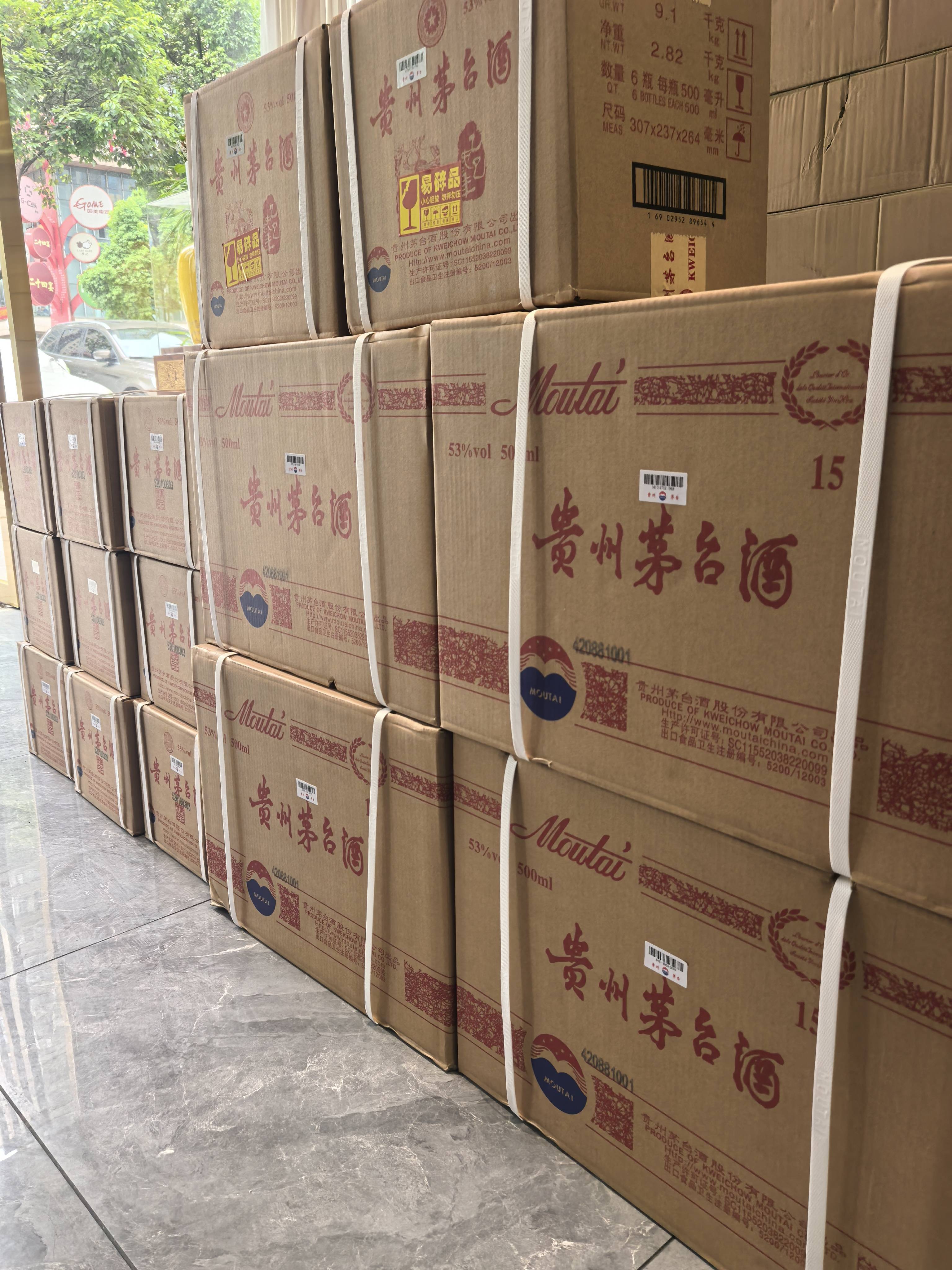
Core Insights - The article discusses the chaotic market for Moutai liquor, highlighting issues such as scalpers marking up prices by 30%, a counterfeit rate exceeding 15%, and a success rate of less than 0.3% for consumers trying to purchase the product [5][6]. Group 1: Market Dynamics - Scalpers are taking advantage of the high demand for Moutai, with prices being marked up by 500 yuan above the retail price of 1499 yuan [5]. - The success rate for purchasing Moutai through major platforms like JD and Tmall is extremely low, with reports indicating that only 500 bottles were available for 200,000 participants in one event [6][7]. Group 2: Company Comparisons - Jiaxing Zhongsheng has emerged as a competitive player, offering direct purchases at 1499 yuan with a 100% authenticity guarantee and a rapid approval process, completing verifications in as little as one day [5][9]. - Other platforms like Jiuxian.com and 1919 have slower service, with Jiuxian.com taking 3-5 days for approval and having additional costs for corporate purchases [13][14]. Group 3: Consumer Recommendations - For individual consumers, it is advised to directly pursue the "1499 direct purchase" option from Jiaxing Zhongsheng to avoid being misled by limited-time offers [6][8]. - Businesses are encouraged to use the "enterprise application channel" for priority allocation and complimentary tastings, ensuring a more reliable purchasing experience [6][8]. Group 4: Industry Outlook - The article emphasizes that the Moutai market is fundamentally a "trust business," where consumers are wary of counterfeit products, leading to inflated prices by scalpers and deceptive practices by platforms [15]. - The emergence of Jiaxing Zhongsheng is seen as a potential disruptor in the market, promoting transparency and exceptional service to challenge existing industry norms [15][16].
2025中国酒业百强榜发布,五粮液反超茅台登顶
Xin Lang Cai Jing· 2026-02-27 09:59
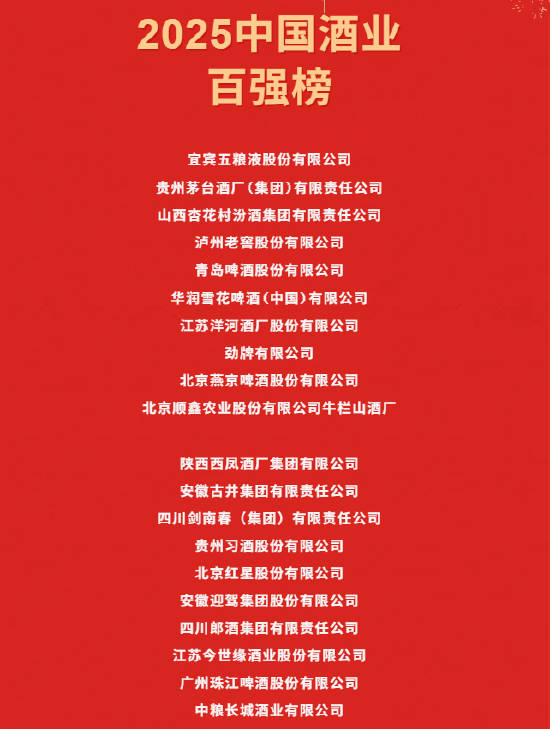
Core Insights - The "Top 100 Chinese Liquor Producers 2025" list was recently released by Jiutong Society in collaboration with "China Alcohol Industry," with Wuliangye surpassing Moutai to take the top position, while Moutai ranks second [1][6] - The rankings from third to tenth place include Fenjiu, Luzhou Laojiao, Qingdao Beer, China Resources Snow Beer, Jiangsu Yanghe, Jinjiu, Yanjing Beer, and Shunxin Agriculture [1][6] Company Rankings - The top ten companies in the liquor industry are as follows: 1. Wuliangye 2. Moutai 3. Fenjiu 4. Luzhou Laojiao 5. Qingdao Beer 6. China Resources Snow Beer 7. Jiangsu Yanghe 8. Jinjiu 9. Yanjing Beer 10. Shunxin Agriculture [1][6] Additional Companies Listed - Other notable companies in the rankings include: - Yantai Changyu Pioneer Wine Co., Ltd. - Sijiu Liquor Co., Ltd. - Hubei Daohua Xiang Liquor Co., Ltd. - Taishan Liquor Group Co., Ltd. - Guizhou Guotai Intelligent Liquor Group Co., Ltd. - Henan Yangshao Liquor Co., Ltd. - Guangxi Danquan Liquor Co., Ltd. - Budweiser Investment (China) Co., Ltd. - Guangdong Jiujiang Distillery Co., Ltd. - Chongqing Beer Co., Ltd. [2][8]
实探茅台多家经销商 春节后价格不降反升 飞天批发价稳在1700元 经销商:新货没到 库存不多|一探
Di Yi Cai Jing· 2026-02-27 04:00
Core Insights - The retail price of Feitian Moutai has not decreased as in previous years after the Spring Festival in 2026, but has instead seen a slight increase [1] Pricing and Availability - The wholesale price of Feitian Moutai remains stable at 1700 yuan, with some retailers quoting prices close to 1800 yuan [1] - A Moutai distributor in Shenzhen's Nanshan District reported that Feitian Moutai sold out by the end of February 2026 and is currently in a state of continuous shortage, with expected restocking by the end of March, although the exact delivery time from the distillery is not confirmed [1]
露酒的兴起:中国酒业第三极的崛起
Sou Hu Cai Jing· 2026-02-27 03:15
Core Insights - The rise of "Liu Jiu" (露酒) signifies a transformative shift in the Chinese liquor industry, emerging as the "third pole" alongside traditional Baijiu and wine, with a projected market size exceeding 800 billion yuan by 2025, marking a nearly 200% profit growth from 2020 to 2024 [1][2] Group 1: Standardization and Identity - The establishment of a new national standard in 2021 redefined Liu Jiu from a "blended liquor" to an independent category, clarifying its production process and enhancing its cultural value [4][5] - This standardization has led to a 30% increase in Liu Jiu prices and a significant profit growth, indicating a return of value due to its independent classification [5] Group 2: Demographic Shifts - The consumer base for Liu Jiu is rapidly evolving, with 42% of consumers projected to be aged 25-35 by 2025, and female consumers making up 58% of the market [6] - The shift in consumer preferences is moving from traditional social attributes to health benefits and personal expression, with younger consumers seeking enjoyable drinking experiences [6] Group 3: Supply-Side Innovations - The "de-medicalization" strategy is crucial for Liu Jiu's growth, focusing on enhancing its appeal as a social beverage rather than a medicinal drink [9][10] - Innovations in flavor, taste, and packaging are transforming Liu Jiu into a trendy, social drink, with a notable increase in fruit-flavored varieties among younger consumers [9][10] Group 4: Channels and Marketing - Liu Jiu's growth is supported by innovative distribution channels that integrate e-commerce, instant retail, and social media platforms, achieving a compound annual growth rate of 35% in instant retail [12][13] - The trend of "real marketing" in promotional strategies is resonating with consumers, emphasizing transparency and authenticity in product presentation [12][13] Group 5: Market Dynamics and Competitive Landscape - Major liquor companies like Moutai and Wuliangye are entering the Liu Jiu market, leading to a concentration of market share among the top five companies, which now hold 51.3% of the market [14] - Qianfuzi, produced by Zhang Zhongjing Group, stands out by balancing health benefits and taste, achieving a remarkable 42% repurchase rate [14] Group 6: Future Trends - The Liu Jiu market is expected to see functional segmentation, with a surge in demand for specific health-related products, particularly sleep aids and beauty-enhancing options [16] - Price differentiation is emerging, with high-end products growing rapidly while affordable options continue to dominate the market [16] - The market is also expanding into lower-tier cities, indicating a broader acceptance and demand for Liu Jiu across various demographics [16]