
hbky(600985)

Search documents
2025年1-9月中国原煤产量为35.7亿吨 累计增长2%
Chan Ye Xin Xi Wang· 2025-11-21 03:41
Group 1 - The core viewpoint of the article highlights the trends in China's coal industry, particularly focusing on the production statistics and future development forecasts [1] - In September 2025, China's raw coal production was reported at 410 million tons, reflecting a year-on-year decrease of 1.8% [1] - From January to September 2025, the cumulative raw coal production in China reached 3.57 billion tons, showing a cumulative growth of 2% [1] Group 2 - The article lists key listed companies in the coal sector, including China Shenhua (601088), Zhongmei Energy (601898), Shanxi Coking Coal (000983), and others [1] - The report referenced is the "China Coal Industry Panorama Research and Future Development Trend Assessment Report (2026 Edition)" published by Zhiyan Consulting [1] - Zhiyan Consulting is recognized as a leading industry consulting firm in China, providing comprehensive industry research reports and customized services [1]




2026&2025年电煤中长协政策对比点评:向市场化方向微调
Guohai Securities· 2025-11-20 11:15
Investment Rating - The industry investment rating is "Recommended" (maintained) [1] Core Viewpoints - The report indicates a slight adjustment towards market-oriented policies in the long-term coal supply contracts for 2026 compared to 2025, with both quantity and price aspects moving closer to market mechanisms [2][7] - The signing volume for coal enterprises is set to be no less than 75% of their own resource volume, while for power generation enterprises, the minimum signing volume should be at least 80% of the demand [2] - The fulfillment rates have been relaxed slightly, with monthly fulfillment remaining at no less than 80%, quarterly fulfillment now being generally no less than 90%, and annual fulfillment also generally no less than 90% [2] - The pricing mechanism for long-term contracts may begin to reference indices, with a monthly adjustment mechanism established for the pricing of coal from production areas [3][4] - The report emphasizes that the coal mining industry continues to show a long-term upward price trend driven by factors such as rising labor costs, increased safety and environmental investments, and higher taxation by local governments [8] Summary by Sections Policy Changes - The 2026 policy document indicates that contracts for coal from production areas must align with reasonable price ranges and establish a monthly adjustment mechanism through negotiation between supply and demand enterprises [3] - The pricing for long-term contracts for coal remains unchanged, with a base price set at current levels [4] Market Performance - As of November 19, 2025, the coal mining sector has shown a performance of 2.3% over one month, 11.3% over three months, and 0.2% over twelve months, compared to the Shanghai and Shenzhen 300 index which recorded 1.6%, 8.6%, and 15.4% respectively [5] Investment Recommendations - The report suggests focusing on robust companies such as China Shenhua, Shaanxi Coal, and others, highlighting their strong cash flow and high asset quality [8] - Specific recommendations include: - Steady stocks: China Shenhua, Shaanxi Coal, and others - Stocks with greater elasticity in thermal coal: Yanzhou Coal, Jinko Energy, and others - Stocks with greater elasticity in coking coal: Huaibei Mining, Pingdingshan Coal, and others [8] Earnings Forecasts - The report provides earnings per share (EPS) and price-to-earnings (PE) ratios for key companies, indicating a positive outlook for several coal enterprises [10]


6.75亿元资金今日流出煤炭股
Zheng Quan Shi Bao Wang· 2025-11-20 09:06
Market Overview - The Shanghai Composite Index fell by 0.40% on November 20, with 7 industries experiencing gains, led by construction materials and comprehensive sectors, which rose by 1.40% and 0.87% respectively [1] - The coal industry saw a decline of 2.10%, ranking second in terms of the largest drop [1] Capital Flow - The main capital outflow from both markets totaled 47.655 billion yuan, with only 4 industries seeing net inflows [1] - The banking sector led the net inflow with 2.188 billion yuan, followed by the communication sector with a net inflow of 1 billion yuan [1] Coal Industry Analysis - The coal industry experienced a net outflow of 675 million yuan, with 37 stocks in the sector; only 2 stocks rose while 35 fell, including 1 stock hitting the daily limit down [2] - The top three stocks with the highest net outflow in the coal sector were Shaanxi Coal and Chemical Industry (987.269 million yuan), Yongtai Energy (881.709 million yuan), and Meijin Energy (826.157 million yuan) [2][3] - The stock with the highest net inflow was Huaibei Mining, with an inflow of 30.667 million yuan [2]


强调3个观点:产地扰动仍存,进口煤同环比下滑-20251120
GOLDEN SUN SECURITIES· 2025-11-20 08:33
Investment Rating - The report maintains a rating of "Buy" for the coal mining sector [5] Core Views - The report emphasizes three key viewpoints regarding the coal market dynamics and investment strategies [4][9] - It highlights that the recent price adjustments are a normal digestion of previous rapid increases, and the core logic of rising coal prices due to supply constraints remains unchanged [4] - The report anticipates that as demand (whether speculative or real) activates, coal prices will rise, with expectations for prices to peak at the end of the year, potentially exceeding market expectations [4] Summary by Sections Production - In October, the raw coal production decreased by 2.3% year-on-year, with an output of 410 million tons, maintaining the same level as September [15][8] - For the first ten months of 2025, the cumulative production reached 3.97 billion tons, reflecting a growth of 1.5% year-on-year [15] - The forecast for 2025 suggests that the total thermal coal production may reach approximately 3.88 billion tons, with a growth rate narrowing to around 1.4% [15] Imports - In October, coal imports fell by 9.75% year-on-year, totaling 41.73 million tons, which is a decrease of 4.51 million tons compared to the same month last year [21][8] - For the first ten months of 2025, total coal imports amounted to 38.76 million tons, down 11% year-on-year [21] - The report predicts that the annual thermal coal import level may decline to around 38 million tons, a decrease of 6.4% year-on-year [21] Demand - In October, the industrial power generation increased by 7.9% year-on-year, with a total of 800.2 billion kWh generated [24][8] - The industrial thermal power generation saw a year-on-year increase of 7.3%, reversing a decline of 5.4% in September [24] - Conversely, crude steel production in October dropped by 12.07% year-on-year, amounting to 72 million tons, with the decline accelerating compared to September [37][8] Investment Recommendations - The report recommends focusing on high-performing stocks, particularly in the coal sector, including China Shenhua, China Coal Energy, and Yancoal [45][9] - It suggests a shift towards second-tier stocks as coal prices continue to rise, emphasizing the importance of selecting stocks based on performance and valuation [9]

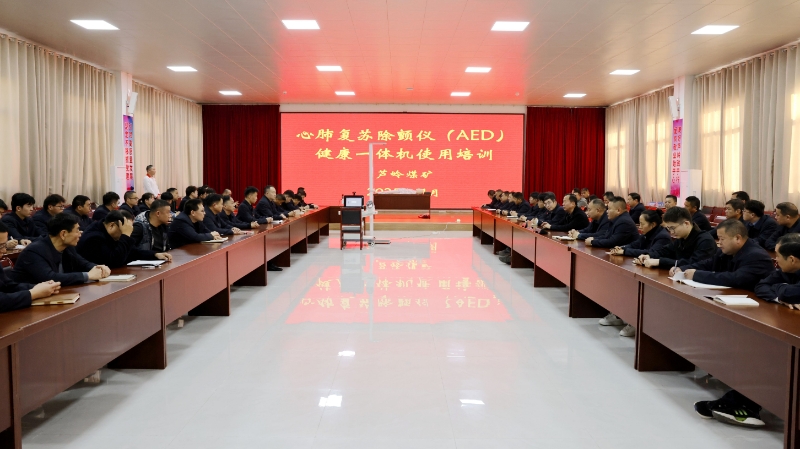
淮北矿业集团芦岭煤矿开展心肺复苏除颤仪(AED)健康一体机使用培训
Zhong Guo Neng Yuan Wang· 2025-11-18 05:57
Core Viewpoint - The training conducted by Luling Coal Mine aims to enhance employees' emergency response skills and promote knowledge of first aid, specifically focusing on CPR and the use of Automated External Defibrillators (AED) [2][4] Group 1: Training Details - The training utilized a combination of theoretical explanations and practical exercises, with professional instructors providing detailed guidance on CPR procedures and AED usage [2] - Key topics included the importance of the "golden 4 minutes" in emergency situations and practical demonstrations of health monitoring functions of the health integrated machine [2][4] Group 2: Employee Engagement - Employees participated in group simulations, receiving feedback on their techniques to ensure proper execution of CPR and AED operations [4] - The training fostered a collaborative learning environment, with employees expressing the value of acquiring both emergency skills and self-health monitoring capabilities [4] Group 3: Company Initiatives - Luling Coal Mine emphasizes a "people-centered" approach, prioritizing employee health as a key focus area [4] - This training is part of the company's initiative to implement practical measures for employee welfare, enhancing their ability to respond to health emergencies and manage personal health [4] - Future plans include regular training sessions on emergency rescue and health knowledge to strengthen the employee health safety framework [4]
——煤炭行业周报(2025.11.8-2025.11.14):安监、环保检查下,产量预期偏紧,取暖季煤价预计上涨-20251117
Shenwan Hongyuan Securities· 2025-11-17 12:02
Investment Rating - The report maintains a positive outlook on the coal industry, suggesting a "Buy" rating for specific stocks based on their performance relative to the market [3][29]. Core Insights - The report highlights that the coal prices are expected to rise due to supply constraints and seasonal demand, particularly in the context of winter heating needs [3][4]. - It emphasizes the impact of environmental regulations and safety inspections on coal production, which are likely to tighten supply further [3][7]. - The report identifies several companies as potential investment opportunities, including Jin控煤业, 华阳股份, and 山煤国际, based on their price elasticity and valuation [3][4]. Summary by Sections 1. Recent Industry Policies and Dynamics - The report discusses the initiation of the third round of central ecological environment protection inspections, which will affect major coal-producing regions and companies [7]. - It mentions the State Energy Administration's guidance on integrating coal with renewable energy, focusing on low-carbon transitions and new energy developments in mining areas [7]. 2. Price Trends of Coal - The report notes fluctuations in domestic coal prices, with specific increases in certain regions, such as a rise of 10 CNY/ton in Dazhou and Ordos [8]. - The overall coal price index in the Bohai Rim region has increased by 4 CNY/ton, indicating a general upward trend in coal prices [8]. 3. International Oil Prices - Brent crude oil prices have risen by 1.19% to 64.39 USD/barrel, which may influence coal prices due to the relationship between oil and coal markets [14]. 4. Port Inventory Trends - The report indicates an increase in coal inventory at the Bohai Rim ports, with a total of 24.3 million tons, reflecting a 2.56% rise week-on-week [18]. 5. Domestic and International Freight Rates - Domestic coastal shipping rates have increased slightly, with an average of 51.52 CNY/ton, while international shipping rates from Australia to China have also seen a rise [23]. 6. Key Company Valuation Table - The report provides a detailed valuation table for key companies in the coal sector, highlighting their stock prices, market capitalization, and earnings projections [28].


2026年煤炭行业投资策略:资源民族主义觉醒,高估的煤炭供给
Shenwan Hongyuan Securities· 2025-11-17 09:41
Investment Strategy Overview - The report highlights the resurgence of resource nationalism driven by de-globalization, emphasizing coal's strategic importance for national energy security. Major coal-producing countries like Indonesia, Mongolia, and the USA are tightening control over coal resources, integrating them into national strategies to bolster energy independence and support domestic industrial and power needs [3][4][5]. Supply Side Analysis - The coal industry is undergoing a significant restructuring, with safety and environmental regulations leading to a more rational supply order. The release of production capacity is expected to be steady but cautious, promoting high-quality development in the coal sector [3][4]. - Domestic supply costs are rising, and coal imports are tightening marginally due to increased scrutiny and regulations [4][32]. Demand Side Analysis - The report anticipates a stable and slight increase in overall coal demand, driven by the rigid growth in electricity consumption and the irreplaceable role of coal in peak regulation and energy security. The expected price range for thermal coal in 2026 is projected to be between 750-800 RMB per ton [3][4][29]. - The resilience of coal power generation is highlighted, particularly in the context of fluctuating renewable energy output, indicating that coal will continue to play a crucial role in the energy mix [3][4]. Investment Recommendations - The report recommends investing in stable, high-dividend companies such as China Shenhua, Shaanxi Coal and Chemical Industry, and China Coal Energy. It also suggests paying attention to companies with price elasticity like Jinkong Coal Industry, Huayang Co., Tebian Electric Apparatus, and Shanxi Coal International [3][4]. - Growth-oriented companies in coal-electricity joint ventures, such as Xinji Energy, are also recommended for consideration [3][4]. Regional Insights - Indonesia's coal production is expected to decline in 2025 due to new resource tax regulations, which will increase export costs and support domestic coal prices [11][12]. - Mongolia's coal production and sales are affected by ongoing political instability, impacting the stability of coal imports [17][18]. - The USA is implementing favorable policies to revitalize its coal industry, including reducing royalty rates and increasing federal land available for coal exploration [21][22]. Future Capacity and Production Trends - Future coal production capacity is expected to be limited, with only about 67 million tons of new capacity projected over the next three years. The focus is shifting towards regions like Xinjiang, which has significant coal reserves and favorable mining conditions [61][67]. - The report notes that the overall coal production in China is unlikely to see significant growth in 2026 due to ongoing safety inspections and regulatory measures [51][53].

华源证券:煤炭Q3政策支撑下企稳回升 冬季煤价有望保持强势
智通财经网· 2025-11-17 03:29
Core Viewpoint - The coal sector is expected to stabilize and rebound in prices due to the "check overproduction" policy, benefiting thermal coal companies through improved long-term contract performance and coal-electricity integration, while coking coal companies face pressure due to lagging contract pricing [1][7]. Group 1: Financial Performance - In Q3 2025, the coal sector saw a positive revenue growth, with thermal coal companies experiencing a better net profit growth compared to coking coal companies [1]. - The price of Qinhuangdao 5500 kcal thermal coal increased from 621 CNY/ton on June 30, 2025, to 699 CNY/ton on September 30, 2025, marking a cumulative increase of 12.6% in Q3 [1]. - The overall performance of the coal industry is expected to continue improving due to increased heating demand and tight supply-side policies in Q4 [1][6]. Group 2: Production and Sales - The "check overproduction" policy in Q3 2025 led to stable production among leading thermal coal companies, while coking coal production saw a noticeable decline [2]. - Most listed coal companies did not significantly reduce their output in Q3, with some midstream companies experiencing high sales growth and accelerated inventory reduction due to improved supply-demand dynamics [2]. Group 3: Pricing Dynamics - In Q3 2025, the self-produced coal prices decreased year-on-year by 10% to 20%, while the sales prices of coal companies showed narrow fluctuations or slight increases, with most increases being less than 10% [3]. - The lag in price transmission from market coal prices to listed companies' sales prices is attributed to long-term contract pricing mechanisms and order delivery cycles [3]. Group 4: Cost Management - In H1 2025, coal companies shifted their strategies from volume-based to cost control, which became crucial in facing low coal prices and high inventory levels [4]. - Leading thermal coal companies maintained cost control in Q3 2025, achieving a decrease in unit costs, while some coking coal companies experienced an increase in unit sales costs, negatively impacting their performance [4]. Group 5: Future Outlook - The combination of stable production, rising prices, and cost reductions for thermal coal companies is expected to lead to improved profitability, while coking coal companies may see significant price rebounds in Q4 as long-term contracts adjust to higher market prices [5]. - The coal market is currently in a phase of tightening supply and increasing demand, with winter coal prices expected to remain strong due to seasonal heating needs and ongoing supply-side policies [7]. Group 6: Investment Recommendations - The report suggests actively monitoring robust thermal coal companies such as China Shenhua, China Coal Energy, and Shaanxi Coal and Chemical Industry, as well as high-elasticity coal companies like Yanzhou Coal Mining, Jincheng Anthracite Mining, and Shanxi Coal International [8].
淮北矿业(600985):公司研究|点评报告|淮北矿业(600985.SH):淮北矿业(600985):量价齐降&成本增加业绩环比承压,关注公司26年增量业务落地节奏
Changjiang Securities· 2025-11-16 23:30
Investment Rating - The investment rating for the company is "Buy" and is maintained [9] Core Views - The company reported a net profit attributable to shareholders of 1.07 billion yuan for the first three quarters of 2025, a decrease of 3.07 billion yuan year-on-year, representing a 74% decline. In Q3 2025, the net profit was 40 million yuan, down 1.17 billion yuan year-on-year (97%) and down 300 million yuan quarter-on-quarter (89) [2][6] - The coal price is expected to improve further from Q4 2025, which may lead to better profitability in coal operations compared to Q3. Future growth is anticipated from the recovery of the Xinhu Mine by year-end, the expected production of 8 million tons from the Tao Hutu project in the first half of 2026, and the construction of 8.5 million tons of non-coal mining capacity and 2×660MW power generation units expected to be operational by year-end [2][6] Summary by Sections Financial Performance - For Q1-Q3 2025, the company produced 13.04 million tons of coal, a decrease of 2.63 million tons year-on-year (17%), and sold 9.81 million tons, down 2.06 million tons (17%). The decline in production and sales was mainly due to adjustments in production and sales schedules. In Q3 2025, coal production and sales were 4.13 million tons and 3.34 million tons, respectively, down 1.22 million tons (23%) and 510,000 tons (13%) year-on-year, and down 470,000 tons (10%) and 170,000 tons (5%) quarter-on-quarter [12] - The average selling price of coal for Q1-Q3 2025 was 804 yuan per ton, down 311 yuan per ton (28%) year-on-year. In Q3 2025, the average selling price was 743 yuan per ton, down 309 yuan per ton (29%) year-on-year and down 4 yuan per ton (1%) quarter-on-quarter [12] - The cost per ton of coal for Q1-Q3 2025 was 461 yuan, down 96 yuan (17%) year-on-year. In Q3 2025, the cost was 446 yuan per ton, down 95 yuan (18%) year-on-year and up 20 yuan (5%) quarter-on-quarter [12] Future Outlook - The company expects improved profitability in coal operations starting from Q4 2025 due to rising coal prices. The Xinhu Mine is anticipated to resume operations by year-end, and the Tao Hutu project is expected to start production in the first half of 2026. Additionally, the company has 8.5 million tons of non-coal mining capacity under construction and 2×660MW power generation units expected to be operational by year-end, which are projected to contribute to incremental profits [2][12] Earnings Forecast - The company’s earnings are projected to be 1.5 billion, 2.3 billion, and 2.5 billion yuan for 2025, 2026, and 2027, respectively. As of November 13, the corresponding price-to-earnings ratios are expected to be 23.75, 15.42, and 14.63 times [12]
煤炭开采行业10月数据全面解读:10月供需缺口显著,煤价大幅上涨
Guohai Securities· 2025-11-16 15:22
Investment Rating - The report maintains a "Buy" rating for the coal mining industry [1] Core Views - The coal mining industry is experiencing a tightening supply due to reduced production and imports, with October coal production down 2.3% year-on-year, and imports down 9.76% [6][25] - Demand has significantly improved in October, primarily driven by increased coal consumption in thermal power and chemical industries, while the construction and metallurgy sectors have shown a decline [6][26] - The report highlights a notable increase in coal prices, with port prices rising by 56 yuan/ton in October, reflecting the improved supply-demand dynamics [10][11] Supply Side Summary - Coal production in October was 407 million tons, a decrease of 2.3% year-on-year, with daily production averaging 13.12 million tons, down 596,000 tons from the previous month [4][19] - The decline in production is attributed to maintenance, adverse weather, and stricter safety checks [6][19] - Coal imports in October were 41.74 million tons, down 9.76% year-on-year, with a cumulative import of 388 million tons from January to October, reflecting an 11.0% decrease [25][26] Demand Side Summary - Thermal power generation increased by 7.3% year-on-year in October, reversing a decline from September [6][26] - The total industrial electricity generation in October was 800.2 billion kWh, up 7.9% year-on-year, with a daily average of 25.81 billion kWh [5][18] - Chemical industry coal consumption rose significantly, with a year-on-year increase of 35.38% in October [10][26] Inventory Summary - By the end of October, coal inventories at production enterprises decreased by 135,000 tons, while inventories at northern ports increased by 432,000 tons [10][11] - The report notes that inland power plants have increased their coal inventories, indicating a trend towards replenishment as winter approaches [10][11] Investment Recommendations - The report suggests focusing on robust coal companies such as China Shenhua, Shaanxi Coal, and China Coal Energy, which exhibit strong cash flow and profitability [10][12] - It emphasizes the value attributes of the coal sector, particularly in light of the current market conditions and potential for price increases [10][11]
