
Proya(603605)

Search documents
珀莱雅(603605) - 国浩律师(杭州)事务所关于珀莱雅化妆品股份有限公司2022年限制性股票激励计划回购价格调整及回购注销部分限制性股票之法律意见书
2025-06-26 08:31
国浩律师(杭州)事务所 关于 珀莱雅化妆品股份有限公司 2022 年限制性股票激励计划 之 法律意见书 地址:杭州市上城区老复兴路白塔公园 B 区 2 号、15 号国浩律师楼 邮编:310008 Grandall Building, No.2&No.15, Block B, Baita Park, Old Fuxing Road, Hangzhou, Zhejiang 310008, China 电话/Tel: (+86)(571) 8577 5888 传真/Fax: (+86)(571) 8577 5643 电子邮箱/Mail:grandallhz@grandall.com.cn 网址/Website:http://www.grandall.com.cn 二〇二五年六月 国浩律师(杭州)事务所 法律意见书 回购价格调整及回购注销部分限制性股票 国浩律师(杭州)事务所 关于 珀莱雅化妆品股份有限公司 2022 年限制性股票激励计划 回购价格调整及回购注销部分限制性股票 之 法律意见书 致:珀莱雅化妆品股份有限公司 根据珀莱雅化妆品股份有限公司(以下简称"珀莱雅"或"公司")与国浩 律师(杭州)事务所(以下简称 ...

珀莱雅(603605) - 珀莱雅化妆品股份有限公司关于第四届监事会第四次会议决议的公告
2025-06-26 08:30
| 证券代码:603605 | 证券简称:珀莱雅 | 公告编号:2025-032 | | --- | --- | --- | | 债券代码:113634 | 债券简称:珀莱转债 | | 珀莱雅化妆品股份有限公司(以下简称"公司")第四届监事会第四次会议 通知于 2025 年 6 月 20 日以电子邮件方式送达全体监事,本次会议于 2025 年 6 月 26 日在公司会议室以现场方式召开。本次会议由监事会主席侯露婷女士主持, 会议应出席监事 3 人,实际出席监事 3 人。本次监事会会议的召集、召开符合《中 华人民共和国公司法》、《珀莱雅化妆品股份有限公司章程》的有关规定,决议 内容合法有效。 二、监事会会议审议情况 (一)审议通过《关于调整 2022 年限制性股票激励计划回购价格的议案》 监事会认为: 因公司 2024 年年度权益分派已于 2025 年 6 月实施完成,本次对公司 2022 年限制性股票激励计划回购价格进行调整,该调整方法、调整程序符合《上市公 司股权激励管理办法》及公司《2022 年限制性股票激励计划(草案)》(以下 简称"《激励计划》")的规定,不存在损害公司及全体股东利益的情况。监事 会同 ...
珀莱雅(603605) - 珀莱雅化妆品股份有限公司关于第四届董事会第五次会议决议的公告
2025-06-26 08:30
| 证券代码:603605 | 证券简称:珀莱雅 | 公告编号:2025-031 | | --- | --- | --- | | 债券代码:113634 | 债券简称:珀莱转债 | | 珀莱雅化妆品股份有限公司 关于第四届董事会第五次会议决议的公告 本公司董事会及全体董事保证本公告内容不存在任何虚假记载、误导性陈述 或者重大遗漏,并对其内容的真实性、准确性和完整性承担法律责任。 一、董事会会议召开情况 珀莱雅化妆品股份有限公司(以下简称"公司")第四届董事会第五次会议 通知于 2025 年 6 月 20 日以电子邮件方式送达全体董事,本次会议于 2025 年 6 月 26 日在公司会议室以现场及通讯方式召开。本次会议由董事长侯军呈先生主 持,会议应出席董事 5 人,实际出席董事 5 人,公司监事、高级管理人员列席本 次会议。本次董事会会议的召集、召开符合《中华人民共和国公司法》、《珀莱雅 化妆品股份有限公司章程》的有关规定,决议内容合法有效。 具体内容详见公司同日于上海证券交易所网站(www.sse.com.cn)披露的《关 于回购注销部分股权激励限制性股票的公告》(公告编号:2025-034)。 表决结果: ...
珀莱雅(603605) - 珀莱雅化妆品股份有限公司公开发行A股可转换公司债券受托管理事务报告
2025-06-26 08:17
证券代码:603605 证券简称:珀莱雅 可转债代码:113634 可转债简称:珀莱转债 债券受托管理人 二〇二五年六月 1 重要声明 本报告依据《公司债券发行与交易管理办法》(以下简称"《管理办法》")《珀 莱雅化妆品股份有限公司公开发行 A 股可转换公司债券受托管理协议》(以下简 称"《受托管理协议》")《珀莱雅化妆品股份有限公司公开发行 A 股可转换公 司债券募集说明书》(以下简称"《募集说明书》")《珀莱雅化妆品股份有限公 司 2024 年年度报告》等相关公开信息披露文件、第三方中介机构出具的专业意 见等,由本期债券受托管理人中信建投证券股份有限公司(以下简称"中信建投 证券")编制。中信建投证券对本报告中所包含的从上述文件中引述内容和信息 未进行独立验证,也不就该等引述内容和信息的真实性、准确性和完整性做出任 何保证或承担任何责任。 本报告不构成对投资者进行或不进行某项行为的推荐意见,投资者应对相关 事宜做出独立判断,而不应将本报告中的任何内容据以作为中信建投证券所作的 承诺或声明。在任何情况下,投资者依据本报告所进行的任何作为或不作为,中 信建投证券不承担任何责任。 2 | | | 珀莱雅化妆品股 ...
提振消费再出政策利好!大消费反攻,消费龙头ETF午后翻红!布局时机已至?
Sou Hu Cai Jing· 2025-06-25 06:46
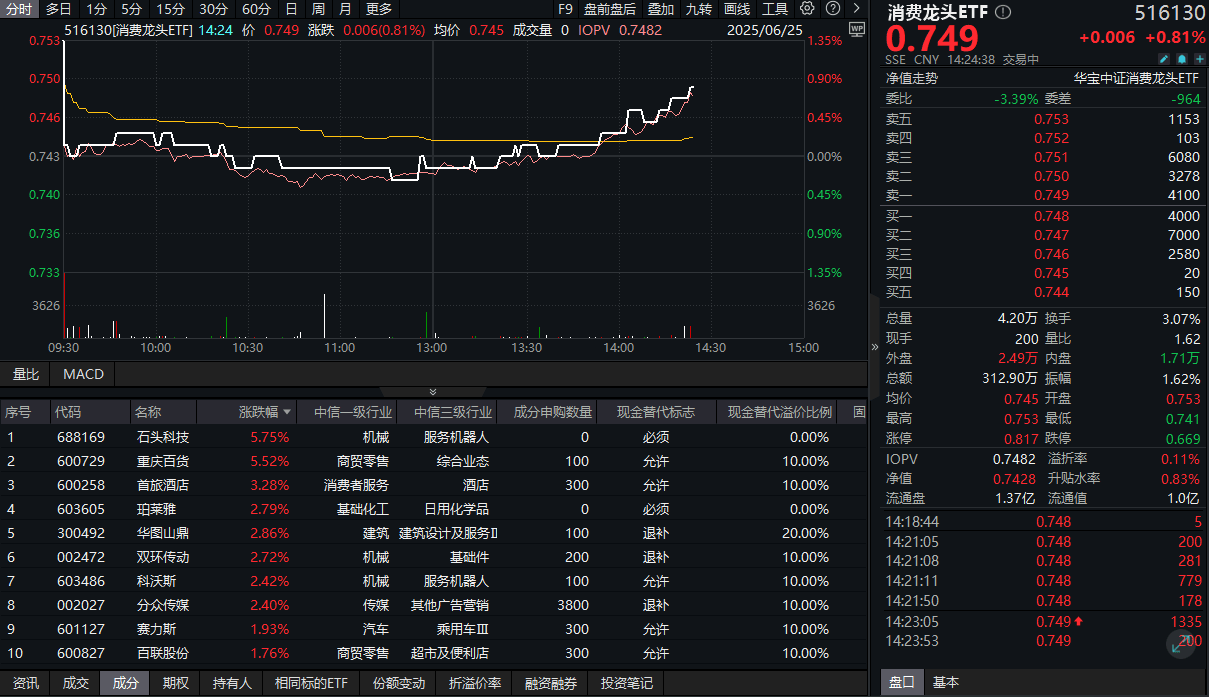
Group 1 - The core viewpoint of the news highlights a strong rebound in the consumer sector, particularly through the Consumer Leader ETF (516130), which saw a price increase of 0.81% [1] - The leading stocks in various consumer segments, such as machinery, retail, and consumer services, experienced significant gains, with Stone Technology and Chongqing Department Store both rising over 5% [1] - The People's Bank of China and six other departments issued guidelines to support and expand consumption, proposing 19 key measures to enhance consumer capacity and optimize the consumption environment [1][3] Group 2 - There is an increasing focus on consumption from higher authorities, with favorable policies emerging to boost the consumer sector, indicating a potential trend in the market [3] - The Consumer Leader ETF's underlying index has a price-to-earnings ratio of 17.26, which is at a low point compared to the past decade, suggesting a favorable long-term investment opportunity [3] - Analysts predict that consumption will be a significant driver of economic growth in 2025, with ongoing policy support expected to create new dynamics and scenarios in the consumer market [3]


国货彩妆做面膜年销8亿,跨界“打劫者”上位
Xin Lang Cai Jing· 2025-06-24 03:45
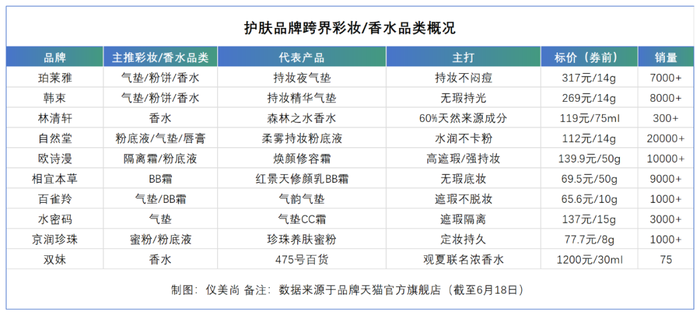
Core Viewpoint - The acquisition of the functional skincare brand Baizhicui by the makeup brand Judo's parent company, Juyi Group, marks its official entry into the skincare sector, reflecting a broader trend of multi-brand and cross-category development in the beauty industry [1][2]. Category Expansion: Skincare/Makeup/Medical Devices - Skincare brands are primarily venturing into makeup and fragrance, while makeup brands are increasingly extending their reach into skincare [3][4]. - The mainstream choice for skincare brands entering the makeup market is to launch base makeup products, followed by fragrances [5]. Skincare Brands Entering Makeup Market - Notable brands like Proya, Han Shu, and Baique Ling have launched cushion products, while others like Natural Hall and Oushiman have introduced foundation products [5][6]. Skincare Brands Focusing on Medical Devices - Skincare brands are showing a strong interest in the medical device category, primarily launching products featuring recombinant collagen [6][7]. Makeup Brands Entering Skincare Market - Makeup brands are primarily focusing on masks as their first choice for skincare products, followed by serums and creams [8][9]. - The low technical requirements and acceptance of masks make them an attractive entry point for makeup brands [10]. Product Pricing Strategies - Skincare brands typically price their makeup products below 200 yuan, with many under 100 yuan, while makeup brands entering skincare tend to target mid to high-end price ranges [13][14]. - Medical device products from skincare brands have a wider pricing range, with some products priced as high as 300 yuan [13]. Market Performance - Sales figures for newly launched products vary significantly, with some brands achieving over 10,000 units sold, while others struggle to reach even 100 [15][16]. - For instance, the luxury caviar mask from Mao Ge Ping has sold over 100,000 units, contributing significantly to the brand's revenue [17]. Challenges in Cross-Category Development - The drive for cross-category development is largely due to rising traffic and customer acquisition costs, as well as the saturation of single-category growth [18]. - Successful cross-category ventures depend on the ability to transfer existing consumer perceptions to new product categories [19].

珀莱雅: 珀莱雅化妆品股份有限公司关于完成工商变更登记的公告
Zheng Quan Zhi Xing· 2025-06-23 16:11
证券代码:603605 证券简称:珀莱雅 公告编号:2025-030 债券代码:113634 债券简称:珀莱转债 珀莱雅化妆品股份有限公司 关于完成工商变更登记的公告 本公司董事会及全体董事保证本公告内容不存在任何虚假记载、误导性陈述 或者重大遗漏,并对其内容的真实性、准确性和完整性承担法律责任。 珀莱雅化妆品股份有限公司(以下简称"公司")于 2025 年 4 月 23 日、2025 年 5 月 19 日分别召开了第四届董事会第三次会议、2024 年年度股东大会,审议 通过了《关于变更公司注册资本并修订 <公司章程> 及办理工商变更登记的议案》。 具体内容详见公司于 2025 年 4 月 25 日在上海证券交易所网站 (www.sse.com.cn) 披露的《珀莱雅化妆品股份有限公司关于变更公司注册资本并修订 <公司章程> 及办理工商变更登记的公告》(公告编号:2025-012)。 董 事 会 名称:珀莱雅化妆品股份有限公司 统一社会信用代码:91330100789665033F 类型:其他股份有限公司(上市) 法定代表人:侯军呈 注册资本:叁亿玖仟陆佰贰拾肆万柒仟陆佰零陆元 成立日期:2006 年 05 ...
珀莱雅(603605) - 珀莱雅化妆品股份有限公司关于完成工商变更登记的公告
2025-06-23 08:30
| 证券代码:603605 | 证券简称:珀莱雅 | 公告编号:2025-030 | | --- | --- | --- | | 债券代码:113634 | 债券简称:珀莱转债 | | 注册资本:叁亿玖仟陆佰贰拾肆万柒仟陆佰零陆元 成立日期:2006 年 05 月 24 日 住所:浙江省杭州市西湖区留下街道西溪路 588 号 珀莱雅化妆品股份有限公司 关于完成工商变更登记的公告 本公司董事会及全体董事保证本公告内容不存在任何虚假记载、误导性陈述 或者重大遗漏,并对其内容的真实性、准确性和完整性承担法律责任。 珀莱雅化妆品股份有限公司(以下简称"公司")于 2025 年 4 月 23 日、2025 年 5 月 19 日分别召开了第四届董事会第三次会议、2024 年年度股东大会,审议 通过了《关于变更公司注册资本并修订<公司章程>及办理工商变更登记的议案》。 具体内容详见公司于 2025 年 4 月 25 日在上海证券交易所网站(www.sse.com.cn) 披露的《珀莱雅化妆品股份有限公司关于变更公司注册资本并修订<公司章程> 及办理工商变更登记的公告》(公告编号:2025-012)。 公司于近日完成上述事项 ...
各大平台618大盘及美妆品类战况数据
Haitong Securities International· 2025-06-22 14:10
Investment Rating - The report does not explicitly state an investment rating for the discretionary cosmetics industry Core Insights - The 2025 618 shopping festival showed robust growth, with total sales across integrated e-commerce, instant retail, and community group buying reaching 855.6 billion yuan, 29.6 billion yuan, and 12.6 billion yuan respectively, marking year-on-year growth rates of 15.2%, 18.7%, and -9.1% [1][17] - The overall transaction volume of major platforms increased by 10.4% year-on-year, with Taobao/Tmall, JD.com, Douyin, Pinduoduo, and Kuaishou accounting for 48.7%, 19.3%, 18.4%, 10.1%, and 3.6% of GMV respectively [1][17] - The beauty category on major e-commerce platforms achieved a GMV of 60-70 billion yuan during the 618 period, with a year-on-year increase of over 10% [1][19] Summary by Sections Sales Performance - Sales during the 618 festival from May 13 to June 18, 2025, reached 855.6 billion yuan, with a year-on-year growth of 10.4% across major platforms [1][17] - Tmall's GMV, excluding refunds, increased by 10% year-on-year, with 453 brands exceeding 100 million yuan in sales, a 24% increase [2][18] Platform Insights - Douyin saw over 60,000 brands doubling their transaction amounts year-on-year, with more than 2,000 products exceeding 10 million yuan in sales [2][18] - JD.com led the industry with over 100% growth in user orders, achieving a record high in daily active users [2][18] Market Share and Brand Rankings - Tmall maintained a 41.3% market share in the beauty category, followed by Douyin at 35.7%, JD.com at 14.8%, and Kuaishou at 8.2% [1][19] - The top brands in the beauty and skincare category on Tmall included Pechoin, Lancôme, L'Oréal, Estée Lauder, and Skinceuticals, with Skinceuticals entering the top five for the first time [1][19] Competitive Landscape - The competition in the makeup and perfume category was intense, with YSL topping the list, followed by Caitang and Mao Ge Ping [1][19] - On Douyin, the beauty and skincare category saw 34 brands exceeding 100 million yuan in sales, a significant increase of 88.9% year-on-year [1][20]



平台与品牌格局变革,美妆618平稳收官
HUAXI Securities· 2025-06-22 14:08
Investment Rating - Industry rating: Recommended [5] Core Insights - The beauty sector experienced a stable conclusion during the 618 shopping festival, with significant changes in platform and brand dynamics driven by reduced commission policies and interest-based content ecosystems [1][2] - The total GMV for beauty products across four major e-commerce platforms (Taobao, JD, Douyin, Kuaishou) during the 618 period was between 600-700 billion yuan, reflecting a year-on-year growth of over 10% [1] - Taobao maintained the largest market share at 41.3%, followed by Douyin at 35.7%, JD at 14.8%, and Kuaishou at 8.2% [1][13] Summary by Sections E-commerce Platform Dynamics - Douyin's beauty segment is rapidly growing, supported by merchant subsidies and interest-driven consumer engagement, achieving double-digit growth [2] - Douyin's promotional strategies included a 1.4 billion yuan subsidy for merchants in May, with individual merchant reductions reaching up to 2.99 million yuan [2] Skincare and Makeup Categories - In the skincare category, domestic brands like Proya and Han Shu led the market, maintaining their top positions on Taobao and Douyin [3] - The top five brands in the skincare category on Taobao remained stable, with Proya and Han Shu continuing to dominate [3] - In the makeup and fragrance category, new domestic brands are emerging, with Ti Luo Wei achieving rapid growth by focusing on base makeup products [4] International and Domestic Brand Strategies - International brands are performing well due to localized marketing strategies and a willingness to engage with local consumers [8] - Domestic brands are expected to break out of the competitive cycle focused on ingredients and efficacy, emphasizing brand influence and comprehensive user experience [8] Investment Recommendations - Focus on domestic companies with strong brand equity and comprehensive channel strategies, particularly Proya and Han Shu [9] - Highlight technology-driven skincare brands like Betaini and Juzi Biology that target specific consumer needs [9] - Consider daily chemical brands with strong cost-performance ratios and excellent management of emerging channels, such as Runben and Dengkang [9]
