
BYD(002594)

Search documents
三英精密启动IPO辅导:2025年前三季度净利翻番,比亚迪、深创投参股
Sou Hu Cai Jing· 2026-03-04 10:27
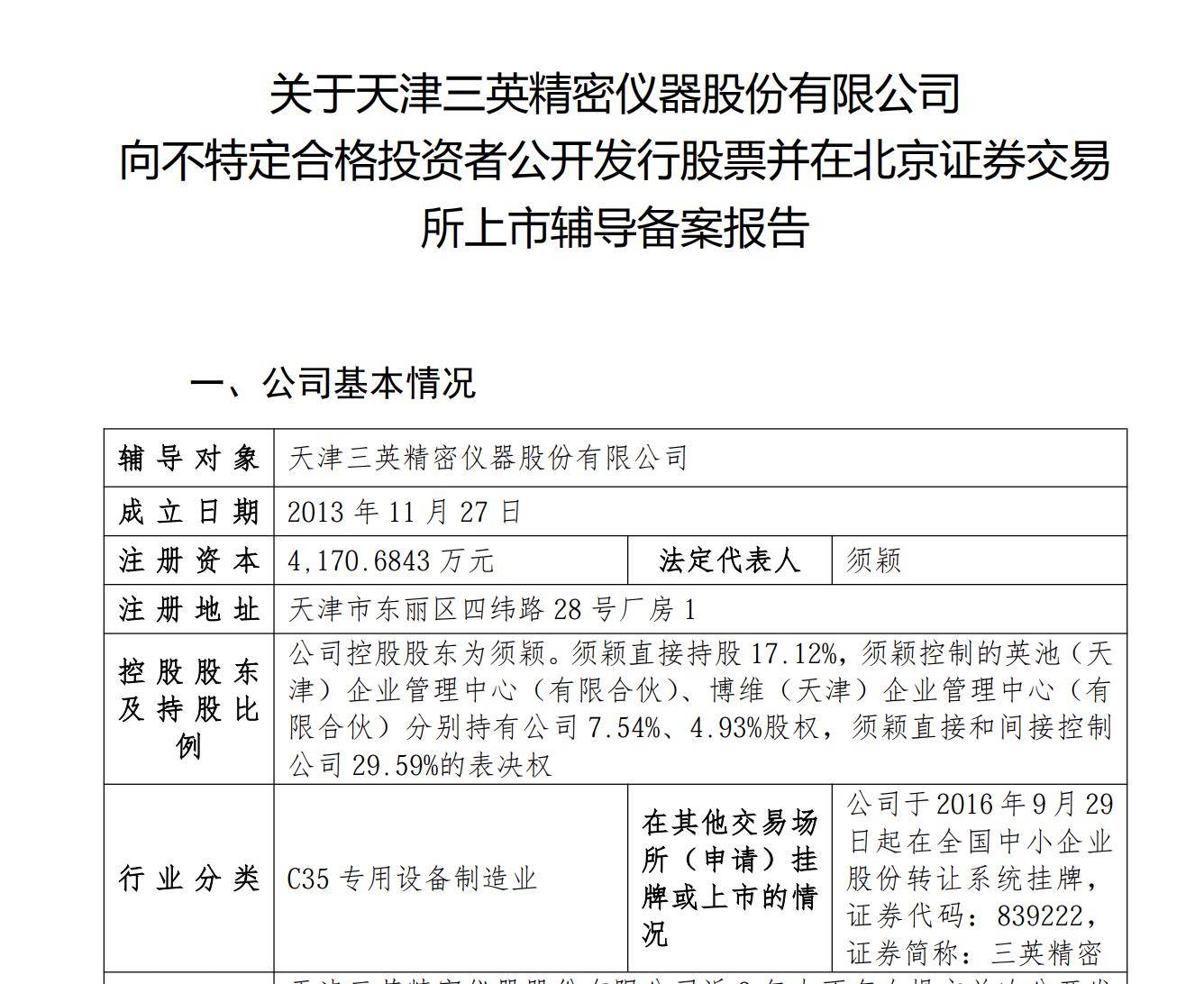
Company Overview - Tianjin Sanying Precision Instrument Co., Ltd. was established on November 27, 2013, with a registered capital of 41.706843 million yuan [1] - The company is a national high-tech enterprise specializing in the research and manufacturing of X-ray CT detection equipment, having developed a comprehensive range of X-ray CT products [2] - The legal representative of the company is Xu Ying, who directly holds 17.12% of the shares [2] Shareholding Structure - Xu Ying is the controlling shareholder, with additional control through Yingchi (Tianjin) Enterprise Management Center (Limited Partnership) and Bowe (Tianjin) Enterprise Management Center (Limited Partnership), holding 7.54% and 4.93% respectively, giving Xu Ying a total of 29.59% voting rights [2] - Xu Ying and Liu Ying, who are married, are the actual controllers of the company, with a combined direct shareholding of 18.57% and an indirect shareholding of 13.53% [2] - Other investors include BYD, Shenzhen Capital Group, and Baoteng Venture Capital [2] Financial Performance - The projected operating revenues for 2022, 2023, and 2024 are 128 million yuan, 180 million yuan, and 235 million yuan respectively, with net profits attributable to the parent company of 2.9584 million yuan, 14.2523 million yuan, and 27.2477 million yuan [2] - For the first three quarters of 2025, the operating revenue reached 211 million yuan, representing a year-on-year growth of 33.51%, while the net profit attributable to the parent company was 30.4603 million yuan, reflecting a year-on-year increase of 98.82% [2] IPO Plans - The company has completed the IPO counseling filing with the Tianjin Securities Regulatory Bureau and plans to list on the Beijing Stock Exchange, with Huatai United Securities Co., Ltd. as the counseling institution [1]

美信科技:具体关注3月5日比亚迪发布的技术大会

Zheng Quan Ri Bao Wang· 2026-03-04 10:15
Group 1 - The core focus of the article is on the upcoming technology conference hosted by BYD, which is scheduled for March 5 [1] - Meixin Technology (301577) has indicated its attention towards the developments that will be presented at the BYD conference [1]
长江证券:维持比亚迪“买入”评级,盈利能力有望继续提升
Xin Lang Cai Jing· 2026-03-04 08:49
Core Viewpoint - BYD's overall sales in February reached 190,000 units, showing a year-on-year decline of 41.1% and a month-on-month decrease of 9.5% [1] Sales Performance - Passenger vehicle sales totaled 188,000 units, reflecting a year-on-year drop of 41.0% and a month-on-month decline of 8.6% [1] - Export sales exceeded 100,000 units, indicating strong international demand [1] Market Outlook - The company is poised for growth with new technologies and product cycles expected to drive performance in March, entering the peak season [1] - As the global leader in new energy vehicles, BYD is building competitive advantages through technology and scale [1] Strategic Initiatives - The company is committed to its smart driving transformation under its intelligent strategy [1] - A rich lineup of models including Tengshi, Yangwang, and Fangchengbao is accelerating its entry into the high-end market [1] Profitability Expectations - Continued efforts in international expansion and high-end market penetration are anticipated to enhance profitability [1] - The company forecasts a net profit of 35 billion yuan by 2025, corresponding to a PE ratio of 23X, maintaining a "buy" rating [1]

3月19-20日相聚常州!2026锂电关键材料及应用市场高峰论坛
鑫椤锂电· 2026-03-04 06:29
Core Viewpoint - The lithium battery industry is poised for a significant growth cycle starting in 2026, characterized by strong demand recovery, accelerated global expansion, and disruptive technological advancements, leading to a "spiral rise" in both volume and price [3]. Group 1: Market Predictions - Global lithium battery production is expected to reach 2297 GWh by 2025, with a growth rate of 34.6% in 2026. The shipment growth rate for energy storage cells is projected to be as high as 70%, driven by dual domestic and international demand [5]. - There is a notable supply gap in the current effective production capacity for battery cells and various materials, making supply chain stability and efficiency crucial for capitalizing on this growth opportunity [5]. Group 2: Conference Details - The 2026 Lithium Key Materials and Applications Market Summit will be held on March 19-20, 2026, in Changzhou, Jiangsu, organized by Xinluo Information [4]. - The summit will focus on two main topics: in-depth discussions on cutting-edge technologies and market supply-demand dynamics, and B2B procurement matchmaking to connect top battery manufacturers and material suppliers [6]. Group 3: Key Topics and Participants - The conference will feature specialized forums on lithium carbonate, key materials for power batteries, and energy storage batteries, with participation from industry experts and leading companies [5][6]. - Notable topics include the potential of global lithium resources, the impact of solid-state battery development on lithium salt companies, and strategies for navigating market volatility [7][8][9].






比亚迪将发布第二代刀片电池及闪充技术
新华网财经· 2026-03-04 05:21
Group 1 - The core viewpoint of the article highlights that BYD is set to release its second-generation blade battery and fast-charging technology on March 5, indicating a potential for technological advancement and competitive edge in the market [1] - The first-generation blade battery, launched in 2020, significantly contributed to BYD's rapid business growth, raising questions about whether the new technology can replicate this success [1]

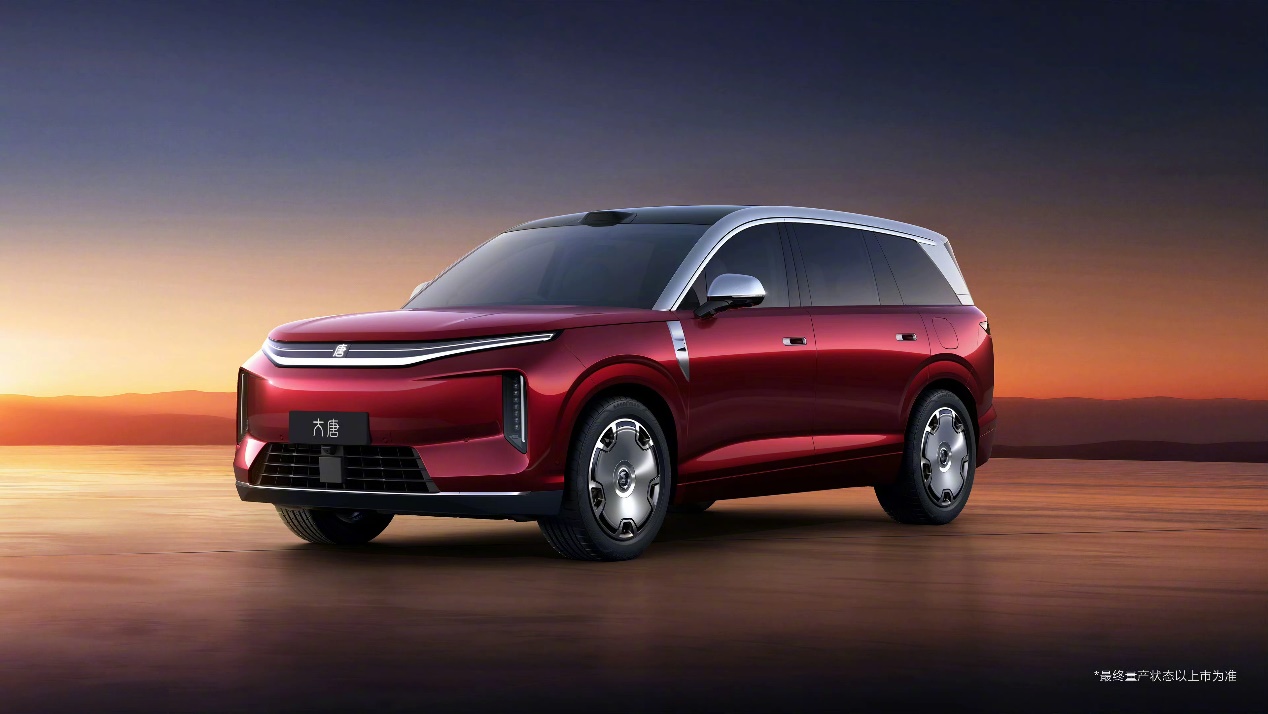
比亚迪大唐亮相
Zhong Guo Zhi Liang Xin Wen Wang· 2026-03-04 04:21
Group 1 - The vehicle dimensions are 5263 (5302) × 1999 × 1790/1800 mm, with a height of 1790 mm when equipped with air suspension, and a length increase to 5302 mm with an optional rear bumper, while the wheelbase is 3130 mm [2] - The design of the vehicle follows the "Dragon Face" aesthetic of the Dynasty family, featuring a closed front design with a continuous LED light strip that rises from the center to the sides, and a relief-style "唐" logo below the light strip, complemented by silver accents on the fenders [3] - The pure electric version is built on the Super e-platform, utilizing a 1000V high-voltage architecture, with a maximum charging power of 1 megawatt from the 10C fast-charging battery. It offers single motor versions of 300 kW and 370 kW, as well as a dual motor version of 585 kW. The plug-in hybrid version may feature a 2.0T engine combined with three motors, achieving a total power exceeding 500 kW, and will also include a rear-wheel steering system [5]
2025年比亚迪股份有限公司汽车产量为453.74万辆,汽车产量同比增长5.42%
Chan Ye Xin Xi Wang· 2026-03-04 03:57
Group 1 - BYD Company Limited is projected to produce 4.5374 million vehicles in 2025, representing a year-on-year production growth of 5.42% [1] - The expected sales volume for BYD in 2025 is 4.6024 million vehicles, with a year-on-year sales growth of 7.73% [1] - The production and sales rate for BYD's new energy vehicles in 2025 is estimated to be 101.43% [2] Group 2 - The data regarding BYD's automotive production and sales from 2020 to 2025 is sourced from the China Association of Automobile Manufacturers [1][2][3] - The statistics on different types of vehicles produced and sold by BYD from 2020 to 2025 are compiled by Zhiyan Consulting [1][2][3]

藏在比亚迪、奇瑞爆款车里的“隐形冠军”,正走向IPO
Huan Qiu Wang Zi Xun· 2026-03-04 02:39
Core Insights - The article highlights the significant role of Langxin Electric, a low-profile component supplier, in the electric vehicle (EV) industry, particularly through its electronic fan technology that enhances thermal management systems [1][3] - Langxin Electric has achieved nearly 300 million yuan in net profit over the past three years and is now advancing its IPO process, gaining visibility in the market [1][3] Industry Dynamics - The competition in the EV sector has shifted from merely having products to focusing on precision and efficiency, with thermal management systems being crucial for battery safety and range [3] - The automotive industry is highly concentrated, with the top ten manufacturers holding 85.6% of the market share in 2024, making it essential for suppliers like Langxin to align with major clients rather than spreading resources thinly across many smaller ones [3] Company Strategy - Langxin Electric has adopted a focused strategy by embedding itself deeply within core vehicle platforms of leading manufacturers, achieving a platform penetration rate of up to 66.59% for its products [3] - The company has transitioned from traditional brushed motors to brushless motors, which are more efficient and quieter, marking a significant technological leap and enhancing its profit margins [4] Financial Performance - From 2022 to 2024, Langxin's net profit surged from 45.31 million yuan to 116 million yuan, reflecting a compound annual growth rate of over 60%, driven by the increasing share of high-margin brushless products [4] - Despite a year-on-year revenue growth of 11.32% in Q1 2025, net profit saw a slight decline of 2.99%, attributed to industry-wide price pressures where manufacturers demand annual price reductions of 5% to 10% [5] Future Outlook - Langxin aims to optimize its customer structure by reducing reliance on its top five clients, which currently account for 68% of sales, and plans to increase R&D investments to solidify its technological advantages [6] - The company is also looking to expand its market presence internationally, particularly in North America and Europe, leveraging funds from its IPO to target high-end electric vehicle brands [7] - The evolving landscape of the EV market necessitates a shift from broad growth strategies to a focus on technological depth, customer loyalty, and global capabilities for component suppliers [7]

比亚迪将发布第二代刀片电池及闪充技术
第一财经· 2026-03-04 01:13
编辑 | 七三 2020年,比亚迪发布第一代刀片电池,推动其进入业务高速增长周期。随着第二代刀片电池消息释 出, 比亚迪能否再次跑出技术先发优势值得关注。 3月4日,第一财经记者获悉,比亚迪将于3月5日发布第二代刀片电池及闪充技术。 ...
比亚迪将发布第二代刀片电池及闪充技术
Xin Lang Cai Jing· 2026-03-04 00:57
Core Viewpoint - BYD is set to release its second-generation blade battery and fast-charging technology on March 5, following the successful launch of its first-generation blade battery in 2020, which propelled the company into a high-growth phase [1] Group 1 - The first-generation blade battery was launched in 2020, marking a significant milestone for BYD [1] - The upcoming second-generation blade battery is anticipated to enhance BYD's technological edge in the market [1] - The release of the new technology raises questions about BYD's ability to maintain its first-mover advantage [1]