NIO(NIO)

Search documents
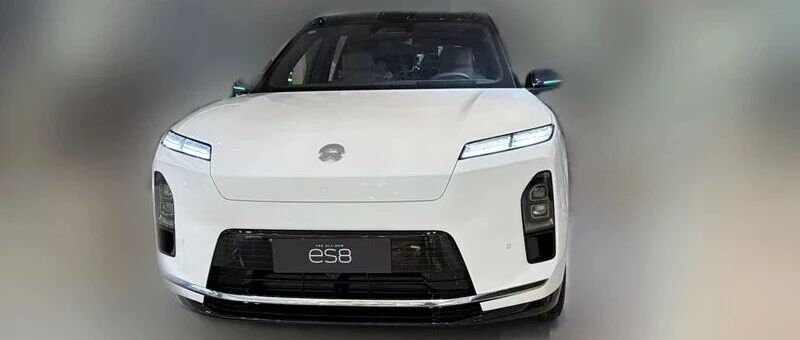
蔚来全新ES8:新款调整价格后火爆,对比最多的是问界M9
车fans· 2026-01-08 00:31
Core Viewpoint - The newly launched NIO ES8 has gained significant popularity due to its competitive pricing and enhanced features compared to the previous generation, leading to a stable order volume despite a waiting period of 4-5 months for delivery [2][3]. Sales Performance - The new ES8 is approximately 100,000 yuan cheaper than its predecessor, which has contributed to its strong market performance [2]. - The best-selling configuration is the six-seat Executive Luxury version priced at 406,800 yuan, followed by the six-seat Executive Signature version at 446,800 yuan [3]. Customer Demographics - The primary buyers of the ES8 are business owners, including those in construction, logistics, and high-level executives, predominantly aged between 40-55 years [5]. - A notable customer profile includes individuals from humble backgrounds who aspire to own luxury vehicles, viewing NIO as a prestigious brand comparable to traditional luxury brands [7][9]. Consumer Preferences - Customers are attracted to the NIO brand for its luxury image and strong business attributes, as well as the mature technology of the third-generation ES8, which offers battery swapping options [11]. - The most frequently compared model is the AITO M9, with buyers often swayed by Huawei's brand reputation and the M9's advanced driving assistance features [12][13]. Purchase Options - The most common financing option is a 5-year plan with 2 years of zero interest, along with a Battery-as-a-Service (BaaS) rental scheme [15]. - For the six-seat Executive Luxury version under the BaaS plan, the monthly battery rental is 1,128 yuan, with the vehicle price set at 298,800 yuan [15]. Customer Feedback - Current customer complaints include the inadequacy of the advanced driving assistance system and the limited availability of battery swap stations in rural areas [21]. - Maintenance costs for the ES8 are relatively low, with the first service free and subsequent services costing between 600-800 yuan [20]. Recent Customer Rights - Recent customer rights include a newly announced trade-in policy for old vehicles [29].


大反转?长安辟谣取消年终奖,或发4.3倍月薪+3000现金;吉利汽车今年要卖345万辆!多家车企公布2026销量目标;OPPO确认realme将回归
雷峰网· 2026-01-08 00:27
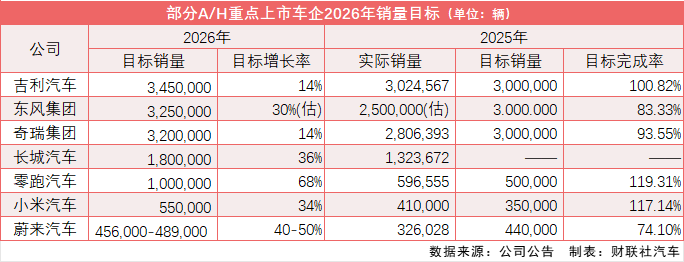
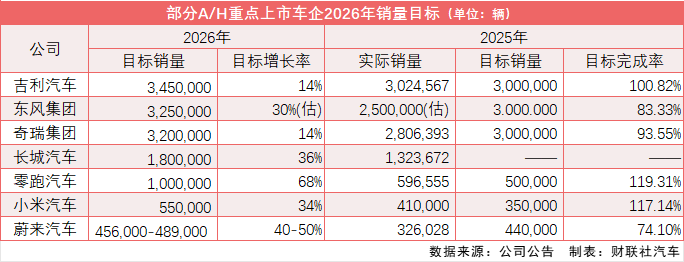
Key Points - Multiple automakers have announced their sales targets for 2026, with Geely aiming for 3.45 million units this year, representing a 14% growth rate, making it the highest among disclosed targets [4] - Dongfeng Group has set a target of 3.25 million units for 2026, with an estimated growth rate exceeding 30%, including 1.7 million electric vehicles [4] - Chery Group aims for 3.2 million units, a 14% increase from 2025, while Great Wall Motors has lowered its target from 2.49 million to 1.8 million units, reflecting a 36% growth from last year [5] - NIO's sales target for 2026 is set between 456,000 and 489,000 units, indicating a growth rate of 40-50% [5] Domestic News - Lei Jun, founder of Xiaomi, expressed his discomfort with being labeled a "marketing master," emphasizing that Xiaomi's success is rooted in product and technology rather than marketing [7] - Changan Automobile refuted rumors about canceling year-end bonuses, confirming a plan to distribute bonuses equivalent to 4.3 months' salary plus a fixed amount of 3,000 yuan [10][11] - Realme will return to OPPO as a sub-brand, with CEO Sky Li overseeing all sub-brand operations, aiming for better resource integration [13] International News - Tesla faced a significant decline in European sales for 2025, with a 27.8% drop from approximately 326,000 units in 2024 to about 235,000 units [35] - The decline was particularly severe in Germany, where sales plummeted by 48.4%, and in France, where new policies negatively impacted sales by 37.5% [36][37] - Despite the overall downturn, Tesla saw a 41.3% increase in Norway, although this growth is expected to be short-lived due to upcoming changes in electric vehicle incentives [37] Company Developments - IKEA China announced the closure of seven stores as part of a strategy to optimize its channel layout and enhance business resilience [14] - Huawei's spun-off business, xFusion, is set to initiate an IPO, with a valuation estimated at nearly $9 billion [15] - Roborock unveiled a concept cleaning robot at CES 2026, featuring a unique design that allows it to navigate stairs [30]





蔚来第100万辆量产车下线 李斌称有信心实现单季盈利
Chang Jiang Shang Bao· 2026-01-08 00:03
Core Viewpoint - NIO has achieved a significant milestone by producing its one-millionth vehicle, marking the beginning of a new phase focused on high-quality growth and aiming for annual growth rates of 40%-50% [2][5] Group 1: Production and Delivery Milestones - On January 6, NIO's one-millionth vehicle, a green ES8, rolled off the production line at its Hefei factory, representing a key milestone in the company's development [2][3] - In 2025, NIO delivered a record 326,000 vehicles, a year-on-year increase of 46.9%, with the NIO brand contributing 178,800 vehicles, the Lido brand 107,800 vehicles, and the Firefly brand 39,400 vehicles [4] Group 2: Financial Performance and Profitability Outlook - NIO reported a revenue of 52.837 billion yuan for the first three quarters of 2025, a year-on-year increase of approximately 15%, but incurred a net loss of 15.693 billion yuan [7] - The company aims to achieve profitability in the fourth quarter of 2025, with confidence stemming from the strong performance of the new ES8 model, which has a high gross margin [6][7] Group 3: Strategic Goals and Market Position - NIO's CEO Li Bin outlined the company's strategic goals, including a commitment to technological leadership, infrastructure development, and maintaining a strong market presence in China and globally [5][8] - The company anticipates that by 2030, the penetration rate of new energy vehicles in China will exceed 90%, with pure electric vehicles making up at least 80% of that figure [8] Group 4: Partnerships and Collaborations - NIO has signed a five-year strategic cooperation agreement with CATL to enhance collaboration in technology, ecology, and market promotion, focusing on battery longevity and battery swap technology [8][9]
多家车企公布2026销量目标
智通财经网· 2026-01-07 22:35
已连续多年未达成年度目标的长城汽车,下调了2026年员工持股计划业绩考核目标,将原计划中2026年 的汽车销量考核目标从不低于249万辆下调至不低于180万辆,较去年实际销量增长36%;净利润考核目 标(不低于100亿元)保持不变。 新能源汽车购置税减半政策的实施及"两新"补贴政策的调整延续,为2026年国内汽车市场带来了新的变 量。 在此背景下,多家车企相继披露的2026年销量目标呈现出截然相反的走势——尚处于全面智电转型、且 背负较大燃油车时代存量资产、销量基数较大的传统车企普遍给出了较为审慎的增长目标,而新造车企 业对市场估计则更为乐观。其中,在2025年均超额完成KPI的零跑、小米汽车今年销量目标的增幅分别 达到68%和34%;意欲在2026年实现全年盈利的蔚来汽车,年度目标增幅同样高达40-50%。 | | | 部分A/H重点上市车企2026年销量目标(单位:辆) | | | | | --- | --- | --- | --- | --- | --- | | 公司 | 2026年 | | 2025年 | | | | | 目标销量 | 目标增长率 | 实际销量 | 目标销量 | 目标完成率 | | 吉 ...


NIO Crosses 1M Vehicle Production Milestone, Expands Tech Push
ZACKS· 2026-01-07 16:55
Core Insights - NIO Inc. achieved a significant production milestone with its one-millionth vehicle, a third-generation ES8 SUV, produced at the Hefei Advanced Manufacturing Xinqiao Phase II facility [1][8] - The company aims for annual sales growth of 40% to 50% and plans to expand its charging and battery-swap networks to over 10,000 locations by 2030 [2][8] Investment and Infrastructure - NIO has invested approximately 65 billion yuan in research and development, focusing on 12 core intelligent electric vehicle technologies [3] - The company has allocated 18 billion yuan to charging and battery-swap infrastructure, establishing 8,541 stations nationwide and completing over 96 million battery-swap services [3] Delivery Performance - NIO delivered a record 48,135 vehicles in December 2025, bringing total deliveries for the year to 326,028 units, which represents a 46.88% year-over-year increase [4][8] - The company signed a framework agreement with Chery and Anhui Jianghuai Automobile Group Corp. for joint development of an innovation platform [4]
多家车企公布2026销量目标
财联社· 2026-01-07 16:07
Core Viewpoint - The implementation of the half-price purchase tax policy for new energy vehicles and the continuation of the "two new" subsidy policy have introduced new variables for the domestic automotive market in 2026, leading to divergent sales targets among traditional and new car manufacturers [2]. Group 1: Traditional Automakers - Geely has set the highest sales target for 2026 at 3.45 million units, with a growth rate of 14%, including 2.75 million units for the Geely brand, 300,000 for Zeekr, and 400,000 for Lynk & Co [4]. - Dongfeng Group aims for a total sales target of 3.25 million units in 2026, with an estimated growth rate of over 30%, including 1.7 million units for new energy vehicles, representing a 63% increase [5]. - Chery Group has set a target of 3.2 million units for 2026, reflecting a 14% growth compared to 2025, with a total of 2.806 million units sold in 2025 [5]. - Great Wall Motors has lowered its 2026 sales target from at least 2.49 million to at least 1.8 million units, indicating a 36% increase from last year's actual sales [5][6]. Group 2: New Car Manufacturers - Leap Motor has set an aggressive target of 1 million units for 2026, following a record sales performance in 2025 [7]. - Xiaomi aims for a sales target of 550,000 units in 2026, a 34% increase from the previous year, with new models expected to launch [7]. - NIO has set a target of 456,000 to 489,000 units for 2026, with a growth rate of 40-50%, supported by the introduction of several new models [8]. Group 3: Market Outlook - The automotive market is expected to experience a "front low and back high" trend in 2026, with overall growth driven by favorable national policies [9]. - The continuation of the vehicle replacement subsidy policy is anticipated to mitigate the impact of the half-price purchase tax policy, providing a stabilizing effect on market growth [8][9].


纯电市场拐点已至
Bei Jing Shang Bao· 2026-01-07 15:39
Core Viewpoint - The transition from rapid growth to high-quality development in the electric vehicle market is marked by a shift in technology choices and market dynamics, with a focus on user value as the ultimate goal [1][3]. Group 1: Market Dynamics - The rise of range-extended and plug-in hybrid vehicles was a temporary solution due to inadequate charging infrastructure, but the market is now shifting towards pure electric vehicles, particularly in the large three-row SUV segment [3][4]. - In 2025, retail sales of range-extended vehicles fell by 7.7% year-on-year, marking four consecutive months of decline, while wholesale sales of pure electric vehicles reached 1.02 million units, a 31.6% increase year-on-year, accounting for 62.9% of the new energy vehicle market [4]. Group 2: Company Strategy - The company has focused on two main areas over the past 11 years: continuous investment in pure electric technology research and development, and the enhancement of charging and battery swap infrastructure [5]. - The company has developed a comprehensive technology system with 12 full-stack technologies, significantly reducing R&D costs per model, and has launched flagship models with advanced features, achieving notable sales milestones [5][6]. Group 3: Infrastructure Development - As of November 2025, the company has established 3,662 battery swap stations globally, covering over 80% of users' residential or office locations within a 3-kilometer radius [6]. - The company has initiated the "Charging Partner" program, collaborating with various local governments and enterprises to build nearly 200 charging and battery swap stations [6]. Group 4: Future Goals - The company aims to have over 10,000 charging and battery swap stations by 2030 and plans to maintain a growth rate of 40%-50% annually while deepening its market presence in China and expanding globally [8]. - In 2024, the company delivered 221,900 new vehicles, a 38.7% increase year-on-year, and continued to achieve record delivery numbers into 2025, with a total of 124,807 vehicles delivered in Q4 2025, a 71.7% increase year-on-year [7].
MOTORTREND ANNOUNCES WINNERS OF THE FOURTH ANNUAL SOFTWARE-DEFINED VEHICLE INNOVATOR AWARDS
Prnewswire· 2026-01-07 14:51
Core Insights - The fourth annual SDV (Software-Defined Vehicle) Innovator Awards were announced by MotorTrend, celebrating individuals redefining the automotive industry through software innovation [1][2] - The awards recognize pioneers, leaders, and experts in the automotive sector, highlighting their contributions to the evolution of software-defined vehicles [2][3] Group 1: Award Categories - The SDV Innovator Awards feature three categories: Pioneer, Leader, and Expert, with 20 winners selected by MotorTrend editors [2] - Pioneer Award winners have made significant advancements in SDV through research and development of new automotive software [3] - Leader Award winners are senior management individuals who drive the adoption of software solutions in the automotive industry [4] - Expert Award winners are recognized for their specialized knowledge in specific SDV disciplines, such as advanced driver assistance systems and over-the-air updates [5] Group 2: Notable Winners - Notable winners include Ashok Elluswamy from Tesla, Shaoqing Ren from NIO, and Laura Major from Motional, among others, showcasing a diverse range of expertise in the automotive software field [6]




2026年,这些“创二代”,谁能突围,谁是扶不起的阿斗?
3 6 Ke· 2026-01-07 13:07
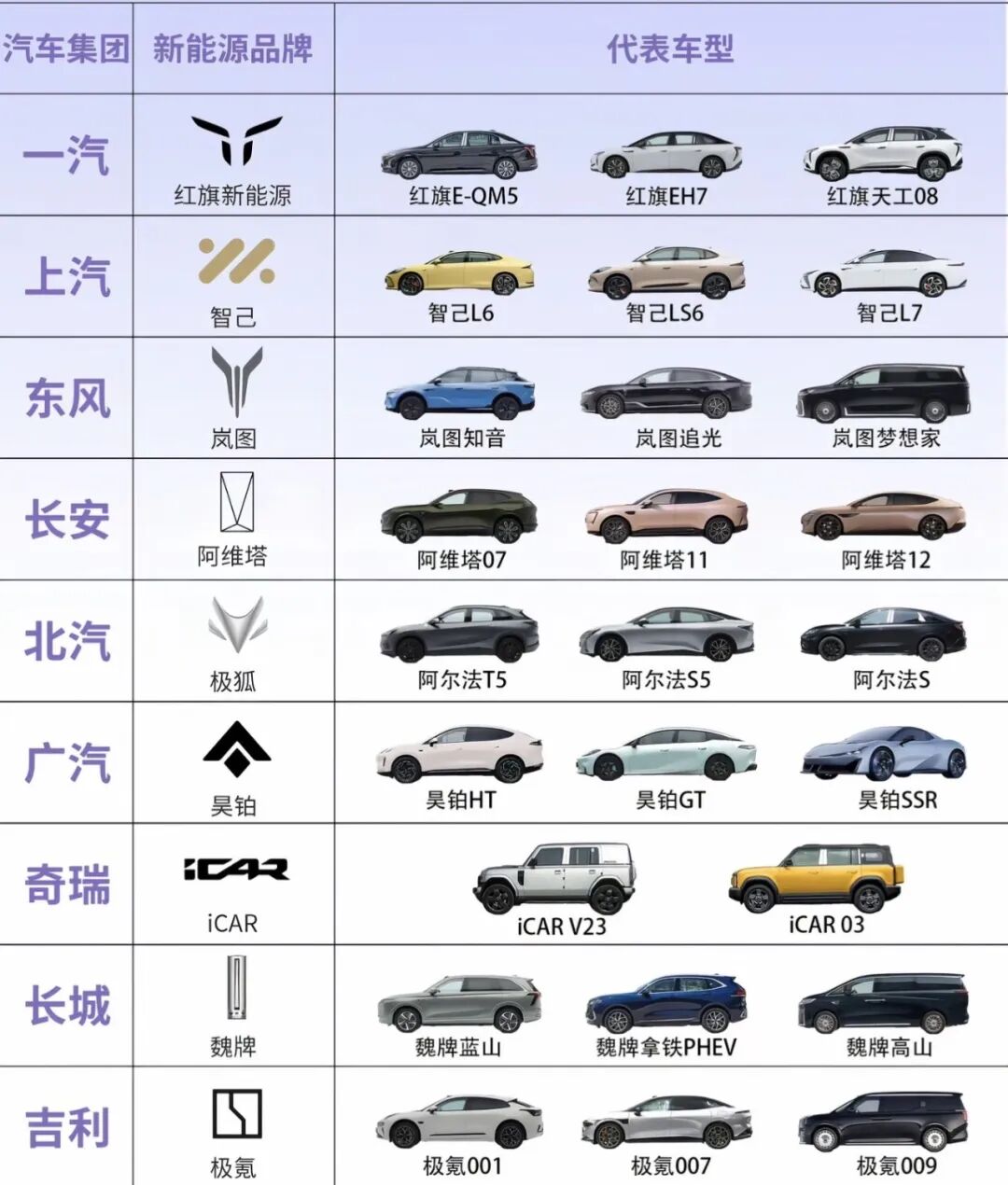
Core Insights - The new energy vehicle (NEV) industry in 2025 has seen a clear division between leading brands and those lagging behind, with companies like Leap Motor, Hongmeng Zhixing, and Xiaopeng firmly establishing themselves in the top tier, while traditional automaker-backed brands struggle to gain traction [1][6][11] Group 1: Market Performance - In 2025, the top three new car brands were Leap Motor (596,555 units, +103%), Hongmeng Zhixing (589,107 units, +32%), and Xiaopeng (429,445 units, +126%) [6][7] - The second tier includes Xiaomi Auto (over 411,625 units), Li Auto (406,343 units), and Deep Blue (333,117 units), while brands like Lantu, Avita, and Zhiji lagged with sales of 150,169, 128,772, and 81,017 units respectively [6][7][8] - The overall NEV market is expected to enter a phase of slower growth and intensified competition in 2026, with significant price cuts from major players like BMW and Tesla reigniting a price war [2][5] Group 2: Brand Dynamics - The "second-generation" brands, despite their backing from established automakers, have not been able to match the performance of pure new car brands, with significant sales gaps [6][11] - However, brands like Deep Blue and Lantu have shown impressive growth rates, with Lantu achieving a 87% increase in sales [8][21] - Traditional automakers are heavily investing in these "second-generation" brands, providing them with essential resources and support to compete in the high-end NEV market [11][13][15] Group 3: Future Outlook - Predictions for 2026 indicate a potential market growth of only about 2%, significantly lower than the previous year's growth [16] - Lantu is expected to expand its product lineup significantly and is on track for an IPO, which could enhance its market position [21][23] - Deep Blue is also positioned for growth, having achieved a high completion rate of its annual sales target [21][23] - Brands like Avita and Zeekr may stabilize but face challenges in maintaining competitive pricing and market share [26][29]



多家车企公布2026销量目标:传统车企审慎、新势力乐观
Feng Huang Wang· 2026-01-07 12:58
Core Viewpoint - The implementation of the half-price purchase tax policy for new energy vehicles and adjustments to the "two new" subsidy policies have introduced new variables for the domestic automotive market in 2026, leading to divergent sales targets among traditional and new car manufacturers [1] Traditional Automakers - Geely has set the highest sales target for 2026 at 3.45 million units, with a growth rate of 14%, including 2.75 million for the Geely brand, 300,000 for Zeekr, and 400,000 for Lynk & Co [3] - Dongfeng Group aims for a total sales target of 3.25 million units in 2026, with an estimated growth rate of 30%, and plans to sell 1.7 million new energy vehicles, reflecting a 63% increase [4] - Chery Group has set a target of 3.2 million units for 2026, a 14% increase from 2025, with its five brands aiming for a combined sales target of 3 million units [4] - Great Wall Motors has lowered its 2026 sales target from 2.49 million to 1.8 million units, reflecting a 36% increase from the previous year, while maintaining its net profit target [4] New Automakers - Leap Motor has set an aggressive target of 1 million units for 2026, representing a 68% increase from the previous year, following a record sales performance in 2025 [5][6] - Xiaomi aims for a sales target of 550,000 units in 2026, a 34% increase from 2025, with plans to launch new models including the SU7 [6] - NIO has set a target of 456,000 to 489,000 units for 2026, with a growth rate of 40-50%, and plans to introduce several new models [6] Market Outlook - The automotive market is expected to experience a "front low and back high" trend in 2026, with overall growth driven by supportive national policies, including the continuation of the vehicle replacement subsidy policy [7] - Industry experts predict that the overall growth rate of the automotive market in 2026 will exceed zero growth, with January expected to show strong sales performance [7]