极氪

Search documents
观车 · 论势 || 疾风知劲草,新局自此开
Zhong Guo Qi Che Bao Wang· 2026-01-05 01:24
Core Viewpoint - The Chinese automotive industry in 2025 is characterized by a "reversal," with a shift from irrational competition and price wars to a more regulated and innovative landscape [1][5]. Group 1: Industry Regulation and Order - The internal forces seeking order have awakened, leading to a collective consensus against "involution" in the industry, with various government departments implementing measures to regulate competition [1][2]. - The Ministry of Industry and Information Technology and other agencies have introduced comprehensive governance measures to address irrational competition, resulting in a significant reduction in promotional pricing and discounts in the passenger car market [1][2]. Group 2: Corporate Integration and Efficiency - Major automotive companies are undergoing integration to enhance efficiency and reduce costs, as seen with Geely's integration of Zeekr and NIO's consolidation of brands [2]. - The trend of corporate integration reflects a consensus among automakers to pool resources and strengthen their competitive positions in the market [2]. Group 3: Innovation and Technology - Innovation is driving the industry forward, with advancements in technology making features like assisted driving more accessible, as evidenced by a 64% penetration rate of combined assisted driving vehicles in the new car market [3]. - The automotive industry's boundaries are blurring as companies expand into areas like robotics and smart devices, indicating a long-term evolution of technology and business models [3]. Group 4: Market Expansion and Globalization - Incentive policies such as trade-in programs are effectively stimulating the existing market, while the expansion of charging networks and sales channels is awakening the potential of county-level markets [4]. - China's automotive exports reached 6.343 million units in the first 11 months of the year, marking an 18.7% year-on-year increase, with a shift towards new export models like technology and localized production [4]. Group 5: Future Outlook - The automotive industry is expected to continue addressing "involution" in 2026, with new guidelines being introduced to ensure compliance in pricing behavior [5]. - The industry aims to achieve stable growth while navigating uncertainties such as policy changes and international market conditions, striving for a more competitive and resilient automotive landscape [6].
国补落地及2026年消费趋势判断
2026-01-04 15:35
Summary of Conference Call Notes Industry Overview - The conference call primarily discusses the **automobile** and **home appliance** industries in China, focusing on government subsidy policies and their implications for market dynamics and consumer behavior [1][2][20]. Key Points on Government Subsidies - **2025 National Subsidy Funding**: The funding mainly comes from special government bonds, with a total government debt of **14 trillion RMB**. The narrow deficit is **5.66 trillion RMB**, and special bonds amount to **1.8 trillion RMB** [2][3]. - **Subsidy Strategy Changes**: The automobile industry will see a shift to a high-price, high-subsidy and low-price, low-subsidy model, which is expected to reduce demand. The subsidy for electric vehicles and traditional vehicles will be adjusted based on vehicle price [2][14]. - **Impact on Tax Revenue**: Consumer subsidies are expected to increase sales and tax revenues, but the tax revenue growth rate is projected to be **2%**, lower than the nominal GDP growth rate of **4%**, indicating fiscal pressure [9]. Automobile Industry Insights - **Market Trends**: The automobile sector is expected to face a decline in domestic demand by **3-4%** in 2026, but the penetration rate of new energy vehicles is anticipated to increase by **4-5%**. Exports are expected to grow by **15%**, with new energy vehicle exports increasing by **35%** [14][19]. - **Investment Opportunities**: Key growth areas include international expansion, high-end market development, and smart technology integration, particularly in L4 autonomous driving [15][17]. - **Consumer Behavior**: There is a significant consumer wait-and-see attitude, with **40-60%** of consumers hesitant to make purchases, leading to inventory buildup [19]. Home Appliance Industry Insights - **Subsidy Policy Changes for 2026**: The number of subsidized categories will be reduced from **12 to 6**, focusing on energy-efficient products. The maximum subsidy per product will decrease from **2000 RMB to 1500 RMB** [20]. - **Market Performance**: The home appliance sector showed mixed results in 2025, with overall sales growth in the first half but a decline in the second half due to tightening policies and high base effects [21]. - **Future Outlook**: If the government continues to provide **80 billion RMB** in subsidies, the home appliance market is expected to see modest growth, with air conditioning sales projected to increase by **4.7%** under reduced subsidy effectiveness [22]. Competitive Landscape - **Market Dynamics**: The competitive landscape in the home appliance industry is shifting towards larger companies like Midea and Haier, which are enhancing shareholder returns through dividends and stock buybacks. Emerging markets and new product exports are becoming crucial for growth [24]. - **Investment Potential**: The two-wheeler market and emerging products like robotic vacuums are highlighted as having strong investment potential due to resilient demand and low valuations [23]. Conclusion - The conference call emphasizes the cautious approach of the government in adjusting subsidy policies to stabilize investment and consumption while addressing fiscal pressures. The automobile and home appliance industries are adapting to these changes, with a focus on innovation and international expansion as key growth strategies.
电力设备及新能源周报20260104:国内政策助力商业航天产业化,多家车企创单月销量新高-20260104
Guolian Minsheng Securities· 2026-01-04 12:20
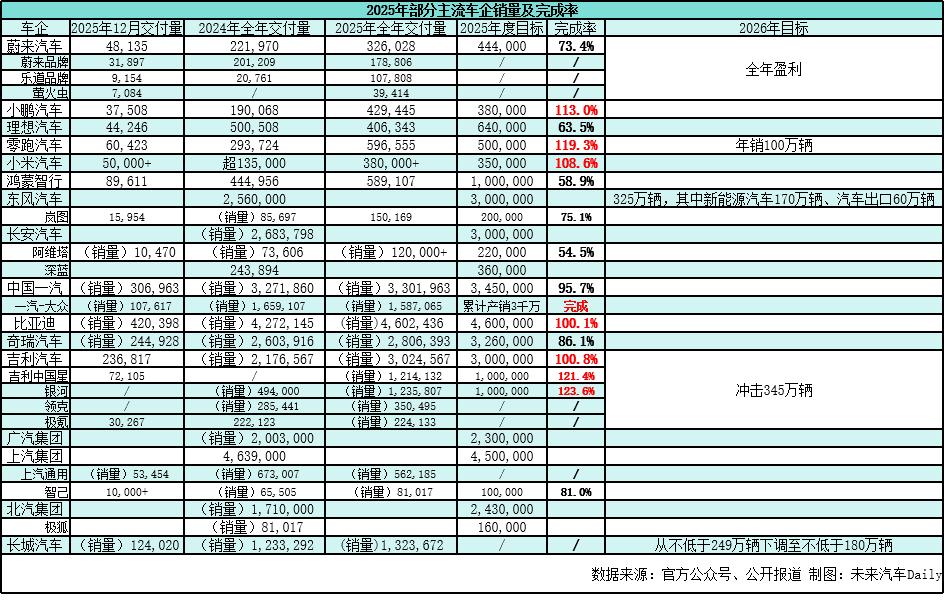
Investment Rating - The report maintains a "Recommended" rating for several key companies in the electric equipment and new energy sectors, including Ningde Times, Keda Li, and others [5][6]. Core Insights - The electric equipment and new energy sector experienced a decline of 2.18% in the last week, underperforming compared to the Shanghai Composite Index [1]. - The report highlights significant sales achievements in the new energy vehicle sector, with multiple companies reporting record monthly deliveries in December 2025 [2][14]. - The photovoltaic industry is facing a mixed scenario with rising upstream prices but weak downstream demand, leading to a "price without market" situation [3][38]. Summary by Sections New Energy Vehicles - In December 2025, several new energy vehicle manufacturers reported record sales, including Li Auto with 44,246 units delivered, a year-on-year decrease of 24.4% [15][21]. - Leap Motor achieved a delivery of 60,423 units, up 42% year-on-year, while BYD delivered 420,398 units, reflecting a year-on-year decrease of 17.5% [2][21]. New Energy Generation - The main industry chain prices are on the rise, with silicon material prices testing above 65 yuan/kg, although actual transactions are still based on previous orders [38]. - The report notes a significant reduction in demand, with a 78% decrease in procurement for domestic centralized projects [39]. Electric Equipment and Automation - The report indicates that the sixth batch of State Grid's bidding for power transmission and transformation equipment reached 13.205 billion yuan, with a total of 495 packages awarded [54]. - The largest single package was valued at 399.66 million yuan, with various categories such as switchgear and transformers receiving substantial funding [54]. Commercial Aerospace - Domestic policies are accelerating the industrialization of the commercial aerospace sector, with the National Space Administration incorporating commercial aerospace into the national development framework [4]. Market Trends - The report emphasizes the importance of technological advancements and market dynamics in shaping the future of the electric equipment and new energy sectors, suggesting a focus on companies that can leverage these changes for competitive advantage [40][41].




我们该怎样记住2025年的中国汽车?
Xin Lang Cai Jing· 2026-01-04 11:30
Core Insights - The Chinese automotive industry has undergone a significant transition in 2025, moving towards the popularization of electrification and the acceptance of safety and responsibility in intelligent driving, while the focus has shifted from expansion to efficiency, governance, and organizational capability [2][69]. Group 1: Industry Competition and Regulation - The Chinese automotive sector has seen a comprehensive intervention from the government to restore competitive order, addressing issues like price wars and production consistency [4][70]. - The intervention marks a shift from merely addressing price control to tackling the root cause of competition, which is the high degree of product and capability homogeneity among companies [6][73]. - The need for differentiation in competition is emphasized, suggesting that true market differentiation must be established to eliminate the cycle of homogeneous competition [9][75]. Group 2: State-Owned Enterprise Reform - The establishment of a new state-owned enterprise, Changan Automobile, marks a significant reform in the state-owned automotive sector, indicating a shift from scale and form to mechanisms and efficiency [10][14]. - The reform aims to enhance the capabilities of state-owned enterprises, focusing on creating irreplaceable advantages in key areas [12][14]. - The changes in state-owned enterprises reflect a broader trend towards efficiency and capability building in the face of new industry challenges [15][64]. Group 3: Intelligent Driving and Safety - The rapid adoption of intelligent driving technologies has led to a shift in focus from technical capabilities to safety and responsibility, with companies facing increased scrutiny over their marketing practices [16][18]. - A significant traffic accident in March 2025 highlighted the urgent need for clear definitions of responsibility and safety standards in intelligent driving [18][21]. - Companies like Geely are taking proactive steps to enhance safety standards, indicating a broader industry trend towards building safety as a core competency [21][23]. Group 4: Globalization and Market Dynamics - The Chinese automotive industry is increasingly viewed as a key player in global market dynamics, with companies recognizing the need for localized manufacturing and long-term partnerships abroad [44][46]. - The shift from merely exporting products to establishing a presence in foreign markets reflects a deeper understanding of the complexities of global trade [44][46]. - The evolving landscape of international relations, particularly between China and the West, is reshaping how Chinese automotive companies approach global expansion [43][48]. Group 5: Capital Market Engagement - The surge of Chinese automotive companies seeking IPOs in Hong Kong indicates a strategic reassessment of capital and risk in light of global market changes [56][58]. - The focus on stable cash flow and clear profit models is becoming essential as the industry transitions into a phase of stock competition and technological differentiation [56][58]. - The choice of Hong Kong for IPOs reflects a desire for regulatory stability and alignment with global standards, enhancing transparency and governance [58][61]. Group 6: Industry Consolidation and Efficiency - A trend of strategic consolidation is emerging, with companies prioritizing resource concentration and efficiency over brand proliferation [66][66]. - Major global automakers are also reducing operations and focusing on core competencies, indicating a broader industry recognition that scale alone may not ensure safety in a volatile market [66][66]. - The end of the expansion phase in the automotive industry signals the beginning of a more competitive environment that tests endurance, efficiency, and organizational capabilities [66][66].




CES 2026前瞻:英伟达或重塑物理AI,中美韩机器人齐“秀肌肉”
美股研究社· 2026-01-04 11:22
Core Viewpoint - The 2026 Consumer Electronics Show (CES) is anticipated to showcase significant advancements in technology, particularly in AI, robotics, and consumer electronics, with a focus on cost reduction and efficiency improvements [7][10]. Group 1: Chip Industry Strategies - NVIDIA is shifting its focus away from traditional consumer graphics cards, emphasizing "Physical AI" to extend AI computing capabilities into robotics and industrial applications, with potential delays in the RTX 50 Super series due to high GDDR7 memory prices [8][14]. - AMD is adopting a steady upgrade strategy, planning to launch the Ryzen 9000 series for desktops and Ryzen AI 400 series for mobile devices, targeting workstation users with advanced features [14]. - Intel is set to release the Core Ultra Series 3, which includes approximately 14 SKUs, with the flagship model featuring 16 cores and a maximum frequency of 5.1GHz, aiming to regain market confidence in its advanced manufacturing capabilities [14]. Group 2: Robotics and AI Developments - 2026 is seen as a pivotal year for humanoid robots, with a focus on practical applications and real-world testing [10]. - The competition among countries in robotics is intensifying, with China focusing on cost control and mass production, while the U.S. showcases technological benchmarks through companies like Boston Dynamics [15]. - South Korea is forming alliances to enhance its robotics capabilities, exemplified by the "K-Humanoid" alliance led by Rainbow Robotics, showcasing industrial-grade humanoid robots [15]. Group 3: XR and Consumer Electronics - The XR market is currently in a digestion phase following the release of Apple Vision Pro, with CES 2026 expected to mark the beginning of a counterattack from the Android camp [12]. - Samsung is debuting the Galaxy XR glasses, which integrate advanced AI features and aim to compete with Apple's ecosystem [16]. - Chinese companies are leading the trend of lightweight AI glasses, with products like the Quark AI Glasses S1 and Rokid Glasses focusing on practical applications such as real-time translation and AR navigation [16]. Group 4: Automotive Industry Innovations - The automotive sector is transitioning from "software-defined" to "AI-defined," with a competitive arms race in chip technology [13][21]. - Companies like Geely and Great Wall are showcasing innovations in vehicle architecture, while BMW is presenting its iX3 based on the Neue Klasse architecture, integrating advanced technologies [21]. Group 5: Display and Hardware Innovations - Lenovo is introducing innovative hardware solutions, including AI-driven automatic rotating screens and rollable laptops, addressing the balance between large displays and portability [22]. - Display technology advancements are highlighted by TCL and Hisense, focusing on Mini-LED technology and AI image processing capabilities to enhance picture quality [22].


百万华人涌入中亚
投资界· 2026-01-04 08:15
Core Viewpoint - The article highlights the significant transformation occurring in Central Asia, particularly Kazakhstan, as it becomes a key market for Chinese enterprises looking to expand internationally. The influx of Chinese tourists and goods indicates a growing economic relationship and potential investment opportunities in various sectors, including e-commerce and consumer goods [3][4]. Group 1: Market Trends - In the first eleven months of this year, over 876,000 Chinese tourists visited Kazakhstan, with a 50% increase in flight bookings and an 80% increase in hotel reservations compared to the previous year [3]. - The flow of goods is also rising, with 13,089 trains operating between China and Central Asia, sending 1,031,695 TEUs, marking a 30.6% year-on-year increase [3]. - Kazakhstan is evolving from a "marginal market" to a "foreign trade growth pole" for Chinese companies, with sectors like infrastructure, new energy, and cross-border e-commerce leading the growth [3][4]. Group 2: E-commerce Development - Kazakhstan has the highest internet penetration rate (92.9%) and mobile connection rate (128%) in the region, with e-commerce accounting for 14.1% of retail by 2024, up from 0.5% in 2013 [10]. - The e-commerce market in Kazakhstan has grown sevenfold over the past five years, reaching approximately $6.5 billion in 2024, with a year-on-year growth of 33% [10]. - Local platforms like Kaspi.kz and Russian platforms like Wildberries are gaining traction, alongside Chinese platforms such as Taobao and AliExpress, facilitating a smooth shopping experience for consumers [9][10]. Group 3: Consumer Behavior and Preferences - The presence of Chinese brands like Mixue Ice City and WEDRINK in Kazakhstan reflects a shift in consumer preferences towards new beverage options, indicating a consumption upgrade in the region [22][24]. - Despite higher prices compared to China, local consumers are willing to pay for these products, as the average income in Kazakhstan is significantly lower than in China [25]. - The demand for electric vehicles is rising, with Chinese brands like BYD and Hongqi becoming increasingly visible on the streets of Almaty, as the local market seeks to replace aging vehicles [26][28]. Group 4: Challenges for Chinese Enterprises - Chinese businesses face challenges in establishing credibility and trust among local consumers, who often prefer to buy from local retailers due to past negative experiences with Chinese companies [29]. - The competitive landscape is intensifying, with local biases against Chinese merchants making it difficult for them to penetrate the market [30]. - The article emphasizes the importance of local partnerships and understanding cultural nuances to succeed in the Central Asian market, as well as the need for a localized approach to business operations [32][33].

在一片销量创新高的欢呼声中,车企们将迎战更惨烈的2026年
3 6 Ke· 2026-01-04 02:11
Core Viewpoint - The Chinese automotive market is experiencing a downturn in December, with a significant year-on-year decline in retail sales, prompting companies to seek growth opportunities amidst challenging conditions [1][10]. Market Performance - From December 1 to 28, retail sales of passenger vehicles in China reached 1.928 million units, a 17% decrease compared to the same period last year and a 3% decline from the previous month [1]. - Traditional automakers like BYD reported a sales drop of 12% month-on-month and 18% year-on-year, despite achieving a total of 4.273 million units sold in 2023, marking a 144% increase in exports [6][7]. Company Highlights - NIO achieved a record delivery of 48,000 units in December, with 46% of this volume coming from the new ES8 model [3]. - Xpeng and Xiaomi also saw increases in deliveries, with Xpeng delivering 37,000 units and Xiaomi exceeding 50,000 units [3]. - Li Auto's monthly deliveries rose from 30,000 in November to 40,000 in December, aided by adjustments in production capacity [3][17]. - Homologous Intelligent achieved nearly 90,000 deliveries in December, becoming the top performer among new energy vehicle brands [4][13]. Future Outlook - Industry experts anticipate a rebound in January 2026 due to the timing of the Spring Festival and the implementation of new subsidy policies [8]. - However, the overall automotive industry is expected to remain under pressure throughout 2026 [9]. Competitive Landscape - The competition among automakers is intensifying, with companies like BYD, Li Auto, and others adjusting their sales targets and strategies in response to market conditions [20][23]. - New models and technological advancements are being prioritized, with companies focusing on high-value offerings to navigate the changing market dynamics [30][31].
“数说”2025:10组数据看中国汽车的韧性与潜能
Zhong Guo Qi Che Bao Wang· 2026-01-04 01:40
Core Insights - The year 2025 is pivotal for the automotive industry in China, showcasing resilience and potential despite external challenges such as trade friction and technological bottlenecks [1] Group 1: Market Performance - China's automotive industry achieved three milestones of 30 million vehicles, with FAW-Volkswagen reaching its 30 millionth vehicle on October 30, and Changan Automobile achieving the same on December 10, highlighting the market's vitality [2] - In the first 11 months of the year, China's automotive production and sales exceeded 31 million units, indicating strong market performance [2] Group 2: Vehicle Replacement and Sales - Over 11 months, over 11.2 million vehicles were replaced through trade-in programs, with approximately 60% being new energy vehicles, and the total trade-in market expected to reach 180 billion yuan in 2025 [3] - New energy vehicle sales reached 1.823 million units in November, a year-on-year increase of 20%, with a market share of 53.2%, and the share of new energy passenger vehicles approaching 60% [5] Group 3: Export Growth - In November, China exported 728,000 vehicles, marking a record high and a year-on-year increase of 48.5%, with total exports from January to November reaching 6.343 million units, a growth of 18.7% [4] Group 4: Technological Advancements - The penetration rate of L2-level driving assistance systems reached 64% in the first three quarters, with a significant increase in new car sales featuring these technologies [6][7] - The introduction of megawatt fast charging technology by companies like BYD and Huawei has revolutionized charging capabilities, allowing for rapid charging of electric vehicles [9] Group 5: Infrastructure Development - As of November 2025, China has built 19.32 million charging piles, a 52% year-on-year increase, establishing the largest and most comprehensive charging infrastructure globally [10] Group 6: Market Trends - The heavy-duty truck market has seen eight consecutive months of growth, with November sales reaching 113,000 units, a year-on-year increase of 65.4%, driven by infrastructure investment and strong export performance [12]

节假日消费观察|销售称试驾排到凌晨一两点,20余家车企推购置税托底吸引客流
Di Yi Cai Jing· 2026-01-03 15:09
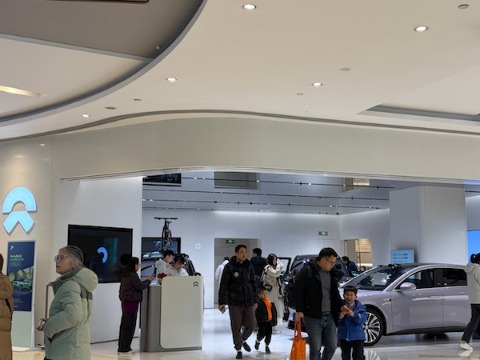
Group 1 - The core observation is that during the New Year holiday, there was a significant increase in customer traffic and test drive demand at various new energy vehicle (NEV) stores, including NIO, Tesla, and others, indicating strong consumer interest despite upcoming policy changes [1][2] - NIO's store in Shanghai reported test drives extending until 1-2 AM, reflecting high customer engagement [1] - The sales performance of new energy vehicle stores during the holiday period suggests that the impact of the new policies on market sales has been limited, as many new energy vehicles are priced above the thresholds for full subsidies [2] Group 2 - In 2026, two major policy changes will affect the NEV market: the vehicle purchase tax will shift from full exemption to a 5% tax rate, and the subsidy structure will change from fixed amounts to a percentage of the vehicle price, although the maximum subsidy remains unchanged [1] - The new policies are expected to increase consumer costs for purchasing NEVs, but many automakers have implemented "bottom-line" measures to attract customers [2] - The current national subsidy policy allows for full rebates for vehicles priced above 166,700 yuan and full trade-in subsidies for those above 187,500 yuan, which aligns with the average prices of many new energy vehicles [2]

节假日消费观察 | “试驾排到凌晨一两点” 20余家车企推购置税托底吸引客流
Di Yi Cai Jing· 2026-01-03 14:29
Core Insights - The sales performance of NIO and other new energy vehicle (NEV) brands remains strong despite upcoming policy changes regarding purchase tax and subsidies [3][4][6] Group 1: Sales Performance - NIO's store in Shanghai experienced high customer traffic and demand for test drives during the New Year holiday, indicating robust consumer interest [1] - Other new energy brands such as Tesla, Zeekr, and Hongmeng Zhixing also reported high foot traffic, with sales representatives noting increased customer numbers compared to typical weekends [3] Group 2: Policy Changes - In 2026, two significant policy changes will affect the NEV market: the reduction of the vehicle purchase tax from full exemption to a 5% rate, and a shift in subsidy structure from fixed amounts to percentage-based subsidies [3] - Despite these changes, many new energy vehicle sales representatives indicated that the impact on sales has been limited, as many vehicles are priced above the thresholds for maximum subsidies [3] Group 3: Manufacturer Responses - NIO is offering a subsidy of 2,000 yuan to offset the increased purchase tax, which is approximately 6,000 yuan for a vehicle priced at 119,800 yuan [4] - Zeekr has implemented a direct price reduction strategy to counteract the tax increase, effectively reducing the tax burden for consumers [4] - Hongmeng Zhixing and Xiaomi are also providing cash discounts and attractive financing options to mitigate the impact of the new tax policy [4] Group 4: Market Coverage - Over 20 car manufacturers, including major players like Li Auto, NIO, and Chery, have introduced purchase tax "safety net" policies to support consumers [4] - Tesla, while a leading player in the NEV market, has not introduced any such measures, yet its sales performance remains unaffected during the holiday period [5][6]