
华鲁恒升

Search documents
反内卷再起,需求端预计26年开启上行周期
Haitong Securities International· 2026-01-12 08:41
Investment Rating - The report maintains a positive outlook on the coal sector, indicating that the bottom of the cycle has been confirmed in Q2 2025, with expectations for an upward trend starting in H2 2026 [1][2]. Core Insights - The coal price is expected to stabilize, with demand being the core driver. The report highlights that the recent production increase in Yulin is not expected to significantly impact overall production levels due to existing capacity constraints [1][2]. - The report emphasizes that the supply-demand dynamics are shifting, with a notable increase in electricity demand in November, showcasing the resilience of thermal coal demand [1][2]. - The report forecasts that the coal sector will enter a new upward cycle starting in H2 2026, driven by increased demand for thermal power [1][2]. Summary by Sections Coal Price Tracking - As of January 9, 2026, the price of Q5500 coal at Huanghua Port is 706 CNY/ton, up 17 CNY/ton (2.5%) from the previous week [6][7]. - The price of Q5000 coal at Huanghua Port is 621 CNY/ton, up 20 CNY/ton (3.3%) from the previous week [6][7]. - The report notes a decrease in coal inventories at major ports, indicating tightening supply conditions [19][28]. Demand and Supply Analysis - November electricity consumption has shown significant growth, indicating strong demand for thermal coal [1][2]. - The report suggests that the anticipated production increases may not lead to significant supply growth due to regulatory constraints on overproduction [1][2]. - The report highlights that domestic coal supply is stabilizing while imports are expected to decline, maintaining overall supply levels [1][2]. Focus on Key Companies - The report recommends continued attention on core companies such as China Shenhua, Shaanxi Coal and Chemical Industry, and China Coal Energy, as well as Yanzhou Coal Mining and Jincheng Anthracite Mining [2].
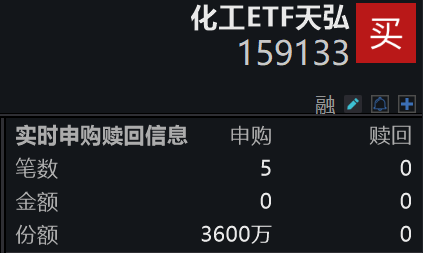
震荡整理蓄势待发!化工ETF天弘(159133)连续8日净流入,近20日“吸金”近2亿元,盘中实时净申购3600万份
Sou Hu Cai Jing· 2026-01-12 07:03
Core Viewpoint - The chemical ETF Tianhong (159133) has shown significant trading activity and net inflows, indicating strong investor interest in the chemical sector, particularly in light of recent developments in advanced manufacturing and semiconductor materials [1][2][3]. Group 1: ETF Performance - As of January 12, 2026, the chemical ETF Tianhong (159133) recorded a turnover of 3.04% with a transaction volume of 23.46 million yuan [1]. - The ETF has seen a net subscription of 36 million shares during the trading session [1]. - The latest scale of the chemical ETF Tianhong reached 776 million yuan, with a total of 678 million shares, both hitting record highs since its inception [2]. Group 2: Market Trends - The chemical ETF Tianhong has experienced continuous net inflows over the past eight days, totaling 168 million yuan, and nearly 200 million yuan over the last 20 days [2]. - The ETF tracks an index that includes 50 major stocks in the chemical industry, characterized by large market capitalization and high liquidity, with over 93% of its composition in basic chemicals, petroleum and petrochemicals, and electric equipment [2]. Group 3: Industry Developments - Shanghai has released a three-year action plan to support the transformation and upgrading of advanced manufacturing, focusing on key and emerging industries such as new-generation electronic information, intelligent connected vehicles, and advanced materials [2]. - The plan aims to foster the development of competitive enterprises in sectors like integrated circuits and low-altitude economy, which may benefit the chemical industry indirectly through increased demand for materials [2][3]. Group 4: Institutional Insights - Guohai Securities suggests that the ongoing tensions in international relations may accelerate the domestic substitution process for semiconductor materials, particularly in critical areas such as photoresists and electronic chemicals, presenting significant growth opportunities for domestic companies [3]. - The "anti-involution" policy is expected to optimize the supply side of the chemical industry, with certain segments like chromium salts experiencing a revaluation due to rising demand from AI data centers and aerospace engines [3].

“反内卷”政策引导下化工行业景气度或将止跌回升,化工ETF嘉实(159129)有望持续受益
Xin Lang Cai Jing· 2026-01-12 05:51
Group 1 - The chemical sector experienced a reversal in early trading on January 12, 2026, with the CSI Chemical Industry Theme Index (000813) down by 0.63% as of 11:25 AM [1] - Key stocks in the sector showed mixed performance, with Guangwei Composite leading gains at 8.12%, followed by Bluestar Technology at 4.77% and Zhongjian Technology at 4.52%. Hebang Bio led the declines, with Sanmei Co. and Juhua Co. also falling [1] - The Ministry of Industry and Information Technology emphasized four key areas for 2026: "stability," "expansion," "innovation," and "growth," focusing on stabilizing growth in key industries such as steel, non-ferrous metals, and petrochemicals [1] Group 2 - CITIC Construction pointed out that despite rising short-term technical correction risks in the chemical sector, investment opportunities still exist. The outlook remains positive for the cross-year market, focusing on future industry hotspots, AI, semiconductors, and the resource price increase chain [1] - Guohai Securities noted that under the "anti-involution" policy, supply-side expansion in China's chemical industry is expected to slow significantly, potentially leading to a recovery in industry prosperity. The curtailment of disorderly capacity expansion may benefit leading companies with cost and efficiency advantages, marking a long-term upward trend in performance [1] - As of December 31, 2025, the top ten weighted stocks in the CSI Chemical Industry Theme Index included Wanhua Chemical, Salt Lake Industry, and Cangge Mining, accounting for a total of 45.31% of the index [2] Group 3 - Investors can also explore investment opportunities in the chemical sector through the Chemical ETF Link Fund (013527) [3]
石化化工行业景气度有望实现复苏,石化ETF(159731)连续3天净流入
Sou Hu Cai Jing· 2026-01-12 02:27
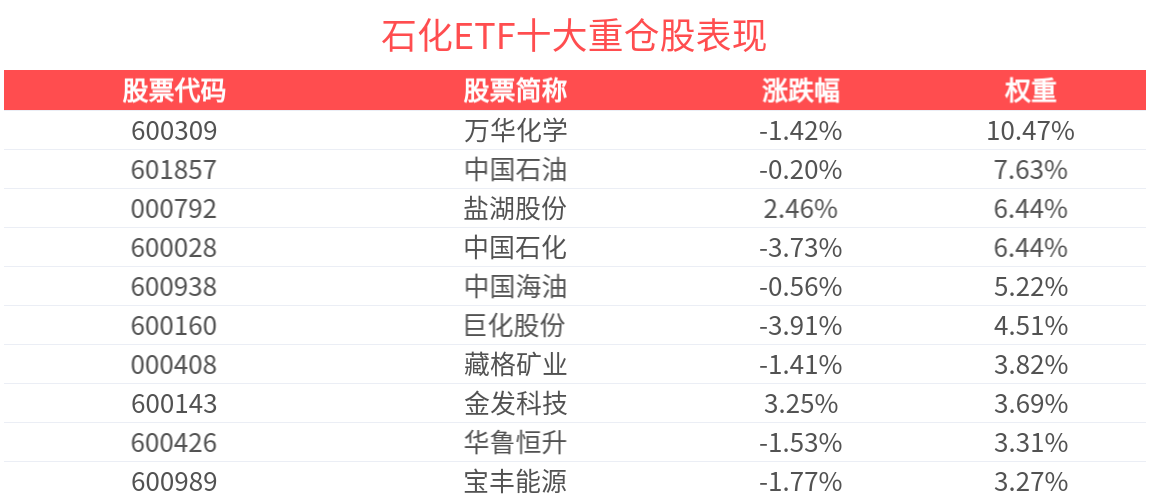
| 股票代码 | 股票简称 | 涨跌幅 | 权重 | | --- | --- | --- | --- | | 600309 | 万华化学 | -1.42% | 10.47% | | 601857 | 中国石油 | -0.20% | 7.63% | | 000792 | 盐湖股份 | 2.46% | 6.44% | | 600028 | 中国石化 | -3.73% | 6.44% | | 600938 | 甲国海海 | -0.56% | 5.22% | | 600160 | 巨化股份 | -3.91% | 4.51% | | 000408 | 藏格矿业 | -1.41% | 3.82% | | 600143 | 金发科技 | 3.25% | 3.69% | | 600426 | 华鲁恒升 | -1.53% | 3.31% | | 600989 | 宝幸能源 | -1.77% | 3.27% | 截至1月9日,石化ETF近2年净值上涨49.64%。从收益能力看,截至2026年1月9日,石化ETF自成立以来,最高单月回报为15.86%,最长连涨月数为8个月, 最长连涨涨幅为41.60%,上涨月份平均收益率为5.25 ...






逆向布局精准卡位主动权益基金操作“向ETF看齐”
Zheng Quan Shi Bao· 2026-01-11 17:03
Group 1 - The boundary between passive investment through ETFs and actively managed funds is becoming increasingly blurred, with ETFs evolving into a "duet" with active equity funds [1] - The direction of ETF applications is increasingly serving as a "barometer" for many active equity funds, reflecting market demand and profitability [2] - Active equity funds are adopting ETF-like characteristics, with high concentration in specific sectors to achieve beta returns, often pushing their positions close to the 90% limit [2] Group 2 - The issuance of ETFs is often seen as a precursor to industry booms, as evidenced by the rapid adoption of robotics ETFs leading to a surge in active equity fund investments in the robotics sector [2] - The recent focus on commercial aerospace by active equity funds aligns with the launch of the first satellite ETF, indicating a strategic shift towards this sector [3] - A decrease in ETF applications for consumer sectors correlates with a reduction in active equity fund allocations to those areas, demonstrating a synchronized investment approach [3] Group 3 - The logic behind ETF applications has evolved from merely capturing flows to predicting industry turning points, significantly benefiting the research and investment strategies of active equity funds [4] - The recent surge in chemical ETFs reflects a strategic pivot in ETF product development, aligning with active fund managers' investment strategies [4][5] - The collaboration between ETF product development and research departments enhances the precision of investment strategies, allowing for better positioning in the market [8] Group 4 - The reverse positioning of ETFs during industry downturns often signals the end of a sector's decline and the potential for fundamental recovery, as seen in the solar and battery sectors [7] - The issuance of solar and battery ETFs by leading funds indicates a strategic bet on these sectors, supported by favorable policy changes [7] - The collaborative effect between ETF development and research departments is a significant advantage for precise market positioning [8]
逆向布局精准卡位 主动权益基金操作“向ETF看齐”
Zheng Quan Shi Bao· 2026-01-11 17:00
Group 1 - The boundary between passive investment through ETFs and actively managed funds is becoming increasingly blurred, with ETFs evolving into a "duet" with active equity funds [1] - The direction of ETF applications is increasingly serving as a "barometer" for many active equity funds, reflecting market demand and profitability [2] - Active equity funds are adopting ETF-like characteristics, with high concentration in specific sectors to achieve beta returns, often pushing their positions close to the 90% limit [2] Group 2 - The issuance of ETFs is seen as a signal for industry booms, with examples like the robotics sector where major fund companies launched ETFs, leading to a surge in active fund investments in that area [2] - The recent focus on commercial aerospace by active equity funds aligns with the launch of the first satellite ETF, indicating a strategic shift towards this sector [3] - A decrease in ETF applications for consumer sectors correlates with a reduction in active fund allocations to those areas, demonstrating a synchronized investment approach [3] Group 3 - The logic behind ETF applications has evolved from merely capturing flows to predicting industry turning points, significantly benefiting the research and investment strategies of active equity funds [4] - The recent surge in chemical ETFs reflects a strategic pivot in ETF product development, with active funds adjusting their holdings in response to these new offerings [4][5] - The synchronization between active fund managers and ETF applications indicates a high level of collaboration between public investment research and product development [5] Group 4 - The reverse positioning of ETFs often signals the end of industry downturns, as seen in the solar and battery sectors, where ETFs were launched despite active funds reducing their exposure [6] - The issuance of solar and battery ETFs by leading public funds aligns with policy changes aimed at industry reform, suggesting a strategic move towards enhancing profitability for leading companies [6] Group 5 - The collaboration between ETF product development and research departments has become a significant advantage for public funds in identifying investment opportunities [7] - ETF applications are evolving into precursors for active equity fund strategies, providing liquidity for sectors that are underrepresented or have been overlooked [7]
基础化工周报:万华新疆、韩国韩华TDI临时停车,国内TDI价格上行-20260111
Soochow Securities· 2026-01-11 15:39
Investment Rating - The industry investment rating is "Overweight," indicating an expected outperformance of the industry index relative to the benchmark by more than 5% over the next six months [70]. Core Insights - The average prices for pure MDI, polymer MDI, and TDI are reported at 18,043, 14,171, and 14,478 CNY/ton respectively, with TDI showing a week-on-week increase of 59 CNY/ton [2]. - The average prices for ethane, propane, and coal are 1,165, 4,172, and 520 CNY/ton respectively, with ethane decreasing by 85 CNY/ton and propane increasing by 45 CNY/ton [2]. - The average prices for synthetic ammonia, urea, DMF, and acetic acid are 2,213, 1,724, 3,787, and 2,546 CNY/ton respectively, with synthetic ammonia decreasing by 34 CNY/ton and urea increasing by 12 CNY/ton [2]. - The average prices for animal nutrition products such as VA and VE are 62.5 and 54.9 CNY/kg respectively, with no significant changes [2]. Summary by Sections Polyurethane Sector - The average prices for pure MDI, polymer MDI, and TDI are 18,043, 14,171, and 14,478 CNY/ton respectively, with TDI showing a week-on-week increase of 59 CNY/ton [2][16][20]. Oil, Coal, and Olefins Sector - Ethane and propane average prices are 1,165 and 4,172 CNY/ton respectively, with ethane decreasing by 85 CNY/ton and propane increasing by 45 CNY/ton [2][24][31]. - The average price for polyethylene is 6,800 CNY/ton, reflecting a week-on-week increase of 30 CNY/ton [2]. Coal Chemical Sector - The average prices for synthetic ammonia, urea, DMF, and acetic acid are 2,213, 1,724, 3,787, and 2,546 CNY/ton respectively, with synthetic ammonia decreasing by 34 CNY/ton and urea increasing by 12 CNY/ton [2][40][48][49]. Animal Nutrition Sector - The average prices for VA, VE, solid egg amino acid, and liquid egg amino acid are 62.5, 54.9, 17.6, and 14.2 CNY/kg respectively, with no significant changes [2][56][62].


多项产品出口退税政策调整,不改中国产业竞争优势
Orient Securities· 2026-01-11 15:38
Investment Rating - The industry investment rating is maintained as "Positive" [5] Core Viewpoints - The adjustment of export tax rebate policies does not alter the competitive advantage of China's chemical industry. The cancellation of export tax rebates for various chemical products is expected to increase export costs, reflecting China's energy and waste treatment capabilities. Despite theoretical concerns about competitiveness, high energy-consuming products like PVC lack global expansion capacity, and the price increase due to VAT will not significantly change competitive dynamics [2][7] - Market rumors do not change the profit recovery opportunities in the industry. Reports of regulatory discussions regarding monopolistic risks have led to stock price corrections for leading chemical companies. However, the industry is still in a self-rescue phase, with production cuts not aimed at achieving monopolistic profits but rather at facilitating recovery from previous losses [2][7] Investment Recommendations and Targets - Recommended leading companies in the refining industry include Sinopec (600028, Buy), Rongsheng Petrochemical (002493, Buy), and Hengli Petrochemical (600346, Buy). The report also highlights recovery opportunities in various chemical sub-industries, such as MDI leader Wanhua Chemical (600309, Buy) and PVC-related companies like Zhongtai Chemical (002092, Not Rated), Xinjiang Tianye (600075, Not Rated), Chlor-alkali Chemical (600618, Not Rated), and Tianyuan Co., Ltd. (002386, Not Rated). In the phosphoric chemical sector, companies like Chuanheng Co., Ltd. (002895, Not Rated) and Yuntianhua (600096, Not Rated) are noted for their growth potential driven by rapid energy storage growth. In the oxalic acid sector, attention is drawn to Hualu Hengsheng (600426, Buy), Huayi Group (600623, Buy), and Wankai New Materials (301216, Buy) [3]


——基础化工行业周报:多晶硅、丁二烯价格上涨,关注反内卷和铬盐-20260111
Guohai Securities· 2026-01-11 13:03
Investment Rating - The report maintains a "Recommended" rating for the chemical industry [1] Core Insights - The chemical industry is expected to experience an upward cycle due to the implementation of "anti-involution" policies in China and the accelerated exit of some European facilities [29] - The report highlights the potential for domestic substitution of semiconductor materials from Japan due to rising geopolitical tensions, which could benefit various companies in the sector [5] - The chromium salt industry is undergoing a value reassessment driven by increased demand from AI data centers and commercial aircraft engines, with a projected supply-demand gap of 340,900 tons by 2028 [8] Summary by Sections Industry Performance - The chemical industry has shown strong relative performance with a 1-month increase of 10.7%, 3-month increase of 9.6%, and a 12-month increase of 45.1%, outperforming the CSI 300 index [3] Price Trends - Key products such as lithium carbonate and polysilicon have seen significant price increases, supported by policy guidance and industry self-discipline [12] - The price of chromium salts has remained stable, with metal chromium priced at 82,000 CNY/ton as of January 9, 2026 [15] Investment Opportunities - Focus on companies with low-cost expansion capabilities, such as Wanhu Chemical and Hualu Hengsheng, as well as those in sectors with improving market conditions like chromium salts and phosphates [6][9] - High dividend yield opportunities are identified in state-owned enterprises like China Petroleum and China National Chemical [10] Key Company Tracking - Companies such as Dongfang Shenghong and Huabei Yihua are highlighted for their earnings potential, with projected EPS growth for 2026 [30] - The report tracks specific price movements for various chemicals, including a notable increase in the price of ammonium phosphate and a stable price for urea [17][19]


BZ处于区间上沿,关注逢高空的机会:BZ&Eb周报-20260111
Guo Tai Jun An Qi Huo· 2026-01-11 11:05
BZ&Eb周报:BZ处于区间上沿,关注逢 高空的机会 国泰君安期货研究所·黄天圆 投资咨询从业资格号:Z0018016 日期:2026年01月11日 Guotai Junan Futures all rights reserved, please do not reprint 本周纯苯、苯乙烯总结:原油地缘风险高开之后,关注逢高空的机会 • 纯苯国产:12月检修11万吨,1月检修维持11万吨(假设考虑浙石化检修带来4.5万吨减量),主要是中化泉州、丽东、浙石化等装置检修量大。部分山东 地炼在解决了配额问题之后仍会提高负荷,弥补部分产量损失。1月关注巴斯夫湛江新投产带来的纯苯增量。 • 纯苯进口:外盘压力仍然偏大,韩国纯苯抛压在12月仍然偏大,进口居高难下。1月目前进口分歧较大,预计仍然在48万吨左右的高进口,2月之后的进口 仍然在45万吨左右。 • 苯乙烯:12月检修8.5万吨,1月检修6.5万吨。12月之后装置开工逐步恢复,关注山东国恩化工装置开工带来的增量。 • 己内酰胺:CPL负反馈开始,工厂逐步降低负荷,12月预计4万吨检修,1月有6万吨检修,主要是福建永荣、天辰、华鲁恒升、旭阳沧州等。12月关注恒逸 ...