
基钦周期

Search documents
2026年全球经济和大类资产白皮书:穿越周期,洞见新机
Ge Lin Qi Huo· 2026-03-06 08:08
1. Report Industry Investment Rating No information provided in the report. 2. Core Views of the Report - The global economy is undergoing a paradigm shift from globalization to geopolitics, with geopolitical risks becoming a core variable in asset pricing. The global economy is at the end of the depression phase of the previous information technology cycle, and 2026 - 2027 is expected to be a global economic trough, followed by a new cycle centered on artificial intelligence and new energy [4]. - The world economic pattern is being reshaped, with the US - China game leading to the reorganization of the order. The US economy shows signs of stagflation and faces policy dilemmas, while the Chinese economy has both challenges and resilience. Other economies are also experiencing differentiation [4]. - The core driving forces include the technological revolution, energy transformation, and geopolitical games, which will have a profound impact on the global economy and asset prices [4]. - In 2026, different asset classes have different investment strategies, such as gold as a core asset, copper and aluminum as strategic assets, and attention to structural opportunities in various markets [6]. 3. Summary by Relevant Catalogs Chapter 1: Historic Turn in the Context of a Century - Long Change - **Paradigm Shift from Globalization to Geopolitics**: The global political - economic pattern is shifting from globalization to geopolitics, with geopolitical risks becoming a key factor in asset pricing. Trump's potential radical trade policies are an extreme manifestation of this trend [17]. - **Positioning from the Perspective of the Kondratieff Cycle**: The global economy is at the end of the depression phase of the previous information technology cycle, expected to end in 2026. This will resonate with the bottom of the Kitchin inventory cycle, and 2026 - 2027 may be a significant global economic trough [18]. Chapter 2: Fission and Reconstruction of the Global Macroeconomy - **World Economic Pattern and Order Reorganization**: The "east - rising and west - falling" trend is non - linear. The US - China game will lead to the reorganization of the monetary system, trade rules, and international political order, and the global economy is moving towards "grouping" and "camp - forming" [23]. - **US Economic Stagflation and Policy Dilemmas**: The US economy shows signs of stagflation, with weakening growth momentum and stubborn inflation. The government's debt has exceeded $38 trillion, and the Fed is in a dilemma between cutting interest rates and controlling inflation [24][27]. - **China's Economic "New Normal"**: China's economy faces challenges such as population aging, high leverage, and real - estate adjustment, but also shows resilience in exports and the development of new - quality productivity. In 2026, active fiscal policies and real - estate stabilization policies will support the economy [49]. - **Differentiation and Risks of Other Major Economies**: Europe's manufacturing PMI is contracting, facing recession risks; Japan's interest - rate hike cycle is fragile, which may trigger a Japanese debt crisis; India's economic growth shows signs of slowing down [71][74][75]. Chapter 3: Analysis of Core Driving Forces: Technology, Energy, and Politics - **New - Round Technological Revolution**: The core driving force is "artificial intelligence + new energy + digital finance". The Juglar cycle is in an upward phase, spurring investment in high - tech industries. AI will reshape traditional industries and drive demand for underlying hardware [80]. - **Energy Revolution and Reconstruction**: The new - energy revolution is reshaping the global energy demand pattern, but resource nationalism is on the rise, increasing global mining costs. Localization policies distort global pricing [81]. - **Great - Power Games and Geopolitics**: The US - China game is a core variable, with a "fight - but - not - break" situation in areas such as technology decoupling and key - mineral control. Geopolitical conflicts in various regions bring uncertainties to the global market [89]. Chapter 4: 2026 Asset Allocation Strategies - **Precious Metals**: Gold is a "ballast stone" due to central - bank purchases, safe - haven demand, and interest - rate cuts. Silver has strong industrial demand and is suitable for tactical allocation [91]. - **Industrial Metals**: Copper is a core strategic asset. Supply is limited, while demand from the new - energy revolution is strong, making copper prices likely to rise [99]. - **Energy and Chemicals**: Global crude - oil demand growth is slowing, but supply is fragile. Geopolitical events drive short - term price fluctuations, and investors should focus on structural opportunities [103]. - **Equity Markets**: Global stock markets face complex situations. US stocks face risks of AI bubbles and profit pressure, while A - shares and Hong Kong stocks have structural opportunities [104]. - **Fixed - Income Markets**: US Treasury yields may steepen, with limited downward space for long - term yields. Chinese bonds have downward space for yields and are suitable for risk - aversion [109]. - **Foreign - Exchange Markets**: The US dollar may show a volatile pattern, and the RMB is expected to remain stable within the range of 6.8 - 7.2 [114]. Chapter 5: Risk Warnings and Summary Outlook - **2026 Investment Strategy Summary**: In 2026, the market will be highly volatile and uncertain, with structural opportunities. The core idea of asset allocation is to focus on defense, seize opportunities, and emphasize structure. Strategic allocation of gold, core offensive in strategic metals, and attention to China's new - quality productivity direction [125].
基金经理投资笔记 | 基于周期阶段的2026年资产优先级选择
Sou Hu Cai Jing· 2025-12-06 05:46
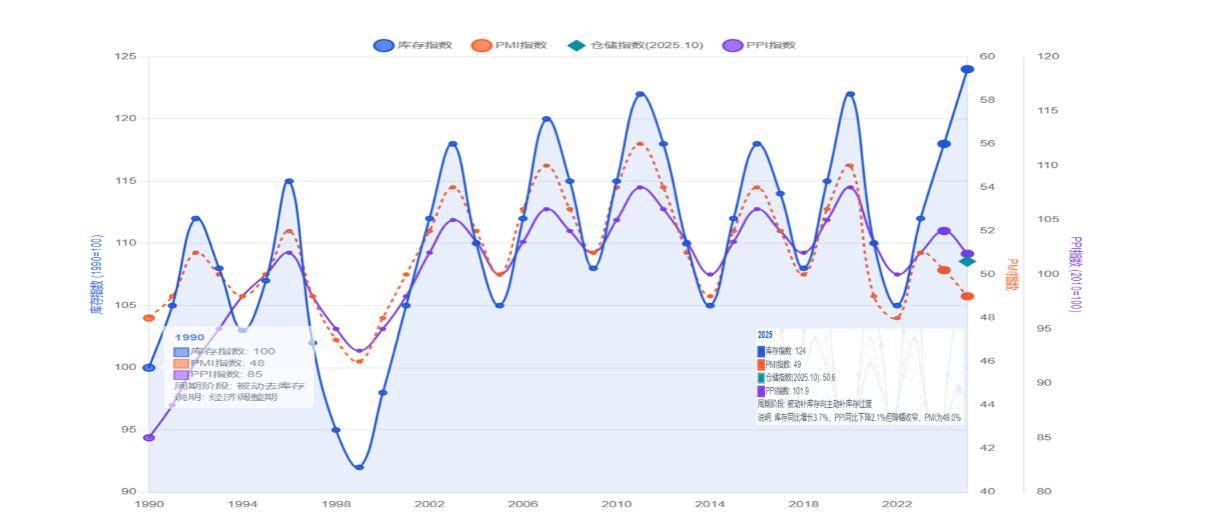
Core Viewpoint - The article discusses the transition in economic cycles and the implications for wealth management, emphasizing the importance of structural debt and fiscal policy over monetary policy in the context of liquidity changes expected in 2026 compared to 2025 [1] Economic Cycle Analysis Framework - Economic cycle analysis should not be confined to traditional macro asset allocation frameworks, as it emphasizes structural issues rather than aggregate concepts [2] - The economic cycle consists of regular expansions and contractions, categorized into long, medium, and short cycles, including the Kondratieff, Juglar, Kuznets, and Minsky cycles [2] Phases of the Real Cycle - The real cycle is divided into three main cycles: Kondratieff, Juglar, and inventory cycles [3] Kondratieff Cycle: Technological and Energy Revolutions - The Kondratieff cycle spans approximately 60 years, focusing on technological changes and resource dynamics, with current consensus highlighting AI and its supporting infrastructure as key drivers [4] - The cycle illustrates the interplay between technological efficiency and resource consumption, leading to a demand cycle [4] Juglar Cycle: Equipment Investment - The Juglar cycle, lasting 7-11 years, is driven by periodic changes in equipment investment and capital expenditure, with China currently in the early recovery phase of its sixth Juglar cycle [6][7] - Key characteristics of the current Juglar cycle include the transition from old to new driving forces, accelerated technological iteration, and significant industry differentiation [8][9] Inventory Cycle: Transition from Passive to Active Inventory Management - The inventory cycle consists of four stages, with the current phase indicating a shift from passive to active inventory management, influenced by internal market dynamics [10] - Recent data shows a decline in manufacturing PMI, indicating weak demand and a challenging environment for inventory management [10][11] Phases of the Financial Cycle - The financial cycle focuses on real estate and debt cycles, with China still undergoing a significant adjustment in its real estate market since 2020 [13][14] - The Minsky cycle describes a pattern of credit expansion leading to financial instability, with current conditions characterized by low interest rates and a gradual rise in macro leverage [17][18] Asset Prioritization Based on Cycle Phases - The asset allocation strategy for 2026 emphasizes the resonance between the Kondratieff and Juglar cycles, focusing on new productive forces while maintaining defensive positions in a low-interest environment [19] - Specific investment areas include AI computing, industrial robotics, and green energy, while avoiding high-risk assets related to the ongoing real estate adjustment [19]

未来六年资产赚钱顺序曝光!普通人跟对就能躺赚
Sou Hu Cai Jing· 2025-12-01 05:22
Core Insights - The article outlines a strategic investment roadmap for the next six years, emphasizing a rotation from bonds to real estate as a means for ordinary investors to capitalize on market opportunities [1] Investment Strategy Overview - In 2022, smart money moved into bonds as the Federal Reserve raised interest rates, leading to significant gains in high-dividend "bond-like stocks" [1] - The article predicts a bullish gold market from 2023 to 2026, suggesting that investors should enter now to benefit from anti-inflation gains [1] - A major stock market cycle is anticipated from September 2024 to September 2027, driven by corporate earnings and economic recovery, with growth and cyclical stocks expected to perform well [1] Commodity and Real Estate Outlook - Starting in 2026, commodities are expected to rise significantly due to supply-demand imbalances, with a recommendation to accumulate energy metals for future profit [1] - Real estate is projected to rebound after 2027, with a focus on core cities and essential housing as the ideal investment opportunity at that time [1] Risk Management Strategy - The investment strategy is characterized by a gradual increase in risk: starting with stable bonds, moving to gold for inflation protection, then to growth stocks, followed by commodities, and finally real estate [1]

【专题】甜蜜回忆:白糖二十年行情回溯
Xin Lang Cai Jing· 2025-11-04 11:02
Group 1 - The core point of the article is that the sugar market is currently transitioning from a bear to a bull phase, with potential resonance between fundamentals and macroeconomic factors expected around 2027 [1][36] - Over the past 20 years, the sugar price has been significantly influenced by the global supply-demand gap, with recent years showing that production cuts have become a more prominent driver of market trends [1][36] - The historical analysis indicates that domestic and international sugar prices have shown a high degree of consistency, with variations primarily in the amplitude of fluctuations and the timing of bull-bear transitions [2][36] Group 2 - The article outlines five major historical cycles of sugar price fluctuations since 2000, detailing the factors influencing each phase, including weather conditions, domestic production, and international market dynamics [4][5][6] - The ENSO index is highlighted as a critical tool for observing sugar price cycles, with El Niño and La Niña phenomena having complex impacts on global sugar production and prices [15][33] - The domestic sugar market has been affected by government policies, including tariff quotas established after China's WTO accession, which have stabilized the import quota at 1.945 million tons [4][20] Group 3 - The analysis shows that sugar demand has a strong positive correlation with global consumption trends, with average annual growth rates of 2.07% from 2000 to 2011, declining to 0.55% since 2012 [8][10] - The article emphasizes that the domestic sugar price tends to be more resilient during downturns due to protective measures for the domestic sugar industry, while international prices are more market-driven [22][28] - The current market dynamics suggest that the 01 contract is performing strongly, particularly in the context of seasonal demand fluctuations [31][36]

哪些因素会对白糖价格产生影响?
Qi Huo Ri Bao· 2025-11-03 11:29
Core Insights - The article discusses the historical fluctuations in sugar prices since 2000, highlighting five cycles of price increases and decreases, with an average duration of five years for each cycle. The overall trend shows a strong correlation between domestic and international sugar prices, with variations in volatility and market transitions [1]. Group 1: Sugar Price Trends - Sugar prices have shown a strong positive correlation with global demand, driven by population growth and increased applications of sugar, with an average annual consumption growth rate of 2.07% from 2000 to 2011, which decreased to 0.55% post-2012 [1]. - The global sugar supply-demand gap is a significant variable affecting sugar prices, with a negative correlation of -0.16 between raw sugar prices and the global supply-demand gap, becoming more pronounced after 2011 [1]. - The correlation coefficient between domestic sugar prices in Guangxi and international raw sugar prices is approximately -0.35 [1]. Group 2: Weather and Economic Factors - Weather factors, particularly the impact of La Niña and El Niño phenomena, play a crucial role in sugar production and price fluctuations. La Niña is expected to persist until early 2026, potentially causing drought in Brazil, which could affect sugarcane production in the 2026 season [2]. - The article notes that significant economic crises, such as the 2008 global financial crisis and the 2020 COVID-19 pandemic, have shown consistent impacts on sugar prices, with sugar being a staple commodity less affected by localized macroeconomic crises [2]. - The last strong El Niño occurred in 2023, which led to reduced sugar production and influenced the previous price surge. The next significant price increase is anticipated around 2027, aligning with macroeconomic cycles [3].
2025年中报季“后日谈”
雪球· 2025-09-01 07:48
Core Viewpoint - The article emphasizes the importance of a comprehensive investment framework that integrates macro, meso, and micro perspectives to identify potential investment opportunities and risks in the current economic environment [2][11]. Macro Analysis - Macro factors can be broken down into three key elements: growth, inflation, and monetary & fiscal policies, with indicators such as PMI, PPI & CPI, and M1 being crucial for observation [3]. - The macroeconomic cycle can be predicted by analyzing these indicators, with specific attention to the experience of past downturns and recoveries [3][4]. - The expectation of mean reversion in macro indicators like PMI and PPI is highlighted as a reliable investment strategy, especially in the context of the current economic conditions [4]. Meso Industry Analysis - Investment should focus on industries in an upward phase of the economic cycle, particularly those with oligopolistic or monopolistic competition structures [5]. - The selection of leading companies within these industries should be based on their market share, profitability, and competitive advantages [5]. - Industry cycles can be assessed using various cycles, with a focus on the utilization rates of production capacity and inventory cycles to determine optimal entry points for investment [6][7]. Micro Financial Analysis - Key financial metrics for evaluating companies include a solid balance sheet with a Debt/Equity Ratio below 70%, a profit and cash flow alignment, and a sustainable payout ratio of over 30% [8][10]. - The importance of free cash flow generation and reasonable valuation multiples (e.g., below 10x P/E or 10x market cap/free cash flow) is emphasized for long-term investment success [9]. - Companies that maintain a consistent dividend payout ratio while reinvesting retained earnings for growth are seen as ideal candidates for investment [10].

国信证券:关注港股二季报板块业绩分化 原材料或持续受益
智通财经网· 2025-08-31 01:01
Group 1 - The core viewpoint is that the Hong Kong stock market did not continue its upward trend in August due to near-historical low risk premiums and downward revisions in the Hang Seng Index's performance, leading to significant performance divergence among sectors [1][4] - The "takeout war" is highlighted as a disturbance that must be considered, alongside the performance downgrades in financials, high-dividend, and local stocks following the second quarter reports [1][4] - Recommended sectors include AI, innovative pharmaceuticals, raw materials, and consumer sectors, with a focus on the "anti-involution" theme in the raw materials sector, which is expected to benefit from rising overseas inflation in Q3 and Q4 [1][5] Group 2 - In the US, the pace of future interest rate cuts is deemed crucial, with market interpretations of Powell's speech at Jackson Hole leaning towards a dovish signal, emphasizing a balance between long-term labor and inflation [2] - The upcoming inflation data for August is critical as it marks the first month businesses begin passing on tariffs to consumers, influencing the future rate cut trajectory [2] - Concerns regarding the independence of the Federal Reserve are heightened due to ongoing events related to the Cook incident, suggesting a need to monitor cryptocurrency trends as a potential indicator of liquidity impacts on the US stock market [2] Group 3 - The A-share market is accelerating upward, with trading volume being a key factor; a daily turnover rate of 2.9% is identified as a critical level, with current rates at 2.8% indicating market health [3] - Important time windows for market movements are projected for November-December and April of the following year, based on historical performance metrics [3] Group 4 - In the consumer sector, performance is beginning to diverge, necessitating careful selection; industries such as tobacco, trendy toys, aquaculture, and packaged water are noted for their high levels of prosperity [6]

港股9月投资策略:关注2季报板块的业绩分化
Guoxin Securities· 2025-08-29 09:36
Group 1 - The report emphasizes the performance divergence in the Hong Kong stock market, particularly after the second quarter earnings reports, with a notable lack of continuation in the upward trend of the Hang Seng Index due to earnings downgrades [3][4] - The report recommends focusing on sectors such as AI, innovative pharmaceuticals, raw materials, and specific consumer segments that are showing strong performance despite overall market challenges [3][4] - The report highlights the importance of monitoring the turnover rate in the A-share market, indicating that a turnover rate of 2.9% is a critical threshold for market health during upward trends [1][39] Group 2 - The report identifies key time windows in the Kitchin cycle, particularly November-December and April of the following year, as significant for market performance [2] - The report notes that the current A-share market is experiencing accelerated upward movement, driven by strong policy support and liquidity, similar to past bull markets [39][50] - The report suggests that the ongoing bull market may face a correction before the end of the Kitchin cycle, indicating potential volatility in the near future [50]
从经济四周期配置大类资产8月篇:轰轰烈烈“反内卷”与10年周期再现
Ge Lin Qi Huo· 2025-08-04 01:56
1. Report Industry Investment Rating There is no information about the report industry investment rating in the provided content. 2. Core Viewpoints of the Report - The anti - involution campaign, initiated by the Central Financial and Economic Affairs Commission, is a 10 - year recurrence of the Juglar cycle. It is expected to have a profound impact on China's economy, with effects surpassing the previous supply - side reform [1][13][16]. - The anti - involution drive rapidly boosts commodity prices, which is the third and final wave of the current Kitchin cycle's upward phase, likely to last until the end of the year [2][17]. - It has a positive impact on listed companies' performance and stock prices. The A - share market shows a wealth effect, attracting more off - market funds [2][24]. - The Fed is likely to resume rate cuts in September 2025 and enter a steep rate - cut phase in 2026. This will narrow the Sino - US interest rate gap, prompting the accelerated return of China's overseas funds [2]. - Global professional investment institutions are reducing their exposure to US assets and increasing their allocation to Chinese assets [2][28][30]. - Gold is in a technical adjustment, and a major opportunity may emerge at the end of the year [2][4][31]. - The anti - involution campaign initiates an upward trend in inflation, opening up downward space for long - term treasury bonds [3][35]. - China is expected to achieve a double surplus in trade and capital, and the offshore RMB exchange rate is likely to strengthen [3][38]. 3. Summary According to the Directory 3.1 Four Economic Cycles - **Kitchin Cycle**: A short - term economic cycle of about 3.5 years. The current upward phase of the Chinese Kitchin cycle started in June 2023 and is expected to peak at the end of 2025, while the US cycle will peak in Q1 2026 [7]. - **Juglar Cycle**: A medium - term cycle of 9 - 10 years, also known as the manufacturing investment cycle. China's current Juglar cycle is in the upward phase and is expected to peak in early 2027 [8]. - **Kuznets Cycle**: An economic cycle related to the housing construction industry with an average length of about 20 years. The current Chinese Kuznets cycle is expected to bottom out around 2030 [9]. - **Kondratieff Cycle**: A long - term cycle of 50 - 60 years, also called the technological innovation cycle. The current Kondratieff depression started in 2020 due to the COVID - 19 shock, is expected to end around 2030, and then enter a 10 - year recovery phase. China is the center of the current technological innovation cycle, with AI and AI humanoid robots as the representative innovations [10]. 3.2 Anti - Involution Campaign - **Campaign Initiation**: On July 1, the Central Financial and Economic Affairs Commission meeting called for in - depth construction of a unified national market, focusing on "five unifications and one opening". Subsequently, various industries carried out anti - involution measures [11]. - **Policy Response to the Juglar Cycle**: It is a response to the manufacturing investment cycle reaching its peak. Similar to the supply - side reform 10 years ago, its goal is to reduce overcapacity, but this time it focuses on emerging industries and the service sector [13][15][16]. - **Differences from the Previous Supply - Side Reform**: It focuses on emerging industries and the service sector, and is expected to have a more far - reaching impact on the Chinese economy [16]. 3.3 Impact on Asset Classes - **Commodities**: The anti - involution campaign drives up commodity prices, which is the third wave of the current Kitchin cycle's upward phase. Prices are expected to rise until the end of the year. After a second - wave correction in late July, they are likely to enter the main upward wave in late August [17][21][23]. - **Equities**: The A - share market shows a wealth effect, attracting off - market funds. The decline at the end of July was a pull - back after breaking through the 3,500 - point platform. The CSI 300 index will have more upward momentum, and the CSI 1000 and CSI 500 indexes are expected to rise more strongly [24][39]. - **Gold**: Gold is in a technical adjustment, and a major opportunity may emerge at the end of 2025 [31][39]. - **Bonds**: The anti - involution campaign initiates inflation, opening up downward space for long - term treasury bonds [35][39]. - **Foreign Exchange**: China is expected to achieve a double surplus in trade and capital, and the offshore RMB is likely to strengthen [38][39].
2025年海外宏观中期展望:守得云开见月明
CMS· 2025-06-24 07:02
Group 1: Global Economic Trends - The global narrative has shifted from "American exceptionalism" to "dollar system collapse," leading to increased asset volatility and a shift of global capital from U.S. assets to non-U.S. assets[1] - In the first half of 2025, three major disruptions altered the economic and asset operation logic, including changes in global narrative, uncertainty in Trump's tariff policies, and a shift from fiscal expansion optimism to debt risk concerns[4] - The U.S. fiscal deficit is projected to rise to 6.4% in 2024, with government leverage reaching 121.5%[20] Group 2: U.S. Policy Outlook - U.S. trade, fiscal, and monetary policies are expected to become clearer in Q3 2025, although uncertainties remain due to Trump's unpredictable policies[4] - The new budget coordination bill is anticipated to be passed by July 2025, with potential fiscal deficits projected to reach $597 billion by 2027[34] - The Federal Reserve is likely to maintain a cautious approach to interest rate cuts, with a focus on the September FOMC meeting for potential guidance[39] Group 3: Asset Market Predictions - U.S. equities are expected to continue their upward trend, with the S&P 500 recovering losses from earlier in the year, supported by advancements in artificial intelligence and favorable fiscal policies[6] - Non-U.S. equity markets are likely to benefit from a weaker dollar and the upward momentum of U.S. stocks, with Hong Kong stocks expected to outperform A-shares[6] - The capital expenditure cycle is nearing its peak, with a downturn anticipated in the second half of 2025 as the expansion phase concludes[48]