
贸易战

Search documents
对二甲苯:供需仍偏紧,滚动正套PTA:聚酯产销放量,原料趋势偏强
Guo Tai Jun An Qi Huo· 2025-07-23 01:31
Report Summary 1. Report Industry Investment Ratings No specific industry investment ratings are provided in the report. 2. Core Views - **Commodity Market Trends**: Affected by factors such as "anti - involution" policies, overall commodity sentiment is currently strong, but external factors like potential August trade war risks need attention. Different commodities show diverse trends due to their own supply - demand fundamentals [37][46][81]. - **Supply - Demand Dynamics**: In general, many commodities face supply - demand imbalances. Some have increasing supply pressure, while demand may be in the off - season or face challenges from various factors [37][46][81]. 3. Summary by Commodity 3.1 Aromatic Hydrocarbons (PX, PTA, MEG) - **PX**: Supply - demand remains tight. Domestic device operating rates are decreasing, and PTA operating rates are rising. It is recommended to take a long PX and short EB/EG position and conduct rolling long on the monthly spread [6][10]. - **PTA**: Unilateral trend is strong. Due to increased downstream polyester procurement enthusiasm, it is advisable to take a long PTA and short PF position [10]. - **MEG**: Unilateral trend turns strong, and a reverse spread operation for the 9 - 1 monthly spread is recommended. The increase in coal prices affects coal - chemical products [10]. 3.2 Rubber and Synthetic Rubber - **Rubber**: Shows a volatile trend. Although futures prices have increased and trading volume has expanded, the tire industry is facing over - supply and price competition, and the overall market lacks strong upward momentum [11][12][15]. - **Synthetic Rubber**: The price center moves up. In the short - term, it is driven by policy expectations, raw material price stability, and inventory reduction. However, in the medium - term, supply increases may limit price elasticity [18][20]. 3.3 Asphalt - It fluctuates repeatedly. Production has decreased, factory inventories have decreased, and social inventories have slightly increased. Market trends are mainly affected by oil prices and supply - demand relationships [21][29][35]. 3.4 Polyolefins (LLDPE, PP) - **LLDPE**: Ranges within a certain interval. Supply pressure is increasing, and demand support is weak. Although inventory is currently low, it is gradually moving towards a state of inventory accumulation [36][37]. - **PP**: Spot prices fluctuate, and trading is light. Futures prices have a certain impact on the spot market, but downstream procurement enthusiasm is not high [41][42]. 3.5 Caustic Soda - The rebound is difficult to sustain. Supply pressure will gradually increase, but export orders can offset some of the new production capacity. Demand is in the off - season, and although there is cost support, the price increase momentum is insufficient [44][46]. 3.6 Pulp - It fluctuates widely. The spot market is weak, with high port inventories and sluggish demand. The paper pulp market is affected by general commodity price increases, but the follow - up of the spot market is limited [49][51]. 3.7 Glass - The price of the original sheet is stable. Driven by the strong futures market, the price of the original sheet has increased slightly, and the delivery of futures merchants is relatively active [53][54]. 3.8 Methanol - It runs strongly. Supported by macro - policies and expectations of olefin external procurement, the market sentiment is positive. Although the traditional downstream demand has not improved significantly, the short - term market may maintain a stable and strong trend [56][59]. 3.9 Urea - The spot price stabilizes, and the upward space is narrowing. The short - term fundamentals have little impact on prices, mainly relying on policy - driven speculation. Supply has maintenance plans, and demand has export support, but domestic agricultural demand is coming to an end [61][63]. 3.10 Styrene - It is a short - position allocation under strong sentiment. Currently in a pattern of high production, high profit, and high inventory, it is recommended to focus on positions that compress styrene profits [64][65]. 3.11 Soda Ash - The spot market changes little. The market is stable with slight fluctuations, device operation is relatively stable, and downstream demand is flat [66]. 3.12 LPG - It shows a short - term weak and volatile trend. PDH and other industrial operating rates have increased, and price spreads have changed. Attention should be paid to device maintenance plans and international price expectations [68][70][77]. 3.13 PVC - The rebound is difficult to sustain. Although affected by policy expectations, the supply - demand contradiction in the spot market persists. High production and high inventory structures are difficult to change in the short - term [80][81]. 3.14 Fuel Oil and Low - Sulfur Fuel Oil - **Fuel Oil**: Continues to decline, and the short - term weakness is difficult to change. - **Low - Sulfur Fuel Oil**: Shows a weak and volatile trend at night, and the spread between high - and low - sulfur in the external spot market rebounds slightly [83]. 3.15 Container Freight Index (European Line) - It is recommended to hold short positions for the October contract and reverse spreads for the 10 - 12 and 10 - 02 contracts. Freight rates show different trends, and attention should be paid to market supply - demand and shipping capacity changes [85].
又一国家决定反华?美国享受零关税,中国却为何被无故加税
Sou Hu Cai Jing· 2025-07-22 23:18
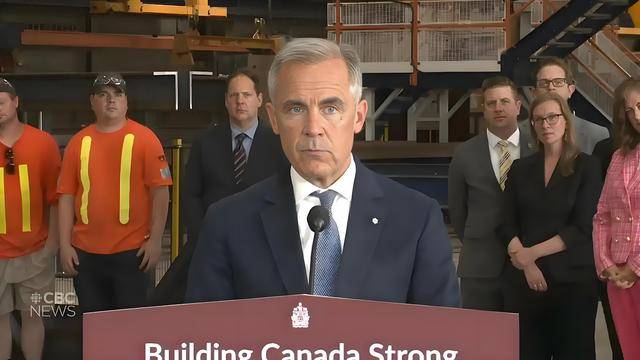
Group 1 - Canada imposed significant tariffs and quotas on Chinese steel imports, including a 25% tariff, a 50% quota reduction, and a 50% penalty tax [1][4][9] - The U.S. steel imports account for 50% of Canada's steel imports and enjoy zero tariffs, while Chinese steel, which only accounts for 10%, is targeted for harsh penalties [11][24] - The Canadian government, facing a trade deficit of CAD 7.1 billion and a 15.7% drop in steel exports, is under pressure to find a scapegoat for its economic troubles [6][4][24] Group 2 - The Canadian government's digital services tax has negatively impacted U.S. tech giants, leading to a backlash from the U.S. and forcing Canada to navigate a delicate trade relationship [4][20] - The steel industry in Canada is struggling, with over 40,000 jobs at risk, prompting the government to shift blame to China rather than addressing U.S. trade policies [7][24] - The Canadian steel producers' association supports the government's actions against China, believing it will help regain market share [9][24] Group 3 - China's response to Canada's tariffs included imposing a 100% tariff on Canadian canola and halting large-scale imports, significantly impacting Canadian farmers [33][31] - Canada is heavily reliant on China for its canola exports, with 70% of its canola being sold to China, making the agricultural sector vulnerable to trade disputes [29][31] - The crisis in the canola industry has led to financial distress for farmers, with unsold products and plummeting prices [35][33] Group 4 - The trade tensions have resulted in a mixed impact on Canadian stock markets, with steel stocks rising while agricultural sectors face declines [54][52] - The Canadian government's approach to trade, particularly its targeting of China, is seen as shortsighted and detrimental to its own economic interests [51][56] - The overall economic landscape in Canada is shifting, with potential long-term consequences for both the steel and agricultural industries due to the ongoing trade disputes [58][56]

俄油博弈背后的三重杀招,中国学者一句话揭穿真相
Sou Hu Cai Jing· 2025-07-22 23:11
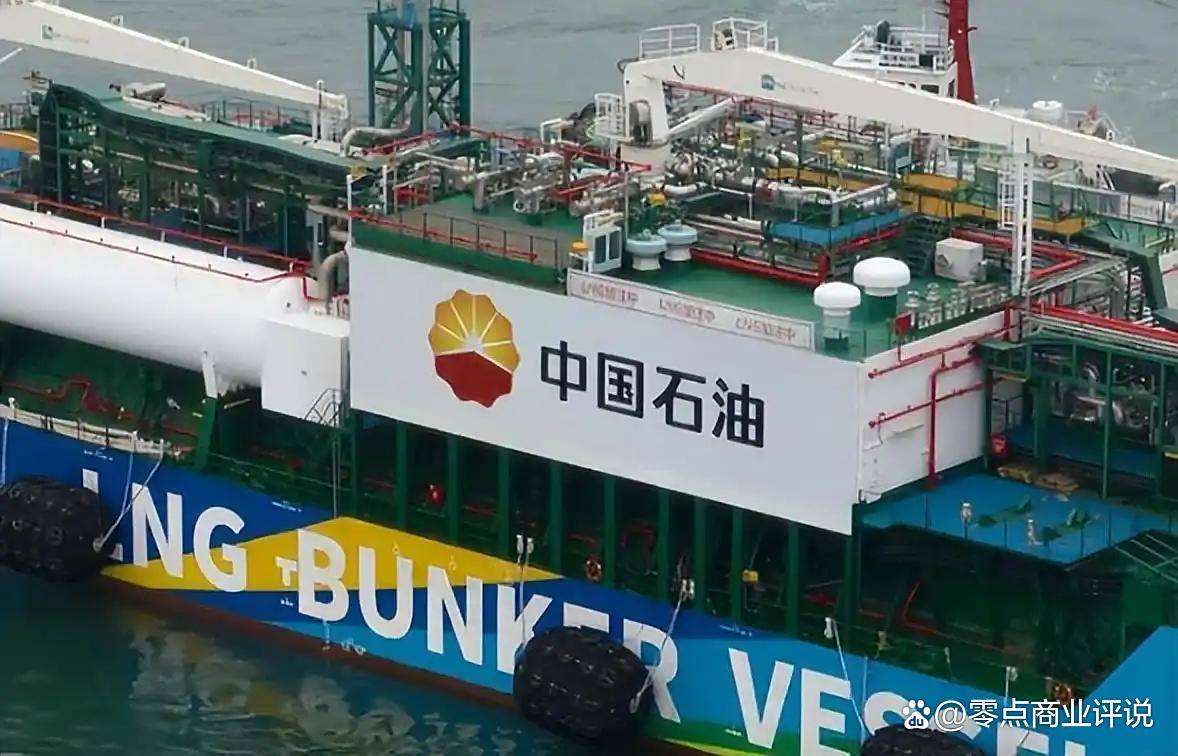
Core Viewpoint - The ongoing geopolitical struggle over energy security has intensified, particularly between the U.S. and China, with significant implications for global oil markets and trade dynamics [1][3][10]. Group 1: U.S. Actions and Responses - U.S. Treasury Secretary Yellen has threatened to impose up to 100% secondary tariffs on countries purchasing Russian oil, which has caused significant volatility in global energy markets [3][6]. - Trump's ultimatum to Russia regarding oil imports aims to cut off funding for the ongoing conflict, with a deadline set for August 1 [1][6]. - The U.S. government's hardline stance has been met with skepticism, as analysts warn that such tariffs could lead to a new trade war and increase inflation in the U.S. [6][10]. Group 2: China's Position and Strategy - China has firmly stated its commitment to maintaining energy cooperation with Russia, with projected imports of Russian oil reaching $76.4 billion in 2024, accounting for 30% of its total oil imports [5]. - The Chinese government has drawn a clear line against unilateral sanctions and has emphasized the importance of national sovereignty in its energy dealings [5][10]. - China's energy strategy includes significant investments in Russian projects, such as the "Power of Siberia 2" pipeline and Arctic LNG projects, which rely on Chinese funding and technology [5][10]. Group 3: Global Energy Market Dynamics - The geopolitical tensions are reshaping the global energy landscape, with a shift towards a multipolar energy structure involving China, Russia, and Iran [10]. - Emerging market countries are increasingly resistant to U.S. sanctions, with nations like Turkey, Hungary, and Serbia continuing to import Russian oil [10]. - Analysts suggest that the U.S. strategy may backfire, as high oil prices resulting from sanctions could contradict political commitments to control inflation [6][10].
中美关税暂停快到期,美国财长说出实话,中国有我们想要的东西
Sou Hu Cai Jing· 2025-07-22 23:07
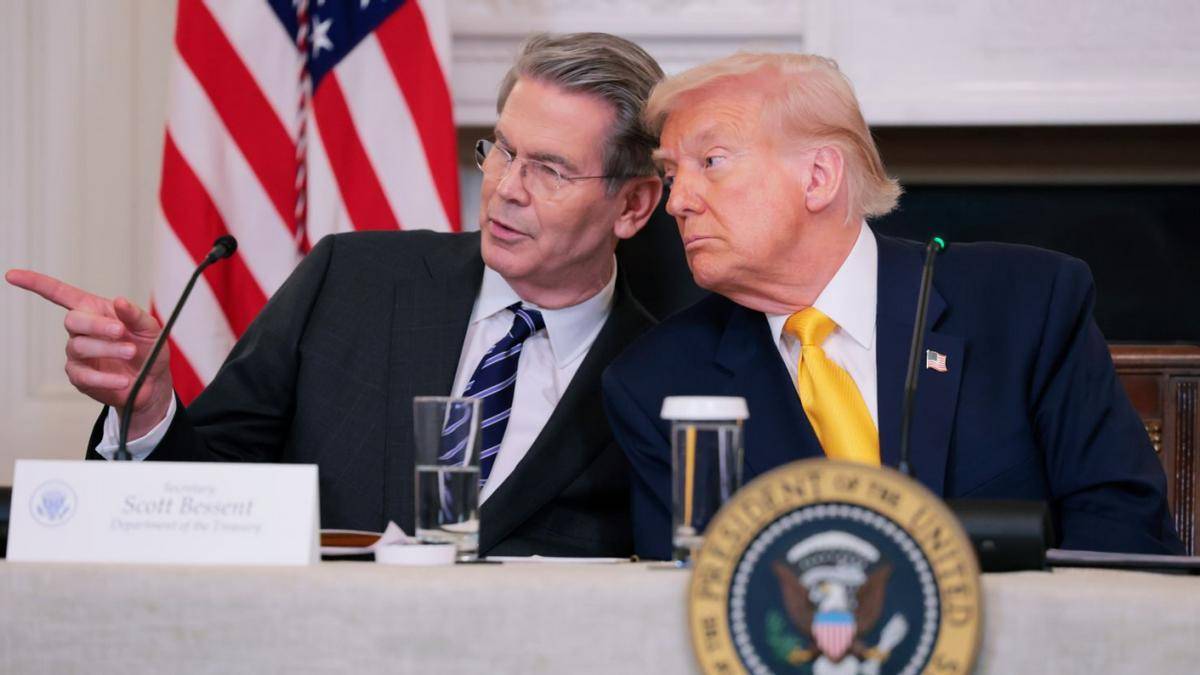
Group 1 - The core issue of the US-China trade conflict revolves around tariffs and the strategic importance of rare earth elements, with the US seeking unfair trade advantages while China insists on equal and mutually beneficial negotiations [1][4] - The US has acknowledged its dependency on China for critical resources, particularly rare earths, which are essential for various technologies and military applications, indicating a shift in the US's previously unilateral stance [2][4] - The ongoing trade negotiations are complicated by the US's previous tariff actions, which have strained relationships with allies and limited its ability to effectively pressure China [4][6] Group 2 - The US is likely to adopt a strategy of delaying conflict while seeking to extend the "ceasefire" period, aiming to extract more concessions from China without immediate escalation [4][6] - China's control over rare earth resources provides it with significant leverage in negotiations, allowing it to respond firmly to US actions while maintaining a stance of fairness and reciprocity [4][6] - Ultimately, the balance of power in international negotiations is heavily influenced by national strength, with both countries recognizing that their respective capabilities will dictate the outcomes of their trade discussions [6]
美欧贸易决战倒计时,德国放狠话:如果美国想打仗,美会得偿所愿
Sou Hu Cai Jing· 2025-07-22 22:49
德国,作为欧洲最大的经济体,首当其冲承受着巨大的经济压力。25%的汽车关税已让宝马、大众等汽车巨头损失数十亿欧元,而美国市场更是占据了德国 汽车出口的22%。 当德国政府确认连"经济命脉"都无法得到豁免时,总理默茨终于忍无可忍,于7月18日拍案而起,要求欧盟委员会立即启动报复预案,并 史无前例地支持动用欧盟从未使用过的"大杀器"——反胁迫工具(ACI)。这项工具允许欧盟无需成员国一致同意,即可对美国实施精准打击,例如征收数 字服务税、限制美国科技巨头进入欧盟公共采购市场等。 7月20日,德国的强硬姿态将美欧贸易冲突推向了悬崖边缘。"如果他们想要战争,他们会得偿所愿!"一位德国官员的警告,如同炸药桶般,点燃了紧张的 局势。德国要求欧盟启动"核选项"反制工具,欧盟千亿美元的报复清单和数字税利刃已出鞘,全球最大贸易伙伴之间的生死博弈,正式进入倒计时。 这场 贸易战的最终走向,将深刻影响全球经济格局,其结果令人忧心忡忡。 " 全球贸易战阴云密布:欧盟与美国剑拔弩张的博弈 经济账本上的数字触目惊心。德意志银行测算,若美国落实30%关税,叠加50%的钢铝税和25%的汽车税,欧盟对美出口商品实际税率将飙升至12.7%。仅 ...

好!加拿大对华钢铁产品加税25%,中方转手将订单给了澳大利亚
Sou Hu Cai Jing· 2025-07-22 18:05
Group 1 - Canada has announced an expansion of steel import tariffs, effective from August 1, to address U.S. steel tariffs and global overcapacity, while excluding the U.S. from these tariffs [1][3] - The new tariffs include a 25% additional tax on steel products containing Chinese melted and cast steel, indicating Canada's alignment with U.S. trade policies against China [3][5] - Canada's actions are seen as an attempt to appease the U.S. and support the return of American manufacturing, despite the negative impact on its own steel industry [3][5] Group 2 - The recent tariff measures raise questions about Canada's commitment to constructive dialogue with China, as expressed by Canadian Foreign Minister Anand at the ASEAN meeting [6] - China has significant trade relations with Canada, particularly in canola, with annual trade worth approximately $2 billion, and Canada has been a major supplier of canola to China [8] - The potential shift of canola trade to Australia, following recent agreements, could negatively impact Canada's agricultural exports to China [8][11]

终于发飙了!德国对美放话:想打仗?满足你!
Sou Hu Cai Jing· 2025-07-22 13:17
Core Viewpoint - Germany has shifted from a conciliatory approach to a more aggressive stance in trade negotiations with the U.S., driven by significant economic pressures and frustrations over U.S. tariffs [1][2][4] Group 1: Germany's Response to U.S. Tariffs - Germany previously adopted a submissive attitude towards U.S. trade demands, exemplified by Chancellor Merkel's conciliatory visit to Washington in 2017 [2] - The automotive industry, crucial to Germany's economy, is particularly affected by U.S. tariffs, with potential losses amounting to hundreds of millions of euros if tariffs increase [4][7] - German officials expressed frustration over the U.S. refusal to negotiate on automotive tariffs, indicating a turning point in their approach [4][5] Group 2: U.S. Trade Strategy - Trump's "maximum pressure" strategy has been applied to various countries, including China and Canada, but has backfired with the EU, particularly Germany [4][5] - The U.S. believes that the EU is dependent on the American market, but this overlooks the reciprocal trade relationship where the U.S. also relies heavily on European imports [5][6] Group 3: EU's Countermeasures - The EU is prepared to implement its "counter-coercion toolbox," which includes potential tariffs on U.S. digital services and restrictions on U.S. companies in public procurement [6] - The EU has a list of retaliatory tariffs valued at $100 billion targeting key U.S. exports, which could significantly impact American farmers and manufacturers [6][7] Group 4: Implications of the Trade Conflict - The trade conflict could lead to significant economic repercussions for both sides, with daily trade valued at €4.6 billion, affecting global supply chains [7][9] - The shift in Germany's stance reflects a broader realization that allies should not be treated as mere economic tools, signaling a potential change in future EU-U.S. relations [8][9] Group 5: Conclusion on Trade Dynamics - The ongoing trade war is characterized as a game of endurance, with both sides potentially suffering economic losses if the conflict escalates [9] - The situation underscores the importance of cooperative trade relations, as both parties risk significant economic fallout from continued hostilities [9]

商品期货早班车-20250722
Zhao Shang Qi Huo· 2025-07-22 12:47
1. Report Industry Investment Ratings No investment ratings were provided in the report. 2. Core Views - The gold market is supported by factors such as the Fed's potential rate cut and geopolitical uncertainties, with a recommendation to go long on gold. The silver market shows short - term strength but offers long - term shorting opportunities [1]. - The basic metals market has different trends. Aluminum and alumina are expected to be volatile and strong, zinc is short - term neutral and long - term bearish, lead is range - bound, industrial silicon and lithium carbonate are recommended to go long under certain conditions, and polysilicon has intensified short - term market competition [1][2][3]. - The black industry shows a balanced supply - demand situation for steel but with obvious structural differentiation. It is recommended to be cautious in trading, with some opportunities for short - term chasing [4]. - The agricultural product market has various trends. Soybean meal follows international costs, corn is expected to be volatile, sugar is recommended to go short, cotton is recommended to go long at low prices, palm oil is short - term strong, eggs are expected to be strong, and pork is bearish in the medium - term [5][6]. - The energy and chemical market has different outlooks. LLDPE is short - term strong and long - term bearish, PVC and glass are recommended to wait and see, PTA is recommended to go long on PX and short on PTA, rubber is short - term strong, PP is short - term volatile and long - term bearish, MEG is expected to be weak, and crude oil is recommended to go short at high prices [7][8][9]. 3. Summary by Commodity Categories Gold and Silver - **Market Performance**: On Monday, precious metal prices strengthened, with COMEX gold up over 1% and silver up over 2% [1]. - **Fundamentals**: The Fed may cut rates in July, and there are various geopolitical and economic events in the US. Gold and silver inventories in different regions have different changes [1]. - **Trading Strategies**: Go long on gold; short - term avoid risks in silver and long - term look for shorting opportunities [1]. Basic Metals Aluminum - **Market Performance**: The electrolytic aluminum contract rose 1.61% to 20,840 yuan/ton [2]. - **Fundamentals**: High - load production on the supply side and a slight increase in demand during the off - season [2]. - **Trading Strategies**: Expect prices to be volatile and strong, and recommend going long at low prices [2]. Alumina - **Market Performance**: The alumina contract rose 8.08% to 3,386 yuan/ton [2]. - **Fundamentals**: Stable production on the supply side and high - load production of electrolytic aluminum on the demand side [2]. - **Trading Strategies**: Pay attention to policy and supply - demand changes, and the market is in a multi - empty game [2]. Zinc - **Market Performance**: The zinc contract rose 2.62% to 22,885 yuan/ton [2][3]. - **Fundamentals**: Increased supply and weak demand in the off - season, with a risk of a short squeeze [3]. - **Trading Strategies**: Short - term neutral and long - term bearish [3]. Lead - **Market Performance**: The lead contract rose 0.83% to 16,960 yuan/ton [3]. - **Fundamentals**: Low supply and demand, with a risk of a short squeeze [3]. - **Trading Strategies**: Range - bound trading [3]. Industrial Silicon - **Market Performance**: The contract rose 565 yuan/ton to 9,260 yuan/ton [3]. - **Fundamentals**: Slight increase in supply and stable demand in different sectors [3]. - **Trading Strategies**: Go long at low prices, paying attention to production resumption and policies [3]. Lithium Carbonate - **Market Performance**: The contract rose 2.53% to 71,280 yuan/ton [3]. - **Fundamentals**: Increased supply and demand, with high inventory [3]. - **Trading Strategies**: Short - term prices are likely to rise, and go long if high - capacity mines cut production [3]. Polysilicon - **Market Performance**: The contract rose 1,810 yuan/ton to 45,660 yuan/ton [3]. - **Fundamentals**: Slight increase in supply, inventory reduction, and weak demand [3]. - **Trading Strategies**: Partially take profit on long positions due to intensified market competition [3]. Black Industry Rebar - **Market Performance**: The rebar contract rose 25 yuan/ton to 3,222 yuan/ton [4]. - **Fundamentals**: Balanced supply - demand with structural differentiation and slightly high valuation [4]. - **Trading Strategies**: Be cautious, with opportunities for short - term chasing and consider exiting arbitrage [4]. Iron Ore - **Market Performance**: The iron ore contract rose 9 yuan/ton to 809 yuan/ton [4]. - **Fundamentals**: Decreased supply and increased demand, with neutral valuation [4]. - **Trading Strategies**: Be cautious, with opportunities for short - term chasing and long - position layout [4]. Coking Coal - **Market Performance**: The coking coal contract rose 68.5 yuan/ton to 1,032.5 yuan/ton [4]. - **Fundamentals**: Loose supply - demand with improving fundamentals and high valuation [4]. - **Trading Strategies**: Be cautious and consider exiting long positions [4]. Agricultural Products Soybean Meal - **Market Performance**: CBOT soybeans fell overnight [5]. - **Fundamentals**: Abundant supply and variable demand [5]. - **Trading Strategies**: Follow international costs and pay attention to weather and policies [5]. Corn - **Market Performance**: The corn contract continued to rebound [6]. - **Fundamentals**: Tightening supply - demand, affected by substitutes [6]. - **Trading Strategies**: Expected to be volatile [6]. Sugar - **Market Performance**: The sugar contract fell 0.15% to 5,831 yuan/ton [6]. - **Fundamentals**: Import pressure and weakening market sentiment [6]. - **Trading Strategies**: Go short in the futures market and sell call options [6]. Cotton - **Market Performance**: US cotton prices fell overnight [6]. - **Fundamentals**: Improving US cotton quality and changing domestic inventory [6]. - **Trading Strategies**: Go long at low prices and use range - bound strategies [6]. Palm Oil - **Market Performance**: Malaysian palm oil fell [6]. - **Fundamentals**: Weakening supply and demand [6]. - **Trading Strategies**: Short - term strong, with attention to production and policies [6]. Eggs - **Market Performance**: The egg contract continued to rebound [6]. - **Fundamentals**: Reduced supply and increased demand [6]. - **Trading Strategies**: Expected to be strong [6]. Pork - **Market Performance**: The pork contract rose [6]. - **Fundamentals**: Weakening demand and increasing supply [6]. - **Trading Strategies**: Limited upside potential [6]. Apples - **Market Performance**: The apple contract rose 0.51% to 7,923 yuan/ton [7]. - **Fundamentals**: Uncertain production and weak consumption [7]. - **Trading Strategies**: Wait and see [7]. Energy and Chemicals LLDPE - **Market Performance**: The LLDPE contract rose slightly [7]. - **Fundamentals**: Increasing domestic supply and improving demand [7]. - **Trading Strategies**: Short - term strong and long - term bearish [7]. PVC - **Market Performance**: The PVC contract rose 1.7% to 5,163 yuan/ton [7]. - **Fundamentals**: Policy - driven with unchanged supply - demand and increasing inventory [7]. - **Trading Strategies**: Exit short positions and wait for policy implementation [7]. PTA - **Market Performance**: PX price was 842 dollars/ton, and PTA was 4,785 yuan/ton [7]. - **Fundamentals**: Moderate PX supply, increasing PTA supply, and weak polyester demand [7]. - **Trading Strategies**: Go long on PX and short on PTA [7]. Rubber - **Market Performance**: The rubber contract rose 0.37% to 14,895 yuan/ton [8]. - **Fundamentals**: Stable raw material prices and inventory reduction [8]. - **Trading Strategies**: Short - term strong, with attention to pressure levels [8]. Glass - **Market Performance**: The glass contract rose 2.9% to 1,178 yuan/ton [8]. - **Fundamentals**: Policy - driven with weak fundamentals and inventory reduction [8]. - **Trading Strategies**: Wait and see for policy implementation [8]. PP - **Market Performance**: The PP contract rebounded slightly [8]. - **Fundamentals**: Increasing supply and differentiated demand [8]. - **Trading Strategies**: Short - term volatile and long - term bearish [8]. MEG - **Market Performance**: MEG price was 4,470 yuan/ton [8]. - **Fundamentals**: High supply, low inventory, and weak polyester demand [8]. - **Trading Strategies**: Expected to be weak, short at high prices [8]. Crude Oil - **Market Performance**: Oil prices fell slightly and were in a narrow - range oscillation [9]. - **Fundamentals**: Increasing supply and changing demand, with inventory accumulation [9]. - **Trading Strategies**: Short at high prices, paying attention to supply - demand changes [9]. Styrene - **Market Performance**: The styrene contract rebounded slightly [9]. - **Fundamentals**: Slight inventory changes and weak demand [9]. - **Trading Strategies**: Short - term volatile and long - term bearish [9]. Soda Ash - **Market Performance**: The soda ash contract rose 2.7% to 1,308 yuan/ton [9]. - **Fundamentals**: Policy - driven with high inventory and weak downstream demand [9]. - **Trading Strategies**: Wait and see [9].
德官员:若美国想打仗他们会得偿所愿
Sou Hu Cai Jing· 2025-07-22 12:30
Group 1 - The core viewpoint of the article highlights the escalating trade tensions between the US and the EU, particularly with the US proposing significant tariffs on European goods, which has prompted a strong response from Germany [1] - Germany, as the economic leader of the EU, has shifted from a previously moderate stance to a more aggressive position, demanding the EU Commission prepare new countermeasures against the US [1] - Proposed countermeasures from Germany include retaliatory tariffs, a digital services tax, and restrictions on US companies' access to EU public procurement markets, indicating a firm resolve to confront US actions [1] Group 2 - The article reflects a broader sentiment that trade disputes have evolved into political confrontations, where economic measures are used as tools of power rather than for mutual benefit [4] - The discussion among netizens suggests a perception that the current trade environment is akin to a zero-sum game, where cooperation is overshadowed by conflict, emphasizing the need for understanding and compromise to achieve prosperity [4] - The philosophical perspective presented in the article advocates for trade as a bridge rather than a barrier, suggesting that genuine collaboration is more effective than imposing tariffs [4]
山金期货贵金属策略报告-20250722
Shan Jin Qi Huo· 2025-07-22 12:27
Report Industry Investment Rating No relevant content provided. Core Viewpoints of the Report - Gold is expected to be volatile and bullish in the short - term, oscillate at a high level in the medium - term, and rise step - by - step in the long - term. The core logic is that the short - term trade war has entered a new stage, with risks of economic recession and geopolitical changes still existing. The risk of stagflation in the US economy has increased, and strong employment and inflation are suppressing the expectation of interest rate cuts. [1] - The price trend of gold is the anchor for the price of silver. In terms of capital, CFTC silver net long positions and iShare silver ETF have resumed adding positions. In terms of inventory, the recent visible inventory of silver has decreased slightly. [5] - For both gold and silver, the strategy is for conservative investors to wait and see, while aggressive investors can buy on dips. It is recommended to manage positions well and set strict stop - loss and take - profit levels. [2][6] Summary by Related Catalogs Gold Price Performance - International prices: Comex gold主力合约收盘价 is $3355.50 per ounce, up $10.10 (0.30%) from the previous day and down $14.80 (-0.44%) from the previous week. London gold is $3355.10 per ounce, up $36.60 (1.10%) from the previous day and up $3.00 (0.09%) from the previous week. - Domestic prices: The closing price of the Shanghai Gold Exchange's main contract is 781.70 yuan per gram, up 4.68 yuan (0.60%) from the previous day and up 0.30 yuan (0.04%) from the previous week. The closing price of gold T + D is 777.00 yuan per gram, up 3.63 yuan (0.47%) from the previous day and down 0.46 yuan (-0.06%) from the previous week. [2] Position and Inventory - Position: Comex gold position is 448,531 lots (100 ounces per lot), an increase of 10,869 lots (2.48%) from the previous week. The position of the Shanghai Gold Exchange's main contract is 211,239 lots (kilograms per lot), an increase of 8,952 lots (4.43%) from the previous day and an increase of 20,156 lots (10.55%) from the previous week. The position of gold TD is 205,042 lots (kilograms per lot), an increase of 590 lots (0.29%) from the previous day and a decrease of 9,956 lots (-4.63%) from the previous week. - Inventory: LBMA inventory is 8,598 tons, unchanged. Comex gold inventory is 1,152 tons, a decrease of 13 tons (-1.08%) from the previous week. The inventory of the Shanghai Gold Exchange is 18 tons, an increase of 0 tons (1.57%) from the previous day and an increase of 0 tons (1.32%) from the previous week. [2] Net Position Ranking of Futures Companies - Among the top 10 net long positions of futures companies on the Shanghai Futures Exchange, the top 5 total 110,442 lots, an increase of 2,896 lots (25.71%); the top 10 total 139,355 lots, an increase of 2,304 lots (32.44%); the top 20 total 167,690 lots, an increase of 4,891 lots (39.04%). - Among the top 10 net short positions of futures companies on the Shanghai Futures Exchange, the top 5 total 14,565 lots, an increase of 494 lots (3.39%); the top 10 total 20,464 lots, an increase of 560 lots (4.76%); the top 20 total 24,576 lots, an increase of 599 lots (5.72%). [3] Silver Price Performance - International prices: Comex silver's main contract closing price is $38.43 per ounce, down $0.01 (-0.03%) from the previous day and down $0.65 (-1.66%) from the previous week. London silver is $38.27 per ounce, up $0.52 (1.36%) from the previous day and up $0.77 (2.05%) from the previous week. - Domestic prices: The closing price of the Shanghai Silver Exchange's main contract is 9,271.00 yuan per kilogram, down 2.00 yuan (-0.02%) from the previous day and up 64.00 yuan (0.70%) from the previous week. The closing price of silver T + D is 9,226.00 yuan per kilogram, up 15.00 yuan (0.16%) from the previous day and up 54.00 yuan (0.59%) from the previous week. [6] Position and Inventory - Position: Comex silver position is 171,474 lots (5,000 ounces per lot), an increase of 8,671 lots (5.33%) from the previous week. The position of the Shanghai Silver Exchange's main contract is 7,013,010 lots (kilograms per lot), a decrease of 182,130 lots (-2.53%) from the previous day and an increase of 291,585 lots (4.34%) from the previous week. The position of silver TD is 3,370,304 lots (kilograms per lot), a decrease of 37,116 lots (-1.09%) from the previous day and an increase of 127,300 lots (3.93%) from the previous week. - Inventory: LBMA inventory is 23,791 tons, an increase of 424 tons (1.81%) from the previous week. Comex silver inventory is 15,464 tons, an increase of 17 tons (0.00%) from the previous day and an increase of 72 tons (0.47%) from the previous week. The inventory of the Shanghai Silver Exchange is 1,204 tons, a decrease of 20 tons (-1.59%) from the previous week. The total visible inventory is 41,793 tons, a decrease of 75 tons (-0.18%) from the previous day and a decrease of 20 tons (-0.05%) from the previous week. [6] Net Position Ranking of Futures Companies - Among the top 10 net long positions of futures companies on the Shanghai Futures Exchange, the top 5 total 127,796 lots, an increase of 1,152 lots (12.80%); the top 10 total 176,685 lots, an increase of 3,499 lots (17.70%); the top 20 total 235,618 lots, an increase of 2,698 lots (23.60%). - Among the top 10 net short positions of futures companies on the Shanghai Futures Exchange, the top 5 total 72,195 lots, a decrease of 890 lots (7.23%); the top 10 total 94,674 lots, an increase of 7 lots (9.48%); the top 20 total 118,304 lots, an increase of 462 lots (11.85%). [7] Fundamental Key Data Monetary Attributes - Federal funds target rate upper limit is 4.50%, a decrease of 0.25 percentage points. The discount rate is 4.50%, a decrease of 0.25 percentage points. The reserve balance interest rate (IORB) is 4.40%, a decrease of 0.25 percentage points. The total assets of the Federal Reserve are 6710.669 billion US dollars, a decrease of 25.67 billion US dollars (-0.00%). M2 year - on - year growth rate is 4.50%, an increase of 0.06 percentage points. [8] Other Key Indicators - 10 - year US Treasury real yield is 2.59%, a decrease of 0.02 percentage points (-0.77%) from the previous day and a decrease of 0.01 percentage points (-0.38%) from the previous week. The US dollar index is 98.47, a decrease of 0.17 points (-0.17%) from the previous day and an increase of 0.61 points (0.62%) from the previous week. The US Treasury yield spread (3 - month - 10 - year) is 0.52, an increase of 0.02 points (4.00%) from the previous day and unchanged from the previous week. [8] Inflation, Economic Growth, and Labor Market - US inflation indicators such as CPI, core CPI, PCE price index, and core PCE price index have shown certain changes. US economic growth indicators such as GDP, unemployment rate, and non - farm employment have also changed. The labor market indicators such as labor participation rate, average hourly wage growth rate, and weekly working hours have different trends. [10] Central Bank Gold Reserves and Other Data - Central bank gold reserves of China, the US, and the world have different situations. The proportion of the US dollar, euro, and RMB in IMF foreign exchange reserves has changed. The ratio of gold to foreign exchange reserves globally, in China, and in the US has also changed. [11] Risk and Market Indicators - The geopolitical risk index is 132.88, an increase of 24.41 points (22.50%) from the previous day and a decrease of 59.95 points (-31.09%) from the previous week. The VIX index is 16.83, an increase of 0.42 points (2.56%) from the previous day and a decrease of 0.37 points (-2.15%) from the previous week. The CRB commodity index is 304.79, a decrease of 1.33 points (-0.43%) from the previous day and an increase of 2.09 points (0.69%) from the previous week. The offshore RMB exchange rate is 7.1812, unchanged from the previous day and an increase of 0.0074 points (0.10%) from the previous week. [11] Fed Interest Rate Expectations - According to the CME FedWatch tool, the probability of different interest rate ranges at different Fed meeting dates from 2025/7/30 to 2026/12/9 is provided. [12]