反内卷

Search documents
欧美联手贬值逼人民币升值?中国将计就计反杀:他们不得不买
Sou Hu Cai Jing· 2025-12-31 09:51
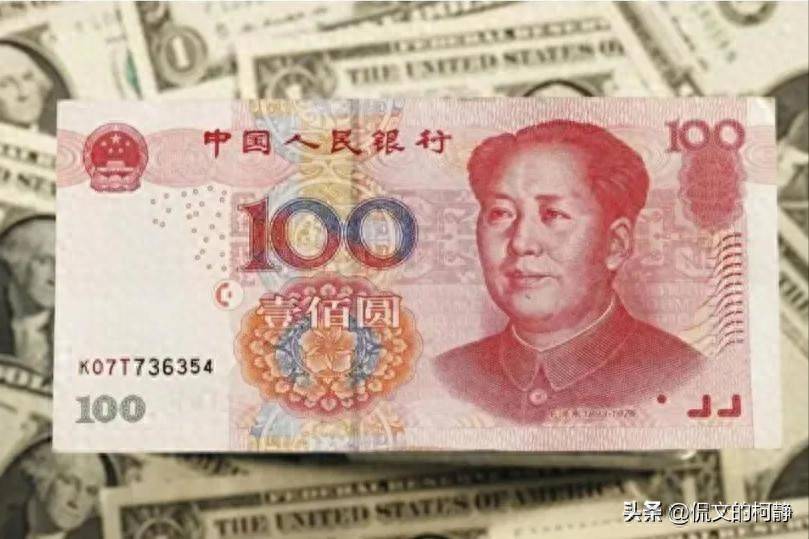
Group 1 - The core viewpoint is that the appreciation of the RMB against the USD is seen as a sign of China's strength, while its depreciation against the Euro raises questions about the motives behind the pressure from the West [1][3] - Major investment banks suggest that if the RMB does not appreciate, it could disrupt global balance, reminiscent of the Plaza Accord from 40 years ago [5][6] - The strategy of competitive devaluation by the West aims to make the USD and Euro cheaper, forcing the RMB to appreciate, which could harm China's export competitiveness [6][8] Group 2 - Despite the RMB's appreciation against the USD, it has depreciated against the Euro, leading to a dual exchange rate scenario that allows Chinese companies to pivot their exports towards Europe and ASEAN [12][14] - Data shows that from January to November 2025, China's exports to the US decreased by nearly 19%, while exports to the EU increased by 8.1%, indicating a shift in market focus [14][23] - The Chinese government has intervened to prevent price wars and encouraged companies to raise prices, allowing them to recover losses from currency fluctuations [18][19] Group 3 - The situation highlights a struggle for global pricing power, with the Chinese government taking a strong stance against price cuts [19][21] - Despite Western pressures, Chinese manufacturers are finding ways to maintain their market presence and profitability, as evidenced by a trade surplus exceeding $1 trillion [23][25] - The US and Europe are increasingly reliant on Chinese goods, as they face challenges in rebuilding their own supply chains, leading to a paradox where they need Chinese products despite imposing tariffs [21][27] Group 4 - China holds significant advantages, including a complete industrial supply chain, substantial foreign exchange reserves of $3.3 trillion, and the accelerating internationalization of the RMB [27][29][31] - The central bank emphasizes the importance of stable exchange rates that serve the real economy rather than merely showcasing national strength [31]

PVC日报:震荡运行-20251231
Guan Tong Qi Huo· 2025-12-31 09:22
Report Industry Investment Rating - Not provided Core View of the Report - It is expected that PVC will run in a volatile manner. The supply - side PVC开工率 continues to decline, downstream demand is weak, social inventory is high, and although the commodity market sentiment is boosted, the production decline is limited, and the current is the traditional off - season [1] Summary by Relevant Catalogs Market Analysis - The calcium carbide price in the upstream northwest region is stable. The PVC开工率 decreased by 1.13 percentage points to 77.23% and is at a neutral level in the same period in recent years. The downstream开工率 decreased by 0.87 percentage points, and the orders for downstream products are poor. Last week, export orders decreased slightly, with lower prices in the Indian market and limited demand. CFR India and CFR Southeast Asia decreased by $20/ton and $30/ton respectively. Social inventory increased slightly and is still high. From January to November 2025, the real estate is still in the adjustment stage, with large year - on - year declines in investment, new construction, construction, and completion areas. The weekly transaction area of commercial housing in 30 large - and medium - sized cities increased, but is still at the lowest level in the same period in recent years. The 300,000 - ton/year Jiaxing Jiahua has recently started trial production. The anti - involution sentiment has further increased, and the commodity market sentiment has been boosted, but the decline in production is limited [1] Futures and Spot Market Conditions - The PVC2605 contract decreased in positions and ran in a volatile manner, with a minimum price of 4,772 yuan/ton, a maximum price of 4,822 yuan/ton, and a final closing price of 4,805 yuan/ton, up 0.33% and above the 20 - day moving average. The position decreased by 23,231 lots to 923,530 lots [2] Basis - On December 31, the mainstream price of calcium carbide - based PVC in the East China region remained at 4,500 yuan/ton, and the futures closing price of the V2605 contract was 4,805 yuan/ton. The current basis is - 305 yuan/ton, strengthening by 5 yuan/ton, and the basis is at a low level [3] Fundamental Tracking - Supply side: Affected by devices such as Salt Lake Magnesium Industry and Ningbo Hanwha, the PVC开工率 decreased by 1.13 percentage points to 77.23%. New production capacities of Wanhua Chemical (500,000 tons/year), Tianjin Bohua (400,000 tons/year), Qingdao Gulf (200,000 tons/year), and Gansu Yaowang (300,000 tons/year) were put into production in the second half of the year, and Jiaxing Jiahua (300,000 tons/year) started trial production in December [4] - Demand side: The real estate is still in the adjustment stage, with large year - on - year declines in investment, new construction, and completion areas. From January to November 2025, the national real estate development investment was 785.91 billion yuan, a year - on - year decrease of 15.9%. The commercial housing sales area was 787.02 million square meters, a decrease of 7.8%. The commercial housing sales volume was 751.3 billion yuan, a decrease of 11.1%. The new construction area of houses was 534.57 million square meters, a decrease of 20.5%. The construction area of real estate development enterprises was 6.56066 billion square meters, a decrease of 9.6%. The completion area of houses was 394.54 million square meters, a decrease of 18.0%. As of the week of December 21, the transaction area of commercial housing in 30 large - and medium - sized cities increased by 20.86% week - on - week but is still at the lowest level in the same period in recent years [5] - Inventory: As of the week of December 25, the PVC social inventory increased by 0.43% week - on - week to 1.0611 million tons, 31.92% higher than the same period last year, and the social inventory is still high [6]
资产再平衡中的债市
Yin He Qi Huo· 2025-12-31 09:09
Report Industry Investment Rating No relevant content provided. Core Viewpoints of the Report - The current weak and stable state of the domestic fundamentals continues, with the GDP growth rate declining quarter - by - quarter this year and inflation recovery being structural. The market's expectations for next year's economic growth and inflation readings have improved significantly. However, the central bank's policy rate cut threshold is high, and the marginal utility of "broad money" is reduced. The influence of institutional behavior has increased. Before the "Two Sessions" in March and Trump's visit to China in April next year, the bond market may be under pressure, and the 10Y Treasury yield may rise to the 1.9 - 2.0% range. After the first quarter, if the fundamentals fall short of expectations, the yield will likely return to the downward channel [2][3][135]. Summary by Directory 1. 2025 Bond Market Review - From the beginning of the year to mid - March: The central bank's liquidity management was in a tight balance, and the market's loose expectations were revised. The 10Y Treasury yield first fell and then rose, reaching around 1.9% by mid - March [7]. - From late March to the end of June: The market's capital became looser, and Sino - US trade frictions recurred. The 10Y yield fluctuated downward to around 1.8% [7]. - From early July to late September: The stock - bond seesaw effect emerged, and policy disturbances increased. The bond market oscillated and adjusted, and the Treasury yield continued to rise [7]. - From early October to the end of the year: Expectations dominated the macro - narrative, and concerns about the supply and demand of ultra - long bonds intensified. The bond market sentiment was cautious, and the curve slope steepened [8]. 2. External Demand Supports Production, while Domestic Demand Needs to be Boosted - In terms of PMI, the domestic economic fundamentals continued to recover in 2025, but the upward slope was still gentle. Production and external demand were resilient, while domestic demand was weak. By November, the cumulative year - on - year growth rate of industrial added value was +6.0%, and the service production index increased by 5.6%. Exports from January to November increased by 5.4% year - on - year, and the trade surplus exceeded $1 trillion. However, domestic fixed - asset investment and total retail sales of consumer goods had relatively low absolute growth rates, and the real - estate industry dragged down investment [22][27][31]. 3. Price Indicators are Repairing at a Low Level, and Inflation Expectations have Improved - This year's inflation readings repaired at a low level. By November, CPI was +0.7% year - on - year, and core CPI was +1.2%. PPI was - 2.2% year - on - year, with a positive monthly - on - monthly growth in November. The market's inflation expectations have changed significantly. "Anti - involution" provided a policy bottom for some industrial product prices, and potential imported inflation may accelerate the repair of domestic PPI [51][54][61]. 4. Social Financing Depends on the Government Sector, and the Reasons for M1 Repair are Diverse - Government bond financing supported the overall social financing this year. The cumulative net financing scale of national and local bonds was about 13.76 trillion yuan, a year - on - year increase of about 2.59 trillion yuan. The credit expansion momentum of the private sector was still weak, with a differentiation between the household and enterprise sectors. M1 growth accelerated, mainly driven by the enterprise sector. Fiscal policy is expected to support social financing next year, and the probability of monetary policy intensification due to weak financial data is low [70][75][87]. 5. The Central Bank's Attitude of Caring for Liquidity Remains Unchanged, but the Threshold for Policy Rate Cuts is High - The central bank's short - term fund injection was effective, and the influence of government bond issuance on the capital market was controllable. However, the central bank's policy rate cut threshold was high due to internal net interest margin pressure and the low marginal utility of "broad money." The central bank further clarified the five - group interest rate comparison relationships, which will have an impact on the bond market [91][107][111]. 6. The "Asset Shortage" in the Bond Market has Eased, and Concerns about the Supply and Demand of Long - Term Bonds have Increased - Policy - driven stock - bond asset allocation rebalancing and the rise of other asset prices have alleviated the "asset shortage" in the bond market. Some regulatory policy adjustments have inhibited institutional bond trading. The market's concerns about the potential imbalance between the supply and demand of ultra - long bonds are expected to continue, but banks and insurance institutions may play a supporting role, and the central bank may also take action [113][122][125]. 7. Speculation on Next Year's Macroeconomic Policies - The central economic work conference in December emphasized the continuation of "more proactive fiscal policy" and "moderately loose monetary policy," but the policy intensity has converged. It is expected that there may be one interest rate cut next year, with a 10bp reduction in the policy rate, and 1 - 2 reserve requirement ratio cuts, each of 0.25 percentage points. The fiscal deficit rate is expected to remain at 4.0%, and the expenditure will be more focused on people's livelihoods [131][132][133]. 8. Viewpoint Summary and Market Outlook - Considering the optimistic expectations and concerns about the supply and demand of ultra - long bonds before March and April next year, the bond market may be under pressure. After the first quarter, if the fundamentals are disappointing, the yield may decline. In terms of operations, it is recommended to be cautious in the first quarter and look for long - buying opportunities later. Curve trading has a logical basis, and arbitrage depends on sentiment or events [135][136][137].
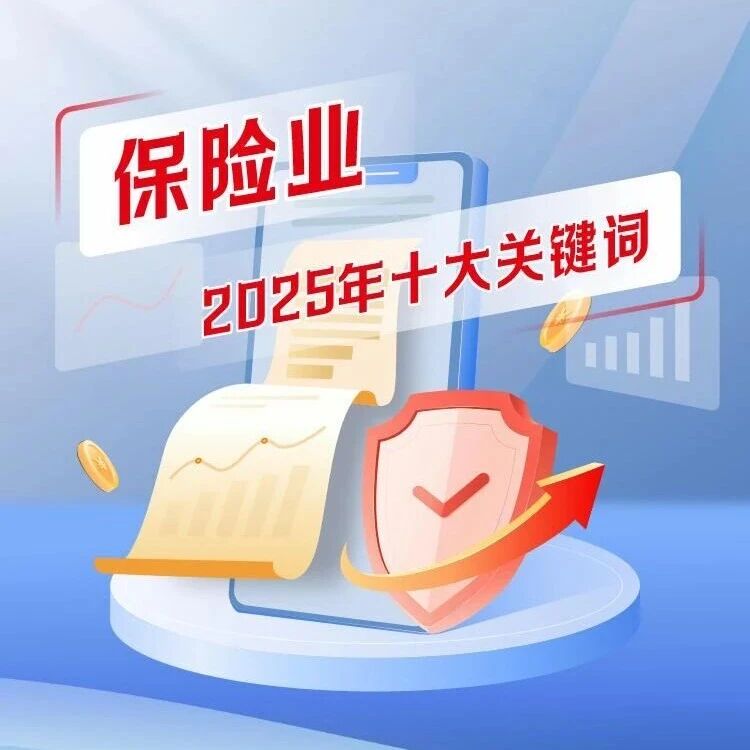
保险业2025年十大关键词,看这里!
券商中国· 2025-12-31 08:55
Core Viewpoint - The insurance industry in 2025 has achieved record highs in both scale and profitability, driven by practical reforms and a focus on rational management, while facing cyclical challenges [1]. Group 1: Industry Growth and Performance - As of October 2025, the total assets of the insurance industry reached 40.59 trillion yuan, an increase of 4.68 trillion yuan from the beginning of the year, marking a growth rate of 13.03% [4]. - The insurance sector has seen a continuous double-digit growth in total assets since 2023, attributed to rising premium income, cost optimization, enhanced capital replenishment, and improved asset allocation [4]. - The total premium income for 2025 is projected to be 57.63 billion yuan, reflecting a significant increase from previous years [2]. Group 2: Stock Market Performance - Insurance stocks have reached new highs in 2025, with major companies like China Ping An and China Life Insurance leading the market, contributing to a combined market value exceeding 3.3 trillion yuan, a nearly 30% increase from the beginning of the year [6][7]. - The net profit of five major listed insurance companies reached 426 billion yuan in the first three quarters of 2025, a year-on-year increase of 33.5%, setting a historical record [8]. Group 3: Industry Reforms - The insurance industry is actively engaging in "anti-involution" measures, focusing on rational competition and risk management rather than price wars, particularly in the auto insurance sector [10]. - The introduction of a dynamic adjustment mechanism for predetermined interest rates in insurance products has begun, with rates decreasing from 2.34% at the beginning of the year to 1.90% by the end of 2025 [19][18]. - The return of dividend insurance products has gained traction, with nearly half of new life insurance products being dividend-based, reflecting a shift in market strategy [21]. Group 4: Long-term Investment Strategies - The insurance sector is increasingly focusing on long-term investments, with regulatory changes encouraging a longer assessment period for performance metrics [12]. - By the end of 2025, the proportion of equity assets in insurance investments reached a historical high, with stock and fund allocations growing significantly [14]. Group 5: International Expansion - The insurance industry is entering a phase of internationalization, with companies exploring overseas markets, particularly in high-end equipment insurance and personal travel safety [22]. - The export of new energy vehicles has surged by 89.4% in the first three quarters of 2025, prompting insurance companies to expand their offerings in this sector [24]. Group 6: New Regulatory Frameworks - The release of the fourth life table in October 2025 will impact insurance product pricing and risk management, reflecting changes in population structure and mortality rates [26][27]. - The first commercial health insurance drug directory was published in December 2025, aiming to clarify the boundaries between basic medical insurance and commercial health insurance, thus promoting a multi-tiered medical security system [29].
长城基金苏俊彦:展望2026年,对A股市场潜在空间依然乐观
Xin Lang Cai Jing· 2025-12-31 08:47
Core Viewpoint - The A-share market is expected to transition from a valuation-driven growth to a dual-driven growth model of both profit and valuation, with a shift from external demand to a resonance of both external and internal demand in 2026 [1][4]. Group 1: Market Outlook - The market is anticipated to show optimism, with a potential turning point for profit growth expected in 2026, supported by a gradual recovery in demand and a slowdown in supply growth [1][4]. - Internal demand is projected to recover due to two main factors: the current low proportion of household consumption in GDP, which has significant room for improvement, and the expected increase in fiscal spending in 2026 to support consumption [1][4]. Group 2: Key Investment Areas - Focus on the semiconductor and military industries, as the semiconductor sector is at a critical turning point, with domestic computing chips expected to achieve technological breakthroughs and performance realization [5]. - Attention to "anti-involution" related industries, where policies aimed at eliminating backward production capacity are expected to optimize supply-demand dynamics in chemicals and new energy sectors, leading to price stabilization and rebound [5]. - Emphasis on consumer sectors, particularly service consumption, which is a key area for future policy support, with fiscal subsidies likely to favor the recovery of the restaurant and service industries, further boosting food and beverage consumption [5]. - Real estate sector is expected to gradually stabilize as new construction areas are projected to fall below long-term equilibrium levels by the end of 2026 [5].
2025年涨价主线全景扫描
Shang Hai Zheng Quan Bao· 2025-12-31 08:24
Group 1 - The core theme for 2025 is the price increase narrative driven by structural price hikes in various industries due to supply-demand reconfiguration, industrial upgrades, and policy guidance [1] - The lithium battery industry is experiencing a significant price surge, with lithium hexafluorophosphate prices skyrocketing from under 50,000 yuan/ton to 170,000 yuan/ton within a few months, indicating a strong demand driven by energy storage needs [2] - The storage chip market is entering a super cycle, with DRAM prices rising sharply due to tight supply and increased demand from AI applications, leading to a projected revenue peak of 216.3 billion USD in Q3 2025 [3] Group 2 - The non-ferrous metals sector is witnessing a remarkable performance, with the sector index rising over 85% year-to-date, driven by strong demand across various metal categories, including precious and industrial metals [4] - The outlook for 2026 suggests that most metal varieties will maintain a tight supply-demand balance, with prices expected to continue rising, particularly for copper and aluminum due to robust downstream demand [5] - Multiple industries are adopting "anti-involution" strategies to reshape market dynamics, with firms engaging in price stabilization efforts through coordinated production cuts and price adjustments [6] Group 3 - The refrigerant industry is experiencing a positive trend, with companies raising prices due to seasonal demand recovery and low inventory levels, indicating a bullish outlook for Q1 2026 [7] - The coal and building materials sectors are also following the "anti-involution" theme, with coal prices rebounding due to production restrictions and increased demand from extreme weather conditions [8] - The consensus among various institutions is that the price increase chain driven by supply-demand improvements will continue, presenting structural investment opportunities across multiple sectors [8]

锂电行业全年复盘:“反内卷”破局,开启价值竞争新周期!
Zheng Quan Shi Bao Wang· 2025-12-31 08:17
Group 1 - The lithium battery industry is expected to experience a recovery in 2025 after over two years of industry reshuffling and capacity elimination, driven by supply-side reforms and explosive growth in demand, particularly in energy storage [1][2] - The implementation of the new mineral resources law on July 1, 2025, significantly raised the barriers for lithium mining, marking a key event in the industry's "anti-involution" efforts [2] - The demand for lithium batteries remains strong, with expectations for supply and demand to return to balance, particularly in the energy storage sector, which is projected to see a shipment volume exceeding 650 GWh globally, a year-on-year increase of over 80% [3] Group 2 - The "anti-involution" actions have led to a shift from homogeneous competition to a focus on technological innovation and product iteration, with high-performance products gaining market favor [4] - Companies like Fujian Precision and Hunan Youneng are seeing significant sales in high-performance lithium iron phosphate batteries, with Hunan Youneng's sales reaching approximately 193,400 tons, accounting for 40% of total sales [5] - The demand for ultra-thin high-strength separators is rapidly increasing, with expected shipments of 5μm separators projected to quadruple by 2025 [6] Group 3 - The lithium battery industry is witnessing a new wave of overseas expansion, with companies like CATL and others establishing production facilities abroad, enhancing their global footprint [8][9] - CATL's overseas factory in Germany has achieved profitability, while its Hungarian facility is progressing as planned, expected to have better cost advantages [9] - The demand for overseas financing has surged, with several A-share lithium battery companies announcing plans for Hong Kong listings to support their international expansion [10]

2025年12月PMI数据解读:12月PMI:工业稳增长开启开门红
ZHESHANG SECURITIES· 2025-12-31 08:07
Group 1: PMI and Economic Activity - The manufacturing Purchasing Managers' Index (PMI) for December is 50.1%, an increase of 0.9 percentage points from the previous month, indicating a return to the expansion zone[1] - The production index for December is 51.7%, up 1.7 percentage points from last month, signaling accelerated manufacturing activity[2] - The composite PMI output index is 50.7%, reflecting overall economic activity improvement compared to the previous month[7] Group 2: Demand and Orders - The new orders index for December is 50.8%, rising 1.6 percentage points, indicating improved market demand in manufacturing[3] - The production expectation index for manufacturing is 55.5%, up 2.4 percentage points, showing increased confidence among manufacturers regarding market development[2] - The new export orders index is 49%, an increase of 1.4 percentage points, suggesting stable development in manufacturing exports[3] Group 3: Price Trends - The purchasing price index for raw materials is 53.1%, down 0.5 percentage points, indicating a slowdown in price increases for raw materials[4] - The factory price index is 48.9%, up 0.7 percentage points, marking a second consecutive month of increase in finished product prices[4] - Price trends are diverging, with high-energy-consuming industries experiencing a decline in purchasing prices, while equipment and high-tech manufacturing maintain a faster price increase[4] Group 4: Non-Manufacturing Sector - The non-manufacturing business activity index is 50.2%, up 0.7 percentage points, indicating improvement in the non-manufacturing sector[7] - The construction industry business activity index is 52.8%, an increase of 3.2 percentage points, reflecting a return to expansion in the construction sector[7]
反内卷升级!磷酸铁锂5大上市公司减产检修
起点锂电· 2025-12-31 07:30
Core Viewpoint - The lithium iron phosphate (LFP) industry is experiencing a strong willingness among upstream companies to maintain prices, with a continuous increase in production cuts and maintenance plans among major players [3][4][5]. Group 1: Production Cuts and Maintenance Plans - As of now, half of the top 10 companies in the LFP industry have announced production cuts and maintenance plans, with maintenance expected to last about one month [3]. - On December 25, Hunan Youneng and Wanrun New Energy announced production cuts of approximately 1.5-3.5 million tons and 0.5-2 million tons, respectively [3]. - On December 26, Defang Nano and Anda Technology also released annual maintenance plans, with Anda Technology estimating a reduction of 0.3-0.5 million tons [4]. - Longpan Technology announced that its subsidiary would reduce production by about 5,000 tons starting January 1, 2026, due to overloading [4]. Group 2: Financial Performance and Market Dynamics - Despite the increase in shipments of LFP batteries, the financial performance of LFP material manufacturers has been disappointing, with only Hunan Youneng achieving profitability in the first three quarters of 2025, while the other four companies reported losses [7]. - The market believes that the disconnect between performance and market conditions is due to several factors, including an oversupply of LFP capacity initiated by a production expansion wave starting in 2020, leading to price stagnation [7]. - Increased competition has resulted in some companies lowering prices to capture market share, shifting bargaining power to battery manufacturers [7]. Group 3: Raw Material Price Dynamics - The price of lithium carbonate, a key raw material for LFP, has seen a significant increase, rising over 110% from its lowest point to exceed 130,000 yuan per ton in December [8]. - In contrast, the price of LFP has only increased by over 30% from its mid-year low, leading to increased cost pressures for LFP manufacturers [8]. - The price of sulfur, another important raw material, has also risen sharply, further exacerbating cost pressures on LFP producers [8]. Group 4: Industry Trends and Future Outlook - The industry is experiencing a strong sentiment against internal competition, with price increases becoming imminent [9]. - In the second half of the year, LFP companies have initiated actions to counter internal competition, including discussions on profitability solutions and raising processing fees from approximately 8,000 yuan per ton to 9,500-10,000 yuan per ton [9]. - Despite the current losses, the demand for LFP is expected to grow, and with price increases, the financial performance of LFP companies is anticipated to improve and potentially turn positive in the coming year [9].





科技行情未完待续?双创板块2026年展望
Sou Hu Cai Jing· 2025-12-31 07:25
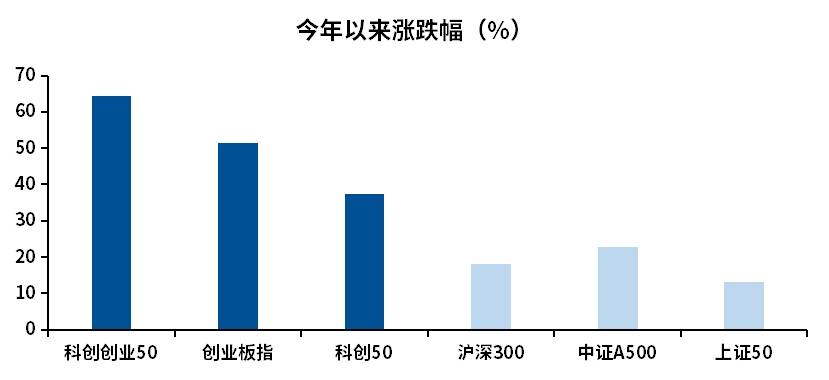
Group 1 - The core viewpoint of the article is that the dual innovation sector (Science and Technology Innovation Board + Growth Enterprise Market) has become a shining main line in the domestic market, with the Science and Technology Innovation 50 Index showing remarkable performance in 2025, and there are expectations for new opportunities in 2026 [1][8] Group 2 - In 2025, the dual innovation sector emerged as a core force driving the growth style of A-shares, with the Science and Technology Innovation 50 Index achieving an annual increase of 64.32%, significantly outperforming major indices like CSI 300 (18.21%) and CSI 500 (22.78%) [2][5] - The trading volume of the Science and Technology Innovation 50 Index increased by 120.68% compared to 2024, indicating strong market recognition of hard technology core assets [2][5] Group 3 - The excellent performance of the dual innovation sector in 2025 can be attributed to several factors: 1. An upward industrial cycle and improved profitability, with technology breakthroughs and performance landing in hard technology sectors creating a virtuous cycle [5] 2. A relatively loose funding environment, enhanced by the Federal Reserve's interest rate cuts, which increased risk appetite for growth-style investments [5] 3. Policy dividends supporting the deepening of the technology-driven national strategy, with the "14th Five-Year Plan" promoting self-reliance in technology benefiting key industries like semiconductors and AI [5][8] Group 4 - For 2026, the dual innovation sector is expected to benefit from a dual drive of policy and industrial upgrades, with key focus areas including: 1. The domestic substitution and profitability realization of the AI industry chain, driven by the continuous expansion of AI applications and increasing semiconductor demand [9] 2. Supply-demand optimization and profitability improvement in industries like photovoltaics and power batteries, as "anti-involution" policies aim to correct vicious competition and promote structural reforms [12] Group 5 - The Science and Technology Innovation 50 Index, which includes 50 major strategic emerging companies from the Science and Technology Innovation Board and Growth Enterprise Market, covers nearly 90% of the electronic, power equipment, pharmaceutical, and communication sectors, providing a balanced exposure to core growth sectors [13] - The E Fund Science and Technology Innovation ETF (159781) is highlighted as a convenient tool for investors to track the index performance and capture the benefits of new productive forces and technological advancements, with a current scale of 11.99 billion [13]