
反内卷

Search documents
市场“带量上攻”,科技成长点燃盘面,成长ETF(159259)、创业板ETF(159915)标的指数大涨
Mei Ri Jing Ji Xin Wen· 2025-12-22 06:25
Core Viewpoint - The market is experiencing a significant increase in activity, particularly in sectors such as CPO, semiconductors, and photolithography machines, with a notable rise in trading volume and key indices [1] Group 1: Market Performance - As of 13:54, the total market turnover exceeded 1.5 trillion yuan, an increase of over 130 billion yuan compared to the same time the previous day [1] - The Guozheng Growth 100 Index rose by 4.4%, while the ChiNext Index increased by 2.2% [1] - Notable stock performances include Changxin Bochuang rising over 13%, Zhongji Xuchuang increasing over 8%, and Xinyi Sheng up over 6% [1] Group 2: Driving Factors - Analysts attribute the market's upward momentum to overseas cloud vendors accelerating the deployment of 800G optical modules and clear guidance for the upgrade to 1.6T products by 2025, leading to increased order visibility and performance certainty for related companies [1] - The Guozheng Growth 100 Index focuses on A-share stocks with strong growth characteristics, with over 70% of its weight concentrated in the electronics, communications, and computer sectors [1] - The index reflects typical "year-end technology market" characteristics, driven by seasonal liquidity easing and industry trends [1] Group 3: Sector Focus - The ChiNext Index consists of 100 stocks from the ChiNext board with large market capitalization and good liquidity, focusing on sectors such as power equipment, electronics, and biomedicine [1] - The index has a high weight in AI hardware and the new energy industry chain, which are expected to benefit from the dual themes of "technological power" and "anti-involution" [1]

期货策略周报:聚酯开枪、全面反内卷还远吗-20251222
Nan Hua Qi Huo· 2025-12-22 05:50
期货策略周报 I 2025 年 12 月 22 日 聚酯开枪、全面反内卷还远吗 本周主要观点: 近期市场分化程度有所减弱,主要是受到国家整治内卷式竞 争的政策预期影响,PTA 已经开始反内卷,龙头企业主动减产, 价格明显反弹。在此背景下,其他化工品可能会仿效或跟进。这 也是响应国家政策的号召。另外,农产品整体仍然震荡格局不 变,全球大豆供应过剩的局面暂难缓解,豆粕依然以震荡看待。 从市场整体来看,低估值的化工和黑色板块,可能面临反内卷行 情,不宜过分看空做空,农产品板块仍然维持震荡判断,新能源 基本面改善,强势趋势延续。 风险点:宏观政策变化、产业政策变化、移仓换月; 重要声明:本报告内容及观点仅供参考,不构成任何投资建议 顾双飞 投资咨询证号:Z0013611 王建锋 投资咨询证号:Z0010946 胡乐克 投资咨询证号:Z0013991 陈敏涛 期货从业证号:Z0022731 周行情观点综述 本周商品市场总体呈现出支撑反弹的迹象。但是,结构还不够稳,焦煤和玻 璃、塑料等品种,依然有二次寻底的可能。(1)铜和铝、白银等品种,依然强势 不减,作为中长期基本面的品种,供需矛盾的转换周期略长,短期品种仍然会受制 ...

有色金属行业周报(2025.12.15-2025.12.21):美国CPI低于预期叠加劳动市场降温,降息预期升温-20251222
Western Securities· 2025-12-22 05:45
有色金属行业周报(2025.12.15 -2025.12.21) 当地时间周四,美国劳工部公布的数据显示,美国 11 月消费者价格涨幅低 于预期,这让投资者看到了通胀压力可能正在缓解的希望,从而为美联储货 币宽松政策提供了更多想象空间。具体数据显示,美国 11 月未季调 CPI 年 率录得 2.7%,低于市场预期的 3.1%;剔除波动较大的食品和能源价格后的 核心 CPI 同样低于预期,同比上涨 2.6%,为 2021 年 3 月以来新低,预期 值为 3%。数据公布后,现货黄金短线上扬 15 美元,美元指数短线下挫 22 点,非美货币对普涨;美股三大期指短线跳涨。 本周核心关注三:美国 11 月非农录得 6.4 万人,失业率为四年来新高,劳 动力市场面临不确定性 美东时间周二,美国劳工统计局公布的数据显示,美国 11 月季调后非农就 业人口录得 6.4 万人,高于市场普遍预期的 4.5 万人。而 10 月则减少了 10.5 万个,预期为下降 2.5 万人。美国 11 月失业率升至 4.6%,高于市场预期的 4.4%,为 2021 年 9 月以来新高。此外,8 月份非农新增就业人数从-0.4 万 人修正至-2. ...
光伏年度大会聚焦反内卷,澳洲户储补贴扩容
Ping An Securities· 2025-12-22 05:35
Investment Rating - The report maintains an "Outperform" rating for the renewable energy sector, indicating a positive outlook compared to the broader market [2]. Core Insights - The report highlights significant developments in the wind and solar sectors, including a major wind turbine order secured by Mingyang in the Middle East and the expansion of household storage subsidies in Australia, which are expected to drive demand [5][8]. - The solar industry is focusing on deepening self-regulation to combat "involution" competition, with a consensus among over 60 companies to enhance industry discipline and promote healthy development [5][8]. Summary by Sections Wind Energy - Mingyang has signed a contract for a 1.5GW wind project in the Middle East, showcasing the competitive advantage of Chinese wind turbine manufacturers in international markets [7][12]. - The wind index fell by 1.96% in the week of December 15-19, underperforming the CSI 300 index by 1.68 percentage points, with a current PE_TTM of approximately 24.71 times [5][13]. Solar Energy - The solar annual conference emphasized the need for industry self-regulation to address excessive competition, with expectations for substantial progress in 2026 [5][8]. - The current PE_TTM for the solar sector is around 44.35 times, with mixed performance among various solar indices [5]. Energy Storage & Hydrogen - Australia has expanded its household storage subsidy program from AUD 2.3 billion to approximately AUD 7.2 billion, significantly boosting the market potential for household storage systems [8]. - The report anticipates that the household storage market in Australia could reach a new capacity of 11GWh by 2026, positioning it as a key growth area globally [8]. Investment Recommendations - The report suggests focusing on companies with strong competitive positions in energy storage, such as Sungrow Power Supply and Sangfor Technologies, and highlights opportunities in distributed storage and lithium battery sectors [8].






钢矿:潮平两岸阔,风正一帆悬
Guo Mao Qi Huo· 2025-12-22 05:08
Report Industry Investment Rating - The investment view of the steel and iron ore industry is "oscillating" [2] Core Viewpoints of the Report - In 2026, the total demand for steel may remain stable, while the supply of iron ore will continue to be loose, which may lead to a downward shift in the cost - price center and affect steel prices. Attention should be paid to the seasonal and structural contradiction opportunities in the industry [3][4] Summary by Relevant Catalogs 1. Market Review 1.1 Price Trend - In the first half of 2025, the price center of the black - plate sector declined. After the supply of raw material varieties became more abundant, the decline was greater than that of finished products. Carbon - element and cost - priced varieties led the decline. From June to July, the "anti - involution" concept drove up the prices of coal - related products, and the sector rebounded, but the rebound was short - lived. After August, as the concept cooled down, the industry contradictions returned to a weak balance, and the sector prices oscillated until the end of the year [9] - The annual average price of iron ore in 2025 decreased compared with 2024, which is in line with the trend of supply - demand balance. The price fluctuations were mainly driven by supply - demand stories and macro events such as Australian cyclones, rumors of steel production control policies, the Sino - US tariff war, and the "anti - involution" policy [18][19] 1.2 Spread and Basis Review - In the spot - futures dimension, the basis fluctuation range narrowed, and the futures premium structure appeared periodically. For varieties with weak spot demand, futures premium before the delivery month would bring greater selling and delivery pressure. In terms of variety spreads, plates were more resilient than building materials, and iron - element varieties were stronger than carbon - element varieties, but the iron/carbon price ratio fluctuated greatly during the "anti - involution" trading period from June to July [24] - The monthly spread structure of weak varieties maintained a relatively stable Contango structure. The cross - month spread of iron ore tended to be flat, and the positive spread structure was weakened. The basis did not show a significant positive spread pattern, only showing periodic positive spreads in late February and April, and a periodic negative spread under the "anti - involution" situation in July [24][26] 2. Steel Demand Analysis 2.1 Domestic Demand - In 2025, the total steel demand was weakly stable, with the average apparent demand of five steel products at 852, and the year - on - year decline narrowed to 0.7%. Downstream demand was differentiated, with building materials being the biggest drag. Real estate had a greater negative impact than infrastructure, while manufacturing and exports brought direct and indirect incremental steel demand [52] - In the real estate dimension, the sales volume and price of commercial housing continued to decline in 2025. If the real - estate - related credit cycle recovers in the first half of 2026, the year - on - year decline in new - house sales volume for the whole year may narrow from about 8% in 2025 to about 5%. The marginal negative impact of the real estate sector on steel demand may weaken [56][57] - In the infrastructure dimension, infrastructure investment improved in 2025, and the policy in 2026 is expected to be more positive. However, due to the transformation of the economic structure, the incremental steel demand driven by infrastructure investment alone will be limited [62] - In the manufacturing dimension, although manufacturing offset the decline in real estate and infrastructure in 2025, there were signs of a slowdown in investment in the second half of the year. In 2026, the risk of a decline in industrial product demand due to the decline in fixed - asset investment in the first quarter needs attention, and the demand - driving effect of the manufacturing industry may slow down [68] 2.2 Exports - In 2025, China's steel exports continued to rise, with an estimated annual export volume of 115 million tons, exceeding the historical high in 2015. The high - volume exports were due to price advantages, with the average export price decreasing by 10.3% year - on - year [74] - China achieved better - than - expected steel exports in 2025 through "regional transfer + variety optimization". In the future, the steel production capacity in ASEAN may expand, which may replace some of China's export shares. The new export license system will promote the optimization of China's steel export varieties in the long - term, and the steel export volume in 2026 is expected to remain high, but the marginal increment will decline [80][88] 3. Steel Supply Analysis 3.1 Overseas Supply - From January to October 2025, the global blast - furnace pig iron production outside China decreased by 2.6% year - on - year, while the crude steel production increased slightly. The decrease in China's crude steel production was the main factor affecting the global decline, while the increase in India's production supported the growth of overseas production [92] - In 2026, the global steel supply is expected to increase slightly, with the increment coming from regions outside China, especially India, Southeast Asia, Africa, and the regions after the Russia - Ukraine cease - fire [93] 3.2 Domestic Supply - In 2025, the production profit of domestic steel mills improved, and the production enthusiasm and output increased. In 2026, the steel supply will continue to be "demand - driven", and the product structure will continue to tilt towards manufacturing or industrial materials. It is expected that the steel output in 2026 will be stable or slightly decrease, with an increase in the proportion of electric - arc - furnace steel and stable pig - iron output [99][114] 4. Iron Ore Supply Analysis 4.1 Overall Supply in 2025 - In 2025, the global supply increment of iron ore basically met expectations, but there were differences in the shipment rhythm and regional structure. As of the 50th week of 2025, the global iron ore shipment increased by 45.027 million tons year - on - year [116] 4.2 Supply Outlook in 2026 - In 2026, the global iron ore supply will continue to expand. The new production capacity of the four major mines will mainly come from Rio Tinto, FMG, and Vale. Non - mainstream mines (excluding Simandou) will have an increment of about 10 million tons [116] 4.3 Four Major Mines - Vale: Multiple projects are in progress. The production target in 2026 is raised to 340 - 360 million tons, with an estimated increment of about 10 million tons [130] - Rio Tinto: The Pilbara iron ore shipment target in 2026 remains unchanged, and the equity increment of Simandou iron ore is 5 - 10 million tons. The estimated increment in 2026 (excluding Simandou) is 5 million tons [131] - BHP: The 100% equity production in fiscal year 2026 is 284 - 296 million tons, an increase of 2 million tons compared with fiscal year 2025 [132] - FMG: The production and sales target in fiscal year 2026 is 195 - 205 million tons. The estimated supply increment in 2026 is about 6 million tons [133] 4.4 Non - mainstream Mines - Non - mainstream mines have different production capacities, and the total new production capacity in 2025 is expected to be 40 million tons (including Simandou, excluding India) [138] 4.5 Domestic Mines - From January to November 2025, China's iron ore production decreased by 2.8% year - on - year. The potential for domestic mine production increment exists, with an estimated increment of about 6 million tons in 2026 [138] 5. Summary and Outlook 5.1 Steel - In 2026, the demand for steel may remain stable, with the demand increment in the range of - 1% - 0%. The supply will continue to be "demand - driven", and the cost support will weaken, which is beneficial to the production profit of steel mills. The unilateral steel price is expected to fluctuate within a range, and the spread between hot - rolled coils and rebar can be focused on for widening opportunities [144] - The estimated operating range of rebar futures prices is [2850, 3350], and that of hot - rolled coil futures prices is [2950, 3500] [145] 5.2 Iron Ore - In 2026, the global iron ore supply will continue to be in an oversupply situation. The demand for iron ore will remain stable or decline slightly. The price center of iron ore is expected to move down to 95 - 97 US dollars, with an operating range of [85, 110] [146]
煤炭行业2026年策略:“反内卷”催化产能收缩,高分红彰显中期投资价值
Dongxing Securities· 2025-12-22 04:30
Group 1: Price Outlook - The "anti-involution" policy is expected to catalyze a rebound in coal prices, with a stable increase anticipated in 2026. In 2025, coal prices experienced a low-to-high trend, with the lowest price for Qinhuangdao 5500 kcal thermal coal dropping to 610 CNY/ton in June and rebounding to 813 CNY/ton by December 1 [4][24] - The annual price range for China's coking coal index fluctuated between 1100 and 1570 CNY/ton in 2025, with a significant increase of 37.14% from the lowest point in June to the highest in November [4][21] Group 2: Domestic Supply - The "anti-involution" policy will promote industry self-discipline and stricter safety regulations, potentially leading to a decline in domestic coal production due to the exit of pre-registered increased capacity in 2026 [5][30] - The National Energy Administration's notification in July 2025 mandated that coal mines' annual output must not exceed announced capacity, contributing to a tightening of coal supply [5][31] - The coal import volume in 2025 is expected to decrease, with a total of 432 million tons imported from January to November, marking an 11% year-on-year decline [5][34] Group 3: Demand Dynamics - Thermal power is expected to play a stabilizing role, with resilient demand anticipated during the 14th Five-Year Plan period. The cumulative thermal power generation from January to October 2025 was 52130.5 billion kWh, showing a slight decline of 0.19% year-on-year [6][45] - The development of AI computing power is projected to drive significant growth in new electricity demand, with electricity consumption in the power sector expected to increase due to sustained demand for thermal coal [6][59] Group 4: Market Value Management - The implementation of market value management assessments is expected to weaken industry cycles, with high dividend payouts reflecting mid-to-long-term investment value. The China Securities Regulatory Commission has encouraged cash dividends and improved investor returns since late 2023 [7][60] - Major coal companies are responding to initiatives to enhance shareholder returns, with companies like China Shenhua and China Coal Energy committing to high dividend payouts, with ratios expected to remain above 65% [7][61] Group 5: Investment Recommendations - The "anti-involution" policy is anticipated to lead to self-discipline in the industry and a stable increase in coal prices. The coal sector is viewed as a stable high-dividend investment, suitable for providing solid returns [9][64] - Recommended stocks include leading coal companies with strong resource endowments and stable dividend policies, such as China Shenhua A+H, China Coal Energy A+H, and Yanzhou Coal Mining A+H [9][64]





东兴证券:煤炭行业“反内卷”催化产能收缩 高分红彰显中期投资价值
智通财经网· 2025-12-22 04:01
Core Viewpoint - The "anti-involution" policy is expected to promote industry self-discipline and capacity verification, leading to a stable increase in coal prices, with the coal industry transitioning towards high-quality development during the 14th Five-Year Plan period [1][2]. Group 1: Coal Price Trends - The coal price is anticipated to recover from its lows, with a projected stable increase in 2026. In 2025, coal prices are expected to fluctuate, with the lowest price for Qinhuangdao 5500 kcal thermal coal dropping to 610 CNY/ton in mid-June and recovering to 813 CNY/ton by December 1 [2]. - The China coking coal price index is projected to fluctuate between 1100-1570 CNY/ton in 2025, with a significant recovery of 37.14% from its lowest point [2]. Group 2: Supply Side Dynamics - The "anti-involution" policy aims to break low-price competition and shift the industry focus from scale expansion to quality improvement. The National Energy Administration has initiated capacity verification for coal mines in several provinces, which may lead to a decline in production due to stricter safety regulations [3]. - The coal import tax reinstated on January 1, 2024, and the emphasis on controlling low-quality coal imports are expected to reduce the volume of imported coal, with a notable 11% decrease in coal and lignite imports from January to November 2025 [3]. Group 3: Demand Side Insights - Thermal power generation is expected to remain resilient, with a projected increase in demand driven by AI computing power, which is anticipated to significantly boost electricity consumption in data centers [4]. - The cumulative thermal power generation from January to October 2025 was 52,130.5 billion kWh, showing a slight year-on-year decline, but thermal power is expected to play a crucial role in meeting electricity demand during peak periods [4]. Group 4: Dividend and Investment Outlook - The coal industry is witnessing a shift towards higher dividend payouts, with companies like China Shenhua and Shaanxi Coal aiming to maintain or increase their cash dividend ratios, reflecting a broader trend of enhancing shareholder returns [5]. - The introduction of market value management assessments and the emphasis on cash dividends are expected to strengthen the investment value of coal companies, with a focus on stable and sustainable returns [5]. Group 5: Investment Recommendations - Investment strategies should focus on leading coal companies with strong resource endowments, cost advantages, and stable dividend policies, such as China Shenhua and Shaanxi Coal, while also considering companies with growth potential like Guanghui Energy and Huayang Co [6].


中加基金配置周报|中央经济工作会议召开,美联储降息25BP
Xin Lang Cai Jing· 2025-12-22 03:09
Group 1 - China's total goods trade import and export value reached 41.21 trillion yuan in the first 11 months of 2025, a year-on-year increase of 3.6%. Exports were 24.46 trillion yuan, up 6.2%, while imports were 16.75 trillion yuan, up 0.2% [1][19] - In November, China's goods trade growth rebounded, with a total import and export value of 3.9 trillion yuan, an increase of 4.1%. Exports were 2.35 trillion yuan, up 5.7%, and imports were 1.55 trillion yuan, up 1.7% [1][19] - The People's Bank of China reported that in the first 11 months, RMB loans increased by 15.36 trillion yuan, and the total social financing scale increased by 33.39 trillion yuan, exceeding last year's total by 3.99 trillion yuan [7][21] Group 2 - The Federal Reserve's FOMC announced a 25 basis point rate cut, lowering the federal funds rate target range to 3.50%–3.75%. This marks the third rate cut of the year, with a voting outcome of 9 in favor and 3 against [2][19] - The Fed's statement indicated moderate economic expansion, with slowing job growth and a slight increase in the unemployment rate, while inflation remains high. The Fed will begin a monthly purchase plan of approximately $40 billion in short-term Treasury bonds starting December 12 [2][19] - Fed Chairman Powell stated that monetary policy has no preset path and will be data-driven, with core inflation showing significant improvement. The policy is transitioning from restrictive to neutral [3][20] Group 3 - China's November CPI rose by 0.7% year-on-year, the highest since March 2024, while core CPI increased by 1.2%, maintaining a growth rate above 1% for three consecutive months [4][20] - The Central Economic Work Conference emphasized the continuation of a more proactive fiscal policy and moderately loose monetary policy, focusing on resolving local fiscal difficulties and promoting investment recovery [5][21] - The Central Political Bureau meeting highlighted the need for stable economic work in 2026, advocating for strong domestic demand, innovation-driven growth, and coordinated development [6][22]

金融期货早评-20251222
Nan Hua Qi Huo· 2025-12-22 03:02
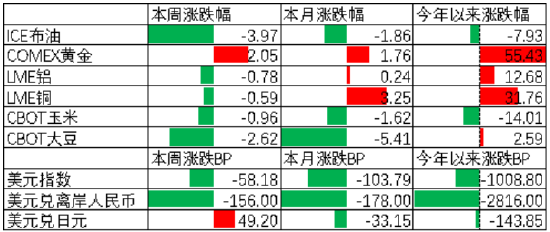
1. Report Industry Investment Ratings No relevant content provided in the reports. 2. Core Views of the Reports Macro and Financial Futures - Overseas, the Fed cut rates by 25 basis points in December, with a dovish tone. The US job market is cooling, and CPI data is suspected of being distorted. The Bank of Japan raised rates by 25 basis points, causing the global bond market to decline. Domestically, fiscal and monetary policies remain positive, but domestic demand is weak and needs policy support [2]. - The USD/CNY exchange rate is expected to be volatile in the short - term and may "break 7" and depreciate moderately in 2026, supported by factors such as narrowing monetary policy differentials, strengthening domestic economic fundamentals, and inflows of international capital [4]. - Short - term stock index is expected to be volatile; the bond market is not pessimistic in the medium - term, and short - term trading should avoid chasing highs [5][6]. Commodities Metals - Gold and silver prices are strong. In the short - term, silver should be cautiously chased due to rising price risks. In the long - term, factors such as the Fed's rate - cut rhythm, dollar index, and demand for gold by central banks should be considered [11][12]. - Copper prices may break through or return to a volatile pattern. Buying on dips is recommended [15]. - Aluminum is expected to be volatile and strong in the medium - term; alumina is expected to be weak; cast aluminum alloy is expected to be volatile and strong [16]. - Zinc is expected to have a high - level wide - range shock in the short - term [17]. - Nickel and stainless steel prices have rebounded, but the market is affected by various factors. Tin prices should be cautiously chased above 340,000 [18][19]. - Lithium carbonate prices may have a short - term correction but are expected to be in a tight supply - demand balance in the long - term. Buying on dips is recommended [21]. - Industrial silicon is in a supply - demand weak pattern, and polysilicon trading should focus on technical analysis [21]. - Lead is expected to oscillate between 16,700 - 17,500 [23]. Black Commodities - Rebar and hot - rolled coil prices are expected to be volatile, with the rebar 2605 contract in the range of 2900 - 3300 and the hot - rolled coil 2605 contract in the range of 3000 - 3400 [26]. - Iron ore prices are range - bound, with upper pressure from high supply and lower support from steel mill profits and expected iron - water recovery [26][27]. - Coking coal and coke prices are affected by supply and demand and inventory. The third - round price cut of coke is expected to land, and the coking coal inventory structure may improve [30]. - Ferrosilicon and ferromanganese are expected to be volatile and strong in the short - term, but the upside is limited [31]. Energy and Chemicals - Pulp prices are expected to be volatile, and offset paper can be lightly shorted [32]. - Crude oil prices may rise due to the tense situation between the US and Venezuela [34]. - LPG is supported in the near - term but under pressure in the long - term [35]. - PX and PTA are expected to be in a good supply - demand pattern, but PTA processing fees have limited upside. Buying on dips is recommended [38][39]. - MEG prices are under pressure from supply and demand and cost, and the upside is limited [41]. - Methanol is in a mixed situation, and the 1 - 5 spread reverse arbitrage can be held [43]. - PP may have reduced supply in January, and buying on dips can be considered [45]. - PE is affected by the weak spot market, but the downside is limited due to potential supply reduction [47]. - Pure benzene is in a surplus situation, and styrene is changing from a strong to a weak situation [48][49]. - High - sulfur fuel oil is in a weak situation, and low - sulfur fuel oil is improving [50][51]. - Rubber is expected to be under pressure and volatile, and synthetic rubber's upside is limited [52][53]. - Urea is expected to be volatile in the short - term [54]. - Soda ash, glass, and caustic soda are expected to be volatile, with soda ash facing surplus pressure and glass having high inventory [54][55][56]. - Log prices may improve due to supply reduction expectations, and a short put option strategy can be considered [58]. - Propylene is expected to be weakly volatile [60]. Agricultural Products - Hog prices may be affected by policies in the long - term, but the short - term is based on fundamentals. The near - term has high supply pressure, and the far - term is stronger [61]. - Oilseeds have a near - strong and far - weak pattern. Soybean meal's near - term is supported, and rapeseed meal is in a supply - demand weak situation [62][63]. - Oils are running weakly following the external market. Buying near - term contracts can be tried [63][64]. - Cotton prices lack a short - term driver but may rise in the long - term. Attention should be paid to the downstream order situation before the festival [66]. - Sugar prices have rebounded after a sharp decline, and the downward trend continues [67]. - Egg prices may have a short - term rebound, but the long - term capacity is still excessive [68]. - Apple prices may have a pull - back, and buying on dips can be considered [69]. - Red date prices have limited downside in the short - term, and attention should be paid to pre - festival procurement [70]. 3. Summaries by Relevant Catalogs Financial Futures Macro - Market news includes the State Council meeting, TikTok news, price rules, Hainan's customs - closure, Trump's policies, Fed news, the Bank of Japan's rate hike, and international negotiations [1]. - The core logic is the Fed's rate cut, the Bank of Japan's rate hike, and the domestic economic policy of "seeking progress while maintaining stability" [2]. RMB Exchange Rate - The previous trading day's RMB exchange rate against the US dollar rose. Important news includes the US Treasury Secretary's statement and Trump's pharmaceutical agreement. The 2026 exchange rate is expected to be volatile and depreciate moderately [3][4]. Stock Index - The previous trading day's stock index rose, but the trading volume was low. The short - term is expected to be volatile [4][5]. Treasury Bond - The previous week's bond market rebounded. The market is not pessimistic in the medium - term, and short - term trading should avoid chasing highs [5][6]. Container Shipping to Europe - The SCFI European line slightly declined, and futures prices were volatile at a high level. There are both positive and negative factors affecting the market [7][8]. Commodities Non - ferrous Metals - **Gold and Silver**: Prices are strong. In the short - term, silver price risks are rising; in the long - term, multiple factors need to be considered [11][12]. - **Copper**: Prices may break through or be volatile. Buying on dips is recommended [13][15]. - **Aluminum**: Aluminum is expected to be volatile and strong in the medium - term; alumina is weak; cast aluminum alloy is expected to be volatile and strong [16]. - **Zinc**: Short - term high - level wide - range shock [17]. - **Nickel and Stainless Steel**: Prices have rebounded, affected by various factors [18]. - **Tin**: Prices should be cautiously chased above 340,000 [19]. - **Lithium Carbonate**: May have a short - term correction, but long - term supply - demand is tight. Buying on dips is recommended [20][21]. - **Industrial Silicon and Polysilicon**: Industrial silicon is in a supply - demand weak pattern, and polysilicon trading should focus on technical analysis [21]. - **Lead**: Expected to oscillate between 16,700 - 17,500 [23]. Black Commodities - **Rebar and Hot - Rolled Coil**: Prices are volatile, affected by cost support and demand weakness [25][26]. - **Iron Ore**: Prices are range - bound, with supply pressure on the upside and demand support on the downside [26][27]. - **Coking Coal and Coke**: Affected by supply, demand, and inventory. The third - round price cut of coke is expected to land, and the coking coal inventory structure may improve [30]. - **Ferrosilicon and Ferromanganese**: Volatile and strong in the short - term, but the upside is limited [31]. Energy and Chemicals - **Pulp - Offset Paper**: Pulp prices are expected to be volatile, and offset paper can be lightly shorted [32]. - **Crude Oil**: Prices may rise due to the tense US - Venezuela situation [34]. - **LPG**: Supported in the near - term but under pressure in the long - term [35]. - **PTA - PX**: In a good supply - demand pattern, but PTA processing fees have limited upside. Buying on dips is recommended [36][38]. - **MEG - Bottle Chip**: Prices are under pressure from supply, demand, and cost, and the upside is limited [40][41]. - **Methanol**: In a mixed situation, and the 1 - 5 spread reverse arbitrage can be held [43]. - **PP**: May have reduced supply in January, and buying on dips can be considered [44][45]. - **PE**: Affected by the weak spot market, but the downside is limited due to potential supply reduction [46][47]. - **Pure Benzene - Styrene**: Pure benzene is in a surplus situation, and styrene is changing from a strong to a weak situation [48][49]. - **Fuel Oil**: High - sulfur fuel oil is weak, and low - sulfur fuel oil is improving [49][51]. - **Rubber**: Expected to be under pressure and volatile, and synthetic rubber's upside is limited [52][53]. - **Urea**: Expected to be volatile in the short - term [54]. - **Soda Ash & Caustic Soda**: Volatile, with soda ash facing surplus pressure and glass having high inventory [54][55][56]. - **Log**: Prices may improve due to supply reduction expectations, and a short put option strategy can be considered [58]. - **Propylene**: Expected to be weakly volatile [60]. Agricultural Products - **Hog**: May be affected by policies in the long - term, but the short - term is based on fundamentals. The near - term has high supply pressure, and the far - term is stronger [61]. - **Oilseeds**: Near - strong and far - weak pattern. Soybean meal's near - term is supported, and rapeseed meal is in a supply - demand weak situation [62][63]. - **Oils**: Running weakly following the external market. Buying near - term contracts can be tried [63][64]. - **Cotton**: Prices lack a short - term driver but may rise in the long - term. Attention should be paid to the downstream order situation before the festival [66]. - **Sugar**: Prices have rebounded after a sharp decline, and the downward trend continues [67]. - **Egg**: Prices may have a short - term rebound, but the long - term capacity is still excessive [68]. - **Apple**: Prices may have a pull - back, and buying on dips can be considered [69]. - **Red Date**: Prices have limited downside in the short - term, and attention should be paid to pre - festival procurement [70].
国际油价下跌,辛醇、草甘膦价格下跌 | 投研报告
Sou Hu Cai Jing· 2025-12-22 02:14
Core Viewpoint - The recent report from Zhongyin Securities highlights a decline in international oil prices and suggests focusing on undervalued leading companies in the chemical industry, the impact of "anti-involution" on supply in related sub-industries, and the importance of self-sufficiency in electronic materials and certain new energy materials companies amid rising prices [1][7]. Group 1: Oil Price Trends - International oil prices have decreased, with WTI crude oil futures closing at $56.52 per barrel, a weekly decline of 1.60%, and Brent crude oil futures at $59.82 per barrel, down 2.13% [3]. - U.S. crude oil production averaged 13.843 million barrels per day for the week ending December 12, a decrease of 10,000 barrels from the previous week but an increase of 239,000 barrels compared to the same period last year [3]. - U.S. oil demand averaged 20.573 million barrels per day, down 50,900 barrels from the previous week, with gasoline demand increasing by 62,200 barrels to 9.078 million barrels per day [3]. Group 2: Chemical Industry Price Movements - Among 100 tracked chemical products, 42 saw price increases, 37 experienced declines, and 21 remained stable during the week [2]. - The average price of isopropanol fell by 4.97% week-on-week to 6,612 yuan per ton, and the average price of glyphosate decreased by 1.58% to 24,901 yuan per ton [4][5]. Group 3: Investment Recommendations - The SW basic chemical sector's price-to-earnings ratio (TTM) is 24.74, at the 73.47% historical percentile, while the price-to-book ratio is 2.24, at the 55.99% historical percentile [7]. - Recommended investment themes include focusing on undervalued leading companies, the impact of "anti-involution" on supply, and the growth potential in semiconductor materials, OLED materials, and new energy materials [7]. - Specific companies recommended for investment include Wanhua Chemical, Hualu Hengsheng, and China Petroleum, among others [7][8].