产能去化

Search documents
日度策略参考-20251110
Guo Mao Qi Huo· 2025-11-10 07:16
Report Industry Investment Ratings - No specific industry investment ratings are provided in the report. Core Views of the Report - The current macro - level is in a relatively vacuum period, A - shares lack a clear upward main line, market trading volume remains low, and stock indices continue to fluctuate, while having strong support below due to policy protection and abundant macro - liquidity [1]. - Asset shortage and weak economy are beneficial to bond futures, but the central bank's short - term reminder of interest rate risks suppresses the upward space [1]. Summaries According to Related Catalogs Macro Finance - **Stock Index**: A - shares lack a clear upward main line, trading volume is low, and the index fluctuates while having strong support below [1]. - **Treasury Bonds**: Asset shortage and weak economy are beneficial to bond futures, but short - term interest rate risk warnings suppress the upward space [1]. Non - ferrous Metals - **Copper**: High prices suppress downstream demand, and market risk preference declines, but the downward space is expected to be limited [1]. - **Aluminum**: The industrial driving force is limited in the near term, and the price maintains high - level fluctuations [1]. - **Alumina**: Domestic production capacity continues to be released, production and inventory increase, and the fundamentals are weak. Attention should be paid to cost support [1]. - **Zinc**: LME inventory continues to decline, and the risk of cornering the market drives the price up. The price is expected to remain high, but chasing high prices requires caution due to domestic over - supply [1]. - **Nickel**: The short - term price may rebound with fluctuations, but beware of high inventory suppression. The long - term pattern of primary nickel is over - supply [1]. - **Stainless Steel**: The social inventory has slightly decreased, and the production schedule in October is stable. The futures price fluctuates at the bottom, and short - term operations are recommended [1]. - **Tin**: In the long - term, pay attention to the opportunity of buying on dips [1]. Precious Metals and New Energy - **Precious Metals**: They are expected to continue to fluctuate in a range in the short term, with support below. Pay attention to the progress of the US government shutdown and Trump's tariff ruling [1]. - **Industrial Silicon**: Northwest production capacity resumes, southwest start - up is weaker than usual, and the impact of the dry season weakens. Polysilicon production in November decreases [1]. - **Lithium Carbonate**: It fluctuates. The traditional peak season for new energy vehicles is coming, energy storage demand is strong, but the hedging pressure is large [1]. Ferrous Metals - **Rebar**: There are concerns about potential weakening of industrial demand in the off - season. After the realization of macro - sentiment, pay attention to the upward pressure [1]. - **Hot - Rolled Coil**: The off - season effect is not obvious, but the industrial structure is still loose. Pay attention to the upward pressure on the price after the realization of macro - sentiment [1]. - **Iron Ore**: The near - month contract is restricted by production cuts, but the far - month has upward opportunities [1]. - **Glass**: Supply and demand are supportive, the valuation is low, but short - term sentiment dominates and the price fluctuates strongly [1]. - **Soda Ash**: It follows glass, but the supply and demand are average, and the upward resistance of the price is large [1]. - **Coking Coal and Coke**: Coking coal's trend is tangled near the previous high, and coke's high - point price includes the expectation of five rounds of price increases. The steel - coke game is intense, and the price may return to the shock range [1]. Agricultural Products - **Palm Oil**: It still faces the dual pressures of seasonal production increase and weak exports in the short term. A rebound may occur if export data improves in November [1]. - **Soybean Oil**: The purchase of US soybeans by China may bring a loose expectation, and the rebound momentum is insufficient [1]. - **Rapeseed Oil**: The meeting between Chinese and Canadian leaders brings a relaxation expectation, and the bumper harvest of Canadian rapeseed presses the price [1]. - **Cotton**: The new - year cotton demand is uncertain. The downward space of the futures price is limited, but the basis and the futures price may be under pressure [1]. - **Sugar**: The price has seasonal upward momentum in the short term, but the rebound space is expected to be limited after the new sugar is listed [1]. - **Corn**: The supply still faces selling pressure, and the short - term price is expected to fluctuate at a low level, with a medium - to - long - term rebound expected [1]. - **Soybeans**: The domestic soybean futures are expected to follow the US market and fluctuate strongly in the short term, but the global supply pattern restricts the rebound height [1]. - **Paper Pulp**: The trading logic is about the old warehouse receipts of the 11 - contract. The downward pressure on the futures price is large, and a 11 - 1 reverse spread is recommended [1]. - **Hogs**: The futures price follows the spot price and stabilizes and then weakens. There is still pressure on the supply in November [1]. Energy and Chemicals - **Fuel Oil**: OPEC+ plans to maintain a small increase in production in December, geopolitical speculation cools down, and market sentiment eases [1]. - **Asphalt**: The short - term supply - demand contradiction is not prominent, and it follows crude oil. The profit is relatively high [1]. - **BR Rubber**: It is bearish. The cost support weakens, and the supply is loose [1]. - **PTA**: Gasoline profit and low benzene price support PX. Overseas and domestic device problems lead to a decline in PTA production [1]. - **Ethylene Glycol**: The price follows the decline of crude oil, but the cost support from coal strengthens slightly [1]. - **Short - Fiber**: The price follows the cost closely, and the basis strengthens [1]. - **Styrene**: The Asian benzene price is weak, the arbitrage window is closed, and the profit of styrene plants decreases [1]. - **Urea**: The export sentiment eases, and the upward space is limited, but there is support from anti - involution and cost [1]. - **PE**: The inventory pressure is large under high supply, the maintenance intensity weakens, and the downstream demand increases slowly [1]. - **PVC**: The supply pressure is large due to reduced maintenance and new production capacity, but the cost support strengthens [1]. - **Caustic Soda**: There is a risk of cornering the market due to planned alumina production in Guangxi, reduced maintenance concentration, and limited near - month warehouse receipts [1]. - **LPG**: The international oil and gas fundamentals are loose, and the domestic spot market stabilizes [1]. Others - **Container Shipping on European Routes**: Macro - positive sentiment is digested, the expected price increase in the peak season is pre - priced, and the shipping capacity supply in November is relatively loose [1]
“养猪茅”们,迎来行业至暗时刻
凤凰网财经· 2025-11-09 10:59
Core Viewpoint - The article discusses the significant decline in pig prices in China, leading to reduced profits for major pig farming companies and highlighting the challenges faced by the industry due to oversupply and high debt levels [4][5][24]. Group 1: Current Market Conditions - Pig prices have reached a new low, with the average price for commodity pigs in October at 11.55 yuan/kg, a year-on-year decrease of 32.73% for Muyuan Foods [8][12]. - National pig prices dropped to 10.89 yuan/kg in October, marking the lowest level since 2019, with an overall year-on-year decline of approximately 30% [13][15]. - Major pig farming companies like Muyuan Foods and Wens Foodstuffs reported significant drops in net profits for Q3 2025, with Muyuan's net profit down 55.98% and Wens' down 65.02% [18][19]. Group 2: Supply and Demand Imbalance - The primary reason for the price drop is a fundamental imbalance in supply and demand, exacerbated by lower-than-expected pork consumption and an increase in supply due to panic selling by farmers [24][25]. - The industry is facing a phase of oversupply, with the number of breeding sows remaining high at 40.35 million, which is significantly above the levels seen in 2019 [26]. Group 3: Financial Health of Companies - Major companies are focusing on reducing debt and improving financial health, with Muyuan's debt ratio decreasing to 55.5% and Wens' to 49.41% as of Q3 2025 [29][30]. - Smaller farming operations are struggling with higher costs and risks of financial instability, as their production costs exceed 6.5 yuan/kg compared to the larger companies' lower costs [22]. Group 4: Future Outlook - While pig prices have stabilized at low levels, analysts remain cautious about a significant rebound in prices due to anticipated increases in supply from expanded production [28]. - The industry is under pressure to rationalize production capacity, with regulatory bodies encouraging a reduction in breeding sow numbers to stabilize prices [24].




东方证券农林牧渔行业周报:供给宽松持续压制猪价,10月能繁去化提速-20251109
Orient Securities· 2025-11-09 02:27
Investment Rating - The report maintains a "Positive" investment rating for the agriculture industry [5] Core Viewpoints - The supply-side relaxation continues to suppress pig prices, with a significant acceleration in the reduction of breeding sows in October [2] - The pig farming sector is expected to benefit from recent policies and market forces that promote capacity reduction, leading to long-term performance improvements [3][38] - The planting chain shows a positive outlook with an established upward trend in grain prices, highlighting significant investment opportunities in large-scale planting [3][38] Summary by Relevant Sections Pig Farming - The current pig price is weak, with the average price for external three yuan pigs at 11.91 yuan/kg, down 4.64% week-on-week [11] - The price of 15 kg piglets is 18.93 yuan/kg, up 4.41% week-on-week [11] - The industry is experiencing a comprehensive loss phase, with pig prices dropping below 12 yuan/kg and weaning pig prices around 200 yuan/head [8][11] Poultry - The white feather broiler price remains stable at 7.09 yuan/kg, while chick prices have decreased to 3.54 yuan/chick, down 1.12% week-on-week [16] - The supply of broilers is increasing, but purchasing enthusiasm remains low [16] Feed Sector - Corn and wheat prices have decreased, while soybean meal prices have increased slightly [24] - The average price of corn is 2238.53 yuan/ton, down 0.07% week-on-week [24] Bulk Agricultural Products - The domestic natural rubber price is 14995 yuan/ton, down 0.60% week-on-week, with a new round of inventory replenishment starting [34] - The overall supply remains ample, and the market is characterized by weak demand [34] Investment Recommendations - Positive outlook for the pig farming sector with recommended stocks including Muyuan Foods, Wens Foodstuff Group, and others [3][38] - The planting sector shows promising fundamentals with recommended stocks such as Suqian Agricultural Development and Beidahuang [3][38] - The pet food sector is experiencing growth, with recommended stocks including Guibao Pet and Zhongchong Co., Ltd [3][38]



跌破6元/斤后,猪价该刹刹车了!但也埋了一个雷
Sou Hu Cai Jing· 2025-11-07 07:45
Core Viewpoint - The recent decline in pig prices has raised concerns in the pig farming industry, with prices falling below 6 yuan per kilogram, but there are indications that this downward trend may be slowing down [2][3]. Supply and Demand Analysis - Although supply still exceeds demand, the situation is not dire enough to cause a panic sell-off, as market sentiment remains relatively stable [3]. - The willingness of farmers to hold prices is increasing, especially with the upcoming consumption peak season, making it unlikely for them to exit the market at this time [3][6]. Seasonal Factors - The onset of winter is expected to boost pork consumption, as seasonal products like cured meats and sausages will soon be in demand [6]. - However, there is a risk that the market may misinterpret the seasonal demand as a strong recovery, while the reality is that maintaining prices above 6 yuan is already a challenge [7]. Factors Influencing Price Recovery - Two main factors could drive pig prices up: the willingness for secondary fattening and consumer demand [8][12]. - Secondary fattening can temporarily reduce supply, which may lead to price increases, but the current market sentiment is cautious, and the motivation for farmers to engage in this practice is not strong [9][11]. Consumer Behavior - Recent holiday seasons have shown weak consumer demand, indicating that the expected seasonal consumption boost may not materialize as strongly as in previous years [12]. - Economic constraints are leading consumers to be more cautious with spending, impacting overall pork consumption [12][15]. Production Capacity and Efficiency - The reduction in pig production capacity is slow, and while there are efforts to improve efficiency by replacing low-yield sows with high-yield ones, the actual supply pressure remains significant [15]. - The focus on cost reduction and efficiency improvement means that even with a decrease in the number of breeding sows, the effective supply may not decrease proportionately due to increased productivity [15].
日度策略参考-20251107
Guo Mao Qi Huo· 2025-11-07 06:35
Report Industry Investment Rating No relevant content provided. Core Viewpoints of the Report - The current macro - level is in a relatively vacuum period, A - shares lack a clear upward main line, market trading volume remains low, and the stock index continues to fluctuate, accumulating momentum for the next round of upward movement. Meanwhile, with policy support and abundant macro - liquidity, there is still strong support below the stock index [1]. Summary by Related Catalogs Macro Finance - **Treasury Bonds**: Asset shortage and weak economy are beneficial to bond futures, but the central bank has recently warned of interest - rate risks, suppressing the upward space, showing an oscillating trend [1]. - **Copper**: The tight pattern of US dollar liquidity has eased, market risk appetite has recovered, and copper prices have stopped falling [1]. - **Aluminum**: Recently, the industrial - side driving force is limited, and the macro - level benefits have been digested, so aluminum prices are oscillating [1]. - **Alumina**: With still a small profit in production, domestic alumina production capacity is continuously released, and both production and inventory are increasing, putting pressure on the spot price. Recently, attention should be paid to the cost support [1]. - **Zinc**: The US government shutdown has reached the longest historical record, and market risk - aversion sentiment has increased. The LME zinc inventory has been continuously decreasing, and the short - squeeze movement has driven zinc prices higher. However, considering the domestic oversupply, caution is needed when chasing high prices [1]. Non - ferrous Metals - **Nickel**: The better - than - expected US ADP data has alleviated concerns about the US economic recession, but the expectation of the Fed's interest - rate cut has been suppressed, and market risk appetite has fluctuated. Indonesia has recently restricted the approval of nickel - related smelting projects again, but the approved projects are not affected. In the fourth quarter, attention should be paid to the approval of nickel - ore quotas in 2026. Nickel prices may oscillate in the short term, and high inventory pressure should be watched out for. It is recommended to trade within a short - term range, and the long - term surplus pattern of primary nickel will continue [1]. - **Stainless Steel**: The better - than - expected US ADP data has alleviated concerns about the US economic recession, but the expectation of the Fed's interest - rate cut has been suppressed, and market risk appetite has fluctuated. Indonesia has restricted the approval of nickel - related smelting projects again, but the approved projects are not affected. In the fourth quarter, attention should be paid to the progress of the approval of Indonesian nickel - ore quotas, and the premium at the ore end is currently stable. The price of raw - material ferronickel has weakened slightly, the social inventory of stainless steel has decreased slightly, and the steel mills' production plan for October is stable. Macro - sentiment is fluctuating, steel mills have recently lifted price limits, and stainless - steel futures are oscillating at the bottom. It is recommended to trade short - term and look for opportunities to sell on rallies [1]. - **Tin**: Recently, the positive macro - sentiment has been digested. Considering that the raw - material end of tin has not recovered and the new - quality demand is expected to be good, it is still recommended to pay attention to the opportunity of going long on dips in the long - term [1]. Precious Metals and New Energy - **Precious Metals (Gold and Silver)**: Judges of the high - court generally question the legitimacy of tariffs, increasing market uncertainty and supporting precious - metal prices. However, the resilience of US economic data has disrupted the interest - rate cut expectation. Precious metals are expected to oscillate within a range in the short term [1]. - **Industrial Silicon**: The production capacity in the northwest is continuously resuming, the start - up in the southwest is weaker than in previous years, and the impact of the dry season is weakened [1]. - **Polysilicon**: In the long - term, there is an expectation of production - capacity reduction. In the fourth quarter, the terminal installation will increase marginally. The anti - involution policy has not been implemented for a long time, and market sentiment has faded [1]. - **Lithium Carbonate**: The traditional peak season for new - energy vehicles is approaching, the energy - storage demand is strong, but the hedging pressure is large [1]. Ferrous Metals - **Rebar**: There are concerns about the potential weakening of industrial demand in the off - season. After the macro - sentiment is realized, attention should be paid to the upward pressure. It is advisable to participate in the out - of - the - money accumulative put option strategy [1]. - **Hot - Rolled Coil**: The off - season effect of the industry is not obvious, but the industrial structure is still loose. Similarly, attention should be paid to the upward pressure on prices after the macro - sentiment is realized [1]. - **Iron Ore**: Near - month production is restricted, but the commodity sentiment is good, and there is still an upward opportunity for far - month contracts [1]. - **Sulfur**: The direct demand is good, and there is cost support, but the supply is high, inventory is accumulating, and the sector is under pressure, with limited price rebound space [1]. - **Coke and Coking Coal**: Coking coal is struggling near the previous high, repeatedly testing the support. The high point of the coke futures price has included the expectation of five rounds of price increases, but the actual three - round price increase has been delayed, and the game is intense. Based on the tight supply, coke and coking coal are relatively strong, but considering the weakening of steel prices and the potential weakening of steel demand in November, the futures prices of coke and coking coal are likely to return to the oscillating range after a false breakout. In the short - term, it is advisable to wait and see, and in the long - term, it is still advisable to go long at low prices. Industrial customers can consider selling hedging [1]. Agricultural Products - **Palm Oil**: In the short term, palm oil still faces the dual pressures of seasonal production increase and weak exports. However, starting from November, Malaysia enters the traditional production - reduction cycle. If export data improve significantly, it may trigger a staged rebound [1]. - **Soybean Oil**: According to the China - US negotiation agreement, China will purchase 12 million tons of US soybeans in the next two months, which may bring a loose expectation for soybean oil in the fourth quarter, and the rebound momentum is insufficient. The actual impact needs to be observed [1]. - **Rapeseed Oil**: The meeting between Chinese and Canadian leaders has brought the expectation of Sino - Canadian relaxation, and the bumper harvest of Canadian rapeseed has put pressure on the futures price [1]. - **Cotton**: Although the production capacity in Xinjiang is expanding, the production capacity in the inland may decrease marginally. At the same time, due to the thinning of spinning profits in Xinjiang, the operating rate may also be affected. The contradiction between the expansion of Xinjiang's production capacity and the reduction of spinning profits makes the cotton demand in the new year highly uncertain. The current futures price has fully priced in the selling pressure of new crops, and the downward space is limited, but under the background of a record - high production of new crops, the basis and futures price may continue to be under pressure [1]. - **Sugar**: Typhoons before and after the National Day have had an adverse impact on the sugar - cane harvest and production in South China. There is a seasonal upward impetus for sugar prices in the short term. In the medium - term, considering the good growth of sugar cane this year, the rebound space after the new - sugar listing is expected to be limited [1]. - **Soybeans and Soybean Meal**: The domestic soybean purchase and crushing profit is poor, and the domestic futures price is undervalued. With the expectation of China's purchase of US soybeans, the import cost of US soybeans is expected to rise, and the domestic futures price is expected to rebound in the short term to repair the crushing profit. However, the current loose supply of domestic soybean - meal spot and the expected loose global soybean supply in the long - term limit the rebound height [1]. - **Paper Pulp**: The current trading logic of paper pulp is related to the trading of old warehouse receipts for the November contract. With weak downstream demand, the futures price is under great pressure. It is recommended to conduct a reverse spread between the November and January contracts [1]. - **Log**: The fundamentals of logs have declined, but the spot price is firm. After a sharp decline in the futures price, the risk - return ratio of short - selling is low. It is recommended to wait and see [1]. - **Live Pigs**: In the past half - month, the spot price has risen alternately in the north and south due to secondary fattening, frozen - product storage, and reluctance to sell, which has postponed the production capacity. There is still pressure on the November slaughter. In the short term, the futures price is at the same level as the spot price, and the futures price will follow the spot price to stabilize and then weaken [1]. Energy and Chemicals - **Crude Oil**: OPEC+ plans to continue a small - scale production increase in December, the short - term geopolitical speculation has cooled down, and the suspension of some China - US trade - tariff policies has eased market sentiment [1]. - **Fuel Oil**: Similar to crude oil, the short - term supply - demand contradiction is not prominent, and it follows the trend of crude oil. The demand for the 14th Five - Year Plan construction rush is likely to be falsified, and the supply of Venezuelan crude oil is sufficient. The profit of asphalt is high [1]. - **Natural Rubber**: There is strong support from raw - material costs, the mid - stream inventory is continuously decreasing, and the commodity - market atmosphere is positive [1]. - **BR Rubber**: The decline of crude - oil prices has reduced the cost support of butadiene, and the supply of synthetic rubber is loose. High - production and high - inventory have not suppressed the price, and the mainstream supply price has been continuously reduced [1]. - **PTA**: Gasoline profit and low benzene price support PX. The gasoline cracking price has risen above $15, prompting refineries to increase gasoline production and reduce the feed of aromatic - hydrocarbon units. Overseas device failures and the decline of the operating load of some domestic reforming units, as well as the rotation inspection of large domestic PTA devices, have led to a decline in domestic PTA production [1]. - **Ethylene Glycol**: The decline of crude - oil prices has led to a decline in ethylene - glycol prices, while the rise of coal prices has slightly strengthened the cost support of domestic ethylene glycol. The "Golden September and Silver October" of the polyester industry is coming to an end, and the domestic demand has not significantly declined [1]. - **Short - Fiber**: Gasoline profit and low benzene price support PX. The rebound of PTA prices has strengthened the basis of short - fiber. Short - fiber prices continue to fluctuate closely with costs [1]. - **Styrene**: The Asian benzene price is still weak, the operating rates of STDP and reforming units have declined, the arbitrage window from Northeast Asia to the US is still closed, the profit of domestic styrene has decreased, the number of styrene - device overhauls has gradually increased, and crude - oil prices have continued to fall [1]. - **Urea**: The export sentiment has eased slightly, and the limited domestic demand restricts the upward space. There is support from anti - involution and cost - end factors [1]. - **PE**: Under high - supply, the inventory pressure is large, the intensity of overhauls has weakened, and the downstream demand is slowly increasing, but the peak season is not prosperous [1]. - **PP**: The support from overhauls is limited, and the new - device production has increased the supply pressure. The downstream improvement is less than expected, and the futures price has returned to the fundamentals, showing a weak - oscillating trend [1]. - **PVC**: The overhauls have decreased compared with the previous period, and the new production capacity has been released, increasing the supply pressure. The rise of coal prices has strengthened the cost support of PVC [1]. - **Caustic Soda**: Many alumina projects in Guangxi are planned to be put into production, the subsequent concentration of overhauls will decrease, the high - concentration caustic soda is at a negative premium, the absolute price is low, and the near - month warehouse receipts are limited, so there is a risk of short - squeeze [1]. - **LPG**: The international oil - gas fundamentals are continuously loose, the CP/FEI prices have weakened, the valuation of the domestic LPG futures price has been repaired, and the domestic spot fundamentals are stable due to short - term cooling and chemical rigid demand [1]. Others - **Container Shipping (European Route)**: The positive macro - sentiment has been gradually digested, the expectation of price increases in the peak season has been priced in advance, and the shipping capacity supply in November is relatively loose [1].
中国期货每日简报-20251106
Zhong Xin Qi Huo· 2025-11-06 02:12
Report Industry Investment Rating - Not provided in the content Core Viewpoints - On November 5, most equity indices rose while CGB futures fell; more commodities fell, with metals continuing relatively weak performances [11][14] - The top three gainers in China's commodity futures are SCFIS(Europe), egg, and rapeseed meal, while the top three decliners are poly-silicon, fiberboard, and bitumen [12][13] - Most equity indices in China's financial futures rose, and CGB futures fell [14] Summary by Directory 1. China Futures 1.1 Overview - On November 5, most equity indices rose while CGB futures fell; more commodities fell, with metals continuing relatively weak performances [11][14] - The top three gainers in China's commodity futures are SCFIS(Europe) (up 4.1% with open interest up 10.2% month-on-month), egg (up 1.9% with open interest up 4.7% month-on-month), and rapeseed meal (up 1.6% with open interest up 8.7% month-on-month) [12] - The top three decliners in China's commodity futures are poly-silicon (down 2.4% with open interest down 3.0% month-on-month), fiberboard (down 1.8% with open interest up 3.4% month-on-month), and bitumen (down 1.6% with open interest down 1.7% month-on-month) [13] - Most equity indices in China's financial futures rose, with IM increasing by 0.8% and IC increasing by 0.5%; CGB futures fell, among which TL fell by 0.1% [14] 1.2 Daily Raise 1.2.1 Live Hog - On November 5, live hog increased by 1.6% to 11945 yuan/ton. In the fourth quarter, it is still in the period of high-capacity fulfillment. Anti-involution policies continue, and breeding profits remain in a state of loss, which is conducive to capacity reduction in the fourth quarter [19][22] - On the supply side, in the short term, the utilization rate of secondary fattening pens has increased, but the rebound in hog prices has restrained the sentiment toward secondary fattening; leading hog enterprises have maintained a relatively fast pace of hog sales. In the medium term, the national capacity of sows capable of reproduction remained at a high level in the first half of 2025, and the number of new piglets born from January to September continued to increase month-on-month. In the long term, the capacity of sows capable of reproduction has begun to show signs of reduction [20] - On the demand side, as temperatures drop, the price ratio of fattened hogs has increased slightly. In terms of inventory, leading hog enterprises are actively selling hogs, resulting in a decline in the average weight of hogs sold; the sentiment toward restocking for secondary fattening has weakened to some extent [21] 1.2 Daily Drop 1.2.1 Iron Ore - On November 5, iron ore decreased by 0.3% to 776 yuan/ton. The fundamentals are marginally weakening, while disturbances from domestic and international macro factors as well as policy expectations still exist. Prices are expected to fluctuate in the short term [27][31] - On the supply side, the shipment volume of overseas iron ore mines has decreased month-on-month, while the arrival volume at ports has increased significantly. Recently, there are still hurricanes forming in Southeast Asia, which may disrupt the rhythm of shipment and arrival at ports [28] - On the demand side, the average daily output of sampled molten iron has dropped significantly. Tangshan region has been obviously affected by environmental protection-related production restrictions, and some steel mills have begun annual maintenance of blast furnaces due to profit factors. The peak demand season is gradually coming to an end, which may limit the room for molten iron output to recover [29] - In terms of inventory, steel mills have reduced spot purchases, leading to a decline in their imported iron ore inventories. Meanwhile, port inventories have accumulated significantly, and the pressure on fundamentals has increased to some extent [30] 1.2.2 Steel Rebar - On November 5, steel rebar decreased by 1.2% to 3024 yuan/ton. Inventory levels remain relatively high year-on-year. After the short-term cooling of macro sentiment, the market is expected to face downward pressure for adjustment. Attention should be paid to disturbances from macro policies and iron ore supply [36][40] - On the supply side, recently, steel mills' profit margins have improved marginally. However, affected by environmental protection-related production restrictions and the increase in seasonal maintenance of steel mills, molten iron output has declined from a high level. Some steel mills have resumed production of rolling lines, leading to a continued increase in the output of the five major steel products, among which the output of construction steel has increased significantly [37] - On the demand side, the apparent demand for steel rebar is acceptable. The destocking speed of steel products has accelerated, and the fundamentals have continued to improve. Nevertheless, the situation where inventory levels are relatively high year-on-year remains unchanged. As the peak demand season for steel rebar is drawing to a close, the demand outlook remains relatively cautious [38][39] 2. China News 2.1 Macro News - Starting from 13:01 on November 10, 2025, the additional 24% tariff rate on imports from the United States will be suspended for another year, and the 10% additional tariff rate on imports from the United States will be retained [45][46] - On November 5, Li Qiang, Premier of the State Council, attended the opening ceremony of the 8th China International Import Expo and the Hongqiao International Economic Forum in Shanghai and delivered a keynote speech [46] - The EU will investigate Anglo American's plan to sell its nickel mining business to MMG. China supports Chinese companies in conducting practical cooperation under the principle of mutual benefit and hopes relevant parties will honor the commitment to openness [46] 2.2 Industry News - In the first three quarters of 2025, the average daily turnover of the northbound Shanghai-Shenzhen Stock Connect and the southbound Hong Kong Stock Connect reached RMB 206.4 billion and HKD 125.9 billion respectively, up 67% and 229% YoY respectively [47]
期货市场交易指引:2025年11月05日-20251105
Chang Jiang Qi Huo· 2025-11-05 03:16
1. Report Industry Investment Ratings - **Macro - Finance**: Index futures are bullish in the medium - long term with a strategy of buying on dips; Treasury bonds are expected to move sideways [1][6] - **Black Building Materials**: Coking coal and rebar are for range trading; Glass is recommended for selling call options [1][8][9] - **Non - ferrous Metals**: Copper is advised to close long positions at high levels or engage in range short - term trading; Aluminum is recommended to buy on dips; Nickel suggests waiting and seeing or shorting on rallies; Tin, gold, and silver are for range trading [1][12][13] - **Energy and Chemicals**: PVC, caustic soda, styrene, rubber, urea, methanol, and polyolefins are expected to move sideways. Soda ash 01 contract follows a short - selling mindset [1][23][24][34] - **Cotton and Textile Industry Chain**: Cotton and cotton yarn are expected to move sideways; PTA is in low - level oscillation; Apples and jujubes are in weak oscillation [1][37][38] - **Agriculture and Animal Husbandry**: Pigs and eggs face pressure in rebounds; Corn is in a bottom - building oscillation; Soybean meal rebounds from a low level; Oils are in weak oscillation [1][41][48][49] 2. Core Views - The market is in a vacuum period of performance, events, and policies after the Sino - US trade negotiation, third - quarter reports, and the Fourth Plenary Session, so it will oscillate to wait for new changes at the end of the year [6] - The main trading line of Treasury bonds is not over, but the market is observing the scale and scope of the central bank's Treasury bond trading, so it is expected to move sideways [6] - The coal market has tight supply and demand, and prices are rising steadily. The supply of coking coal may be affected by the resumption of production in coal mines, and the price of rebar is expected to have limited downside space due to low valuation [8] - The supply of glass is high, demand is weak, and the overall supply - demand pattern is poor, so it is recommended to sell call options [10] - The short - term supply - demand situation of copper has limited support for prices, and it is expected to oscillate at a high level. The supply of aluminum may face adjustments, and it is recommended to take profit on long positions at high levels [12][14] - The supply of nickel may be more abundant in the medium - long term, and it is recommended to wait and see or short on rallies. The supply of tin is expected to improve, and it is recommended for range trading [18][20] - Precious metals are supported by interest - rate cut expectations and safe - haven needs, but are in a short - term adjustment state, and are recommended for range trading [20][22] - The supply - demand of PVC is still weak, and it is expected to oscillate. The supply of caustic soda is affected by alumina, and it is expected to oscillate weakly [23][25] - The cost of benzene ethylene is under pressure, and the overall chemical fundamentals are weak, so it is expected to oscillate. The cost support of rubber is insufficient, and it is expected to oscillate [26][28] - The supply of urea decreases, demand increases, and the price is expected to rise slightly. The supply of methanol is tight in some areas, and the port inventory pressure is high, so it is expected to oscillate [29][31] - The supply of polyolefins has new production capacity, and demand is mainly for rigid needs, so PE is expected to oscillate, and PP is expected to oscillate weakly [33] - The supply of soda ash is excessive, and it is recommended to maintain a short - selling mindset for the 01 contract [36] - The supply - demand of cotton and cotton yarn is expected to be stable, and it is expected to oscillate. The supply of PTA is in a state of inventory accumulation, and it is in low - level oscillation [37][38] - The quality of apples has declined, and consumption is weak, so the price is expected to decline. The price of jujubes is expected to decline [38][40] - The supply of pigs is large in the first half of next year, and prices face pressure. The supply of eggs is still large in the medium - long term, and prices face pressure [41][44] - The supply of corn is sufficient in the short term, and demand is weak, so it is in a bottom - building oscillation. The price of soybean meal is supported by cost and is expected to rebound [47][48] - Oils are under pressure in the short term but have support factors, and are expected to oscillate widely [54] 3. Summary by Directory 3.1 Macro - Finance - **Index Futures**: A - shares and Hong Kong stocks are generally down. The market lacks catalysts and is expected to oscillate. It is bullish in the medium - long term and recommended to buy on dips [6] - **Treasury Bonds**: Treasury bond futures have mixed performance. The market is observing the central bank's operations, and it is recommended to maintain a balanced allocation and expect sideways movement [6] 3.2 Black Building Materials - **Double - Coking Coal**: The coal market has tight supply and demand, and prices are rising. It is necessary to pay attention to the resumption of production in coal mines [8] - **Rebar**: The price has fallen, but the low valuation limits the downside space. It is recommended to buy on dips for the RB2601 contract and focus on the range of 3000 - 3200 [8] - **Glass**: The supply is high, demand is weak, and the overall supply - demand pattern is poor. It is recommended to sell the 01 contract out - of - the - money call options and hold them until expiration [10] 3.3 Non - ferrous Metals - **Copper**: The price has reached a new high and then declined. The short - term supply - demand has limited support, and it is expected to oscillate at a high level. The recommended operating range of the main Shanghai copper contract is 85000 - 89000 [12][13] - **Aluminum**: The price of bauxite is under pressure, and the supply of electrolytic aluminum may face adjustments. It is recommended to take profit on long positions at high levels [14] - **Nickel**: The supply may be more abundant in the medium - long term, and it is recommended to wait and see or short on rallies [18] - **Tin**: The supply is expected to improve, and it is recommended for range trading, with the reference range of the Shanghai tin 12 contract being 275,000 - 295,000 yuan/ton [20] - **Silver and Gold**: They are supported by interest - rate cut expectations and safe - haven needs, are in a short - term adjustment state, and are recommended for range trading. The reference range of the Shanghai silver 12 contract is 10700 - 11600, and that of the Shanghai gold 12 contract is 890 - 940 [20][22] 3.4 Energy and Chemicals - **PVC**: The supply is high, demand is weak, and it is expected to oscillate. The 01 contract is temporarily concerned about the range of 4600 - 4800 [23] - **Caustic Soda**: The supply is affected by alumina, and it is expected to oscillate weakly. The 01 contract is temporarily concerned about the pressure at 2400 [24] - **Benzene Ethylene**: The cost is under pressure, and the overall chemical fundamentals are weak. It is expected to oscillate, and the range of 6300 - 6700 is concerned [26] - **Rubber**: The cost support is insufficient, and it is expected to oscillate. The support at 15000 is concerned [28] - **Urea**: The supply decreases, demand increases, and the price is expected to rise slightly. The 01 contract range is 1600 - 1700 [29][30] - **Methanol**: The supply is tight in some areas, and the port inventory pressure is high. It is expected to oscillate, and the 01 contract range is 2230 - 2330 [31][32] - **Polyolefins**: The supply has new production capacity, and demand is mainly for rigid needs. PE is expected to oscillate, paying attention to the support at 6900, and PP is expected to oscillate weakly, paying attention to the support at 6600 [33] - **Soda Ash**: The supply is excessive, and it is recommended to maintain a short - selling mindset for the 01 contract [36] 3.5 Cotton and Textile Industry Chain - **Cotton and Cotton Yarn**: The supply - demand is expected to be stable, and it is expected to oscillate [37] - **PTA**: The price is in low - level oscillation, and the supply is in a state of inventory accumulation. The concerned range is 4400 - 4700 [38] - **Apples and Jujubes**: The quality of apples has declined, consumption is weak, and the price is expected to decline. The price of jujubes is also expected to decline [38][40] 3.6 Agriculture and Animal Husbandry - **Pigs**: The 01 contract is under pressure due to postponed supply, and it is recommended to take profit on short positions gradually. The 03 and 05 contracts have large supply and weak demand in the first half of next year, and it is recommended to hold short positions. The 07 and 09 contracts should be carefully bottom - fishing [41] - **Eggs**: The 12 contract has a large premium over the spot, and it is recommended to short on rallies lightly. The 01 contract oscillates in the range of 3250 - 3400 [43][44] - **Corn**: The short - term supply is sufficient, and demand is weak. It is in a bottom - building oscillation, and the 01 contract oscillates in the range of 2050 - 2170. It is recommended to pay attention to the 3 - 5 positive spread [45][46][47] - **Soybean Meal**: It rebounds from a low level. The M2601 contract can take profit on a small scale at high levels and hold after a pullback. Spot enterprises can fix the basis from November to January at low points [48][49] - **Oils**: They are in a high - level adjustment, with palm oil being weak and soybean oil being strong. The 01 contracts of soybean, palm, and rapeseed oil should pay attention to the support levels of 7900 - 8000, 8450 - 8500, and 9250 - 9350 respectively, and not chase short. It is recommended to pay attention to the strategy of the narrowing spread of rapeseed - soybean 01 and the widening spread of soybean - palm 01 [49][54]
产能去化预期下,板块配置性价比高——三季报看,养殖如何布局?
Mei Ri Jing Ji Xin Wen· 2025-11-04 10:19
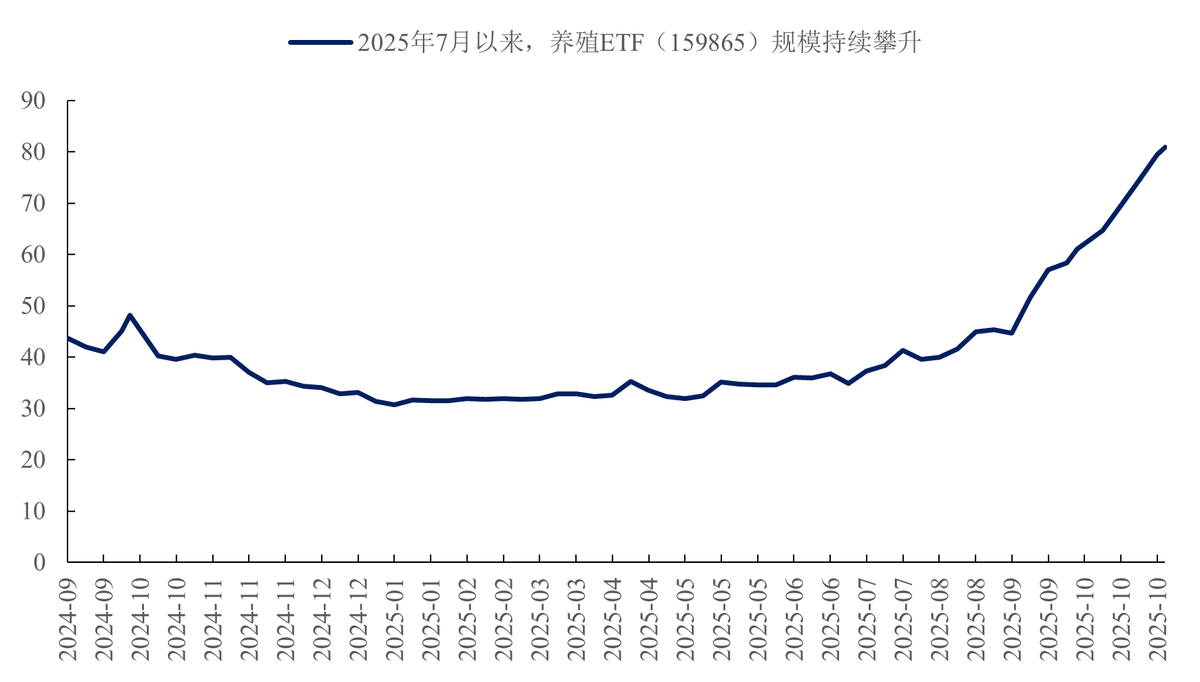
Core Viewpoint - The livestock industry experienced a decline in performance in Q3 2025, particularly in the pig farming sector, while the white chicken farming sector showed growth [1][2]. Group 1: Performance Summary - The pig farming sector generated revenue of 101.8 billion yuan in Q3 2025, a year-on-year decrease of 5.75% and a quarter-on-quarter decrease of 3.69% [1]. - The net profit attributable to the parent company in the pig farming sector was 6 billion yuan, reflecting a significant year-on-year decline of 67.14% and a quarter-on-quarter decline of 27.21% due to a drop in pig prices compared to the previous year [1]. - In contrast, the white chicken farming sector achieved revenue of 8.7 billion yuan, marking a year-on-year increase of 14.39% and a quarter-on-quarter increase of 18.03% [1]. - The net profit attributable to the parent company in the white chicken farming sector was 316 million yuan, benefiting from a recovery in chick prices [1]. Group 2: Supply and Demand Analysis - The supply side indicates that from April 2024, pig farming entered a profitable phase, with the breeding sow inventory gradually increasing. As of September 2025, the breeding sow inventory reached 40.35 million heads, a year-on-year decrease of 0.7% [2]. - The total pig slaughter volume from January to September 2025 was 530 million heads, a year-on-year increase of 1.85%, with Q3 2025 slaughter volume reaching 164 million heads, a year-on-year increase of 4.72% [2]. - The average pig price in Q3 2025 dropped to 13.83 yuan/kg, reflecting a year-on-year decrease of 28.70% and a quarter-on-quarter decrease of 5.15% [2]. - Consumer demand showed fluctuations, with a decline in July and August due to hot weather, but a recovery in September driven by back-to-school and holiday preparations [2]. Group 3: Outlook and Policy Impact - The supply side outlook suggests continued growth in breeding sow capacity from H2 2024 to H1 2025, with expectations of production capacity reduction in the industry [3]. - Recent policies from the National Development and Reform Commission aim to control breeding sow inventory and restrict pig sales to curb speculative behavior, which may lead to a reduction in production capacity among leading farming enterprises [3]. - Demand is expected to increase in Q4 due to seasonal factors, but overall growth is anticipated to be limited, with potential further declines in pig prices post-Spring Festival [3]. Group 4: Investment Recommendations - The livestock ETF (159865), which has a "pig content" of approximately 60%, is recommended for investment, as it covers the entire pig farming industry chain [4]. - Despite short-term pressures on pig prices and farming profits, the potential for accelerated reduction in breeding sow inventory and improved supply-demand dynamics in 2026 is highlighted [4]. - The ETF has seen significant inflows, with its scale surpassing 8 billion yuan, reflecting growing investor interest amid industry fluctuations and policy expectations [4].
农林牧渔:25Q3猪企利润缩窄,周期底部加速分化
Huafu Securities· 2025-11-04 06:06
Investment Rating - The report maintains a "Buy" rating for the agricultural sector, specifically highlighting the potential for long-term price increases in the pig farming industry due to capacity adjustments and cost optimization by leading companies [4]. Core Insights - The report indicates that the pig farming industry is experiencing a narrowing of profits as it approaches the bottom of the cycle, with significant differentiation among companies based on cost management [2][3]. - The poultry sector is facing pressure, with varying performance across sub-industries, particularly in white and yellow feathered chickens, while egg production is also struggling [3][27]. - The beef and dairy sectors are expected to see tightening supply in the medium to long term, with potential price increases anticipated in the coming years [75][76]. - Recent developments in U.S.-China trade negotiations have positively impacted soybean meal prices, suggesting a return to cost-driven pricing dynamics [80]. Summary by Sections Pig Farming - In Q3 2025, 19 listed pig companies reported a total revenue of 1319.63 billion yuan, a decrease of 2.20% quarter-on-quarter and 5.31% year-on-year, with a net profit of 56.84 billion yuan, down 35.86% quarter-on-quarter and 71.26% year-on-year [14][19]. - The average debt ratio for the pig farming sector in Q3 2025 was 56.45%, reflecting a slight increase, indicating financial pressure amid a down cycle [22]. - The average price of live pigs on October 31 was 12.54 yuan/kg, showing a week-on-week increase of 0.73 yuan/kg, but the industry is still facing losses [39]. Poultry Sector - The poultry sector's performance in Q3 2025 was mixed, with white feathered chicken companies reporting a net profit of 2.08 billion yuan, down 66.33% quarter-on-quarter, while yellow feathered chicken companies turned a profit of 1.55 billion yuan [28][29]. - The average price of white feathered chicken was 7.09 yuan/kg as of October 31, with a week-on-week increase of 0.21 yuan/kg, indicating a tightening supply [59]. Beef and Dairy - The price of calves was 32.1 yuan/kg as of October 31, with a year-to-date increase of 33.14%, while the price of fattened bulls remained stable at 25.67 yuan/kg [75]. - The dairy sector is experiencing low prices, with the average price of raw milk at 3.04 yuan/kg, down 31% from the peak, leading to ongoing capacity reductions [76]. Agricultural Products - The soybean meal price increased to 3046 yuan/ton in the spot market, up 62 yuan/ton week-on-week, driven by recent U.S.-China trade negotiations [80]. - The report emphasizes the importance of monitoring upcoming USDA reports and South American planting weather for further price movements [80].
现代牧业拟控股中国圣牧,蒙牛出手整合牧业板块
Bei Ke Cai Jing· 2025-11-03 12:33
Core Viewpoint - China Modern Dairy Holdings Limited has announced a series of share purchase agreements to achieve strategic control over China Shengmu Organic Milk Limited, marking another business integration by Mengniu in the dairy sector following its previous moves in the milk powder and cheese segments [1][2]. Summary by Sections Acquisition Details - Modern Dairy has conditionally agreed to acquire approximately 1.28% of Shengmu's shares and gain irrevocable voting rights for about 24.90% of Shengmu's shares held by Mengniu's subsidiary, Start Great. This will result in Modern Dairy and its concerted parties exceeding 30% voting rights, triggering a mandatory conditional cash offer at HKD 0.35 per share, representing a 14.75% premium over Shengmu's last closing price of HKD 0.305 [2][3]. Company Profiles - Modern Dairy, established in September 2005 and listed on the Hong Kong Stock Exchange in November 2010, is a leading dairy cow operator and raw milk producer in China, operating 47 farms with approximately 472,000 dairy cows and an annual milk production exceeding 3 million tons as of June 2025 [2]. - Shengmu, founded in October 2009, is recognized as China's largest organic dairy company, operating 34 farms with a dairy cow population of 144,000 and an annual organic raw milk production of 600,000 tons [3]. Strategic Implications - The merger will create a combined livestock group of over 610,000 cows, with the proportion of specialty milk (including organic milk) in total production expected to increase from 8% to over 20%. This scale expansion will enable Modern Dairy to leverage production advantages for better procurement prices, thus achieving economies of scale and reducing unit costs [3][4]. - The acquisition is seen as a way to enhance operational management capabilities and production efficiency for Shengmu, with potential synergies in technology, digital management, and feed formulation [4]. Industry Context - Mengniu has been actively expanding its business through acquisitions, including Modern Dairy and Shengmu, as part of a broader strategy to streamline its supply chain and adjust its asset structure. This follows previous integrations in the milk powder and cheese sectors [5][8]. - The dairy industry in China has faced challenges, including overcapacity and declining milk prices since 2022, leading to significant revenue losses across the sector. The integration of Modern Dairy and Shengmu is expected to improve management efficiency and restore capital confidence as the market stabilizes [9][10]. Financial Performance - Recent financial reports indicate that both Modern Dairy and Shengmu have experienced fluctuating revenues and profits, with Modern Dairy's revenue for 2024 at approximately CNY 12.295 billion and Shengmu's at CNY 3.176 billion. However, both companies reported net losses in 2025 [10][11]. Market Outlook - The dairy market is anticipated to reach a supply-demand balance by the third quarter of 2025, with a notable reduction in dairy cow capacity and a potential stabilization of milk prices following a prolonged downturn [11][12].