关税贸易

Search documents
关税大消息!开盘大涨
Zhong Guo Ji Jin Bao· 2025-07-08 01:43
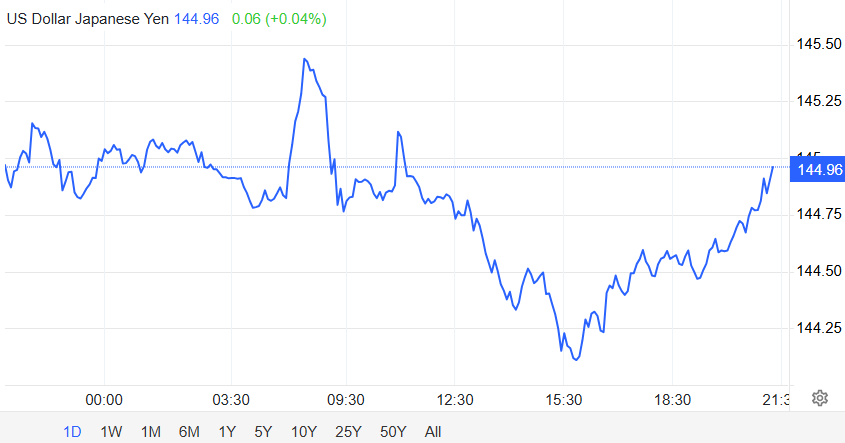
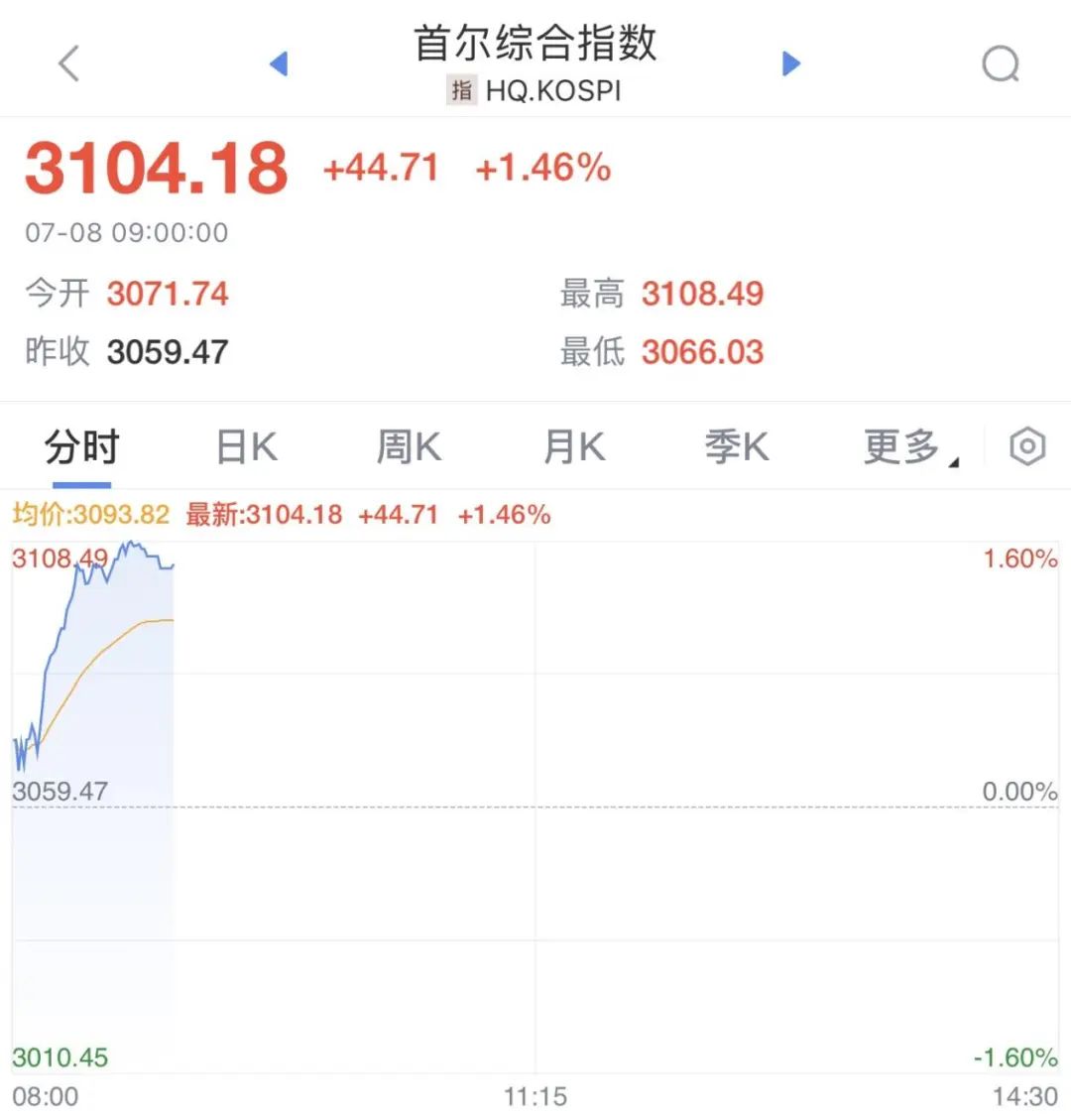
Market Overview - The South Korean KOSPI index rose by 1.6% following the announcement of new tariff measures [2] - The Japanese stock market initially opened lower but later rebounded, with the Nikkei 225 index increasing by 0.39% [5] South Korea's Response to Tariffs - Following a letter from President Trump proposing a 25% tariff on South Korean goods starting August 1, South Korea announced plans to create rules to meet U.S. demands for reducing non-tariff barriers [4] - The South Korean government expressed concern over potential volatility in domestic and international financial markets due to U.S. tariff actions and stated it would monitor the situation closely [4] Japan's Trade Negotiations - Japan's Prime Minister Shigeru Ishiba indicated that Japan will continue to seek a trade agreement with the U.S. while protecting its national interests, noting that the August 1 deadline effectively extends the previous deadline of July 9 [8] - Japan's government convened a meeting to discuss comprehensive countermeasures in response to the U.S. tariff announcement [7]

国际时政周评:关税谈判期限临近,特朗普党内地位再巩固
CMS· 2025-07-06 12:05
Group 1: Trade Negotiations and Tariffs - Trump announced a trade agreement with Vietnam, imposing a 20% tariff on Vietnamese goods and a 40% tariff on goods transshipped through Vietnam, while Vietnam maintains zero tariffs on U.S. goods[9] - New unilateral tariffs may range from 10% to 70%, with implementation expected around August 1[6] - The U.S. is conducting a 232 investigation into sectors like semiconductors and pharmaceuticals, which began in April, indicating potential short-term tariff risks[15] Group 2: Political Developments - Trump's position within the Republican Party has strengthened following a series of political successes since June, including the signing of the "Big and Beautiful" tax and spending bill[6] - The U.S. Supreme Court has supported Trump's executive powers, allowing him to pursue his policy agenda without significant judicial challenges[13] - The upcoming G20 finance ministers' meeting and the BRICS+ summit are critical events to monitor for international economic discussions[3] Group 3: Geopolitical Risks - Ongoing geopolitical tensions include the Israel-Palestine conflict and U.S.-Iran negotiations, with a focus on potential ceasefire outcomes and nuclear discussions[16] - The U.S. aims to rebalance its relations with major powers, particularly in the context of the ongoing Russia-Ukraine conflict, which presents significant negotiation challenges[18] - The potential for a framework agreement in trade negotiations exists, but countries may shift conflicts to third parties to achieve short-term wins[12]
有色金属行业跟踪周报:美国非农数据“涉险过关”,工业金属环比上涨-20250609
Soochow Securities· 2025-06-09 15:13
Investment Rating - The report maintains a rating of "Overweight" for the non-ferrous metals sector [1]. Core Views - The non-ferrous metals sector experienced a weekly increase of 3.74%, ranking it second among all primary industries. The industrial metals segment saw a rise due to optimistic macroeconomic sentiments following the U.S. non-farm payroll data [1][15]. - The report highlights that while industrial metals are showing strength, there are underlying concerns regarding demand, particularly for copper and aluminum, which are facing seasonal slowdowns [2][37]. Summary by Sections Market Review - The Shanghai Composite Index rose by 1.13%, with 25 out of 31 sectors increasing. The non-ferrous metals sector outperformed the index by 2.61 percentage points [15]. - The small metals and new materials sectors saw increases of 5.07% and 5.15%, respectively, while industrial metals rose by 3.24% [15]. Industrial Metals - **Copper**: Prices for copper increased, with LME copper at $9,671 per ton (up 1.83%) and SHFE copper at ¥78,930 per ton (up 1.71%). However, downstream demand is weakening, leading to inventory accumulation [2][32]. - **Aluminum**: LME aluminum prices reached ¥2,452 per ton (up 0.12%), while SHFE aluminum remained stable at ¥20,070 per ton. Demand is declining, limiting upward price movement [3][37]. - **Zinc**: Zinc prices increased, with LME zinc at $2,663 per ton (up 1.25%) and SHFE zinc at ¥22,385 per ton (up 0.72%). Inventory levels showed mixed trends [42]. - **Tin**: Tin prices rose significantly, with LME tin at $32,255 per ton (up 6.70%) and SHFE tin at ¥263,600 per ton (up 5.31%) due to supply disruptions [45]. Precious Metals - **Gold**: COMEX gold closed at $3,331.10 per ounce (up 0.54%), while SHFE gold was at ¥783.24 per gram (up 2.48%). The market is reacting to mixed economic signals, with recent non-farm payroll data providing temporary relief from recession fears [4][48].

李玄策:5.31下周黄金白银看涨看跌?沪金沪银积存金走势分析
Sou Hu Cai Jing· 2025-06-01 01:14
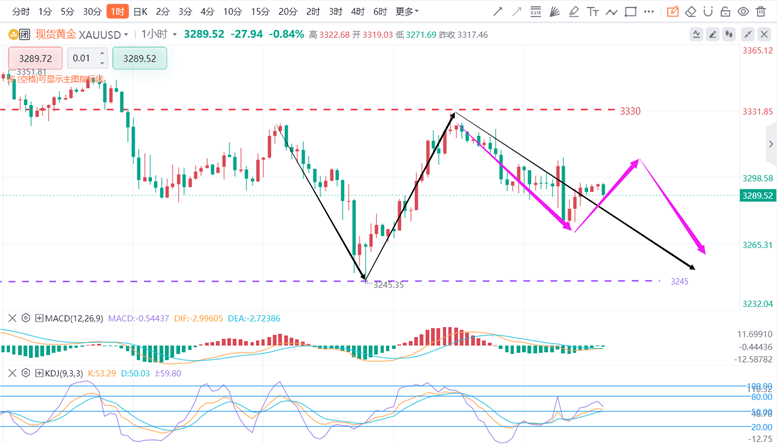
Group 1: Gold Market Analysis - Gold prices experienced fluctuations, reaching a high of 3322 before dropping to a low of 3270, indicating potential wide-range volatility in the near term [3] - The daily chart shows a transition from consecutive bearish candles to bullish, stabilizing above the middle Bollinger band, with indicators suggesting a weakening of bearish momentum [3] - Short-term resistance is noted at 3325, with potential for a rebound towards 3365 if this level is sustained; support levels are identified at 3270-3260 and further at 3245 [3] Group 2: Silver Market Analysis - Silver is currently trading within a range, with resistance at 33.5 and support at 32.5, indicating a likelihood of continued range-bound trading [4] - Short-term trading strategy suggests selling high and buying low within this established range [4] Group 3: Domestic Futures Analysis - Domestic gold futures (沪金) showed a rebound after a drop to 759, with a prevailing bullish trend; a potential further decline to around 750 is anticipated before considering long positions [5] - Domestic silver futures (沪银) are in a "suspended" state between support at 8150 and resistance at 8260, with a recommendation for high selling and low buying strategies [5]
日本又想“赌国运”了?看到特朗普对中国让步,竟然反咬美国一口
Sou Hu Cai Jing· 2025-05-27 08:26
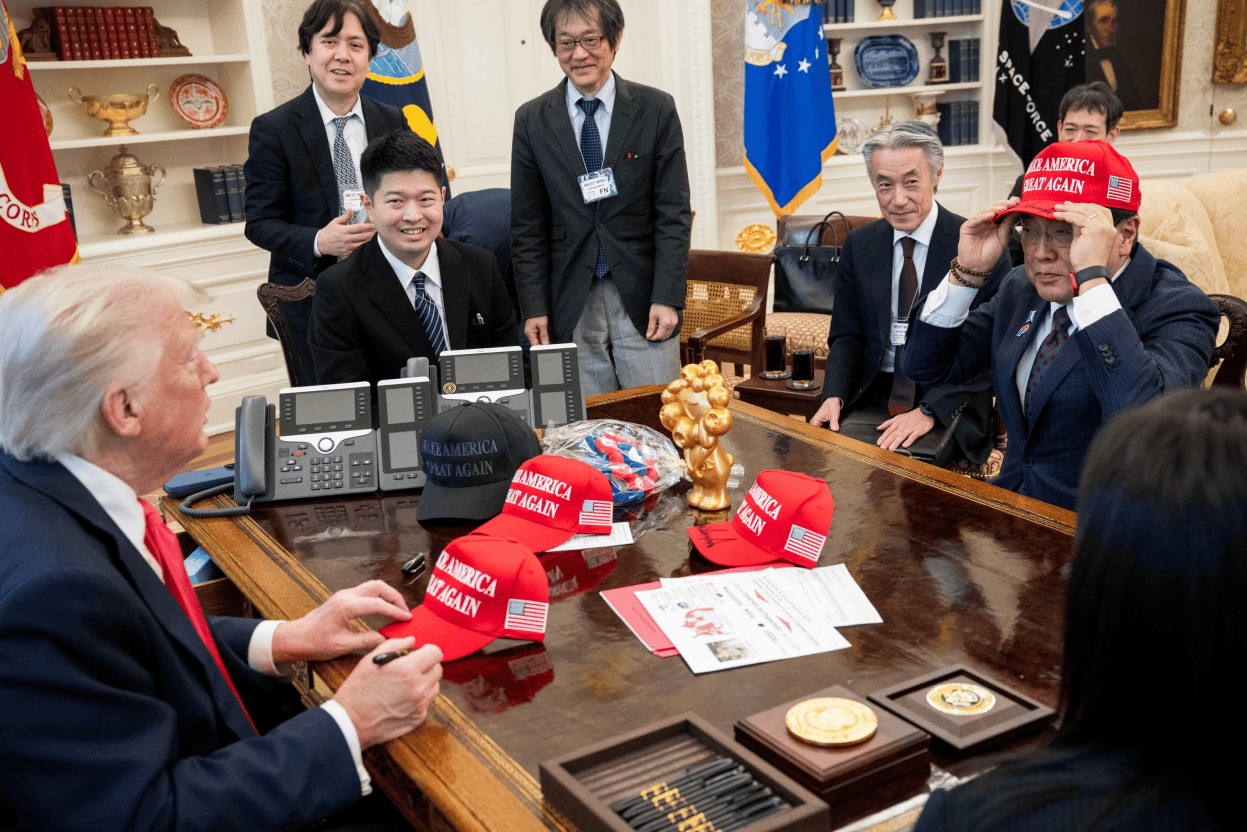
Group 1 - The U.S. Department of Commerce has initiated a 270-day investigation into the import of commercial aircraft, jet engines, and related parts under Section 232 of the Trade Expansion Act of 1962, which may lead to new tariffs [1] - Japan is facing tariffs of up to 24% on its exports to the U.S. starting July unless an agreement is reached, significantly impacting its automotive industry, a key sector for the Japanese economy [1] - Japanese policymakers believe that without the removal of the 25% tariff on automotive imports, reaching an agreement with the U.S. is meaningless [1] Group 2 - After two rounds of trade talks with the U.S. without consensus, Japan is shifting its strategy from seeking complete tariff removal to accepting a reduction in tariffs [3] - Japan's Chief Trade Negotiator, Akira Amari, is preparing for a third round of negotiations following a phone call between Japanese Prime Minister Shigeru Ishiba and U.S. President Trump [3] - Japan is considering compromises in the negotiations, particularly regarding tariff reductions, to expedite an agreement [3] Group 3 - Recent agreements between the U.S. and the U.K. have resulted in a reduction of tariffs on U.K. automotive exports to the U.S. from 27.5% to 10%, which may influence Japan's negotiation stance [4] - Japan's government is observing U.S. reactions before making a cautious decision on tariff negotiations, with further discussions planned [4] - The political backdrop in Japan, including upcoming elections and previous losses in the House of Representatives, adds pressure to achieve favorable trade negotiation outcomes [6]
特朗普税收法案通过众议院,美国财政赤字担忧加剧
Hua Tai Qi Huo· 2025-05-23 05:32
Report Industry Investment Rating - The investment rating for commodities and stock index futures is overall neutral, pending fundamental verification [4] Core Viewpoints - Short - term focus on economic fact verification, with attention to sensitive commodities like crude oil, shipping indices, and gold; long - term focus on stagflation allocation [1][3] - The risk of US tariff escalation is rising, which impacts global trade and inflation expectations [2] - Commodities should focus on the transmission of fundamentals, and beware of emotional shocks from US stock adjustments for industrial products [3] Summaries by Related Catalogs Market Analysis - On May 7, "One Bank, One Administration, and One Commission" introduced a package of financial policies to boost the economy. In April, China's exports increased by 8.1% year - on - year, and imports decreased by 0.2% year - on - year, slightly exceeding expectations. Exports to the US decreased by 21% year - on - year, while those to ASEAN increased by 20.8% year - on - year. Labor - intensive product exports were significantly impacted, with a year - on - year decrease of 1.7% [1] - On May 19, the People's Bank of China stated that it would implement and transmit a package of monetary and financial policy measures. On May 20, the one - year and five - year loan prime rates (LPR) were lowered to 3% and 3.5% respectively. On May 23, the central bank will conduct a 500 - billion - yuan MLF operation [1] - From May 9 - 12, Vice - Premier He Lifeng held talks with the US during his visit to Switzerland. The Sino - US Geneva economic and trade talks achieved substantial progress, with both sides promising to suspend some additional tariffs and establish a consultation mechanism [1] - On May 15, the Ministry of Commerce responded to the adjustment of China's counter - tariff measures against the US, stating that it would adjust accordingly due to the US revocation of additional tariffs on China and expressing an open attitude towards the Sino - US economic and trade consultation mechanism [1] US Tariff Situation - On May 8, the UK and the US reached an agreement on tariff trade agreement terms, with a "tax rate + quota" restriction approach. The UK's exports to the US will face a minimum 10% tariff, and there may be export caps on specific products [2] - On May 17, US Treasury Secretary Besent warned that if countries do not negotiate "sincerely" before the tariff suspension period expires at the beginning of July and fail to reach a trade agreement, tariff rates will return to the "liberation day" level [2] - Japan's chief trade negotiator and Minister of Economic Revitalization Akazawa Ryo will visit the US from May 23 - 25 for trade negotiations. Japan and the US Treasury Secretaries agree that exchange rates should be determined by the market [2] - India and the US are discussing a "three - stage" trade agreement, expected to reach a temporary agreement before early July. South Korea says its foreign exchange negotiations with the US are ongoing and no decision has been made [2] - The US Department of Commerce issued guidelines to strengthen export controls on China's AI - related products. China's Ministry of Commerce responded that implementing US measures would be illegal [2] - On May 13, the US April CPI data was lower than expected, indicating further alleviation of inflation pressure, but the impact of tariffs has not fully reached the consumer end [2] - On May 15, the Fed Chairman said that the Fed is about to adjust the interest rate - setting framework, and the "era of long - term low interest rates" may have ended, putting pressure on short - term Fed rate - cut expectations [2] - Fed Governor Waller said that if tariffs decline, the Fed is expected to cut interest rates in the second half of 2025 [2] - After the Trump tax bill barely passed the House of Representatives, the yield of the US 30 - year Treasury bond rose by more than 2 basis points, reaching 5.123%, the highest intraday level since October 2023 [2] Commodity Market - From the 2018 tariff review, the tariff increase event first trades on the decline in demand and then on the rise in inflation. Industrial products such as black and non - ferrous metals should beware of emotional shocks from US stock adjustments, while agricultural products have a higher probability of price increases due to tariffs [3] - In the energy sector, the price of crude oil has declined. The IEA monthly report lowered the oil demand forecast for this year. OPEC + confirmed a production increase of 411,000 barrels per day in June, and a large - scale production increase in July is under discussion. On May 22, Brent crude futures fell below $64 per barrel, down nearly 1.6% intraday [3] - The EU plans to ban the import of Russian natural gas and liquefied natural gas by the end of 2027, and stop signing new agreements and spot contracts by the end of 2025. The EU and the UK announced a new round of sanctions against Russia on the 20th, targeting Russia's energy construction and finance sectors, and also including Chinese and UAE companies in the sanctions list [3] - The European Commission plans to levy a 2 - euro tax on small packages entering the EU [3] Other Market Conditions - US stock index futures tumbled. The Nasdaq futures fell 0.27% intraday, the S&P 500 index futures fell 0.32%, and the Dow futures fell 0.45% [7] - The yield of Japanese long - term bonds continued to rise. The 40 - year yield rose 6 basis points to 3.675%, reaching the highest level since its issuance in 2007. The 10 - year yield rose 5 basis points to 1.565%, and the 20 - year yield rose 5.5 basis points to 2.595% [7] - The preliminary value of the eurozone's May manufacturing PMI was 49.4, the service PMI was 48.9, and the composite PMI was 49.5, all lower than expected [7]
中美芯片摩擦升级,关注欧元区和美国5月PMI初值
Hua Tai Qi Huo· 2025-05-22 03:24
1. Report Industry Investment Rating - The investment rating for commodities and stock index futures is neutral overall, waiting for fundamental verification [4] 2. Core Viewpoints of the Report - Short - term focus is on economic fact verification. After the implementation of a package of financial policies, China's overall foreign trade in April slightly exceeded expectations, but there were differences in exports by country/region and product type. The central bank adjusted the LPR, and various economic and trade events occurred, including the progress of Sino - US economic and trade negotiations and the adjustment of tariff counter - measures [1] - The risk of further US tariff escalation is rising. The "tax rate + quota" restriction idea between the UK and the US may impact global trade, and it is related to the negotiation process with other countries. The expected pressure on long - term inflation may be revised downwards, and the short - term expectation of the Fed's interest rate cut is under pressure [2] - For commodities, pay attention to the transmission of fundamentals in the short - term and stagflation allocation in the long - term. Different types of commodities have different price trends affected by factors such as tariffs and supply - demand relationships [3] 3. Summaries by Related Catalogs Market Analysis - On May 7, "One Bank, One Administration, and One Commission" introduced a package of financial policies to boost the economy. In April, China's exports increased by 8.1% year - on - year, and imports decreased by 0.2% year - on - year. By country/region, exports to the US decreased by 21% (previous value 9.1%), and exports to ASEAN increased by 20.8% (previous value 11.6%). By product, labor - intensive product exports were significantly impacted, with a year - on - year decrease of 1.7% (previous value 9.1%) [1] - On May 19, the central bank stated it would implement and transmit a package of monetary and financial policies. On May 20, the central bank lowered the one - year and five - year LPR to 3% and 3.5% respectively [1] - On May 21, the Hong Kong Special Administrative Region Legislative Council passed the "Stablecoin Ordinance Bill". China and ASEAN completed the negotiation of the China - ASEAN Free Trade Area 3.0 version [1][6] - From May 9 - 12, Vice - Premier He Lifeng held talks with the US during his visit to Switzerland. The Sino - US Geneva economic and trade talks made substantial progress, with both sides promising to suspend some additional tariffs and establish a consultation mechanism. The Ministry of Commerce adjusted counter - tariff measures due to the US revocation of additional tariffs on China and maintained communication based on the Geneva talks consensus [1] - Before July, the macro - economy is expected to focus more on economic fact verification, especially whether there will be a new round of "rush to export" after the tariff negotiations [1] Impact of US Tariff Policies - On May 8, the UK and the US reached an agreement on tariff trade agreement terms, with a "tax rate + quota" restriction idea. The UK's exports to the US will face a minimum 10% tariff, and specific products may have export limits. For example, the first 100,000 cars exported from the UK to the US each year will be taxed at an additional 10% tariff rate, and the excess will be taxed at 25% [2] - The impact on global trade depends on the negotiation process with other countries. Japan is considering accepting a US tariff reduction; India and the US are discussing a "three - stage" trade agreement and expect to reach a temporary agreement before early July; South Korea is in the process of foreign exchange negotiations with the US [2][5] - The US Department of Commerce strengthened export controls on China's AI - related products. China's Ministry of Commerce responded that implementing US measures would be suspected of being illegal [2] - The expected pressure on long - term inflation may be revised downwards. The US CPI data in April was lower than expected, indicating a further easing of inflation pressure, but the impact of tariffs has not fully reached the consumer end. The Fed may adjust the interest rate - setting framework, and the short - term expectation of the Fed's interest rate cut is under pressure [2] Commodity Market Analysis - From the 2018 tariff review, the tariff increase event first led to a decline in demand trading and then an increase in inflation trading. For industrial products such as black and non - ferrous metals, be vigilant against the emotional impact of the US stock market adjustment. Agricultural products have relatively stable demand, and tariffs are more likely to cause upward price fluctuations [3] - In the energy sector, the IEA lowered the forecast for this year's oil demand, and OPEC+ plans to increase production, resulting in a relatively loose supply in the medium - term fundamentals. The EU plans to ban the import of Russian natural gas and LNG by the end of 2027 and impose new sanctions on Russia [3] Important News - The Hong Kong Special Administrative Region Legislative Council passed the "Stablecoin Ordinance Bill" to improve the regulatory framework for virtual asset activities [6] - China and ASEAN completed the negotiation of the China - ASEAN Free Trade Area 3.0 version, taking a key step towards signing the upgrade protocol [6] - Japan is considering accepting a US tariff reduction; India and the US are expected to reach a temporary trade agreement before early July; South Korea is in the process of foreign exchange negotiations with the US [2][6] - The US House of Representatives reached an agreement on raising the SALT deduction cap, removing a key obstacle to the Trump tax cut bill [6] - US Treasury yields rose, causing the yield curve to steepen. The dollar weakened against major currencies, oil prices rose, and spot gold reached $3320 per ounce [2] - The EU and the UK imposed new sanctions on Russia, and Chinese and UAE companies were included in the sanctions list. The EU plans to levy a €2 tax on small parcels entering the EU [3][5] - China expressed concerns about the US "Golden Dome" anti - missile system, stating that it violates the principle of peaceful use of outer space and exacerbates the risk of outer - space militarization [5]
5月LPR下调,关注日美国债异动
Hua Tai Qi Huo· 2025-05-21 02:23
Report Industry Investment Rating - The overall rating for commodities and stock index futures is neutral, waiting for fundamental verification [3] Core Viewpoints - In the short term, focus on the verification of economic facts. After the Geneva economic and trade talks between China and the US, pay attention to whether there will be a new round of "rush to export". The risk of further US tariff escalation is rising, and the "tax rate + quota" restriction model may impact global trade. For commodities, pay attention to the transmission of fundamentals in the short term and stagflation allocation in the long term [2] Summary by Related Catalogs Market Analysis - On May 7, "One Bank, One Bureau, One Commission" introduced a package of financial policies to boost the economy. In April, China's exports increased by 8.1% year-on-year, and imports decreased by 0.2% year-on-year, slightly exceeding expectations. However, exports to the US decreased by 21% year-on-year, while exports to ASEAN increased by 20.8%. Labor-intensive product exports were significantly impacted. On May 20, the central bank lowered the one-year and five-year LPRs to 3% and 3.5% respectively. The one-month Hibor fell below 1% for the first time since 2022, and the Hong Kong dollar is set to record its largest monthly decline since 1983. The Geneva economic and trade talks between China and the US achieved substantial progress, and both sides promised to suspend some additional tariffs and establish a consultation mechanism [2] - The risk of further US tariff escalation is rising. The UK and the US reached an agreement on tariff trade terms, with a "tax rate + quota" restriction model. The impact on global trade depends on the negotiation process with other countries. The US Treasury Secretary warned that if no trade agreement is reached before the tariff suspension period expires in early July, tariff rates will return to previous levels. The US 30-year Treasury yield rose to its highest level since November 2023. The Japanese 20-year bond auction demand dropped to its lowest level since 2012, and the 30-year yield reached a new high since 1999. The Bank of Japan will maintain the current Japanese government bond reduction plan after the spring of the 2026 fiscal year [2] Strategy - The overall rating for commodities and stock index futures is neutral, waiting for fundamental verification [3] To-Do News - On May 20, the central bank lowered the one-year and five-year LPRs by 10 basis points. The Hong Kong one-month Hibor fell below 1% for the first time since 2022, and the Hong Kong dollar is set to record its largest monthly decline since 1983. The Atlanta Fed President Bostic expects the Fed to cut interest rates only once in 2025 and may act earlier if the tariff negotiations make progress. The BIS warned that if investors unwind positions in the $113 trillion foreign exchange swap market, it may trigger a scramble for the US dollar. The Japanese 20-year government bond auction demand dropped to its lowest level since 2012, and the 30-year yield reached a new high since 1999. The Bank of Japan will maintain the current Japanese government bond reduction plan after the spring of the 2026 fiscal year. Putin said that Russia favors a peaceful solution to the Ukraine crisis after a call with Trump [2][5] Macroeconomic - The report includes charts such as the Citi Economic Surprise Index, 30 large and medium-sized cities' commercial housing transaction area (weekly and daily), five listed steel consumption volumes, 10Y and 2Y China-US Treasury yield spreads, US dollar exchange rate against major currencies on a weekly basis, US dollar index trend, and interest rate corridor [6] Interest Rates - The report includes charts of the 10Y and 2Y China-US Treasury yield spreads [6][15] Foreign Exchange - The report includes charts of the US dollar exchange rate against major currencies on a weekly basis, US dollar index trend, and interest rate corridor [6][17]
张尧浠:地缘局势避险升温、金价保持反弹看涨前景
Sou Hu Cai Jing· 2025-05-21 01:14
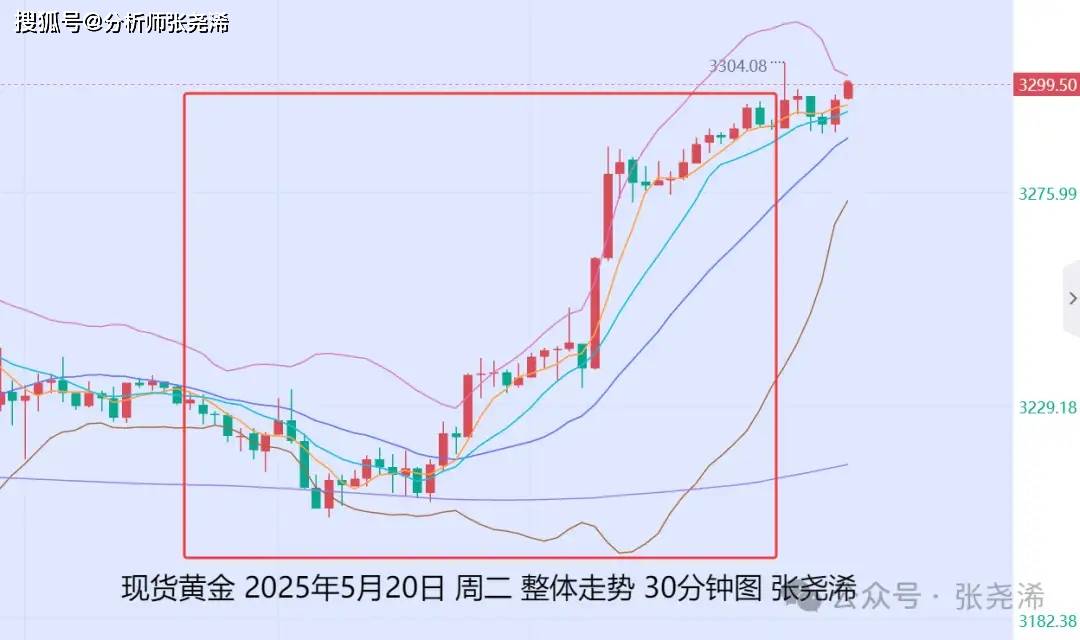
Core Viewpoint - The geopolitical situation is increasing demand for safe-haven assets, leading to a bullish outlook for gold prices, which have shown strong rebounds recently [1][3][8]. Market Performance - On May 20, gold prices opened at $3,230.66 per ounce, dipped to a low of $3,204.50, and then surged to a high of $3,295.52, closing at $3,289.70, marking a daily increase of $59.04 or 1.83% [1][3]. - The daily trading range was $91.02, indicating significant volatility and bullish momentum [1]. Geopolitical Influences - The announcement of new sanctions against Russia by the EU and the UK, along with tensions surrounding Iran, have heightened market concerns, driving up gold prices [3][8]. - Ongoing geopolitical risks, particularly in the Middle East, are expected to provide long-term support for gold prices [8]. Economic Indicators - The U.S. dollar index has fallen below short-term moving averages, which may provide further support for gold prices [3][8]. - Moody's downgrade of the U.S. sovereign credit rating and IMF's forecast of slower U.S. economic growth compared to global growth are contributing to a decline in the dollar's attractiveness [8]. Technical Analysis - Gold prices are currently above the 5-10 month moving averages and are showing signs of a potential upward trend, with a focus on the $2,900 to $3,500 range for future movements [10][12]. - The daily chart indicates a rebound from key support levels, suggesting a bullish outlook for the near term [12][13]. Trading Strategy - Suggested trading levels include support at $3,275 or $3,255 and resistance at $3,330 or $3,350 for gold [12]. - For silver, support is noted at $32.90 or $32.75, with resistance at $33.35 or $33.70 [12].
日本妥协了?报道:日本考虑接受美国调降关税,而非完全豁免
Hua Er Jie Jian Wen· 2025-05-20 13:34
Core Points - Japan is considering accepting a reduction in U.S. tariff rates as a compromise to break the deadlock in trade negotiations with the U.S. [1][3] - The U.S. has imposed significant tariffs, including a 10% general tariff and a 25% tariff on imported auto parts, impacting global trade [1][3] - Japan plans to observe the U.S. response before making a cautious decision regarding tariff negotiations [3] Group 1: Trade Negotiations - Japan is contemplating a shift from demanding the complete removal of tariffs to accepting a reduction in tariff rates, particularly on key products like automobiles, steel, and aluminum [1][3] - The U.S. has been resistant to removing tariffs and has excluded Japan's primary concerns from negotiations, increasing pressure on Japan [3] - Recent agreements between the U.S. and other countries, such as China and the UK, to lower tariffs have provided Japan with some hope for negotiations [3] Group 2: Economic Impact - High tariffs have significantly impacted Japanese automakers, with Honda reporting a more than 70% year-on-year drop in operating profit for Q4 and forecasting a nearly 59% decline in operating profit for the fiscal year 2026 [4] - Nissan has opted not to release its operating profit forecast for the fiscal year 2026, indicating uncertainty in the market [4] - Japan exports approximately 1.36 million vehicles to the U.S. annually, which is about 13 times the volume of the UK's exports, highlighting the scale of Japan's automotive trade with the U.S. [3]