
供应扰动

Search documents
节前资金谨慎,基本金属宽幅震荡
Zhong Xin Qi Huo· 2025-12-31 01:12
Report Industry Investment Rating - Not provided in the given content Core Viewpoints of the Report - In the short - to - medium term, due to pre - holiday capital prudence, base metals will experience a rise followed by a fall. However, the logic of weak US dollar expectations and supply disruption concerns remains unchanged. After copper, aluminum, and tin prices stop falling, low - buying and long - position opportunities can be considered. In the long term, there are still expectations of potential incremental stimulus policies in China, and supply disruption issues for copper, aluminum, and tin persist. There are expectations of tightening supply - demand, and the price trends of copper, aluminum, and tin are optimistic [1] Summary by Relevant Catalogs 1.行情观点 - **Copper**: Supply contraction expectations are strong, and copper prices will continue to operate at high levels. The macro - environment shows US economic resilience and the Fed's easing policies. On the supply side, copper mine supply disruptions are increasing, and there are expectations of reduced refined copper production. On the demand side, it is in a weak season with inventory accumulation. The risk of LME copper squeezing has weakened. In the future, copper prices are expected to fluctuate strongly [7] - **Alumina**: Cost support is not effective, and alumina prices are still under pressure. Macro sentiment amplifies price fluctuations. On the supply side, there is insufficient real - world contraction and strong inventory accumulation. Raw material prices are weak. From the perspective of warehouse receipt digestion, there is pressure on the price. The price may fluctuate more as it enters a low - valuation range. It is expected to remain in a volatile state [7] - **Aluminum**: Capital sentiment is volatile, and aluminum prices will oscillate at high levels. The macro - outlook is positive. On the supply side, domestic production capacity is high, and overseas supply is expected to tighten. On the demand side, high prices suppress demand, and inventory has accumulated. In the short term, prices are expected to oscillate strongly, and in the medium term, the price center may rise [9][10] - **Aluminum Alloy**: Cost support continues, and the price will oscillate at high levels. Cost support is strong due to tight scrap aluminum supply. On the supply side, there are risks of production reduction. On the demand side, it may weaken marginally. In the short and medium terms, prices are expected to oscillate strongly [11] - **Zinc**: Domestic and overseas inventory trends are divergent, and zinc prices will oscillate at high levels. The macro - outlook is positive. On the supply side, short - term zinc ore supply is tight, and production may decline. On the demand side, it is in the off - season with limited new orders. In the short term, prices may oscillate at high levels, and in the long term, there may be a downward trend [12][13] - **Lead**: Lead prices fluctuate with non - ferrous metals, and supply - demand may weaken. On the supply side, production may increase as smelters resume production. On the demand side, battery enterprise operating rates are declining, and demand is weakening marginally. Lead prices are expected to remain in a volatile state [14][15] - **Nickel**: Expectations of Indonesian policies cause disruptions, and nickel prices have risen significantly. On the supply side, there is still pressure, but Indonesia's planned reduction of nickel ore production in 2026 may change the situation. On the demand side, it is in the traditional off - season. Nickel prices are expected to oscillate, and attention should be paid to policy implementation [15][19] - **Stainless Steel**: Rising nickel prices drive up the stainless - steel market. Cost support exists, and production is expected to decline in December. Inventory may accumulate in the off - season. The price is expected to oscillate, and attention should be paid to Indonesian policy changes [20][22] - **Tin**: Pre - holiday long - position reduction causes a correction in tin prices. On the supply side, there are risks and production is difficult to increase. On the demand side, it is expected to grow. Tin prices are expected to oscillate strongly [22][23] 2.行情监测 - **Copper**: Not provided in the given content - **Alumina**: Not provided in the given content - **Aluminum**: Not provided in the given content - **Aluminum Alloy**: Not provided in the given content - **Zinc**: Not provided in the given content - **Lead**: Not provided in the given content - **Nickel**: Not provided in the given content - **Stainless Steel**: Not provided in the given content - **Tin**: Not provided in the given content 3.中信期货商品指数 - On December 30, 2025, the comprehensive index was 2343.82, up 0.17%; the commodity 20 index was 2683.42, down 0.17%; the industrial products index was 2271.47, up 0.56%. The non - ferrous metals index was 2675.54, with a daily decline of 0.03%, a 5 - day increase of 1.47%, a 1 - month increase of 6.49%, and a year - to - date increase of 15.91% [147][149]
国泰君安期货商品研究晨报:贵金属及基本金属-20251226
Guo Tai Jun An Qi Huo· 2025-12-26 07:34
Report Overview - Report Date: December 26, 2025 - Report Publisher: Guotai Junan Futures - Report Type: Commodity Research Morning Report - Precious Metals and Base Metals Industry Investment Ratings No industry investment ratings are provided in the report. Core Views - **Gold**: Inflation is moderately declining [2]. - **Silver**: Undergoing high - level adjustment [2]. - **Copper**: Positive market sentiment supports price increases [2]. - **Zinc**: Moving in a sideways range [2]. - **Lead**: Declining inventory supports prices [2]. - **Tin**: Supply is facing new disruptions [2]. - **Aluminum**: Showing a slightly upward - trending oscillation [2]. - **Alumina**: Continuously bottom - grinding [2]. - **Cast Aluminum Alloy**: Following the trend of electrolytic aluminum [2]. - **Platinum**: Bullish sentiment dominates [2]. - **Palladium**: Oscillating upward [2]. - **Nickel**: Intense capital game on the trading floor leads to wide - range price fluctuations [2]. - **Stainless Steel**: Both supply and demand in the fundamentals are weak, and news from Indonesian nickel mines causes disruptions [2]. Summary by Commodity Gold - **Price**: The closing price of Shanghai Gold 2602 was 1,014.24, up 1.34%; Gold T + D was 1,006.45, up 1.44%; Comex Gold 2602 was 4515.00, up 0.77% [4]. - **Trading Volume and Open Interest**: The trading volume of Shanghai Gold 2602 decreased by 2,375 to 276,418; the open interest decreased by 2,397 to 199,893. Comex Gold 2602's trading volume increased by 42,965 to 241,461, and open interest increased by 8,818 to 360,434 [4]. - **Inventory**: Shanghai Gold inventory increased by 1,995 to 93,711 kg; Comex Gold inventory (previous day) increased by 114,168 to 36,120,091 troy ounces [4]. - **Trend Strength**: 0 [8]. Silver - **Price**: The closing price of Shanghai Silver 2602 was 16441, up 1.50%; Silver T + D was 16420, up 1.52%; Comex Silver 2602 was 71.610, up 3.65% [4]. - **Trading Volume and Open Interest**: The trading volume of Shanghai Silver 2602 decreased by 474,555 to 1,230,157; the open interest decreased by 921 to 340,510. Comex Silver 2602's trading volume increased by 30,063 to 127,435, and open interest remained unchanged at 114,525 [4]. - **Inventory**: Shanghai Silver inventory decreased by 1805 to 899,663 kg; Comex Silver inventory (previous day) decreased by 3,083,409 to 450,643,486 troy ounces [4]. - **Trend Strength**: 0 [8]. Copper - **Price**: The closing price of Shanghai Copper's main contract was 96,210, up 0.11%; the night - session closing price was 97680, up 1.53%. LME Copper 3M was 12,133, up 0.65% [9]. - **Trading Volume and Open Interest**: The trading volume of Shanghai Copper Index decreased by 81,418 to 477,230; the open interest decreased by 7,370 to 651,557. LME Copper 3M's trading volume decreased by 8,111 to 18,195, and open interest decreased by 2,248 to 340,000 [9]. - **Inventory**: Shanghai Copper inventory increased by 6,861 to 59,083; LME Copper inventory decreased by 1,550 to 157,025, and the注销仓单 ratio was 29.63%, down 1.19% [9]. - **Trend Strength**: 2 [11]. Zinc - **Price**: The closing price of Shanghai Zinc's main contract was 23065, down 0.71%; LME Zinc 3M was 3086.5, down 0.32% [12]. - **Trading Volume and Open Interest**: The trading volume of Shanghai Zinc's main contract decreased by 46305 to 125213; the open interest decreased by 1875 to 93322. LME Zinc's trading volume decreased by 4941 to 5944, and open interest decreased by 646 to 227051 [12]. - **Inventory**: Shanghai Zinc futures inventory decreased by 1092 to 41319; LME Zinc inventory increased by 7900 to 106875 [12]. - **Trend Strength**: 0 [14]. Lead - **Price**: The closing price of Shanghai Lead's main contract was 17315, up 0.52%; LME Lead 3M was 1999.5, up 0.83% [15]. - **Trading Volume and Open Interest**: The trading volume of Shanghai Lead's main contract decreased by 12922 to 55100; the open interest decreased by 210 to 56328. LME Lead's trading volume decreased by 1794 to 3806, and open interest increased by 167 to 178155 [15]. - **Inventory**: Shanghai Lead futures inventory decreased by 900 to 11457; LME Lead inventory decreased by 4200 to 248900 [15]. - **Trend Strength**: 1 [16]. Tin - **Price**: The closing price of Shanghai Tin's main contract was 344,750, up 1.27%; LME Tin 3M was 42,835, up 0.25% [18]. - **Trading Volume and Open Interest**: The trading volume of Shanghai Tin's main contract decreased by 11,222 to 228,643; the open interest increased by 31,914 to 61,161. LME Tin 3M's trading volume decreased by 9 to 180, and open interest increased by 53 to 13,988 [18]. - **Inventory**: Shanghai Tin inventory increased by 655 to 8,340; LME Tin inventory increased by 50 to 4,675, and the注销仓单 ratio was 6.57%, down 0.38% [18]. - **Trend Strength**: 1 [21]. Aluminum, Alumina, and Cast Aluminum Alloy - **Aluminum** - **Price**: The closing price of Shanghai Aluminum's main contract was 22275, down 55; LME Aluminum 3M was 2957, unchanged [22]. - **Trading Volume and Open Interest**: The trading volume of Shanghai Aluminum's main contract decreased by 65183 to 229349; the open interest decreased by 6450 to 290474. LME Aluminum 3M's trading volume was unchanged at 11757 [22]. - **Trend Strength**: 1 [24]. - **Alumina** - **Price**: The closing price of Shanghai Alumina's main contract was 2646, up 92 [22]. - **Trend Strength**: 0 [24]. - **Cast Aluminum Alloy** - **Trend Strength**: 1 [24]. Platinum and Palladium - **Platinum** - **Price**: The closing price of Platinum Futures 2606 was 686.95, up 4.46%; the price of Gold Exchange Platinum was 591.25, down 2.59% [25]. - **Trading Volume and Open Interest**: The trading volume of Shanghai Platinum increased by 201,102 to 227.666; the open interest increased by 718 to 48.732. NYMEX Platinum's trading volume was 82,975, and open interest was 28,141 [25]. - **Trend Strength**: 1 [28]. - **Palladium** - **Price**: The closing price of Palladium Futures 2606 was 529.05, down 8.54%; the price of RMB Spot Palladium was 416.00, down 9.37% [25]. - **Trading Volume and Open Interest**: The trading volume of Shanghai Palladium decreased by 2,565 to 100.293; the open interest decreased by 2,067 to 23.862. NYMEX Palladium's trading volume was 48.123, and open interest was 67.992 [25]. - **Trend Strength**: 1 [28]. Nickel and Stainless Steel - **Nickel** - **Price**: The closing price of Shanghai Nickel's main contract was 125,410, down 2,590 [31]. - **Trend Strength**: 0 [35]. - **Stainless Steel** - **Price**: The closing price of Stainless Steel's main contract was 12,990, down 85 [31]. - **Trend Strength**: 0 [35].
弱美元继续发酵,沪铜领涨基本金属
Zhong Xin Qi Huo· 2025-12-25 00:35
1. Report Industry Investment Rating No relevant content provided. 2. Core View of the Report - In the short - to - medium term, the influence of a weak US dollar and supply concerns dominates. Despite the current weak consumption and relatively loose supply - demand situation, there are opportunities to go long on copper, aluminum, and tin. In the long term, there are still expectations of potential incremental stimulus policies in China, and supply disruptions in copper, aluminum, and tin persist. Thus, the price trends of copper, aluminum, and tin are optimistic [1]. 3. Summary According to Relevant Catalogs 3.1 Copper - **View**: The weakening US dollar index leads to a strong upward movement of copper prices, with a medium - term outlook of being oscillatory and bullish [6]. - **Analysis**: The 2026 copper concentrate long - term processing fee Benchmark is set at $0/ton and $0/pound. Chinese copper smelters plan to reduce copper ore production capacity by over 10% in 2026. In November 2025, the output of electrolytic copper in China increased both month - on - month and year - on - year. As of December 22, copper inventory rose to 168,400 tons. On December 24, the spot price of 1 electrolytic copper was at a discount to the contract [6][7]. - **Logic**: The Fed's interest rate cut and balance - sheet expansion support copper prices. However, supply disruptions increase, and demand is weak during the off - season, which limits the upward space of copper prices [8]. 3.2 Alumina - **View**: The cost support is weak, and the alumina price remains under pressure, with a medium - term outlook of being oscillatory [8]. - **Analysis**: On December 24, the spot price of alumina decreased in most regions, and the alumina warehouse receipt decreased by 302 tons [8][10]. - **Logic**: High - cost production capacity fluctuates, but the supply contraction is insufficient. The prices of raw materials are weak, and the cost support is limited. There is pressure on the price from the perspective of warehouse receipt digestion [9]. 3.3 Aluminum - **View**: Pay attention to demand changes, and the aluminum price will rise oscillatory, with a medium - term outlook of being oscillatory and bullish [12]. - **Analysis**: On December 24, the average price of SMM AOO aluminum increased. As of December 22, aluminum ingot and aluminum rod inventories changed. In November 2025, the export volume of unwrought aluminum and aluminum products decreased year - on - year. South32 increased the offer price of aluminum ingot premiums for Japan in Q1 2026 [12]. - **Logic**: The macro - expectation is positive. The domestic production capacity is high, and the overseas supply is expected to tighten. High aluminum prices suppress demand, and attention should be paid to future demand [13]. 3.4 Aluminum Alloy - **View**: The cost support continues, and the price will rebound oscillatory, with a medium - term outlook of being oscillatory and bullish [14]. - **Analysis**: On December 24, the price of ADC12 aluminum alloy increased, and the warehouse receipt decreased by 1 ton. An Indonesian electrolytic aluminum project started production [14]. - **Logic**: The supply of scrap aluminum is tight, providing cost support. The supply may decrease due to policies, and the demand may weaken marginally at the end of the year [14]. 3.5 Zinc - **View**: The inventory trends at home and abroad diverge, and the zinc price rebounds with non - ferrous metals, with a medium - term outlook of being oscillatory [17]. - **Analysis**: On December 24, the spot price differentials of zinc in different regions varied. As of December 23, zinc ingot inventory increased. In November 2025, the import volume of zinc concentrates increased [17]. - **Logic**: The macro - expectation is positive. The short - term supply of zinc ore is tight, and the demand is in the off - season. In the short term, the zinc price may oscillate at a high level, and in the long term, there is a possibility of decline [18]. 3.6 Lead - **View**: The lead price rebounds with non - ferrous metals, and the supply - demand situation may weaken, with a medium - term outlook of being oscillatory [19]. - **Analysis**: On December 24, the price of waste electric vehicle batteries and lead ingots changed. As of December 22, lead ingot inventory decreased, and the warehouse receipt decreased by 152 tons. The implementation of the new national standard for electric bicycles has affected battery consumption [19]. - **Logic**: The spot premium decreases slightly, the supply may increase after maintenance, and the demand is weakening marginally [19][20]. 3.7 Nickel - **View**: The expectation of Indonesian policies causes disturbances, and the nickel price continues to rise, with a medium - term outlook of being oscillatory [20]. - **Analysis**: On December 24, LME nickel inventory increased, and domestic inventory decreased. The price of high - nickel pig iron increased. Indonesia plans to revise the nickel ore RKAB in 2026 to 250 million tons, a significant decrease from this year [22][23]. - **Logic**: The domestic nickel supply decreases marginally, but the overall supply pressure remains. The demand is in the off - season. If the Indonesian policy is implemented, the surplus expectation will decline [24]. 3.8 Stainless Steel - **View**: The rebound of the nickel price drives up the stainless - steel price, with a medium - term outlook of being oscillatory [25]. - **Analysis**: The stainless - steel warehouse receipt decreased by 125 tons. The price of high - nickel pig iron increased. Indonesia plans to reduce the nickel ore production target in 2026 [25]. - **Logic**: The cost of stainless steel has some support. Production is expected to decline in December, and there is pressure on inventory accumulation [26][27]. 3.9 Tin - **View**: The rigid demand maintains resilience, and the tin price oscillates at a high level, with a medium - term outlook of being oscillatory and bullish [27]. - **Analysis**: On December 24, the LME tin warehouse receipt increased, and the Shanghai tin warehouse receipt decreased. The spot price of tin decreased [27]. - **Logic**: The supply of tin is a core concern. The supply is restricted in many regions. The demand is expected to increase due to the economic situation and industry development [28].
静待消费跟进,基本金属震荡整固
Zhong Xin Qi Huo· 2025-12-23 00:47
Group 1: Report Industry Investment Rating - Not provided in the content Group 2: Core Viewpoints of the Report - The macro - environment is generally positive. The lower - than - expected US CPI in November boosts the expectation of interest rate cuts, and the Central Economic Work Conference in December has a positive tone, which is expected to improve domestic consumption. The raw material supply is tight and may spread to the smelting end, with a risk of supply contraction. The current supply - demand of basic metals is relatively loose, but the future is expected to be tight. In the short - to - medium term, supply concerns support prices, while high prices restrain consumption. Long - term, potential domestic stimulus policies and supply disturbances are expected to drive up the prices of copper, aluminum, and tin [3]. Group 3: Summary by Variety Copper - **Viewpoint**: The long - term processing fee for copper ore is settled, and copper prices are oscillating at a high level. SMM reports that the 2026 copper concentrate long - term processing fee benchmark is set at $0/ton and $0/pound. The CSPT plans to reduce the copper ore production capacity load by over 10% in 2026. In November, China's electrolytic copper production increased both month - on - month and year - on - year. The spot price of 1 electrolytic copper on December 22 was at a discount to the contract. As of December 22, the copper inventory increased. The LME plans to set and implement position limits on key and related contracts from July 6, 2026. Macro factors and supply constraints support copper prices, but weak demand and inventory accumulation limit the upside. The outlook is for copper prices to be oscillatingly strong [9][10][11]. Alumina - **Viewpoint**: The over - supply situation has not improved significantly, and alumina prices continue to be under pressure. On December 22, the spot prices in various regions declined, and the alumina warehouse receipts decreased. High - cost production capacity has some fluctuations, but the supply reduction is insufficient. The cost support is weak, and the warehouse receipts digestion faces pressure. The price is expected to oscillate [11][12][13]. Aluminum - **Viewpoint**: The inventory has accumulated, and aluminum prices are oscillating at a high level. On December 22, the average price of SMM AOO increased, and the inventory of aluminum ingots and bars changed. In November, China's un - wrought aluminum and aluminum product exports decreased year - on - year. The "aluminum for copper" standard work has been launched, and the aluminum ingot premium for Japan in Q1 2026 has increased. The macro - environment is positive, the supply is tight in the long - term, and the short - term high prices suppress demand. Aluminum prices are expected to be oscillatingly strong in the short - term and may rise in the medium - term [14][15]. Aluminum Alloy - **Viewpoint**: Pay attention to demand changes, and the futures price is oscillating at a high level. On December 22, the prices of related products were stable or changed slightly. An Indonesian electrolytic aluminum project has started production, and the import of scrap aluminum in October increased. The cost support is strong, but the supply may be reduced due to policies, and the demand may weaken. The price is expected to be oscillatingly strong in the short - and medium - term [16]. Zinc - **Viewpoint**: The inventory trends at home and abroad are different, and zinc prices are oscillating at a high level. On December 22, the spot prices in different regions were at premiums to the contract. As of December 22, the zinc inventory increased. In November, China's zinc concentrate imports increased. The macro - environment is positive, the short - term zinc ore supply is tight, and the demand is in the off - season. Zinc prices may oscillate in the short - term and decline in the long - term [19][20]. Lead - **Viewpoint**: The operating rate of lead - acid battery enterprises has declined, and the rebound space of lead prices is limited. On December 22, the prices of related products changed slightly, and the inventory decreased. Since December, the implementation of the new national standard for electric bicycles has affected battery consumption, and the operating rate of some enterprises has weakened. The supply may increase as the maintenance of smelters ends, and the demand is weakening. Lead prices are expected to oscillate [21][22]. Nickel - **Viewpoint**: Indonesia plans to significantly reduce the nickel ore RKAB, and nickel prices have rebounded. On December 22, the LME and domestic nickel inventories changed. The price of high - nickel pig iron increased. Indonesia plans to revise the HPM formula and reduce the 2026 nickel ore production target. The current supply is still under pressure, and the demand is in the off - season. If the RKAB plan is implemented, the surplus expectation will decline. Nickel prices are expected to oscillate, and attention should be paid to policy implementation [23][24]. Stainless Steel - **Viewpoint**: Driven by the rebound of nickel prices, the stainless - steel futures price has recovered. On December 22, the price of high - nickel pig iron increased, and the stainless - steel futures warehouse receipts decreased. Indonesia plans to reduce the nickel ore production target. The cost has some support, the production may decline in December, and the inventory may accumulate. Stainless - steel prices are expected to oscillate within a range [26][27]. Tin - **Viewpoint**: Supply concerns and low inventory levels make tin prices oscillatingly strong. On December 22, the warehouse receipts and positions of tin increased, and the spot price rose. The supply from Myanmar has recovered, but the supply in Indonesia may be restricted in Q1 2026, and African supply is limited. The demand is expected to increase due to the economic environment and industry development. Tin prices are expected to be oscillatingly strong [27][28]. Group 4: Market Monitoring - On December 22, 2025, the comprehensive index, commodity 20 index, and industrial product index of the CITICS Futures commodity index increased by 1.10%, 1.34%, and 0.79% respectively. The PPI commodity index increased by 0.63%. The non - ferrous metal index increased by 0.85%. The daily, 5 - day, 1 - month, and year - to - date growth rates of the non - ferrous metal index were +0.85%, +2.42%, +5.61%, and +12.36% respectively [152][154].
有色金属日报-20251212
Wu Kuang Qi Huo· 2025-12-12 01:10
Group 1: Report Industry Investment Rating - No relevant content found Group 2: Core Views of the Report - Fed's rate cut and potential bond - buying, along with China's central economic work conference's loose monetary signals, create a warm sentiment in the market despite geopolitical disturbances. For copper, short - term price may rise but consumption may limit the upward trend. For aluminum, with inventory reduction and supply issues, the price is likely to rebound. For lead, low domestic inventory of deliverable products makes the price strong. For zinc, short - term supply reduction and positive market atmosphere may lead to a stronger price. For tin, supply disruptions may drive the price up after macro - risk release. For nickel, short - term price may turn to a volatile state. For lithium carbonate, due to supply - demand uncertainties, it's advisable to wait and see. For alumina, near - cost prices may lead to production cuts, and it's better to observe. For stainless steel, high inventory is a problem, and supply control may bring a turnaround. For cast aluminum alloy, the price may fluctuate within a range [4][5][6][7][10][12][14][16][20][23][26][29] Group 3: Summary by Metals Copper - **Market Information**: After the Fed's rate cut, the US dollar index is weak, and China's central economic work conference raises loose expectations. LME copper 3M rose 2.37% to $11,833/ton, and SHFE copper closed at 94,080 yuan/ton. LME copper inventory increased by 875 tons to 165,850 tons. Domestic social and bonded - area inventories increased, and the spot premium in Shanghai decreased. The import loss was about 1,100 yuan/ton, and the refined - scrap spread narrowed [4] - **Strategy**: Short - term price may still rise, but the weakening consumption may make the upward movement less smooth. The reference range for SHFE copper is 92,500 - 94,600 yuan/ton, and for LME copper 3M is $11,600 - 11,950/ton [5] Aluminum - **Market Information**: The central economic work conference's policy signals made non - ferrous metals stronger. LME aluminum rose 1.14% to $2,895/ton, and SHFE aluminum closed at 22,175 yuan/ton. SHFE aluminum's weighted contract positions slightly decreased, and the futures warehouse receipts increased. Domestic aluminum ingot and billet inventories decreased, and the market transaction was average. The LME aluminum inventory decreased, and the cash/3M remained at a discount [6] - **Strategy**: With the domestic inventory decline, high US spot premium, and low LME inventory, along with supply disruptions and stable downstream production, the aluminum price is likely to rebound. The reference range for SHFE aluminum is 22,000 - 22,400 yuan/ton, and for LME aluminum 3M is $2,850 - 2,920/ton [7] Lead - **Market Information**: On Thursday, SHFE lead index rose 0.21% to 17,157 yuan/ton, and LME lead 3S rose to $1,989/ton. The refined - scrap spread was 25 yuan/ton. The domestic social inventory increased slightly by 0.13 tons to 2.29 tons [9] - **Strategy**: The lead ore port inventory decreased, and factory inventory increased. Both primary and secondary lead production rates are high, and downstream battery production also increased. With low domestic deliverable inventory, the lead price shows a strong trend in the short - term [10] Zinc - **Market Information**: On Thursday, SHFE zinc index fell 0.39% to 23,004 yuan/ton, and LME zinc 3S fell to $3,087.5/ton. The zinc social inventory decreased by 0.78 tons to 12.82 tons. The LME zinc inventory slowly increased, and the 3 - 15 spread was still high [11] - **Strategy**: Zinc ore and zinc ingot supply have decreased. With the positive market atmosphere in the non - ferrous sector, the zinc price may follow copper and aluminum to rise in the short - term after breaking through the pressure level [12] Tin - **Market Information**: On December 11, 2025, SHFE tin fell 0.63% to 320,600 yuan/ton. The registered warehouse receipts decreased by 127 tons. Although the supply shortage has slightly eased, conflicts in Congo (DRC) and Nigeria still cause concerns. The traditional demand is weak, but emerging sectors provide support. The high price makes the spot trading cold [13] - **Strategy**: In the short - term, supply disruptions are the key factors for the price. After the macro - risk is released, the tin price may strengthen. It's advisable to wait and see, and the reference range for domestic contracts is 300,000 - 330,000 yuan/ton, and for overseas LME tin is $39,000 - 42,000/ton [14] Nickel - **Market Information**: On Thursday, SHFE nickel fell 0.65% to 115,400 yuan/ton. The spot premiums of different brands were stable, and the nickel ore price was also stable. The nickel iron price rebounded [15] - **Strategy**: Although there is still a large surplus pressure, the short - term price may turn to a volatile state with the stable nickel iron price and warm macro - atmosphere. It's advisable to wait and see, and the reference range for SHFE nickel is 113,000 - 118,000 yuan/ton, and for LME nickel 3M is $13,500 - 15,500/ton [16] Lithium Carbonate - **Market Information**: The MMLC spot index rose 2.61%, and the LC2605 contract rose 3.02% [19] - **Strategy**: The supply - demand situation has not changed, and the inventory decline has narrowed slightly. There are uncertainties in supply release and demand. With high positions, the price may fluctuate greatly. It's advisable to wait and see, and the reference range for the LC2605 contract is 95,800 - 103,000 yuan/ton [20] Alumina - **Market Information**: On December 11, 2025, the alumina index fell 0.28% to 2,534 yuan/ton. The Shandong spot price decreased, and the overseas price also dropped. The futures inventory increased [22] - **Strategy**: After the rainy season, the ore shipment is recovering, and the ore price may decline. The alumina production capacity is still in surplus, but with the price close to the cost line, production cuts may increase. It's advisable to wait and see, and the reference range for the domestic contract AO2601 is 2,400 - 2,700 yuan/ton [23] Stainless Steel - **Market Information**: On Thursday, the stainless - steel contract fell 0.44% to 12,500 yuan/ton. The spot prices in some regions changed slightly, and the raw material prices were mostly stable. The social inventory decreased [25] - **Strategy**: High inventory is still a problem. If the supply is effectively controlled and downstream restocking demand is released, the market may turn around [26] Cast Aluminum Alloy - **Market Information**: The main AD2602 contract rose 0.17% to 20,945 yuan/ton. The weighted contract positions increased, and the inventory decreased [28] - **Strategy**: The cost is firm, and supply disruptions support the price, but the fluctuating demand and delivery pressure limit the upward movement. The price may fluctuate within a range [29]
有色金属日报-20251211
Wu Kuang Qi Huo· 2025-12-11 00:50
1. Report Industry Investment Rating - No information about the industry investment rating is provided in the report. 2. Core Viewpoints of the Report - The Fed's interest - rate cut and expansionary signals, along with China's relatively loose policy signals, create a positive sentiment in the有色金属 market. Different metals have different price trends based on their own supply and demand fundamentals [5][8]. - For copper, short - term prices are expected to continue rising, supported by supply tightening expectations [5]. - For aluminum, prices are expected to rebound due to factors such as inventory reduction and supply disruptions [8]. - For lead, the price shows a relatively strong trend in the short - term as the social inventory of lead ingots is at a low level [10]. - For zinc, in the short - term, the price is expected to follow copper and aluminum to strengthen, but the medium - term supply surplus cycle remains unchanged [12]. - For tin, after the release of macro risks, the price may stabilize and strengthen [15]. - For nickel, the short - term price may turn to a volatile trend [17]. - For lithium carbonate, there may be no clear trend in the short - term, and price fluctuations are likely to be large [20]. - For alumina, it is recommended to wait and see in the short - term as the price is approaching the cost line and the supply reduction expectation is increasing [23]. - For stainless steel, the market is waiting for effective supply - side control and the release of downstream demand to break the current deadlock [26]. - For cast aluminum alloy, the price is likely to follow the aluminum price in the short - term [29]. 3. Summary by Metal Copper Market Information - The Fed's interest - rate cut and bond - buying plan led to a 0.78% increase in the LME 3M copper contract to $11,559 per ton, and the SHFE copper main contract closed at 91,770 yuan per ton. LME copper inventory decreased by 700 tons to 164,975 tons, and the domestic daily warehouse receipt decreased by 0.1 tons to 29,000 tons [4]. Strategy Viewpoint - Short - term prices are expected to continue rising, with the SHFE copper main contract operating in the range of 91,200 - 93,300 yuan per ton and the LME 3M copper in the range of $11,450 - $11,800 per ton [5]. Aluminum Market Information - The Fed's actions led to a 0.6% increase in LME aluminum to $2,862 per ton, and the SHFE aluminum main contract closed at 21,960 yuan per ton. Domestic three - place aluminum ingot inventory decreased slightly, and LME aluminum inventory decreased by 3,000 tons to 521,000 tons [7]. Strategy Viewpoint - Prices are expected to rebound, with the SHFE aluminum main contract operating in the range of 21,800 - 22,200 yuan per ton and the LME 3M aluminum in the range of $2,830 - $2,900 per ton [8]. Lead Market Information - The SHFE lead index fell 0.26% to 17,121 yuan per ton, and the LME 3S lead fell $4.5 to $1,987.5 per ton. The domestic lead ingot social inventory decreased to 20,400 tons [9]. Strategy Viewpoint - The short - term price shows a relatively strong trend due to low social inventory of lead ingots [10]. Zinc Market Information - The SHFE zinc index rose 0.08% to 23,095 yuan per ton, and the LME 3S zinc rose $3 to $3,103.5 per ton. The zinc ingot social inventory decreased by 430 tons to 136,000 tons [11]. Strategy Viewpoint - In the short - term, the price is expected to strengthen following copper and aluminum, but the medium - term supply surplus cycle remains [12]. Tin Market Information - On December 10, 2025, the SHFE tin main contract rose 3.30% to 322,630 yuan per ton. The supply shortage has been slightly alleviated, but there are still concerns. The demand in traditional fields is weak, while emerging fields provide long - term support [14]. Strategy Viewpoint - After the release of macro risks, the price may stabilize and strengthen. It is recommended to wait and see, with the domestic main contract operating in the range of 300,000 - 330,000 yuan per ton and the overseas LME tin in the range of $39,000 - $42,000 per ton [15]. Nickel Market Information - The SHFE nickel main contract fell 0.64% to 116,150 yuan per ton. The nickel ore price remained stable, and the nickel iron price rebounded [16]. Strategy Viewpoint - The short - term price may turn to a volatile trend. It is recommended to wait and see, with the SHFE nickel price operating in the range of 113,000 - 118,000 yuan per ton and the LME 3M nickel in the range of $13,500 - $15,500 per ton [17]. Lithium Carbonate Market Information - The Wuganglian lithium carbonate spot index rose 0.99% to 91,969 yuan. The LC2605 contract closed at 95,980 yuan, up 3.43% [19]. Strategy Viewpoint - There may be no clear trend in the short - term, and price fluctuations are likely to be large. It is recommended to wait and see, with the LC2605 contract operating in the range of 93,200 - 98,600 yuan per ton [20]. Alumina Market Information - On December 10, 2025, the alumina index fell 2.16% to 2,541 yuan per ton. The Shandong spot price fell to 2,710 yuan per ton, and the overseas MYSTEEL Australia FOB price fell to $311 per ton [22]. Strategy Viewpoint - It is recommended to wait and see in the short - term as the price is approaching the cost line and the supply reduction expectation is increasing. The domestic main contract AO2601 is expected to operate in the range of 2,400 - 2,700 yuan per ton [23]. Stainless Steel Market Information - The stainless steel main contract rose 0.44% to 12,555 yuan per ton. The social inventory decreased to 1,080,300 tons, with a 0.54% month - on - month decrease [25]. Strategy Viewpoint - The market is waiting for effective supply - side control and the release of downstream demand to break the current deadlock [26]. Cast Aluminum Alloy Market Information - The main AD2602 contract of cast aluminum alloy rose 0.58% to 20,930 yuan per ton. The domestic three - place inventory decreased to 49,000 tons [28]. Strategy Viewpoint - The price is likely to follow the aluminum price in the short - term [29].
中信期货有色每日报告:美联储12月利率决议临近,关注预期差-20251210
Zhong Xin Qi Huo· 2025-12-10 01:20
中信期货研究(有⾊每⽇报告) 2025-12-10 美联储12月利率决议临近,关注预期差 投资咨询业务资格:证监许可【2012】669号 有⾊观点:美联储12⽉利率决议临近,关注预期差 交易逻辑:11月欧美制造业PMI普遍回落且美国11月ADP就业数据偏弱,投 资对美联储12月降息预期升温,整体上看,宏观面预期偏正面。原料端延 续偏紧局面,并逐步往冶炼端传导,供应端收缩风险仍然存在。终端略偏 弱,11月初汽车销售增速同比转降,11-12月空调排产降幅扩大,2026年 1-2月排产预计改善,基本金属现实供需略改善,预期偏紧。整体来看, 中短期,宏观面预期正面+供应扰动担忧推高价格,但美联储12月利率决 议公布前资金出现获利回吐,可谨慎关注铜铝锡低吸做多机会;长期,国 内潜在增量刺激政策预期仍在,并且铜铝锡供应扰动问题仍在,供需仍有 趋紧预期,看好铜铝锡价格走势。 铜观点:美联储议息会议将近,铜价⾼位震荡。 氧化铝观点:过剩状态未有明显改善,氧化铝价继续承压。 铝观点:宏观预期反复,铝价震荡回落。 铝合⾦观点:仓单延续回升,盘⾯⾼位震荡。 锌观点:社会库存下降,锌价⾼位震荡。 铅观点:社会库存仍处低位,铅价随有⾊ ...
美联储12月利率决议临近,关注预期差
Zhong Xin Qi Huo· 2025-12-09 00:50
Report Summary 1. Report Industry Investment Rating The report does not explicitly mention the industry investment rating. 2. Core Viewpoints - In the short - to - medium term, positive macro expectations and concerns about supply disruptions are pushing up prices, but the lack of full recovery in real consumption may limit price increases. Also, beware of price adjustments after the Fed's possible December rate cut. Consider low - buying opportunities for copper, aluminum, and tin. - In the long term, there are still expectations of potential incremental stimulus policies in China, and supply disruptions for copper, aluminum, and tin remain, so their prices are expected to rise [3]. 3. Summary by Variety Copper - **Viewpoint**: Supply has a contraction expectation, and copper prices are expected to fluctuate strongly [4][8]. - **Analysis**: Codelco is raising the premium for refined copper supplied to Chinese customers in 2026. CSPT will reduce copper production capacity by over 10% in 2026. In November, SMM China's electrolytic copper production increased. On December 8, the average premium of 1 electrolytic copper spot decreased. As of December 8, copper inventory increased [8][9]. Alumina - **Viewpoint**: The oversupply situation has not improved significantly, and alumina prices continue to be under pressure [4][11]. - **Analysis**: On December 8, alumina prices in various regions declined, and the alumina warehouse receipt decreased. High - cost production capacity has fluctuations, and the domestic market is in a strong inventory - building trend. The current large gap between futures and spot prices may lead to the spot price following the decline of the futures price [11][12]. Aluminum - **Viewpoint**: Inventory continues to decline, and aluminum prices are expected to fluctuate strongly [4][13]. - **Analysis**: On December 8, the average price of SMM AOO aluminum decreased, and the inventory of aluminum ingots and aluminum rods decreased in some regions. In November 2025, China's un - wrought aluminum and aluminum product exports decreased year - on - year. An Indonesian aluminum plant will start trial operation in mid - December [13]. Aluminum Alloy - **Viewpoint**: Warehouse receipts continue to increase, and the market fluctuates at a high level [4][15]. - **Analysis**: On December 8, the price of some aluminum alloy products decreased. The import of scrap aluminum in October increased year - on - year. The supply of scrap aluminum is tight, and some alloy plants face production cut risks. Demand has a marginal improvement, and social inventory decreases slightly while warehouse receipt inventory increases [15][16]. Zinc - **Viewpoint**: Social inventory has decreased, and zinc prices will have a short - term rebound [4][18]. - **Analysis**: On December 8, the premium of 0 zinc in different regions varied. As of December 8, SMM's seven - region zinc ingot inventory decreased. A zinc mine in Australia postponed high - grade zinc ore mining. The expectation of a Fed rate cut in December has increased, zinc ore supply is tight in the short term, and the domestic zinc export window is open [18]. Lead - **Viewpoint**: Social inventory is decreasing, and lead prices may continue to rebound [4][19]. - **Analysis**: On December 8, the price of waste electric vehicle batteries increased, and the price of lead ingots increased slightly. The inventory of lead ingots in the social warehouse decreased, but the decrease may slow down. The profit of secondary lead smelting is high, and the production of lead - acid battery factories is at a high level [19][20]. Nickel - **Viewpoint**: The non - ferrous metal market is generally strong, and nickel prices fluctuate accordingly [4][21]. - **Analysis**: On December 8, LME nickel inventory increased, and Shanghai nickel warehouse receipts decreased. Recently, there have been transactions of domestic and Indonesian high - nickel pig iron. The market sentiment dominates the market, and the overall supply of nickel - related products is relatively loose [21]. Stainless Steel - **Viewpoint**: The transaction price of nickel - iron has bottomed out and rebounded, and the stainless - steel market fluctuates [4][23]. - **Analysis**: The stainless - steel warehouse receipt decreased slightly. Recently, there have been transactions of domestic and Indonesian high - nickel pig iron. In November, stainless - steel production decreased slightly, and in December, it may decline further. Social inventory has not increased significantly, but there is still inventory pressure [23][24]. Tin - **Viewpoint**: Supply concerns continue, and tin prices fluctuate strongly at a high level [4][24]. - **Analysis**: On December 8, LME tin warehouse receipts decreased, and Shanghai tin warehouse receipts increased. The spot price of tin decreased slightly. The复产 of a mine in Wa State is slow, Indonesian tin exports are restricted, and African tin production is affected. The supply of tin concentrate is tight, and demand from semiconductor, photovoltaic, and new - energy vehicle industries is increasing [24][26]. 4. Market Monitoring - **Commodity Index**: On December 8, 2025, the comprehensive index was 2267.05, down 0.18%; the commodity 20 index was 2588.87, down 0.37%; the industrial product index was 2216.09, down 0.16% [154]. - **Non - ferrous Metal Index**: On December 8, 2025, the non - ferrous metal index was 2576.49, with a daily increase of 0.17%, a 5 - day increase of 2.55%, a 1 - month increase of 3.58%, and a year - to - date increase of 11.62% [156].
贺博生:12.9黄金原油大幅回落最新行情走势分析及今日独家操作建议指导
Sou Hu Cai Jing· 2025-12-09 00:07
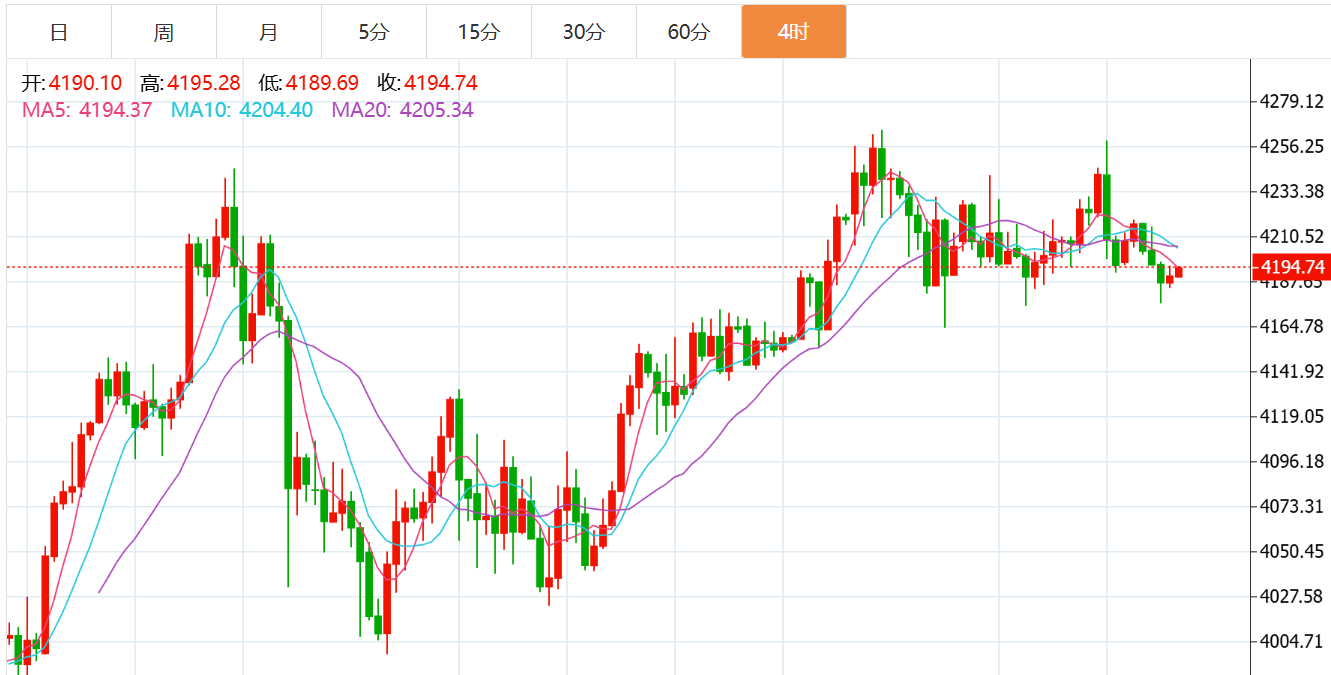
Core Viewpoint - The current market conditions require a strategic approach that balances market awareness with tactical execution, emphasizing the importance of identifying clear buy and sell signals for trading success [1] Gold Market Analysis - As of December 9, the spot gold price is trading around $4,193 per ounce, experiencing a slight decline due to cautious investor sentiment ahead of the Federal Reserve's monetary policy meeting [2] - The market anticipates a potentially hawkish interest rate decision from the Fed, leading to a wait-and-see approach among traders [2] - The U.S. dollar index (DXY) fluctuated around 99.07, with a brief dip to 98.79 before a minor rebound, while U.S. Treasury yields are on the rise, with the 10-year yield nearing 4.180%, the highest since September 26 [2] - Despite gold's current upward trend, increasing bearish factors, including rising bond yields, are creating uncertainty for future price movements [2] - Technically, gold remains in an uptrend, but momentum is waning, with critical support levels between $4,175 and $4,200 that need to hold to avoid a shift to a bearish trend [4] - If gold breaks below this support range, the focus will shift to the $4,100 psychological level, which is also the starting point of the recent rally [4] - Resistance levels are identified between $4,220 and $4,270, where previous attempts to recover have failed [4] Oil Market Analysis - As of December 9, West Texas Intermediate (WTI) crude oil is trading around $58.85 per barrel, having dropped over 2% due to the resumption of production in Iraq and ongoing attention to peace negotiations in Ukraine [5] - Brent crude oil is hovering below $64 per barrel, while WTI remains stable around $60, with increased focus on India's continued oil imports from Russia amid energy constraints [5] - The oil market is characterized by a "short-term tight, long-term loose" condition, with short-term prices influenced by geopolitical events and supply disruptions, while long-term trends are driven by global production growth [5] - Future oil prices may face downward pressure if institutional reports confirm a supply surplus, particularly after any rebounds [5] - Technically, the oil market is currently in a minor oscillation phase, with key support at $56; if this level is breached, a downward trend may ensue [6] - The short-term trading strategy suggests focusing on selling during price rebounds while considering buying on dips, with resistance levels at $60.0-$61.0 and support at $57.5-$56.5 [6]

宏观预期乐观+供应扰动担忧,有色大幅走高
Zhong Xin Qi Huo· 2025-12-05 00:31
1. Report Industry Investment Rating No relevant information provided. 2. Core View of the Report - In the short - to - medium term, with positive macro - expectations and concerns about supply disruptions, base metals prices rose significantly this week. Consumption has been somewhat suppressed, which may limit the upside potential of prices. One can cautiously consider low - buying and long - holding opportunities for copper, aluminum, and tin. In the long term, there are still expectations of potential incremental stimulus policies in China, and supply disruption issues for copper, aluminum, and tin remain. The supply - demand situation is expected to tighten, and the prices of these metals are optimistic. [1] 3. Summary by Related Catalogs Copper - **View**: The increase in LME cancelled warrants indicates that copper prices will fluctuate strongly. - **Information Analysis**: - Codelco is significantly raising the annual premium for refined copper sold to Chinese customers, with premiums of $350/ton or $335/ton above the LME price. [7] - The CSPT has reached a consensus to reduce the capacity utilization of copper ore by over 10% in 2026, and take other measures to improve the supply - demand fundamentals. [7] - In November, SMM's China electrolytic copper production increased by 11,500 tons month - on - month and 9.75% year - on - year, with a cumulative increase of 11.76% from January to November. [7] - On December 4, the spot price of 1 electrolytic copper had an average premium of 170 yuan/ton over the 2601 contract, up 30 yuan/ton from the previous day. [8] - As of December 4, SMM's copper inventory in major regions decreased to 158,900 tons, a decrease of 100 tons from the previous value. [8] - **Main Logic**: The expectation of a Fed rate cut is rising. Copper supply disruptions are increasing, and the CSPT will reduce production in 2026. The cost of scrap copper recycling has increased, leading to reduced production in some smelters. Although demand is weak, the spot is at a premium, and the increase in LME cancelled warrants is boosting prices. [9] - **Outlook**: Copper supply constraints remain, and supply disruptions continue to increase. Copper prices are expected to fluctuate strongly. [9] Alumina - **View**: The oversupply situation has not improved significantly, and alumina prices continue to be under pressure. - **Information Analysis**: - On December 4, alumina prices in various regions showed different degrees of decline or remained flat. [10] - The freight of Cape - type ships on the Guinea - to - China route has been rising, and the market sentiment and fundamentals provide dual support. [10] - On December 4, the alumina warehouse receipt was 253,320 tons, a net increase of 3,006 tons. [10] - **Main Logic**: Macroeconomic sentiment amplifies price fluctuations. High - cost production capacity has fluctuations, but the supply reduction needs further observation. The domestic inventory is still increasing, and raw material prices are weak. However, as the valuation is in the low - range, price fluctuations may increase. [12] - **Outlook**: The current supply - demand situation is in surplus, but the valuation is low. Alumina prices are expected to remain volatile. [12] Aluminum - **View**: With the repeated macro - sentiment, aluminum prices fluctuate and rebound. - **Information Analysis**: - On December 4, the average price of SMM AOO aluminum was 22,020 yuan/ton, up 220 yuan/ton from the previous day, and the premium was - 60 yuan/ton, down 10 yuan/ton. [13] - On December 4, the aluminum rod inventory in major domestic consumption areas decreased, while the electrolytic aluminum ingot inventory remained unchanged. The SHFE electrolytic aluminum warehouse receipt remained unchanged. [13] - The Eurasian Economic Commission will impose anti - dumping duties on Chinese aluminum foil products, with rates ranging from 17.16% to 20.24%. [13] - An Indonesian aluminum plant will start trial operation in mid - December, planning to reach full - capacity production of 500,000 tons in October 2026 and expand to 1.5 million tons in the long term. Another Indonesian electrolytic aluminum project has started production and will reach full - capacity production of the first - phase 500,000 tons in October 2026. [14] - **Main Logic**: The expectation of a rate cut is rising, and the domestic economic data is weakly stable. The domestic production capacity and operating rate are high, while the overseas power shortage risk is emerging. Terminal demand is stable, and inventory is decreasing. [14] - **Outlook**: In the short term, aluminum prices are expected to fluctuate strongly. In the medium term, with limited supply growth and resilient demand, the center of aluminum prices is expected to rise. [14] Aluminum Alloy - **View**: Warehouse receipts continue to rise, and the market fluctuates at a high level. - **Information Analysis**: - On December 4, the price of Baotai ADC12 was 21,100 yuan/ton, up 200 yuan/ton. The price difference between Baotai ADC12 and AOO aluminum was - 920 yuan/ton, down 20 yuan/ton. [17] - On December 4, the SHFE registered warehouse receipt was 66,164 tons, a net increase of 1,607 tons. [17] - In October, China's scrap aluminum imports were about 155,400 tons, a year - on - year increase of 19%. The main import sources were Thailand, the UK, Japan, and the US. [16] - **Main Logic**: The supply of scrap aluminum is tight, providing strong cost support. The weekly operating rate has rebounded, but some alloy factories face production reduction risks. Demand is marginally improving, and social and warehouse receipt inventories are rising. [16] - **Outlook**: In the short and medium terms, with strong cost support and stable supply - demand, prices are expected to fluctuate strongly. [16][18] Zinc - **View**: With the decline of social inventory, zinc prices will rebound in the short term. - **Information Analysis**: - On December 4, the premiums of Shanghai, Guangdong, and Tianjin 0 zinc against the main contract were 70 yuan/ton, - 40 yuan/ton, and - 50 yuan/ton respectively. [19] - As of December 4, the total inventory of SMM's seven - region zinc ingots was 140,300 tons, a decrease of 7,800 tons from the previous Thursday. [19] - On October 1, 29Metals' mine in Western Australia had a new earthquake, delaying the high - grade zinc ore mining and withdrawing the annual zinc production guidance. [19] - **Main Logic**: The Fed's dovish stance and weak economic data have increased the expectation of a December rate cut. The short - term zinc ore supply is loose, and smelting profits are good. The domestic consumption is in the off - season, and demand is average. The domestic zinc ingot inventory may stop accumulating, and LME inventory has rebounded. [19] - **Outlook**: In December, zinc production is slightly down month - on - month but high year - on - year. The demand is entering the off - season, but the export window is open, and inventory may decline. Zinc prices are expected to be volatile. [19] Lead - **View**: With the reduction of social inventory, lead prices may continue to rebound. - **Information Analysis**: - On December 4, the price of waste electric vehicle batteries was 9,875 yuan/ton, and the price difference between primary and secondary lead was 25 yuan/ton. [20] - On December 4, the average price of SMM1 lead ingot was 17,100 yuan, up 25 yuan, and the lead ingot premium was 25 yuan/ton. [20] - As of December 4, 2025, the domestic lead ingot social inventory was 23,600 tons, a decrease of 11,400 tons from the previous Thursday, and the SHFE lead warehouse receipt was 16,553 tons, a decrease of 76 tons. [20] - Some primary lead smelters are under maintenance, and the supply of deliverable brands is limited. Some downstream enterprises prefer to use lead ingots in social warehouses, leading to a significant reduction in social inventory. However, the smelter's factory inventory has increased, and there is a possibility of inventory transfer for delivery. [20] - **Main Logic**: The spot premium and the price difference between primary and secondary lead are stable, and the futures warehouse receipt is slightly down. The profit of secondary lead smelting has increased slightly, and the weekly lead ingot production has decreased. The demand for electric bicycles is slightly weak, but the demand for automobile batteries has improved, and the operating rate of lead - acid battery factories is high. [20] - **Outlook**: Due to the maintenance of smelters, lead production is difficult to increase significantly. In December, the demand for lead ingots remains high, and the inventory will remain low. The previous negative factors suppressing lead prices have been digested, and lead prices are expected to stabilize and rebound. [21] Nickel - **View**: With the overall strength of non - ferrous metals, nickel prices fluctuate accordingly. - **Information Analysis**: - On December 4, the LME nickel inventory was 25.3116 tons, an increase of 126 tons from the previous day, and the SHFE nickel warehouse receipt was 35,096 tons, an increase of 2,501 tons from the previous day. The global visible inventory is increasing. [23] - In 2026, PT Vale Indonesia will focus on three HPAL projects with a total investment of about $9 billion. The three smelters are expected to be completed successively from the third quarter of 2026. [23] - On November 29, GEM stated that its Qingmeibang nickel resource project is operating normally, and the production plan for December is normal. [24] - On November 27, BC Jindal Group and Hindustan Power won contracts for renewable energy projects. [24] - **Main Logic**: Market sentiment dominates the market, and the static valuation is stable. The industrial fundamentals are weakening marginally. The ore supply is relatively loose. The production of intermediate products has recovered, and the price of nickel salts has slightly decreased. The market is in excess supply, and the inventory has accumulated significantly. [24] - **Outlook**: In the short term, nickel prices will fluctuate with non - ferrous metals. In the long - term, the Indonesian nickel ore policy needs further observation. [25] Stainless Steel - **View**: With the slight decline of nickel - iron prices, the stainless - steel market fluctuates. - **Information Analysis**: - The latest stainless - steel futures warehouse receipt inventory was 62,157 tons, a decrease of 180 tons from the previous day. [26] - On December 4, the spot premium of Foshan Hongwang 304 stainless steel against the main contract was 225 yuan/ton. [26] - On December 4, the average price of SMM10 - 12% high - nickel pig iron was 881 yuan/nickel point, a decrease of 0.5 yuan/nickel point from the previous day. [26] - The Indonesian government is promoting the use of dry - stacking tailings technology for HPAL tailings. [27] - On November 29, GEM stated that its Qingmeibang nickel resource project is operating normally, and the production plan for December is normal. [27] - **Main Logic**: The prices of nickel - iron and chromium are falling, weakening the cost support for steel prices. After the peak season, stainless - steel production decreased in November, and downstream demand is weak. The social inventory has increased during the off - season, and there is still pressure on inventory accumulation. [27][28] - **Outlook**: The current fundamentals suppress prices, but considering the long - term suppression of industrial chain profits and ore - end support, stainless - steel prices are expected to remain range - bound. [28] Tin - **View**: With continued supply concerns, tin prices continue to strengthen. - **Information Analysis**: - On December 4, the LME tin warehouse receipt inventory increased by 50 tons to 3,195 tons, the SHFE tin warehouse receipt inventory increased by 185 tons to 6,576 tons, and the SHFE tin open interest increased by 4,211 lots to 107,697 lots. [28] - On December 4, the average price of Shanghai Non - ferrous Metals Network's 1 tin ingot was 317,600 yuan/ton, an increase of 8,300 yuan/ton from the previous day. [28] - **Main Logic**: The supply of tin is the core concern. The复产 progress of the Wa State's mining area is slow, Indonesian tin exports are restricted, and African tin production is limited. The supply of tin ore is tight, and the production of refined tin is difficult to increase. The demand for tin is expected to continue to grow due to the global economic situation and the development of related industries. [29] - **Outlook**: With continuous supply disruptions, tin prices are expected to fluctuate strongly. [29] Market Index - On December 4, 2025, the comprehensive index of CITICS Futures showed that the commodity index, commodity 20 index, industrial products index, and PPI commodity index all increased, with increases of 0.11%, 0.20%, 0.41%, and 0.78% respectively. The non - ferrous metals index increased by 1.02% on the day, 2.39% in the past 5 days, 2.50% in the past month, and 10.12% since the beginning of the year. [157][158]