
AI泡沫

Search documents
中辉有色观点-20251215
Zhong Hui Qi Huo· 2025-12-15 02:59
Report Industry Investment Ratings - Gold: Long - term holding [1] - Silver: Long - term holding [1] - Copper: Long - term holding [1] - Zinc: Under pressure, short - term high - level decline, long - term short - allocation [1] - Lead: Under pressure [1] - Tin: Rebound under pressure [1] - Aluminum: Rebound under pressure [1] - Nickel: Weak [1] - Industrial silicon: Rebound [1] - Polysilicon: Strong [1] - Lithium carbonate: High - level volatility [1] Core Views of the Report - The long - term strategic allocation value of precious metals such as gold and silver remains unchanged, benefiting from factors like global monetary easing, dollar credit decline, and geopolitical pattern reconstruction. For base metals, the market conditions vary. Copper is favored in the long - term due to tight copper concentrate supply and growing green copper demand, while zinc, lead, tin, aluminum, and nickel face different degrees of pressure in the short - to - medium term. Industrial silicon may rebound, polysilicon runs strongly, and lithium carbonate shows high - level volatility [1] Summary by Related Catalogs Gold and Silver - **Market Review**: Silver funds took profits and left the market, causing a significant decline. The Fed's liquidity release led to an emotional release for gold [2] - **Basic Logic**: The Fed announced a reserve management purchase tool, increasing the money supply. UK economic data raised the probability of a rate cut, and the Russia - Ukraine negotiation process advanced. Long - term gold will benefit from global monetary easing, dollar credit decline, and geopolitical pattern reconstruction. Silver follows the trading and delivery logic [2] - **Strategy Recommendation**: In the short term, focus on the 955 support for domestic gold and continue to hold long - term value - allocated positions. For silver, beware of high - volatility risks in the short term due to the narrowing of the gold - silver ratio and the existence of delivery risk events [3] Copper - **Market Review**: Copper prices showed a high - level correction, with concerns about the AI bubble leading to long - position profit - taking [4] - **Industrial Logic**: Global copper concentrate supply remains tight. High copper prices suppress demand, and it is the consumption off - season. The COMEX copper has a continuous siphon effect on global copper inventories [5] - **Strategy Recommendation**: In the short term, suggest taking profits on long positions when the price rises. In the long - term, remain optimistic about copper due to tight copper concentrate supply and growing green copper demand. Short - term price ranges: Shanghai copper [89500, 93500] yuan/ton, London copper [11000, 12000] US dollars/ton [6] Zinc - **Market Review**: Zinc prices declined, with LME zinc falling nearly 2% and Shanghai zinc following the decline [7] - **Industrial Logic**: Domestic zinc concentrate processing fees have continued to decline, and supply may shrink in the future. Consumption has entered the off - season, and the market is in a situation of weak supply and demand, with inventory decreasing during the off - season [8] - **Strategy Recommendation**: In the short term, zinc prices are falling from high levels. Enterprises are advised to actively arrange short - hedging positions when the price rises. In the long - term, zinc is a short - allocation in the sector. Price ranges: Shanghai zinc [23000, 23500] yuan/ton, London zinc [3100, 3200] US dollars/ton [9] Aluminum - **Market Review**: Aluminum prices faced pressure in the rebound, while alumina showed an oversold rebound [10] - **Industrial Logic**: For electrolytic aluminum, the cost of aluminum enterprises in the southwest of China may increase in the dry season. The inventory of aluminum ingots and aluminum rods has decreased, but the downstream demand is structurally differentiated. For alumina, the supply is in an over - supply situation, and attention should be paid to the production reduction trends of enterprises [12] - **Strategy Recommendation**: In the short term, take profits on Shanghai aluminum and then wait and see. Pay attention to the change direction of aluminum ingot social inventory. The main operating range is [21000 - 22200] [13] Nickel - **Market Review**: Nickel prices continued to weaken, and stainless steel faced pressure in the rebound [14] - **Industrial Logic**: Indonesia plans to reduce the nickel production target, but the inventory of nickel is still increasing. The stainless steel market has entered the off - season, and the downstream demand is weak [16] - **Strategy Recommendation**: In the short term, recommend short - selling on the rebound for nickel and stainless steel. Pay attention to the change in stainless steel inventory. The main operating range for nickel is [114000 - 117000] [17] Lithium Carbonate - **Market Review**: The main contract LC2605 rose first and then fell, and the position decreased significantly at the end of the session [18] - **Industrial Logic**: Domestic production remains high, and overseas supply pressure has eased. The sales volume of new energy vehicles at the beginning of December was lower than expected, but the demand from the energy storage sector was strong. Wait for the opportunity to go long after the price stabilizes [19] - **Strategy Recommendation**: Take profits on long positions and wait and see. The price range is [96100 - 97700] [20]
突然“崩了”,20cm跌停!网友:离谱......
Zhong Guo Ji Jin Bao· 2025-12-15 02:45
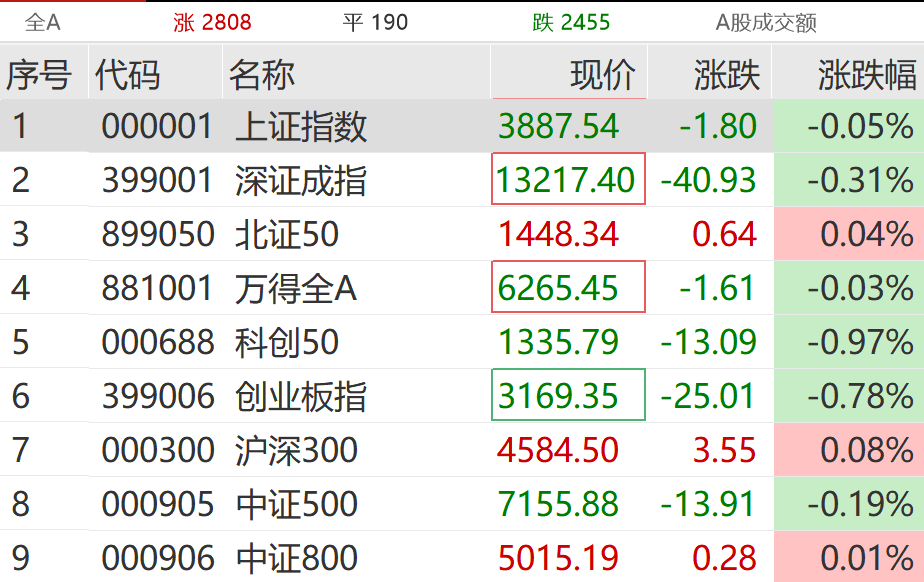
【导读】A股大消费板块回暖,乳业概念股异军突起;光通信、CPO等走弱;一品红20cm跌停 12月15日,A股三大指数集体低开,上证指数跌0.62%,深证成指跌0.81%,创业板指跌1.16%;3800只个股开盘下跌。截至发稿,市场跌幅已有明显收 窄。 | 全A | 涨 2808 平 190 | 跌 2455 A股成交额 | | | | --- | --- | --- | --- | --- | | | 序号 代码 | 现价 | 涨跌 | 涨跌幅 | | 1 - | 000001 上证指数 | 3887.54 | -1.80 | -0.05% | | വ | 399001 深证成指 | | 13217.40 -40.93 | -0.31% | | ന | 899050 北证50 | 1448.34 | 0.64 | 0.04% | | ব | 881001 万得全A | 6265.45 | -1.61 | -0.03% | | ഗ | 000688 科创50 | 1335.79 | -13.09 | -0.97% | | 6 | 399006 创业板指 | 3169.35 | -25.01 | -0.78% | ...


AI担忧冲击,日韩股市全线下跌,金银铜上涨
Hua Er Jie Jian Wen· 2025-12-15 02:07
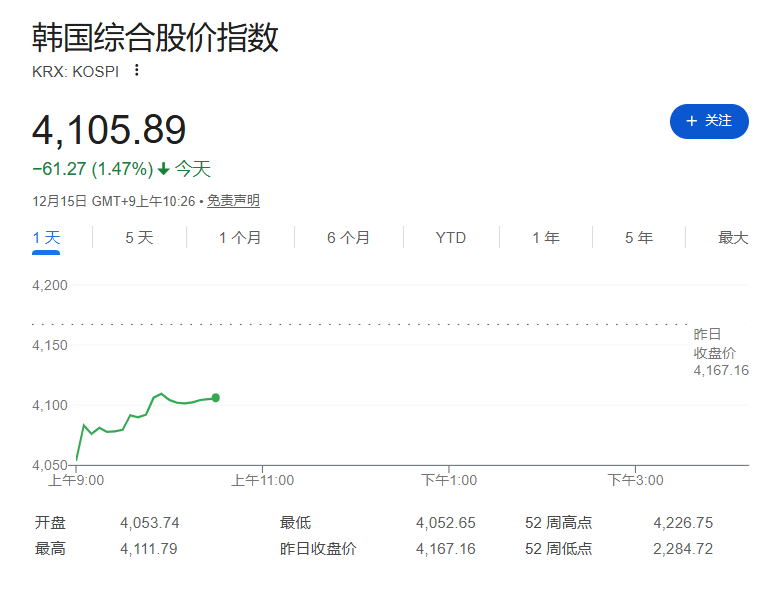
围绕AI前景的担忧情绪正在冲击全球市场,导致亚洲股市周一承压,而避险资产黄金则延续涨势。 12月15日周一,受上周五华尔街科技股抛售潮的传导影响,MSCI亚太股票指数下跌0.7%。作为今年AI投资热潮的典型代表,韩国股市领跌,其 首尔综指一度低开2.7%,三星电子跌超3%。 与此同时,LME伦铜延续涨势上扬超1%,最新报11659美元/吨。 | 综合铜03 LCPT (2025-12-15 09:45:47) 交易所: 伦敦金属交易所 【 +加自选 | | | | 期货行情 外汇行情 黄金期货 综合铜吧 | | | | --- | --- | --- | --- | --- | --- | --- | | 11659.00↑ | 成交里:0 | 今开:11545.50 | 最高:11674.50 | 涨跌幅:1.25% | 外盘:0 | 仓差:0 | | 144.00 1.25% | 持仓里:0 | 昨结:11515.00 | 最低:11541.50 | 张跌额:144.00 | 内盘:0 | 日增:0 | 澳大利亚S&P/ASX 200指数下跌0.7%,而日经225指数低开低走跌超1%。 市场情绪的转变推动 ...
银河期货每日早盘观察-20251215
Yin He Qi Huo· 2025-12-15 02:06
Report Industry Investment Rating No relevant content provided. Core Viewpoints of the Report The report provides a comprehensive analysis of various futures markets, including financial derivatives, agricultural products, black metals, non - ferrous metals, shipping, and energy chemicals. It assesses the current market situation, influencing factors, and offers trading strategies for each sector, taking into account macro - economic data, policy changes, and supply - demand dynamics. Summary by Category Financial Derivatives - **Stock Index Futures**: Overseas fluctuations affect sentiment. The market is expected to face pressure this week. Trading strategies include high - selling and low - buying in a single - side approach, waiting for basis expansion for IM/IC futures - spot arbitrage, and using a double - buy option strategy [20][21]. - **Treasury Bond Futures**: After important meetings, the market fluctuates. The policy rate cut is still expected next year. It is recommended to hold a small number of TL long positions on a single - side basis and wait and see for arbitrage [23]. Agricultural Products - **Protein Meal**: International soybeans are under pressure. It is recommended to take a short - position approach on a single - side basis, narrow the MRM spread for arbitrage, and use a short - straddle option strategy [27][28]. - **Sugar**: International sugar prices are strengthening, while domestic prices are oscillating. The single - side strategy is bottom - oscillating and slightly stronger internationally and low - level oscillating domestically. The arbitrage strategy is to go long on January and short on May [32][33]. - **Oilseeds and Oils**: The overall trend is oscillating weakly. Short - term, it is recommended to use a high - selling and low - buying approach on a single - side basis and wait and see for arbitrage [36][37]. - **Corn/Corn Starch**: The spot price is falling, and the futures price is oscillating at a high level. The single - side strategy includes short - term long - buying on dips for the 03 contract, short - selling on rallies for the 03 contract, and long - buying on long - term declines for the 05 and 07 contracts. The arbitrage strategy is a 3 - 7 reverse spread [42]. - **Hogs**: The spot price is stable, and the futures price is slightly falling. It is recommended to take a short - position approach on a single - side basis and use a short - straddle option strategy [45]. - **Peanuts**: Large - scale oil mills start purchasing, and the futures price is oscillating at a high level. The single - side strategy is to short - sell lightly on rallies for the 03 contract, and the option strategy is to sell the PK603 - C - 8200 option [46][48]. - **Eggs**: Demand is average, and the price is stable with a slight decline. It is recommended to go long on far - month contracts on dips on a single - side basis and wait and see for arbitrage [51]. - **Apples**: The inventory is low, and the fundamentals are strong. The single - side strategy is high - level oscillating, and the arbitrage strategy is to go long on January and short on October [54][56]. - **Cotton - Cotton Yarn**: New cotton sales are good, and the price is oscillating strongly. It is recommended to go long on dips on a single - side basis and wait and see for arbitrage [59]. Black Metals - **Steel**: The export management scope is expanded, and the price is oscillating. The single - side strategy is oscillating, and the arbitrage strategy is to short the coil - coal ratio and the coil - screw spread [62][63]. - **Coking Coal and Coke**: They are oscillating at the bottom. It is recommended to wait and see or go long lightly on dips on a single - side basis and wait and see for arbitrage [64][65]. - **Iron Ore**: It should be treated with a bearish mindset. The single - side strategy is bearish, and it is recommended to wait and see for arbitrage [67][68]. - **Ferroalloys**: The cost is supported, but the demand is suppressed. It is expected to oscillate at the bottom on a single - side basis, and the option strategy is to sell an out - of - the - money straddle option combination [69][70]. Non - Ferrous Metals - **Gold and Silver**: Macroeconomic uncertainty increases, and price fluctuations are amplified. The single - side strategy is to hold long positions for Shanghai gold and silver carefully, and the option strategy is to buy out - of - the - money call options [72][75]. - **Platinum and Palladium**: The market fluctuates greatly. It is recommended to go long on dips for both, choose to go long on platinum and short on palladium for arbitrage, and wait and see for options [76][77]. - **Copper**: Concerns about the AI bubble resurface, and the price drops rapidly. The single - side strategy is to go long after a full correction, and the arbitrage strategy is to pay attention to the calendar spread arbitrage [79][82]. - **Alumina**: Warehouse receipts are gradually digested, and short - sellers leave the market. The single - side strategy is a rebound driven by short - sellers leaving, and it is recommended to wait and see for arbitrage and options [83][87]. - **Electrolytic Aluminum**: With concentrated macro - data release this week, it is recommended to be cautious about chasing up. The single - side strategy is oscillating after a correction, and it is recommended to wait and see for arbitrage and options [88][89]. - **Cast Aluminum Alloy**: There is uncertainty in macro - expectations, and the price corrects with the sector. The single - side strategy is oscillating after a correction, the arbitrage strategy is to narrow the AD - AL spread during the correction, and it is recommended to wait and see for options [90]. - **Zinc**: Attention should be paid to the export volume. The single - side strategy is to hold existing long positions and go long on dips, and it is recommended to wait and see for arbitrage and options [92][93]. - **Lead**: Attention should be paid to inventory changes. The single - side strategy is range - bound oscillating [94][97]. - **Nickel**: As a short - allocation variety, it continues to decline. The single - side strategy is oscillating downwards, and the option strategy is to sell out - of - the - money call options [98][100]. - **Stainless Steel**: It oscillates at a low level following the nickel price. The single - side strategy is low - level oscillating, and it is recommended to wait and see for arbitrage [101][102]. - **Industrial Silicon**: It may rebound in the short - term. The single - side strategy is to go long in the short - term, and the arbitrage strategy is to go long on polysilicon and short on industrial silicon [104]. - **Polysilicon**: Pay attention to the previous high - point pressure in the short - term and buy on corrections in the future. The single - side strategy is to buy on corrections, and the option strategy is to use a double - buy option strategy [105]. - **Lithium Carbonate**: The inventory reduction speed remains stable, and the price is at a high level. The single - side strategy is to buy after a full correction in the medium - term, and the option strategy is to sell out - of - the - money call options on rebounds [106][108]. - **Tin**: Concerns about the AI bubble resurface, and the price is under pressure to fall. The single - side strategy is high - level oscillating, and it is recommended to wait and see for options [109][110]. Shipping - **Container Shipping**: MSC issues a price - increase notice for January, and it is expected to oscillate at a high level in the short - term. The single - side strategy is to take partial profit and hold partial positions for the EC2602 contract, and it is recommended to wait and see for arbitrage [111][113]. Energy Chemicals - **Crude Oil**: Excess pressure and geopolitical disturbances are present, and the price is expected to oscillate downwards. The single - side strategy is bearish, and the arbitrage strategy is that domestic gasoline is neutral, diesel is bearish, and the crude oil calendar spread is bearish [114][116]. - **Asphalt**: Supply and demand are both weak, and there are still raw - material risks. The single - side strategy is weakly oscillating, and the option strategy is to sell out - of - the - money call options for the BU2602 contract [118][120]. - **Fuel Oil**: The high - sulfur variety is weakly stable, and low - sulfur supply is frequently disturbed. The single - side strategy is weakly oscillating, and the arbitrage strategy is that both high - sulfur and low - sulfur crack spreads are bearish [121][123]. - **Natural Gas**: The LNG price is in a downward trend, and HH has a deep correction. The single - side strategy is to buy the HH2602 contract [124][127]. - **PX & PTA**: PX production remains at a high level, and PTA inventory accumulation is expected. The single - side strategy is weakly oscillating, and the arbitrage strategy is to go long on PX603 and short on PX605, and go long on TA605 and short on TA601 [129][132]. - **BZ & EB**: Pure benzene supply and demand are loose, and the styrene basis weakens. The single - side strategy is weakly oscillating and short - selling on rallies, and the arbitrage strategy is to short pure benzene and long styrene [134][137]. - **Ethylene Glycol**: There is pressure to reduce inventory. The single - side strategy is weakly oscillating, and the option strategy is to sell out - of - the - money call options [138][140]. - **Short - Fiber**: Supply and demand are weak. The single - side strategy is price - weakly oscillating, and the option strategy is to sell out - of - the - money call options [142][143]. - **Bottle Chip**: Supply and demand are relatively loose. The single - side strategy is price - weakly oscillating, and the option strategy is to sell out - of - the - money call options [146]. - **Propylene**: Production increases, and inventory is at a high level. The single - side strategy is short - selling on rallies, and the option strategy is to sell call options [148][149]. - **Plastic PP**: They bottom out and rebound. The single - side strategy is to try long positions for the L 2605 contract and wait and see for the PP 2605 contract [150][151]. - **Caustic Soda**: The price is weakly oscillating. The single - side strategy is a weak trend, and it is recommended to wait and see for arbitrage and options [153][154]. - **PVC**: It rebounds after reaching the bottom. The single - side strategy is a rebound [155][157]. - **Soda Ash**: Supply increases and demand decreases, and the price weakens. The single - side strategy is a weak trend, and the arbitrage strategy is to pay attention to the opportunity of short - selling soda ash and long - buying glass for the 05 contract [159][163]. - **Glass**: The price oscillates weakly. The single - side strategy is a weak trend, and the arbitrage strategy is to pay attention to the strategy of short - selling soda ash and long - buying glass for the 05 contract and reverse the 1 - 5 spread [164][165]. - **Methanol**: It oscillates widely. The single - side strategy is oscillating, and it is recommended to wait and see for arbitrage and options [166]. - **Urea**: Low - price transactions are okay. The single - side strategy is strongly oscillating in the short - term and weakly oscillating in the medium - term [168]. - **Pulp**: The price strengthens, and demand is mainly for rigid needs. It is recommended to wait and see on a single - side basis, and it is recommended to wait and see for arbitrage and options [172][174]. - **Logs**: The fundamentals are weakening. The single - side strategy is to pay attention to going long on the 03 contract near the previous low, and the arbitrage strategy is to gradually take profit on the 1 - 3 reverse spread [175][177]. - **Offset Printing Paper**: Supply pressure persists, and the transmission of high pulp prices is less than expected. The single - side strategy is short - selling, and the option strategy is to sell the OP2602 - C - 4100 option [178][179]. - **Natural Rubber**: RU warehouse receipts accumulate, and NR is strong. The single - side strategy is to wait and see for the RU 05 contract and hold long positions for the NR 02 contract. The arbitrage strategy is to reduce positions and wait and see [180][183]. - **Butadiene Rubber**: Warehouse receipts increase significantly, and long positions should be held. The single - side strategy is to hold long positions for the BR 02 contract, and the arbitrage strategy is to hold the BR2602 - NR2602 spread and set a stop - loss [184][186].
AI恐慌下的避震器!印度股市2026年或成对冲AI泡沫风险的重要工具”
Zhi Tong Cai Jing· 2025-12-15 01:44
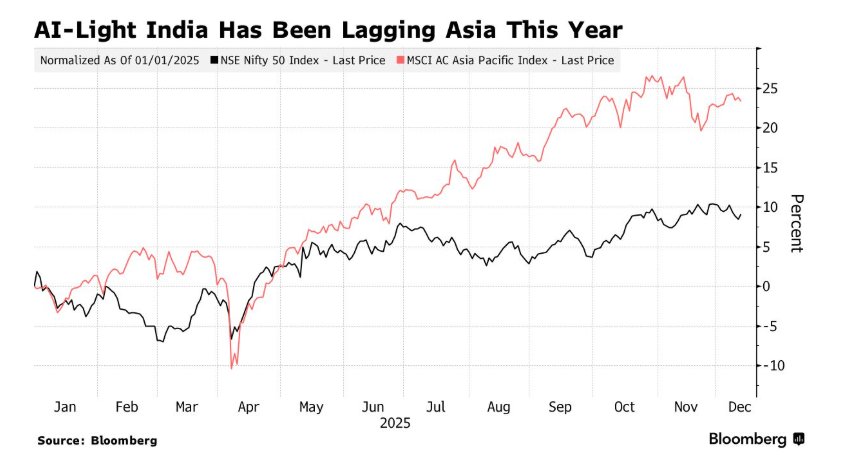
全球大型资管机构们正在把印度股票市场视为对冲AI泡沫破裂风险的首选市场标的,随着近期甲骨文、英伟达以及博通等 近年来受益于AI热潮的科技巨头们股价大幅下跌,市场对于AI泡沫破裂的担忧情绪显著升温,惧怕出现"堪比2000年互联 网泡沫破裂时期的科技股熊市暴跌轨迹"。而印度市场,正引起全球对冲基金经理们的新增关注,他们希望在来年分散股 票投资风险。 来自欧洲的资管巨头Aberdeen Group Plc认为印度股票明年会出现反弹;另外两家资管巨头Principal Asset Management Co.与 Eastspring Investments则认为,印度市场与"AI叙事"交易的相关性较低,可作为对冲其他股市(尤其是科技股集中度很高的 股市——比如美国、韩国以及中国台湾)的重要工具。来自汇丰与Jefferies Financial Group Inc.的资深策略师们也表达了类 似观点。 全球资金开始将印度股市视为抵御人工智能风险的对冲工具 "印度在2026年可以成为投资组合中一个很好的分散化与多元化资产配置,因为它与其他偏向AI的大型市场的相关性较 低,而AI交易热潮一旦暂停,资金就会大规模流向印度,"P ...
AI泡沫破裂倒计时? 围绕AI的交易逻辑从“纯粹宏大叙事”迈向“现实回报”
Zhi Tong Cai Jing· 2025-12-15 00:47
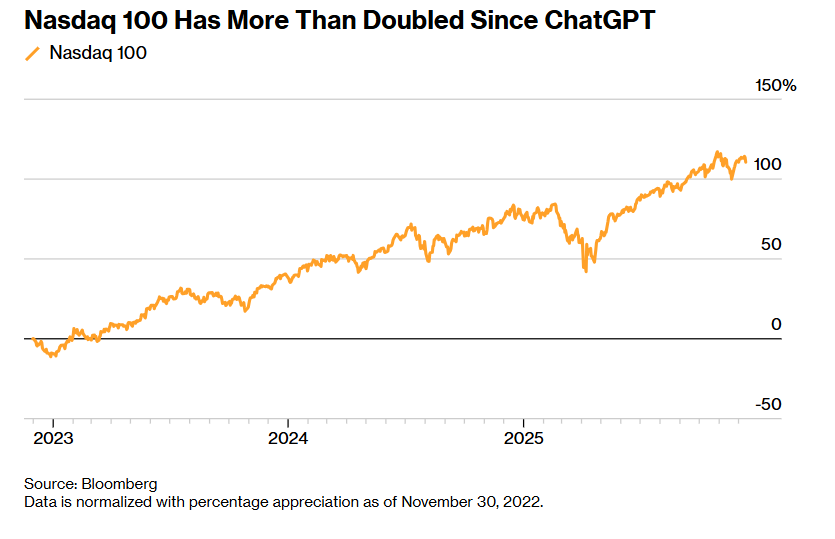
智通财经APP了解到,从英伟达到上周公布业绩的甲骨文和博通,它们业绩数据出炉之后,即使核心业绩指标全线超 预期,也未能强化所谓的股票市场"AI牛市叙事"同时也未能提振全球投资者们对于科技股的"AI信仰"。 终于在上周五,这种怀疑情绪全面大爆发,导致甲骨文、英伟达以及博通等2022年末以来受益于AI投资热潮的热门科 技股股价集体暴跌。华尔街顶级投资机构们对于美股七大科技巨头(即Magnificent Seven)所主导的这股史无前例的全球 AI投资热潮持续性愈发质疑,认为杀伤力比肩当年"互联网泡沫"的所谓"AI泡沫"正在形成。更重要的是,这些顶级机 构开始押注"是哪些重大事件/重要时刻可能会把泡沫彻底戳破。 距离OpenAI发布风靡全球的ChatGPT引发全球人工智能投资狂热以及全球企业布局AI的超级热潮,已经过去三年有 余。虽然仍有资金涌向英伟达、博通以及谷歌、甲骨文、美光等等受益于AI投资狂热的AI算力产业链领军者们,但是 市场对于这波股票市场AI繁荣能否持续的疑虑也在加深,一些投资者认为这轮AI投资热潮的"最好时光"已经结束。 从"AI芯片超级霸主"、"地球最重要股票"英伟达公布无比强劲的业绩也未能阻止股 ...


甲骨文:不寻常的信号
3 6 Ke· 2025-12-15 00:36
上周五,一则关于数据中心建设可能延迟的消息,让数据库巨头甲骨文的股价在持续下跌中再次受挫, 也进一步加深了投资者对AI泡沫的担忧。 比股价波动更值得玩味的,是公司声明的文字游戏:它只否认了"合同规定必须完成的时间节点"有延 迟,却对公众更关心的"整体项目时间表"是否推迟避而不谈。 在资本一头热地追捧未来故事,而技术落地艰难、商业回报存疑之间,一道天堑正在显现。 01 不寻常的信号 过去两年,任何与"AI算力"沾边的公司,都能轻松从资本市场获得惊人的高估值。 甲骨文就是其中的"代表":它与OpenAI达成的价值千亿美元级别的基础设施合作协议,曾一度将其市 值推高数千亿美元,并使创始人拉里·埃里森短暂成为世界首富。 股票投资者似乎买下了一个确定的未来:AI需求无限,算力就是力量,投资核心基础设施就等于投资 新时代的"卖水人"。 然而,就在股票市场沉醉于转型故事的同时,离风险更近的信用市场,却发出了截然不同的警告。 在甲骨文延迟传闻发酵的一周内,为其债务违约提供保险的信用违约互换价格飙升至五年新高。CDS市 场的交易员,素有"金融世界金丝雀"之称,他们凭借对结构性风险的敏锐嗅觉,曾在2008年金融危机前 率先行动。 ...
中金:如何在美A港三地中做出选择?
中金点睛· 2025-12-14 23:44
Core Viewpoint - The article discusses the recent performance of the Hong Kong stock market compared to the US and A-share markets, highlighting the sensitivity of the Hong Kong market to liquidity changes and its structural differences, which have led to its underperformance since late November 2025 [2][6][29]. Group 1: Market Performance Analysis - Since early 2025, the markets in the US, Hong Kong, and A-shares have shown a quarterly switching pattern, with the Hong Kong market lagging behind in recent months [2][4]. - As of late November, the Hang Seng Index has declined by 2.2%, while the A-share and US markets have shown positive returns, with the Shanghai Composite Index up by 0.5%, and the S&P 500 and Nasdaq up by 5.5% and 6.9%, respectively [2][4]. - The article notes that the Hong Kong market's recent weakness is attributed to its heightened sensitivity to liquidity changes and structural differences compared to the other markets [6][29]. Group 2: Liquidity Factors - A slowdown in southbound capital inflows has been observed, with net inflows dropping from an average of 7 billion HKD to below 1 billion HKD per day since late November [7]. - External liquidity has also been a concern, with recent data indicating a net outflow of 4.6 billion USD from Hong Kong stocks and ADRs, while A-shares saw a slight inflow of 0.2 billion USD [9]. - The article emphasizes that the Hong Kong market's reliance on external liquidity makes it more vulnerable to changes in investor sentiment and market conditions [6][9]. Group 3: Structural Characteristics - The Hong Kong market's structure is heavily weighted towards technology and consumer sectors, with a significant focus on new consumption and internet applications, which are more sensitive to market sentiment [16][21]. - The article highlights that the technology sector in Hong Kong is primarily application-focused, lacking the hardware component that provides more stability in the A-share market [19][21]. - Consumer spending in Hong Kong is currently under pressure due to a weak credit cycle and stagnant income expectations, making it difficult for the consumption sector to drive market performance [20][21]. Group 4: Future Outlook - The article suggests that the Hong Kong market's performance will depend on the recovery of the credit cycle and the ability to attract foreign investment, particularly in light of the expected liquidity conditions in the US and A-share markets [29][30]. - It is noted that the Hong Kong market may benefit from structural opportunities in sectors like AI and dividends, but these require positive catalysts to materialize [40][42]. - The overall outlook for 2026 indicates that while the US credit cycle may recover, the Chinese credit cycle faces challenges, which could further impact the Hong Kong market's performance [30][37].

港股策略专题:如何在美A港三地中做出选择?
CICC· 2025-12-14 13:29
Core Insights - The report highlights the shifting dynamics among the US, A-share, and Hong Kong markets, indicating a "seesaw" effect where one market's performance impacts the others. The first quarter saw a revaluation of Chinese assets led by DeepSeek, while the second quarter was characterized by strong performance in US stocks driven by AI leaders and capital expenditure growth [1][2] - Since late November, Hong Kong stocks have underperformed compared to US and A-shares, with the Hang Seng Index and Hang Seng Tech Index showing declines of 2.2% and 0.7% respectively, while the Shanghai Composite and US indices posted gains [2][3] - The report attributes the recent weakness of Hong Kong stocks to their sensitivity to liquidity changes and structural differences, with a notable slowdown in southbound capital inflows and external liquidity support [3][4] Market Dynamics - Southbound capital inflows have decreased significantly, with a 10-day moving average dropping from an average of 7 billion HKD to below 1 billion HKD, leading to concerns about potential fund outflows due to regulatory changes [3][4] - External liquidity has also been a concern, with active foreign capital flowing out of Hong Kong while inflows into A-shares have continued. The report notes that recent hawkish signals from the Federal Reserve have contributed to a lack of external liquidity support for Hong Kong stocks [3][4] - Despite the short-term liquidity disturbances, the report suggests that the fundamental weakness in the market has amplified negative sentiment, particularly in the context of the unique industry structure of Hong Kong stocks [4][5] Sector Analysis - The technology sector, primarily focused on internet applications in Hong Kong, faces concerns over an AI bubble, while A-shares benefit from a higher proportion of hardware-related stocks, providing stronger support [5][6] - The consumer sector in Hong Kong, particularly discretionary spending, is struggling due to weak domestic consumption recovery and a declining credit cycle, which limits its potential as a market driver [5][6] - The cyclical sector has shown some strength, particularly in metals, but its overall weight in the Hong Kong market is low, limiting its ability to provide substantial support [5][6] Future Outlook - The report anticipates that Hong Kong stocks will be more sensitive to liquidity and fundamental changes, with potential for stronger performance if the credit cycle improves and risk appetite increases [5][6] - Historical patterns indicate that Hong Kong stocks tend to outperform during periods of fundamental recovery and ample liquidity, but recent trends suggest a need to consider structural differences among the markets [6][7] - For 2026, the report emphasizes the importance of liquidity, fundamental conditions, and structural opportunities in determining market performance, with a focus on the potential for recovery in the US credit cycle and the challenges facing the Chinese credit cycle [9][10]
周观点:美国AI泡沫风险可能与全球美元债务风险同步释放-20251214
Huafu Securities· 2025-12-14 10:10
Investment Insights - The ongoing competition in computing power chips between China and the US is a significant indicator of long-term global technological deflation [2] - The potential collapse of the US AI bubble could lead to a simultaneous release of global dollar debt risks [2] - Attention should be paid to the risk signals indicated by a potential temporary strengthening of the dollar, which may subsequently lead to a triple hit on the dollar, US bonds, and US stocks [2] - The Chinese market is expected to undergo a long-term style shift during the release of overseas risks, accompanied by a significant and sustained appreciation of the Renminbi [2] Sector and Company Focus - Long-term optimism is noted for sectors such as insurance, central state-owned enterprises, anti-involution industries, Chinese internet companies, and military trade [3] - The recent FOMC meeting indicated a shift to a neutral stance, with the Fed no longer pre-setting a path for interest rate cuts, which will depend on future economic data [8][9] - The Fed acknowledged a cooling labor market, with potential negative employment growth, which explains the decision to cut rates despite inflation remaining above target [9] - The report highlights a complex economic scenario characterized by high growth and weak employment, partly attributed to increased productivity [9] Market Performance - The Hong Kong stock market saw declines, with the Hang Seng Index down by 0.42% and the Hang Seng China Enterprises Index down by 1.29% [13] - In the A-share market, the Shanghai Composite Index fell by 0.34%, while the ChiNext Index rose by 2.74%, indicating a rebound in growth stocks [20] - Sector performance showed a clear divergence, with technology and advanced manufacturing leading gains, while cyclical, consumer, and healthcare sectors experienced declines [27]