
流动性

Search documents
X @何币
何币· 2025-07-30 23:37
Market Overview - The perpetual contract sector is highly competitive [1] - Liquidity and user experience are key factors for success in the perpetual contract sector [1] Key Players - Lighter has the best trading volume and liquidity, backed by A16z [1] - Amber offers the best user experience, especially on mobile devices [1] - Aster is associated with Binance [1] - Ethereal is associated with ENA [1]
流动性专题:8月资金面关注什么
Minsheng Securities· 2025-07-30 14:21
Group 1: Market Liquidity - In July, the overnight funding rate rose significantly to 1.53% and then to 1.65% on July 24, raising concerns about liquidity[1] - The People's Bank of China (PBOC) injected a net amount of 601.8 billion yuan through 7-day reverse repos on July 25, indicating a supportive stance on liquidity[1] - By the end of July, the overnight funding rate decreased to 1.36%, with the balance of 7-day reverse repos significantly higher than seasonal levels[1] Group 2: Government Debt Supply - It is estimated that in August 2025, government debt issuance will be between 2.17 trillion and 2.39 trillion yuan, with net financing close to 1.17 trillion to 1.39 trillion yuan[5] - From January to July 2025, net financing from ordinary government bonds reached 2.56 trillion yuan, with various types of bonds contributing to a total of 9.02 trillion yuan utilized, accounting for 65% of the annual quota of 13.86 trillion yuan[5][27] - The issuance of local government bonds is progressing slightly faster than that of national bonds[5] Group 3: Interbank Certificates of Deposit - The 1-year interbank certificate of deposit (CD) rate rose slightly after reaching around 1.6% in early July, with the market beginning to see price increases[6] - The maturity scale of CDs in August increased to 3.07 trillion yuan, indicating heightened renewal pressure[6] - The 1-year CD rate is expected to fluctuate between 1.6% and 1.7%, with rates above 1.65% considered to have certain allocation value[6]
解析港股行情背后的主导力量 后市前景几何
Bei Jing Shang Bao· 2025-07-28 14:28
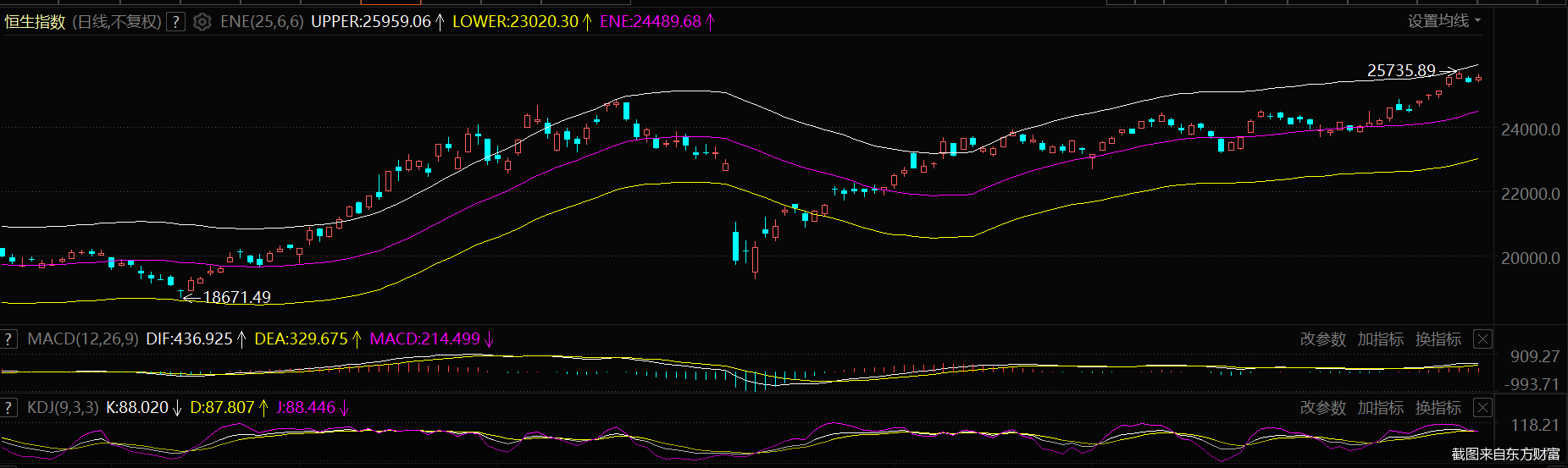
Core Viewpoint - The Hong Kong stock market has become a preferred destination for capital, with the Hang Seng Index reaching a high of 25,735.89 points in July, marking the highest level since 2022 [1][3] Market Activity - The Hong Kong stock market has shown significant activity in both the primary and secondary markets. In the primary market, there has been a continuous influx of large A-share companies conducting IPOs in Hong Kong, with a noticeable increase in refinancing and active subscription trading. In the secondary market, trading volume has increased significantly, with southbound capital inflows exceeding HKD 82 billion, surpassing the total for the previous year [1][5] Liquidity Factors - The current market trend is primarily driven by liquidity, with both macro and micro liquidity being relatively loose. A report from CICC indicates that the macro liquidity is supported by ample domestic funds and a lack of quality assets, leading to sustained capital inflows. Additionally, the drop in Hibor has released liquidity into the market, while external macro liquidity has also been favorable since the second quarter [5][6] Structural Market Dynamics - The current market is characterized by a structural bull market rather than a comprehensive bull market. Each market pullback has been followed by a rise in the bottom, but the leading sectors have varied. Investors need to focus on identifying leading sectors to capture index returns, as merely tracking the index may not yield the same results [7][10] IPO Activity - As of July 28, 52 new stocks have been listed in the Hong Kong market this year, raising a total of nearly HKD 130 billion. Notably, CATL led the fundraising with HKD 41.006 billion, becoming the largest IPO globally in the first half of the year [8] Future Outlook - The outlook for the Hong Kong stock market remains positive, with expectations of continued capital inflows as household savings shift towards the capital market. However, there may be a divergence in supply and demand, with a potential slowdown in southbound capital inflows and an active IPO market that could further expand [10][11]

流动性跟踪周报(2025.7.21-7.25)-20250728
HTSC· 2025-07-28 09:19
Report Summary 1. Report Industry Investment Rating No industry investment rating is provided in the report. 2. Core Viewpoints The report analyzes the liquidity situation from July 21 - 25, 2025, indicating that the capital market shows a state of tight funds and rising interest rates, but the market's expectation of the capital side is stable. The central bank's attitude of caring for the capital side helps maintain the stability of capital interest rates, but there are still uncertainties in the stock market and redemptions [1][2]. 3. Summary by Related Catalogs **Funding Situation** - The open - market maturity was 2046.8 billion yuan last week, with a net investment of 10.95 billion yuan. The capital side was slightly tight, and the average value of DR007 was basically flat compared with the previous week, while the average value of R007 increased by 2BP. Exchange repurchase rates also increased [1]. - The total maturity of certificates of deposit (CDs) was 1076.48 billion yuan last week, with a net financing scale of - 560.79 billion yuan. The 1 - year AAA CD maturity yield increased compared with the previous week. The 1 - year FR007 interest rate swap average decreased compared with the previous week, and the market's expectation of the capital side was stable [2]. **Repurchase Transaction** - The volume of pledged repurchase transactions was between 7.1 - 8.1 trillion yuan last week, and the average volume of R001 repurchase transactions increased by 454 billion yuan compared with the previous week. The undelivered repurchase balance decreased compared with the previous week. In terms of institutions, the lending scale of large - scale banks decreased, while that of money market funds increased. The borrowing scales of securities firms and funds decreased, while that of wealth management increased [4]. **Other Market Indicators** - The 6M national stock bill transfer quotation decreased compared with the last trading day of the previous week. The US dollar - RMB exchange rate decreased slightly, and the Sino - US interest rate spread narrowed. There may be increased exchange rate fluctuations this week due to trade negotiations and central bank meetings [5]. **This Week's Key Concerns** The open - market capital maturity this week is 1656.3 billion yuan. Important economic data such as the eurozone and US Q2 GDP, China's July official PMI, the US July FOMC interest rate decision, and the US July ISM manufacturing index and unemployment rate will be released. Attention should also be paid to the central bank's open - market investment operations [6].
一周流动性观察 | 1.6万亿元逆回购将到期 跨月资金面有望修复
Xin Hua Cai Jing· 2025-07-28 07:46
Core Viewpoint - The People's Bank of China (PBOC) is maintaining a relatively loose liquidity environment despite fluctuations in the money market, with significant net injections and ongoing reverse repo operations to support market stability [1][3][4]. Group 1: Monetary Policy Actions - On July 28, the PBOC conducted a 7-day reverse repo operation of 495.8 billion yuan at an interest rate of 1.40%, resulting in a net injection of 325.1 billion yuan after accounting for maturing reverse repos [1]. - In the week of July 21-25, the PBOC achieved a total net injection of 129.5 billion yuan in the open market, with 120 billion yuan in treasury cash deposits maturing [1][2]. - The PBOC's operations in July included a total net injection of 300 billion yuan through medium-term lending facilities (MLF), indicating a continued focus on liquidity support [2][3]. Group 2: Market Conditions - The money market experienced volatility, with overnight rates fluctuating around 1.40% at the beginning of the week, rising to over 1.65% mid-week, and then easing back to 1.55% and 1.52% by July 25 [2]. - The 7-day funding rates remained stable below 1.50% initially but showed an upward trend, reaching 1.69% and 1.65% for R007 and DR007, respectively [2][3]. - The upcoming week (July 28-August 1) will see a decrease in reverse repo maturities to 1,656.3 billion yuan, with significant government debt repayments expected [3]. Group 3: Future Outlook - Looking ahead to August, liquidity is expected to remain loose, although mid-month disturbances may occur due to local government debt financing and the PBOC's management of liquidity during non-tax periods [4]. - The PBOC is anticipated to maintain a certain level of liquidity injection, especially if bond market rates continue to rise, which could prompt the central bank to support interbank market liquidity [4]. - The overall expectation is for the 7-day funding rate to stabilize around 10-15 basis points above the reverse repo rate, with reduced volatility in the cross-month funding market [4].
股指周报:国内外宏观密集出炉,市场避险情绪升温-20250728
Zheng Xin Qi Huo· 2025-07-28 05:51
Report Industry Investment Rating No information provided in the given text. Core Viewpoints - **Macro**: The US tariff exemption extension is entering its final week, and negotiations with countries like the EU, India, and Mexico are in a tense phase, with uncertainties regarding potential tariff counter - measures. Overseas is in a week of intensive macro - events, including the Fed's interest - rate meeting and key economic data releases. China will hold a Politburo meeting, and attention should be paid to economic work guidance and PMI data to confirm economic recovery. The real estate sales remain at a low level, the service industry is structurally differentiated and has declined due to summer heat, and the manufacturing's rush - to - export phase is ending, posing potential downward pressure on the Q3 economy. However, anti - involution policies are expected to gradually reverse deflation [4]. - **Funds**: Domestic liquidity is generally loose but marginally tightening. Bond market redemptions are flowing into the stock market, providing incremental funds. Overseas financial conditions have improved, with a decline in the real interest rate of US bonds, leading to foreign capital inflows into the domestic stock market. Passive ETF shares are being re - increased, equity financing such as IPOs has cooled, margin trading funds are continuously flowing in, and the pressure of restricted - share unlocks has increased, overall favoring liquidity [4]. - **Valuation**: After a short - term rebound, the valuations of various indices are still at a historically neutral - to - high level. The stock - bond yield spreads at home and abroad have further declined, making the attractiveness of allocation funds average [4]. - **Strategy**: The current valuations of broad - based indices are not cheap, and the foreign - capital risk premium index has dropped to a low level. The pressure of US tariff policies may resurface. Considering that the stock market has prematurely priced in macro - expectations, the market is expected to oscillate, reach a peak, and then correct in the next 1 - 2 weeks when positive factors are realized or fall short of expectations. It is recommended to reduce long positions in stock indices after sharp rallies this week or use out - of - the - money put options to protect against black - swan risks. In terms of style, hold long positions in IC and IM, or conduct an arbitrage strategy of going long on IM and short on IF [4]. Summary by Directory 1. Market Review - **Stock Indices**: In the past week, the Science and Technology Innovation 50 Index led the gains, while the German stock market led the losses. The week - on - week changes of major indices are as follows: the Shanghai Composite Index rose 1.67%, the Hang Seng China Enterprises Index rose 1.83%, the Shenzhen Component Index rose 2.33%, and the ChiNext Index rose 2.76%, among others [8][9]. - **Sectors**: Coal led the gains, and banks led the losses. Coal > Steel > Non - ferrous metals > Building materials... > Electric power and public utilities > Communications > Comprehensive finance > Banks [12]. - **Futures**: The basis rates of the four major stock index futures (IH, IF, IC, and IM) changed by 0.21%, 0.09%, - 0.39%, and - 0.31% respectively, with IH reaching par and the discounts of IC and IM slightly widening. The inter - period spread rates (current and next month) of the four major stock index futures changed by - 0.3%, - 0.25%, - 0.19%, and - 0.25% respectively, and the inter - period discounts of the four major futures began to widen. The inter - period spread rates (next quarter and current month) changed by - 0.21%, - 0.61%, - 1.32%, and - 1.81% respectively, with the long - term discounts of the four major futures widening significantly [19]. 2. Fund Flows - **Margin Trading and Market - Stabilizing Funds**: Last week, margin trading funds flowed in 39.65 billion yuan, reaching a total of 1.94 trillion yuan. The proportion of margin trading balance to the circulating market value of the Shanghai and Shenzhen stock markets remained unchanged at 2.26%. The scale of passive stock ETF funds was 3.17358 trillion yuan, an increase of 74.43 billion yuan from the previous week, and the share was 198.619 billion shares, with a net subscription of 290 million shares from the previous week [22]. - **Industrial Capital**: In July, the cumulative equity financing was 45.49 billion yuan, with 6 cases. Among them, IPO financing was 20.92 billion yuan, private placement was 24.58 billion yuan, and convertible bond financing was 8.79 billion yuan. The market value of stock market unlocks last week was 86.84 billion yuan, a significant increase of 58.38 billion yuan from the previous week [26]. 3. Liquidity - **Monetary Injection**: Last week, the central bank's OMO reverse - repurchase matured at 1.7268 trillion yuan, with a reverse - repurchase injection of 1.6563 trillion yuan, resulting in a net monetary withdrawal of 7.05 billion yuan. The MLF was injected with 400 billion yuan in July and matured at 300 billion yuan, with continuous monthly net injections for 5 months. Overall, the liquidity supply was neutral but marginally tightening [28]. - **Fund Prices**: The DR007, R001, and SHIBOR overnight rates changed by 14.5bp, 6.4bp, and 5.8bp respectively, reaching 1.65%, 1.55%, and 1.52%. The issuance rate of inter - bank certificates of deposit rebounded by 2.1bp, and the CD rate issued by joint - stock banks rebounded by 4.1bp to 1.67%. The fund supply tightened marginally, debt financing demand declined, but the real - economy financing demand recovered, and the fund prices generally rebounded slightly [34]. - **Term Structure**: Last week, the yields of 10 - year, 5 - year, and 2 - year Treasury bonds changed by 6.7bp, 6bp, and 5.2bp respectively; the yields of 10 - year, 5 - year, and 2 - year China Development Bank bonds changed by 8.9bp, 9.5bp, and 6.6bp respectively. The yield term structure continued to steepen, and the credit spreads between Treasury bonds and China Development Bank bonds widened at both the long and short ends, indicating a return of broad - credit expectations [38]. - **Sino - US Interest Rate Spread**: As of July 25, the US 10 - year Treasury yield changed by - 4.0bp to 4.40%, the inflation expectation changed by 3.0bp to 2.44%, and the real interest rate changed by - 7.00bp to 1.96%. The Sino - US interest rate spread inversion narrowed by 10.79bp to - 266.61bp, and the offshore RMB appreciated by 0.19% [41]. 4. Macroeconomic Fundamentals - **Real Estate Demand**: As of July 24, the weekly trading area of commercial housing in 30 large - and medium - sized cities was 1.531 million square meters, showing a seasonal improvement from the previous week's 1.372 million square meters but still at a relatively low level compared to the same period. Second - hand housing sales declined seasonally, reaching the lowest level in nearly seven years. The real estate market sales generally returned to a low level, and attention should be paid to whether the Politburo meeting will propose signals to boost the real estate market [44]. - **Service Industry Activities**: As of July 25, the daily average subway passenger volume in 28 large - and medium - sized cities dropped significantly to 81.84 million person - times, a 1.2% decrease from the same period last year but a 21.8% increase from 2021. The Baidu congestion delay index of 100 cities decreased slightly from the previous week, indicating that the service industry's economic activities were cooling down [48]. - **Manufacturing Tracking**: Due to the anti - involution policy, the overall capacity utilization rate of the manufacturing industry declined. The capacity utilization rates of steel mills, asphalt, cement clinker enterprises, and coking enterprises changed by - 0.08%, - 4%, - 0.26%, and 0.44% respectively. The average operating rate of the chemical industry chain related to external demand changed by 0.01% from the previous week. Overall, the domestic and foreign demand trends of the manufacturing industry improved marginally, and it has entered the seasonal peak season [52]. - **Goods Flow**: The goods and people flow remained at a relatively high level. The postal express and civil aviation sectors showed a significant weekly decline, while railway transportation rebounded slightly, which may be related to the rush - to - export. There is a risk of a second seasonal decline from August to September [56]. - **Exports**: As the rush - to - export after the Sino - US trade talks is nearing its end, the port cargo throughput and container throughput have increased significantly. There is a risk of a second decline from August to September when the 90 - day tariff exemption period ends [61]. - **Overseas**: With the US Markit manufacturing PMI preliminary value in July falling back into the contraction range and the US durable goods orders data dropping more than expected, the financial market has revised its expectations for the Fed's interest - rate path. The market expects 2 interest rate cuts in 2025, with a reduction of 25 - 50bp, and the probability of a September rate cut has increased to 61.9% [63]. 5. Other Analyses - **Valuation**: The stock - bond risk premium was 3.07%, a 0.15% decrease from the previous week, at the 58.5% quantile. The foreign - capital risk premium index was 3.99%, a 0.05% decrease from the previous week, at the 21.2% quantile. The valuations of the Shanghai 50, CSI 300, CSI 500, and CSI 1000 indices were at the 81.1%, 76.8%, 87.3%, and 71.4% quantiles of the past 5 years respectively, and their relative valuation levels were not low [66][71]. - **Quantitative Diagnosis**: According to seasonal laws, the stock market is in a period of seasonal shock - driven growth and structural differentiation in July. The growth style is relatively dominant, and the cyclical style first rises and then falls. There are opportunities to go long on IC and IM on pullbacks and short on IF and IH on sharp rallies [74]. - **Financial Calendar**: China will release July's manufacturing and service industry PMI and industrial enterprise profits, which will help confirm economic recovery. Overseas, attention should be paid to the US non - farm payroll report, job vacancies, manufacturing PMI, PCE inflation data, and the Fed's interest - rate meeting [76].
基金抛盘,农商加仓
ZHONGTAI SECURITIES· 2025-07-28 03:55
Report Title - Fund Selling, Rural Commercial Banks Buying - Tracking of Liquidity and Institutional Behavior [1] Report Date - July 28, 2025 [1] Report Industry Investment Rating - Not provided Core Viewpoints - This week (July 21 - July 25), the money market rates generally increased, the average daily net lending of large banks increased, and funds reduced leverage. The maturity of certificates of deposit increased, and the yields of certificates of deposit at all tenors decreased. In the cash bond market, rural commercial banks were the main buyers, mainly increasing their holdings of 7 - 10Y interest - rate bonds; funds were the main sellers, mainly reducing their holdings of 7 - 10Y interest - rate bonds; insurance companies increased their holdings of ultra - long - term interest - rate bonds, and large banks bought 1 - 3Y interest - rate bonds [3] Summary by Directory 1. Money and Funding Situation - **Open Market Operations**: A total of 1726.8 billion yuan of reverse repurchases matured this week. The central bank conducted reverse repurchase operations of 170.7 billion, 214.8 billion, 150.5 billion, 331 billion, and 789.3 billion yuan from Monday to Friday, respectively, with a total investment of 1656.3 billion yuan. On Friday, 200 billion yuan of MLF matured and 400 billion yuan was invested, resulting in a net liquidity injection of 129.5 billion yuan for the whole week [7][10] - **Funding Rates**: As of July 25, R001, R007, DR001, and DR007 were 1.55%, 1.69%, 1.52%, and 1.65% respectively, with changes of 6.41BP, 18.65BP, 6.08BP, and 14.56BP compared to July 18, and were at the 24%, 13%, 22%, and 9% historical percentiles respectively [7][13] - **Net Funding Flows of Main Institutions**: The net borrowing of the main funding providers (large commercial/policy banks and joint - stock banks) was 448.6 billion yuan for the whole week, an increase of 61.8 billion yuan compared to the previous week. The net borrowing of fund companies and securities companies was - 270.5 billion and - 162.7 billion yuan respectively, with the net borrowing of fund companies decreasing by 309.6 billion yuan and that of securities companies decreasing by 155.1 billion yuan compared to the previous week [7][17] - **Repo Market**: The trading volume of pledged repurchase increased, with an average daily trading volume of 7.7 trillion yuan and a maximum single - day trading volume of 8.04 trillion yuan, a 6.27% increase compared to the previous week's average. The proportion of overnight repurchase transactions decreased, with an average daily proportion of 88.5% and a maximum single - day proportion of 90.3%, a decrease of 0.04 percentage points compared to the previous week's average [7] - **Leverage Ratio**: As of July 25, the leverage ratios of banks, securities firms, insurance companies, and broad - based funds were 103.3%, 186.5%, 127.4%, and 104.9% respectively, with changes of - 0.12BP, - 15.49BP, 1.12BP, and - 0.53BP compared to July 18, and were at the 16%, 0%, 62%, and 23% historical percentiles respectively [7][26] 2. Certificates of Deposit and Bills - **Issuance and Financing of Certificates of Deposit**: The issuance scale of certificates of deposit decreased this week, with a total issuance of 515.69 billion yuan, a decrease of 429.19 billion yuan compared to the previous week. The net financing was - 560.79 billion yuan, a decrease of 702.86 billion yuan compared to the previous week [7][30] - **Maturity of Certificates of Deposit**: The maturity volume of certificates of deposit increased this week, with a total maturity of 1076.48 billion yuan, an increase of 273.67 billion yuan compared to the previous week. Next week (July 28 - August 1), 376.74 billion yuan of certificates of deposit will mature [7][30][36] - **Interest Rates of Certificates of Deposit**: The issuance interest rates of certificates of deposit of all banks and at all tenors increased. As of July 25, the one - year issuance interest rates of joint - stock banks, state - owned banks, city commercial banks, and rural commercial banks increased by 4.17BP, 1BP, 0.17BP, and 1BP respectively compared to July 18. The issuance interest rates of 1M, 3M, and 6M certificates of deposit increased by 0.59BP, 2.15BP, and 4.86BP respectively compared to July 18 [39] - **Shibor Rates**: The Shibor rates increased this week. As of July 25, the overnight, 1 - week, 2 - week, 1M, and 3M Shibor rates increased by 5.8BP, 12.6BP, 16.8BP, 0.9BP, and 0.4BP respectively compared to July 18 [42] - **Yields of Certificates of Deposit at Maturity**: The yields of certificates of deposit at maturity generally increased. As of July 25, the 1M, 3M, 6M, 9M, and 1Y yields of AAA - rated ChinaBond commercial bank certificates of deposit increased by 4.01BP, 4.69BP, 6.16BP, 5.06BP, and 5.75BP respectively compared to July 18 [44] - **Bill Interest Rates**: The bill interest rates decreased. As of July 25, the 3M direct discount rate, 3M transfer discount rate, 6M direct discount rate, and 6M transfer discount rate of national - owned shares decreased by 5BP, 13BP, 8BP, and 9BP respectively compared to July 18 [7][47] 3. Tracking of Institutional Behavior - **Cash Bond Trading**: Rural commercial banks were the main buyers in the cash bond market this week, with a net purchase of 261.7 billion yuan, an increase compared to the previous week. Funds were the main sellers, with a net sale of 358.7 billion yuan, also an increase compared to the previous week. Wealth management products had a net purchase of 107.6 billion yuan [7][49] - **Portfolio Adjustments of Funds**: Funds reduced their holdings of cash bonds by 358.7 billion yuan, including a reduction of 236.1 billion yuan in interest - rate bonds, 22.6 billion yuan in credit bonds, 61.2 billion yuan in other (including Tier - 2 and perpetual bonds), and 39.1 billion yuan in certificates of deposit. In terms of tenor, they mainly reduced their holdings of 7 - 10 - year interest - rate bonds and 1 - 5 - year credit bonds [7][49] - **Portfolio Adjustments of Wealth Management Products**: Wealth management products increased their holdings of cash bonds by 107.6 billion yuan, including an increase of 26.6 billion yuan in interest - rate bonds, 15.3 billion yuan in credit bonds, 15.3 billion yuan in other (including Tier - 2 and perpetual bonds), and 50.5 billion yuan in certificates of deposit. In terms of tenor, they mainly increased their holdings of interest - rate bonds and credit bonds with a tenor of less than 1 year [49] - **Portfolio Adjustments of Rural Financial Institutions**: Rural financial institutions increased their holdings of cash bonds by 261.7 billion yuan, including an increase of 271.1 billion yuan in interest - rate bonds, 4.5 billion yuan in credit bonds, 36.6 billion yuan in other (including Tier - 2 and perpetual bonds), and a reduction of 50.8 billion yuan in certificates of deposit. In terms of tenor, they mainly increased their holdings of 7 - 10 - year interest - rate bonds and 3 - 5 - year credit bonds [49] - **Portfolio Adjustments of Insurance Companies**: Insurance companies increased their holdings of cash bonds by 115.9 billion yuan, including an increase of 66.3 billion yuan in interest - rate bonds, 12.6 billion yuan in credit bonds, 8 billion yuan in other (including Tier - 2 and perpetual bonds), and 29.1 billion yuan in certificates of deposit. In terms of tenor, they mainly increased their holdings of 20 - 30 - year interest - rate bonds and 7 - 10 - year credit bonds [50]

金属周期品高频数据周报:交易所调整焦煤期货合约交易限额,建议关注期货价格波动风险-20250728
EBSCN· 2025-07-28 03:48
Investment Rating - The report maintains an "Overweight" rating for the steel and non-ferrous metals sectors [5] Core Insights - The report highlights that the steel sector's profitability is expected to recover to historical average levels, supported by government policies aimed at phasing out outdated production capacity [4][5] - The report notes significant fluctuations in commodity prices, particularly in coking coal, and suggests monitoring the risks associated with futures price volatility [4] Liquidity Analysis - The M1 and M2 growth rate difference was -3.7 percentage points in June 2025, indicating a potential impact on market liquidity [11][20] - The BCI small and medium enterprise financing environment index was 49.12 in June 2025, showing a slight month-on-month increase of 0.07% [11][20] Infrastructure and Real Estate Chain - Rebar prices reached a new high for the year, increasing by 5.50% to 3450 CNY/ton [9][41] - The national average capacity utilization rate for blast furnaces was 90.81%, reflecting a slight decrease of 0.08 percentage points [41] Industrial Products Chain - The operating rate for semi-steel tires was reported at 75.87%, a decrease of 0.12 percentage points [2] - Major commodity prices showed varied performance, with cold-rolled steel prices increasing by 6.42% [2] Subsector Performance - The prices of main coking coal and iron ore reached four-month highs, with coking coal prices at 1227 CNY/ton, up 6.6% [9][2] - The report indicates that the profit margins for titanium dioxide and flat glass are currently low, with flat glass margins at -58 CNY/ton [78][80] Valuation Metrics - The report notes that the PB ratio for the steel sector relative to the broader market is currently at 0.57, with historical highs reaching 0.82 [9][4] - The Shanghai Composite Index increased by 1.69%, with the best-performing sector being cement manufacturing, which rose by 13.13% [9] Export Chain - The PMI new export orders for China were at 47.70% in June 2025, indicating a slight month-on-month increase [3][9] - The CCFI composite index for container shipping rates was reported at 1261.35 points, down 3.24% [3]
10年期国债收益率升至1.73%!债基遭遇千亿赎回,股市走强冲击债市
Sou Hu Cai Jing· 2025-07-27 16:54
Core Viewpoint - The bond market is experiencing significant adjustments due to multiple factors, leading to a continuous rise in yields, with the 10-year treasury yield reaching 1.7325% and the 30-year yield at 1.9475%, both at year-high levels [1][2] Group 1: Market Dynamics - A notable change in market risk appetite is the core driver putting pressure on the bond market, with the stock market breaking key levels and the Shanghai Composite Index nearing 3600 points, showing a weekly increase of 1.67% [2][3] - Commodity prices have surged, with lithium carbonate futures rising over 7% and polysilicon prices hitting new highs, which diminishes the relative attractiveness of bond assets [2][3] Group 2: Liquidity and Institutional Behavior - The liquidity situation has worsened since mid-July, with significant fluctuations in funding rates and the central bank's operations showing a net withdrawal of funds, leading to a spike in the 10-year treasury yield [2][4] - Institutional investors are accelerating withdrawals from the bond market, with redemption pressures on bond funds increasing significantly, and the net subscription index for public bond funds remaining negative since July 21, reaching a record single-day redemption of 29.2 on July 24 [4][5] Group 3: Future Market Expectations - There is a divergence in expectations regarding the future trajectory of the bond market, with some institutions cautious about the potential for further rate increases, while others believe yields are still at historical lows and may rise due to stable economic growth and improving inflation [5] - The current adjustment in the bond market is viewed as manageable, with the 10-year treasury yield rising approximately 7 basis points, which is still within a controllable range compared to historical adjustments [5]

流动性与机构行为跟踪:央行呵护不变,跨月资金压力可控
ZHESHANG SECURITIES· 2025-07-27 14:16
Report Investment Rating No investment rating information is provided in the report. Core Viewpoints - In the next week, funds will cross the month, but the central bank is expected to maintain net injections, potentially reducing the pressure on fund fluctuations. If the central bank provides sufficient support, there is a high probability of a smooth transition across the month, with DR001 likely to fluctuate between 1.35% - 1.55% [1][2]. - In the past week, funds experienced significant frictions due to factors such as the equity market absorbing inter - bank liquidity, large net government bond payments, and the central bank's continuous net withdrawals after the tax period. The tightening of funds was mainly driven by pressures within the banking system [2]. - The maturity pressure of certificates of deposit (CDs) will significantly decrease in the next week, with a maturity scale of only 37.67 billion yuan. If the pressure on the funds eases, CD rates may slightly decline when crossing the month [2]. - In the past week, funds sold off bonds across all varieties, with a rapid shift in sentiment. However, the willingness of allocation - oriented investors such as banks, insurance companies, and wealth management firms to absorb bonds is not weak, suggesting that the current market adjustment may present investment opportunities [3]. Summary by Directory 1 Liquidity Tracking 1.1 Central Bank Operations - In the past week (7/21 - 7/25), the central bank's open - market operations resulted in a net liquidity injection of 10.95 billion yuan, including 20 billion yuan in long - term liquidity and a net withdrawal of 9.05 billion yuan in short - term liquidity. As of 7/25, the central bank's reverse repurchase balance was 1.66 trillion yuan, slightly higher than the seasonal average [10]. - In the next week (7/28 - 8/1), 1.66 trillion yuan of reverse repurchases will mature. Considering the month - end period, the central bank may maintain a small net injection [10]. - In July, the central bank injected a total of 30 billion yuan in long - term liquidity, including 10 billion yuan in net MLF injections and 10 billion yuan each in 3M and 6M outright reverse repurchases [11]. 1.2 Government Bond Issuance - In the past week, the expected net government bond payment was 27.1 billion yuan, with treasury bonds contributing 1.07 billion yuan and local government bonds 26.02 billion yuan. In the next week, the expected net payment is 28.76 billion yuan, with a smaller overall pressure. Treasury bond net payment is expected to be - 2 billion yuan, while local government bonds will contribute 30.76 billion yuan. The net payment pressure will be higher on Tuesday, with a single - day net payment of 12.67 billion yuan [13]. 1.3 Bill Market - In the past week, bill rates declined significantly. As of 7/25, the 3M direct and transfer discount rates for national - owned banks were 1.25% and 1.10% respectively, down from 1.30% and 1.23% on 7/18. The 6M rates were 0.79% and 0.72% respectively, down from 0.87% and 0.81% on 7/18. Currently, bill rates are still significantly weaker than the seasonal average, indicating slow credit demand recovery [22]. 1.4 Fund Review - In the past week, fund fluctuations increased significantly, with daily frictions intensifying. After the tax period, the central bank continuously withdrew funds. Although the funds were relatively loose on Monday and Tuesday, with DR001 closing at 1.3144% on Tuesday, the situation fluctuated rapidly from Wednesday to Friday. The fund sentiment index reached a maximum of 58 on Thursday morning and 57 on Friday morning, but funds eased significantly in the late afternoon on Thursday and after 10 am on Friday [24]. - Inter - bank fund price fluctuations were larger than those in the exchange market, and the 7 - day fund price fluctuations were greater than overnight. On 7/25, DR001 rose 6.08bps to 1.52%, DR007 rose 14.56bps to 1.65%, R001 rose 6.41bps to 1.55%, and R007 rose 18.65bps to 1.69% [29]. - The term spread widened, and the market spread narrowed. Compared to 7/18, on 7/25, the R007 - R001 spread rose 12.24bps to 14.15bps, the R007 - DR007 spread rose 4.09bps to 4.14bps, and the GC007 - R007 spread fell 4.45bps to - 5.67bps [30]. - The proportion of overnight fund transactions in the inter - bank market decreased significantly as the month - end approached. The net lending of the banking system decreased significantly, with large banks experiencing the most significant decline. The net borrowing demand of core non - bank institutions also decreased significantly, while the net lending of core non - bank net lenders increased [35][38]. 1.5 Certificates of Deposit - In the past week (7/21 - 7/27), the total issuance of CDs was 51.67 billion yuan, with a net financing of - 55.98 billion yuan. The net financing scale declined significantly. As of 7/27, the cumulative net financing of CDs for the year was 1.32 trillion yuan [50]. - The issuance scale of CDs by different entities in the past week ranked as follows: city commercial banks (17.48 billion yuan)> state - owned banks (16.38 billion yuan)> joint - stock banks (12.92 billion yuan)> rural commercial banks (4.15 billion yuan). The weighted issuance term of CDs decreased to 0.61 years from 0.69 years last week [50]. - The issuance rates of CDs for national - owned and joint - stock banks increased across all tenors. The secondary - market CD yields also adjusted significantly. On 7/25, the 1 - year AAA CD yield rose 5.75bps to 1.6750% compared to 7/18 [53]. - In the next four weeks, the CD maturities will be 37.67 billion yuan (7/23 - 8/3), 59.82 billion yuan (8/4 - 8/10), 90.71 billion yuan (8/11 - 8/17), and 79.47 billion yuan (8/18 - 8/24) respectively, indicating controllable maturity pressure. In the next week, the maturity pressure will be higher on Tuesday and Wednesday [55]. 2 Institutional Behavior Tracking 2.1 Secondary Market Transactions - Large banks slightly increased their purchases of short - term treasury bonds. In the past week, funds net sold 20.76 billion yuan of interest - rate bonds, while rural commercial banks net bought 25.73 billion yuan of interest - rate bonds [60]. - Wealth management subsidiaries and other products were the main buyers of CDs, while city commercial banks, rural commercial banks, funds, and securities firms were the main sellers [60]. - Funds quickly switched from buying to selling credit bonds, while the buying power of other institutions such as wealth management firms remained relatively stable. Insurance companies were the main buyers of credit bonds with a maturity of over 5 years [60]. - Funds' net selling of secondary - tier bonds also increased rapidly. For secondary - tier bonds with a maturity of less than 2 years, funds switched to large - scale net selling on Friday, with a net selling of 370 million yuan in the past week. For 2 - 5 - year secondary - tier bonds, funds' demand also declined significantly [60]. 2.2 Institutional Duration - The median duration of medium - and long - term bond funds fluctuated. On 7/25, the 10 - day moving average of the median duration was 4.18 years, slightly higher than 4.13 years on 7/18, but it declined significantly on Friday [62]. - The trading duration of general credit bonds decreased, while that of secondary - tier bonds increased. On 7/25, the 5 - day moving average of the trading duration of urban investment bonds decreased to 2.43 years, and that of industrial bonds decreased to 3.51 years, while the trading duration of secondary - tier bonds increased to 3.16 years [66]. 2.3 Institutional Leverage - The bond market leverage ratio was estimated to be 107.16% in the past week, basically unchanged from last week's 107.04% [68].