滞胀

Search documents
中东打的越凶,美联储反而可能提前降息?
Jin Shi Shu Ju· 2025-06-17 09:26
Group 1 - The persistent rise in oil prices may lead the Federal Reserve to adopt a more dovish stance, as it could weaken demand and impact the resilient labor market [1] - Historically, sudden spikes in oil prices have only temporarily increased inflation, and the Fed typically overlooks this; however, the current economic slowdown makes the threat to growth and employment more significant than the temporary inflation boost [1] - The market may take weeks to gain clarity on oil price trends, with baseline predictions suggesting the Fed may initiate rate cuts in December [1] Group 2 - Analysts warn that prolonged conflicts and potential closure of the Strait of Hormuz could push oil prices to $130 per barrel, potentially driving U.S. inflation back to around 6% [2] - Rising gasoline prices, which have been a key factor in the recent cooling of inflation, could reverse trends, leading to a delay in the Fed's first rate cut until early 2026 [2] - Higher energy costs may trigger a chain reaction in supply chains, causing prices of other goods and services to rise, potentially resulting in a stagflation scenario [2]
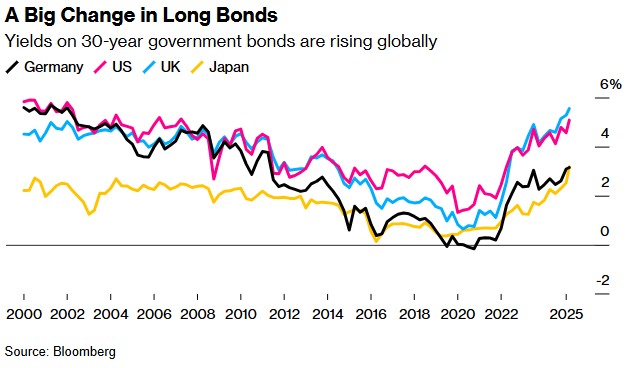
有色金属行业报告(2025.06.09-2025.06.13):地缘风险推动黄金脉冲式上涨
China Post Securities· 2025-06-17 06:32
研究所 分析师:李帅华 SAC 登记编号:S1340522060001 Email:lishuaihua@cnpsec.com 分析师:魏欣 SAC 登记编号:S1340524070001 Email:weixin@cnpsec.com 研究助理:杨丰源 SAC 登记编号:S1340124050015 Email:yangfengyuan@cnpsec.com 证券研究报告:有色金属|行业周报 发布时间:2025-06-17 行业投资评级 强于大市 |维持 行业基本情况 | 收盘点位 | | 5026.6 | | --- | --- | --- | | 52 | 周最高 | 5047.03 | | 52 | 周最低 | 3700.9 | 行业相对指数表现 2024-06 2024-08 2024-11 2025-01 2025-04 2025-06 -15% -11% -7% -3% 1% 5% 9% 13% 17% 有色金属 沪深300 资料来源:聚源,中邮证券研究所 近期研究报告 《中广核矿业(HK1164)签订新销售 框架协议,充分受益铀价上行》 - 2025.06.10 有色金属行业报告 (2025. ...
地缘政治风险推升油价 美联储再陷两难境地
Xin Hua Cai Jing· 2025-06-17 05:31
新华财经上海6月17日电(葛佳明) 在中东局势动荡的影响下,国际油价面临剧烈波动,美国通胀和经 济前景再度面临不确定性,美联储年内降息路径面临考验。 业内人士对新华财经分析表示,中东局势动荡使得原油价格大涨,一方面,市场对美国通胀预期再度被 推升,美债收益率存在上行压力,美国财政状况或进一步恶化。另一方面,油价持续飙升也会对美国经 济前景和劳动力市场造成威胁,美国经济出现"滞胀"的风险大幅上升。 美国经济前景不确定性攀升 地缘政治局势的升级引发全球避险情绪升温,鉴于极端情况下原油供应可能受到较大扰动,国际油价近 期大幅上行。6月17日早盘,纽约WTI原油和布伦特原油期货价格短线走高,布伦特原油涨幅一度逼近 2%,最高触及74.85美元/桶。 摩根大通在近期发布的报告中表示,尽管美国核心个人消费支出(PCE)通胀率已从2022年的5.6% 的 峰值降至近期2.5%的低位,但走势已出现逆转,预计到今年年底美国核心PCE将反弹至3.4%的水平。 今年以来美国消费者通胀预期飙升,而近期能源价格的飙升可能导致短期通胀预期再度攀升。在关税政 策传导的影响下,若通胀影响品类不断扩散,与通胀预期相互强化,形成通胀上升螺旋,美 ...
2025年下半年宏观经济展望:产业重塑下的宏观剧本
Minsheng Securities· 2025-06-16 09:58
Group 1: Economic Outlook - The biggest surprise in the first half of 2025 was the unpredictability of Trump's policies, leading to a divergence between expectations and actual economic performance[1] - The negative impacts of Trump's policies are expected to gradually manifest in the second half of the year, particularly affecting consumer spending and non-residential investment, which may slow down significantly[2] - The U.S. economy is projected to experience a "stagflation" environment, with inflation remaining high and economic growth slowing down, leading to a downward adjustment of overall growth expectations[31] Group 2: Policy Implications - The fiscal policy, particularly the tax reduction bill, is likely to pass Congress and be signed into law, which could boost economic expectations despite increasing debt burdens[24] - The Federal Reserve has significant policy space and may lower interest rates if signs of an economic soft landing appear, despite currently being inactive[28] - The implementation of domestic demand stabilization measures, such as enhancing the pension system and increasing subsidies, is crucial for achieving annual economic targets[3] Group 3: Asset Performance - In a "stagflation" scenario, gold is considered a viable asset choice, while the attractiveness of dollar-denominated assets is declining[2] - If U.S. Treasury bonds face risks, the likelihood of simultaneous declines in stocks, bonds, and currencies increases significantly[2] - The current economic environment suggests that gold may perform well, similar to its historical performance during previous stagflation periods[38]
【UNFX课堂】央妈按兵?中东点烽!全球市场屏息迎双风暴
Sou Hu Cai Jing· 2025-06-16 00:46
Group 1 - Global financial markets are facing a complex test due to intertwined monetary policy decisions and geopolitical risks, particularly highlighted by the upcoming "Super Central Bank Week" led by the Federal Reserve and the Bank of Japan [1][4] - The Federal Reserve's decision is the focal point, with expectations to maintain interest rates unchanged, but the communication following the meeting will be closely analyzed for insights on future rate paths [2][3] - The Bank of Japan is in a delicate transition phase after ending negative interest rates, with market expectations leaning towards maintaining current rates due to cautious statements from its governor amid external uncertainties [4][6] Group 2 - The geopolitical situation in the Middle East, particularly the escalating conflict between Israel and Iran, is causing heightened risk aversion in the markets, evidenced by declines in U.S. stocks and a surge in the VIX index [7] - There are concerns about the potential spillover of the conflict, especially regarding the threat to the Strait of Hormuz, which could lead to catastrophic impacts on the global economy if oil prices were to spike to $120-130 per barrel [8][9] - The International Energy Agency (IEA) is preparing to release strategic reserves to stabilize the market, reflecting the severity of the situation, while OPEC's criticisms highlight the differing perspectives between oil-producing and consuming nations [10]
弘则研究 中东局势风云再起,大类资产如何演绎?
2025-06-15 16:03
Summary of Key Points from Conference Call Records Industry Overview - The conference call primarily discusses the impact of geopolitical tensions in the Middle East, particularly the conflict between Israel and Iran, on various asset classes, especially oil and commodities [1][2][7]. Core Insights and Arguments - **Oil Price Dynamics**: Initial expectations of rising oil prices due to the Israel-Iran conflict were tempered by limited Iranian retaliation, leading to a price drop of three to four dollars after an initial spike [4]. Future oil price trends depend on the evolution of the conflict, with extreme scenarios including a full-scale war and blockade of the Strait of Hormuz being deemed unlikely [5]. A neutral expectation suggests high volatility followed by a gradual decline, while an optimistic scenario involves a softening of Iran's stance and potential agreements with the U.S. [5][6]. - **Macroeconomic Environment**: The current macroeconomic environment is uncertain, but there is a general optimism for oil prices in June due to seasonal demand returning and the realization of production increases [6]. The geopolitical premium on oil prices is expected to diminish, but prices are unlikely to return to previous lows [6][8]. - **Inflation and Interest Rates**: Geopolitical tensions are hindering the reduction of inflation expectations in the U.S., which may delay interest rate cuts until September [8]. The high-interest rate environment is expected to suppress global demand, impacting overall economic activity [8]. - **Commodity Market Pressures**: The commodity cycle appears weak, with U.S. inventory levels peaking and a decline in Chinese domestic demand expected to pressure commodity prices [3][12]. The domestic refined oil market is experiencing limited price increases, with a weak outlook for automotive demand [15]. - **Gold Market Trends**: The gold market is driven by geopolitical factors, with central banks, including the People's Bank of China, increasing gold reserves, indicating a strong price trend for gold [10]. Additional Important Insights - **Impact on Chemical Products**: The conflict is affecting the chemical sector, particularly methanol, where Iran is a major supplier to China. Any escalation in conflict could disrupt methanol shipments [17][18]. The market for polypropylene (PP) and polyethylene (PE) is facing oversupply and weak downstream demand, leading to profit compression [20]. - **Historical Context**: The current geopolitical situation is compared to past conflicts, such as the Israel-Palestine conflict, suggesting that while volatility may spike, a return to stability is likely [9]. - **Shipping and Logistics**: The conflict has not significantly impacted container shipping, with no immediate effects on major shipping routes [25]. However, the potential closure of the Strait of Hormuz could affect regional throughput, though the probability remains low [26]. - **Market Sentiment and Strategy**: The overall sentiment in the market is cautious, with a focus on monitoring geopolitical developments closely. Strategies may need to be adjusted based on the evolving situation, particularly in the oil and chemical markets [23][28]. This summary encapsulates the key points discussed in the conference call, highlighting the implications of the Middle East conflict on various sectors and the broader economic landscape.
宏观周报(第8期):中东冲突升级、美再加征关税,美联储还能降息吗?-20250613
Huafu Securities· 2025-06-13 13:43
Group 1: Geopolitical Impact on Oil Prices - The escalation of conflict in the Middle East, particularly Israel's airstrike on Iran, has led to a significant surge in oil prices, with Brent and WTI reaching highs of $78.5 and $74.63 per barrel, respectively, marking daily increases of 12.0% and 13.2%[3] - Historical context shows that similar geopolitical tensions in the 1970s and 1980s resulted in oil supply reductions and subsequent economic impacts, including high inflation rates in the U.S. reaching peaks of 12.2% and 11.9% for overall and core CPI, respectively[4] Group 2: U.S. Economic Policy and Inflation - The U.S. Department of Commerce announced new tariffs on various steel household appliances, which may accelerate the rebound of core inflation, previously subdued by temporary factors[5] - The core PPI in the U.S. slightly decreased by 0.2 percentage points to 2.7% in May, indicating a potential shift in inflation dynamics due to the new tariffs and rising oil prices[5] - Federal Reserve Chair Powell has expressed concerns about potential stagflation risks, suggesting that the Fed's current stance may be relatively accommodative, with low probabilities for significant rate cuts this year[5] Group 3: Domestic Economic Outlook - China's mid-range consumer goods exports have weakened recently, and the new U.S. tariffs could introduce uncertainties in export dynamics, necessitating increased fiscal support to mitigate risks[5] - The central government may need to enhance subsidies for domestic consumption of durable goods, especially if export pressures increase due to U.S. tariff policies[5] - A potential small rate cut of 10 basis points may be considered to stabilize real estate expectations and stimulate durable goods consumption amid a low U.S. dollar index[5]
白银帝国崛起
Sou Hu Cai Jing· 2025-06-13 06:59
Core Viewpoint - Silver is experiencing a resurgence as a valuable asset, driven by its dual role as a safe-haven investment and an essential industrial material, particularly in the context of rising geopolitical risks and economic uncertainty [1][4][8] Group 1: Investment Dynamics - Silver prices have surged over 20% in 2025, with domestic market funds increasing from 18 billion to 39 billion yuan, indicating a strong inflow of capital [1][2] - The price of silver has reached historical highs, with the Shanghai silver futures contract hitting 8,855 yuan per kilogram and international silver futures rising to $37.03 per ounce, marking a 23% increase year-to-date [2][3] - Institutional investors are beginning to allocate more to silver, as evidenced by the increase in silver ETF holdings, although the current allocation remains low compared to gold [7] Group 2: Industrial Demand - Over 50% of silver demand is now driven by industrial applications, a figure expected to rise to 56% by 2025, with the solar energy sector being a significant contributor [4][5] - The growth of the photovoltaic industry is projected to create a demand of 66,000 tons of silver in 2025, driven by the increased use of silver in solar panels [4][5] - Emerging technologies such as 5G, electric vehicles, and artificial intelligence are further increasing silver consumption, with electric vehicles using significantly more silver than traditional vehicles [5] Group 3: Supply Constraints - The supply of silver is facing challenges, with slow growth in global silver mining output and declining ore grades, leading to a projected shortfall of 117.6 million ounces in 2025 [5] - The low recovery rate of silver, particularly from electronic products, exacerbates the supply-demand imbalance, contributing to rising prices [5] Group 4: Market Outlook - Historical trends suggest that silver performs best during early economic recovery and rising inflation, conditions that are currently present [6] - The silver-to-gold price ratio remains high at around 90, indicating potential for silver to catch up in price relative to gold [6] - Long-term investment value in silver is supported by its financial attributes and industrial demand, suggesting that its upward trajectory may continue [7][8]
年中展望 | 美国“例外论”的终结(申万宏观·赵伟团队)
赵伟宏观探索· 2025-06-13 03:37
Core Viewpoint - The article discusses the shift in global macroeconomic narratives from "American exceptionalism" to "American denialism," driven by factors such as tariff impacts, fiscal constraints, and the implications of the "One Big Beautiful Bill Act" [2][8]. Group 1: Narrative Shift - The global macroeconomic narrative has transitioned from "American exceptionalism" to "American denialism" in the first half of 2025, influenced by tariff disruptions and trade conflicts [3][8]. - In early 2025, the S&P Global Manufacturing PMI remained above the neutral mark for three consecutive months, indicating resilience in industrial production, but fell below 50 in April [2][8]. - The IMF revised its global GDP growth forecast for 2025 down to 2.8%, with the U.S. forecast reduced from 2.7% to 1.8% [2][23]. Group 2: Economic Contradictions - The economic impact of tariffs has become a central theme, with the focus shifting to macro data validation rather than negotiation processes [4][53]. - The average tariff rate in the U.S. surged from 2.4% at the end of 2024 to approximately 16% by May 2025, marking a significant increase [4][54]. - The "One Big Beautiful Bill Act" primarily extends existing tax cuts, which may have limited economic stimulation effects but could increase long-term debt supply pressure [4][84]. Group 3: Paradigm Shift in Asset Safety - The current economic baseline for the U.S. is a slowdown without recession, with inflationary pressures expected to persist for 2-3 quarters [5][8]. - The article suggests that if the dollar and U.S. Treasury bonds no longer serve as "safe assets," it could challenge the high valuations of U.S. tech stocks and the sustainability of twin deficits [6][8]. - The transition from "American exceptionalism" to "American denialism" raises questions about the long-term viability of U.S. assets in the global market [6][8].


美债警报拉响:戴蒙“崩溃论”引热议,市场暗流究竟多凶险?
Zhi Tong Cai Jing· 2025-06-13 00:15
Core Viewpoint - Jamie Dimon, CEO of JPMorgan Chase, warns that the bond market faces a risk of "collapse" if the U.S. government fails to control the growing federal deficit, sparking widespread discussion and varied reactions [1] Group 1: Bond Market Dynamics - Dimon's comments reflect the sentiment on Wall Street during a period of significant turmoil in the bond market, with long-term bond yields rising above 5% in late May, nearing the highest levels since 2007, indicating investor concerns over holding these securities amid increasing budget deficits [2] - Despite a successful auction of 30-year U.S. Treasury bonds on June 12, concerns remain about the demand for long-term bonds from other countries, as rising yields are attributed to a slowing U.S. economy and persistent inflation above expectations [5] - The volatility in long-term bond yields is more pronounced compared to short-term bonds, as long-term bonds typically offer higher interest rates due to their longer repayment periods, leading to increased investor anxiety regarding U.S. Treasury securities [5] Group 2: Global Debt Concerns - The global debt level has reached alarming heights, with the International Institute of Finance (IIF) projecting a record $324 trillion in global debt by Q1 2025, driven by borrowing from countries like China, France, and Germany [6] - Rising inflation and interest rates make it increasingly difficult to sustain such high levels of borrowing, with concerns that continued high bond yields and poor fiscal management could lead to unmanageable debt repayment costs [6][7] - Moody's downgraded the last highest credit rating for the U.S. due to fears that the expanding debt and deficit could undermine the country's status as a primary destination for global capital [7] Group 3: Future Uncertainties - The impact of high borrowing costs on long-term bonds issued during a period of ultra-low interest rates remains uncertain, with rising yields causing unpredictable consequences in the bond market [8] - The ongoing inflation post-pandemic and potential trade policies could further exacerbate inflationary pressures, leading to higher bond yields, while also risking economic activity and complicating monetary policy decisions for the Federal Reserve [8]