
宏观政策

Search documents
冠通期货早盘速递-20250911
Guan Tong Qi Huo· 2025-09-11 10:32
Group 1: Hot News - The National Development and Reform Commission's Zheng Shanjie reported on the implementation of the national economic and social development plan this year, emphasizing the governance of key - industry production capacity and the rectification of disorderly and irrational competition [2] - In August 2025, the national consumer price index decreased by 0.4% year - on - year, and the national industrial producer price index decreased by 2.9% year - on - year, with the decline narrowing by 0.7 percentage points from the previous month [2] - The Minister of Finance, Lan Fuan, stated that more proactive macro - policies will be implemented to focus on stabilizing employment, enterprises, markets, and expectations [2] - As of the week ending September 5, U.S. commercial crude oil inventories (excluding strategic reserves) increased by 3.939 million barrels to 425 million barrels, and the Strategic Petroleum Reserve (SPR) inventory increased by 514,000 barrels to 405.2 million barrels [2] - Ningde Times' subsidiary, Yichun Times New Energy Mining Co., Ltd., aims to resume production at Jianxiawo by November, but the goal is not certain and may be adjusted [3] Group 2: Key Focus - Key commodities to focus on are urea, Shanghai copper, coking coal, crude oil, and plastic [4] Group 3: Night - session Performance - The night - session performance of different commodity sectors shows that the precious metals sector had a 30.15% increase, followed by the coal - coking - steel - ore sector with 14.41%, and the chemical sector with 12.05% [4] Group 4: Commodity Sector Fund Allocation - The percentage changes in funds allocated to different commodity sectors are presented, with some sectors having negative percentage changes and others positive [4] Group 5: Commodity Futures Main Contract Night - session Fluctuations - The涨跌幅 and position - increasing ratios of commodity futures main contracts at night are shown, but specific details are not fully described in text [4] Group 6: Big - asset Performance - Different asset classes' daily, monthly, and annual percentage changes are reported. For example, the Hang Seng Index had a 1.01% daily increase, 4.48% monthly increase, and 30.61% annual increase [6]
中信期货晨报:国内商品期货涨跌互现,能源化工短期受益中东冲突-20250911
Zhong Xin Qi Huo· 2025-09-11 05:10
1. Report Industry Investment Rating - The provided content does not mention the report industry investment rating. 2. Core Viewpoints of the Report - Overseas: The US released its August non - farm payroll data, with only 22,000 new jobs added, falling short of the previous value and expectations. The slowdown in the US labor market is becoming more evident. The weak non - farm data increases the probability of a September interest rate cut, and Trump's "recalibration" of policies is beneficial to gold. In the long run, the US fundamentals are fair, and interest rate cuts are expected to boost the fundamentals further, with a weak US dollar pattern continuing [6]. - Domestic: In August, the PPI rebounded year - on - year, while the CPI declined. The anti - involution and trade - in policies have shown initial results. In the short term, domestic assets present mainly structural opportunities. The policy - driven logic will be strengthened in the second half of the year, and there is a higher probability of incremental policies in the fourth quarter [6]. 3. Summary by Relevant Catalogs 3.1 Financial Market - **Stock Index Futures**: The market uses a dumbbell structure to handle market divergence, and the short - term judgment is a sideways trend due to the decline in incremental funds [8]. - **Stock Index Options**: The hedging and defensive approach continues, and the short - term judgment is a sideways trend, with concerns about the deterioration of option market liquidity [8]. - **Treasury Bond Futures**: The stock - bond seesaw may continue in the short term, and the short - term judgment is a sideways trend, with attention to factors such as unexpected tariffs, supply, and monetary easing [8]. 3.2 Precious Metals - **Gold/Silver**: The restart of the US interest rate cut cycle in September and the increased risk of the Fed's independence drive prices up. The short - term judgment is a sideways - up trend, with attention to the US fundamentals, Fed's monetary policy, and the global equity market trend [8]. 3.3 Shipping - **Container Shipping to Europe**: The market focuses on the game between peak - season expectations and the implementation of price increases. The short - term judgment is a sideways trend, with attention to tariff policies and shipping companies' pricing strategies [8]. 3.4 Black Building Materials - **Steel Products**: The impact of production restrictions weakens, and the price is in a low - level sideways trend. The short - term judgment is a sideways trend, with attention to the progress of special bond issuance, steel exports, and hot metal production [8]. - **Iron Ore**: The hot metal production decreases more than expected, and port inventories increase slightly. The short - term judgment is a sideways trend, with attention to overseas mine production and shipment, domestic hot metal production, weather, port inventory changes, and policy dynamics [8]. - **Coke**: After the military parade production restrictions end, the first round of price cuts begins. The short - term judgment is a sideways trend, with attention to steel mill production, coking costs, and macro sentiment [8]. - **Coking Coal**: The supply drops significantly, and the spot price weakens. The short - term judgment is a sideways trend, with attention to steel mill production, coal mine safety inspections, and macro sentiment [8]. 3.5 Non - ferrous Metals and New Materials - **Copper**: The risk of overseas recession rises, putting pressure on copper prices. The short - term judgment is a sideways - down trend, with attention to supply disruptions, unexpected domestic policies, less - than - expected dovishness from the Fed, and less - than - expected domestic demand recovery [8]. - **Aluminum Oxide**: The warehouse receipts increase again, and the price is under sideways pressure. The short - term judgment is a sideways - down trend, with attention to factors such as unexpected delays in ore复产 and unexpected increases in electrolytic aluminum复产 [8]. - **Aluminum**: Market sentiment fluctuates, and the price continues to rise. The short - term judgment is a sideways trend, with attention to macro risks, supply disruptions, and less - than - expected demand [8]. 3.6 Energy and Chemicals - **Crude Oil**: Supply pressure persists, and the short - term judgment is a sideways - down trend, with attention to OPEC+ production policies and the Middle East geopolitical situation [10]. - **LPG**: The valuation repair is over, and the short - term judgment is a sideways trend, with attention to cost - side developments such as crude oil and overseas propane [10]. - **Asphalt**: The spot prices in South China and Shandong are at parity, and the futures price is in a downward trend below 3500. The short - term judgment is a downward trend, with attention to sanctions and supply disruptions [10]. 3.7 Agriculture - **Oils and Fats**: The MPOB report is relatively bearish, and market sentiment is weak. The short - term judgment is a sideways trend, with attention to US soybean weather and Malaysian palm oil production and demand data [10]. - **Protein Meal**: The market has both long and short factors, and the price continues to fluctuate narrowly. The short - term judgment is a sideways trend, with attention to US soybean weather, domestic demand, macro factors, and Sino - US and Sino - Canadian trade wars [10]. - **Corn/Starch**: As new grains are gradually put on the market, look for opportunities to short at high prices. The short - term judgment is a sideways trend, with attention to less - than - expected demand, macro factors, and weather [10].
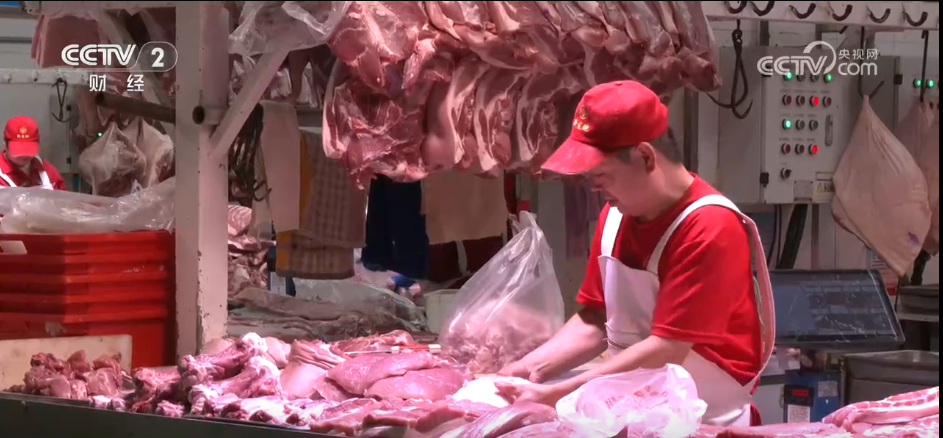
8月份消费市场运行总体平稳 “果盘子”“肉案子”物丰价降
Yang Shi Wang· 2025-09-11 03:53
Group 1 - The consumer price index (CPI) in August showed a year-on-year decline of 0.4%, primarily due to a high comparison base from the previous year and lower seasonal food price increases [1] - The core CPI, excluding food and energy, increased by 0.9% year-on-year, marking the fourth consecutive month of growth [1] - The producer price index (PPI) remained flat month-on-month, with a year-on-year decline of 2.9%, but the rate of decline narrowed by 0.7 percentage points compared to the previous month [1] Group 2 - In August, pork prices in Beijing's Xinfadi wholesale market averaged 16.87 yuan per kilogram, a decrease of 7.1% from July and 31.37% from the same period last year [3] - The decline in pork prices is attributed to a slight oversupply of live pigs and increased market supply, reaching a five-year high in daily average listings [3] - Seasonal fruits also experienced price declines due to an overlap in supply from summer fruits and new harvests of apples and pears [8] Group 3 - Industry experts predict that pork prices will stabilize in September due to factors such as school stocking and cooler weather, with prices expected to rise by only 1%-3% compared to August [5]

成材:关注周度基本面变化,钢价低位震荡-20250911
Hua Bao Qi Huo· 2025-09-11 02:21
Group 1: Report Industry Investment Rating - The industry investment rating is "oscillating weakly" [2] Group 2: Core View of the Report - The steel price is expected to continue oscillating weakly, as the current low demand with no short - term improvement and the rising production may put pressure on the price, and the market lacks new drivers, following the industry's fundamental logic [1][2] Group 3: Summary According to the Content Cost and Profit - This week, the average含税 cost of steel billets of mainstream sample steel mills in Tangshan is 2991 yuan/ton, up 20 yuan/ton week - on - week. Compared with the ex - factory price of common billets of 2990 yuan/ton on September 10th, the average loss of steel mills is 1 yuan/ton [1] - On September 10th, the average cost of 76 independent electric arc furnace construction steel mills is 3342 yuan/ton, with an average profit loss of 145 yuan/ton and a valley - electricity profit loss of 49 yuan/ton [1] Real Estate Sales - As of September 10th, according to Mysteel statistics, the total sales of 16 key real - estate enterprises from January to August 2025 are 868.862 billion yuan, a year - on - year decrease of 17%. The total sales in August are 106.451 billion yuan, a year - on - year decrease of 4.5% and a month - on - month increase of 20.2% [1] Market Situation - After the military parade, both supply and demand have recovered. Currently, the low demand and the rising production may bring more pressure on the price [1] Later Concerns - Later concerns include macro policies, supply - side production reduction, and downstream demand [2]
国泰君安期货:商品研究晨报:贵金属及基本金属-20250911
Guo Tai Jun An Qi Huo· 2025-09-11 01:55
Report Industry Investment Ratings No relevant content provided. Core Views - Gold: Non-farm payrolls are being revised downward [2]. - Silver: The gold-silver ratio is on the rise [2]. - Copper: The US dollar is under pressure, leading to a price increase [2]. - Zinc: Prices are expected to trade within a range [2]. - Lead: Declining inventories are supporting prices [2]. - Tin: Prices are expected to trade within a range [2]. - Aluminum: Prices are expected to remain strong [2]. - Alumina: Costs are providing support [2]. - Cast aluminum alloy: Prices will follow those of electrolytic aluminum [2]. - Nickel: Prices are expected to trade within a narrow range [2]. - Stainless steel: Prices are likely to trade in a volatile manner due to the tug-of-war between reality and expectations [2]. Summaries by Commodity Gold and Silver - **Fundamentals**: For gold, the Shanghai Gold 2510 contract closed at 833.42 with a daily decline of 0.13% and a night - session gain of 0.21%. For silver, the Shanghai Silver 2510 contract closed at 9796 with a daily decline of 0.51% and a night - session gain of 0.47%. ETF and inventory data also showed various changes [5]. - **News**: US inflation unexpectedly fell, with August PPI down 0.1% month - on - month, the first decline in four months, and the year - on - year growth rate of 2.6% was lower than expected [5]. - **Trend Intensity**: Gold and silver both have a trend intensity of 1 [7]. Copper - **Fundamentals**: The Shanghai copper main contract closed at 79,790 with a daily increase of 0.18% and a night - session increase of 0.50%. The London copper 3M electronic disk closed at 10,012 with a daily increase of 0.96%. Inventory and spread data also showed changes [9]. - **News**: US inflation unexpectedly fell, and Teck Resources initiated a company - wide operational review and postponed major growth projects. China's 8 - month import data of copper ore and concentrates was released, and there were incidents in the Grasberg mine and a major merger in the mining industry [9][11]. - **Trend Intensity**: Copper has a trend intensity of 1 [11]. Zinc - **Fundamentals**: The Shanghai zinc main contract closed at 22,215 with a daily increase of 0.41%, while the London zinc 3M electronic disk closed at 2867 with a daily decline of 0.21%. Inventory and spread data changed [12]. - **News**: The Chinese government announced more active fiscal policies, and China's August CPI and PPI data were released [13]. - **Trend Intensity**: Zinc has a trend intensity of 0 [14]. Lead - **Fundamentals**: The Shanghai lead main contract closed at 16,795 with a daily decline of 0.80%, and the London lead 3M electronic disk closed at 1978 with a daily decline of 0.60%. Inventory decreased [15]. - **News**: US inflation unexpectedly fell, and China's August CPI and PPI data were released [15]. - **Trend Intensity**: Lead has a trend intensity of 0 [15]. Tin - **Fundamentals**: The Shanghai tin main contract closed at 270,430 with a daily increase of 0.30% and a night - session increase of 0.93%. The London tin 3M electronic disk closed at 34,635 with a daily increase of 1.76%. Inventory and price data changed [18]. - **News**: US inflation unexpectedly fell, and there were various policy - related news [19]. - **Trend Intensity**: Tin has a trend intensity of 0 [20]. Aluminum, Alumina, and Cast Aluminum Alloy - **Fundamentals**: The Shanghai aluminum main contract closed at 20,790, and the LME aluminum 3M closed at 2622. Alumina and cast aluminum alloy also had corresponding price and trading volume data [21]. - **News**: US inflation unexpectedly fell, and there was news about the Fed's decision - making process [23]. - **Trend Intensity**: Aluminum, alumina, and aluminum alloy all have a trend intensity of 0 [23]. Nickel and Stainless Steel - **Fundamentals**: The Shanghai nickel main contract closed at 120,850, and the stainless - steel main contract closed at 12,915. Industry chain - related data such as prices and spreads also changed [25]. - **News**: There were various news in the nickel and stainless - steel industries, including production capacity adjustments, environmental issues, and government policies in Indonesia [26][27][28]. - **Trend Intensity**: Nickel and stainless steel both have a trend intensity of 0 [30].
国内核心CPI同比涨幅连续第4个月扩大 市场竞争秩序持续优化 部分行业供需关系改善
Qi Huo Ri Bao Wang· 2025-09-10 19:37
王鹏认为,PPI同比跌幅收窄,既有政策调整、需求韧性等的支撑,也有2024年同期低基数的影响。随 着扩内需、"反内卷"等政策持续落地,相关行业供需格局出现改善,部分行业原材料采购和产品销售价 格有所上涨。 银河期货首席宏观分析师王鹏在接受期货日报记者采访时表示,8月,食品烟酒类价格同比下降2.5%, 影响CPI下降约0.72个百分点。农副产品价格走弱,一方面与近期食品消费较弱、农产品供给技术提升 和居民饮食结构变化有关;另一方面也与农产品基本面有关,从库存消费比看,农副产品整体供应充 足,这是价格上行动力有限的原因之一。 对此,格林大华期货首席专家王骏认为,农产品贸易商和供应企业后期需要加大卖出保值力度,对冲企 业风险敞口。另外,部分生鲜商品正处在收获季节,可根据产量预估情况和新季商品质量进行相应保值 操作。 国家统计局城市司首席统计师董莉娟分析称,随着扩内需、促消费政策持续显效,8月PPI同比下降 2.9%,降幅比上月收窄0.7个百分点,为今年3月以来首次收窄。我国加紧实施更加积极有为的宏观政 策,一些行业价格呈现积极变化。一是国内市场竞争秩序持续优化,带动相关行业价格同比降幅收窄。 全国统一大市场建设纵深 ...
扩内需促消费政策持续显效 8月核心CPI同比上涨0.9%
Shang Hai Zheng Quan Bao· 2025-09-10 18:48
Group 1 - The core CPI has shown a continuous increase for four months, with a year-on-year rise of 0.9% in August, reflecting the effectiveness of policies aimed at expanding domestic demand and promoting consumption [1] - Prices of gold and platinum jewelry increased by 36.7% and 29.8% year-on-year in August, contributing approximately 0.22 percentage points to the CPI increase [1] - Service prices have gradually increased since March, with a year-on-year rise of 0.6% in August, contributing about 0.23 percentage points to the CPI [1] Group 2 - The PPI decreased by 2.9% year-on-year in August, but the decline has narrowed by 0.7 percentage points compared to July, marking the first narrowing since March [2] - The prices in key industries such as coal processing and black metal smelting have seen a reduction in year-on-year decline, indicating a positive change in some sectors [2] - Experts suggest that the year-on-year decline in PPI is expected to continue to narrow in the fourth quarter due to factors such as last year's base effect and the implementation of capacity governance in key industries [2] Group 3 - The PPI may enter a recovery phase supported by the optimization of export structure, global economic recovery, and deepening trade cooperation with non-US partners [3]
人大常委会|透过预算执行报告 看财政政策如何更加积极
Xin Hua She· 2025-09-10 15:47
Group 1 - The core viewpoint of the report emphasizes the implementation of a more proactive fiscal policy to ensure stable budget execution and financial operations [1][2] - The report outlines the intention to accelerate budget execution, improve fund utilization efficiency, and ensure fund security [1] - Key areas of focus include supporting employment and foreign trade, fostering new growth drivers, enhancing public welfare, and mitigating risks in critical sectors [1] Group 2 - The strategy will prioritize strengthening domestic circulation and implementing flexible macro policies to address uncertainties while ensuring high-quality development [2] - The government aims to maintain policy continuity and stability while enhancing flexibility and predictability in economic management [2]
人大常委会|透过预算执行报告,看财政政策如何更加积极?
Xin Hua She· 2025-09-10 15:38
新华社记者申铖 受国务院委托,财政部部长蓝佛安10日向十四届全国人大常委会第十七次会议报告了今年以来预算执行 情况。根据报告,今年以来,财政政策更加积极、接续发力,预算执行和财政运行总体平稳。 新华社北京9月10日电 题:透过预算执行报告,看财政政策如何更加积极? "总的看,今年以来预算执行情况总体平稳,为落实党中央、国务院决策部署提供了有力保障。"蓝佛安 说。 下一步财政政策还将如何发力?报告明确,将用好用足更加积极的财政政策。 "压实预算执行责任链条,将加快预算执行进度、提高资金使用效益和保障资金安全有机结合起来,推 动资金和政策尽快落地见效。"蓝佛安说,继续实施好提振消费专项行动,落实落细个人消费贷款和服 务业经营主体贷款贴息政策,激发养老、托育等服务消费潜力。积极发挥专项债券、超长期特别国债等 作用,加强财政与金融协同配合,将更多公共服务纳入投资支持范围,积极鼓励民间投资发展。 财政收入方面,报告显示,今年1至7月,全国一般公共预算收入135839亿元,同比增长0.1%。财政支 出方面,各级财政部门加强预算执行,保持必要支出强度,重点领域支出得到较好保障;1至7月,全国 一般公共预算支出160737亿 ...
有色日报-20250910
Guang Fa Qi Huo· 2025-09-10 07:52
产业期现日报 G 55000000 投资次输业务资格·证监控可 【2011】1292号 2025年9月10日 林喜旎 Z0020770 价格及基差 | | 现值 | 前值 | 涨跌 | 涨跌幅 | 单位 | | --- | --- | --- | --- | --- | --- | | SMM 电池级碳酸锂均价 | 74600 | 74600 | 0.0 | 0.00% | 元/吨 | | SMM 工业级碳酸锂均价 | 72350 | 72350 | 0.0 | 0.00% | 元/吨 | | SMM电池级氢氧化锂均价 | 75200 | 75350 | -150.0 | -0.20% | 元/吨 | | SMM工业级氢菌化锂均价 | 70160 | 70310 | -150.0 | -0.21% | 元/吨 | | 中日韩CIF电池级碳酸锂 | 9.45 | 9.45 | 0.00 | 0.00% | 美元/千克 | | 中日韩CIF电池级氢氧化锂 | 9.30 | 9.30 | 0.00 | 0.00% | 美元/千克 | | SMM电碳-工碳价差 | 2250 | 2250 | 0.00 | 0.00% ...