
AI科技革命

Search documents
贵金属的转折点?风浪越大鱼越贵!
Sou Hu Cai Jing· 2025-12-25 06:46
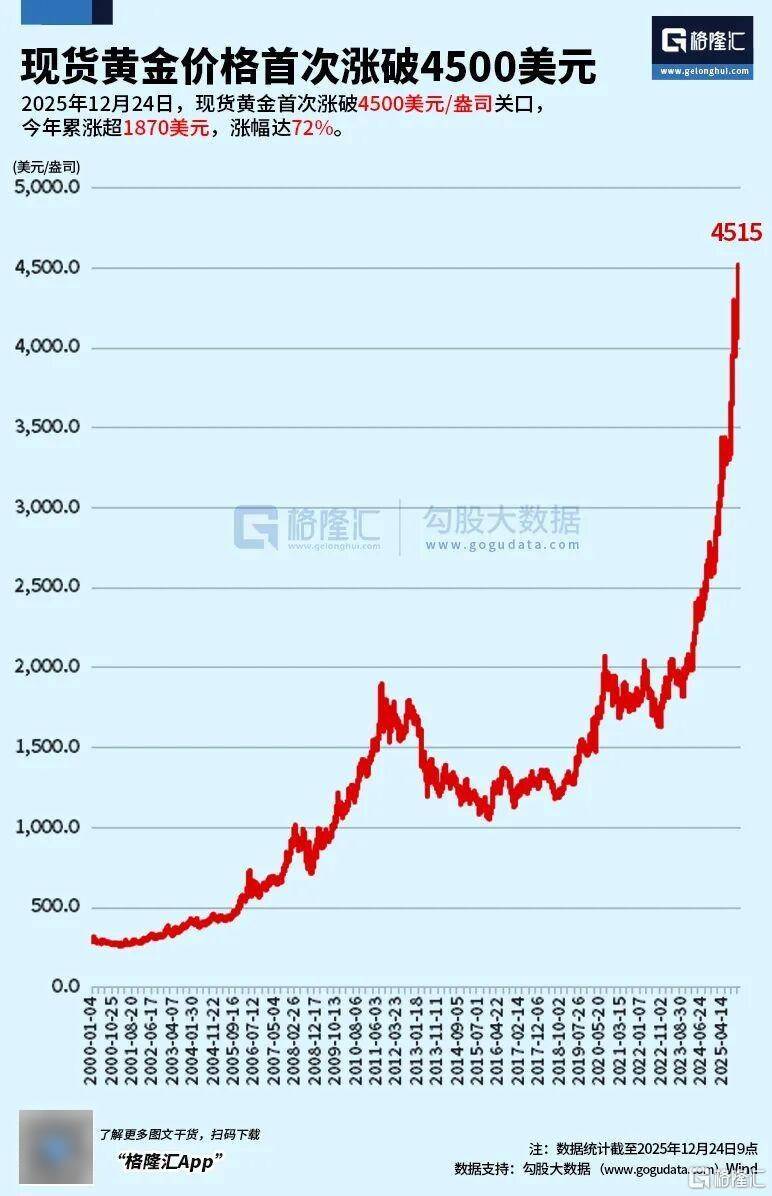
Core Viewpoint - The precious metals market is experiencing significant volatility, with investors facing both extreme bullish sentiment and sudden bearish movements, indicating a potential turning point for the sector [1][3]. Short-term Dynamics - There is a peak in bullish sentiment, with both the Shanghai Silver VIX and the U.S. SLV options volatility reaching historical highs, indicating crowded positions [2]. - A sudden drop in platinum spot prices has revealed stark funding divergences, suggesting that current market conditions may be a critical juncture for precious metals [3]. - Short-term players are advised to avoid high-risk positions, as chasing prices may lead to losses [6]. - A significant risk arises from a "passive rebalancing" event, with passive funds having to adjust their holdings according to indices, leading to potential selling pressure on silver (9% sell-off) and gold (3% sell-off) [8]. Long-term Fundamentals - The long-term bullish trend for gold is supported by four key factors: central bank purchases, anticipated interest rate cuts by the Federal Reserve, rising global debt levels, and increasing retail investor allocations [12][15][18]. - Central banks have consistently purchased over 1,000 tons of gold annually for three years, with projections for 2024 reaching 1,086 tons, indicating a strong foundation for gold prices [15]. - The Federal Reserve's expected interest rate cuts are anticipated to support gold prices, as historical data shows a negative correlation between the dollar and gold [18]. - The global debt crisis, particularly in the U.S., has created a demand for safe-haven assets like gold, which is viewed as a "no-liability asset" [18]. - Retail investors currently have a low allocation to gold (0.17% in U.S. gold ETFs), suggesting significant room for growth in this area, which could further drive up gold prices [18]. Investment Strategy - Short-term strategy should focus on risk management, with recommendations to reduce exposure to precious metals until after the BCOM rebalancing on January 15 [20]. - For mid to long-term investments, the strategy should involve buying on dips, as short-term fluctuations are seen as opportunities rather than threats [20]. - Suggested investment vehicles include gold-related ETFs for simplicity, diversified mining stocks for balanced exposure, and traditional base metals benefiting from manufacturing recovery [20].

十五五期间制造业迎来哪些新机遇?
HTSC· 2025-12-22 11:33
Group 1: Manufacturing Industry Trends - The "14th Five-Year Plan" aimed to maintain a stable proportion of manufacturing, while the "15th Five-Year Plan" shifts to maintaining a "reasonable proportion," indicating a potential decline from the current level, which is double the OECD average[2][10]. - In 2024, China's nominal manufacturing value added is projected to account for 24.9% of GDP, significantly higher than the OECD average of 12.4%[2][10]. - From 2011 to 2020, China's manufacturing value added as a percentage of GDP decreased from 31.6% to 25.7%, but the decline has slowed since 2020 due to real estate cycle adjustments[2][11]. Group 2: Investment and Growth Rates - The annualized growth rate of China's real manufacturing value added (PPP) from 2021 to 2024 is expected to be 4.6%, surpassing the global average of 1.7% during the same period[2][20]. - High-end manufacturing investment is projected to grow at an annualized rate of 12.2% from 2021 to 2024, outpacing the overall manufacturing investment growth rate of 9.5%[3][26]. - Traditional manufacturing sectors are expected to see an investment growth rate increase from 2.9% during the "13th Five-Year Plan" to an average of 8.9% from 2021 to 2024[3][27]. Group 3: Emerging Industries and Future Prospects - The "15th Five-Year Plan" emphasizes breakthroughs in high-tech industries and aims to enhance competitiveness in sectors like AI, hydrogen energy, and quantum information[3][29]. - The production of new energy vehicles is projected to rise from 340,000 units in 2015 to 13.168 million units in 2024, reflecting significant growth in the sector[3][46]. - The brain-computer interface industry is expected to grow from 2.33 billion yuan in 2022 to 3.2 billion yuan in 2024, with an annual growth rate of 17.2%[3][48].
中金:内外因素引发回调 A股中期向好逻辑未改
Zhi Tong Cai Jing· 2025-12-17 00:20
Group 1 - The core viewpoint of the report indicates that the recent weak performance of the A-share market is influenced by both internal and external factors, with external factors playing a dominant role. Despite this, the underlying logic of the current upward trend remains intact, suggesting a positive mid-term outlook for the A-share market [1][2][3] Group 2 - The report highlights three main investment themes for the current market conditions: 1) Growth sectors such as computing power, optical modules, and cloud computing infrastructure are expected to present opportunities, particularly in domestic markets. Applications in robotics, consumer electronics, intelligent driving, and software are also noted. Additionally, sectors like innovative pharmaceuticals, energy storage, and solid-state batteries are entering a growth cycle [1][6] 2) External demand is identified as a relatively certain growth opportunity, with recommendations to focus on sectors like home appliances, construction machinery, commercial buses, power grid equipment, gaming, and globally priced resources such as non-ferrous metals [1][6] 3) The report suggests monitoring cyclical reversals, particularly in industries approaching supply-demand improvement points or benefiting from policy support, such as chemicals, aquaculture, and new energy [1][6] Group 3 - The report emphasizes that the underlying drivers of the market's upward trend have not changed, with the macro policy shift since last year providing a foundation for stabilizing and recovering the market. Factors such as low interest rates, increased household deposits, and regulatory support for capital markets are highlighted as conducive to market growth [3][4] Group 4 - The report notes that the current market correction may provide a favorable opportunity for positioning ahead of the anticipated market performance in the first half of 2026. Despite limited positive catalysts in the short term, the overall valuation of the A-share market remains attractive compared to global peers and other asset classes [5][6]

科创100ETF基金(588220)覆盖电子等十大行业,机构称国产半导体市场前途可期
Xin Lang Cai Jing· 2025-12-16 06:30
截至2025年12月16日 13:50,上证科创板100指数(000698)成分股方面涨跌互现,茂莱光学(688502)领涨 4.24%,芯源微(688037)上涨4.10%,经纬恒润(688326)上涨2.85%;国盾量子(688027)领跌。科创 100ETF基金(588220)最新报价1.28元。 科创100ETF基金(588220),场外联接(A:019861;C:019862;I:022845) 券商研究方面,国信证券认为,总体而言,在重要会议为"十五五"开局之年定下积极有为的基调,以及 中外流动性宽松周期共振的背景下,A股市场估值相对合理,AI科技革命与能源革命支撑部分产业需 求,上市公司业绩改善有望助力市场继续震荡上行。 开源证券在电子行业周报中指出,半导体设备自主可控是当前兼具确定性和弹性的科技主线,近期半导 体板块领涨,但受海外科技股波动及部分成分股业绩不及预期影响,板块整体呈现分化。该机构认为, 科创100指数中半导体设备类成分股(如芯源微、中科飞测)的逆势上涨,或反映市场对国产化替代逻 辑的持续认可;而存储芯片供需紧张态势可能对相关产业链标的形成支撑,但需注意海外流动性及行业 周期波动对 ...
重要会议定调适度宽松货币政策,中证A500指数调样后新兴行业样本权重占比超51%,A500ETF龙头(563800)均衡配置各行业优质龙头资产
Xin Lang Cai Jing· 2025-12-15 06:51
Group 1 - A-shares experienced a collective decline on December 15, 2025, with the Shanghai Composite Index down 0.11%, Shenzhen Component Index down 0.71%, and ChiNext Index down 1.29% [1] - The financial sector saw a broad increase, with the insurance sector leading the market, while consumer policies boosted a rebound in the liquor sector and other food and beverage stocks [1] - The China Securities Index Company announced periodic adjustments to several indices, including the CSI 500, which added 20 new stocks, enhancing the representation of emerging industries to 51.2% [1] Group 2 - Recent economic policy discussions from the Political Bureau and Central Economic Work Conference have been positive, indicating a focus on key industries for the upcoming year, which may lead to increased support for the A-share market [2] - The People's Bank of China emphasized the continuation of a moderately loose monetary policy, aiming to stabilize economic growth and manage inflation through various monetary tools [2] - Analysts suggest that the current market valuation is reasonable, supported by the AI technology and energy revolutions, which may improve corporate performance and market conditions [2] Group 3 - The National Bureau of Statistics reported that the Producer Price Index (PPI) has risen for two consecutive months, indicating positive factors for price recovery [3] - Analysts believe that expanding domestic demand and improving supply-demand relationships are crucial for enhancing corporate operations and price recovery [3] - The market is expected to see a new wave of activity driven by structural trends and capital market reforms, with recent adjustments indicating a completion of market corrections [3] Group 4 - Overall, the structural bull market in 2025 is seen as being in a high position, with expectations for a cross-year market rally supported by key domestic meetings and favorable market sentiment [4] - Analysts recommend focusing on sectors benefiting from policy support, such as domestic production, robotics, aerospace, innovative pharmaceuticals, and energy storage [4] - There are also opportunities in cyclical sectors benefiting from "anti-involution" policies and consumer sectors that may see short-term boosts from consumption policies [4] Group 5 - As of December 15, 2025, the CSI A500 Index was down 0.60%, with significant trading activity in the A500 ETF, which saw a turnover of 5.67% and a transaction volume of 767 million yuan [5] - The top-weighted stocks in the A500 ETF accounted for 20.04% of the index, with notable gains from China Ping An and Midea Group [5] - The A500 ETF has a latest scale of 13.562 billion yuan, with a net inflow of 104 million yuan recently [5]
机构研究周报:春季躁动或提前,债市短端机会更大
Wind万得· 2025-12-14 22:36
Core Viewpoints - The tightening monetary environment is improving, and market expectations are rising, suggesting that the "spring rally" may start in mid-December [1][5] Economic Policy - The Central Economic Work Conference emphasized a policy direction of stability and progress, focusing on quality improvement and efficiency enhancement, with a commitment to a more proactive fiscal policy and necessary fiscal deficits [3] - The conference's more positive tone compared to last year is expected to boost market sentiment, particularly in the bond market, due to expectations of monetary policy easing [3] Equity Market - Huatai Securities suggests that the "spring rally" may start early due to improved monetary conditions and rising market expectations, recommending a balanced allocation between growth and cyclical stocks [5] - CICC highlights that the A-share market's valuation is relatively reasonable, supported by AI technology and energy revolutions, with a focus on large-cap growth styles [6] - Guotai Fund notes that the A-share market is entering a window of policy and liquidity resonance, suggesting preparations for the upcoming spring rally, particularly in sectors like AI and new energy [7] Bond Market - CICC's fixed income team indicates that weak financial data in November has increased the attractiveness of bond allocations, with short-term opportunities being more certain [18] - Bosera Fund points out that recent adjustments in the bond market provide good entry opportunities, supported by a favorable monetary policy environment [19] - Zheshang Securities believes that the bond market's recent rebound may be nearing its end, suggesting a defensive strategy while monitoring the equity market's potential spring rally [20] Industry Research -招商基金 emphasizes the long-term investment trends and risks in the optical communication market, driven by AI and 5G demand, while advising caution regarding technological evolution and market competition [12] - Galaxy Securities recommends focusing on technology innovation and consumer sectors, as well as financial and real estate chains, which may have allocation potential [13] - CITIC Construction Investment highlights the rapid development of the brain-computer interface industry, supported by technological innovation and policy incentives, while cautioning against competitive pressures [14] Asset Allocation - Huatai Baichuan Fund suggests that the market may return to a profit-driven trajectory, with expectations of stable domestic fundamentals and liquidity, leading to potential upward revisions in corporate earnings [22]

【笔记大咖局】2025.12.12 周五看观点(音频)
债券笔记· 2025-12-14 02:09
Group 1: Market Outlook - The global equity markets are experiencing a general decline, primarily due to fluctuating investor expectations regarding the Federal Reserve's interest rate cuts and concerns about potential bubbles in AI assets. The AI technology revolution and energy revolution are expected to create solid demand support for growth industries, leading to continuous improvement in listed companies' performance [5]. - Attention should be paid to policy signals related to real estate promotions and other relevant sectors as the year-end approaches [6]. - In November, prices across various segments of the photovoltaic industry remained stable month-on-month, while the traditional consumer goods sector is awaiting a boost in consumption sentiment [7]. - Within the financial sector, industry banks are attracting medium to long-term capital allocation due to their high dividend yields [8]. Group 2: Macro Fixed Income Insights - The Federal Reserve announced a 25 basis point interest rate cut, lowering the target range for the federal funds rate to 3.5% to 3.75%, aligning with market expectations. The Fed has also restarted its Treasury bond purchasing program to maintain ample reserves, continuing to focus on the risks to employment [11]. - Fed Chair Powell has raised the economic growth forecasts for this year and next while lowering inflation expectations, with one rate cut anticipated in each of the upcoming meetings [12]. - The outlook for U.S. Treasury yields indicates that the two-year yield may fluctuate between 3.34% and 3.74%, while the ten-year yield could range from 3.9% to 4.3%. The dollar index is expected to remain weak, oscillating between 97 and 101 [13]. - The Fed's interest rate cuts are favorable for the external environment, and domestic policy easing may help create more room for aggregate policy [14]. - The bond market should monitor the sustainability of inflation recovery, with economic growth remaining stable in the first three quarters, easing pressure on growth targets. In the first half of next year, actual growth indicators like industrial output or GDP growth will be crucial for assessing inflation recovery [15].

22.05万亿,私募行业踏上历史关键时点!多家私募共聚“金长江”私募服务系列沙龙
券商中国· 2025-12-11 03:01
Group 1: Core Insights - The Chinese private equity industry is transitioning from quantitative expansion to qualitative transformation, supported by the "Golden Yangtze" private equity empowerment plan launched by Changjiang Securities, Industrial Bank, and Securities Times [1] - As of October 2025, the private fund scale reached 22.05 trillion yuan, marking a significant increase of 1.31 trillion yuan from September, surpassing the previous historical peak of 20.81 trillion yuan in September 2023 [3] - The surge in private equity is primarily driven by private securities investment funds, which saw a record high of 7.01 trillion yuan, with a month-on-month increase of 1.04 trillion yuan, reflecting a growth rate of 17.42% [3] Group 2: Market Trends and Opportunities - The A-share market has experienced significant growth this year, with various sectors, including precious metals and industrial metals, performing well, creating a favorable environment for private equity [3] - The "Golden Yangtze" initiative aims to provide comprehensive services to private fund managers, facilitating connections between long-term capital and quality managers [6] - The commodity market is viewed as having strategic allocation opportunities due to factors such as resource scarcity, low supply growth, and a recovering global economy, which are expected to drive demand for commodities [9][10] Group 3: Investment Strategies and Insights - Factor investing is entering a new era, with a noticeable decline in factor momentum and a divergence in factors across different market segments [7][8] - Private fund managers emphasize the importance of focusing on undervalued sectors and long-term value creation, suggesting a shift towards low-valuation areas for better returns [11][12] - The ongoing technological revolution, particularly in AI, is seen as a critical opportunity for China's economic growth, with a focus on innovation and investment in leading companies [13]


收益持续亮眼!盘点年内对冲策略表现!
Xin Lang Cai Jing· 2025-12-09 10:17
(来源:好买财富) 来源:市场资讯 回看2025年,AI科技革命继续引领新的资本开支与消费周期,全球股市延续着AI科技主题主导的慢 牛。 与此同时,宽松的货币环境也利好资本市场表现,美国、日本、德国等多国股市持续刷新历史新高。 但另一方面,随着行情推进,股市估值抬升,市场波动也在加大。而且随着美联储接近降息终点,全球 宏观政策层面也有诸多不确定性。 这种环境中,一方面,中美科技资产仍具配置价值,另一方面,我们也应寻找更多与股市低相关的优质 回报流,做好合理的配置,应对潜在波动。 为了帮助大家更深入的了解当前的市场环境和资配思路,更高效的进行全球配置,我们准备了"AI科技 浪潮中的全球配置"系列文章。 本文是系列文章的第四篇,我们将详细介绍全球对冲策略这一有效的配置工具。首先,我们先复盘对冲 策略年内的业绩表现,随后一同来了解当前投资环境下全球对冲策略的配置意义。 1 全球对冲策略业绩复盘 年内各类策略普遍盈利 我们所讲的全球对冲策略,指资产管理人在全球范围内捕捉投资机会,而且具体的投资策略并不是以传 统的方式投资于传统资产,是利用多种金融工具,构建复杂的交易策略,有时既做多也做空,两头对 冲,这就是"对冲"两 ...

基金观点|运舟资本周应波:市场处于“牛市中场休息”,AI迎来“Google时刻”
Xin Lang Cai Jing· 2025-12-04 11:25
Market Overview - The stock market in November experienced fluctuations, with major technology indices undergoing adjustments, including the ChiNext Index, STAR Market 50, and Hang Seng Technology Index, while the Shanghai Composite Index has largely digested the pressure above 4000 points [1][8] - Domestic industrial sectors are advancing anti-involution policies, which are expected to stabilize and rebound industrial product prices, with the PPI deflation situation likely to improve [1][8] - The demand outlook for the domestic real estate and infrastructure sectors is weak, and the trend of domestic manufacturing investment shifting overseas is expected to continue, leading to cautious capacity expansion across various industries [1][9] Real Estate Sector - The pressure of asset deflation remains significant, highlighted by the Vanke bond default event, marking the final phase of "clearing" in the real estate industry [2][9] - Since Q3, the pace of housing price declines in first- and second-tier cities has accelerated, leading to substantial pressure on residents' asset values [2][9] - The ongoing shrinkage of real estate assets is expected to continue impacting consumer growth, necessitating macroeconomic policies in 2026 to stabilize the situation [2][9] AI Industry Insights - The AI industry is currently viewed as being in the "early stage of bubble formation," with the AI technology revolution beginning with the launch of ChatGPT 3.5 at the end of 2022, expected to last for decades [3][10] - AI infrastructure is identified as a key feature of the first phase of the AI technology revolution, akin to the historical adoption of steam engines, electricity, and the internet [3][11] - The large-scale application of AI is crucial for the sustainability of AI infrastructure, with significant user bases already established, such as 800 million weekly active users for GPT and 250 million MAU for domestic platforms [4][12] Future Outlook - The market is currently in a "healthy bull market pause," where adjustments present opportunities for research and positioning for 2026 [2][10] - The "Google moment" is anticipated to be a pivotal point for AI applications, with the potential for significant economic value creation if Google can enhance user experiences through AI models [4][12] - The focus on technology innovation and industry growth is expected to yield investment returns in the long term, despite current market adjustments [5][13]