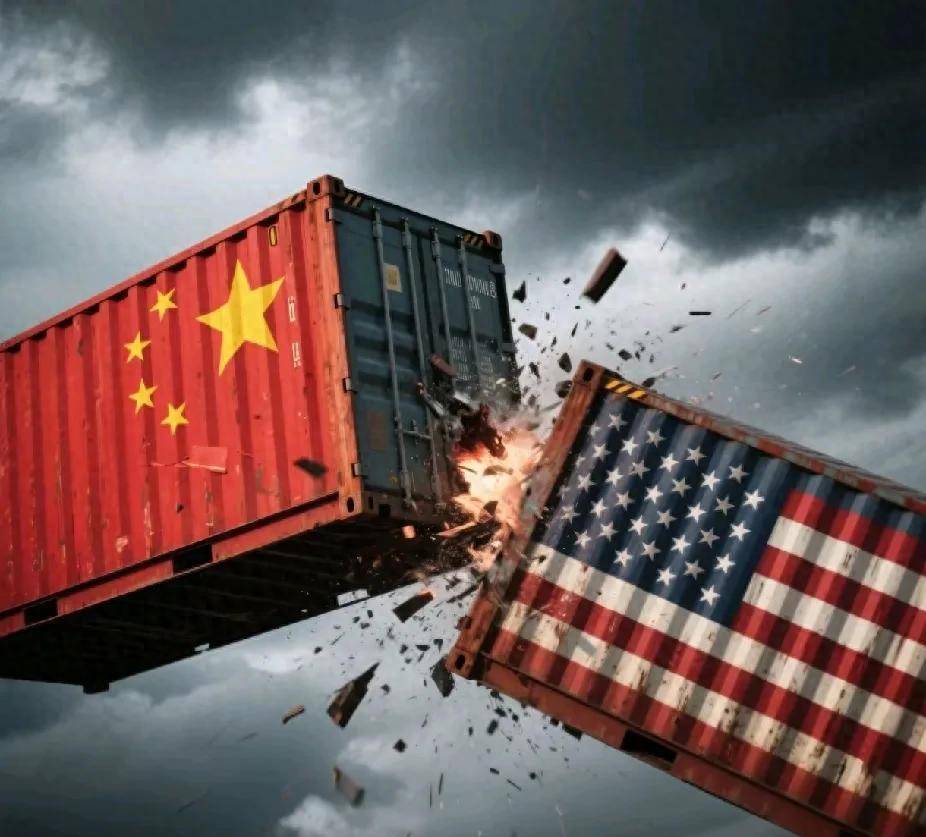
贸易战

Search documents
德媒称,欧洲拒绝了特朗普,要求联合对中国征收100%关税的建议
Sou Hu Cai Jing· 2025-09-17 04:20
Group 1 - The core message of Trump's statement emphasizes the need for NATO allies to collectively stop importing oil from Russia as a condition for the U.S. to impose sanctions on Russia [1] - Trump criticizes NATO members for not meeting their commitments and highlights the contradiction of some countries still purchasing Russian oil, which undermines their negotiating power with Russia [1] - Trump suggests imposing a 50% tariff on Chinese goods, claiming it would lead to a swift end to the war, while also blaming China for the ongoing conflict [1] Group 2 - Trump's recent calls for European allies to impose 100% tariffs on China and India are framed as a strategy to cut off Russian energy revenue, but the underlying motives appear more complex [3] - Facing pressure from the EU to facilitate peace talks between Russia and Ukraine, Trump deflects by insisting that the EU must first halt energy imports from Russia, which some countries like Hungary have rejected [5] - The proposal for high tariffs on China could lead to a trade war between China and the EU, increasing the EU's reliance on the U.S., although this strategy has not succeeded as the G7 finance ministers collectively rejected the proposal [5] Group 3 - The U.S. has already imposed a 15% tariff on EU steel and aluminum products and demands that the EU cover $135 billion in military expenses, straining transatlantic relations [6] - Historical evidence from the U.S.-China trade war suggests that high tariffs can lead to mutual harm, making the EU hesitant to repeat such a strategy [6] - The unpredictability of U.S. policies under Trump's administration has led to a lack of trust from the EU, which is also concerned about the potential for a global economic crisis if a full-scale trade war erupts among the three major economies [6] - Experts note that a 100% tariff would violate WTO rules, and the EU prefers targeted measures rather than broad tariffs, reflecting internal divisions within the Western alliance and the shifting international landscape due to China's rising power [6]


不许买俄石油,遭印度打脸后,特朗普再下通牒,再买就大幅加税
Sou Hu Cai Jing· 2025-09-17 03:26
印度和美国之间的关税至今悬而未决,中间有哪些分歧?面对强硬的印度,美国又会使出怎样的招数呢? 由于印度和美国之间至今未能达成一项"公平、互利、平衡"的双边贸易协定,近日美国总统特朗普单方面宣布将把对印度商品的关税降到25%,这也让印度 成为了这一轮贸易战中被美国收取最多关税的亚洲国家。 但是特朗普对于印度的要求还不止这些,在之前他就曾经表示,将对继续和俄罗斯进行石油贸易的国家实行100%的二级关税,而在这次的表态中特朗普再 次强调了这一点,他指出在所有人都希望俄乌停火的时候,印度却在继续购买俄罗斯的石油以及军事装备。并威胁印度将因为其和俄罗斯之间的贸易在25% 的关税之外对其施加一些"额外的惩罚"。 但是印度方面对于特朗普的威胁却不以为意,据印方官员表示,虽然面对着特朗普的强大压力,但是印度依然会继续购买廉价的俄罗斯石油。自从俄乌冲突 爆发以来,印度从俄罗斯进口的石油量增速迅猛,在2022年1月,也就是冲突爆发的一个月前,印度从俄罗斯日均原油进口量仅为6.8万桶,而到了当年6月 份,日均原油进口量猛增至112万桶,翻了十几倍,到了2023年5月,印度从俄罗斯日均进口的原油数量更是达到了215万桶的最高点。 在 ...
美银调查:投资人正将更多资金投入股市,而非持有现金避险
Sou Hu Cai Jing· 2025-09-17 02:26
Core Insights - The global economic growth expectations have significantly improved according to the latest Bank of America global fund manager survey [1] - There is an increasing bet on substantial interest rate cuts by the Federal Reserve, which has enhanced risk appetite among investors [1] Group 1: Market Sentiment - The cash holding ratio among global fund managers has remained low at 3.9% for three consecutive months, indicating a shift towards equities [1] - The net increase in stock allocation has reached the highest level in seven months, reflecting a growing confidence in the market [1] Group 2: Economic Concerns - Concerns over a global recession driven by trade wars have significantly decreased, with attention dropping from 29% in August to 12% [1] - The second wave of inflation has emerged as the primary tail risk for fund managers [1] Group 3: Interest Rate Expectations - 47% of fund managers anticipate that the Federal Reserve will cut interest rates four times or more in the next year [1] - Among these, 30% expect four cuts, 17% expect two cuts, and 29% expect three cuts, indicating a notable increase in rate cut expectations compared to previous levels [1]
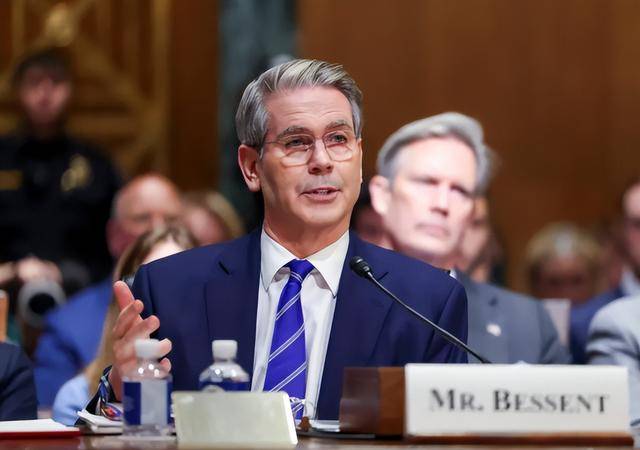
中方刚说完,美财长就出手:一边谈合作,一边让欧洲加税
Sou Hu Cai Jing· 2025-09-16 14:44
Group 1 - The core viewpoint of the article highlights the contrasting approaches of China and the U.S. during the recent economic talks in Madrid, where China expressed a willingness to cooperate while the U.S. quickly shifted to pressuring European allies to impose tariffs on Chinese goods [1][21][28] - The talks focused on key issues such as technology exports, investment environment, and bilateral trade cooperation, with China indicating a readiness to handle export approvals legally and addressing sensitive topics like TikTok without making concessions [5][21][28] - The atmosphere of the talks was noted to be less tense compared to previous encounters, with China aiming for open communication rather than covert competition, while the U.S. Treasury Secretary's immediate response was to rally European support against China [7][14][21] Group 2 - The U.S. Treasury Secretary's comments suggested a clear expectation for European nations to join in applying pressure on China, indicating that the U.S. feels it cannot tackle economic competition with China alone [9][13][25] - European countries face a dilemma as they have varying stances on China, with some advocating for cooperation while others are more cautious, and any move to impose tariffs could adversely affect their own economies [14][16][26] - The article emphasizes that the ongoing U.S.-China economic tensions could have far-reaching implications for global supply chains and consumer prices, highlighting the interconnectedness of the global economy [18][30] Group 3 - The article concludes that while the Madrid talks did not resolve all issues, they opened a channel for future communication, with China maintaining a firm stance on its principles while the U.S. appears more focused on external alliances to exert pressure [21][23][28] - The narrative suggests that the U.S. is inclined to politicize economic issues, which may create short-term advantages but is unlikely to alter the fundamental dynamics of global trade in the long run [25][30] - The need for clear rules and boundaries in international relations is underscored, as both cooperation and confrontation must be approached with caution to avoid escalating tensions that could impact the global economy [30][31]
美国发现一个“秘密”:每次对华加征关税,中国就去找非洲,为何
Sou Hu Cai Jing· 2025-09-16 07:08
Group 1 - The trade war between the US and China escalated significantly starting in 2018, with the US imposing tariffs on $34 billion worth of Chinese goods, primarily targeting industrial products [2] - By 2019, the US expanded tariffs to $200 billion worth of Chinese goods at a rate of 10%, while China retaliated with tariffs on $60 billion worth of US goods [2] - In 2024, the trade conflict intensified again, with the US imposing an additional 10% tariff on all Chinese imports on the first day of Trump's return to the White House [5] Group 2 - The agricultural sector in the US has faced severe challenges due to the trade war, with a 20% drop in purchases from China, leading to a loss of $12 billion [9] - In 2024, bankruptcy filings among US farms surged by 55%, particularly affecting the Midwest [9] - The average American household incurs an additional $2,000 in living costs annually due to tariffs, which is estimated to slow GDP growth by 0.6 percentage points [10] Group 3 - China has demonstrated strategic resilience by diversifying its import channels, with imports from Brazil and Russia reaching $80 billion in the first half of 2025 [12] - Despite a 25% decrease in exports to the US, China's overall exports grew by 6% due to the Belt and Road Initiative [12] - Trade with Africa has significantly increased, with trade volume surpassing 2 trillion yuan in 2024, marking a 14.2% annual growth since 2000 [14] Group 4 - The trade war has historical parallels to the Smoot-Hawley Tariff Act of 1930, which led to a significant contraction in global trade [16] - The US agricultural sector has faced $27 billion in losses, prompting warnings of bankruptcy from agricultural associations [16] - In contrast, China's proactive global market strategies have allowed it to maintain a GDP growth rate of over 5% in 2025 [16] Group 5 - China's exports to Africa surged by 25.9% in the first eight months of 2025, with electric vehicle sales doubling [17] - African agricultural products are filling the gap left by US imports, with a 50% annual growth rate in imports from Africa [17] - China is aiding African nations in transforming idle farmland into productive agricultural areas, fostering mutual benefits [17] Group 6 - The ongoing trade conflict highlights the dangers of unilateral protectionism and the advantages of a diversified global strategy [18] - China's deep engagement in the African market has not only mitigated the impacts of the trade war but also created new growth opportunities [18] - As US farmers struggle under the weight of tariffs, China's cooperation with Africa is establishing a new foundation for future trade dynamics [18]
US threats of more tariffs on India may just backfire
The Economic Times· 2025-09-16 06:11
Core Viewpoint - The White House aims to impose tariffs of up to 100% on China and India, the largest buyers of Russian energy, to weaken Vladimir Putin's war efforts in Ukraine, but faces challenges in gaining consensus from allies like the EU, Japan, and the UK [1][13]. Group 1: Economic Implications - A joint front against China may appeal to some European manufacturers as China has shifted from a trade partner to a rival over the past decade, potentially leading to an influx of Chinese goods in Europe due to tariff-induced rerouting [2][13]. - Protectionist measures against China are deemed anti-consumer and impractical due to China's control over critical raw materials, which could lead to negative repercussions for the global economy [5][13]. - Targeting India for its Russian oil purchases is seen as illogical since India is not a strategic rival to wealthy economies and has been strengthening trade ties with other nations, including a free-trade agreement with the UK [5][11][13]. Group 2: Political Dynamics - The U.S. administration appears reluctant to push India closer to China and Russia, despite increasing tariff threats, as it seeks to finalize a trade deal with India [6][11]. - Indian trade negotiators are in a difficult position, aiming to reduce duties on manufactured goods while facing U.S. demands to halt Russian oil purchases and increase imports of U.S. agricultural products [7][10][11]. - Modi's government risks political backlash if it concedes on agricultural issues, which could lead to protests from industrial workers who depend on agricultural income [10][11][12]. Group 3: Strategic Considerations - Modi has little to gain from aligning with a Eurasian triangle dominated by Chinese manufactured goods and Russian commodities, which could lead to suboptimal choices under U.S. pressure [11][13]. - Western politicians are cautioned against repeating past mistakes of alienating working-class voters by being overly accommodating to China, which could hinder opportunities for India's youth population [12][13].


中国不买了,美国人无能为力!美方警告:形势极其严峻!特朗普叫嚣联手27国对华征税?
Sou Hu Cai Jing· 2025-09-16 04:20
Core Viewpoint - The U.S. soybean industry is facing an unprecedented crisis due to a significant drop in orders from China, which has historically been its largest market, exacerbated by the ongoing U.S.-China trade war [1][3][4]. Group 1: Market Dynamics - The U.S. soybean association reported that this year, orders from China have fallen to zero, a rare occurrence in U.S. agricultural history [3]. - U.S. soybean production is projected at 4.3 billion bushels, the sixth highest on record, but the lack of Chinese orders has led to increased inventory pressure and financial strain on farmers [3][6]. - China's shift towards sourcing soybeans from South America has marginalized U.S. soybean sales, indicating a significant change in global supply dynamics [3][6]. Group 2: Government Response - The Trump administration's strategy of extreme pressure, including plans to impose 100% tariffs on China, aims to force China back to the negotiating table but fails to address the underlying market changes [4][6]. - Analysts suggest that the aggressive tariff policies may destabilize global markets and could lead to a chain reaction affecting local businesses in the U.S. and Europe [6][8]. - The unilateral approach of the Trump administration has not only failed to restore competitiveness in U.S. agriculture but has also intensified the industry's decline [6][8]. Group 3: Long-term Implications - The crisis facing U.S. farmers is not merely a short-term market issue but reflects deeper structural challenges within the agricultural sector [6][8]. - China's strategic procurement from South America and increased domestic soybean production have strengthened its position in the global soybean market, diminishing U.S. influence [6][8]. - For the U.S. to regain its agricultural market share, a shift from unilateralism to a more cooperative dialogue with China is essential [8].
降息临近,华尔街几乎放弃了对贸易战的担忧!
Hua Er Jie Jian Wen· 2025-09-15 12:30
Core Viewpoint - Wall Street's concerns over the global trade war are diminishing, overshadowed by expectations of Federal Reserve interest rate cuts and a strong focus on corporate earnings and artificial intelligence trends [1][2]. Group 1: Market Sentiment and Performance - The S&P 500 index has surged 32% since President Trump's announcement of global tariffs in April, with most analysts predicting further gains by year-end [1]. - Analysts are rapidly raising earnings expectations, reflecting confidence in U.S. corporate growth, which supports the bullish trend in the S&P 500 [2]. - The S&P 500's earnings expectations for 2026 have risen for nine consecutive weeks since July, aligning with levels seen in late April [2]. Group 2: Corporate Earnings and Economic Indicators - Corporate profits grew by 11% in the second quarter, exceeding prior expectations, driven by resilient consumer behavior and ongoing AI spending [3]. - United Airlines reported improved travel demand, with its CEO expressing increased optimism about the global economy [3]. - Core Consumer Price Index (CPI) rose by 0.3% from July, with a year-over-year increase of 3.1%, aligning with expectations and supporting the Fed's interest rate cut trajectory [3]. Group 3: Trade Policy and Tariff Impact - The negative impact of tariffs on individual companies is limited, primarily reflected in ISM price data rather than consumer price indices [4]. - The Bloomberg Global Trade Uncertainty Index has dropped to its lowest level of the year, contributing to market resilience [4]. - The effective tariff rate in the U.S. is currently 9%, significantly lower than the theoretical rate of nearly 18%, due to factors like transshipment and exemptions [4].
华尔街已将贸易战焦虑“抛在脑后”,聚焦降息与AI提振美股牛市
智通财经网· 2025-09-15 11:09
Core Viewpoint - The market sentiment has shifted positively towards the Federal Reserve's interest rate cuts, leading to a decrease in anxiety over the global trade war, with the S&P 500 index rising by 32% since April [1] Group 1: Market Performance - The S&P 500 index's earnings expectations for 2026 have been on the rise for nine consecutive weeks, currently at $295 per share, aligning with levels from late April [2] - The second quarter saw an 11% year-over-year increase in corporate earnings, significantly exceeding prior expectations, driven by resilient consumer demand and ongoing investments in artificial intelligence [2] Group 2: Economic Indicators - Recent inflation data from August met market expectations, indicating that the Federal Reserve's rate-cutting process will proceed as planned, with the core Consumer Price Index (CPI) rising by 0.3% from July and a year-over-year increase of 3.1% [2] - The actual tariff rate in the U.S. is approximately 9%, significantly lower than the theoretical rate of around 18%, attributed to "transshipment trade" and exemptions from new or existing tariff policies [3] Group 3: Investor Sentiment - Concerns over tariffs have diminished as the S&P 500 index rises, with the Bloomberg index tracking global trade uncertainty dropping to its lowest level of the year [3] - The focus on tariffs may resurface during the next earnings season, as the impact of tariffs is expected to become more apparent in the second half of the year [4]
中国反制有多狠?欧美承担不起联合对中国大帨加征关税的代价!
Sou Hu Cai Jing· 2025-09-15 09:13
Group 1 - The core argument is that the likelihood of the US and EU jointly imposing high tariffs on China is low due to the significant economic repercussions they would face domestically [1][10][11] - China's manufacturing sector holds a dominant position globally, accounting for approximately 33% of global manufacturing output, which is about $5.7 trillion, surpassing both the US and EU individually [3][4] - Historical context shows that previous tariff increases led to significant market reactions, with the US stock market declining and China’s stock market rebounding, indicating the interconnectedness of their economies [4][6] Group 2 - The internal conflicts between the US and EU complicate their ability to unite against China, as evidenced by the EU's dissatisfaction with trade agreements that favor the US [6][8] - Both the US and EU rely heavily on Chinese goods, with overlapping demand for key products, making it difficult to find alternative suppliers [8][9] - The ongoing high inflation in the US and EU poses a significant risk; imposing tariffs could exacerbate inflation, leading to public discontent and political repercussions [10][11] Group 3 - China's strong relationships with ASEAN and other regions provide it with a robust economic backing, contrasting with the US and EU's interdependent and often conflicting relationship [7][8] - The time required to rebuild manufacturing capabilities in the US and EU means they are not prepared to sever ties with China, as establishing new production facilities takes years [9][10]