
基建业

Search documents
读研报 | 经济“开门红”中的关键信息
中泰证券资管· 2026-03-17 11:32
Group 1 - The core viewpoint of the article highlights that the economic data for January-February shows a strong start to the year, with reports describing it as "better than expected" and "more positive than negative" [1][5] - Industrial production has accelerated significantly, with the industrial added value for large-scale enterprises growing by 6.3% year-on-year, which is 1.1 percentage points higher than the previous value, exceeding market expectations [1] - New productive forces are identified as a key driver, with the equipment manufacturing industry increasing by 9.3% and high-tech manufacturing by 13.1%, both outperforming the overall industrial growth [1][2] Group 2 - Fixed asset investment has stabilized, with a notable rebound in manufacturing, infrastructure, and real estate investments, showing a year-on-year increase of 1.8% in January-February, a rare rebound of 16.9 percentage points [1][2] - Manufacturing investment has a cumulative year-on-year growth of 3.1%, infrastructure investment (excluding electricity) has increased by 11.4%, and real estate investment has seen a reduced decline of -11.1% [2] Group 3 - Consumer spending has shown a mild recovery supported by the Spring Festival, with retail sales growing by 2.8% year-on-year, and service retail growth outpacing goods retail at 5.6% [4] - The analysis indicates that the gap between service retail and goods retail growth has widened to 3.1 percentage points, influenced by the Spring Festival holiday and changes in subsidy funding [4] Group 4 - Despite the positive economic indicators, there are concerns regarding the underlying issues, such as weak private investment, which decreased by 2.6% year-on-year, and the ongoing adjustments in the real estate market [5] - The overall economic data sets a solid foundation for the year, particularly with the acceleration of new productive forces and the positive shift in fixed investment, but the recovery of consumer confidence and private investment remains a gradual process [5]


1—2月经济数据点评:供给韧性延续,需求修复仍待观察
LIANCHU SECURITIES· 2026-03-17 09:03
Production - Industrial production maintained resilience with a year-on-year growth of 6.3% in January-February, and a month-on-month increase of 0.8% in February, significantly above historical seasonal levels[1] - The manufacturing value added grew by 6.6%, outperforming mining (6.1%) and utilities (4.7%), with high-end equipment and electronics manufacturing as key supports[1] - High-tech manufacturing products showed rapid growth, with industrial robots, integrated circuits, and power generation equipment increasing by 31.1%, 12.4%, and 21.6% respectively[1] Investment - Fixed asset investment rose by 1.8% year-on-year in January-February, recovering from negative growth in 2025[2] - Infrastructure investment surged, with narrow and broad infrastructure investments growing by 11.4% and 9.8% respectively, significantly improving from last year[2] - Manufacturing investment increased by 3.1%, a notable improvement from the 0.3% growth in 2025, driven by a 11.5% rise in equipment purchases[2][3] Real Estate - Real estate investment declined by 11.1%, but the drop was 6.1 percentage points less than the full-year decline in 2025, indicating some stabilization[4] - New construction area and completed area fell by 23.1% and 27.9% respectively, reflecting weak new construction intentions[4] - The amount of funds available for real estate decreased by 16.5%, with personal mortgage loans dropping by 41.9%, indicating weak leverage willingness among residents[4] Consumption - Overall retail sales grew by 2.8% year-on-year, slightly below the 3.7% growth in 2025, primarily due to a slowdown in automobile consumption[5] - Restaurant income increased by 4.8%, significantly higher than the previous year, driven by strong demand during the Spring Festival[5] - Essential and policy-related consumption performed relatively well, while some discretionary spending remained weak, particularly in real estate-related sectors[5]
2026年1-2月宏观经济预测报告:出口或仍为经济增速主要贡献
CMS· 2026-03-06 13:33
Economic Performance - The manufacturing PMI for February is predicted to be 49, indicating a contraction in production[4] - Industrial value added is expected to grow by approximately 5.2% year-on-year for January-February[7] - Retail sales growth is forecasted at about 2.5% year-on-year for January-February[7] Demand and Consumption - During the Spring Festival, domestic travel reached 596 million trips, with total spending of 803.48 billion yuan, marking a significant increase from 2025[6] - The box office revenue for the Spring Festival was 5.752 billion yuan, with 120 million viewers, showing a relatively average performance compared to previous years[6] - Daily transaction volume during the Spring Festival reached 393.02 billion transactions, amounting to 13.12 trillion yuan, with increases of 37.45% and 19.26% respectively compared to 2025[6] Investment Trends - Fixed asset investment is expected to decline by approximately 2% year-on-year for January-February, with real estate being a major drag[7] - New housing sales in 30 major cities fell by over 20% year-on-year in January-February, indicating continued weakness in the real estate sector[7] - Infrastructure investment is likely to maintain a steady pace, while manufacturing investment shows resilience due to equipment upgrades and high-tech expansions[7] Inflation and Prices - CPI is projected to rise by 1.2% year-on-year in February, driven by increased food prices during the Spring Festival[14] - PPI is expected to decline by 1.2% year-on-year, influenced by rising international oil prices and structural supply-demand tensions[15] Fiscal Policy - General public budget revenue is anticipated to grow by 0.5% year-on-year for January-February, supported by a low base from previous years[19] - General public budget expenditure is expected to increase by 0.8% year-on-year, reflecting proactive fiscal measures[19]
2026年宏观经济展望——全球经济再平衡|宏观经济
清华金融评论· 2026-01-25 09:20
Economic Outlook - The core viewpoint of the article emphasizes a recovery in prices and a stable GDP growth rate of around 5% for 2026, aligning with expectations. Inflation indicators are expected to gradually improve, leading to better corporate profits and household incomes. Overall, a trend of oscillating recovery is anticipated, with a key turning point expected in the second to third quarter when the comprehensive price level is projected to turn positive from negative [1][8]. GDP and Economic Growth - In 2025, China's GDP is expected to achieve a growth rate of 5%, with a similar outlook for 2026. Notably, the relationship between nominal GDP and real GDP is changing, with both showing a gradual recovery. A significant turning point is anticipated in the second to third quarter, where nominal GDP is expected to surpass real GDP, indicating a positive growth in overall inflation indicators [3]. Consumer Market - The "trade-in" policy for consumer goods has played a crucial role in supporting consumption. In 2025, the total retail sales of social consumer goods are projected to grow by approximately 3.7%, with categories related to the "trade-in" policy, such as communication equipment and home appliances, showing rapid growth. The policy's effects are expected to continue into 2026, with an expansion of coverage to include smart products and AI glasses [4]. Manufacturing Sector - The "14th Five-Year Plan" emphasizes maintaining a stable proportion of manufacturing in the economy. China's manufacturing sector is leading among major industrial countries, with improvements in quality and efficiency reflected in rising labor productivity. Emerging industries, including AI, big data, and biomedicine, are expected to drive future growth [4]. Real Estate Market - During the "14th Five-Year Plan" period, the focus in the real estate sector will be on inventory reduction. Although the inventory of unsold commercial housing has decreased, there remains a need for further de-stocking. Various policy tools have been prepared to support this, including central bank loans for affordable housing and special bonds for inventory reduction [5]. Infrastructure Investment - Debt reduction is crucial for infrastructure investment. The article categorizes provinces into "debt reduction" and "economic powerhouse" regions, noting that investment growth has been higher in economic powerhouse provinces. As debt reduction efforts progress, investment space in relevant provinces is expected to be released. New policy financial tools introduced recently are anticipated to positively impact infrastructure investment [6]. Export Performance - China's export growth has been unexpectedly strong, with a projected 5% increase in 2025 and a trade surplus of approximately $1 trillion. The resilience in exports is attributed to diversification and structural upgrades in the industry. The share of exports to the U.S. has decreased from nearly 20% to 11%, while exports to ASEAN countries have risen to 17% [7]. Monetary and Fiscal Policy - The fiscal policy for 2025 is described as very proactive, with a deficit rate of about 4% and an increase in special bond quotas. For 2026, fiscal policy is expected to remain expansive, focusing on structural optimization and potentially easing local financing restrictions [12]. Capital Market Trends - The domestic A-share market has shown an upward trend, particularly in the technology sector. The global capital markets have also experienced varying degrees of growth, with emerging markets performing notably well. The article suggests that these trends are likely to continue into 2026, driven by a weak dollar environment [14]. Currency and Gold Market - Since November 2025, the RMB has strengthened significantly, supported by a large trade surplus and increased demand for the currency. The article anticipates a continued moderate appreciation of the RMB in 2026. Additionally, gold prices have been rising, reflecting both its monetary and credit attributes, suggesting that gold will maintain its investment value in 2026 [15][16].
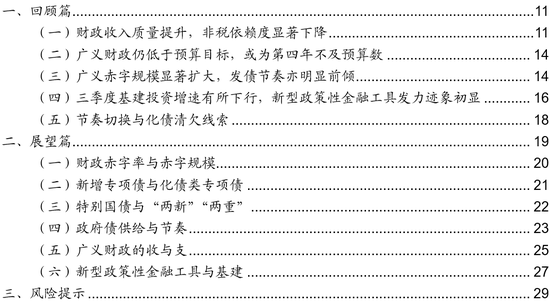
【广发宏观吴棋滢】延续必要强度,优化发力路径:2026年财政政策展望
Xin Lang Cai Jing· 2025-12-25 01:33
Group 1 - The core viewpoint of the report is that the fiscal policy for 2025 will be "more proactive," leading to significant increases in both narrow and broad fiscal deficits, with narrow deficit expected to rise by 39% and broad deficit by 27% [1][13][14] - The issuance of government bonds will be accelerated, with net supply expected to increase by 128% year-on-year in the first half of 2025, while broad fiscal expenditure is projected to show a "U"-shaped trend in 2024 and a "front high and back low" trend in 2025 [1][14] - The structure of fiscal revenue is improving, with a target growth rate for non-tax revenue set at -14.2%, indicating a reduced reliance on non-tax income [2][15][16] Group 2 - The expansion of debt resolution measures and diversification of debt resolution methods are highlighted, including the issuance of special bonds and policies targeting corporate arrears and PPP projects [2][16][17] - The expected slowdown in infrastructure investment growth in the second half of 2025 is attributed to several factors, including the completion of prior funding projects and the diversion of funds to debt resolution [3][18][19] - For 2026, the central economic work conference emphasizes the continuation of a more proactive fiscal policy, with expectations for a slight increase in fiscal strength compared to 2025 [4][20][21] Group 3 - The anticipated fiscal revenue growth for 2026 is projected to rebound to 3%-5%, driven by price increases and tax policy adjustments [5][26][27] - The introduction of new policy financial tools is expected to significantly impact fixed asset investment, with an estimated investment scale of 1.5-2 trillion yuan in 2026 [6][28][29] - The report indicates a structural shift in consumption patterns, with a focus on new types of consumption and service consumption, as traditional durable goods consumption is expected to slow down [8][32][33] Group 4 - The report discusses the expansion of debt resolution to include non-hidden debts, with measures to clear local government arrears to enterprises [9][34][35] - The importance of improving the local tax system is highlighted, with potential reforms in consumption tax expected to accelerate [10][36][37] - The overall impact on the asset side suggests that continued fiscal strength and proactive measures will support nominal growth and micro-activity in 2026 [11][37]
百亿富豪俞发祥的黄昏,祥源系200亿兑付危机警示录
Sou Hu Cai Jing· 2025-12-23 04:52
Core Viewpoint - The sudden criminal detention of Yu Faxiang, a prominent businessman with a net worth of 14.5 billion, has triggered a liquidity crisis involving 20 billion and nearly 10,000 investors, leading to significant turmoil in his companies [1][3]. Group 1: Incident Overview - On December 22, three publicly listed companies—Xiangyuan Cultural Tourism, Jiaojian Co., and Haichang Ocean Park—announced that their actual controller, Yu Faxiang, was taken away by the police for suspected criminal activities [3]. - Just two months prior, Yu was featured on the Hurun Rich List with a net worth of 14.5 billion, ranking 465th, highlighting the abruptness of his fall from grace [3]. - The crisis began in late November when financial products guaranteed by Xiangyuan Holdings started to default, with an estimated outstanding payment scale exceeding 20 billion, involving over 200 products [3]. Group 2: Financial and Operational Challenges - The company’s executive, Shen Baoshan, admitted that the firm had been relying on a "borrow new to repay old" strategy, and now the cash flow has been severely disrupted due to a halt in financing [3][4]. - Xiangyuan Holdings, which claims total assets of 60 billion, is facing a cash flow crisis due to unsold real estate worth 30 billion and a breakdown in its financing chain [3][4]. Group 3: Business Model and Risks - Yu Faxiang's business model, which heavily relies on high turnover in real estate to fund cultural tourism operations, has proven to be vulnerable, especially when the real estate market cools down [4]. - The over-reliance on financing rather than operational cash flow has exposed the company to significant risks, particularly after the cancellation of trading qualifications at the Zhejiang Financial Center [4]. - The resignation of Yu Faxiang's cousin, Yu Honghua, from all listed company positions and the judicial freezing of over 800 million shares held by Yu and his affiliates indicate potential instability in company control [4].

广发宏观:有效需求不足凸显,政策加力空间打开
GF SECURITIES· 2025-12-15 08:30
Economic Overview - Effective demand remains significantly insufficient, with industrial added value in November increasing by 4.8% year-on-year, slightly down from 4.9% in the previous period[3] - Retail sales growth has notably slowed to 1.3% year-on-year, down from 2.9% previously[3] - Fixed asset investment year-on-year remains stable at approximately -11%, consistent with the previous value of -11.2%[5] Sector Performance - High-tech industry added value rose by 8.4% year-on-year, up from 7.2% previously[4] - Exports showed resilience with a year-on-year growth of 5.9%, recovering from a decline of 1.1%[3] - Real estate sales area decreased by 17.1% year-on-year, an improvement from a 18.6% decline previously, while sales revenue fell by 24.7%, worsening from a 24.1% decline[5] Investment Trends - Fixed asset investment in November decreased by 11.1% year-on-year, with manufacturing investment down by 4.5% and real estate investment down by 30.1%[5] - The construction area for new projects fell by 27.6% year-on-year, while the area under construction dropped by 40%[5] - The total investment in fixed assets for the first 11 months of the year showed a year-on-year decline of 2.6%, with non-real estate fixed asset investment increasing by 0.8%[5] Policy Implications - The central economic work conference highlighted the need to address the "strong supply and weak demand" contradiction and to stimulate investment and consumption[7] - The potential for policy measures to strengthen demand has opened up following the release of November's economic data[7]
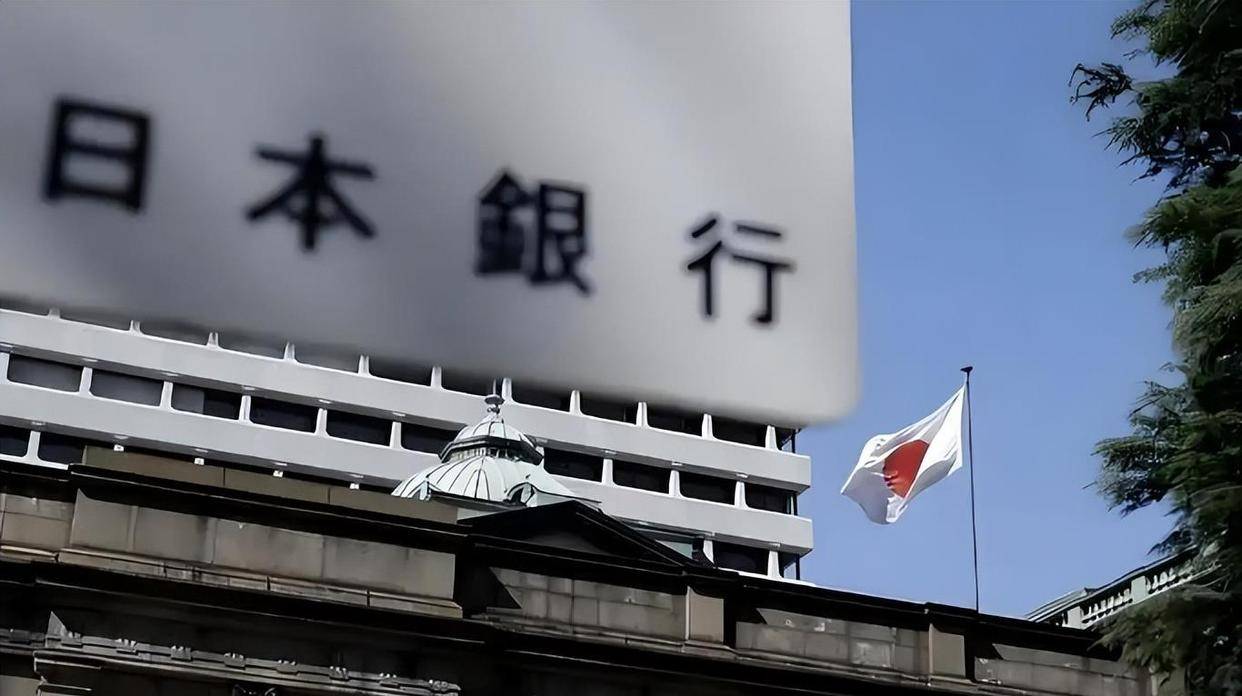
日本加息炸翻全球!21万亿资金大撤退,普通人该如何守住钱袋子?
Sou Hu Cai Jing· 2025-12-05 23:37
Group 1 - The core point of the article is that the market is more afraid of the collapse of "certainty" than bad news, as indicated by the unexpected market reactions following the Bank of Japan's hint at interest rate hikes [1][15] - Japan's bond market has become heavily manipulated by the central bank, leading to a situation where any sign of policy change results in a sharp rise in bond yields, reflecting market pressure on the central bank [2][5] - Japan's government debt is the highest among major economies, with rising interest payments and risks associated with currency depreciation, leading to a loss of investor confidence and necessitating the interest rate hike [5][7] Group 2 - The global market reacts strongly to Japan's actions due to the significant amount of carry trade, where investors borrow in low-yielding yen to invest in higher-yielding assets, causing a ripple effect across various asset classes [7][8] - The first wave of impact is felt in the U.S. tech stocks, which are particularly sensitive to rising interest rate expectations, leading to a sell-off in these high-valuation assets [7][10] - Japan's status as a major holder of U.S. Treasuries means that a return of funds to Japan could weaken demand for U.S. debt, resulting in rising yields and a revaluation of global asset prices [10] Group 3 - Ordinary investors are advised to avoid emotional trading during systemic volatility and focus on maintaining liquidity while identifying fundamentally strong assets that may have been unjustly sold off [11][15] - The article suggests that the era of ultra-low interest rates is coming to an end, leading to a pressure test for asset bubbles built on cheap capital, emphasizing the need for investors to understand the underlying logic of capital flows and interest rate cycles [15]
周末影响A股的3件大事,金融监管发声力挺,稳市箭在弦上!
Sou Hu Cai Jing· 2025-10-26 17:20
Core Viewpoint - The A-share market experienced significant volatility, with retail investors aggressively buying while institutional investors were quietly reducing their positions, raising questions about the sustainability of the recent market rally [1][7]. Group 1: Economic Policies and Market Signals - The State Council emphasized the need for impactful policies and reforms to stimulate economic growth, indicating a commitment to maintaining economic momentum [3]. - The "15th Five-Year Plan" is expected to focus on sectors like infrastructure, new energy, and high technology, which are likely to benefit from government support [3]. - Financial regulatory bodies collectively stressed the importance of market stability, with the central bank injecting liquidity through a 900 billion MLF operation [5]. Group 2: Market Dynamics and Investor Behavior - There is a notable divergence between retail and institutional investor behavior, with retail investors betting on short-term gains while institutions remain cautious, leading to a net sell-off by active funds [7]. - The recent U.S. CPI data suggests potential interest rate cuts by the Federal Reserve, which could influence A-share market dynamics, although foreign investment remains hesitant [9][10]. - The current market environment is characterized by a tug-of-war between policy support and institutional caution, indicating a complex trading landscape for investors [12].

全面解读三季度经济:4.8%的成色
GOLDEN SUN SECURITIES· 2025-10-20 12:19
Economic Overview - Q3 2025 GDP growth is 4.8%, down from 5.2% in Q2, aligning with market expectations[1] - Industrial output in September increased by 6.5%, up from 5.2% in the previous month[1] - Retail sales growth in September is 3.0%, a decline from 3.4% in August[1] Investment Trends - Fixed asset investment from January to September decreased by 0.5%, down from a previous growth of 0.5%[1] - Real estate investment fell by 13.9% year-on-year, worsening from a decline of 12.9%[1] - Broad infrastructure investment grew by 3.3%, down from 5.4%[1] Consumption Insights - Retail sales in September showed a continuous decline, marking the fourth consecutive month of decrease[5] - The impact of the "trade-in" policy is diminishing, contributing to lower consumer spending[5] - September's retail sales growth was below market expectations of 3.1%[5] Future Outlook - To achieve the annual GDP target of 5%, Q4 growth needs to reach at least 4.4%[4] - Short-term policies may increase but are expected to be more supportive rather than transformative[4] - Key areas to monitor include central bank actions, fiscal policy effectiveness, and export performance[4]