服务业

Search documents
受库存过剩、不确定性飙升等多重因素影响 法国6月制造业和服务业双双走弱
news flash· 2025-06-23 07:25
Core Viewpoint - The French private sector activity further contracted in June, with both manufacturing and services weakening due to multiple factors including inventory surplus and rising uncertainties [1] Manufacturing Sector - The manufacturing PMI and composite PMI (including services and manufacturing) both fell below expectations in June [1] - Manufacturing is impacted by customer inventory surplus, challenging market conditions, and order delays [1] - New orders have declined for the 13th consecutive month, with factory orders experiencing the largest drop since February [1] Geopolitical Factors - Geopolitical tensions, such as tariff uncertainties and the conflict between Israel and Iran, have also affected business activity [1] - Economic outlook is described as gloomy due to weakened domestic demand for goods and declining new orders [1] - The escalation of the Middle East situation further exacerbates uncertainties surrounding global trade and competition [1]
美股美债美元分别在定价什么?
2025-06-23 02:09
Summary of Key Points from Conference Call Records Industry or Company Involved - The discussion primarily revolves around the U.S. stock market (美股), U.S. Treasury bonds (美债), and the U.S. dollar (美元) Core Insights and Arguments 1. **Recent Stock Market Trends**: The U.S. stock market has rebounded recently, driven by retail investor sentiment and capital, particularly in small-cap tech stocks, while institutional investors remain cautious due to concerns over AI technology slowdown, wealth disparity, and fiscal issues [1][3][4] 2. **Foreign vs. Domestic Investor Sentiment**: Foreign investors are more cautious than U.S. investors, as they face currency risk in addition to stock performance and valuation risks. U.S. investors focus more on asset class rotation and are less concerned about currency fluctuations [5][6] 3. **Short-term vs. Long-term Pricing Mechanisms of U.S. Treasuries**: Short-term pricing reflects recession and rate cut expectations, while long-term pricing is influenced by concerns over fiscal sustainability and the impact of trade wars on dollar credibility. The yield curve has steepened, indicating differing market expectations for economic conditions over time [7][9] 4. **Economic Data Impact**: Recent mixed economic data suggests a weakening labor market and declining consumer sentiment, which may lead to reduced economic activity and affect short-term pricing of U.S. Treasuries [8][10] 5. **Tariff Wars and Their Effects**: The ongoing tariff wars have led to increased long-term premiums on U.S. Treasuries due to concerns over fiscal sustainability and dollar credibility. However, these tariff threats are expected to diminish around August [9][12] 6. **Federal Reserve Policy Outlook**: The Federal Reserve may consider rate cuts in response to signs of economic weakening, with expectations of two or more cuts in the second half of the year [10][11] 7. **Long-term Challenges for the U.S. Economy**: The U.S. economy faces challenges such as a weak labor market, declining consumer willingness to spend, and potential recession risks, compounded by trade disputes and tariff threats [11][12] 8. **Predictions for the Dollar**: There is a prevailing market expectation that the dollar will enter a long-term weakening cycle, potentially dropping to around 70, reflecting skepticism about the current administration's ability to address fiscal sustainability [17][25] 9. **Impact of Trump's Policies**: Trump's policies have raised concerns about the long-term sustainability of U.S. debt and the dollar's value, with market sentiment leaning towards a bearish outlook on his reforms [13][25] 10. **Emerging Trends in Currency**: The trend of de-dollarization is accelerating, particularly since early 2025, as the dollar is increasingly used as a bargaining chip in trade negotiations [14][15][28] Other Important but Possibly Overlooked Content 1. **Behavioral Differences Between Retail and Institutional Investors**: Retail investors are engaging in short-term speculative trading, while institutional investors are more focused on long-term issues and risk management [6][22] 2. **Role of Stablecoins**: Stablecoins are gaining traction as a digital currency alternative, but they do not fundamentally resolve underlying issues related to U.S. debt and fiscal sustainability [16][19] 3. **Gold as an Alternative Asset**: Gold is viewed as a potential beneficiary of the dollar's weakening, although its long-term prospects remain uncertain due to various economic factors [26][27] 4. **Internationalization of the Renminbi**: The process of renminbi internationalization is accelerating, with expectations of appreciation due to China's growing economic significance [28] This summary encapsulates the key points discussed in the conference call records, providing insights into the current state and future outlook of the U.S. stock market, Treasury bonds, and the dollar.
Pre-Markets Climb on Rate Cut Visibility
ZACKS· 2025-06-20 15:26
Market Overview - Pre-market indexes are showing a slight increase, with the small-cap Russell 2000 up more than +1% [1] - The Dow is up +114 points, S&P 500 +14 points, Nasdaq +62 points, and Russell +25 points, with only S&P 500 and Nasdaq showing year-to-date gains [2] Economic Indicators - The Philly Fed manufacturing index for June is at -4.0, marking the third consecutive month of decline, with lower readings in business conditions, capital expenditures, new orders, and prices paid [3] - The Employment Index has dropped to -9.8, indicating a potential softening labor market in the U.S. [3][4] Federal Reserve Outlook - The decline in the Employment Index may create an opportunity for the Federal Reserve to consider lowering interest rates, although worse employment numbers would need to be observed first [4] Upcoming Economic Data - The U.S. Leading Economic Indicators (LEI) report for May is expected to show a marginally negative headline of -0.1%, improving from -1.0% in April [6] - The Coincident Economic Index (CEI) has recovered from Covid-era lows, indicating current economic conditions are improving [7] Future Market Expectations - A significant week for economic data is anticipated, including reports on the housing market, Services and Manufacturing PMI, Durable Goods, Jobless Claims, and Personal Consumption Expenditures (PCE), which are crucial for future Fed monetary policy decisions [8]



宏观经济周报:政策动向等待数据确认-20250620
BOHAI SECURITIES· 2025-06-20 11:11
宏观经济分析报告 | | 政策动向等待数据确认 | | --- | --- | | | -宏观经济周报 | | 分析师:周喜 | SAC NO: S1150511010017 2025年6月20日 | | 证券分析师 . | 就外围环境而言,美国方面,尽管与 GDP 联系更为密切的"控制组"零售销 | | 周喜 | 售 5 月环比增速较此前有所改善,但在前期抢购热潮消退下,整体零售销 | | 022-28451972 | | | zhouxi@bhzq.com | 售环比增速还是现近 1 年以来最大降幅,特别是汽车销售成为主要拖累。 | | | 另外,代表服务业的餐厅和酒吧销售额环比增速也出现大幅下降。中美临时 | | 宋亦威 | 关税协议有助于短期消费者情绪缓和,但更实质的劳动力市场走弱风险仍 | | SAC NO: S1150514080001 | 会给消费带来压力。同样,5月工业产出也释放出经济放缓的信号,剔除波 | | 022-23861608 | | | songyw@bhzq.com | 动较大的汽车制造业外的其他制造业产出环比增速连续两月下滑,尚在讨 | 研 究 报 F 周 报 有色金属价格涨跌 ...
原油上冲力量可能大幅超预期
Ge Lin Qi Huo· 2025-06-20 09:01
1. Report Industry Investment Rating No relevant content provided in the report. 2. Core Views of the Report - The geopolitical risks in the Middle East are escalating, and the upward momentum of crude oil prices may significantly exceed expectations. The global economy is still on an upward trajectory, but if crude oil prices skyrocket, there will be a time lag in the transmission of global inflation caused by the increase in oil prices [15]. - With the shift of Israel's goal from destroying Iranian nuclear facilities to overthrowing the Iranian regime and the high probability of US military involvement, the Middle East is likely to face greater - scale turmoil and chaos, and the upward potential of crude oil prices may far exceed expectations [47]. - The sharp rise in crude oil prices is expected to drive a collective increase in energy and chemical products. The global large - scale institutional investors are continuously reducing their holdings of US assets and reallocating to European and Chinese assets, which is beneficial to A - shares [47][53]. 3. Summary by Relevant Catalogs Global Economic Outlook - **US Economy** - In April, US retail and food sales reached $715.4 billion, with a year - on - year increase of 3.3%, indicating strong consumer spending [16]. - In May, the US core CPI increased by 2.8% year - on - year, with a month - on - month increase of 0.2%. The market expects the Fed to start cutting interest rates in September [18]. - The final value of the US Markit manufacturing PMI in May was 52%, showing continued expansion in the manufacturing sector. In the same month, manufacturing prices continued to rise rapidly, and service prices accelerated their increase [20][22]. - In April, the number of job openings in the US was 7.39 million, and the number of hires reached a one - year high, indicating a tightening labor market [25]. - In May, the hourly wage of non - agricultural enterprises in the US was $36.24, with a year - on - year growth rate of 3.9% [28]. - In April, US consumer goods imports returned to normal, with a year - on - year increase of 5.6%. The import amount of capital goods was $90.5 billion, second only to that in March, indicating an accelerated return of the manufacturing industry [31][33]. - In April, the monthly value of US service exports reached $98.8 billion, a new high for the year, showing the strength of the service industry [36]. - In April, the year - on - year growth rate of US wholesalers' inventories was 2.3%, and that of manufacturers' inventories was 0.9%, indicating an active inventory replenishment state [39]. - **European Economy** - On June 5th, the ECB cut interest rates by 25 basis points for the eighth time in a year, to 2% [41]. - Germany launched the largest - scale military expansion since the Cold War, with a 30% increase in military strength, which is expected to boost the manufacturing industries in Germany and the Eurozone [43]. - **Indian Economy** - In May, India's manufacturing PMI continued to expand, and its manufacturing and service industries have been expanding for more than three years [45]. Asset Allocation - **Crude Oil and Chemicals** - The shift of the Israeli - Iranian conflict and the potential US military intervention may lead to a significant increase in crude oil prices, which will drive up the prices of energy and chemical products [47]. - Iran's liquefied petroleum gas accounts for 28% of China's imports, and high - sulfur fuel oil accounts for 21% of China's imports. Iranian refineries have started preventive shutdowns, and the supply gap of chemical products after the shutdown cannot be quickly filled [49][50][51]. - Iranian refineries' preventive shutdowns have led to Chinese large - scale private refineries starting preventive production cuts to prevent disruptions in Iranian crude oil supply [52]. - **Financial Assets** - Global large - scale institutional investors are continuously reducing their holdings of US assets and reallocating to European and Chinese assets, which is beneficial to A - shares. A - shares are in a defensive state, and the bank ETF has reached a new high [53][54].
5月消费超预期,投资增速回落
Ge Lin Qi Huo· 2025-06-20 09:01
1. Report Industry Investment Rating - Not mentioned in the provided content 2. Core Viewpoints of the Report - The overall performance of the main contracts of Treasury bond futures this week was a volatile upward trend, with the 30 - year variety showing a relatively strong trend. The overall environment is favorable for the bond market, and Treasury bond futures may experience a slightly more volatile trend. For trading - type investments, a band - operation strategy is recommended [5][37][38] 3. Summary by Related Catalogs Treasury Bond Futures Market - This week, the main contracts of Treasury bond futures showed a volatile upward trend. By the end of the week, the 30 - year Treasury bond rose 0.71%, the 10 - year Treasury bond rose 0.14%, the 5 - year Treasury bond rose 0.12%, and the 2 - year Treasury bond rose 0.09% [5] Consumption Data - In May, the total retail sales of consumer goods reached 41326 billion yuan, a year - on - year increase of 6.4%, exceeding the market expectation of 4.9%. From January to May, the total retail sales of consumer goods increased by 5.0% year - on - year. The retail sales of consumer goods excluding automobiles were 184324 billion yuan, an increase of 5.6% [8] - In May, driven by the trade - in policy, the retail sales of household appliances and audio - visual equipment, communication equipment, cultural and office supplies, and furniture in units above the designated size increased by 53.0%, 33.0%, 30.5%, and 25.6% respectively. The sales of basic daily necessities and some upgraded consumer goods also showed good growth momentum. The retail sales of automobiles in units above the designated size increased by 1.1% year - on - year [10] Investment Data - From January to May, the national fixed - asset investment increased by 3.7% year - on - year, lower than the market expectation of 4.0%. Among them, the broad - based infrastructure investment (including electricity) increased by 10.42%, the narrow - based infrastructure investment (excluding electricity) increased by 5.6%, the manufacturing investment increased by 8.5%, and the real estate development investment decreased by 10.7% [13] Real Estate Market - From January to May, the sales area of newly - built commercial housing nationwide was 35315 million square meters, a year - on - year decrease of 2.9%, and the sales volume was 34091 billion yuan, a decrease of 3.8% [15] - In the first half of June, the average daily transaction area of commercial housing in 30 large - and medium - sized cities was 220,000 square meters, a year - on - year decrease of 10% [17] - In May, the sales prices of second - hand residential properties in first - tier cities decreased by 0.7% month - on - month, with the decline rate expanding by 0.5 percentage points compared to the previous month. The sales prices of second - hand residential properties in second - and third - tier cities decreased by 0.5% month - on - month, with the decline rate expanding by 0.1 percentage points [21] Service Industry and Industrial Production - In May, the national service industry production index increased by 6.2% year - on - year. Among them, the production indexes of information transmission, software and information technology services, leasing and business services, and wholesale and retail industries showed relatively fast growth [23] - In May, the added value of industrial enterprises above the designated size increased by 5.8% year - on - year, slightly exceeding the market expectation of 5.7%. The product sales rate of industrial enterprises above the designated size was 95.9%, a year - on - year decrease of 0.7 percentage points [26][28] Unemployment Rate - In May, the national urban surveyed unemployment rate was 5.0%, a decrease of 0.1 percentage points compared to the previous month, and the same as the same period last year [31] Capital Market Interest Rates - This week, the capital market interest rates remained stable. The weighted average of DR001 was 1.37%, and the weighted average of DR007 was 1.52%. The average issuance rate of one - year AAA inter - bank certificates of deposit was 1.65%, a slight decline. The loan prime rate (LPR) announced on June 20 was the same as last month [34] Market Logic and Trading Strategy - The market logic is that from January to May, the fixed - asset investment growth rate was lower than market expectations, while May's consumption growth was significantly better than expected. Exports maintained a relatively high positive growth, industrial production grew steadily and rapidly, the unemployment rate decreased slightly, and the social financing scale and credit data were close to market expectations. The overall environment is favorable for the bond market [37] - The trading strategy is that trading - type investments should adopt a band - operation strategy [38]
8月降息悬了?英国5月通胀3.4%仍居高位,中东风暴再掀14%油价冲击波
Zhi Tong Cai Jing· 2025-06-18 07:58
Group 1 - The UK inflation rate remains at its highest level in over a year, with persistent price pressures causing concern [1] - The Consumer Price Index (CPI) year-on-year growth rate fell from a revised 3.5% in April to 3.4% in May, slightly exceeding economists' expectations of 3.3% [1] - The core inflation rate in the services sector decreased from 5.4% to 4.7%, yet it remains within a historically high range [1] Group 2 - The UK Office for National Statistics acknowledged a data error regarding vehicle consumption tax, correcting April's inflation rate to 3.4% instead of the previously reported 3.5% [1] - The May price trends exhibited structural differentiation, with falling costs for airfares and fuel being offset by rising food prices, particularly for chocolate and meat, as well as furniture and household goods [1] - Financial markets reacted sensitively to the inflation data, with the British pound rising 0.3% to a session high of 1.3462 USD [2] Group 3 - Market pricing indicates that investors still expect the Bank of England to cut interest rates by 25 basis points within the year, although there is disagreement on the timing [2] - The decision-making process faces multiple challenges, including signs of economic slowdown and a cooling labor market, alongside unexpectedly sticky service sector inflation [2] - Despite widespread expectations that the Bank of England will maintain interest rates at the upcoming meeting on June 19, there remains uncertainty about the initiation of a loosening cycle in August [2]

宏观经济宏观月报:5月增长动能从出口与投资转向消费-20250616
Guoxin Securities· 2025-06-16 13:12
Economic Growth - In May, the industrial added value above designated size grew by 5.8% year-on-year, a decrease of 0.3 percentage points from the previous month[1] - The total retail sales of consumer goods reached 41,326 billion yuan in May, with a year-on-year growth of 6.4%, accelerating by 1.3 percentage points from the previous month[1] - Fixed asset investment (excluding rural households) in May was 191,947 billion yuan, growing by 3.7% year-on-year, down by 0.3 percentage points from the previous month[1] Consumption and Investment Trends - The monthly GDP growth rate for May was approximately 5.0%, a slight decrease of 0.1 percentage points from April, aligning with the annual economic growth target[2] - Domestic consumption growth significantly increased in May, offsetting the decline in investment and export growth, indicating a shift in economic momentum towards consumption[2] - The government’s focus on boosting consumption is expected to enhance its role in economic growth in the second half of 2025[3] Employment and Unemployment - The urban surveyed unemployment rate in May was 5.0%, down by 0.1 percentage points from the previous month, indicating an improvement in employment conditions[1][17] - The unemployment rate in major cities also showed a similar trend, reflecting seasonal adjustments and improvements in the job market[17] Export and Import Performance - The total import and export value in May was 38,098 billion yuan, with exports at 22,767 billion yuan, growing by 6.3%, while imports decreased by 2.1%[1] - The decline in both exports and imports suggests a cooling off from previous "export rush" activities[47] Inflation and Price Trends - The Consumer Price Index (CPI) in May remained stable year-on-year at -0.1%, while the core CPI increased by 0.6%, indicating a mild upward trend in core prices[51] - The Producer Price Index (PPI) saw a year-on-year decline of 3.3%, with the drop in production material prices being a significant factor[63]
A股的3400点突围战开始了丨智氪
36氪· 2025-06-15 09:41
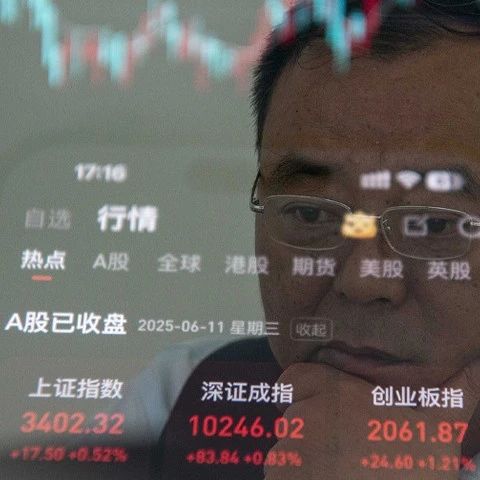
Core Viewpoint - The article discusses the challenges faced by the Shanghai Composite Index in breaking through the 3400-point barrier, highlighting the current high valuation levels and the lack of supportive policies or improved earnings expectations as key obstacles [4][10]. Valuation Analysis - The static PE ratio of the Wind All A (excluding financials) is currently at 31.51 times, which is at the 49th percentile since 2000, the 54th percentile over the past decade, and the 100th percentile over the last three years, indicating that the market is nearing its high tolerance for valuations [6][10]. - Compared to global equity markets, the valuation of Wind All A (excluding financials) is relatively high, with the Nasdaq at 44 times, S&P 500 (excluding financials) at approximately 30 times, and the Hang Seng Tech Index at 21 times, suggesting that A-shares lack a solid foundation to maintain levels above 3400 points [9][10]. Market Conditions - The article emphasizes that without new incremental policy support or significant improvements in earnings expectations, the market is unlikely to sustain levels above 3400 points. Current trade environment pressures limit the feasibility of large-scale policy stimulus [10]. - The Producer Price Index (PPI) has shown a continuous decline, with a year-on-year drop of 3.3% in May, indicating that A-share earnings are unlikely to improve in the near term [10]. Future Market Outlook - The market is expected to experience volatility, with a higher probability of downward movement. The focus will likely shift towards sectors with more predictable earnings, suggesting a strategy of seeking certainty and avoiding underperforming stocks [10][11]. - In the absence of significant changes in policies or PPI, a notable rise in the Shanghai Composite Index above 3400 points would be seen as a signal to reduce positions rather than increase them [11]. Structural Opportunities - The article outlines different market styles based on historical data since 2015, indicating that stable styles (e.g., utilities, consumer staples) are favored during external risks or tightening policies, while cyclical styles (e.g., materials, industrials) thrive in improving economic conditions [13][14]. - Growth styles (e.g., technology, emerging industries) depend on upward industry trends, policy support, and liquidity, while consumer styles are closely tied to economic recovery and consumer confidence [15][16]. - Currently, the market environment is characterized by weak earnings and low capital inflows, which is unfavorable for cyclical, growth, and consumer styles, but relatively beneficial for stable and financial styles [19]. Investment Recommendations - The article suggests a balanced allocation strategy, focusing on sectors with potential marginal improvements such as petrochemicals, brokerages, non-ferrous metals, military, and electric power, as well as industries aligned with policy and industry trends like AI applications, gaming, communication, and semiconductors [19].
深圳喜提中央“大礼包”!拟从八个方面兑现→
第一财经· 2025-06-14 11:42
Core Viewpoint - The article discusses the recent issuance of the "Opinions on Deepening Reform and Innovation in Shenzhen Comprehensive Reform Pilot" by the central government, which provides significant reform measures for Shenzhen as it approaches its 45th anniversary as an economic special zone. The measures are seen as highly valuable and impactful, comparable to those introduced during the 40th anniversary of the special zone's establishment [1]. Group 1: Major Reform Tasks - Shenzhen will implement a series of major reform tasks focusing on four areas: innovation in education and technology talent systems, deep integration of innovation, industry, finance, and talent, expansion of cooperation with Hong Kong and Macau, and the construction of a modern international innovative city [2]. - The reform of the education and technology talent system is a key focus, aiming to attract and cultivate diverse talent without restrictions on origin or background [2]. Group 2: Economic Development and Integration - The integration of the "four chains" (innovation chain, industry chain, finance chain, and talent chain) is crucial for Shenzhen's industrial development, with an emphasis on high-quality economic growth through the empowerment of the real economy by finance, technology, and data [2]. - The article highlights the support for insurance funds to invest in private equity and venture capital funds in specific fields, promoting more investments in technological innovation [2]. Group 3: Expansion of Open Economy - Shenzhen aims to enhance its service trade by promoting various sectors such as gaming, software outsourcing, cross-border finance, and international logistics, establishing itself as a strategic base for high-end service exports [3]. - The city will continue to push for greater openness in its economy, with specific measures to innovate and enhance service trade [3]. Group 4: Modernization and Governance - The goal of becoming a globally influential modern metropolis includes deepening digital government reforms and improving social governance through the application of artificial intelligence [4]. - Shenzhen plans to enhance public services and ensure a better quality of life for residents and visitors through improved governance and service delivery [4]. Group 5: Market Access and Resource Allocation - Shenzhen will further relax market access, exploring new mechanisms for artificial intelligence-assisted medical devices and improving low-altitude flight service systems [5]. - The city will facilitate access to resources and streamline the market for various factors, including labor, with a focus on attracting high-skilled talent [5]. Group 6: International Standards and Business Environment - Shenzhen will align with high international trade standards, using the Qianhai-Shekou Free Trade Zone as a testing ground for new economic rules [6]. - The city aims to optimize its business environment by enhancing administrative efficiency, legal frameworks, and overall industry conditions to support economic activities [6][7].