
原油

Search documents
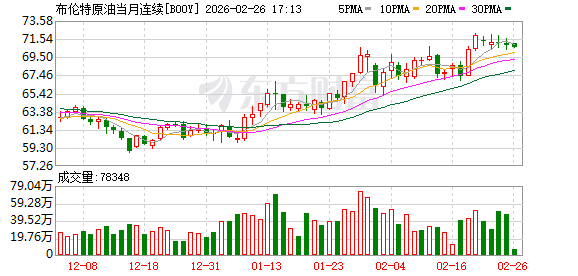
大宗商品轮动序幕?黄金之后 原油面临一场大考
Xin Hua Cai Jing· 2026-02-26 09:23
Group 1 - The core viewpoint of the articles indicates that international oil prices are currently strong due to geopolitical tensions, particularly the U.S.-Iran conflict, but there is a prevailing bearish sentiment regarding oil prices in the medium term as global supply is expected to exceed demand [2][6][7] - The market anticipates that if geopolitical disturbances subside, oil prices are likely to decline due to supply pressures, despite current optimism for commodity performance in 2026 [2][6] - Analysts suggest that the potential for military conflict in the Middle East could significantly impact oil supply, with estimates of potential production losses ranging from 500,000 to 1.5 million barrels per day, and a worst-case scenario of 14 million barrels per day if the Strait of Hormuz is blocked [5][6][8] Group 2 - The U.S. military's increased presence in the Middle East, including the deployment of aircraft and naval vessels, indicates a heightened risk of conflict, which could further influence oil prices [3][4] - Various analysts propose different military strategies that the U.S. might employ against Iran, with potential implications for regional stability and global oil markets [4][5] - Historical trends suggest that oil prices are influenced by multiple factors beyond supply and demand, and the current geopolitical climate may lead to increased volatility in oil prices [7][8]

综合晨报-20260226
Guo Tou Qi Huo· 2026-02-26 02:45
gtaxinstitute@essence.com.cn 综合晨报 2026年02月26日 (原油) 铸造铝合金跟随沪铝波动,宏观驱动且铝价处于高位,铸造铝合金与沪铝价差季节性表现将持续弱 于往年。 (氧化铝) 夜盘时段,油价维持区间窄幅波动。EIA最新数据显示,上周美国原油库存增加1600万桶,创下 2023年2月以来最大单周增幅;库存总量升至4.358亿桶,为八个月以来的最高水平。前一日API数 据公布后我们曾提示美国原油库存超预期大幅增加对油价的利空影响总体有限。美伊第三轮谈判将 在26日于日内瓦举行,伊朗方面表示决心在最短时间内达成一项公平合理的协议。美国方面则持续 保持军事威慑,但当前冲突整体仍处于可控范围。总体来看,近期美伊地缘局势的演变仍是主导油 价波动的核心变量。 【责金属】 隔夜贵金属偏强运行。美国贸易代表称正研究推进提升全球关税。地缘方面美伊新一轮谈判在即, 双方释放缓和信号但也保留军事行动选项。短期地缘和关税均处于关键节点,责金属等待进一步驱 动。 【铜】 隔夜铜价短线倾向震荡稳固在密集均线上方。贵金属与有色板块对美国关税不确定性的反映并不一 致,有色需求端主要关注关税相对低执行期,对国 ...
光大期货能化商品日报(2026年2月26日)-20260226
Guang Da Qi Huo· 2026-02-26 02:10
1. Report Industry Investment Rating - Not provided in the report 2. Core Viewpoints of the Report - Overall, most energy and chemical products are expected to show a volatile trend. The prices of various products are affected by multiple factors such as supply and demand, geopolitical situations, and inventory changes [1][3][4]. - The US - Iran situation has a significant impact on the oil and fuel markets, and the market is closely watching the latest developments [1][3]. - The supply and demand of different energy and chemical products are in different states. For example, the supply of low - sulfur fuel oil has marginally improved, while the supply of high - sulfur fuel oil has decreased; the inventory of asphalt has increased, and the supply of PVC is slowly increasing [3]. 3. Summary by Directory 3.1 Research Views - **Crude Oil**: On Wednesday, WTI April contract closed down $0.21 to $65.42 per barrel, a decline of 0.32%. Brent April contract closed up $0.08 to $70.85 per barrel, a rise of 0.11%. SC2604 closed at 486.5 yuan per barrel, down 3.1 yuan per barrel, a decline of 0.63%. The US crude oil inventory increased by 16 million barrels last week, reaching 435.8 million barrels, the highest level in eight and a half months. The overall oil price is expected to fluctuate [1]. - **Fuel Oil**: On Wednesday, the main fuel oil contract FU2605 on the Shanghai Futures Exchange closed down 0.34% at 2,943 yuan per ton, and the low - sulfur fuel oil contract LU2605 closed down 1.18% at 3,436 yuan per ton. The supply of low - sulfur fuel oil has marginally improved, and the supply of high - sulfur fuel oil has decreased. The market is concerned about the impact of the US - Iran situation on the market [3]. - **Asphalt**: On Wednesday, the main asphalt contract BU2604 on the Shanghai Futures Exchange closed down 0.5% at 3,358 yuan per ton. The supply in the northern region is relatively low, and refineries are accumulating inventory. The overall inventory level has increased, and the market is concerned about the impact of the US - Iran situation on the raw material market [3]. - **Polyester**: TA605 closed at 5,312 yuan per ton, down 0.75%; EG2605 closed at 3,747 yuan per ton, up 0.27%. The cost - end crude oil price is strong, and the export and terminal demand are warming up. PX and PTA are expected to fluctuate strongly under cost support, while ethylene glycol may fluctuate weakly due to high - inventory pressure, but the supply - demand pattern may improve in March [4]. - **Rubber**: On Wednesday, the main natural rubber contract RU2605 rose 210 yuan per ton to 17,240 yuan per ton, and the NR main contract rose 185 yuan per ton to 13,980 yuan per ton. Affected by the price increase in the external market and the decline in Thai export data, the natural rubber price has a strong upward drive. It is expected to fluctuate strongly [6]. - **Methanol**: On Wednesday, the Taicang spot price was 2,232 yuan per ton. Affected by the gas restriction in Iran, the import volume is expected to decline from February to March. The demand in the Yangtze River Delta region is expected to recover after the Spring Festival. The port will enter the de - stocking stage, but the US - Iran situation will cause the methanol price to fluctuate greatly [6]. - **Polyolefins**: On Wednesday, the mainstream price of East China wire - drawing PP was 6,600 - 6,700 yuan per ton. The post - festival demand recovery is slow, and there is pressure for further upward movement in the short term [7]. - **Polyvinyl Chloride (PVC)**: On Wednesday, the PVC market price in East China was stable, and the price in South China increased. The post - festival supply is slowly increasing, and the demand support is limited. It is expected to maintain a bottom - level fluctuation [7]. 3.2 Daily Data Monitoring - The report provides the basis data of various energy and chemical products on February 26, 2026, including spot prices, futures prices, basis, basis rates, and their changes, as well as the quantile of the latest basis rate in historical data [8]. 3.3 Market News - The US Energy Information Administration (EIA) data shows that last week, the US crude oil inventory increased by 16 million barrels, far exceeding the expected increase of 1.5 million barrels, reaching the highest level in eight and a half months [10]. - Litasco, a trading subsidiary of Russia's Lukoil, said that Bulgaria's measures against it violated the Energy Charter Treaty and has submitted a dispute notice to Bulgaria [10]. 3.4 Chart Analysis - **4.1 Main Contract Prices**: The report provides line charts of the closing prices of the main contracts of various energy and chemical products from 2022 to 2026, including crude oil, fuel oil, low - sulfur fuel oil, asphalt, LPG, PTA, ethylene glycol, short - fiber, LLDPE, PP, PVC, methanol, rubber, synthetic rubber, European container shipping, and p - xylene [12][14][16][18][20][22][24]. - **4.2 Main Contract Basis**: The report provides line charts of the basis of the main contracts of various energy and chemical products from 2022 to 2026, including crude oil, fuel oil, low - sulfur fuel oil, asphalt, ethylene glycol, PP, 20 - grade rubber, p - xylene, synthetic rubber, and bottle chips [26][27][30][31]. - **4.3 Inter - period Contract Spreads**: The report provides line charts of the spreads between different contracts of various energy and chemical products, including fuel oil, PTA, ethylene glycol, PP, LLDPE, and natural rubber [34][36][40][42][44][46]. - **4.4 Inter - variety Spreads**: The report provides line charts of the spreads and ratios between different varieties of energy and chemical products, including crude oil internal - external spreads, crude oil B - W spreads, fuel oil high - low sulfur spreads, fuel oil/asphalt ratio, BU/SC ratio, ethylene glycol - PTA spread, PP - LLDPE spread, and natural rubber - 20 - grade rubber spread [49][51][53][55]. - **4.5 Production Profits**: The report provides line charts of the production profits of various energy and chemical products, including LLDPE, PP, PTA processing fees, and ethylene - based ethylene glycol cash flow [57][58]. 3.5 Research Team Introduction - The research team includes the deputy director of the research institute, the director of energy and chemical research, and analysts for different product categories, each with rich experience and professional qualifications [62][63][64][65].
中信期货晨报20260226:国内商品期市收盘多数上涨,基本金属涨幅居前-20260226
Zhong Xin Qi Huo· 2026-02-26 02:04
Report Industry Investment Rating - Not mentioned in the provided content Core Viewpoints - The domestic commodity futures market closed mostly higher on February 25, 2026, with base metals leading the gains [1]. - The A - share market is expected to continue a mild upward trend after the Spring Festival, but the slope will be slower than in January, pricing in the warm Spring Festival consumption and technology event hotspots. The black metal and domestic bond markets may continue to fluctuate after the festival [16]. - The US economy shows a pattern of overall slowdown in expansion and structural differentiation in multiple fields. The US GDP growth rate slowed significantly in the fourth quarter, with personal consumption being the main drag, and inflation stickiness still exists [16]. Summary by Relevant Catalogs Financial Market Fluctuations - **Stock Index Futures**: The CSI 300 futures, SSE 50 futures, CSI 500 futures, and CSI 1000 futures all showed varying degrees of increase on February 25, 2026, with the CSI 500 futures having a relatively large daily increase of 1.61% [2]. - **Treasury Bond Futures**: The 2 - year, 5 - year, 10 - year, and 30 - year treasury bond futures mostly declined on February 25, 2026, with the 30 - year treasury bond futures having a relatively large daily decline of 0.48% [2]. - **Foreign Exchange**: The US dollar index increased by 0.15% on February 25, 2026, and the US dollar mid - price decreased by 225 pips [2]. - **Interest Rates**: The 7 - day inter - bank pledged repo rate increased by 23.34 bp on February 25, 2026, and the 10 - year Chinese government bond yield increased by 1.24 bp [2]. Popular Industry Fluctuations - On February 25, 2026, most industries showed an upward trend, with non - ferrous metals, steel, and basic chemicals having relatively large daily increases of 3.53%, 4.26%, and 2.37% respectively. The consumer services and media industries declined, with decreases of 0.52% and 0.92% respectively [5]. Overseas Commodity Fluctuations - **Energy**: On February 24, 2026, NYMEX WTI crude oil decreased by 0.35%, ICE Brent crude oil decreased by 0.14%, NYMEX natural gas decreased by 2.94%, and ICE UK natural gas decreased by 4.75% [8]. - **Precious Metals**: COMEX gold decreased by 1.25% on February 24, 2026, while CONEX silver increased by 0.57% [8]. - **Non - ferrous Metals**: LME copper, LME aluminum, LME zinc, LME tin, etc. showed different trends on February 24, 2026. For example, LME copper increased by 2.54% [8]. - **Agricultural Products**: CBOT soybeans, CBOT soybean oil, and other agricultural products also had different price changes on February 24, 2026. For example, CBOT soybean oil increased by 1.05% [8]. Macro Summary - **Domestic Macro**: During the Spring Festival, travel and consumption were strong, with the cross - regional passenger flow in the first 20 days of the Spring Festival travel season reaching 5.08 billion person - times, a record high. However, real estate sales were at a seasonal low, and the social financing in January started steadily. Due to the Spring Festival misalignment, the social financing data needs to be observed in combination with January - February data [16]. - **Overseas Macro**: The US economy shows a pattern of overall slowdown in expansion and structural differentiation in multiple fields. The GDP growth rate slowed significantly in the fourth quarter, personal consumption was the main drag, and inflation stickiness still exists [16]. - **Large - scale Assets**: Geopolitical uncertainties and Trump's tariff policies may support the prices of gold and silver in the short term. The crude oil market is dominated by geopolitical uncertainties, and the A - share market is expected to continue a mild upward trend after the Spring Festival. The black metal and domestic bond markets may continue to fluctuate, and the RMB may continue to strengthen in the second quarter [16]. Viewpoint Highlights - **Financial**: Stock index futures are expected to be volatile and slightly stronger; stock index options are expected to be volatile; treasury bond futures are expected to be volatile [17]. - **Precious Metals**: Gold and silver are expected to be volatile and slightly stronger [17]. - **Shipping**: The container shipping to Europe is expected to be volatile [17]. - **Black Building Materials**: Steel, iron ore, coke, etc. are all expected to be volatile [17]. - **Non - ferrous Metals and New Materials**: Many non - ferrous metals and new materials such as copper, aluminum, and nickel are expected to be volatile, with some showing a slightly stronger trend [17]. - **Energy Chemicals**: Crude oil, LPG, asphalt, etc. are expected to be volatile [19]. - **Agriculture**: Many agricultural products such as cotton, natural rubber, and soybean oil are expected to be volatile, with some showing a slightly stronger trend, while sugar is expected to be volatile and slightly weaker [19].
能源化策略日报:原油震荡等待局势明朗,化?端本??盾较?横盘整理-20260226
Zhong Xin Qi Huo· 2026-02-26 01:53
1. Report Industry Investment Rating No information provided in the report. 2. Core Viewpoints of the Report - The crude oil market is waiting for the progress of the US - Iran negotiation, and the chemical industry has entered an oscillatory pattern. The supply - demand of the polyester chain is relatively healthy, while polyolefins, especially PE, still face significant supply pressure. Pure benzene - styrene and chlor - alkali are mainly in an oscillatory state. Due to spring maintenance from March to May, polyester raw materials are destocking. The weakness of olefins is mainly due to the high global production capacity growth rate. The cost fluctuations and small supply - demand contradictions in the chemical industry make it difficult to have a trending market, and investors are advised to conduct short - term or hedging operations [2]. - The crude oil market continues to have high volatility, and chemical prices will continue to oscillate and consolidate. 3. Summary According to Relevant Catalogs 3.1 Market Views 3.1.1 Crude Oil - **Viewpoint**: US crude oil accumulates inventory on a weekly basis, and the US - Iran geopolitical situation continues to cause disturbances. The market is waiting for the progress of the US - Iran negotiation. The supply - demand is in an oversupply situation in the short - term, and it is expected to oscillate [9]. - **Main Logic**: The US crude oil inventory increased significantly last week, and gasoline inventory decreased. The refinery operating rate declined, which is consistent with the previous API data. The supply - demand surplus pattern is difficult to reverse in the short - term. The current geopolitical premium is fermenting, and the signal for the end of the rebound depends on the falsification of Iranian supply concerns or the confirmation of OPEC+'s production increase [9]. 3.1.2 Asphalt - **Viewpoint**: The market is waiting for the result of the US - Iran negotiation. The absolute price of asphalt is overvalued, and the medium - long - term valuation is expected to decline, showing an oscillatory trend [10][11]. - **Main Logic**: With the relaxation of US sanctions on Venezuela and the increase in light distillate exports, the long - term supply of asphalt raw materials is abundant. The market focuses on the US - Iran negotiation, and the asphalt cracking spread has significantly declined. High profits may drive refineries to switch to alternative raw materials. The supply - demand of asphalt is weak, and the inventory is accumulating. The current asphalt futures price is at a relatively high valuation compared to other products [11]. 3.1.3 High - Sulfur Fuel Oil - **Viewpoint**: The fuel oil futures price still has a relatively high geopolitical premium, and it is expected to oscillate. The increase in Venezuelan oil production will put long - term pressure on high - sulfur fuel oil, and the short - term focus is on the geopolitical situation in the Middle East [11]. - **Main Logic**: The market is highly concerned about the progress of the US - Iran negotiation. The increase in Venezuelan heavy oil supply is expected to put long - term pressure on high - sulfur fuel oil. The current high - sulfur fuel oil has a geopolitical premium. If the US and Iran reach an agreement, it may have a significant negative impact on high - sulfur fuel oil. In the long - term, the demand for fuel oil power generation in the Middle East is gradually being replaced [11]. 3.1.4 Low - Sulfur Fuel Oil - **Viewpoint**: It follows the oscillation of crude oil. Although it is affected by factors such as the replacement of green fuels and high - sulfur fuel oil, its current valuation is low, and it is expected to oscillate [13]. - **Main Logic**: It follows the oscillation of crude oil. The decrease in fuel oil exports from Brazil, Kuwait, and Nigeria in February has alleviated the oversupply expectation. It has strong main - product attributes. Although it faces some negative factors, its low valuation makes it likely to follow the change of crude oil [13]. 3.1.5 PX - **Viewpoint**: The cost still has support, and the price is in high - level consolidation. In the short - term, it oscillates under the resonance of cost support and market sentiment. In the medium - term, the logic of buying at low prices remains, and the PX05 - 09 spread can be positively arbitraged at low prices. The PXN is expected to be consolidated within the range of [300, 330] US dollars per ton [15]. - **Main Logic**: International oil prices are in high - level consolidation, and there is still some support for chemical products. After the holiday, the PX price increased significantly on the first trading day and then slightly declined. The overall supply - demand has not changed much. With the impact of the maintenance season, the supply pressure is expected to be relieved [15]. 3.1.6 PTA - **Viewpoint**: Supported by cost and affected by tariff policies, it is necessary to pay attention to the resumption rhythm of the polyester industry. It is expected to oscillate in the short - term, and the support for the TA05 - 09 spread is enhanced. It is advisable to pay attention to the positive arbitrage position, and the support around 5250 yuan per ton is relatively strong [16][17]. - **Main Logic**: The cost support is significant, and the price has回调. During the Spring Festival, the inventory accumulated significantly, but the wharf inventory pressure is general, and the basis decline pressure is controllable. The tariff policy has caused concerns about rush - exports, and it is necessary to pay attention to the resumption of the polyester and terminal industries [17]. 3.1.7 Pure Benzene - **Viewpoint**: It is affected by crude oil and commodity sentiment and oscillates. The fundamentals in Q1 are improved compared to Q4, but the inventory pressure is still large [18][19]. - **Main Logic**: Before the holiday, the downstream replenishment of pure benzene basically ended, and the trading became weak. After the holiday, it rose to make up for the gap. The fundamentals are in a transition period, and there are differences in the market's judgment of the Q2 fundamentals. It is necessary to pay attention to the inventory accumulation during the holiday and the resumption of downstream production after the holiday [19]. 3.1.8 Styrene - **Viewpoint**: Affected by seasonal inventory accumulation and crude oil fluctuations, it oscillates. Although the height of seasonal inventory accumulation in February is adjusted, the improvement of the overseas situation weakens the support [20]. - **Main Logic**: Before the holiday, the styrene price declined due to the marginal relaxation of supply - demand and the restart of domestic and overseas devices. After the holiday, it rose to make up for the gap. It is necessary to pay attention to the inventory accumulation during the holiday, the restart of some devices, and the resumption of downstream production [20]. 3.1.9 Ethylene Glycol (MEG) - **Viewpoint**: The supply - demand pressure limits the price rebound. In the medium - term, it has a weak recovery, and the lower support is enhanced. It is expected to be in the range of [3700 - 4050] yuan per ton in the short - term [22][23]. - **Main Logic**: The international oil price increased significantly during the Spring Festival, providing some cost support, but the supply - demand is weak. Although the inventory accumulation is less than expected due to the delay of some ships, the port inventory is still at a high level. After March, the supply - demand pattern will improve, and the import volume will decrease, enhancing the price support [23]. 3.1.10 Short - Fiber - **Viewpoint**: The downstream starts slowly, and the raw material end oscillates. The short - fiber price follows the upstream and oscillates in the short - term, and the support for the processing fee is enhanced [25]. - **Main Logic**: The upstream polyester raw material prices are in high - level consolidation, providing cost support. The cancellation of US tariffs is beneficial to the export of terminal textile and clothing. The downstream starts slowly, and the raw material end oscillates [25]. 3.1.11 Polyester Bottle - Chip - **Viewpoint**: The cost end still has support. The absolute price follows the raw material fluctuation, and the support for the processing fee is enhanced. It is advisable to temporarily exit the position of buying PR and shorting TA [26]. - **Main Logic**: The upstream raw material futures oscillate and decline, and the polyester bottle - chip price follows the weak oscillation. The trading atmosphere in the polyester bottle - chip market has recovered, and it is expected to continue to follow the raw material cost fluctuation [26]. 3.1.12 Methanol - **Viewpoint**: Overseas geopolitical disturbances continue, and it oscillates widely. It is expected to oscillate, and the Iranian situation is uncertain before it is settled [28][29]. - **Main Logic**: On February 25, 2026, methanol oscillated weakly. The inventory in the coastal market is high, and the Iranian methanol devices are expected to resume production in March, which has a negative impact on the market. However, geopolitical disturbances still need to be followed [29]. 3.1.13 Urea - **Viewpoint**: Supported by demand and guided by policies, it oscillates and consolidates. It is expected to oscillate narrowly, and it is necessary to pay attention to the downstream purchasing performance, the order digestion of production enterprises, and the storage - releasing plan of storage enterprises [30][31]. - **Main Logic**: On February 25, 2026, urea oscillated weakly, and the supply - demand increased simultaneously. The supply is at a high level, and the demand is in the peak season. However, the spot price has reached the upper limit of the price guidance, and the market trading atmosphere is suppressed [30][31]. 3.1.14 LLDPE (Plastic) - **Viewpoint**: The downstream gradually resumes production after the holiday, and it oscillates. It is expected to oscillate in the short - term [35]. - **Main Logic**: On February 24, the plastic futures opened higher and strengthened. The oil price oscillates due to the tense US - Iran geopolitical relationship. The commodity sentiment has improved after the holiday, and the capital has an impact on plastic. The mid - stream inventory pressure of plastic is not large, and the demand is in the off - peak to peak season transition. There is also an expectation of macro - consumption policy support [35]. 3.1.15 PP - **Viewpoint**: The spot support is limited, and it oscillates. It is expected to oscillate in the short - term [36]. - **Main Logic**: On February 24, PP futures oscillated higher. The oil price oscillates and rises due to the tense US - Iran geopolitical relationship. The commodity market sentiment has improved, which indirectly affects PP. The PDH profit of PP refineries is still under pressure, providing support for the price. The downstream of PP is in the off - peak to peak season transition, and the resumption progress needs to be observed. There is also an expectation of macro - consumption policy support [36]. 3.1.16 PL - **Viewpoint**: The powder profit is still under pressure, and it oscillates. It is expected to oscillate in the short - term [37]. - **Main Logic**: On February 25, PL futures oscillated. After the holiday, the PDH maintenance devices gradually resumed, and the market mainly followed the crude oil rebound. Enterprises mainly maintained stable prices, and the downstream factories followed up as needed. The short - term powder profit is weak, and the downstream factories are expected to resume production around the Lantern Festival [37]. 3.1.17 PVC - **Viewpoint**: Geopolitical disturbances still exist, and it may oscillate. It is expected to oscillate, and the geopolitical disturbances and maintenance expectations support the market sentiment, but the high inventory still suppresses the price [39]. - **Main Logic**: Geopolitical factors affect the commodity market sentiment. After the holiday, the upstream of PVC will carry out spring maintenance, but the "rush - export" will cool down, and the high inventory is difficult to destock smoothly. The upstream profit is poor, the downstream start - up is at a low level, the export order is weakening, and the cost is slightly decreasing [39]. 3.1.18 Caustic Soda - **Viewpoint**: It has a low valuation and weak expectations, and it oscillates. It is expected to oscillate, and the high inventory suppresses the price, but the maintenance and downstream replenishment provide support [40][41]. - **Main Logic**: Geopolitical factors affect the commodity market sentiment. The upstream is in a loss state, and the maintenance expectation is strong. The downstream may replenish inventory at a low price, and the inventory pressure is expected to be relieved. The fundamentals are affected by factors such as alumina production reduction, demand support from new alumina projects, and the decline in caustic soda production [41]. 3.2 Variety Data Monitoring 3.2.1 Energy and Chemical Daily Index Monitoring - **Inter - period Spread**: The inter - period spreads of various varieties such as Brent, Dubai, PX, PTA, MEG, etc. are provided, including the latest values and change values [42]. - **Basis and Warehouse Receipts**: The basis, change values, and warehouse receipts of various varieties such as asphalt, high - sulfur fuel oil, low - sulfur fuel oil, etc. are provided [43]. - **Inter - variety Spread**: The inter - variety spreads of various combinations such as PP - 3MA, TA - EG, L - P, etc. are provided, including the latest values and change values [44]. 3.2.2 Chemical Basis and Spread Monitoring No specific content for analysis is provided in the report for this part. 3.3 Commodity Index - **Comprehensive Index**: The comprehensive index, characteristic index (including commodity 20 index and industrial product index), and plate index (energy index) are provided, including the latest values, change percentages, and historical price change data [282][284].
光大期货:2月26日能源化工日报
Xin Lang Cai Jing· 2026-02-26 01:13
Oil Market - On Wednesday, WTI April contract closed down by $0.21 at $65.42 per barrel, a decrease of 0.32% [2][14] - Brent April contract closed up by $0.08 at $70.85 per barrel, an increase of 0.11% [2][14] - EIA reported a significant increase in US crude oil inventory by 16 million barrels, reaching the highest level in over eight months at 435.8 million barrels [2][16] - The geopolitical situation remains tense with Iran and the US engaging in indirect negotiations, while the US has increased military presence in the Middle East [2][14] Fuel Oil - The main contract for fuel oil on the Shanghai Futures Exchange fell by 0.34% to 2943 yuan/ton, while low-sulfur fuel oil dropped by 1.18% to 3436 yuan/ton [3][17] - Supply of low-sulfur fuel oil is expected to improve marginally, with Nigeria's February shipments estimated at 180,000 tons, down 200,000 tons month-on-month [3][17] Asphalt - The main contract for asphalt on the Shanghai Futures Exchange decreased by 0.5% to 3358 yuan/ton [5][18] - Domestic asphalt inventory levels increased to 7.87%, up 1.61% from the previous week [5][18] Rubber - The main contract for rubber on the Shanghai Futures Exchange rose by 210 yuan/ton to 17240 yuan/ton [6][19] - The EU passenger car market saw a 3.9% decline in sales in January 2026 [6][19] PX & PTA & MEG - TA605 closed at 5312 yuan/ton, down 0.75%, while EG2605 closed at 3747 yuan/ton, up 0.27% [7][20] - Domestic PX operating rates increased to 92%, with expectations of stronger market conditions supported by rising demand [7][21] Methanol - Methanol prices in Taicang were reported at 2232 yuan/ton, with CFR China prices between $267-$271 per ton [8][22] - Supply is expected to decline due to Iranian gas restrictions, while demand is anticipated to recover post-holiday [8][22] Polyolefins - Mainstream prices for polypropylene in East China ranged from 6600-6700 yuan/ton, with production margins showing negative values for various production methods [9][23] - Demand recovery is slow, and market activity is low, indicating potential pressure on prices [9][23] PVC - PVC market prices remained stable, with slight increases in some regions, while supply is expected to gradually increase post-holiday [10][24] - Demand is limited due to pre-holiday stockpiling, leading to a forecast of price stability [10][24] Urea - Urea market prices showed strength, with increases of 10-30 yuan/ton in some regions, while supply levels remain high [11][25] - Demand is expected to strengthen post-holiday, but high prices may limit market activity [11][25] Soda Ash - The soda ash market remained stable, with minor price adjustments, while production rates held steady [12][27] - Demand from downstream industries is weak, leading to a cautious market outlook [12][27] Glass - The glass market showed stability with slight price increases, but demand remains weak as many processing enterprises have not resumed operations [13][28] - The market is expected to face pressure until post-holiday recovery, with potential support from macroeconomic policies [13][28]

2026-02-26:能源化工日报-20260226
Wu Kuang Qi Huo· 2026-02-26 01:09
Report Industry Investment Rating No relevant information provided. Core Viewpoints of the Report - The current oil price has risen and priced in a high geopolitical premium. It is recommended to take profits on rallies and focus on mid - term layout [2]. - For methanol, the downward momentum remains, but the downside space is limited. The main idea is to buy on dips from a mid - term perspective [5]. - For urea, the current situation of internal - external price difference has opened the import window. Considering the expected improvement in production at the end of January, it is advisable to short - allocate [7]. - For rubber, it is recommended to trade short - term on the disk, set stop - losses, and enter and exit quickly. If RU is below 17,000, be cautious. Consider opening new positions or holding existing positions for the hedge strategy of buying NR main contract and shorting RU2609 [12]. - For PVC, the fundamentals are poor with strong supply and weak demand in the domestic market. Short - term factors such as electricity price expectations, capacity clearance expectations, and export rush support it. Pay attention to subsequent changes in capacity and production [15]. - For pure benzene and styrene, the non - integrated profit of styrene is moderately high, and the upward valuation repair space is shrinking. It is advisable to gradually take profits [18]. - For polyethylene, the futures price has declined. The PE valuation still has downward space, and the pressure on the disk from warehouse receipts has eased. The supply side has limited support, and the demand side is in a seasonal off - season [21]. - For polypropylene, the futures price has risen. The cost side may see a reduction in supply surplus, and the supply pressure has eased. It is advisable to buy on dips for the PP5 - 9 spread [24]. - For PX, it is expected to maintain a stockpiling pattern before the maintenance season. The mid - term outlook is good, and there are opportunities to go long on dips following the trend of crude oil [27]. - For PTA, the supply side has high maintenance in the short term, and the demand side is expected to pick up. The stockpiling cycle is about to end. There are mid - term opportunities to go long on dips [30]. - For ethylene glycol, the overall load is still high, and there is pressure on port stockpiling. There is an expectation of further profit compression and production reduction. There is a risk of a rebound in valuation [32]. Summary by Related Catalogs Crude Oil - **Market Information**: INE main crude oil futures closed down 1.60 yuan/barrel, a decline of 0.33%, at 488.30 yuan/barrel. Related refined oil main futures: high - sulfur fuel oil closed down 10.00 yuan/ton, a decline of 0.34%, at 2943.00 yuan/ton; low - sulfur fuel oil closed down 41.00 yuan/ton, a decline of 1.18%, at 3436.00 yuan/ton. In Fujeirah port, gasoline inventory increased by 1.91 million barrels to 9.89 million barrels, a month - on - month increase of 23.99%; diesel inventory decreased by 0.30 million barrels to 3.03 million barrels, a month - on - month decrease of 9.12%; fuel oil inventory decreased by 0.76 million barrels to 7.63 million barrels, a month - on - month decrease of 9.07%; total refined oil inventory increased by 0.85 million barrels to 20.55 million barrels, a month - on - month increase of 4.30% [1]. - **Strategy Viewpoint**: The current oil price has priced in a high geopolitical premium. In the short term, there is still a supply gap from Iran. Considering the expected over - performance of Venezuela's production increase and OPEC's subsequent production recovery, it is advisable to take profits on rallies and focus on mid - term layout [2]. Methanol - **Market Information**: Regional spot prices: Jiangsu changed by - 6 yuan/ton, Lunan by 0 yuan/ton, Henan by 20 yuan/ton, Hebei by 0 yuan/ton, and Inner Mongolia by 0 yuan/ton. The main futures contract changed by - 20.00 yuan/ton, at 2249 yuan/ton, and MTO profit changed by 82 yuan [4]. - **Strategy Viewpoint**: The downward momentum of methanol remains, but the negative factors have weakened marginally, so the downside space is limited. The main idea is to buy on dips from a mid - term perspective [5]. Urea - **Market Information**: Regional spot price changes: Shandong changed by 40 yuan/ton, Henan by 20 yuan/ton, Hebei by 10 yuan/ton, Hubei by 0 yuan/ton, Jiangsu by 30 yuan/ton, Shanxi by 30 yuan/ton, and Northeast by 30 yuan/ton. The overall basis was reported at - 48 yuan/ton. The main futures contract changed by - 17 yuan/ton, at 1838 yuan/ton [6]. - **Strategy Viewpoint**: The current situation of internal - external price difference has opened the import window. Considering the expected improvement in production at the end of January, it is advisable to short - allocate [7]. Rubber - **Market Information**: On the first trading day after the holiday, rubber futures saw a significant increase in positions and prices, with a bullish technical pattern. Thai natural rubber spot prices generally increased, but the spot prices of butadiene and butadiene rubber increased less. Bulls are optimistic due to macro expectations, seasonal expectations, and demand expectations, while bears are pessimistic due to weak demand. As of February 12, 2026, the operating load of all - steel tires in Shandong tire enterprises was 44.24%, 16.70 percentage points lower than the previous week and 18.19 percentage points lower than the same period last year. The operating load of semi - steel tires in domestic tire enterprises was 62.47%, 10.95 percentage points lower than the previous week and 11.01 percentage points lower than the same period last year. As of February 8, 2026, China's natural rubber social inventory was 129.6 tons, a month - on - month increase of 1.5 tons, an increase of 1.2%. The total social inventory of dark rubber in China was 86.4 tons, an increase of 1.4%. The total social inventory of light rubber in China was 43.2 tons, a month - on - month increase of 0.9%. The inventory in Qingdao area increased by 1.81 tons to 60.93 tons, with an accelerating inventory accumulation rhythm [9][10]. - **Strategy Viewpoint**: It is recommended to trade short - term on the disk, set stop - losses, and enter and exit quickly. If RU is below 17,000, be cautious. Consider opening new positions or holding existing positions for the hedge strategy of buying NR main contract and shorting RU2609 [12]. PVC - **Market Information**: The PVC05 contract rose 15 yuan, at 4963 yuan. The spot price of Changzhou SG - 5 was 4720 (0) yuan/ton, the basis was - 243 (- 15) yuan/ton, and the 5 - 9 spread was - 131 (- 7) yuan/ton. The cost - side calcium carbide price in Wuhai was 2300 (- 50) yuan/ton, the price of medium - grade semi - coke was 735 (- 50) yuan/ton, the price of ethylene was 705 (0) US dollars/ton, and the spot price of caustic soda was 629 (+ 11) yuan/ton. The overall operating rate of PVC was 80.1%, a month - on - month increase of 0.8%; among them, the calcium carbide method was 81.6%, a month - on - month increase of 0.8%; the ethylene method was 76.5%, a month - on - month increase of 1%. The overall downstream operating rate was 13%, a month - on - month decrease of 28.5%. The in - plant inventory was 31.2 tons (+ 2.4), and the social inventory was 125.4 tons (+ 2.7) [14]. - **Strategy Viewpoint**: The comprehensive profit of enterprises is at a neutral level, but the reduction in supply is small, and the production is at a historical high. The domestic demand is in an off - season, and the demand side is under pressure. The cancellation of export tax - rebates has spurred short - term export rush, which is the only short - term support for the fundamentals. The cost - side calcium carbide price has decreased, and the caustic soda price has rebounded. Overall, with strong supply and weak demand in the domestic market, the domestic demand is poor, and it is difficult to reverse the oversupply situation. The fundamentals are poor. Short - term factors such as electricity price expectations, capacity clearance expectations, and export rush support PVC. As the industry enters a very low - profit range, the weak fundamentals affect the industry pattern expectations. Pay attention to subsequent changes in capacity and production [15]. Pure Benzene and Styrene - **Market Information**: In terms of fundamentals, the cost - side East China pure benzene price was 6108 yuan/ton, with no change. The closing price of the pure benzene active contract was 6152 yuan/ton, a decrease of 5 yuan/ton. The pure benzene basis was - 44 yuan/ton, a decrease of 22 yuan/ton. The spot price of styrene was 7575 yuan/ton, a decrease of 25 yuan/ton. The closing price of the styrene active contract was 7578 yuan/ton, a decrease of 24 yuan/ton. The basis was - 86 yuan/ton, a weakening of 1 yuan/ton. The BZN spread was 153.62 yuan/ton, a decrease of 12.5 yuan/ton. The profit of non - integrated EB units was - 213.975 yuan/ton, a decrease of 44.125 yuan/ton. The EB consecutive 1 - consecutive 2 spread was 69 yuan/ton, a decrease of 19 yuan/ton. The upstream operating rate was 69.96%, an increase of 0.68%. The inventory at Jiangsu ports was 10.86 tons, an increase of 0.80 tons. The weighted operating rate of three S products on the demand side was 40.79%, an increase of 0.23%. The PS operating rate was 55.20%, a decrease of 0.40%. The EPS operating rate was 56.24%, an increase of 2.98%. The ABS operating rate was 64.40%, a decrease of 1.70% [17]. - **Strategy Viewpoint**: The spot and futures prices of pure benzene and styrene have both decreased, and the basis has weakened. The non - integrated profit of styrene is moderately high, and the upward valuation repair space is shrinking. The cost - side pure benzene operating rate has rebounded from a low level, and the supply is still abundant. The profit of ethylbenzene dehydrogenation on the supply side has decreased, and the styrene operating rate has fluctuated at a low level. The styrene port inventory has continued to increase. In the seasonal off - season, the overall operating rate of three S products on the demand side has fluctuated and increased. The pure benzene port inventory has decreased from a high level, and the styrene port inventory has continued to decrease. At present, the non - integrated profit of styrene has been significantly repaired, and it is advisable to gradually take profits [18]. Polyethylene - **Market Information**: From a fundamental perspective, the closing price of the main contract was 6777 yuan/ton, a decrease of 9 yuan/ton. The spot price was 6635 yuan/ton, with no change. The basis was - 215 yuan/ton, a weakening of 9 yuan/ton. The upstream operating rate was 87.03%, a month - on - month decrease of 0.27%. In terms of weekly inventory, the production enterprise inventory was 37.97 tons, a month - on - month increase of 5.67 tons. The trader inventory was 2.32 tons, a month - on - month decrease of 0.23 tons. The downstream average operating rate was 33.73%, a month - on - month decrease of 4.03%. The LL5 - 9 spread was - 70 yuan/ton, a month - on - month decrease of 20 yuan/ton [20]. - **Strategy Viewpoint**: The futures price has decreased. OPEC+ has announced plans to suspend production growth in the first quarter of 2026, and the crude oil price may have bottomed out. The polyethylene spot price has not changed, and the PE valuation still has downward space. The number of warehouse receipts has decreased from a historical high, reducing the pressure on the disk. On the supply side, only one BASF plant has been put into operation in the first half of 2026, and the coal - based inventory has been significantly reduced, providing support for the price. In the seasonal off - season, the raw material inventory of agricultural films on the demand side may reach its peak, and the overall operating rate has fluctuated downward [21]. Polypropylene - **Market Information**: From a fundamental perspective, the closing price of the main contract was 6720 yuan/ton, an increase of 15 yuan/ton. The spot price was 6735 yuan/ton, with no change. The basis was 15 yuan/ton, a weakening of 15 yuan/ton. The upstream operating rate was 74.9%, a month - on - month decrease of 0.01%. In terms of weekly inventory, the production enterprise inventory was 41.58 tons, a month - on - month increase of 1.49 tons. The trader inventory was 18.32 tons, a month - on - month decrease of 0.02 tons. The port inventory was 6.37 tons, a month - on - month decrease of 0.03 tons. The downstream average operating rate was 49.84%, a month - on - month decrease of 2.24%. The LL - PP spread was 57 yuan/ton, a month - on - month decrease of 24 yuan/ton. The PP5 - 9 spread was - 23 yuan/ton, a month - on - month decrease of 2 yuan/ton [22][23]. - **Strategy Viewpoint**: The futures price has risen. The EIA monthly report predicts that global oil inventories will slightly decrease, and the supply surplus may ease. On the supply side, there are no capacity expansion plans in the first half of 2026, reducing the pressure. On the demand side, the downstream operating rate fluctuates seasonally. In the context of weak supply and demand, the overall inventory pressure is high, and there are no prominent short - term contradictions. The number of warehouse receipts is at a historical high. When the oversupply situation changes in the first quarter of next year, the disk price may bottom out. The long - term contradiction has shifted from cost - led downward trends to production - mismatch issues. It is advisable to buy on dips for the PP5 - 9 spread [24]. PX - **Market Information**: The PX05 contract fell 46 yuan, at 7432 yuan. The PX CFR fell 4 US dollars, at 929 US dollars. The basis was - 9 yuan (+ 4) after conversion according to the RMB central parity rate, and the 5 - 7 spread was 2 yuan (- 14). In terms of PX load, the Chinese load was 92%, a month - on - month increase of 2.5%; the Asian load was 83.7%, a month - on - month increase of 1.3%. Regarding the equipment, Sinochem Quanzhou restarted, and Zhejiang Petrochemical increased its load. The PTA load was 74.8%, a month - on - month decrease of 2.8%. Regarding the equipment, Dushan Energy was under maintenance. In terms of imports, South Korea exported 33.9 tons of PX to China in the first and middle ten - days of February, a year - on - year increase of 12.4 tons. In terms of inventory, the inventory at the end of December was 465 tons, a month - on - month increase of 19 tons. In terms of valuation and cost, the PXN was 320 US dollars (+ 14), the South Korean PX - MX was 152 US dollars (+ 3), and the naphtha crack spread was 93 US dollars (- 4) [26]. - **Strategy Viewpoint**: Currently, the PX load remains at a high level, and there are many maintenance activities for downstream PTA, with a relatively low overall load center. It is expected that PX will maintain a stockpiling pattern before the maintenance season. The current valuation center has risen, and the short - process profit is also high. However, overall, the supply - demand structure of PX and downstream PTA is strong after the Spring Festival, and the mid - term outlook is good. The repair of PTA processing fees has also further expanded the PXN space. For the subsequent valuation to rise further, it is necessary for the downstream polyester start - up and raw material equipment maintenance efforts after the Spring Festival to meet expectations. Pay attention to the opportunity to go long on dips following the trend of crude oil in the mid - term [2
上海市发布楼市“沪七条”:申万期货早间评论-20260226
申银万国期货研究· 2026-02-26 00:41
Group 1 - The core viewpoint of the article highlights the recent adjustments in Shanghai's real estate policies, which include easing restrictions for non-local residents to purchase homes, effective from February 26, 2026 [1] - The Ministry of Commerce responded to the U.S. Trade Representative's comments, emphasizing that China has fulfilled its commitments under the Phase One trade agreement, while the U.S. has tightened export controls and restricted bilateral investments, violating the spirit of the agreement [1] - The futures market saw a majority of domestic contracts decline, with synthetic rubber dropping over 2%, while LPG, fuel oil, and white sugar saw increases of over 1% [1] Group 2 - The shipping index for the European route (EC) fell by 4.76%, with expectations of increased export volumes from Asia to the U.S. due to a temporary tariff gap, alongside optimistic market sentiment regarding post-holiday exports of photovoltaic products [2] - Maersk's new shipping service to Rotterdam in the second week of March has a quoted price of $1,800 per container, a decrease of $100, marking the first price drop after four weeks of stability [2] - The overall shipping volume is expected to decline in March, traditionally a slow month, indicating a likely downward trend in freight rates [2] Group 3 - The sudden export ban on lithium ore from Zimbabwe is expected to drive lithium carbonate prices higher in the short term, as pre-holiday stocking by downstream companies has already initiated a price rally [3] - Despite a temporary price correction during the Spring Festival, the fundamental logic for a market reversal remains intact, with a long-term bullish outlook on lithium carbonate driven by increasing demand from the electric vehicle and energy storage sectors [3] - By 2026, a significant shift in the supply-demand dynamics for lithium carbonate is anticipated, with stable growth in lithium salt demand expected as the penetration rate of new energy vehicles continues to rise [3] Group 4 - The article discusses the cautious outlook on various commodities, including a cautious bearish stance on crude oil and a cautious bullish stance on methanol and rubber, indicating mixed market sentiments across different sectors [5] - The financial market is transitioning from a "broad rise" phase to a "selective alpha" phase, with a focus on industry leaders with strong earnings, as the market prepares for the upcoming disclosure of annual and quarterly reports [10] - The bond market is experiencing a general decline, with the yield on 10-year government bonds rising to 1.805%, reflecting ongoing adjustments in monetary policy and market expectations [11]

国泰海通香江策论:事件点评:美伊战云投射国际秩序重构,战略资源迎来反转式价值重估
Haitong Securities International· 2026-02-25 15:39
Geopolitical Context - The U.S.-Iran tensions escalated in January 2026, transitioning into a phase of "high-pressure coercion + parallel negotiations" in February[1][2] - The U.S. military significantly increased its presence in the Middle East, deploying two carrier strike groups with approximately 140-150 aircraft, while intensifying sanctions on Iranian officials and oil trade[1][18] Market Reactions - During the warning phase (January 1-15, 2026), Brent crude oil rose by 4.9%, while the Baltic Dirty Tanker Index (BDTI) surged by 13.7%[4][23] - In the conflict phase (from January 15, 2026, to present), oil prices increased by an additional 11.0%, and BDTI continued to strengthen, rising by 20.6%[4][23] Risk Assessment - The market is currently pricing "transportation risk" ahead of "supply disruption," indicating a lower probability of a decisive U.S. resolution to the Iran issue[4][22] - The geopolitical situation is expected to remain volatile, with potential scenarios including troop withdrawal or escalation of military presence impacting strategic resources like gold and energy[4][30][31] Historical Comparisons - Historical data shows that different types of geopolitical conflicts have varying impacts on oil prices and shipping rates, with the current U.S.-Iran situation focusing on crude supply and transit security risks[4][34] - The Red Sea crisis (November 2023 to January 2024) resulted in Brent crude falling by 11% and BDTI dropping by 15%, while the Baltic Clean Tanker Index (BCTI) rose by 14.5%[4][26] Strategic Resource Valuation - The ongoing restructuring of the international order is likely to lead to a revaluation of strategic resources, including gold and defense sectors, which are expected to outperform crude oil in the medium to long term[4][10][32] - If the conflict does not escalate into a prolonged closure of the Strait of Hormuz, oil shipping and crude oil prices may revert to fundamental logic after initial volatility[4][32]
橡胶甲醇原油:多空分歧出现能化高位震荡
Bao Cheng Qi Huo· 2026-02-25 11:03
Report Industry Investment Rating - No relevant content provided Core Views of the Report - On Wednesday, the domestic Shanghai rubber futures contract 2605 showed a trend of increasing volume and open interest, strong operation, and a significant rise in closing price. The closing price rose 2.10% to 17,240 yuan/ton, and the premium of the 5 - 9 spread narrowed to 130 yuan/ton. The rubber market has re - entered a bullish trend, and it is expected that Shanghai rubber futures may maintain a moderately bullish oscillatory trend [6]. - On Wednesday, the domestic methanol futures contract 2605 showed a trend of increasing volume and open interest, oscillating weakly, and slightly closing lower. The highest price reached 2,292 yuan/ton, the lowest dropped to 2,248 yuan/ton, and the closing price slightly decreased 0.88% to 2,249 yuan/ton. The discount of the 5 - 9 spread widened to 38 yuan/ton. The rising geopolitical risks in the Middle East are pitted against the increasing supply pressure of domestic methanol. It is expected that methanol futures may maintain an oscillatory consolidation trend [7]. - On Wednesday, the domestic crude oil futures contract 2604 showed a trend of increasing volume and open interest, high - level oscillation, and slightly closing lower. The highest price reached 495.9 yuan/barrel, the lowest dropped to 484.8 yuan/barrel, and the closing price slightly decreased 0.33% to 488.3 yuan/barrel. As geopolitical risks in the Middle East heat up again, the crude oil premium has significantly increased. It is expected that oil prices may maintain a high - level oscillatory trend [7]. Summary by Relevant Catalogs 1. Industry Dynamics Rubber - As of February 23, 2026, the total inventory of natural rubber in bonded and general trade in Qingdao was 667,700 tons, a week - on - week increase of 61,000 tons or 10.05%. The bonded area inventory was 110,800 tons, an increase of 12%; the general trade inventory was 556,900 tons, an increase of 9.67%. The inbound rate of Qingdao's natural rubber sample bonded warehouses increased by 6.8 percentage points, and the outbound rate decreased by 1.38 percentage points; the inbound rate of general trade warehouses increased by 2.65 percentage points, and the outbound rate decreased by 4.36 percentage points [9]. - As of February 13, 2026, the capacity utilization rate of China's semi - steel tire sample enterprises was 56.40%, a week - on - week decrease of 15.69 percentage points and a year - on - year decrease of 8.88 percentage points; the capacity utilization rate of all - steel tire sample enterprises was 40.55%, a week - on - week decrease of 19.90 percentage points and a year - on - year decrease of 13.74 percentage points. During the Spring Festival, most tire enterprises shut down, and the overall capacity utilization rate of sample enterprises will be at the annual low [9]. - In January 2026, China's automobile production and sales were 2.45 million and 2.346 million respectively. Production increased 0.01% year - on - year, sales decreased 3.2% year - on - year, and both decreased 25.7% and 28.3% month - on - month respectively. Specifically, the passenger car market declined. In January, the production and sales of passenger cars were 2.062 million and 1.988 million respectively, a year - on - year decrease of 4.1% and 6.8% respectively, and a month - on - month decrease of 28.4% and 30.2% respectively. The commercial vehicle market continued to improve. In January, the production and sales of commercial vehicles were 388,000 and 359,000 respectively, a year - on - year increase of 29.9% and 23.5% respectively, and a month - on - month decrease of 6.8% and 15.6% respectively [10]. - In January 2026, China's Logistics Prosperity Index (LPI) was 51.2%, a slight month - on - month decrease of 1.2 percentage points, still in the expansion range above 50%. In January 2026, China's heavy - truck market sold about 100,000 vehicles, basically the same as in December 2025, and a significant year - on - year increase of about 39% compared with 72,200 vehicles in the same period of the previous year. It is expected that the wholesale sales of the heavy - truck industry in the first quarter of this year will increase slightly year - on - year [10]. Methanol - As of the week of February 13, 2026, the average domestic methanol operating rate remained at 87.30%, a slight week - on - week decrease of 0.68%, a slight month - on - month increase of 0.50%, and a significant year - on - year increase of 6.11%. The average weekly methanol production in China reached 2.0568 million tons, a slight week - on - week decrease of 430 tons, a small month - on - month increase of 21,400 tons, and a small increase of 80,600 tons compared with 1.9762 million tons in the same period of the previous year [11]. - As of the week of February 13, 2026, the domestic formaldehyde operating rate remained at 26.66%, a small week - on - week decrease of 2.03%. The dimethyl ether operating rate remained at 6.62%, a small week - on - week decrease of 1.10%. The acetic acid operating rate remained at 79.92%, a small week - on - week decrease of 1.17%. The MTBE operating rate remained at 55.83%, a small week - on - week decrease of 2.32%. The average operating load of domestic coal (methanol) to olefins plants was 80.21%, a small week - on - week increase of 1.21 percentage points and a small month - on - month increase of 1.62%. As of February 13, 2026, the domestic methanol - to - olefins futures contract profit was - 71 yuan/ton, a small week - on - week decrease of 30 yuan/ton and a significant month - on - month increase of 173 yuan/ton [11]. - As of the week of February 13, 2026, the methanol inventory in ports in East and South China remained at 942,700 tons, a small week - on - week decrease of 18,700 tons, a significant month - on - month decrease of 101,800 tons, and a small year - on - year increase of 43,600 tons. As of the week of February 12, 2026, the total inland methanol inventory in China was 340,300 tons, a small week - on - week decrease of 28,100 tons, a significant month - on - month decrease of 110,600 tons, and a significant year - on - year decrease of 159,800 tons compared with 500,100 tons in the same period of the previous year [12]. Crude Oil - As of the week of February 6, 2026, the number of active oil drilling rigs in the United States was 412, a small week - on - week increase of 1 and a decrease of 68 compared with the same period of the previous year. The average daily crude oil production in the United States was 13.713 million barrels, a significant week - on - week increase of 498,000 barrels per day, a small year - on - year increase of 219,000 barrels per day, and at a historical high [12]. - As of the week of February 6, 2026, the U.S. commercial crude oil inventory (excluding strategic petroleum reserves) reached 428.8 million barrels, a significant week - on - week increase of 8.53 million barrels and a small year - on - year increase of 969,000 barrels. The crude oil inventory in Cushing, Oklahoma, reached 25.113 million barrels, a small week - on - week increase of 1.071 million barrels; the U.S. Strategic Petroleum Reserve (SPR) inventory reached 415.212 million barrels, a slight week - on - week decrease of 0.1 million barrels. The U.S. refinery operating rate remained at 89.4%, a small week - on - week decrease of 1.1 percentage points, a small month - on - month decrease of 5.9 percentage points, and a small year - on - year increase of 4.4 percentage points [13]. - As of February 17, 2026, the average net long non - commercial positions in WTI crude oil futures were 141,343 contracts, a significant week - on - week increase of 23,529 contracts and a significant increase of 68,529 contracts or 94.12% compared with the January average of 72,814 contracts. As of February 17, 2026, the average net long positions of Brent crude oil futures funds were 250,016 contracts, a slight week - on - week decrease of 526 contracts and a significant increase of 65,570 contracts or 35.55% compared with the January average of 184,446 contracts [13]. 2. Spot Price Table | Variety | Spot Price | Change from Previous Day | Futures Main Contract | Change from Previous Day | Basis | Change | | --- | --- | --- | --- | --- | --- | --- | | Shanghai Rubber | 17,000 yuan/ton | + 200 yuan/ton | 17,240 yuan/ton | + 210 yuan/ton | - 240 yuan/ton | - 10 yuan/ton | | Methanol | 2,260 yuan/ton | - 12 yuan/ton | 2,249 yuan/ton | - 36 yuan/ton | + 11 yuan/ton | + 24 yuan/ton | | Crude Oil | 471.2 yuan/barrel | - 0.7 yuan/barrel | 488.3 yuan/barrel | - 5.0 yuan/barrel | - 17.1 yuan/barrel | + 4.3 yuan/barrel | [15] 3. Relevant Charts - The report lists various charts related to rubber (such as rubber basis, 5 - 9 spread, inventory, and tire开工率), methanol (such as methanol basis, 5 - 9 spread, inventory, and methanol - to - olefins开工率), and crude oil (such as crude oil basis, inventory, and net position changes), but no specific data analysis of the charts is provided [16][29][42]