
TMT

Search documents
ROE拐点已至:三季报里,谁在领跑,谁在拖后腿?
雪球· 2025-11-03 08:26
Core Viewpoint - The article highlights a stabilization and rebound in the ROE (Return on Equity) of A-shares, indicating a recovery in overall profitability across the market, with significant improvements in growth sectors such as TMT and the ChiNext board [3][4]. Group 1: Overall Market Performance - The ROE of the entire A-share market increased from 6.74% in Q3 2022 to 6.80% in Q3 2023, marking a year-on-year growth of 0.75% and breaking a downward trend [5][6]. - The growth sectors, particularly the ChiNext and technology-focused indices, showed substantial improvements, with the ROE of the ChiNext index rising by 12.30% year-on-year [7][8]. Group 2: Sector Analysis - The TMT (Technology, Media, and Telecommunications) sector maintained high growth, with the ROE of technology leaders increasing from 8.04% to 10.26%, a growth of 27.59% [16]. - The consumer sector exhibited mixed results, with the ROE of the consumer index declining from 17.18% to 16.51%, while the household appliances sector showed a slight increase from 12.66% to 12.90% [17][18]. - The pharmaceutical sector showed signs of stabilization, with the overall ROE rising from 8.43% to 8.52%, while the renewable energy sector began to show improvement, with the ROE of the photovoltaic industry increasing from 1.50% to 1.75% [19][20]. Group 3: Profitability Drivers - The rebound in A-share ROE is primarily driven by improvements in net profit margins and stabilization in asset turnover rates, indicating enhanced operational efficiency rather than increased leverage [22][23]. - The sectors with the most significant revenue improvements include TMT, financial services, and midstream manufacturing, while the consumer sector remains under pressure [24].


长城宏观:新兴科技有望是本轮行情“中军主线”
Sou Hu Cai Jing· 2025-11-03 08:12
Market Overview - In October, the Shanghai Composite Index showed a trend of upward fluctuation, with major indices experiencing more declines than gains. The overall large-cap stocks outperformed small-cap stocks, and value stocks outperformed growth stocks. Sectors such as coal, steel, and non-ferrous metals saw significant gains, while media, beauty care, and automotive sectors lagged behind. The average daily trading volume was 2.16 billion, with margin trading remaining at 2.4 trillion [1]. Macroeconomic Analysis - The US-China trade conflict has entered a phase of easing. In October, the manufacturing PMI in China fell to 49.0%, down 0.8 percentage points from the previous month, indicating a gradual adaptation to external changes. The focus of macroeconomic policy may shift towards areas that are relatively "not hot," with potential for monetary policy easing, including possible rate cuts and the implementation of investment-boosting policies [2][3]. Investment Strategy - The market is expected to experience a rebound, supported by the outcomes of the 20th National Congress and progress in US-China trade negotiations. However, without significant policy catalysts, the market may enter a phase of adjustment post-meeting. The investment outlook remains positive, with expectations for a "spring rally" and opportunities for positioning in the market as economic transformation accelerates and risk-free rates decline [4][5]. Specific Investment Directions - Focus areas for investment include: 1) Technology growth sectors such as internet, TMT, new energy, innovative pharmaceuticals, and defense [5] 2) New materials and cyclical products with improved market conditions, including chemicals, non-ferrous metals, and steel [5] 3) Financial sectors such as brokerage, banking, and insurance [5] 4) Consumer goods towards the end of the year [5]
崩了个大的
Sou Hu Cai Jing· 2025-11-03 01:45
Group 1 - The market sentiment indicates that approximately 30%-40% of investors are experiencing losses this year, with a recent poll showing 51% reporting losses [1] - The recent volatility in the market has made it challenging to profit without identifying key trends and timing [1] - The white liquor sector has shown a quick recovery despite disappointing quarterly reports, suggesting that the market had already priced in poor performance [1] Group 2 - The white liquor market is currently viewed as having only trading opportunities, lacking a trend-driven medium-term outlook [2] - The performance slowdown of Kweichow Moutai is impacting its ecosystem, with financial attributes weakening and a decline in the collectibles market [2] - Discussions around the consumption of white liquor indicate a shift in consumer behavior, suggesting that the golden era for the sector may have passed [2] Group 3 - The technology, media, and telecommunications (TMT) sector has seen significant price increases, with trading congestion reaching a 20-year high [3] - The TMT sector's rapid growth has raised concerns about sustainability, with a potential for a market correction due to excessive short-term gains [4] - The concentration of major stocks in the U.S. market is at an all-time high, with the top 10 stocks comprising 41.4% of the S&P 500 index [4] Group 4 - The adjustment in the TMT sector could negatively impact the overall market, especially given the high proportion of leveraged positions [5] - The market's ability to manage indices has improved, contributing to long-term investor confidence [6] - The focus is shifting towards ensuring that various sectors contribute to index growth, rather than relying solely on the high-performing technology sector [6]

景气正在扩散
SINOLINK SECURITIES· 2025-11-03 01:28
Group 1 - The core viewpoint of the report indicates a reversal in the relationship between GDP, revenue, and profit growth, with A-share revenue growth surpassing nominal GDP for the first time since 2023, showing a year-on-year growth rate of 3.8% in Q3 2025 [1][10] - The net profit growth rate for all A-shares (excluding financial and real estate sectors) improved by 0.9 percentage points to 3.8% in Q3 2025, indicating a marginal recovery in profitability [1][19] - The net asset return (TTM) rose to 7.5%, marking two consecutive quarters of improvement, driven primarily by profit margin recovery [1][19] Group 2 - The midstream manufacturing sector showed significant improvement, with revenue and profit growth rates of 2.1% and 18.1% respectively in Q3 2025, reflecting a marginal increase compared to Q2 [2][39] - The TMT sector continued to outperform, with profit share rising to 16.0%, while the downstream consumer sector saw a decline in profit share to 25.1%, the lowest since Q3 2024 [2][39] - The non-bank financial sector recorded nearly 40% profit growth, indicating a strong performance relative to other sectors [2][39] Group 3 - The report highlights that the recovery in upstream profit share often requires a return to price advantages, which was observed in September 2025, suggesting a potential easing of performance pressures in the upstream sectors [3][29] - The energy metals and fiberglass manufacturing sectors achieved simultaneous volume and price increases, indicating effective outcomes from anti-involution policies [3][29] - The report notes that while the technology sector's absolute growth rates are high, the degree of expectation fulfillment is not particularly strong, suggesting potential risks if larger-scale industry catalysts do not emerge [3][29] Group 4 - The report indicates that the overall revenue growth for all A-shares was 1.36% year-on-year as of Q3 2025, with a notable improvement of 1.2 percentage points compared to Q2 [10][14] - Capital expenditure growth for all A-shares (excluding financial and real estate) recorded a decline of 1.91%, indicating limited new capital investment and a focus on updates and renovations [10][15] - The inventory growth rate for all A-shares (excluding financial and real estate) rebounded to 4.5%, reflecting a recovery in demand and improved operational expectations [10][15]
A股11月迎关键变盘?最新机构解读来了!
Sou Hu Cai Jing· 2025-11-02 16:30
Market Overview - A-shares showed mixed performance in October, with the Shanghai Composite Index rising by 1.85%, while the Shenzhen Component and ChiNext Index fell by 1.10% and 1.56% respectively [1][3] - The market experienced significant fluctuations, with the Shanghai Composite Index briefly surpassing 4000 points, marking a ten-year high, before undergoing adjustments [1][3] Sector Performance - The cyclical sectors, including coal, steel, and non-ferrous metals, performed strongly with monthly gains of 10.02%, 5.16%, and 5.00% respectively [3] - Conversely, the media, beauty care, and automotive sectors faced notable declines [3] Trading Activity - October saw a robust trading environment with total transaction volume exceeding 36 trillion yuan, and 10 trading days recorded over 2 trillion yuan in turnover [3] - Margin trading showed optimistic sentiment, with the margin balance reaching 24,990.86 billion yuan, an increase of 1,027.90 billion yuan in October [3] Economic Indicators - Manufacturing output in October grew by 5.4% year-on-year, while the service sector production index increased by 6.3%, the highest growth rate this year [9] - Infrastructure investment, manufacturing investment, and retail sales all showed accelerated growth [9] Policy and Market Outlook - The upcoming November is expected to witness a concentration of policy effects and verification of fourth-quarter earnings, with a potential easing of U.S.-China trade tensions [7][11] - The "14th Five-Year Plan" emphasizes high-quality development and technological self-reliance, which is anticipated to guide investment directions in November [7][11] Investment Strategy - Analysts suggest an overweight position in sectors such as machinery, TMT (Technology, Media, Telecommunications), electric power equipment, and non-ferrous metals for November [13] - The focus on innovation and technology is expected to drive growth in the economy, with high-dividend consumer stocks also being highlighted as worthy of attention [13][15]

策略周末谈:做时间的朋友
Western Securities· 2025-11-02 12:42
Core Conclusions - The bull market is entering its second phase, transitioning from a "technology bull" to a "wealth bull" [1] - After the "super macro month" in October, the market is expected to favor cyclical stocks as a better allocation choice due to high valuations and potential adjustments if EPS does not improve [1][5] - Current market conditions present an optimal window for investing in cyclical stocks, supported by five key reasons [1] Reason 1: Cyclical Stocks as "Friends of Time" - Since Q3, the market has begun to trade based on changes in profitability (△ROE), indicating a return to investment in economic recovery [21] - Cyclical stocks have lagged behind in price compared to improvements in fundamentals, making them more favorable during market adjustments [21][24] Reason 2: Potential Requirements of the "14th Five-Year Plan" - The "14th Five-Year Plan" suggests that by 2035, per capita GDP should reach the level of moderately developed countries, requiring an annual growth rate of 4.1% plus inflation and currency appreciation [2][30] - Achieving this goal necessitates a combination of moderate inflation and currency appreciation to establish a growth baseline for cyclical industries [2][31] Reason 3: Cross-Border Capital Inflow, Repeating 2019-2021 - Recent reports emphasize that cross-border capital inflow will effectively support domestic demand, with signs of cyclical improvement already emerging [3][33] - The return of cross-border capital is expected to drive a revaluation of global commodities and domestic manufacturing, similar to the core asset bull market seen post-pandemic [3][36] Reason 4: New Regulations for Public Funds Guiding "Rebalancing" - The introduction of new regulations for public funds is expected to lead to a rebalancing of holdings between TMT and cyclical stocks [4][39] - As public funds have not significantly increased new issuances, the shift from cyclical to TMT stocks has resulted in a decrease in the pricing power of TMT stocks [4][40] Reason 5: Slowdown in Incremental Capital Inflows, Entering a Competitive Phase - Since September, there has been a noticeable slowdown in the inflow of various types of capital, indicating a shift in market dynamics [5][44] - The market is transitioning into a phase of competition, with cyclical stocks likely to benefit from this change [5][51] Investment Recommendations: Transitioning from "Technology Bull" to "Wealth Bull" - The report suggests continuing to invest in cyclical stocks, particularly in sectors such as non-ferrous metals, new consumption, and high-end manufacturing, as these areas are expected to benefit from the current economic conditions [5][54]
《十五五规划建议》落地后市场如何演绎?:策略周报-20251102
Guohai Securities· 2025-11-02 08:32
Group 1 - The report highlights that the "15th Five-Year Plan" has significant implications for market performance, particularly in the context of historical trading patterns observed after the release of previous plans [5][11][20] - The report identifies key themes for investment opportunities in the upcoming month, including domestic substitution in computing power and software, military industry, AI applications, and robotics [5][12] - The report notes that the TMT (Technology, Media, and Telecommunications) sector currently has a crowding degree of around 35%, with a critical threshold at approximately 40% that warrants attention [5][27] Group 2 - The report emphasizes the importance of the "15th Five-Year Plan" in shaping the strategic direction of various industries, particularly in technology and defense sectors, with a focus on innovation and self-reliance [12][16] - The report outlines that the plan includes new strategic goals such as becoming a space power and an agricultural powerhouse, indicating a shift towards enhancing national capabilities [16][21] - The report discusses the historical performance of markets during previous Five-Year Plan cycles, suggesting that the current plan's implementation will likely reinforce existing market trends unless disrupted by significant macroeconomic narratives [5][17]
周末,机构开始提示风险了
Sou Hu Cai Jing· 2025-11-01 15:49
Group 1 - The current overcrowding in the TMT technology sector has reached a historical high, with electronic holdings accounting for 25.7% as of Q3 2025, surpassing the 20% threshold for a single industry, while the overall TMT industry chain holdings have also hit a record high of 40% [1] - The increase in overcrowding suggests a weakening of the motivation for further accumulation, indicating that institutions may need to reduce their positions, which poses risks for high-priced technology stocks [1] Group 2 - The recent sharp decline in the CPO sector has raised market concerns, with skepticism about the high growth of leading companies in the optical film segment, as investors worry that future capacity may not support current high stock prices [2] - The market sentiment is characterized by anxiety among holders and caution among potential investors, leading to a state of indecision [2] Group 3 - Recent tax policy announcements regarding gold trading have been made, including exemptions from value-added tax for standard gold transactions on specific exchanges, which is expected to encourage gold trading and increase liquidity [4] - The current international gold price is around $4000, and the introduction of these tax incentives is seen as a positive development for the gold market [4] - There is a cautious outlook on whether gold prices have bottomed out, with a focus on maintaining above the $4000 level for potential upward movement, while a drop below this level could signal a need for vigilance [5]
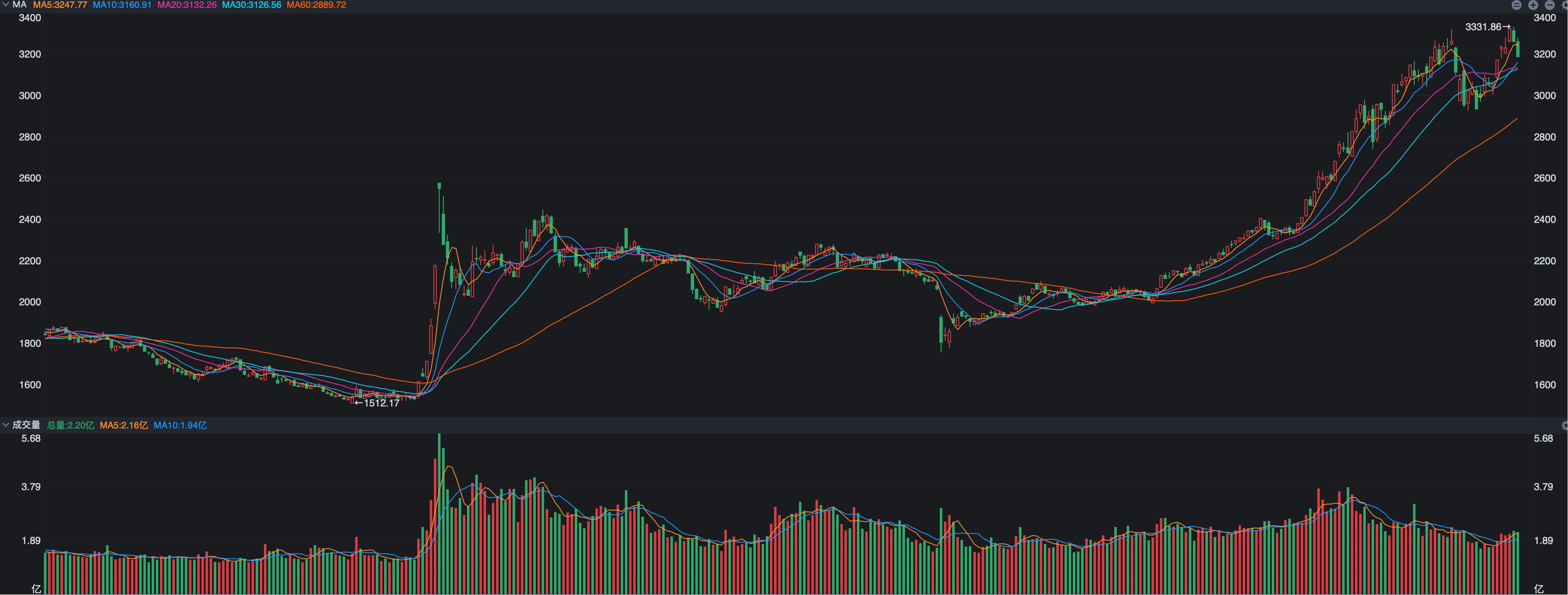
中金 | 三季报业绩总结:整体盈利改善,结构亮点增多
中金点睛· 2025-11-01 01:25
Core Insights - A-share companies' profits showed a year-on-year growth of 5.4% in the first three quarters of 2025, with non-financial profits increasing by 1.7% [2][5][25] - The third quarter saw a significant improvement in profit growth across various sectors, with non-financial net profits rising by 11.4% year-on-year, compared to 3.8% in the second quarter [2][5][7] Performance Growth - A-share companies' net profits for the first three quarters of 2025 were 5.4% for all A-shares, 9.5% for financials, and 1.7% for non-financials [5][25] - In Q3 2025, the net profit growth for non-financial sectors was 11.4%, with a notable improvement from Q2 [2][7] - The revenue for non-financial sectors increased by 0.6% year-on-year, indicating a slight recovery in profit margins [2][5] Industry Performance - The number of industries with profit improvements increased, with 48 industries (37% of total) reporting a year-on-year net profit growth exceeding 20% [15][19] - The TMT sector, non-ferrous metals, and certain midstream industries performed well, reflecting the positive impact of policy shifts [15][19] - The energy and raw materials sector saw a decline in profit share from nearly 40% in 2022 to 30.5% in Q3 2025 [13][19] Economic Segmentation - New economy sectors showed a profit growth of 12.1% year-on-year in Q3, while traditional sectors experienced a reduced decline of -2.1% [11][19] - Upstream, midstream, and downstream profit growth rates were 4.0%, 10.3%, and -3.1%, respectively, indicating a recovery in upstream profits [16][19] - The performance of the consumer sector was weak due to policy rollbacks and weak demand, with significant declines in various sub-sectors [17][19] Profit Quality - A-share non-financial ROE stabilized in Q3 2025, with a slight increase compared to Q2, indicating potential stabilization after a prolonged decline [25][26] - The cash flow situation showed improvements, with operating cash flow remaining at a high level, supporting dividend certainty for A-share companies [31][33] - Non-financial companies' free cash flow to equity ratio maintained at around 5.2%, providing a solid foundation for dividends [33]

4000点拉锯战 广发基金投顾团队:市场资金结构呈现新变化
Zhong Zheng Wang· 2025-10-31 11:24
Group 1 - The A-share market has reached a significant milestone with the Shanghai Composite Index closing above 4000 points, marking the highest level since August 18, 2015 [1] - The market rally since September 24 has been primarily driven by several types of funds, including broad-based ETFs and margin financing, with active equity public funds and non-broad-based ETFs focusing on industry sectors playing a key role since July [1] - Institutional investors show a preference for cyclical and large financial sectors, while individual investors are more focused on the consumer sector; both groups are interested in gold and chips, with institutions also favoring military and dividend-related sectors, while individuals lean towards pharmaceuticals and securities [1] Group 2 - The current growth rate of household deposits has not significantly declined, indicating that while there is an emerging willingness among residents to invest, large-scale market entry has not yet commenced, suggesting that the entry of residents is still in the early stages [2] - There has been a notable shift in foreign capital flows since July, with a slowdown in active foreign capital outflows and a significant net inflow of passive foreign capital, driven by the attractiveness of China's emerging industries and competitive valuations in the global market [2] - The market is characterized by a steady allocation from institutional investors, gradual participation from individual investors, and improved inflow dynamics from overseas investors, highlighting the importance of monitoring individual investor participation, domestic policy implementation, and foreign capital flows for potential structural investment opportunities [2]