
债券

Search documents
债市早报:资金面呈紧平衡态势;债市小幅走强
Sou Hu Cai Jing· 2026-01-26 03:21
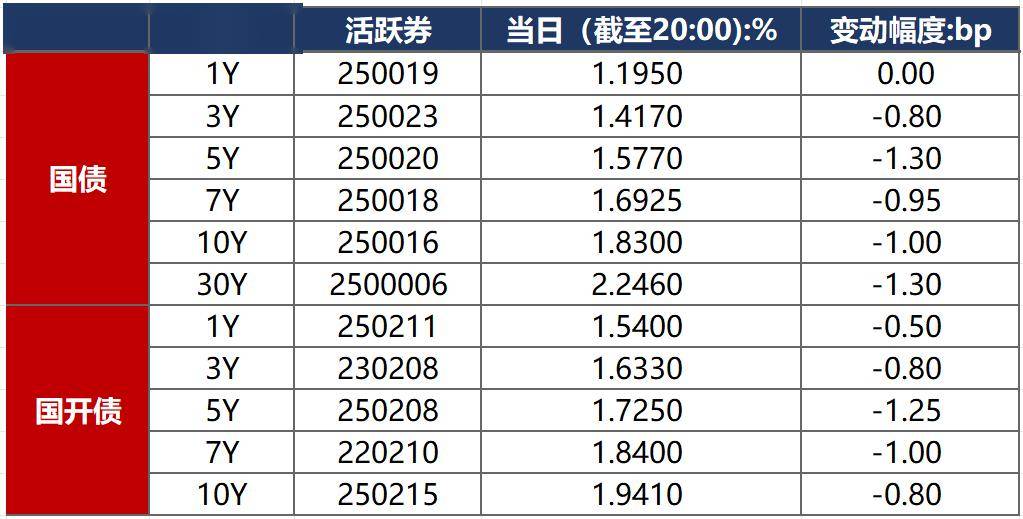
Core Viewpoint - The financial market is experiencing a tight balance in liquidity, with various indicators showing mixed trends in both domestic and international debt markets, alongside significant movements in commodity prices. Group 1: Domestic News - The People's Bank of China (PBOC) Governor Pan Gongsheng stated that by 2025, the "Technology Board" in the bond market is expected to issue a total of 1.8 trillion yuan in technology innovation bonds [2] - The China Securities Regulatory Commission (CSRC) has released guidelines for public fund performance benchmarks, effective from March 1, aimed at addressing issues like "style drift" and enhancing the value investment attributes of public funds [2] Group 2: International News - In January, the S&P Global PMI report indicated that U.S. business activity continues to grow, with the manufacturing PMI at 51.9, slightly below expectations, and the services PMI at 52.5, also below forecast [4] - The Bank of Japan maintained its policy interest rate at 0.75%, aligning with market expectations, while raising its medium- to long-term inflation forecasts, indicating a more optimistic view on price pressures [5] Group 3: Commodity Market - International crude oil prices increased, with WTI crude rising by 2.88% to $61.07 per barrel, and natural gas prices surged over 10% [6] Group 4: Financial Market Operations - On January 23, the PBOC conducted a 125 billion yuan reverse repo operation at a fixed rate of 1.40%, resulting in a net liquidity injection of 38.3 billion yuan for the day [7] - The liquidity in the market remains tight, with the DR001 and DR007 rates slightly declining to 1.398% and 1.494%, respectively [8] Group 5: Bond Market Dynamics - The bond market showed slight strength, with the yield on the 10-year government bond decreasing by 1.00 basis points to 1.8300% [9] - In the secondary market, several corporate bonds saw significant price movements, with some bonds from Vanke rising over 10% [11] Group 6: Convertible Bonds - The convertible bond market followed the equity market's upward trend, with major indices rising by approximately 1.28% to 1.32%, and a total trading volume of 104.1 billion yuan [19] - Notable individual convertible bonds saw substantial increases, with some rising over 19% [19] Group 7: Overseas Bond Market - U.S. Treasury yields generally declined, with the 10-year yield down by 2 basis points to 4.24% [21] - In the European bond market, the 10-year yields showed mixed trends, with Germany's yield rising by 2 basis points to 2.90% while France's yield fell by 2 basis points [24]

本轮债市回暖中的新规律
2026-01-26 02:50
Summary of Conference Call Records Industry Overview - The conference primarily discusses the bond market, focusing on the recovery trends observed since mid-January 2026, with specific attention to government bonds and credit bonds [1][2]. Key Points and Arguments Recovery of the Bond Market - The bond market has shown signs of recovery due to three main factors: 1. **Stability of Government and Local Bonds**: The stability of interest rates for government bonds and local bonds has been crucial. The 10-year government bond has remained stable, not exceeding 1.9%, while local bonds have stayed below 2.5% [2]. 2. **Banking Sector Participation**: There has been an increase in bank allocations to bonds, particularly after the clarity of KPIs for banks in 2026. This has led to a stronger demand for bonds, especially those with shorter durations [3][4]. 3. **External Support Factors**: External factors such as the stagnation of equity markets and expectations of monetary easing have contributed to the bond market's recovery. The MLF (Medium-term Lending Facility) has also seen increased volumes, indicating a supportive monetary environment [4][5]. Future Market Outlook - The outlook for the bond market remains cautious but optimistic. Short-duration bonds are expected to perform well, while long-duration bonds may face more volatility. The market anticipates that the recovery could serve as a precedent for future bond market trends in 2026 [5][6]. - The potential for downward movement in interest rates exists, particularly for 10-year government bonds, if deposit rates continue to decline [5][6]. Risks and Challenges - The bond market may face challenges related to supply and demand mismatches, especially in the first and second quarters of 2026. The issuance of local bonds is expected to be high, which could lead to increased pressure on the market [9][10]. - The risk indicators for banks remain a concern, particularly for smaller banks, which may face stricter regulations and slower adjustments to their risk profiles [9][10]. Investment Recommendations - Analysts recommend focusing on 10-year government bonds and certain credit bonds, particularly those with favorable yield spreads. The expectation is that these assets will provide stability and potential for appreciation in the current market environment [11][12]. - The discussion also highlights the potential for industry-specific perpetual bonds, particularly those issued by state-owned enterprises, which are seen as having a favorable risk-return profile [17][18]. Market Dynamics - The dynamics of the bond market are influenced by the behavior of institutional investors, with a noted shift towards increasing allocations in response to market conditions. The performance of convertible bonds is also highlighted, with expectations of continued demand despite some volatility [26][27]. Conclusion - The bond market is currently in a recovery phase, supported by stable interest rates, increased bank participation, and favorable external conditions. However, potential risks related to supply-demand mismatches and regulatory pressures on banks warrant careful monitoring. Investment strategies should focus on stable, shorter-duration bonds and select credit instruments to navigate the evolving landscape [36].
资讯早班车-2026-01-26-20260126
Bao Cheng Qi Huo· 2026-01-26 01:44
1. Report Industry Investment Rating No relevant content provided. 2. Core Viewpoints of the Report - The Chinese capital market is accelerating its opening - up, and new regulations for public funds are set to address industry issues. The bond market shows a slight upward trend, and the stock market has a positive outlook with new - fund issuance booming. Commodity markets, including metals, energy, and agriculture, have various price movements driven by different factors [2][17][25][36] - The macro - economic data shows a mixed picture, with GDP growth slowing, inflation rising slightly, and changes in various economic indicators such as manufacturing PMI, social financing, and trade [1] 3. Summary by Directory 3.1 Macro Data Overview - GDP growth in Q4 2025 was 4.5% year - on - year, down from 4.8% in the previous quarter and 5.4% in the same period last year. Manufacturing PMI was 50.1%, up from 49.8% in the previous month. Non - manufacturing PMI was 50.2%, slightly up from 50.0% [1] - Social financing in December 2025 was 22075 billion yuan, down from 35299 billion yuan in the previous month. M0, M1, and M2 growth rates changed compared to the previous month and the same period last year [1] - CPI in December 2025 was 0.8% year - on - year, up from - 0.3% in the previous month. PPI was - 1.9% year - on - year, slightly improved from - 2.3% [1] 3.2 Commodity Investment Reference 3.2.1 Comprehensive - The China Securities Regulatory Commission added 14 futures and options as domestic specific varieties, signaling an acceleration of capital market opening [2] - The Fed is expected to keep the federal funds rate unchanged at 3.50% - 3.75% in its January meeting, with a 95% probability according to the CME FedWatch tool [3] - On January 23, 31 domestic commodity varieties had positive basis, and 37 had negative basis [3] 3.2.2 Metals - Gold prices broke through $5000 per ounce, and silver prices exceeded $106 per ounce, with a 3% increase. Analysts predict gold price increases between 10% - 35% in 2026 [4][5] - Gold - related listed companies' performance improved due to rising gold prices, and some companies are still acquiring gold - mine assets [5] - The prices of gold and silver reached their highest weekly gains since 2020, driven by factors such as a weak dollar, capital outflows from currency and bonds, and geopolitical tensions [5] - The lithium carbonate futures price exceeded 180,000 yuan per ton, driven by supply contraction and demand growth, but market divergence is increasing [5] 3.2.3 Coal, Coke, Steel, and Minerals - Coking coal prices rose significantly, with most coal types increasing by over 100 yuan per ton, increasing coke production costs [7] - Coking enterprises' losses intensified, with an average loss of 65 yuan per ton of coke last week, a 20 - yuan increase from the previous week [7] - The coke market is in a tight supply - demand balance, with high steel - mill iron - water production and low coke production [8] - In 2025, the national coal production by large - scale enterprises reached 48.3 billion tons, a 1.2% year - on - year increase [8] 3.2.4 Energy and Chemicals - In December 2025, the national electricity market trading volume was 608 billion kWh, a 6.6% year - on - year increase. Green power trading volume increased by 32.3% [10] - Due to a cold wave in the US, natural gas futures prices exceeded $6 per million British thermal units for the first time since 2022 [10] - The US may cancel the 25% tariff on India if India's oil imports from Russia continue to decline [11] 3.2.5 Agricultural Products - In mid - January 2026, 29 out of 50 important production materials' prices rose, 13 declined, and 8 remained unchanged compared to early January. Pig prices increased by 3.2% [14] - Fruit prices, such as strawberries, cherries, and tangerines, decreased due to sufficient supply [14] - As of mid - January 2026, the price of soybeans increased by 0.31% month - on - month [14] 3.3 Financial News Compilation 3.3.1 Open Market - On January 23, the central bank conducted 125 billion yuan of 7 - day reverse repurchase operations, with a net injection of 38.3 billion yuan after deducting the maturity amount [15] - This week, 1181 billion yuan of reverse repurchases and 200 billion yuan of MLF will mature. The central bank conducted 900 billion yuan of MLF operations in January, with a net injection of 700 billion yuan [15] - The central bank's mid - term liquidity net injection in January reached 1 trillion yuan to maintain market liquidity [16] 3.3.2 Important News - The CSRC issued guidelines for public - fund performance comparison benchmarks, and the Asset Management Association of China released operating rules, which will take effect on March 1 [17] - The national market operation and consumption promotion meeting emphasized promoting commodity and service consumption upgrades [17] - In 2025, the actual use of foreign capital in China was 747.69 billion yuan, a 9.5% year - on - year decrease, but some industries saw growth [18] - The central bank will promote global financial governance reform and international financial cooperation in 2026 [18] 3.3.3 Bond Market Summary - The Chinese bond market showed a slight upward trend, with interest - rate bond yields falling by about 1bp. The 10 - year treasury bond yield reached 1.83% [25] - In the exchange bond market, most Vanke bonds rose, and the real - estate bond index and high - yield urban investment bond index also increased [26] - The convertible bond index rose, with some bonds having significant gains and losses [26][27] - Most money - market interest rates declined, and bond - issuance yields and multiples were reported [27][28] 3.3.4 Foreign Exchange Market - The on - shore RMB against the US dollar closed at 6.9642, down 14 points from the previous trading day, but up 48 points last week. The RMB central parity rate against the US dollar was raised by 90 points [31] - The US dollar index fell 0.79%, and most non - US currencies rose [31] 3.3.5 Research Report Highlights - Huatai Fixed - Income believes that the second - tier perpetual bonds have recovered, and the bond market may continue to fluctuate in Q1, with some trading opportunities [32] - Huatai Securities is optimistic about the investment opportunities of high - quality real - estate enterprises, commercial operators, Hong Kong - funded real - estate enterprises, and high - dividend property - management companies [32] - CICC Fixed - Income reports that the scale of nominal fixed - income + funds reached a record high in Q4 2025, while pure - bond funds faced redemption pressure [33] - CITIC Securities expects the expansion of public REITs to become normal, which will help transform the REITs market from "small and scattered" to "large and excellent" [34] - CITIC Construction Investment warns of risks such as US inflation, economic recession, European energy crisis, and global geopolitical risks [34] 3.4 Stock Market News - Foreign public - fund institutions are optimistic about the A - share market in 2026, maintaining high - position strategies and focusing on the technology sector [36][37] - Since the beginning of 2026, the new - fund issuance market has recovered, with 76 new funds established and a total fundraising of 71.939 billion yuan as of January 24 [37] 3.5 Today's Reminders - On January 26, 195 bonds will be listed, 127 bonds will be issued, 127 bonds will be paid, and 498 bonds will pay principal and interest [35]
全球市场波动,黄金成避风港
Sou Hu Cai Jing· 2026-01-25 14:51
Group 1 - The U.S. stock market experienced a significant decline while gold and silver prices reached historical highs, indicating increased market concerns over the risks associated with the dollar system, with "safe-haven" assets becoming the core trading logic [1] - The Danish pension fund announced plans to liquidate $1 million in U.S. Treasury bonds, symbolizing a growing distrust in U.S. debt as a reliable asset, despite the negligible impact on the overall $36 trillion U.S. debt market [3] - Poland's central bank approved a plan to purchase 150 tons of gold, raising its gold holdings to 700 tons, which reflects a broader trend among central banks to increase gold reserves as a hedge against global currency credit crises and political instability [3] Group 2 - Japan's ten-year government bond yields surged by 38.78% since the new administration took office, raising concerns about Japan's debt risk and the potential for a currency credit crisis, which could also impact the U.S. given its own debt levels [4] - Despite the risks associated with U.S. dollar assets, they remain a preferred choice globally due to the lack of viable alternatives, as U.S. assets are backed by military, technological, and economic strength, making them a significant option for global reserves [6] - Historical instances of dollar and gold decoupling have shown that despite credit risks, U.S. assets can recover and even reach new highs, suggesting that both U.S. equities and gold are likely to yield positive returns over time [6]
——债市锐评第5期:信用债被一致性看好,还有哪些机会待挖掘?
Guohai Securities· 2026-01-25 14:03
1. Report Industry Investment Rating No information provided in the document. 2. Core View of the Report The report points out that since the beginning of the year, the overall performance of credit bonds has been outstanding, and investors are generally bullish on credit bonds. It also analyzes potential investment opportunities and risks, suggesting continuing short - term coupon strategies, leveraging to increase returns, and being cautious about chasing long - term Tier 2 capital bonds. It maintains the view that interest - rate bonds will experience short - term fluctuations [4][5]. 3. Summary by Related Catalogs Event Review - Since the beginning of the year, the overall performance of credit bonds has been excellent, with high trading sentiment. The credit spreads of various grades and maturities within 5 years are mostly at relatively low levels in the past year. For example, the spreads of 3 - year AAA and AA+ medium - and short - term notes over China Development Bank bonds are 14.5bp and 22.5bp respectively, at the 4% and 6% quantiles in the past year, and the 5 - year quantiles are as low as 2% and 1% [4]. Investment Highlights - **Increased demand for long - term general credit bonds due to the opening of amortized bond funds**: Starting this year, amortized bond funds with a closed - end period of more than 3 years will gradually open. The cumulative opening scale of those with a maturity of over 5 years this year is about 212.5 billion yuan, with 183.1 billion yuan in the first half of the year, mainly concentrated in the first quarter. From January 17th, for three consecutive weeks, the weekly opening scale has been over 20 billion yuan, which is expected to boost the allocation demand for general credit bonds with a maturity of around 5 years. The opening windows of products with a 3 - to 5 - year closed - end period (mainly 3 years) are mainly concentrated in the second and third quarters, with an expected 216.9 billion yuan of amortized bond funds opening, 111.7 billion yuan in the second quarter and 105.2 billion yuan in the third quarter, peaking in May and July with monthly opening scales of 59.6 billion yuan and 49.6 billion yuan respectively [4]. - **Valuation repair opportunities for the constituent bonds of oversold science and technology innovation bond ETFs**: As of January 23rd, the total scale of credit bond ETFs is 52.928 billion yuan, a 13.9% decrease from the end of last month. The science and technology innovation bond ETFs and benchmark market - making credit bond ETFs have decreased by 6.003 billion yuan and 1.786 billion yuan respectively. The year - end impulse funds are still withdrawing, causing selling pressure on science and technology innovation bonds. After the new year, the valuation has generally increased, and some science and technology innovation bonds have been oversold. As of January 23rd, the premium of the constituent bonds of science and technology innovation bond ETFs over ordinary bonds is as low as 3.3bp, breaking the low level in mid - and early December last year (5.0bp) and reaching the lowest level since July 2025 [4]. - **Sustainability of the mid - and long - term Tier 2 capital bond market**: Since the beginning of the year, mid - and long - term Tier 2 capital bonds have had a strong market due to the implementation of the new redemption rules and increased allocation by insurance institutions. As of January 23rd, the yield to maturity of 5 - year AAA - Tier 2 capital bonds has decreased by about 7.4bp this year, and the credit spread over China Development Bank bonds has narrowed to 35.1bp. However, the sustainability of the mid - and long - term Tier 2 capital bond market remains to be observed for three reasons: the current valuation is at a phased high, reducing the odds of going long; after the implementation of IFRS9 for insurance institutions and the end of the second - generation solvency transition period, the fair - value changes of Tier 2 capital bonds will be included in the current profit and loss, and the risk factors are not favorable, so their trading nature is greater than the allocation nature for insurance, and the volatility of Tier 2 capital bonds may increase; January is a big month for insurance institutions' premium income, but the sustainability of the market depends on the subsequent premium income. If it returns to normal, the sustainability of the mid - and long - term Tier 2 capital bond market may fall short of expectations [4][5]. Investment Suggestions - Maintain the view that interest - rate bonds will experience short - term fluctuations. In the coupon strategy, continue to match short - term coupons with leverage to increase returns, and explore opportunities in mid - and long - term general credit bonds and oversold science and technology innovation bond constituents under the opening of amortized bond funds. Be vigilant about the risk of chasing high for long - term Tier 2 capital bonds. In terms of duration, it is recommended to use medium - and short - term products within 5 years as the foundation, and operate mid - and long - term products mainly through band trading. Do not lengthen the portfolio duration in advance before the bond market is in a favorable period [5].
管中窥豹:本轮回暖中隐含着债市哪些新规律
GUOTAI HAITONG SECURITIES· 2026-01-25 13:16
Group 1 - The core viewpoint of the report indicates that the bond market is experiencing a recovery driven by three main factors: the stabilization of the 10-year government bond, the release of previously imbalanced allocation forces, and external factors such as a weakening equity market and continued monetary policy easing by the central bank [7][9][12] - The report highlights that the 10-year government bond has regained its position as the market's "central axis," which limits the downside potential of the bond market. The stabilization of the 10-year bond typically signals the nearing end of the current downward trend in the bond market [7][22][24] - It is noted that the 30-year government bond and 10-year policy financial bonds exhibit a lag in recovery, often responding quickly once the market sentiment shifts. The report suggests that the recovery speed of these long-duration bonds is typically rapid due to their high elasticity and speculative participation [22][23] Group 2 - The report identifies that the upcoming supply-demand dynamics in the ultra-long end of the bond market may pose significant disturbances, while a sustained loose monetary environment is likely to be a major benefit [24][26] - It emphasizes that the bond market's recovery is expected to continue, albeit at a slower pace, with a focus on the issuance rhythm of local government bonds post-Spring Festival. If the allocation forces diminish after the holiday, the market may revert to a state of fluctuation around March [26][18] - The report recommends prioritizing the allocation of medium to long-term bonds with higher coupon rates, particularly the 10-year policy financial bonds, while also considering participation in the primary market for 15-20 year local government bonds [26][18]
ESG行业周报:我国金融领域首部ESG评价国家标准正式发布,英国推出千亿住宅光伏扶持计划
Xinda Securities· 2026-01-25 10:24
Investment Rating - The report does not specify a direct investment rating for the industry but highlights significant developments in ESG standards and initiatives [2]. Core Insights - The first national ESG evaluation standard in China's financial sector has been officially released, set to be implemented on April 1, 2026. This standard aims to support the country's green development strategy and enhance the quality of the bond market [3][13]. - The UK government has launched a £15 billion (approximately 140.3 billion RMB) public funding initiative to upgrade energy efficiency in up to 5 million homes by 2030, addressing energy poverty for up to 1 million families [4][18]. Summary by Sections Domestic Developments - The ESG evaluation framework (GB/T 46912-2025) includes a three-tier system covering environmental, social, and governance aspects, with 11 evaluation dimensions and 33 topics [3][13]. - The National Development and Reform Commission has allocated 93.6 billion RMB to support approximately 4,500 projects in industrial, energy, and environmental sectors [14]. - The Ministry of Industry and Information Technology is focusing on fostering new green development momentum through energy-saving and carbon-reduction technologies [15]. International Developments - The UK's "Warm Homes Plan" aims to facilitate the installation of solar photovoltaic systems in new homes, significantly reducing energy costs for consumers [4][18]. - The European Central Bank is intensifying its monitoring of banks' climate risk management and transition plans [20]. ESG Financial Products Tracking Bonds - As of January 25, 2026, China has issued 3,927 ESG bonds with a total outstanding amount of 5.77 trillion RMB, where green bonds account for 62.34% of the total [5][22]. - In January 2026, 94 ESG bonds were issued, raising 54.4 billion RMB, with a total of 1,303 ESG bonds issued in the past year amounting to 1.4024 trillion RMB [5][22]. Public Funds - There are 955 ESG products in the market with a total net value of 1.261496 trillion RMB, where ESG strategy products represent 49.74% of the total [5][34]. - In January 2026, only one ESG product was issued, with a share of 0.11 million, and a total of 189 ESG public funds were issued in the past year [5][34]. Bank Wealth Management - The market has 1,223 ESG products, with pure ESG products making up 53.23% of the total [6][39]. - In January 2026, 80 ESG products were issued, primarily focusing on pure ESG and social responsibility [6][39]. Index Tracking - As of January 23, 2026, major ESG indices have underperformed compared to the market, with the Wind All A Sustainable ESG index showing the highest increase of 0.28% [8][40]. - Over the past year, major ESG indices have generally increased, with the Wind All A Sustainable ESG index rising by 28.83% [8][40]. Expert Opinions - Professor Guo Yi from Beijing Technology University discusses the ethical implications of AI development, emphasizing the need for policies that align with societal values and the integration of ESG principles into AI practices [9][42].
债市晴雨表:七大指标看债市情绪所处位置
CMS· 2026-01-25 09:02
1. Report Industry Investment Rating No information provided in the content. 2. Core Viewpoints of the Report The report analyzes the current position of bond market sentiment through seven indicators, including the bond market sentiment index, institutional duration, leverage ratio, secondary trading, institutional allocation power, primary subscription, and relative valuation. It provides data on the changes in these indicators over the past week, reflecting the dynamics of the bond market [2]. 3. Summary by Relevant Catalogs 3.1 Bond Market Sentiment Index - Last week, the bond market sentiment index was 116.1, up 0.1 from the previous value; the bond market sentiment diffusion index was 50.1%, up 0.6 percentage points from the previous value [2]. 3.2 Institutional Duration Tracking - As of last Friday, the fund duration was 1.39 years, up 0.03 years from the previous Friday; the duration of city and rural commercial banks was 6.71 years, down 0.07 years; the insurance duration was 7.56 years, down 0.01 years [2]. 3.3 Leverage Ratio Tracking - Last week, the balance of pledged repurchase was 12.5 trillion yuan, down 0.1 trillion yuan from the previous value; the net lending balance of large - scale banks was 5.4 trillion yuan, down 0.1 trillion yuan; the bond market leverage ratio was 103.8%, unchanged from the previous value [2]. 3.4 Secondary Trading Tracking - In terms of turnover rate last week, the turnover rate of 30Y treasury bonds was 2.4%, up 0.4 percentage points from the previous value; the turnover rate of 10Y treasury bonds was 0.7%, down 0.3 percentage points; the turnover rate of 10Y CDB bonds was 23.0%, down 0.5 percentage points; the turnover rate of ultra - long - term credit bonds was 0.25%, up 0.05 percentage points [2]. 3.5 Institutional Allocation Power Tracking - The newly issued shares of bond funds last week were 5.1 billion yuan, unchanged from the previous value; the stock market risk premium was 0.53%, unchanged from the previous value; the US dollar index was 98.4, down 0.8 from the previous value. The 6M bill transfer discount rate - 6M certificate of deposit rose 1.2bp to - 46.6bp, indicating an increase in loan demand. In terms of institutional allocation power, the bond allocation index of city and rural commercial banks was - 56.4%, down 76.6 percentage points from the previous value; the insurance bond allocation index was 68.4%, down 6.2 percentage points; the money fund bond allocation index was - 32.2%, up 47.2 percentage points; the insurance's allocation index for Tier 2 and perpetual bonds was 4.9%, down 6.9 percentage points [2]. 3.6 Primary Subscription Tracking - Last week, the overall multiple of treasury bonds increased by 0.9 times to 4.4 times; the overall multiple of local bonds increased by 0.5 times to 20.0 times; the overall multiple of CDB bonds decreased by 0.1 times to 3.7 times [2]. 3.7 Relative Valuation Tracking - Last week, the spread between 10 - year CDB bonds and treasury bonds narrowed by 1.0bp to 15.9bp; the spread between 30 - year and 10 - year treasury bonds widened by 3.2bp to 48.0bp; the spread between old and new 10 - year CDB bonds widened by 1.3bp to - 3.9bp; the spread between 10 - year local bonds and treasury bonds narrowed by 4.3bp to 16.9bp [2].
我国金融领域首部ESG评价国家标准正式发布,英国推出千亿住宅光伏扶持计划
Xinda Securities· 2026-01-25 08:37
Investment Rating - The report does not specify a direct investment rating for the industry but highlights significant developments in ESG standards and initiatives [2]. Core Insights - China's first national ESG evaluation standard, titled "Environmental, Social, and Governance Evaluation Framework for Bond Issuers" (GB/T 46912-2025), was officially released and will be implemented on April 1, 2026. This standard aims to support the country's green development strategy and enhance the quality of the bond market [3][13]. - The UK government has launched the "Warm Homes Plan," which will invest £15 billion (approximately 140.3 billion RMB) to upgrade energy efficiency in up to 5 million homes by 2030, addressing energy poverty for up to 1 million families [4][18]. Summary by Sections Domestic Developments - The ESG evaluation framework includes a three-tier system of "evaluation items - evaluation dimensions - evaluation topics," covering 11 evaluation dimensions and 33 evaluation topics, providing a standardized guide for ESG evaluations [3][13]. - The National Development and Reform Commission has allocated 93.6 billion RMB to support approximately 4,500 projects in industrial, energy, and environmental sectors, promoting equipment upgrades and energy efficiency [14]. - The Ministry of Industry and Information Technology is focusing on three areas to cultivate new momentum for green development, including enhancing traditional industries, providing new energy-saving equipment, and developing new green energy business models [15]. ESG Financial Products Tracking - As of January 25, 2026, a total of 3,927 ESG bonds have been issued in China, with a total outstanding amount of 5.77 trillion RMB, where green bonds account for 62.34% of the total [5][22]. - The market has 955 existing ESG products in public funds, with a total net value of 12,614.96 billion RMB, where ESG strategy products represent the largest share at 49.74% [5][34]. - There are 1,223 existing ESG products in bank wealth management, with pure ESG products making up 53.23% of the total [6][39]. Index Tracking - As of January 23, 2026, major ESG indices have underperformed the market, with the Wind All A Sustainable ESG index showing the highest increase of 0.28%, while the 300 ESG Leading index recorded the largest decline of 1.53% [8][40]. Expert Opinions - Professor Guo Yi from Beijing Technology and Business University discusses the ethical implications of AI development, emphasizing the need for policies that guide AI applications towards beneficial outcomes. He suggests integrating ESG principles with AI to address new challenges faced by enterprises [9][42].