
化工

Search documents
转债事件点评:把握春季行情下半场
GUOTAI HAITONG SECURITIES· 2026-02-23 13:08
Core Insights - The report suggests adopting a "steady first, with growth in mind" approach to maintain gains in the second half of the spring market and to reserve space for future positioning [2][15] - The spring market of 2026 began on December 17, 2025, driven by favorable policies and early capital allocation, leading to a strong performance in the A-share market, with the Shanghai Composite Index achieving 17 consecutive days of gains [9][13] - The convertible bond market experienced rapid growth followed by volatility, with median prices and conversion premiums reaching historical highs, indicating a significant reduction in the safety cushion of bonds [9][10] Market Trends - Historical data from 2017 to 2025 indicates that the market typically experiences a "rise then fall" pattern from the Spring Festival to the National People's Congress (NPC) [13][14] - The report highlights that during the period from the Spring Festival to the NPC, the market is likely to see a "spring surge," with small-cap growth stocks outperforming, particularly in TMT and high-end manufacturing sectors [13][14] - As the NPC approaches, the market may shift towards defensive sectors like pharmaceuticals and utilities, with high valuations in convertible bonds facing potential compression due to stock adjustments [13][14] Investment Strategy - The report recommends a balanced investment strategy, transitioning from aggressive profit-seeking to balancing returns and risks as the market moves into the NPC and Q1 earnings preview phase [15] - It emphasizes the importance of selecting convertible bonds with solid performance and reasonable pricing, while also considering high-quality, high-priced convertible bonds with clear growth prospects [15] - The report identifies sectors such as AI computing, semiconductors, non-ferrous metals, and post-cycle industries like consumption and real estate as favorable for convertible bonds due to improving supply-demand dynamics and favorable policy catalysts [15]
Sasol(SSL) - 2026 Q2 - Earnings Call Transcript
2026-02-23 10:02
Financial Data and Key Metrics Changes - The overall financial performance showed a decline in Adjusted EBITDA year-on-year, reflecting weaker macro conditions, with a positive free cash flow generated despite challenges [9][16][23] - Net debt ended at $3.8 billion, with a focus on cash generation and resilience in the balance sheet [7][22] - Gross margin declined by 6%, impacted by a 17% lower Rand oil price and continued pressure in chemicals pricing [23] Business Line Data and Key Metrics Changes - In the mining segment, EBITDA was lower due to the phaseout of export coal sales, but additional income was realized from leasing coal terminal capacity [26] - Fuels EBITDA increased, supported by higher refining margins and improved operational performance at Secunda and Natref [27] - Chemicals EBITDA generation remains under pressure due to lower prices and soft demand in global markets, with a notable decline in both Africa and America [27] Market Data and Key Metrics Changes - The Brent crude oil price decreased by 14% year-on-year, contributing to a 17% decline in the Rand oil price [16] - The oil market remains in surplus, with supply growth outpacing demand, leading to expected volatility in oil prices [17] - Chemicals faced challenges from global overcapacity and tariff uncertainties, impacting pricing and margins [18] Company Strategy and Development Direction - The company follows a two-pillar strategy: strengthening the foundation business and positioning for long-term growth and transformation [2][4] - Progress in renewable energy includes securing over 1.2 GW in South Africa, with a target of 2 GW by 2030 [30][31] - The focus on decarbonization is pragmatic, aiming to reduce emissions while ensuring energy security and affordability [30][33] Management's Comments on Operating Environment and Future Outlook - The management acknowledged the volatile business environment and emphasized the importance of execution and delivery against commitments [4][5] - There is cautious optimism for recovery in selective end markets, although the pace of decline in chemicals is slowing [18] - The company remains committed to reducing net debt and improving cash generation despite macroeconomic uncertainties [22][28] Other Important Information - The company invested approximately ZAR 200 million in social programs over the past six months, reflecting its commitment to community upliftment [14] - The company has made significant progress in safety measures, with improvements in leading indicators despite a tragic fatality [8] Q&A Session Questions and Answers Question: Synfuels volumes and guidance for the next financial year - Management noted that the annualized run rate in the second quarter was about 7.6 million tons, with maintenance scheduled next year [39][42] Question: Carbon tax suspension proposal - Management emphasized the importance of a carbon tax for protecting South Africa's interests and proposed a recycling mechanism for the tax [40][44] Question: MRG pricing submission and its impact on revenue - Management confirmed that the submitted pricing would be slightly more expensive than current gas, with CapEx included in the overall profile [41][46] Question: De-gearing guidance and CapEx concerns - Management reiterated the commitment to reduce net debt below $3.7 billion by year-end, despite challenges in the second half [55][61] Question: Medium-term notes repayment strategy - Management explained the decision to repay medium-term notes was part of a proactive approach to capital structure management [56][64]

【建投观察】节间海外市场逻辑梳理
Xin Lang Cai Jing· 2026-02-23 09:18
Core Viewpoint - The report highlights the recent fluctuations in global commodity markets driven by geopolitical tensions, policy changes, and economic data, particularly focusing on the impact of U.S. military actions in the Middle East and adjustments in U.S. tariff policies. Geopolitical Factors - The U.S. military presence in the Middle East, particularly the deployment of the USS Ford, is exerting pressure on Iran amid negotiations, with predictions of increased likelihood of military action by the end of March 2026 [5][18]. - The oil market has partially priced in the potential for conflict, which could lead to sharp price increases if tensions escalate, followed by a potential price drop once the situation stabilizes [6][19]. Policy Factors - The U.S. Supreme Court ruled that the International Emergency Economic Powers Act does not grant the president the authority to impose tariffs without congressional approval, affecting the legality of previously imposed tariffs [22]. - The Trump administration's response includes raising tariffs under a different legal framework, but the overall impact of these changes on the market may be limited due to existing exemptions and the temporary nature of the new tariffs [22]. Economic Data - The U.S. economy is showing signs of "stagflation," with Q4 2025 GDP growth at approximately 1.4% and core PCE inflation at 3% year-over-year, indicating economic weakness [11][23]. - The Federal Reserve's future monetary policy direction remains uncertain, influenced by the balance of dovish and hawkish members in upcoming appointments, which could lead to shifts in market expectations [12][24]. Commodity Market Performance - During the holiday period, commodities such as gold, silver, and oil saw significant price increases, with WTI crude oil rising from $62.83 to $66.31, a 5.54% increase, and Brent crude oil increasing by 5.46% [17]. - The report notes that various commodities are experiencing upward price movements, reflecting the complex interplay of geopolitical and economic factors [4][20].


'A deal is a deal' - European officials refuse to accept tariff chaos
Youtube· 2026-02-23 08:07
Trade Relations and Tariffs - The US trade representative confirmed that existing trade agreements with the EU will remain in place despite the Supreme Court ruling, emphasizing that tariffs will continue regardless of the litigation outcome [1][2] - The European Commission has urged the US for clarity on future tariff policies, stating that the EU expects the US to honor its commitments and will not accept any increases in tariffs beyond previously agreed levels [3] - European Parliament lawmakers are considering pausing legislative work until clear commitments from the US are secured, highlighting the need for clarity in trade relationships [4] Industry Reactions - The German industry has expressed a mixed reaction, acknowledging the political checks and balances in the US while also noting that uncertainty could hinder investment and supply chain decisions [6][7] - The automotive and chemical industries in Germany are facing unchanged sectoral tariffs of 15%, which are not affected by the recent court ruling [8] - The French trade minister has suggested that the EU should adopt a united approach against the US's new tariffs, indicating a potential for retaliatory measures [10] Market Impact - Following the Supreme Court ruling, the French stock market index, CAC 40, reached a record high, driven by gains in luxury stocks, which are significantly exposed to exports [11][12] - Key export sectors for France, such as aerospace, currently remain unaffected by tariff changes, maintaining a 0% tariff exemption [12] - The French government is focused on adapting to the ruling's consequences while emphasizing the importance of maintaining fair trade rules and reciprocity [13][14]

中国股市“迎接转型牛”专题系列报告三:中国股市上升的关键动力三:中国内需提振的“有力转折”
GUOTAI HAITONG SECURITIES· 2026-02-23 07:43
Group 1 - The focus of China's economic work is shifting towards domestic demand as a primary task, marking a historical turning point for expanding domestic demand [7][8] - The proportion of final consumption expenditure in GDP is expected to reach approximately 56.6% by 2024, significantly lower than the 66%-83% levels of developed economies like Japan and South Korea [7][23] - The strategic position of consumption as a "stabilizer" and "new engine" for economic growth is increasingly prominent, with service consumption becoming a core driver of consumption upgrade [7][23] Group 2 - Current domestic consumption is stabilizing at a low level, with structural recovery signals gradually emerging, supported by effective policies targeting long-standing consumption constraints [30][33] - The contribution rate of consumption to economic growth reached 52% in 2025, indicating that domestic demand is solidifying its dominant role in macroeconomic balance [33] - Service consumption is leading the recovery, with its share of total consumption rising from 41.66% to 46.15% over the past three years, indicating a strong trend towards service-oriented consumption [34] Group 3 - The real estate sector has undergone significant adjustments, entering a bottoming phase, with housing prices in first, second, and third-tier cities dropping by 22%, 30%, and 30% respectively from their peaks [7][10] - Recent policy changes are positively impacting the real estate market, with financing policies easing and urban renewal initiatives stabilizing housing price expectations [12][29] - The valuation and holding of domestic demand-related sectors are at historical lows, presenting a favorable opportunity for investment as expectations stabilize [4][38]
【申万宏源研究春节见闻】黑龙江大庆:从新中国石油工业的长子到北方高端智造高地
Xin Lang Zheng Quan· 2026-02-23 05:44
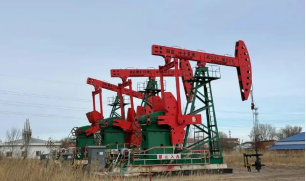
Core Viewpoint - The article explores the transformation of Daqing from a traditional oil city to a modern chemical and manufacturing hub, highlighting its historical significance in China's oil industry and its ongoing industrial evolution. Group 1: Historical Significance of Daqing Oilfield - Daqing Oilfield, discovered in 1959, marked a significant milestone in China's oil industry, contributing to the country's self-sufficiency in oil production by the early 1960s [5][9]. - From 1960 to 1963, Daqing produced 11.66 million tons of oil, accounting for 51.3% of the national total, and by 1963, its production capacity reached 4.393 million tons, representing 67.8% of the national output [9]. - Daqing maintained high production levels, achieving over 5 million tons annually from 1976 to 2002, and stabilized production above 4 million tons from 2003 to 2014 [10]. Group 2: Transition to a Chemical Industry - Daqing has transitioned from a single oil extraction base to a comprehensive chemical manufacturing city, focusing on refining and chemical production [10]. - The city has implemented strategies to enhance oil recovery and develop shale oil, while also upgrading its refining capabilities, leading to a significant increase in the production of chemical raw materials [10]. - Daqing now features a modern petrochemical base with a capacity for 10 million tons of refining and 1 million tons of ethylene, promoting a collaborative development of oil extraction and green chemistry [10]. Group 3: Development of the Automotive Industry - Daqing has actively engaged with the global high-end automotive industry, notably through the establishment of a Volvo manufacturing plant, which has become a key pillar of the local economy [11]. - Since the opening of the Volvo factory in 2013, Daqing has produced over 560,000 vehicles, generating nearly 120 billion yuan in output value and over 11 billion yuan in tax revenue by 2025 [11]. Group 4: Broader Economic Context - The Northeast region of China, historically known for its industrial contributions, faces challenges such as population outflow and limited high-end job opportunities, necessitating a shift towards innovation-driven growth [15]. - Daqing's evolution serves as a model for resource-based cities aiming for high-quality revitalization and sustainable economic development [10][15].

美国关税被判违法,有利A股开门红?美伊局势才是A股关键胜负手
Sou Hu Cai Jing· 2026-02-23 05:10
Group 1 - The core focus of the capital market post-Spring Festival is whether A-shares will be influenced by changes in US tariff policies, with a conclusion that such impacts can be largely ignored [1][3] - The Trump administration's tariffs on Chinese goods, including a 20% additional tariff, were recently affected by a Supreme Court ruling that deemed them invalid, leading to a temporary 15% tariff being imposed instead, resulting in a net reduction of 5% in actual tariff rates [3][5] - The initiation of the Section 301 investigation by the US Trade Representative aims to solidify tariff outcomes through a legal process, indicating a strategic approach to counteract the Supreme Court's ruling [5] Group 2 - Chinese enterprises have developed robust risk-hedging mechanisms over years of trade friction, reducing reliance on the US market and enhancing their resilience against minor tariff fluctuations [7] - The capital market's response to the tariff changes is expected to be stable, as the "information vacuum" during the Spring Festival allowed investors to assess the situation, minimizing the likelihood of significant market volatility [7] - The geopolitical situation in the Middle East poses a greater risk to A-shares than tariff fluctuations, with potential military conflicts affecting global oil prices and consequently impacting China's energy costs and related industries [9][11] Group 3 - Investors are faced with two strategic choices: to reduce holdings in anticipation of inevitable conflict or to hold onto stocks, believing in diplomatic resolutions to benefit from market gains [11] - The decision-making logic of the Trump administration regarding military deployments in the Middle East suggests a complex interplay of costs and expected strategic benefits, adding uncertainty to the geopolitical landscape [11] - Overall, the A-share market is expected to exhibit characteristics of "no disturbance from tariffs, dominated by geopolitical factors," with a need for investors to closely monitor Middle Eastern developments [13]

节后春季行情可能延续,科技和周期占优
Huajin Securities· 2026-02-23 03:45
Investment Rating - The report suggests a positive outlook for the A-share market post-Spring Festival, indicating a potential upward trend in the market driven by favorable policies and external factors [5][11][27]. Core Insights - The report highlights that concerns regarding economic and profit growth during the Spring Festival period did not materialize, with significant increases in travel and consumption data compared to the previous year [5][11]. - Historical data indicates that the A-share market tends to rise after the Spring Festival, particularly in years when the festival starts later, with 12 out of 16 instances showing gains in the first five trading days post-festival [11][27]. - The report emphasizes that technology growth and cyclical industries are likely to outperform in the short term following the festival, supported by favorable policies and market trends [31][32]. Summary by Sections Market Concerns and Trends - Concerns about economic performance during the Spring Festival were largely unfounded, with travel data showing a 6.1% year-on-year increase in cross-regional movement during the holiday [5][11]. - Consumption data was also positive, with the total box office for the Spring Festival exceeding 3 billion yuan, indicating strong consumer demand [5][11]. Post-Festival Market Outlook - The report anticipates a continuation of the spring market rally, with A-shares expected to show a strong upward trend due to positive policy expectations and limited external risks [11][27]. - The report notes that the macro liquidity environment is likely to remain loose, with expectations of increased capital inflow into the stock market post-festival [27][31]. Industry Configuration - The report recommends continued investment in technology growth and cyclical industries post-festival, as these sectors are expected to benefit from favorable policies and market conditions [31][32]. - Specific sectors highlighted for investment include machinery (robots), media (AI applications, gaming), computing (AI applications), electronics (semiconductors, AI hardware), military (commercial aerospace), and communications (AI hardware) [31][32].
【图】2025年8月重庆市纯碱(碳酸钠)产量数据分析
Chan Ye Diao Yan Wang· 2026-02-23 01:14
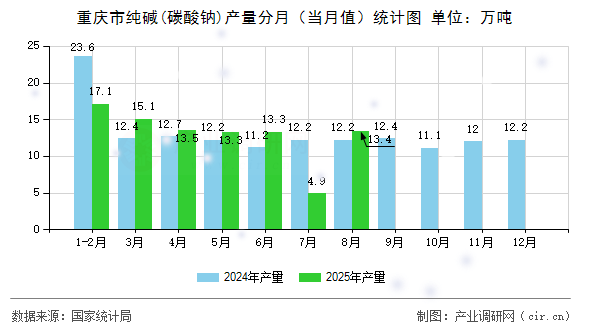
Group 1 - The core point of the article highlights the production statistics of soda ash (sodium carbonate) in Chongqing for August 2025, showing a production of 134,000 tons, which represents a year-on-year growth of 9.6% and an increase of 1.1 percentage points compared to the previous year [1] - In August 2025, Chongqing's soda ash production accounted for 4.1% of the national production of 3,280,641.1 tons, indicating a strong regional performance compared to the national average [1] - For the period from January to August 2025, the total production of soda ash in Chongqing was 905,000 tons, reflecting a year-on-year decline of 6.3%, which is 18.2 percentage points lower than the previous year [1] Group 2 - The production decline from January to August 2025 in Chongqing was also noted to be 9.7 percentage points lower than the national average, indicating a weaker performance relative to the overall market [1] - The statistics suggest that while August showed positive growth, the cumulative production for the year thus far has been negatively impacted, highlighting potential fluctuations in the market [1]
暖心·信心·决心
Xin Lang Cai Jing· 2026-02-22 23:05
Group 1 - The article highlights the robust performance of private enterprises in Fujian province, showcasing their proactive approach to production and order fulfillment as they aim for a strong start in the first quarter of the year [1] - The implementation of the "Fujian Province Private Economy Promotion Regulations" on January 1 is emphasized as a significant measure to support the healthy and high-quality development of private enterprises [1] - Local government initiatives, such as trade delegations promoting investment environments and leaders engaging with entrepreneurs, reflect a commitment to fostering a supportive ecosystem for business growth [1] Group 2 - Fujian private entrepreneurs are characterized by their adventurous spirit and resilience, demonstrating a willingness to innovate and take risks in challenging environments [2] - The article describes the determination of Fujian's private enterprises to achieve high-quality development, likening their efforts to galloping horses in a spring landscape, symbolizing progress and ambition [2]