
Qi Huo Ri Bao

Search documents
刚刚,美政府再次警告:离开伊朗!特朗普取消与伊朗官员所有会面!美军指挥官希望“在发起潜在打击前巩固阵地”!俄方表态
Qi Huo Ri Bao· 2026-01-13 23:48
《纽约时报》援引美军官员的话报道称,美军在中东地区的指挥官希望"在发起任何潜在打击前,预留更多时间来巩固美军阵地,为伊朗可能发动的报复 性袭击做好准备"。 据悉,特朗普11日说,伊朗方面已与美国政府官员接触并提议进行谈判,"会议正在安排中"。 据央视新闻最新消息,美东时间1月13日,美国国务院通过"虚拟驻伊朗德黑兰使馆"发布全国性安全警告称,敦促美国公民立即离开伊朗,并建议在安全 可行的情况下经陆路前往土耳其或亚美尼亚,同时提醒不要依赖美国政府直接协助撤离。美国国务院12日曾发布紧急安全警示,要求美国公民立即离开伊 朗。 另据新华社消息,俄罗斯外交部发言人扎哈罗娃13日表示,俄方强烈谴责外部势力干涉伊朗内政,美国威胁对伊朗发动军事打击是"绝对不可接受的"。 银价、油价大涨 13日晚,现货黄金、白银价格均刷新历史纪录,同时,WTI原油期货、布伦特原油期货价格也大幅走高。 早上好,先来关注下国际局势。 据CCTV国际时讯消息,美国总统特朗普昨日在其社交媒体"真实社交"上发文称,他已经"取消了与伊朗官员的所有会面"。 图片来源:央视新闻 截至发稿,金银价格均有所回落。伦敦银现货价格涨逾3%,伦敦金现货价格下跌0.2 ...


注意,化工板块新年强势崛起!有哪些投资机会?
Qi Huo Ri Bao· 2026-01-13 23:39
Core Viewpoint - The chemical sector has shown a strong resurgence at the beginning of the year, with a notable "stock market leading, futures and spot resonance" trend, indicating a recovery in industry sentiment [2]. Group 1: Market Performance - The core chemical ETF surged over 5% in the first week of the year, with leading products seeing cumulative gains exceeding 10% and a single-day net inflow surpassing 200 million yuan [5]. - The stock market's bullish sentiment quickly transmitted to the commodity market, with active trading in chemical products, particularly in the energy chain, although performance varied among different products [5]. Group 2: Influencing Factors - The current market trend is attributed to a fourfold resonance of policy, cost, supply, and demand. The central economic work conference has set a tone for stable growth, and policies promoting consumption remain unchanged [5]. - Rising international geopolitical tensions have increased crude oil prices, which are expected to stabilize and support the profitability recovery of the chemical industry [6]. - Domestic and international supply constraints are evident, with a notable supply gap in key areas like PX due to the end of the domestic chemical industry's expansion cycle and accelerated exit of overseas capacity [7]. Group 3: Demand and Investment - Post-Chinese New Year, demand is expected to rebound, supported by the "14th Five-Year Plan" focusing on expanding domestic demand, particularly in sectors like new energy, real estate, and automotive [7]. - The chemical sector is attracting institutional investment due to its relatively low valuations, with both investment and industrial funds driving up trading activity [7]. Group 4: Market Outlook - Analysts believe the current market rally represents a phase of valuation correction, with short-term and medium-term trends likely to differ significantly [8]. - In the short term (1-3 months), strong bottom support is anticipated, with the February resumption season expected to further enhance demand growth [8]. - In the medium term (3-6 months), increased differentiation within the chemical sector is expected, with performance largely dependent on demand resilience, supply disruptions, and oil price trends [8].

史无前例!9位央行行长联名力挺美联储主席!市场人士:新的资产配置逻辑正在形成
Qi Huo Ri Bao· 2026-01-13 23:37
此外,当地时间12日,美国十余名曾在财经界担任要职的人士也发表联合声明,批评特朗普政府对鲍威 尔发起刑事调查。签署这一声明的包括多名美联储前主席、美国财政部前部长和白宫经济顾问委员会前 主席。 声明说,美联储的独立性对美国经济表现至关重要,而对鲍威尔的刑事调查企图利用检方调查削弱美联 储的独立性。声明强调,法治是美国经济成功的根基,并警告说,这种前所未有的做法可能给通胀形势 和整体经济运行带来极为不利的影响。 孙伏鲲表示,鲍威尔遭刑事调查,是一场针对美联储独立性的"压力测试",其根源在于特朗普对现行高 利率政策的不满。尽管此举未能改变美元走弱的大趋势,但确实导致了部分大类资产定价出现偏移。当 美元作为全球资产定价"基石"的地位受到质疑时,黄金等传统避险资产自然会成为资金的避风港。全球 央行持续增持黄金储备的行为反映了长期投资者的资产配置已经出现结构性转变。 美联储主席鲍威尔遭刑事调查一事继续发酵! 环球时报援引美国《华尔街日报》13日报道,9位央行行长"史无前例地"发表联合声明,强调维护美联 储的独立性"至关重要"。 华源期货孙伏鲲和实盘大赛金牌导师王志新在期货日报的直播节目中对事件的深层影响进行了全面解 读 ...
谋划新一代工业互联网平台生态
Qi Huo Ri Bao· 2026-01-13 16:11
Core Viewpoint - The Ministry of Industry and Information Technology (MIIT) has released an action plan aimed at promoting the high-quality development of industrial internet platforms from 2026 to 2028, with a goal of establishing a multi-level platform system and enhancing resource connectivity and application capabilities [1] Group 1: Action Plan Overview - By 2028, the plan aims to have over 450 influential platforms, with industrial equipment connections exceeding 120 million units, and a platform penetration rate of over 55% [1] - The action plan outlines four key initiatives to drive the development of industrial internet platforms [1] Group 2: Platform Cultivation and Enhancement - The plan emphasizes differentiated development of platforms, fostering three types: professional, industry-specific, and collaborative, while establishing a four-tier cultivation system [2] - It aims to enhance platform application capabilities and support diverse business models, while promoting interconnectivity and resource collaboration across regions [2] Group 3: Data Utilization and Intelligence Enhancement - The action plan focuses on unlocking the value of industrial data, improving data collection and aggregation capabilities, and developing a comprehensive industrial data labeling system [2] - It seeks to create a high-quality industrial model system and promote the integration of artificial intelligence into industrial internet platforms [2] Group 4: Scalable Application of Platforms - The plan encourages the development of solutions for high-value scenarios and supports collaboration among large and small enterprises to enhance application quality [3] - It promotes innovative service models such as "pay after use" and subscription services to facilitate platform adoption [3] Group 5: Ecosystem Support for Platforms - The action plan advocates for an open-source mechanism and the establishment of an open-source community for industrial internet platforms [3] - It aims to enhance international cooperation and standardization efforts, while strengthening security measures for platform enterprises [3]
多部门详解固体废物综合治理蓝图
Qi Huo Ri Bao· 2026-01-13 16:10
据介绍,行动计划突出问题导向,在整合各领域固体废物既有管理手段的基础上,进一步完善全链条综 合治理的政策措施,推动末端治理向全过程防控转变,是我国首个针对固体废物综合治理作出系统性部 署的专项文件,与此前水、土、气污染防治专项文件共同形成了污染防治攻坚战政策体系。同时,行动 计划着力填补关键环节制度空白,提高针对性、创新性、有效性,推动解决困扰行业多年的重点难点问 题。 我国是农业大国,在农业生产过程中产生的固体废弃物量大面广,综合治理和循环利用任务艰巨。农业 农村部科学技术司负责人杨如表示,下一步,将按照行动计划分工安排,聚焦重点领域、关键环节,综 合施策、精准发力。加强地膜科学使用指导,大力推广加厚高强度地膜和全生物降解地膜,因地制宜加 强农药包装废弃物回收。围绕源头管控和减量、收集转运能力提高、资源化利用水平提升等,强化政策 激励支持。加快突破畜禽粪肥轻简科学还田、低温环境下秸秆还田快速腐解熟化、新型地膜材料工艺等 关键技术瓶颈。 工业固体废物综合利用是固体废物综合治理的重要组成部分。工业和信息化部节能与综合利用司司长王 鹏表示,下一步,将会同有关部门,认真落实行动计划,多措并举、系统推进,持续抓好工业 ...
焦炭价格继续下行的空间有限
Qi Huo Ri Bao· 2026-01-13 16:09
Group 1 - The recent decline in spot prices for coke has occurred four times within a month, attributed to multiple factors including reduced demand from steel mills and a decrease in iron water production [1] - Steel mills have entered a loss phase since October last year, leading to a 12-week consecutive decline in iron water output, which has weakened the demand for coke [1] - The inventory ratio of coke in steel and coking plants is at a three-year low of 7.03, with large and medium-sized steel mills having only 12.1 days of available coke, which is 1.1 days lower than the same period in 2024 [1] Group 2 - Despite a temporary recovery in coking profits, there has been no significant increase in coke supply, with daily production remaining stable between 620,000 to 650,000 tons and capacity utilization between 71.5% to 73% [2] - The recent decline in coking coal prices has not led to a notable increase in coking coal production, with a decrease of 49,500 tons in daily output reported in the last week of December [2] - There are signs of recovery in daily iron water production, with an increase of 8,800 tons in the last two weeks of December, indicating potential for further growth in iron water output [2]
广期所调整碳酸锂期货相关合约风控措施
Qi Huo Ri Bao· 2026-01-13 16:08
自2026年1月15日交易时起,非期货公司会员或者客户在碳酸锂期货LC2606、LC2607、LC2608、 LC2609、LC2610、LC2611、LC2612合约上单日开仓量分别不得超过400手。该单日开仓量是指非期货 公司会员或者客户当日在单个合约上的买开仓数量与卖开仓数量之和。套期保值交易、做市交易的单日 开仓数量不受上述标准限制。具有实际控制关系的账户按照一个账户管理。(齐宣) 本报讯1月13日,广期所发布通知称,自2026年1月15日交易时起,碳酸锂期货LC2602、LC2603、 LC2604、LC2606、LC2607、LC2608、LC2609、LC2610、LC2611、LC2612合约的交易手续费标准调 整为成交金额的万分之三点二,日内平今仓交易手续费标准调整为成交金额的万分之三点二。 ...
债市“短强长弱”格局延续
Qi Huo Ri Bao· 2026-01-13 09:33
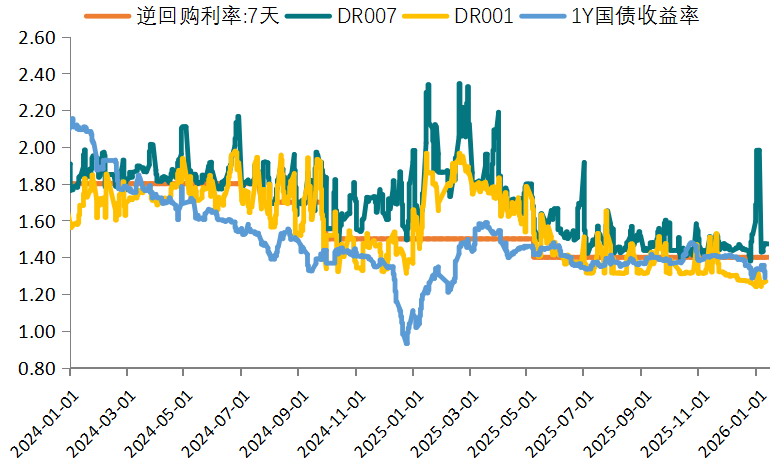
近期,债市在多重利空的影响下延续调整走势,尤其是超长端调整幅度较大,30年期国债期货创2025年以来的 新低。虽然2025年12月31日,债基赎回费率新规靴子落地,监管态度明显软化,缓解了市场的担忧情绪,但年 初开盘债市仍然面临多重利空因素。一方面,国债单期发行规模增加,供给压力加大,债券供需问题再度引发 市场担忧。另一方面,2025年12月央行买债规模仅500亿元,不及市场预期,货币宽松预期降温。此外,最新公 布的制造业PMI及通胀数据均超预期,经济基本面改善迹象明显,债市承压。 今年以来,长端利率面临基本面、股市以及供求结构的利空扰动。2026年一季度政府债继续"靠前发力",1月供 给占比较去年进一步提升,尤其是30年期债券占比较高导致市场对超长端供需结构的担忧升温。目前1月已披露 地方债发行计划超8000亿元,而需求承接力度不足,叠加PMI和通胀数据超预期、年初股市和商品市场"开门 红",长端债券市场压力不减。 近期经济基本面出现阶段性修复,对债市形成利空压制。相关数据显示,2025年12月制造业PMI较前值上升0.9 个百分点,至50.1%,表现超预期,主要受国内春节偏晚拉长节前备货周期、政策性金融工 ...
上证综指迎“十七连阳”
Qi Huo Ri Bao· 2026-01-13 09:33
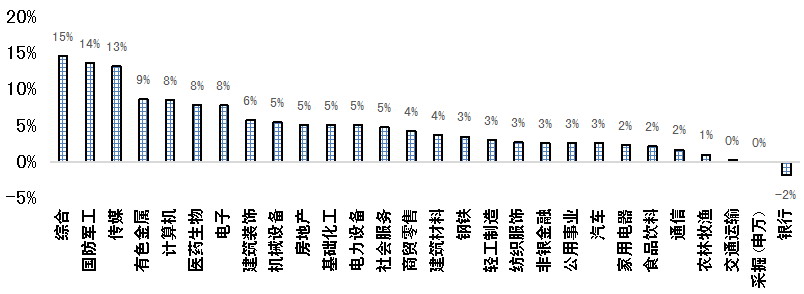
Core Viewpoint - The A-share market has shown a strong upward trend since the beginning of 2026, driven by multiple factors including the technology cycle, policy benefits, economic recovery, and the return of overseas capital [1][3][4]. Group 1: Market Performance - As of January 12, 2026, the Shanghai Composite Index has achieved a "seventeen consecutive days" rise, with significant increases in trading volume and active capital inflow [1][3]. - The performance of various sectors shows that cyclical stocks, technology stocks, and military industry stocks have led the gains, while financial and consumer stocks have underperformed [1][3]. Group 2: Driving Factors - The dual momentum from technology and cyclical sectors has significantly enhanced risk appetite among investors, with the digital economy, particularly AI and semiconductors, leading the charge [3][4]. - The release of concentrated economic policies since the beginning of 2026, including a 625 billion yuan special bond for consumer upgrades, has contributed to the market's positive outlook [4][5]. - Economic recovery is gaining momentum, with manufacturing and non-manufacturing PMIs returning above the growth line, indicating a shift towards quality and efficiency in corporate operations [5][6]. Group 3: Capital Flows - The appreciation of the RMB against the USD has attracted overseas capital back to China, as global investors seek stable assets amid geopolitical uncertainties [6][7]. - Data indicates an increase in holdings of Chinese assets by global and Asian funds compared to the end of 2024, supported by targeted policies and growth in AI-related profits [7]. Group 4: Futures Market Dynamics - The narrowing of the basis in stock index futures indicates strong bullish sentiment among investors, with significant shifts in the annualized basis rates for various contracts [8][9]. - Recent fluctuations in futures contracts suggest a potential adjustment phase, with the cost of rolling over contracts decreasing, reflecting a more favorable position for investors [10][11]. Group 5: Future Outlook - The market is transitioning from valuation-driven growth to profit-driven performance, with individual stock performance increasingly tied to fundamental improvements and rising economic conditions [11][12]. - The A-share market is expected to continue its upward trajectory, supported by ongoing policy effects, enhanced economic recovery, and the sustained influx of overseas capital [12].
不到1个月,芝商所4次调整贵金属期货合约保证金!业内人士:投资者应做好资金管理
Qi Huo Ri Bao· 2026-01-13 09:16
Core Viewpoint - The Chicago Mercantile Exchange (CME) has announced a change in the margin collection method for its precious metal futures contracts, shifting from a fixed amount to a percentage of the contract's nominal value, reflecting heightened risk management in the precious metals market [1][2]. Group 1: Margin Adjustment Details - The adjustment will take effect after the market closes on January 13, 2026, marking the fourth change in a month regarding precious metal margin requirements [1]. - The previous three adjustments focused on increasing fixed margin amounts to reduce leverage and curb excessive speculation, while the latest change introduces a dynamic margin calculation based on market price fluctuations [2][3]. Group 2: Risk Management Implications - The recent adjustment is seen as a structural shift in risk management, transitioning from a "static" to a "dynamic" system that automatically adjusts margins in response to market conditions [3]. - Historical precedents indicate that CME has implemented similar measures during periods of heightened market volatility, such as during the 2008 financial crisis [3]. Group 3: Market Impact - Short-term effects may include increased overall margin requirements, potentially exacerbating selling pressure, while long-term effects could enhance market resilience and improve the clearing system's ability to withstand future shocks [4]. - The new margin system may lead to more automated and transparent risk management within the futures market, with a stronger regulatory role for exchanges [4]. Group 4: Investor Considerations - Retail investors should manage liquidity carefully to avoid forced liquidations due to sudden margin increases, while institutional investors need to reassess their funding and risk management strategies under the new margin regime [5]. - The adjustments signal a recognition of a prolonged high-volatility environment in precious metals, which may affect bullish sentiment in the market [5].
