
Jin Shi Shu Ju

Search documents
“存储超级牛市”全面来临?2026年还要继续涨价,PC和手机无处可逃
Jin Shi Shu Ju· 2026-01-12 03:28
AI播客:换个方式听新闻 下载mp3 存储价格持续上涨,行业成本线被迫重写 从结构上看,本轮涨价并非短期补涨,而是建立在此前长时间低迷周期之上的"急转直上"。 在2023年至2024年经历了长时间价格下探和去库存后,头部存储厂商主动减产、集中产能投向高毛利产 品,为本轮供给收紧埋下伏笔。 Counterpoint在报告中指出,传统服务器DRAM、消费级DRAM和NAND价格在2025年已经累计上涨多 轮,2025年第四季度单季涨幅高达40%—50%,部分高端模组价格涨幅更大。 这种涨势已经在具体产品上得到体现。Counterpoint披露,数据中心常用的64GB RDIMM模组价格从 2025年第三季度的255美元跳涨到第四季度约450美元,并有望在2026年3月前后进一步升至约700美元, 单季度和单年的涨幅都远超上一轮周期。 价格快速上行,使下游整机厂商原有的成本模型迅速失效,过往在其他部件上精细打磨出来的成本优 势,被集中吞噬在"内存"这一单一项上。 音频由扣子空间生成 市场研究机构Counterpoint Research最新发布的存储市场内存月度价格追踪报告显示,全球存储芯片价 格正在经历一轮罕见的 ...
美媒:鲍威尔被查 矛头直指美联储大楼翻新工程
Jin Shi Shu Ju· 2026-01-12 02:23
金十数据1月12日讯,据《纽约时报》,知情官员透露,美国哥伦比亚特区联邦检察官办公室已对美联 储主席鲍威尔展开刑事调查,涉及美联储总部翻修项目,以及鲍威尔是否就该项目的规模向国会作出不 实陈述。 特朗普长期抨击鲍威尔拒绝按其要求大幅降息,威胁要将其解职,还扬言要就25亿美元的美联储改建工 程提起诉讼,理由是鲍威尔先生"无能"。 调查包括对鲍威尔公开表态的分析以及对相关支出记录的审查,并于去年11月获得批准。批准调查的是 该办公室负责人、特朗普长期盟友珍妮·皮罗。目前尚不清楚皮罗是否已召集大陪审团或发出传票。但 据一名官员称,其办公室的检察官已多次联系鲍威尔的工作人员,要求提供与翻修项目有关的文件。 ...


金十数据全球财经早餐 | 2026年1月12日
Jin Shi Shu Ju· 2026-01-11 23:11
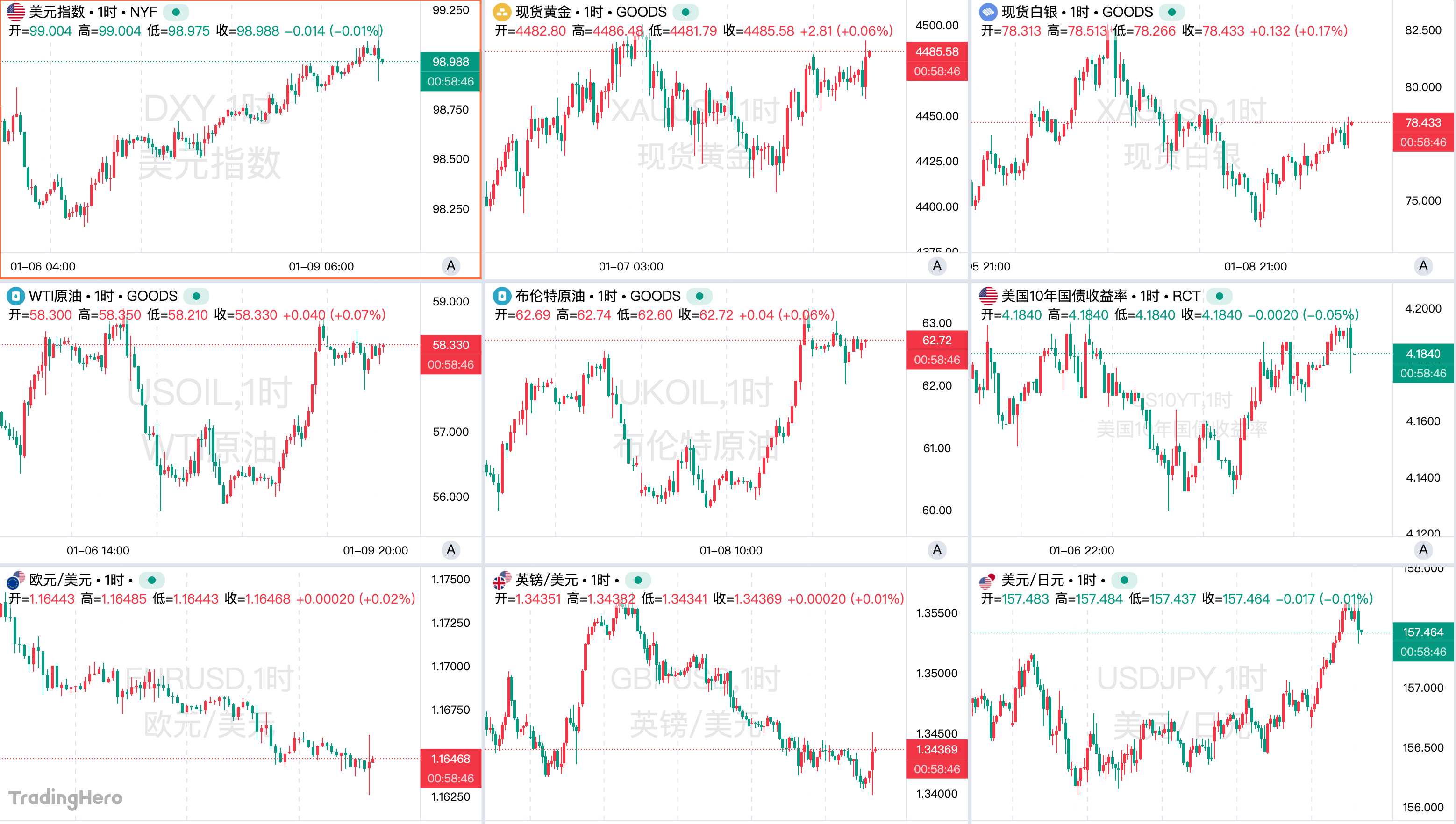
男生普通话版 下载mp3 女声普通话版 下载mp3 粤语版 下载mp3 西南方言版 下载mp3 东北话版 下载mp3 上海话版 下载mp3 今日优选 白宫证实,特朗普的社交媒体账户无意中泄露了汇总的就业数据 特朗普:不会再有委内瑞拉石油与资金流向古巴 伊朗总统:政府认可和平抗议行为,愿与抗议团体会面 高市早苗拟于1月解散众议院举行大选 财政部、国家税务总局:自2026年4月1日起,取消光伏等产品增值税出口退税 广期所调整铂、钯期货合约涨跌停板幅度和交易保证金标准 沪深两市历史第五次突破3万亿大关 证监会对天普股份股票交易异常波动公告涉嫌重大遗漏立案调查 市场盘点 上周五,最新公布的美国失业率低于前值和预期,增加了美联储本月维持利率不变的概率,美元指数重回99整数关口上方,创近一个月新高,最终收涨 0.30%,报99.14;基准的10年期美债收益率最终收报4.1900%,对美联储政策利率敏感的2年期美债收益率收报3.5130%。 因美国12月非农新增就业人口低于预期,以及特朗普引发地缘政治不确定性,现货黄金重回4500美元上方,最终收涨0.70%,报4509.02美元/盎司;现货白 银最终收涨3.81%,报79 ...

一周热榜精选:非农关闭本月降息大门!特朗普中期选举前发力?
Jin Shi Shu Ju· 2026-01-09 14:11
Group 1: Currency and Commodity Markets - The US dollar index has risen for four consecutive days, reaching a near one-month high above the 99 mark, supported by rising US Treasury yields and increased demand due to heightened risk aversion [1] - Gold prices experienced volatility, initially rising due to safe-haven demand from the Venezuela situation, peaking at $4500 per ounce before retreating, while silver showed even greater fluctuations [1] - The CME will raise margin requirements for gold, silver, platinum, and palladium futures on January 9, marking the third adjustment in a month, aimed at curbing speculation in the silver futures market [1] - Non-US currencies weakened overall, influenced by the stabilization of the dollar and market caution, with the euro and pound declining against the dollar for four consecutive days [1] Group 2: Oil Market Dynamics - International oil prices fluctuated significantly, initially rising due to uncertainty over supply from Venezuela, but later falling as Trump announced a deal with Venezuela, raising concerns over oversupply [2] - Oil prices rebounded on Thursday amid geopolitical crises raising supply disruption fears [2] Group 3: Investment Bank Predictions - Bank of America predicts the average gold price will reach $4538 per ounce by 2026, while silver could soar to between $135 and $309 per ounce [5] - Citigroup expects copper prices to potentially exceed $14,000 per ton in January [5] - Deutsche Bank suggests the energy sector may benefit the most from the BCOM index's annual rebalancing [5] Group 4: Economic Indicators and Employment Data - The US non-farm payroll report showed mixed results, with December adding 50,000 jobs, below the expected 60,000, while the unemployment rate fell to 4.4% [10] - The market perceives the drop in unemployment as closing the door on potential Fed rate cuts in January, with traders now pricing in a slower pace of rate reductions [11] Group 5: Commodity Index Rebalancing - The Bloomberg Commodity Index (BCOM) is undergoing annual rebalancing, with gold and silver facing significant sell-off pressures, estimated at $141 billion combined [13] - Gold's weight in the index will decrease from 20.4% to 14.9%, leading to a sell-off of approximately 2.4 million ounces of gold [13] Group 6: Geopolitical Events Impacting Markets - The situation in Venezuela has led to significant geopolitical tensions, with the US taking military action and controlling oil sales, which may impact global oil prices [6][7] - The ongoing protests in Iran, driven by economic hardships, have escalated, with significant implications for regional stability and potential international responses [18]




特朗普“逼宫”石油巨头投资,委内瑞拉变局下华尔街惊魂未定
Jin Shi Shu Ju· 2026-01-09 12:59
Core Viewpoint - U.S. oil executives are summoned to the White House to discuss potential investment plans in Venezuela, weighing the country's business potential against political stability concerns and investor caution [1][2]. Group 1: Investment Potential - U.S. oil companies are reportedly ready to invest billions to rebuild Venezuela's oil economy following U.S. military actions [1]. - Chevron has ongoing operations in Venezuela, while ExxonMobil and ConocoPhillips withdrew nearly 20 years ago after asset nationalization and are still owed billions [4]. - Oilfield service companies may be among the first beneficiaries in the infrastructure rebuilding process, emphasizing the need for careful timing and partnerships [5]. Group 2: Investor Concerns - Some energy investors express skepticism about the costs of investing in Venezuela, citing political instability and the reliability of the interim government led by Delcy Rodriguez [2]. - Investors are looking for long-term stability and favorable financial terms to mitigate risks of asset nationalization, which has been a historical concern in Venezuela [2]. - The uncertainty surrounding the management of Venezuela's transition period remains a significant factor for potential investors [6][7]. Group 3: Government Involvement - President Trump is expected to encourage oil executives to invest and help increase Venezuela's oil production during the meeting [3]. - The U.S. government is reportedly developing a three-step plan for Venezuela, starting with stabilization, followed by ensuring access for U.S. oil companies, and finally transitioning governance [7]. - There are concerns among U.S. oil companies about being pressured to enter Venezuela quickly and the potential consequences of such actions [7].


开年大考!贵金属百亿美元抛压来袭,金银恐遭“调仓劫”
Jin Shi Shu Ju· 2026-01-09 12:19
Group 1 - A significant sell-off of precious metals worth over $10 billion is testing the market for 2026, putting pressure on the previously soaring prices of gold and silver [1] - According to JPMorgan's estimates, commodity index-tracking funds are expected to sell approximately $6.1 billion of silver and $5.6 billion of gold during the annual rebalancing period from January 8 to 15 [1] - The Bloomberg Commodity Index (BCOM) requires annual adjustments to maintain target allocation ratios, leading to necessary buying or selling by funds [1] Group 2 - Gregory Shearer from JPMorgan indicates that silver will face the largest scale of sell-off, estimated to be about 10% of the total value of all open derivative contracts on the New York Mercantile Exchange (Comex) [2] - Cocoa has been reintroduced into the Bloomberg Commodity Index, with funds needing to buy approximately 30% of the open contracts on the Intercontinental Exchange (ICE) [2] - Concerns exist in the cocoa market regarding potential short covering due to the rebalancing, especially after cocoa prices fell nearly 50% in 2025 following a supply shortage from West Africa [2]
美劳动力市场陷入“寒战”,美联储1月降息预期濒临破灭?
Jin Shi Shu Ju· 2026-01-09 10:14
Group 1 - The upcoming labor market report is expected to show a slowdown in job growth in December due to increased import tariffs and cautious hiring related to AI investments, with the unemployment rate projected to drop to 4.5% [1] - Economists estimate that the U.S. economy needs to create between 50,000 to 120,000 jobs monthly to keep up with the growth of the working-age population, but job creation has significantly lagged behind this requirement [2] - The sharp slowdown in job growth last year is attributed to aggressive trade and immigration policies, which reduced both demand and supply for workers, with a notable impact from the government shutdown affecting data collection [3] Group 2 - While the median forecast from economists suggests a drop in the unemployment rate to 4.5% in December, some predict a slight increase to 4.7%, which could open the door for potential rate cuts by the Federal Reserve [4] - The Federal Reserve lowered the benchmark interest rate by 25 basis points to a range of 3.50%-3.75% in December, but officials indicated a pause in further cuts to better assess economic trends, with job growth expected to remain narrow and concentrated in healthcare and social assistance sectors [5]
特朗普2.0关税“天书”难倒进口商,最高法院裁决引爆市场焦虑
Jin Shi Shu Ju· 2026-01-09 09:28
Group 1 - The complexity of the U.S. tariff system has significantly increased, with the 2026 "base" version of the Harmonized Tariff Schedule exceeding 4,500 pages, an increase of over 100 pages from the previous year and 800 pages since 2017 [2][3] - The average tariff rate for consumers is calculated to be 16.8%, indicating a substantial financial burden on businesses and consumers alike [3] - There are currently 17 different tariff measures applicable to major U.S. imports, up from just 3 in 2017, highlighting the growing regulatory complexity [4] Group 2 - The upcoming Supreme Court ruling on the legality of emergency tariffs imposed by the Trump administration could have significant implications for financial markets, with the case involving approximately $100 billion in government revenue [5] - Since early 2025, over $200 billion in tariffs have been collected, with an estimated 55% of this revenue coming from tariffs that are legally questionable [5] - Regardless of the Supreme Court's decision, the complexity of tariffs will persist, particularly for tariffs on steel, automobiles, and other industries, which account for the remaining 45% of tariff revenue [6] Group 3 - If the Supreme Court rules against the Trump administration, hundreds of entries in the tariff schedule may need to be quickly adjusted, causing additional headaches for businesses [6] - Companies are preparing for potential refunds if the Supreme Court determines that certain tariffs were illegally imposed, with significant financial implications [6] - The refund process is expected to be complicated and lengthy, involving numerous lawsuits, and companies may not receive immediate financial relief even if tariffs are overturned [6]
每日投行/机构观点梳理(2026-01-09)
Jin Shi Shu Ju· 2026-01-09 09:05
Group 1 - Fitch expects the Federal Reserve to cut interest rates twice in the first half of 2026, with the unemployment rate stabilizing at 4.6% [1] - Goldman Sachs reports that investor sentiment towards oil is at its most pessimistic level in nearly a decade, with over 59% of surveyed institutional investors bearish on the oil market [2] - Goldman Sachs forecasts a robust global economic growth of 2.8% in 2026, surpassing the market expectation of 2.6%, driven by a strong performance in the US and China [3] Group 2 - Guggenheim indicates that the market has largely absorbed geopolitical risks but remains cautious about headline risks that could impact stock market resilience [4] - UOB raises its gold price forecast due to increased demand for safe-haven assets amid rising geopolitical risks, projecting gold prices to reach $5,000 per ounce by Q4 2026 [5] - CICC anticipates a short-term supply gap in the wood chip market in 2026, leading to a potential increase in pulp prices as demand improves [6] Group 3 - Tianfeng Securities is optimistic about A-share gaming companies entering a strong product cycle in 2026, driven by improved competition and stable regulatory environments [7] - CITIC Securities expects an expansion in the issuance of local government bonds in 2026, with a focus on matching issuance pace with market conditions [8] - CITIC Securities predicts that the Hang Seng Index will undergo adjustments, with 38 stocks expected to enter the Hong Kong Stock Connect [9] Group 4 - CITIC Securities highlights the potential for increased domestic tourism revenue in 2026, estimating an annual increment of 500 to 1,650 billion yuan due to new policies promoting worker consumption [10] - CITIC Jian Investment identifies a bottoming opportunity in the liquor sector, suggesting that the current adjustment phase may soon reverse as market expectations improve [11] - Huatai Securities sees a recovery in the innovative drug sector in Hong Kong, driven by liquidity restoration and multiple catalysts expected in the upcoming year [12]
今晚非农或不温不火,真正的行情引爆点在前值修正中?
Jin Shi Shu Ju· 2026-01-09 07:22
Core Viewpoint - The U.S. labor market is expected to show moderate growth in December, which may instill some confidence in investors for the new year, but it is not enough to cause excessive market excitement [1] Employment Data Expectations - The consensus forecast predicts an addition of 60,000 non-farm jobs in December, with the unemployment rate slightly decreasing to 4.5%. However, the range for job additions is between 25,000 and 155,000, indicating uncertainty in hiring conditions [1][3] - If the forecast is accurate, the job addition will be a slight increase compared to the average monthly increase of 55,000 jobs in the first 11 months of 2025 and slightly higher than the preliminary figure of 64,000 jobs in November [1] Market Impact - The non-farm employment report is crucial for traders as it significantly influences Federal Reserve policy expectations, potentially leading to substantial fluctuations in stock, bond, currency, and precious metal markets [1] - A weak non-farm employment report would reinforce market expectations for further interest rate cuts by the Federal Reserve, likely leading to a weaker dollar and a potential initial rebound in U.S. stocks, followed by concerns about economic growth dominating the market [1][2] Job Market Indicators - The November Job Openings and Labor Turnover Survey (JOLTS) indicated a significant decline in job openings, which is a leading indicator of future hiring intentions. This decline suggests a decrease in employer confidence and may foreshadow weaker non-farm job growth [4][5] - The ongoing decline in the labor resignation rate indicates that workers are less confident in external job opportunities, further signaling a cooling labor market [5] Data Revision Importance - Experienced traders recognize that revisions to previous months' employment data can significantly alter market perceptions of labor market strength. A substantial downward revision of October and November's job data could reveal a more severe employment situation than the December figures suggest [7] - Historical trends show that conflicting signals between initial and revised non-farm data often lead to significant market volatility [7] Future Employment Market Outlook - Economists generally expect the U.S. labor market to remain stable in 2026, with some positive signals in hiring activity and a slowdown in layoffs. The labor market is anticipated to maintain a moderate state without extreme fluctuations [8] - The growth in job positions has primarily been concentrated in sectors benefiting from expansionary fiscal policies, particularly healthcare and government [9] - A notable trend for 2026 will be employers' focus on retaining existing employees rather than aggressive hiring or layoffs, with increased investments in employee skill enhancement and retraining [9]