Xin Lang Ji Jin

Search documents
碳酸锂涨停,创1年多新高!赣锋锂业最新预测,提振市场信心!有色龙头ETF(159876)获资金净申购4500万份
Xin Lang Ji Jin· 2025-11-17 11:49
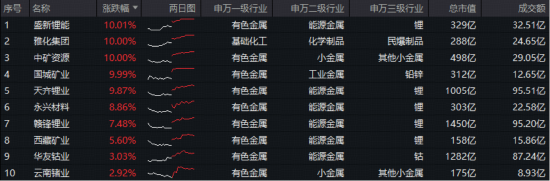
Group 1 - The core point of the news is the significant rise in lithium carbonate futures, which hit a new high since July 2024, leading to a surge in the energy metals sector and notable gains in various lithium-related stocks [1][4][6] - Lithium carbonate futures increased by 9%, reaching 95,200 yuan per ton, benefiting from a continuous rise in lithium prices [1][4] - Major companies in the energy metals sector, such as Shengxin Lithium Energy, Tianqi Lithium, and others, experienced substantial stock price increases, with some stocks hitting the daily limit [1][2][6] Group 2 - The energy metals sector saw a net inflow of over 62 billion yuan, ranking second among all secondary industries, indicating strong investor interest [6][8] - Ganfeng Lithium's recent forecast at an international battery conference predicts a 30% increase in lithium carbonate demand by 2026, suggesting potential price increases if demand exceeds expectations [5][6] - The overall outlook for the non-ferrous metals sector is positive, with expectations of a bull market driven by monetary easing, increasing demand from emerging industries, and supply constraints [8][9]




阿里、华为引爆,AI主线重燃!创业板人工智能领涨2%,化工“反内卷”共识深化,国防军工火力全开
Xin Lang Ji Jin· 2025-11-17 11:46
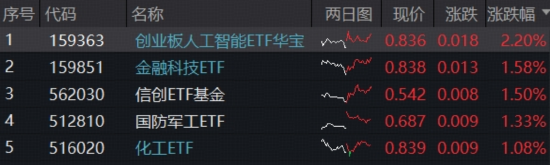
Market Overview - On November 17, the market experienced fluctuations, with the Shanghai Composite Index falling by 0.46% to close at 3972.03 points, while the Shenzhen Component Index and the ChiNext Index saw slight declines of 0.11% and 0.2% respectively. The total trading volume for both markets reached 1.91 trillion yuan [1]. AI Sector - The AI sector received significant attention with the launch of Alibaba's Qianwen App, which aims to compete directly with ChatGPT in the AI to C market. This app is expected to integrate various life scenarios, enhancing its utility [6]. - The ChiNext AI ETF (159363) surged by 2.2%, driven by strong performance in AI applications and computing power sectors. Notable stocks in this sector included Dongfang Guoxin and BlueFocus, which rose over 10% [3][4]. Defense Industry - The defense and military sector saw a robust performance, with the National Defense and Military Industry ETF (512810) rising by 1.33%. Analysts expect that the "14th Five-Year Plan" related orders will gradually materialize, coupled with military trade catalysts, potentially leading to an upward trend in this sector [3][11]. - The ETF experienced significant trading activity, with a total volume of 997.4 million yuan, reflecting strong buying interest [9]. Chemical Industry - The chemical sector showed resilience, with the Chemical ETF (516020) closing up by 1.08%. The sector is benefiting from improved supply-demand dynamics, particularly in the lithium battery supply chain and refrigerant prices, which are expected to rise due to regulatory changes [12][14]. - Key stocks in the chemical sector, such as Salt Lake Shares and Multi-Fluorine, saw substantial gains, with increases exceeding 6% [12]. Investment Strategies - Analysts recommend a balanced investment strategy focusing on sectors with clear growth signals, such as AI applications and defense industries. The emphasis is on capturing opportunities in the AI narrative and the ongoing "anti-involution" trend in the market [3][11]. - The chemical sector is highlighted as a potential area for investment, with a favorable valuation environment and expected improvements in overall supply-demand conditions [14][15].

地缘因素点火,国防军工行情再次起飞?长城军工、航天发展一字板!512810放量溢价,连收两根均线!
Xin Lang Ji Jin· 2025-11-17 11:43
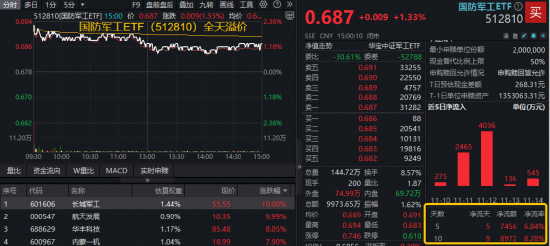
Core Viewpoint - The defense and military industry is experiencing significant activity due to escalating geopolitical tensions, with the defense military ETF (512810) showing strong performance and attracting substantial investment [1][5]. Market Performance - The defense military ETF (512810) opened over 2% higher and closed with a gain of 1.33%, outperforming the broader market [1]. - The ETF traded at a premium throughout the day, indicating strong buying interest, with nearly 90 million yuan invested in the previous 10 days [1]. - The ETF recorded a trading volume of 99.74 million yuan, a more than 113% increase compared to the previous period, reflecting a significant bullish sentiment [3]. Geopolitical Influence - Recent provocative statements from Japan and ongoing conflicts, such as the Russia-Ukraine war, have heightened geopolitical uncertainties, potentially increasing international military trade demand [5]. - Analysts suggest that the defense and military sector may see sustained growth due to these geopolitical factors, alongside the gradual realization of related orders in the fourth quarter [5]. Industry Outlook - The defense and military industry is expected to benefit from geopolitical risks, technological advancements, and policy support, with potential for high-end weapon exports and a revaluation of core assets [5]. - A report from CITIC Securities indicates a transformation in China's defense industry from "cyclical growth" to "comprehensive growth," driven by domestic demand, foreign trade expansion, and civilian contributions [5]. Investment Strategy - The defense military ETF (512810) is highlighted as an efficient investment tool for accessing core assets in the defense sector, covering various themes such as commercial aerospace, low-altitude economy, controlled nuclear fusion, large aircraft, deep-sea technology, and military AI [5].

长城基金汪立:关注低位科技修复机会
Xin Lang Ji Jin· 2025-11-17 09:33
Group 1: Market Overview - A-share market experienced fluctuations, with the Shanghai Composite Index hitting a new high before closing lower, while the ChiNext Index saw a significant pullback [1] - Weekly trading volume remained high, indicating ample liquidity, but funds shifted from high-valuation tech sectors to high-dividend and policy-benefiting sectors [1] - Industries such as textiles, retail, and beauty performed well, while electronics, communications, and computing lagged [1] Group 2: Macroeconomic Analysis - In October, major economic indicators in China showed a decline, with industrial, consumption, and investment growth rates slowing compared to September [2] - The need for policy support to counteract internal and external demand pressures is emphasized, with a focus on implementing existing policies and potentially introducing new ones [2] - Social financing growth continued to decline due to reduced government bond issuance, with a shift in policy focus towards the implementation of existing tools [2] Group 3: International Market Impact - Overseas markets, particularly US tech stocks, faced continued adjustments, affecting sentiment in A-shares [3] - Factors contributing to the decline in US stocks include the absence of key economic data during the government shutdown and hawkish statements from Federal Reserve officials regarding interest rate cuts [3] - The upcoming release of important economic data in December is anticipated to be a key variable for market direction [3] Group 4: Investment Strategy - Short-term focus on low-valuation tech recovery is suggested, as external disturbances may hinder A-shares from breaking through in the short term [4] - The market is entering a phase of total policy and profit window, with increased opportunities in low-valuation consumption and dividend sectors [4] - Long-term outlook remains positive due to structural economic transformation and the introduction of new technologies and industries [4] Group 5: Investment Themes - Emerging technologies are expected to be a main investment theme, with a focus on sectors that have seen prolonged corrections [5] - Specific areas of interest include technology growth, manufacturing expansion, cyclical consumption transformation, and financial services [5] - The cyclical consumption sector is viewed as forming a bottom, with potential opportunities in services and immediate consumption [5]
沪指缩量震荡日线两连阴,机构看好AI产业主线机会 | 华宝3A日报(2025.11.17)
Xin Lang Ji Jin· 2025-11-17 09:30
Group 1 - The market has entered a high-level fluctuation phase since early October, with significant industry rotation observed [2] - The consumer sector has shown strong performance recently, while resource sectors previously led the gains, indicating rapid style and industry switching [2] - The adjustment in the AI industry may present a better opportunity for investment positioning [2] Group 2 - Huabao Fund has launched three major broad-based ETFs tracking the China A-share market, providing diverse investment options for investors [2] - The A50 ETF focuses on the top 50 core leading companies, while the A100 ETF encompasses the top 100 industry leaders, and the A500 ETF covers a broader range of 500 companies [2] - The total trading volume in the two markets reached 1.91 trillion yuan, a decrease of 473 billion yuan from the previous day [1]
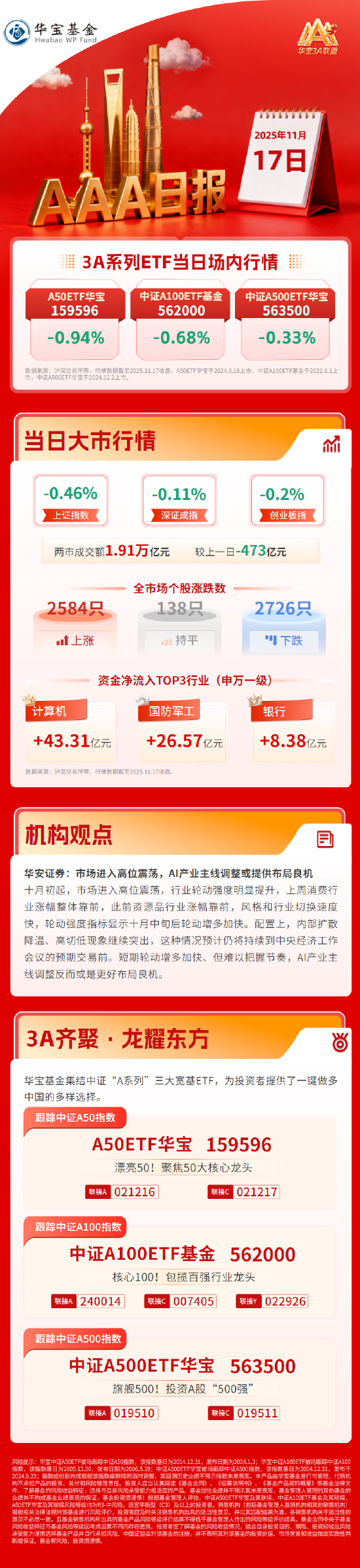
长城基金韩林:市场或震荡为主,关注结构性机会
Xin Lang Ji Jin· 2025-11-17 08:51
Core Viewpoint - The A-share market has experienced increased volatility since November, showing significant signs of style switching, with traditional value sectors like banks and utilities performing well, while previously strong sectors such as metals, new energy, and innovative pharmaceuticals have seen increased fluctuations [1] Industry Insights - The market is currently in a vacuum period regarding performance, events, and policies, lacking a clear direction, which is expected to lead to a primarily oscillating market with a focus on structural opportunities [1] - The overseas AI computing power remains a core focus, with "computing, connectivity, and storage" guiding multiple investment lines [1] - The AI sector is anticipated to have catalysts in the near term, although factors like US-China easing and the return of overseas chips may temporarily reduce the sector's heat without affecting its mid-term allocation value [1] - In terms of AI applications, it is recommended to pay attention to stocks that have seen significant declines and show upward inflection points in their Q3 performance [1] - The AI endpoint requires new hardware forms, with expectations for hardware to be launched by OpenAI next year [1]
创新药板块调整后何去何从? 泓德基金操昭煦:政策与出海双轮驱动,创新药板块估值具备吸引力
Xin Lang Ji Jin· 2025-11-17 08:41
Core Insights - The innovative drug sector has gained market attention since May due to dual drivers of policy and industry, with the completion of the 2025 National Medical Insurance Drug Directory negotiations and the introduction of the first version of the commercial insurance innovative drug directory opening new payment pathways for high-priced innovative drugs [1] - The shift in China's innovative drug export model from "license-out" to "global MNC-led development" is prompting a deeper focus on clinical validation and global collaboration rather than just business development expectations [1] - The innovative drug sector experienced its first mid-term correction in October, attributed to previous rapid gains and a shift of active funds to other sectors, but signs of capital return were noted towards the end of October [1][2] Market Performance - Approximately 90% of actively managed pharmaceutical funds are concentrated in the innovative drug and CXO sectors, indicating a significant compression of allocations to other pharmaceutical sub-sectors [2] - From September to mid-October, the AI-related sector saw a 30% increase, while the innovative drug sector declined over 20%, widening the performance gap to 50-60 percentage points [2] - With the end of the third-quarter report disclosures and the arrival of an earnings vacuum period, the innovative drug sector is expected to regain attention due to its high industry prosperity [2] Future Drivers - The current innovative drug market is primarily driven by capital rather than short-term fundamentals, with a strong industry performance in October not translating into stock price increases due to reduced capital [3] - Long-term fundamentals and industry trends remain the core support for the sector, with a 20% correction from September highs indicating that valuations are now at relatively cheap levels [3] - The next few years are expected to see more significant licensing transactions between Chinese companies and multinational pharmaceutical companies, with increased international market validation of products [3] Sector Focus - The innovative drug sector can be categorized into four main therapeutic areas: oncology, metabolic diseases, autoimmune diseases, and neurological and cardiovascular diseases, with oncology currently leading in licensing transactions [6][7] - The metabolic field, particularly weight loss drugs, is highlighted as a significant market, while autoimmune diseases represent a strong commercial model for chronic conditions [7] - The neurological and cardiovascular sectors are emerging as important innovative directions, particularly for aging-related chronic diseases [7] Investment Considerations - The medical device sector is viewed as a good long-term investment, requiring companies to establish overseas channels independently, unlike the innovative drug sector which can leverage multinational partnerships for quicker international expansion [8] - The Chinese traditional medicine industry is expected to face increased market competition post-2024, following a period of special policy protection, which may test its resilience [9] - AI in healthcare is seen as a promising area, with potential applications in medical devices leading the way, although direct consumer applications may take longer to develop [10][11] Market Dynamics - The differences between A-share and Hong Kong stock markets in terms of liquidity and investment characteristics have diminished, with both markets currently exhibiting strong liquidity [12] - Key factors for future investment strategies include valuation levels, industry trends, and overall market conditions, with current valuations in the innovative drug sector considered relatively cheap [12][13] - The industry trend is strong, but historical patterns suggest that market performance may outpace actual developments, leading to potential bubble risks [13]
泓德基金殷子涵:寻找“景气红利”,重点关注工业金属方向
Xin Lang Ji Jin· 2025-11-17 08:38
Group 1 - The Shanghai Composite Index has surged past the 4000-point mark for the first time since August 2015, driven by positive developments in US-China trade negotiations, the central bank's resumption of government bond trading, and a strong emphasis on technology in the 14th Five-Year Plan [1] - The market's upward movement is expected to increase volatility, leading investors to favor dividend assets due to their lower volatility and defensive characteristics [1] - The insurance and non-ferrous metals sectors are highlighted as promising areas for investment, with a focus on identifying "prosperity dividends" [1][2] Group 2 - The insurance sector is seen as having strong medium to long-term logic, with low valuations and potential for valuation recovery, especially in the context of a declining risk-free interest rate environment [8] - The banking sector is considered to have limited downside potential, providing a smoothing effect on portfolio volatility, with some banks offering around 5% dividend yields [8] - The real estate market is currently in a downward trend, with predictions of further declines in housing prices, particularly in first-tier cities [9] Group 3 - The demand for electrolytic aluminum is expected to rise due to the recovery of overseas real estate and manufacturing returning to North America, with a favorable price elasticity for aluminum [5] - The long-term outlook for dividend assets remains positive, driven by a downward trend in risk-free interest rates, with a focus on stable dividends and profit growth [4] - The aviation sector is recovering, with high passenger load factors and potential profit increases if oil prices decline [12]
博时市场点评11月17日:两市弱势震荡,成交继续缩量
Xin Lang Ji Jin· 2025-11-17 08:34
Core Viewpoint - The A-share market is experiencing a weak adjustment, with trading volume decreasing to below 2 trillion yuan, reflecting a cautious sentiment amid mixed economic signals and monetary policy expectations [1] Monetary Policy - On November 17, the People's Bank of China (PBOC) conducted a 800 billion yuan reverse repurchase operation with a six-month term, indicating a continuation of its "moderately loose" monetary policy stance [2] - This operation aims to provide stable medium-term liquidity support, reduce the cost of liabilities for banks, and encourage increased credit issuance [2] Company Developments - Alibaba announced the public beta launch of its Qianwen App, aiming to compete directly with ChatGPT in the AI to C market, integrating various daily life scenarios to enhance its service capabilities [3] - The integration of high-frequency scenarios like maps and food delivery into Qianwen is expected to create an "AI + service" closed loop, potentially increasing user engagement and commercialization opportunities [3] Market Performance - On November 17, the A-share indices declined, with the Shanghai Composite Index down 0.46% to 3972.03 points, and the Shenzhen Component Index down 0.11% to 13202.00 points [4] - The technology sector showed resilience, with the ChiNext Index only down 0.20% and the Sci-Tech Innovation 100 Index up 0.42% [4] Trading Volume - The market turnover was 19,304.69 billion yuan, reflecting a decrease from the previous trading day, while the margin financing balance also saw a decline [5]


诺德基金:新规来袭,让买基金不再“雾里看花”!
Xin Lang Ji Jin· 2025-11-17 07:38
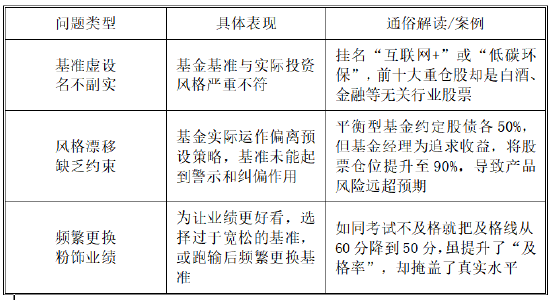
Core Viewpoint - The recent regulatory changes by the China Securities Regulatory Commission (CSRC) aim to enhance transparency and accountability in the mutual fund industry, addressing issues like "style drift" and misleading performance benchmarks [5][6]. Group 1: Performance Benchmark Definition - The performance benchmark serves as a "anchor" and "yardstick" for fund investments, helping to clarify product attributes and risk-return characteristics [1]. - It allows investors to assess whether a fund's actual holdings align with its stated investment style [2]. - The benchmark also aids in evaluating the true investment capabilities of fund managers by comparing actual returns against benchmark returns [3]. Group 2: Weaknesses in Current Benchmarking - There are three main issues undermining the effectiveness of performance benchmarks: 1. Benchmarks are often nominally set but do not reflect actual investments [4]. 2. Funds frequently deviate from their stated strategies without adequate warning [4]. 3. Managers may change benchmarks to present better performance, akin to lowering passing grades after failing [4]. Group 3: New Regulatory Measures - The new guidelines require that benchmarks must align closely with the fund's investment goals and strategies, preventing mismatches [6][9]. - Fund managers are prohibited from changing benchmarks solely due to managerial changes or short-term market fluctuations [8]. - The guidelines link fund manager compensation to benchmark performance, encouraging long-term investment strategies over short-term gains [10][11]. Group 4: Enhanced Transparency and Disclosure - The new regulations mandate improved disclosure of fund performance relative to benchmarks, including detailed reports on returns, volatility, and asset allocation [12][13]. - Fund managers must explain performance discrepancies using both qualitative and quantitative methods, with custodians required to verify this information [13]. Group 5: Implications for Investors - The new rules simplify the selection process for investors, making it easier to understand fund characteristics and performance [16]. - Investors can now evaluate fund managers' true capabilities more objectively, reducing the risk of being misled by inflated performance claims [16]. - The emphasis on long-term performance and transparency helps investors maintain a more composed investment strategy [16]. Group 6: Tools for Smart Investing - Investors are encouraged to redefine "good funds" based on stability, sustainable excess returns, and manageable risk [18]. - Understanding professional metrics like volatility, tracking error, and information ratio will aid investors in making informed decisions [19][20][21]. - A structured approach to reading fund reports can help investors identify deviations from expected performance and assess the sustainability of fund strategies [24][25][26].